Home Blog Page 168

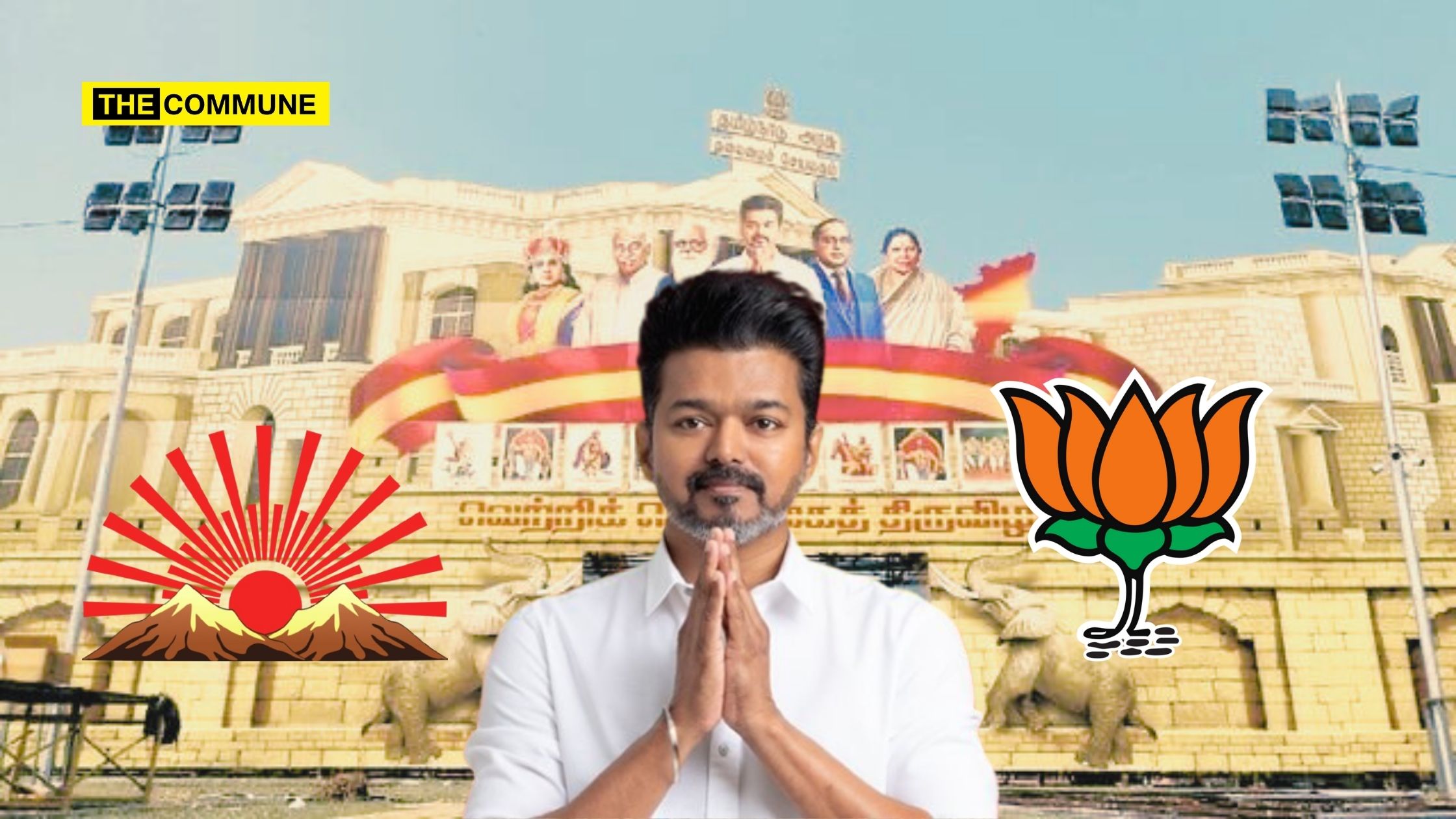
Vijay Invokes MGR, Targets DMK And BJP At TVK Anniversary

Vijay To Target Both DMK And BJP In His Speech Say Reports

Marking the second anniversary of Tamilaga Vettri Kazhagam (TVK) and the beginning of its third year, party founder Vijay addressed party workers and supporters, crediting the party’s rapid growth in Tamil Nadu to its cadre and supporters.

Vijay recalled a June 1977 radio interview of former Chief Minister MG Ramachandran, saying MGR had spoken of weeping after seeing “how such people had come to sit in the place once occupied by Perarignar Anna.” Vijay quoted MGR as saying that the movement formed to wipe away those tears was the Anna Dravida Munnetra Kazhagam.

Drawing a parallel with the present, Vijay said, “In the same way, after 2017, after 2021, when the people of Tamil Nadu reflected on the state of our land—thinking about how people like these had come to occupy the place where Kamarajar stood, where Anna stood, where MGR stood—the people of Tamil Nadu shed tears. Today, the movement that was formed to wipe away those tears is Tamilaga Vettri Kazhagam.”

Anticipating backlash, Vijay said, “Because we speak like this, some people will definitely get agitated. We should not worry about that. Because getting agitated is their only job.” Recalling how MGR was mocked even after winning elections, he said critics had dismissed MGR as “some actor, some new party, some so-called revolutionary leader.” Vijay added, “So, whoever enters politics, their job is to get agitated.”

Responding to questions about his political experience, Vijay said, “Even after we entered politics, they ask: ‘What experience does Vijay have?’… This is the same mouth that once said about MGR that he didn’t even know the ABC of politics, that he relied only on glamour, that he was an empty-tongued publicity seeker who only knew how to ask questions but not answer them.”

He added that critics had also said MGR would not face reporters, would not go against Delhi, and was “under pressure from above.”

Vijay said ridicule was not limited to leaders alone. “Not just MGR, they didn’t spare even his cadre. They mocked those who were dazzled by glitter and sparkle,” he said, adding that people had watched such mockery silently. “You know very well what they did after that.”

Referring to electoral victories, Vijay said, “After he won, those who thought they had settled permanently in politics saw their dreams collapse… Just like 1977, even now, they bring out the same old, rusted, decayed, poisonous, worn-out weapons.” He added pointedly, “My dear gentlemen, technology has moved far ahead. At least change your tactics a little.”

Vijay said even former Chief Minister K. Kamaraj had not been spared. “They mocked him asking what he knew about literature… That great leader was ridiculed,” he said.

He continued, “When we point out their mistakes, when we expose their atrocities, when we speak about their corruption, they roll out the same tin box from 50 years ago. What else would a seventy-year-old woman know (Pavizhavizha Papavukku enna theriyum)? They only know to roll the old box.”

Rejecting calls to stay silent, Vijay said, “Just because they keep rolling out the same old box, can we stop speaking about their mistakes? We will speak. We will keep speaking.”

Invoking classical Tamil literature, Vijay said, “In today’s digital world, if Thiruvalluvar were alive, what Thirukkural would he have written about these evil forces?” He then offered an imagined verse: “Of all things like injustice, lawlessness and crooked dealings, the DMK stands first in the world.”

On multi-cornered contests, Vijay said, “They talk about three-cornered contests, four-cornered contests. Let them talk.” He described one side as TVK, another as the DMK-led alliance, and another as the BJP-led alliance, saying, “On one side is the massive people’s power—us. On another side is the DMK-led alliance. On another side is the BJP-led alliance – several others. Why are you laughing? I’m telling the truth. No matter how many forces come together to defeat the DMK, only the massive people’s power that is us can do it.”

Responding to critics who ask why he does not appear publicly more often, Vijay said, “When they ask, ‘Vijay, why don’t you come out of your house?’ I feel like saying, ‘Oh God, everyone is calling me.’” He added that on voting day, “every Vijay and every Viji in every house will come early in the morning and stand in line… That day, they will regret why they called Vijay.”

On opinion polls, Vijay said, “Some say they are genuine polls, some are frustration-driven polls.” He urged critics to conduct surveys “street by street, house by house,” adding, “In every house, you will see a TVK presence. If that shocks you, erase everything and start again—the result will be the same.”

Referring to remarks by Chief Minister M. K. Stalin, Vijay said, “About two years ago… he said that seeing the atrocities committed by some people in his party and some ministers, he couldn’t sleep at night. That video still exists.” He added, “Ask him even in his sleep which symbol he will vote for—he will say the whistle symbol.”

Rejecting claims that TVK was limited to cities, Vijay said, “There is no village where the whistle symbol hasn’t reached. Wherever the whistle symbol is, TVK is there.” He added, “No one can stop my mothers, sisters, brothers, and families from voting for TVK… This is the ground reality.”

Looking ahead to the 2026 Assembly elections, Vijay declared, “To defeat the evil force, only the pure force that is us can succeed. In the 2026 Assembly elections, TVK is the only option for the people—otherwise, no diversion. This dabba engine, broken engine… no matter how many engines come, the top engine is TVK.”

Calling on party workers to intensify grassroots mobilisation, he said, “Your only job is to ensure votes for the whistle symbol. I will take care of the rest with the people.”

Concluding, Vijay said, “In Tamil Nadu politics, the whistleblower is TVK… at Fort St George, TVK will rise as the ruling party. I am with you.”

Subscribe to our channels on WhatsAppTelegram, Instagram and YouTube to get the best stories of the day delivered to you personally.

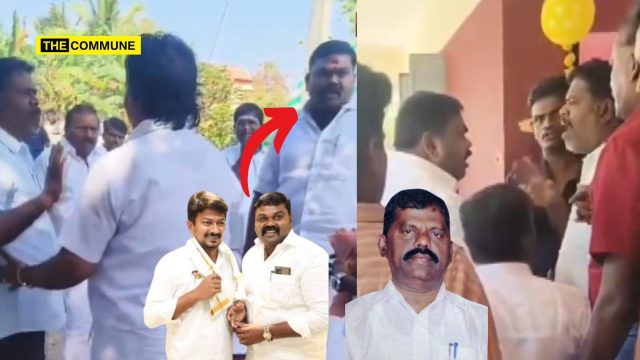
Villagers Chase Away Sankarankovil DMK MLA & Vasudevanallur MDMK MLA During Ration Shop Inauguration In Tenkasi

Villagers Chase Away Sankarankovil DMK MLA & Vasudevanallur MDMK MLA During Ration Shop Inauguration In Tenkasi

An incident in Tenkasi district, where villagers objected to the presence of two MLAs at a ration shop inauguration and forced them to leave the venue, has triggered political attention and social media discussion.

The incident occurred at Kuvalaikkanni village near Sankarankovil, under Sankarankovil taluk. A public distribution system (PDS) ration shop building constructed at an estimated cost of ₹15 lakh under the Mahatma Gandhi National Rural Employment Guarantee Scheme (MGNREGS) was scheduled to be inaugurated on the day.

According to reports, Sankarankovil MLA Raja and Vasudevanallur Sadhan Thirumalaikumar, along with officials and local functionaries (around 100 of them), arrived at the village for the inauguration ceremony.

However, tensions arose when the Kovalakanni panchayat president, Dinesh, along with villagers, questioned the MLAs’ presence. Villagers reportedly confronted them, stating that the legislators had not visited the constituency for nearly four-and-a-half years and pointed out that the ration shop was not built using MLA or MP funds. They objected to the MLAs inaugurating the facility and argued that they had no role in the project.

The confrontation led to a brief period of commotion and tension at the site. Following the protests, both MLAs left the venue without inaugurating the ration shop. Subsequently, villagers themselves opened the ration shop and completed the inauguration.

Videos reportedly showing villagers chasing away the Sankarankovil and Vasudevanallur MLAs have since gone viral on social media, drawing widespread attention to the incident and sparking debate over elected representatives’ engagement with their constituencies.

Subscribe to our channels on WhatsAppTelegram, Instagram and YouTube to get the best stories of the day delivered to you personally.
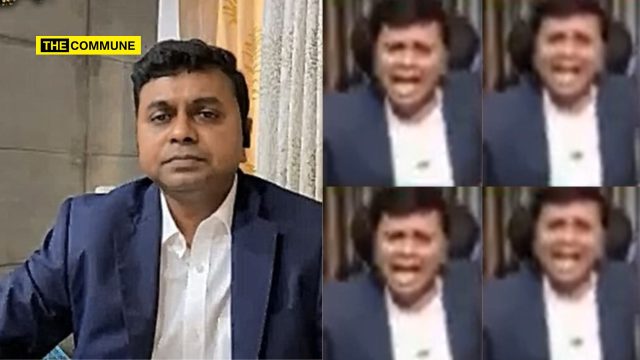
DMK Spokie ‘Melting Point’ Saravanan Has Meltdown, Makes Weird Noises On Live TV

DMK Spox 'Melting Point' Saravanan Once Again Loses Cool, Resorts To Cacophony On Live TV

A live national television debate descended into chaos after DMK spokesperson, who is known by the moniker ‘Melting Point’ Saravanan, responded to a pointed question not with an answer, but with an extended burst of loud, rhythmic laughter that left fellow panelists visibly stunned.

The bizarre moment unfolded as the discussion veered into language politics and alleged “Hindi imposition.” Saravanan, already irritated over what he claimed was a deviation from an English-language debate, appeared increasingly rattled as BJP spokesperson Shehzad Poonawalla pressed him on the ideological roots of the DMK’s oft-cited cultural references.

When Poonawalla asked Saravanan to explain the political context of Parasakthi, specifically who was in power during the period of alleged Hindi imposition and why the DMK was now allied with the Congress, Saravanan offered no substantive response. Instead, he abruptly broke into a loud, repetitive laugh that many viewers online described as “cacophony-like” and “unnerving,” with the studio momentarily frozen in awkward silence.

The clip shows Saravanan laughing uncontrollably for several seconds as other panelists looked on, unsure whether to intervene or move the debate forward. The moderator made no immediate attempt to steer the discussion back on track, further amplifying the surreal nature of the exchange.

Earlier in the debate, Saravanan had complained that he was “upset” about being invited to an English-language discussion only to have other participants speak in Hindi, calling it an “everyday nuisance.” However, the laughter erupted precisely when he was asked to respond to a direct political contradiction involving the DMK’s alliance choices.

The episode has since gone viral on social media, with critics mocking the spokesperson for resorting to theatrics instead of addressing the question. Several users remarked that the laughter appeared less like humour and more like an attempt to drown out an inconvenient line of questioning.

Subscribe to our channels on WhatsAppTelegram, Instagram and YouTube to get the best stories of the day delivered to you personally.
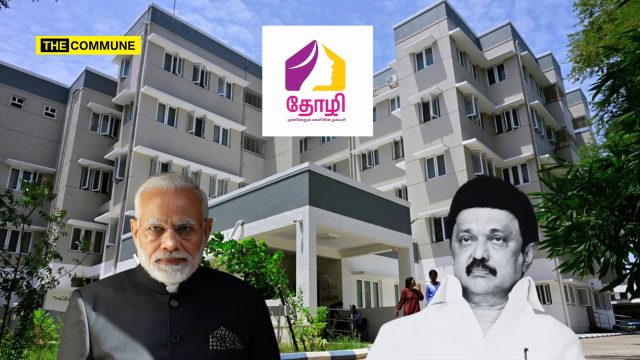
DMK Govt Pastes ‘Dravidian Model’ Sticker On Women’s Hostel Initiative Started During ADMK Govt And Funded By Modi Govt

DMK Peddles 'Dravidian Model' Claim On Girls Hostels - Official Data Says Otherwise

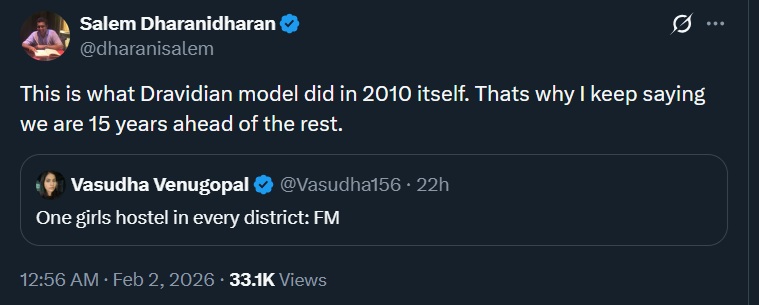
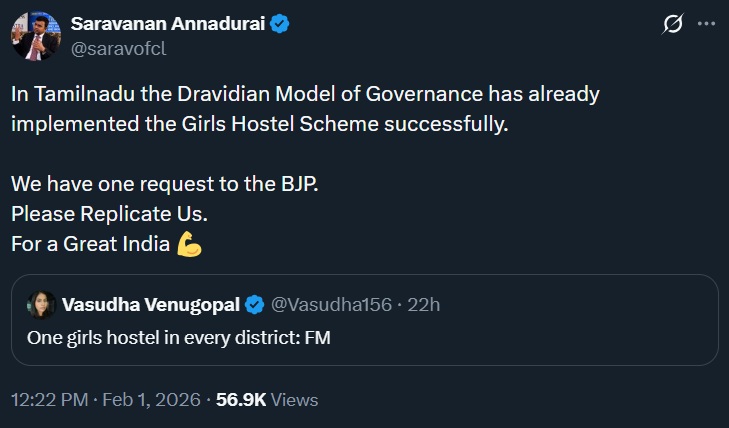
Following Union Finance Minister Nirmala Sitharaman’s announcement that a working women’s hostel will be established in every district across the country, Dravidianists, DMK spokespersons and their media mouthpiecesclaimed that Tamil Nadu had already achieved this under the so-called “Dravidian model” as early as 2010. These claims were amplified through social media posts and television commentary.

However, available records indicate that working women’s hostels in Tamil Nadu significantly predate 2010 and that a substantial portion of the existing infrastructure was created under previous administrations. Government data shows that as early as 1980–81, during AIADMK rule, government-run working women’s hostels were established in several districts of the state. Of the 24 such hostels functioning in Tamil Nadu as of 2024, 20 were started during AIADMK tenures.

Funding details further complicate the narrative being projected. According to official documents, the Central Government provides the majority share of funds for the construction of working women’s hostels in Tamil Nadu. Under the centrally sponsored “Sakhi Niwas” initiative, the Centre contributes 60% of the project cost, with the Tamil Nadu government contributing the remaining 40%. These hostels are implemented nationwide, including in Tamil Nadu, where the state government branded them as “Thozhi hostels”.

In the Union Budget 2024–25, presented in July 2024, Sitharaman announced that the Centre would establish working women’s hostels in collaboration with industries and create crèches to improve women’s workforce participation.

Earlier documentation from August 2021, released by the Ministry of Women and Child Development, shows that the Centre sanctioned funds to the Tamil Nadu government for a working women’s hostel with a daycare facility in Tambaram district. The project, executed by the Tamil Nadu Working Women Hostel Corporation Limited, received a non-recurring central grant of ₹7.005 crore, representing 60 per cent of the total approved project cost of ₹11.675 crore. The first instalment released amounted to ₹3.5025 crore, accounting for 50 per cent of the Centre’s share.

The documents also clarify that the Working Women Hostel scheme functions as a sub-scheme under the Centrally Sponsored Umbrella Scheme Mission for Protection & Empowerment for Women, with the Centre–State funding ratio fixed at 60:40.

So whichever way it is looked at, the Dravidianists have been peddling a lie for the past 2 years and repeating it to push the “Dravidian Model” narrative once again.

Subscribe to our channels on WhatsAppTelegram, Instagram and YouTube to get the best stories of the day delivered to you personally.
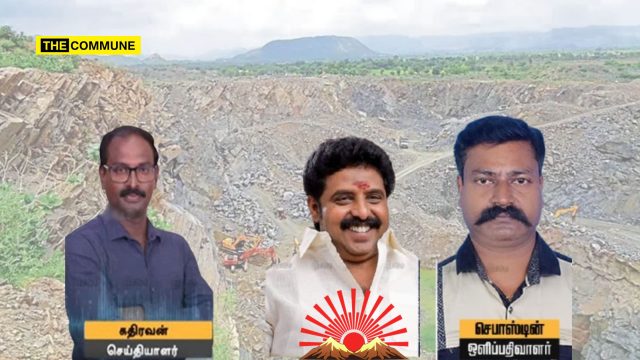
Journalists Attacked, Equipment Worth ₹25 Lakh Destroyed While Investigating Alleged Illegal Quarry Linked To DMK MLA In Karur; Questions Raised Over Police Inaction

Journalists Attacked, Equipment Worth ₹25 Lakh Destroyed While Investigating Alleged Illegal Quarry Linked To DMK MLA In Karur; Questions Raised Over Police Inaction

A fresh controversy has erupted in Karur district following the attack on journalists investigating alleged illegal quarrying operations, with new details raising serious questions about intimidation, destruction of evidence, and the lack of police action.

On Friday, 30 January 2026, five persons, including two journalists from News Tamil 24×7, were assaulted while filming an allegedly illegal stone quarry at Sivayam village near Krishnarayapuram. The quarry is alleged to be linked to DMK Srirangam MLA M Palaniyandi.

The injured include reporter Kathiravan, videographer Sebastian, social activist Sudalai Kannu, advocate Thirumalai Rajan, and his assistant Rajamanickam. According to police, the group travelled to the quarry, about 8 km from the Kulithalai–Manapparai highway and used a drone to document quarry operations for nearly two hours.

The situation escalated after quarry workers allegedly noticed the drone. Around 50 men, said to be quarry staff, reportedly attacked the group with iron rods and wooden logs, severely assaulting them, destroying two cameras, a drone, microphones, live kits and mobile phones, and briefly holding them against their will. The damaged and stolen equipment is estimated to be worth around ₹25 lakh.

For more than two hours, colleagues were unable to contact the victims, prompting an alert to the Karur Superintendent of Police Jose Thangaiah. Acting on his instructions, a police team led by Kulithalai DSP Senthilkumar secured Kathiravan and Sebastian and brought them to the Kulithalai police station. Advocate Thirumalai Rajan and Rajamanickam, who sustained serious injuries, were admitted to the Government Hospital in Kulithalai, while the journalists are undergoing treatment at the Tiruchirappalli Government Hospital.

However, News Tamil reported that despite a written complaint being submitted on the very day of the attack, detailing the time of arrival, purpose of reporting, identities of those involved, the assault, and the theft of equipment, no arrests or concrete action have been taken so far. This alleged inaction has triggered sharp criticism.

Further intensifying the controversy, multiple audio recordings have surfaced on social media and television broadcasts. These audios, aired by News Tamil, are claimed to contain conversations allegedly involving the MLA’s son and others connected to the quarry, discussing the incident and the destruction of evidence. While the authenticity of the recordings has not been officially confirmed, the channel claims the clips shed light on what transpired at the quarry site.

Journalists involved in the reporting alleged that the MLA himself was present at the scene and took part in the assault. According to their account, after the MLA allegedly struck first, others accompanying him followed suit, launching a “blind attack” on the journalists. They further alleged that had the MLA chosen to intervene, the violence could have been prevented.

The incident has also revived scrutiny of Palaniyandi’s past. In 2023, the Karur district administration reportedly imposed a fine of ₹23 crore on quarry operations linked to violations, raising questions about continued mining activities and political patronage.

Political leaders, activists, and journalists’ associations have condemned the attack, describing it as an assault on press freedom and a dangerous signal for journalists investigating environmental crimes such as illegal stone and sand quarrying. Several speakers on News Tamil argued that journalists documenting alleged illegalities should have been met with legal remedies, not violence, and questioned why no case has been registered against the MLA or those involved.

Subscribe to our channels on WhatsAppTelegram, Instagram and YouTube to get the best stories of the day delivered to you personally.
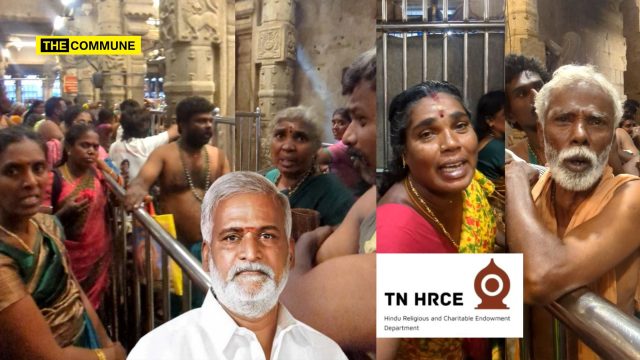
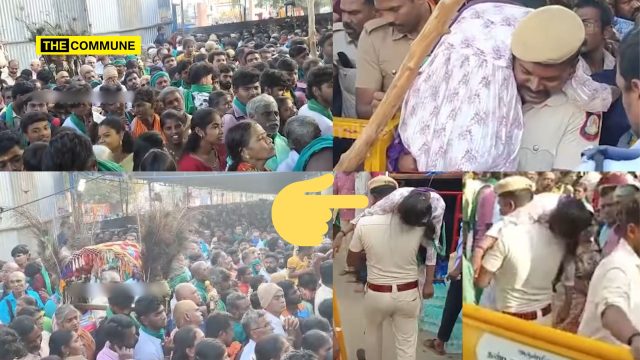
No Water, Long Waits: Devotees Slam HR&CE Over Thaipusam Arrangements At Tiruchendur Murugan Temple

No Water, Long Waits: Devotees Slam HR&CE Over Thaipusam Arrangements At Tiruchendur Murugan Temple

Pilgrims who arrived on foot at the Tiruchendur Subramaniya Swamy Temple for the Thaipusam festival have alleged severe mismanagement and mistreatment by the Hindu Religious and Charitable Endowments Department (HR&CE), leading to widespread distress among padayatra devotees.

Despite Thaipusam being an annual event that draws tens of thousands of devotees, pilgrims alleged that no adequate advance arrangements were made by the HR&CE administration. Only a limited number of police personnel were reportedly deployed, leaving authorities unable to regulate the swelling crowds. Devotees said that even when crowd pressure intensified and people were pushed against one another, officials failed to intervene effectively.

Several devotees, speaking on camera, accused the administration of allowing preferential access while ordinary pilgrims were made to wait for hours without basic facilities. One devotee alleged that entry was being granted after collecting money under the guise of stickers, while others were denied access. “They put a sticker on our (padayatra devotees) wrist, but they collect money and let people in. But here, we are not allowed,” a pilgrim said.

Others complained of the lack of basic amenities. “For 12 hours, they haven’t even provided drinking water,” one devotee said, questioning the preparedness of the authorities.

Pilgrims also alleged discriminatory enforcement of queue norms. “They said everyone should go through the common queue, then why are some allowed to go in freely? We are standing here crushed like cattle. If VIPs go inside, we are left standing outside,” another devotee said, adding that many had walked long distances and were exhausted to the point of fainting.

Some devotees said they were misled by officials at earlier checkpoints. “In Kumarapalayam they told us that showing the token (tag) would allow immediate entry. But when we came here, they made us wait for hours. If we question them, no one responds properly,” a pilgrim said, directly blaming the administration under HR&CE Minister Sekar Babu and alleging that no official came forward to address the crowd.

According to devotees, temple gates were opened late, and even senior citizens were asked to leave the queue after waiting for hours. “They opened the gates only at 1 am. At 2:30 am, even elderly devotees were told there would be no darshan and were sent out,” one pilgrim said, adding that there was still no drinking water or other facilities, even as VIP and special darshan entrants were continuously allowed inside.

Many devotees were eventually seen sitting on the ground due to exhaustion. Questioning the slow pace of entry, one pilgrim remarked, “If they let people in five by five after making everyone sit for an hour, when will darshan happen? We are not here to see a movie actor. We have come to see the Lord. They say abhishekam is going on, that is exactly what we have come for.”

It is noteworthy that the Thaipusam festival in Palani witnessed massive crowds on Sunday, 1 February 2026, as lakhs of devotees from districts including Tiruchirappalli, Madurai and Coimbatore, and from states such as Kerala, thronged the town. Many undertook padayatra, carried kavadi and performed alagu piercing, with queues forming from as early as 2 AM to reach the hill temple. With paid darshan cancelled, waiting times stretched to nearly six hours. Despite a one-way system and batch movement, severe congestion occurred, leading to several devotees fainting. Police rescued those who collapsed. Devotees also reported hardship due to inadequate drinking water and toilet facilities.

Subscribe to our channels on WhatsAppTelegram, Instagram and YouTube to get the best stories of the day delivered to you personally.
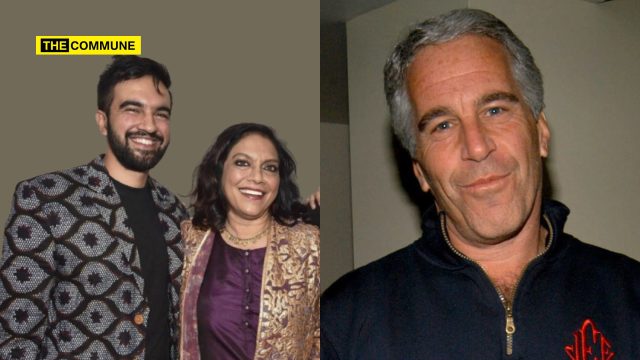
Radical Islamo-Leftist NYC Mayor Zohran Mamdani’s Mother Mira Nair’s Name Appears In Latest Epstein Files Released By US Justice Department

The name of filmmaker Mira Nair, the mother of New York City Mayor Zohran Mamdani, has surfaced in the latest batch of Epstein files released by the US Department of Justice on Friday, 30 January 2026.

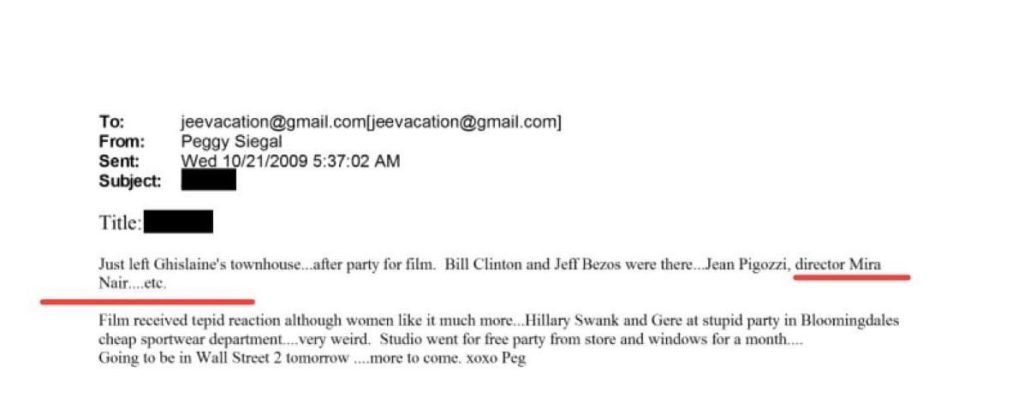
According to reports, the documents include an email dated 21 October 2009, sent by publicist Peggy Siegel to late financier and convicted sex offender Jeffrey Epstein. The email refers to an afterparty hosted at the New York townhouse of Ghislaine Maxwell, who was later convicted for her role in Epstein’s sex trafficking operation.

The afterparty was organised following a screening of Nair’s film Amelia. In the email, Siegel mentioned that the gathering was attended by several high-profile figures, including former US President Bill Clinton and Amazon founder Jeff Bezos, along with Nair and others from the film and social circuit. Siegel reportedly described the reception to the film as lukewarm.

Image Source: Ritam English X Handle

The newly released Epstein files are part of a larger cache of documents linked to the investigation into Epstein’s activities. The files reportedly contain testimonies from victims of sexual abuse, along with internal communications and emails that reference numerous well-known individuals. Among the names appearing in the documents are Microsoft co-founder Bill Gates, Bill Clinton, current US President Donald Trump, and George Bush, though it remains unclear whether the reference is to former President George H W Bush.

The Epstein files comprise thousands of pages of records connected to federal investigations into Epstein, who died in custody in 2019. The Department of Justice began releasing the documents in December last year, following sustained political pressure and a legal deadline established under a law passed by the US Congress.

Source: OpIndia

Subscribe to our channels on WhatsAppTelegram, Instagram and YouTube to get the best stories of the day delivered to you personally.
Thaipusam 2026: Devotees Faint Amid Severe Crowd Congestion While Waiting Long Hours For Darshan At HR&CE-Administered Palani Murugan Temple

Thaipusam 2026: Devotees Faint Amid Severe Crowd Congestion While Waiting Long Hours For Darshan At HR&CE-Administered Palani Murugan Temple

The Thaipusam festival in Palani witnessed massive crowds on Sunday, 1 February 2026. Devotees in lakhs thronged the town from districts including Tiruchirappalli, Madurai and Coimbatore, and from other states such as Kerala.

Devotees from districts including Tiruchirappalli, Madurai and Coimbatore, along with pilgrims from states such as Kerala, arrived in large numbers, many undertaking padayatra, carrying kavadi and performing alagu piercing. From as early as 2 AM, devotees began assembling in queues to proceed to the Palani hill temple.

With all paid darshan categories cancelled, devotees were permitted to have darshan through general queues. However, the overwhelming turnout resulted in wait times stretching to nearly six hours. Heavy crowding was also reported at the rope car station, while congestion on the usual routes led several devotees to attempt climbing the hills to reach the temple.

As the number of devotees continued to swell, police personnel and officials of the Hindu Religious and Charitable Endowments Department struggled to manage the crowd. To regulate movement, authorities converted the hill route into a one-way system, allowing devotees ascending the hill through the Kudamuzhukku Memorial Hall route and directing those descending via the steps pathway. Police also attempted to control the flow by sending devotees in batches along the hill road.

Despite these measures, the situation worsened as devotees attempted to overtake one another, resulting in severe congestion. Due to the crush and prolonged hours of waiting, several devotees fainted. Police personnel on security duty rescued those who collapsed and carried them to out away from the crowd.

While the hill temple had been decorated with colourful flower festoons and buttermilk was distributed to devotees, many pilgrims were said to have faced hardship due to inadequate access to drinking water and toilet facilities during the extended waiting period for darshan.

Subscribe to our channels on WhatsApp, Telegram, Instagram and YouTube to get the best stories of the day delivered to you personally.

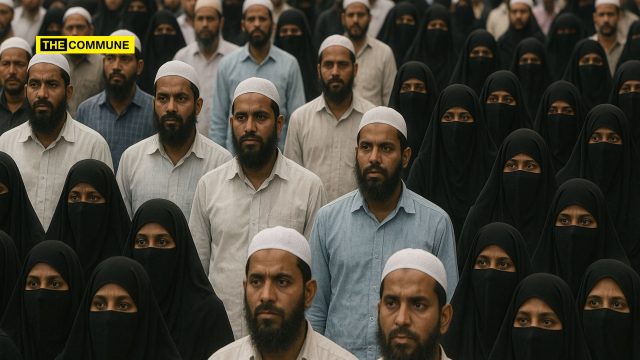
Illegal Immigration And Mumbai’s Silent Demographic Change: What A 2024 TISS Report Warns

A 2024 interim report by Tata Institute of Social Sciences (TISS) on illegal Bangladeshi and Rohingya immigrants in Mumbai paints an alarming picture of a city being reshaped demographically, economically, socially and politically – without mandate, accountability or a clear state response. Far from being a marginal issue, the report argues that unchecked illegal migration is altering the very character, security profile and governance structure of India’s financial capital

Demographic Engineering In Slow Motion

Mumbai has long grown on the back of migration, but the report underlines a structural shift: even as the city reaches saturation, undocumented inflows continue to pour into already choked slums and bottleneck zones. This is highlighted not as organic urbanisation but as a sustained, under‑policed movement with clear demographic consequences.

The Hindu share of Mumbai’s population is reported to have fallen from 88% in 1961 to 66% in 2011, while the Muslim population has risen from 8% to 21% over the same period.

Projections cited in the study suggest that by 2051 Hindus could drop below 54% in Mumbai, while Muslims may touch around 30%, fundamentally altering the city’s religious balance. ​

The report flags roughly 90‑plus “pockets” and bottleneck areas where illegal Bangladeshi and Rohingya migrants have concentrated in significant numbers, often in religiously homogeneous clusters. ​

Localities repeatedly named include Govandi, Mankhurd, Dharavi, Kurla, Malvani, Nalasopara, parts of Turbhe, Ambedkar Nagar, and slum belts around industrial and transport hubs, where the demographic character is said to be shifting rapidly. These clusters are seen not as isolated communities but as expanding bases, continuously replenished by fresh illegal entrants through kinship, village networks and organised routes.

​Routes, Networks And The Machinery Of Illegal Entry

The report maps illegal immigration as a deliberate, organised process, not an accidental spillover.

The India–Bangladesh border is described as porous, with crossings facilitated by human smugglers, touts, corrupt border officials and long‑standing informal trade routes.

Many migrants first enter eastern states such as West Bengal and Assam, obtain shelter and basic documentation through local facilitators, and then move on to growth centres like Mumbai and other western cities.

Interviews describe step‑by‑step journeys involving multiple hand‑offs: from village agents in Bangladesh to border operatives, then to transporters and job contractors inside India.

The report notes that some migrants circulate between Indian cities and home districts, while others remain long term, eventually “integrating” into slums as de facto residents despite having no legal right to be in the country.

This continuous pipeline, the authors warn, ensures that even sporadic crackdowns cannot meaningfully reverse the demographic or security impact unless the networks themselves are dismantled.

Labour Market Capture And The Shadow Economy

One of the most striking points made in the study is how illegal migrants have moved from the margins to the centre of Mumbai’s low‑skill labour market. ​

After Covid‑19, when many local Maharashtrian and other Indian workers returned to their native states, illegal immigrants reportedly stepped into the vacuum – in effect capturing roles such as coolies, helpers, domestic workers, vendors, ragpickers and construction labourers.

The report argues that these workers accept significantly lower wages and poorer conditions, thereby depressing wage levels across the informal sector and displacing natives from jobs they once dominated.​

Key informants link this trend directly to rising resentment among poor local communities, who see themselves competing with people who neither pay taxes nor carry the same legal burdens.​

Beyond low‑end labour, the report places illegal migrants squarely inside Mumbai’s shadow and black economy. ​

They are said to be embedded in smuggling chains (gold, arms, narcotics), illicit liquor, hawking networks, unlicensed workshops, illegal transport and the sex trade. ​

Because much of this activity is unregistered, it yields no tax revenue but fuels parallel power structures in slums and industrial pockets.

The Remittance Outflow: Money Earned in India, Parked Abroad

The report repeatedly flags remittances as a critical but under‑discussed dimension.​

In the executive findings, it is stated that about 40% of immigrants remit between ₹10,000 and ₹1,00,000 per month to their home countries.

Chapter 7 of the report on the economic activities of the illegal Bangladeshis and Rohingyas notes that nearly 84% of surveyed migrants send money back home regularly, characterising these flows as largely unrecorded and outside formal banking channels.

Despite low declared incomes, many respondents report owning land, houses, livestock or vehicles in Bangladesh or Myanmar, which the study interprets as proof that significant earnings made in Mumbai are being converted into assets abroad rather than reinvested locally.

The authors frame this as a “loss of revenue” and a silent economic drain: the city bears the cost of infrastructure, health, policing and subsidies, while a sizeable share of the surplus is exported out of India.​

Women, Sex Work And The Dark Underside of “Survival”

Gender emerges as a particularly grim axis in the report, which devotes extensive space to the condition of illegal migrant women.

The executive summary states that more than 50% of the women interviewed are involved in prostitution. Many women are described as living “dual lives”: working as domestic helpers, vendors, cleaners or casual labourers by day and as sex workers by night to support families locally and back home.

Focus group discussions and key informant interviews point to brothel‑based and street‑based sex trade in areas like Kamathipura and certain slum pockets, where Bangladeshi and Rohingya women are allegedly controlled by brokers, pimps and local criminal elements.

This not seen not only as a moral and legal crisis, but as the nucleus of a wider criminal ecosystem. Human trafficking, forced prostitution, minor girls pushed into sex work, and cross‑border rackets are repeatedly flagged. ​

These networks link illegal immigration directly to organised crime, corruption among officials, and the funding of other illegal activities including smuggling. ​

Public Services Under Siege

Another major strand in the study is the pressure on already overstretched public infrastructure.

Public healthcare: Around four‑fifths of surveyed immigrants reportedly use government hospitals, dispensaries and primary health centres despite lacking full documentation. The authors argue that this adds to congestion, long queues and overstretched staff, effectively crowding out poor Indian citizens who rely on the same facilities.

Overcrowding and disease: Slums dominated by illegal migrants are often characterised by high density, kuchha or semi‑pucca housing, narrow lanes, open drains, poor solid waste management and contaminated water sources. ​

Localities such as Govandi and Mankhurd are specifically named as examples where schools, electricity supply, and water systems are under visible strain.

The study ties these conditions to increased risk of infectious diseases, chronic illness and frequent outbreaks, making immigrant‑dense areas potential public health hotspots.

Crime, Drugs And “No‑Entry” Zones

The report is blunt in linking illegal migration to rising crime and law‑and‑order problems, especially in certain pockets. Key informant interviews speak of illegal migrants’ involvement in arms and gold smuggling, counterfeit currency, and above all, narcotics.

Particular concern is voiced about drug peddling targeting school and college students in areas like Govandi, Kurla and Malad, where cheap substances are allegedly sold by migrant-linked networks.

The report presents a schematic “vicious cycle of crime”: illegal entry → settlement in slums → recruitment by gangs and touts → involvement in black economy → localised spikes in crime, especially against women and children.

Law enforcement, the study argues, is simply not equipped to police dense, informally built, socially closed localities where residents lack documentation and can vanish or relocate quickly.

Many such areas are described as de facto “no‑entry” zones for outsiders, where local gangs and community leaders exercise more real power than the state.

The report states that this environment also makes it easier for extremist elements and radical preachers to operate, recruiting from a pool of young men with no stake in the formal system.

Radicalisation And National Security

Going beyond street‑level crime, the authors point to illegal migration as a national security problem. They note that security agencies have increased surveillance of certain pockets due to suspected links between some illegal immigrants and extremist or Islamist groups.

When we consider global examples such as Germany, France and debates with regard to Muslim migration. When placed alongside Indian cases like PFI, it is derived that demographic shifts combined with ghettoisation can fuel radicalisation.

The report warns that coastal and port‑adjacent migrant settlements in Mumbai pose special risks: they can serve as logistical hubs for cross‑border smuggling and potential terror operations targeting financial and strategic infrastructure.

In this telling, ignoring illegal migration is not just lax governance but a direct compromise of internal security and national sovereignty.

Vote‑bank Politics And Erosion Of Native Voice

A central political alarm in the report is the link between illegal migration and electoral manipulation. ​

India’s fragmented documentation system, multiple IDs such as voter card, Aadhaar, ration card, PAN, birth certificates are identified to be fertile ground for fraud. ​

The absence of a single, non‑duplicable citizenship document allows illegal immigrants, once settled, to obtain forged or “managed” papers, enter voter lists and access welfare schemes meant for citizens. ​

Key informants allege that local political actors, cutting across parties, protect these populations in exchange for loyal vote banks, especially in closely contested municipal wards and assembly segments. ​

The report argues that this has two corrosive effects. ​

First, it undermines electoral integrity, what it calls “shadow voting”, where non‑citizens influence political outcomes. ​

Second, it dilutes the political voice of original residents, including Koli communities and Marathi‑speaking natives, who find themselves numerically and politically marginalised in their own neighbourhoods. ​

The study links this to a broader cultural anxiety: Illegal immigration can possibly lead to eroding the Marathi and original Mumbaikar identity, not only through demographic change but through shifting political priorities and public symbolism.​

Governance Paralysis And Distorted Planning

Beyond politics, the presence of a large undocumented population is said to distort the basic instruments of governance.​

Census and survey data do not fully capture illegal immigrants, but their physical presence still consumes water, housing, roads, transport and welfare resources. ​

This mismatch between official numbers and actual demand leads to chronic under‑provision and misallocation, especially in slum‑heavy wards. ​

Planners struggle to design infrastructure projects – housing, sewage, transport, because the real user base is far larger and more fluid than what official data suggests. ​

The report states that this fuels a cycle where:

Overburdened systems fail → native taxpayers blame “the government” and “outsiders” → politicians tighten rhetoric but avoid hard action due to vote‑bank calculations → illegal settlements are quietly regularised or ignored → networks strengthen further. ​

Frequent relocations by immigrant families from one slum to another, from one rented room to another are also flagged as destabilising for local communities, schooling continuity and social cohesion.

Housing, Rents and Urban Chaos

Housing is another flashpoint.

The report notes that demand for ultra‑low‑cost housing from illegal immigrants intensifies pressure on slums and informal settlements, accelerating unauthorized construction and vertical expansion of already unsafe structures. ​

This, in turn, pushes up rents in lower‑income segments, making basic housing unaffordable for many poor citizens. ​

Informal settlements grown around migrant clusters disrupt urban planning, encroach on public land and infrastructure corridors, and complicate future redevelopment. ​

Public transport such as trains, buses, shared autos is also described as overwhelmed, with illegal migrants adding to already crushing peak‑hour loads. ​

Social Cohesion, Mistrust and Rising Nationalism

Socially, the report argues that illegal migration is deepening fault lines rather than healing them. ​

Many immigrant clusters are ethnically and religiously homogeneous, with limited contact with surrounding populations, leading to “us vs them” perceptions on both sides. ​

Competition for scarce jobs, rations, school seats, hospital beds and municipal services fuels resentment and periodic clashes. ​

The study notes rising nationalist sentiment and polarised debates on immigration, with frequent accusations that political parties are “selling” citizenship benefits and local resources in exchange for captive vote banks. ​

Rather than dismiss this as mere rhetoric, this can be seen as a predictable social response to sustained, unaddressed demographic and economic disruption. ​

What the Report Implicitly Demands

The report does call for strong state action given the findings.​

It mentions the NRC and broader citizenship debates as responses to the scale of illegal immigration and associated security concerns. ​

It argues that effective measures, tightened border control, efficient identification mechanisms, deportation protocols, and firm diplomatic engagement with source countries, are essential to protect national sovereignty and citizens’ rights. ​

It warns that continued inaction will further erode public trust in institutions, deepen social tensions, and leave cities like Mumbai vulnerable to crime, radicalisation and political capture.

Overall, the report documents how illegal immigration, aided by porous borders, compromised politics and ideological denial, is silently rewriting Mumbai’s demography, economy and power structures.

It invites a hard question: if this is what one city already looks like, what happens if the same patterns play out, unchecked, across India’s other urban centres?

Subscribe to our channels on TelegramWhatsApp, and Instagram and get the best stories of the day delivered to you personally.

200-Year-Old Tribal Burial Ground Seized, Fenced Off As Waqf Property In Erode; Protests, Arrests And Court Battle Follow

200-Year-Old Tribal Burial Ground Seized, Fenced Off As Waqf Property In Erode; Protests, Arrests And Court Battle Follow

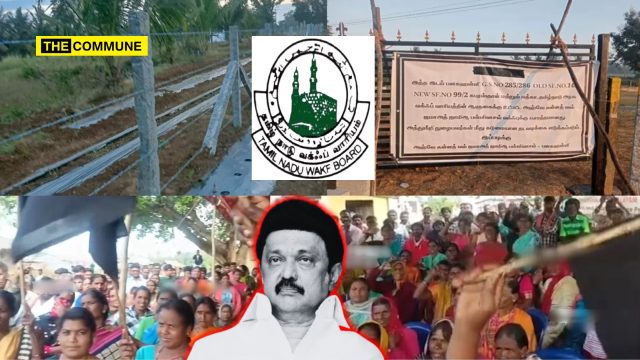
A long-used tribal burial ground in Thalavadi taluk of Erode district has become the centre of a major controversy after the Tamil Nadu Waqf Board fenced off the land, triggering protests, police action, arrests, and an ongoing legal battle.

The burial ground, located between Panagahalli and Palayam villages near the Tamil Nadu-Karnataka border, spans 9.35 acres and has been used by local tribal and village communities for over 200 years. Villagers say the land, classified as government land under Survey No. 99/2, was suddenly brought under Waqf control without inquiry, consultation, or clear demarcation.

Residents say the burial ground has traditionally served more than 3,000 families from both villages. The situation escalated in early December when officials fenced off the entire site with barbed wire, cutting off access to the burial ground and even blocking a long-used public pathway.

“We have been using this burial ground for generations. Now they say it is Waqf land and have sealed it. If someone dies today, there is not even an alternative place to bury the body,” said Rohith, a resident of Thalavadi.

Villagers allege that just days earlier, revenue officials had assured them that the land was government poramboke, prompting them to suspend initial protests. However, on 11 December 2025, over 300 police personnel were deployed and fencing was erected across the entire burial ground.

A signboard at the site now declares that the kabristan and eidgah in Survey No. 99/2 belong to the Panagahalli Ahle Sunnat Jamaat Mosque Waqf, a claim villagers say was never established through a transparent process.

After a joint petition submitted to the Erode District Collector on 12 December 2025 drew no response, a villager named Basavaraj moved the Madras High Court, challenging the Waqf claim and seeking restoration of access to the burial ground.

In his petition, Basavaraj stated that the land has been used as a burial ground since the 1800s, that it is recorded as government land, and that the Waqf Board claimed ownership without producing valid documents or conducting an inquiry. He also alleged that fencing was carried out with police protection, sidelining local objections.

Hearing the matter on 29 December 2025, Justice D Bharatha Chakravarthy directed the Erode District Collector and the Waqf Board Superintendent (Coimbatore) to file responses and adjourned the case to 22 January 2025.

In the interim, the court ordered that if any death occurs in the village, the Thalavadi Tahsildar must be immediately informed and must personally identify a suitable place for burial or cremation, ensuring rites are carried out according to traditional practices.

Protests, Arrests, and Police-Villager Confrontation

Tensions on the ground intensified after protesters allegedly damaged portions of the fencing. Police subsequently summoned seven villagers for inquiry, prompting villagers to accuse the police of arbitrary action.

According to local accounts, villagers detained a police inspector in protest, waved black flags, and accused authorities of siding with the Waqf Board without evidence.

Later that night, unidentified persons allegedly broke the fencing again and vandalised CCTV cameras. In response, Thalavadi police arrested seven residents from Panagahalli village around midnight, further escalating tensions.

When police returned to summon additional villagers, residents blocked police vehicles and again detained the inspector, leading to heated arguments. Attempts by revenue officials and police to negotiate failed, and protests continue.

Waqf Board and Officials Defend Move, Villagers Push Back

While the Waqf Board chairman declined to comment, Mujib Khan, Thalavadi Union President of the Tamil Nadu Muslim Munnetra Kazhagam, speaking for the Panagahalli Sunnat Jamaat Mosque, claimed the land was handed over to the Waqf Board in 1956 and alleged villagers were being instigated by encroachers fearing eviction.

Villagers have strongly rejected this claim, insisting they possess documents proving the land is government property and accusing the administration of handing over tribal burial land without justification.

Thalavadi Tahsildar Marimuthu said Survey No. 99/2 appears in the Waqf property register and claimed all documents were examined before fencing was erected. He added that Islamic burials had taken place there and that the site was maintained by the Sunnat Jamaat.

Unresolved Dispute, Rising Political Questions

The dispute remains unresolved as the matter awaits further hearing on January 22, against the backdrop of wider debates over Waqf land claims and the non-implementation of recent Waqf Act amendments in Tamil Nadu.

Villagers have categorically rejected proposals to shift the burial ground to alternative land near forest areas outside the village.

Source: BBC Tamil

Subscribe to our channels on WhatsAppTelegram, Instagram and YouTube to get the best stories of the day delivered to you personally.