Home Blog Page 166

Illegal Liquor Racket Runs 24×7 In Salem’s Pachapatti, Residents Allege Police Silence

Illegal Liquor Racket Runs 24×7 in Salem’s Pachapatti, Residents Allege Police Silence

Allegations of large-scale illegal liquor sales operating round-the-clock from residential houses have surfaced in the Pachapatti area, which falls under the jurisdiction of the Kitchipalayam Police Station, in Salem raising serious concerns over enforcement and public safety.

Pachapatti, located along a national highway within Salem city limits, does not have any government-run liquor outlets. However, reports indicate that liquor is being illegally stocked inside houses and sold at inflated prices. According to information received by News Tamil 24×7 channel, liquor sales have been taking place in the area from early morning onwards.

Residents allege that not only liquor sold by the Tamil Nadu government but also liquor sourced from other states is being sold in the locality. They further claim that adulterated liquor is widely available, posing a serious health risk. When the News Tamil 24×7 media team visited the area to verify the complaints, they reportedly found several people consuming alcohol during working hours, with frequent arguments breaking out among residents.

The alleged illegal sale is said to closely resemble operations of a TASMAC outlet. Liquor bottles are reportedly stored and sold from inside houses, including from cupboards and refrigerators. While legally sold government liquor carries official label stickers, many bottles found in the area allegedly lacked such labels and were suspected to be adulterated.

According to residents, all varieties of liquor are available on demand, including high-end brands and beers not usually available in government outlets. A quarter bottle is reportedly sold at prices ranging from ₹200 to ₹250. Large consignments of liquor and beer are allegedly procured in bulk from nearby areas and unloaded for sale in a manner similar to TASMAC supply operations.

Residents further claim that illegal liquor sales continue uninterrupted, including on government holidays and during temple festivals. During the media team’s visit, it was observed that young men, elderly persons, and even daily wage labourers were spending time and money consuming alcohol instead of going to work.

Tensions escalated while the media team was collecting information, when relatives of the alleged liquor sellers reportedly approached them in a threatening manner. The journalists alleged that they were intimidated, with some individuals wielding sickles, and warned against reporting the issue.

Locals also alleged that illegal liquor sales are not confined to Pachapatti alone but are taking place at more than 20 locations in surrounding areas. Despite informing the police and alerting them to the media team’s presence, residents claim that no police personnel arrived at the spot for over 30 minutes to conduct any inspection or inquiry.

As intimidation of the media team reportedly continued, residents demanded immediate intervention by the Salem City Police Commissioner and senior police officials, calling for decisive action against the alleged illegal liquor outlets and accountability for what they describe as prolonged inaction by the local police.

Subscribe to our channels on TelegramWhatsApp, and Instagram and get the best stories of the day delivered to you personally.

Narikuravar Children Allegedly Barred From Annadhanam At Nellaiappar Temple In Presence Of DMK Leaders, HR&CE Officials

Narikuravar Children Allegedly Barred From Annadhanam at Nellaiappar Temple In Presence Of DMK Leaders, HR&CE Officials

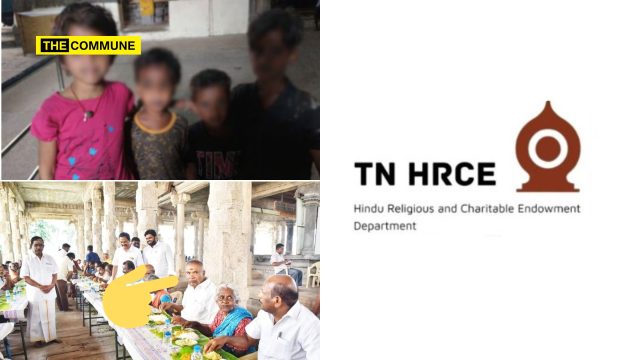
At least five children belonging to the Narikuravar community were allegedly denied participation in a free meal organised inside the Nellaiappar Temple on Tuesday, 3 February 2026, to mark the death anniversary of former Tamil Nadu chief minister CN Annadurai. The incident sparked outrage after a video clip of one of the children narrating the incident to an activist went viral on social media.

According to reports, a man suspected to be a staff member of the Hindu Religious and Charitable Endowments Department allegedly threatened a group of children, warning them that they would be beaten if they entered the temple to partake in the meal. The alleged incident occurred even as Speaker M Appavu, Tirunelveli Mayor G Ramakrishnan, and senior HR&CE officials were present inside the temple and participating in the annadhanam.

After the children recounted the alleged threat to an activist, he reportedly took them to a nearby hotel and bought them food.

The incident triggered sharp political reactions. In a strongly worded statement, the AIADMK said the reported denial of food and temple entry to children from a marginalised community on Annadurai’s memorial day was “deeply shocking.” The statement accused the present administration of practising “modern untouchability” and questioned how such an incident could occur in a state that has historically witnessed temple entry movements and claims a legacy of social justice and equality.

The statement further said that watching the video of a young girl tearfully explaining how the children were threatened was distressing, and described the incident as an extreme form of contemporary discrimination. It also questioned how such an incident could take place in the presence of the Assembly Speaker, demanding explanations from both the Speaker and the government, and calling for a public apology.

Joint Director of the HR&CE Department Kavitha told reporters that an inquiry would be conducted to identify who denied entry to the children and to ascertain the facts surrounding the incident.

Source: The New Indian Express

Subscribe to our channels on TelegramWhatsApp, and Instagram and get the best stories of the day delivered to you personally.

Dravidian Model: Class 11 Student Found Carrying Ganja Inside Govt School In Chennai’s Vyasarpadi

Dravidian Model: Class 11 Student Found Carrying Ganja Inside Govt School In Chennai’s Vyasarpadi

Amid growing concerns over the spread of ganja and narcotic tablets in schools and colleges across Tamil Nadu, a Class 11 student was found carrying ganja inside a government higher secondary school in Vyasarpadi, Chennai, triggering shock and concern among teachers and parents.

The incident came to light on Tuesday after complaints were received alleging drug use by students at the school. Acting on the information, teachers conducted a routine inspection of students and their belongings. During the check, a Class 11 student was found to have a packet containing approximately five grams of ganja concealed in his trouser pocket.

Alarmed by the discovery, the school’s headmistress, Hemalatha, immediately lodged a complaint with the MKB Nagar Police Station. Based on the complaint, police officials arrived at the school, seized the ganja packet, and took the student into custody for questioning.

During the inquiry, the student told the police that he had found the ganja packet lying on the road while on his way to school and had picked it up without knowing what it was. However, police investigations revealed that the student had a prior habit of consuming ganja, casting doubt on his explanation.

The student, a 16-year-old resident of Vyasarpadi, was studying in Plus One at the government school. Teachers said the inspection was initially conducted to check whether students were carrying mobile phones, during which the ganja packet hidden at the student’s waist was detected.

After completing preliminary questioning, police later sent the student back home. Meanwhile, officers have secured CCTV footage from the area where the student claimed to have found the ganja packet and are analysing the recordings to verify his statement and trace the source of the contraband.

Source:ETV Bharat

Subscribe to our channels on TelegramWhatsApp, and Instagram and get the best stories of the day delivered to you personally.
Dravidian Model: Unreleased Remake ‘Sandakkari’ Bags Best Film At Tamil Nadu State Awards

Dravidian Model: Unreleased Remake 'Sandakkari' Bags Best Film At Tamil Nadu State Awards

The recent announcement of the Tamil Nadu government film awards for the years 2016 to 2022 has triggered widespread debate, with particular focus on the 2020 Best Film awardee Sandakkari, which has reportedly not been released theatrically.

The film, starring Vimal and Shreya, suddenly went viral on social media after it emerged that it had won three awards – Best Film (2020), Best Art Direction, and Best Background Singer. Many filmgoers expressed surprise, saying they were unaware the film had ever been released, prompting online searches and scrutiny.

Sandakkari was directed by R Madhesh, known for films such as Vijay’s Madurey, Prashant’s Chocolate, Arasangam, and Trisha’s Mohini. The cast also includes Satyan, Prabhu, and KR Vijaya. Although the trailer was released in 2020 and a theatrical release was planned, the film did not reach cinemas.

Social media users have questioned how an unreleased film could win multiple state awards, with some speculating that it may have been screened exclusively for the jury. The controversy intensified after online discussions claimed that director R. Madhesh was part of the award selection committee, raising allegations of conflict of interest.

Further criticism has centred on reports that Sandakkari is a remake of the Malayalam film My Boss, directed by Jeethu Joseph, leading to questions over how a remake could be selected as Best Film.

The awards list has also drawn criticism in other categories. For the 2022 film Taanakkaran, Bose Venkat won Best Supporting Actor, while several commentators argued that performances by M. S. Bhaskar and Lal in other films went unrecognised.

This angered even Dravidianist supporting directors such as Cheran and Ranjith.

Filmmaker Cheran publicly criticised the awards, stating that his socially driven film Thirumanam was overlooked, which he said reflected a lack of sensitivity or possible insider bias within the selection process.

Director Pa Ranjith also questioned the credibility of the awards after his widely acclaimed film Sarpatta Parambarai failed to earn him recognition.

Additionally, the absence of awards for the splendid child actors Baby Monica for Kaithi and Aswath for Super Deluxe has added to the criticism.

Subscribe to our channels on TelegramWhatsApp, and Instagram and get the best stories of the day delivered to you personally.
Tiruvallur: School Girls Allegedly Harassed By Intoxicated Youths At Bus Stop, Assaulted By Youths’ Parents

Tiruvallur: School Girls Allegedly Harassed By Intoxicated Youths At Bus Stop, Assaulted By Youths' Parents

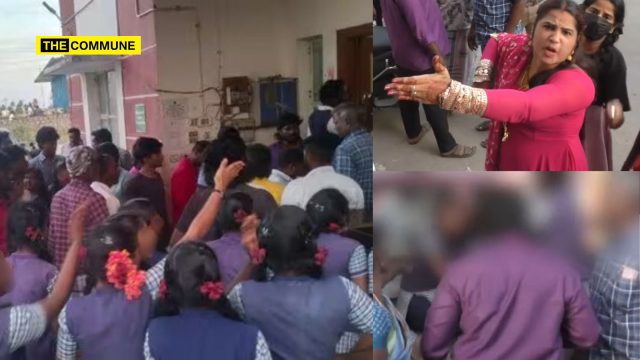
A group of 12th-grade schoolgirls became the victims of public harassment and assault by young men under the influence of ganja, leading to a major road blockade and allegations of police bias, after a disturbing incident at Kanakamma Chathiram in Tiruvallur on Tuesday, 3 February 2026.

The incident began when 13 Class 12 students from the Government Higher Secondary School, waiting at a bus stop after the special examination, were allegedly subjected to obscene and inappropriate language by four intoxicated young men. According to the girls, the verbal abuse persisted until some of them mustered the courage to confront the harassers.

This confrontation, however, triggered a violent escalation. The youths, enraged at being questioned, allegedly began physically attacking the students. Shockingly, the parents of the accused men also joined the fray, not to restrain their sons but to blame the victims.

A passerby asked, “These girls don’t even need to be educated anymore. Why are they studying? Why are they calling boys who are studying? Add all this also against them. Look at the filthy language they use, such disgusting words, sir.”

Traumatized and seeking justice, the students staged a sit-in protest on the busy Chennai-Tirupati National Highway, bringing traffic to a standstill. The Kanakamma Chathiram police arrived and, after negotiations, took all parties involved to the police station for inquiry.

At the station, the situation took another contentious turn. The student victims alleged that the investigating officers acted in favor of the accused youths. Their protest then solidified around two key demands: enhanced security outside their school and strict legal action against the perpetrators.

One student provided a harrowing account of ongoing harassment, alleging, “He is speaking obscenely. He comes and pulls girls by the hand, pulls their bags, touches them everywhere. We have been coming here for years and never had any problem. Since he arrived, it has become harassment. Is it wrong for us to study?”

She detailed the violence: “He can’t even stand properly because of alcohol. His mother comes and abuses us. Stones were thrown – coconuts were thrown from the stone-throwing area. One girl’s leg was badly injured. Another girl was hit by a stone and had to go to the hospital and return.”

Due to the incident, the Kanakamma Chathiram Police Station witnessed heightened activity for nearly three hours, from 5:00 p.m. to 8:00 p.m. on Tuesday evening.

Meanwhile, the Kanakamma Chathiram police arrested one of the students involved in the incident and are searching for the second accused who is currently absconding.

Subscribe to our channels on TelegramWhatsApp, and Instagram and get the best stories of the day delivered to you personally.

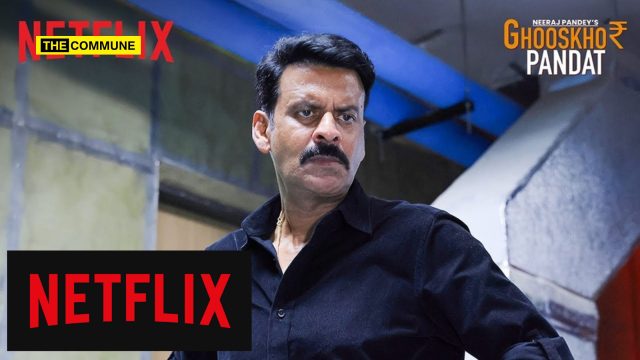
‘Ghooskhor Pandat’: Netflix’s Latest Attempt At Normalising Brahmin Hate

Netflix Comes Up With Brahmin Hate-Normalizing Film "Ghooskhor Pandat"

Netflix India has come under intense criticism following the announcement of its upcoming film Ghooskhor Pandat, directed by Neeraj Pandey and featuring Manoj Bajpayee as a corrupt police officer.

The title itself has become the focal point of outrage. By fusing the word “ghooskhor” (bribe-taker) with “Pandat/Pandit” referring to Hindu priests and Brahmins, the film openly insults and stereotypes an entire Hindu community. The title comes across as vile, casteist, and sensationalist, and Netflix seems to be deliberately normalising hatred against Pandits/Brahmins.

Several commentators have questioned how an entertainment platform could justify branding a show with a name that effectively labels a community identity as synonymous with corruption. If the narrative is genuinely about anti-corruption or institutional decay, there is no defensible reason to anchor the title to a specific caste or religious marker.

Anger has also been directed at the clear double standard. Similar titles targeting other castes or communities would certainly invite criminal complaints, immediate arrests, or action under stringent laws. Would Netflix dare to make a similar movie titled Ghooskhor followed by other SC/ST/OBC communities? In fact, such films would never be permitted to reach this stage.

Bollywood and global streaming platforms like Netflix have repeatedly singled out Brahmins for negative portrayals, packaging community identifiers with moral corruption for shock value. The film’s narration reportedly includes lines suggesting that the very name “Pandit” has become discredited, reinforcing the belief that the intent is reputational damage rather than storytelling.

Netizens have urged the ministry to examine how such content is cleared, arguing that it is unacceptable for an entire community, a small demographic that carries a disproportionate share of professional and institutional responsibility without reservation benefits, to be casually targeted and demeaned.

Some lawyers have come out stating that they will file a case against Netflix in this regard.

As of now, Netflix India has not announced any change to the title or issued a response addressing the allegations of caste-based vilification.

Subscribe to our channels on TelegramWhatsApp, and Instagram and get the best stories of the day delivered to you personally.
Running TN Murasoli, Preaching Journalism: Hypocrisy, Thy Name Is Chitra Subramaniam

Chitra Subramaniam, co-founder of The News Minute—often dubbed “TN Murasoli” for functioning as the DMK’s unofficial mouthpiece—stepping in to buttress DMK spokesperson ‘Melting Point’ Saravanan is a textbook case of how a self‑styled guardian of ethics can weaponise “media critique” selectively to shield her favourite political camp while ignoring far more serious abuses closer home.

What happened On TV

A live national television debate on Times Now descended into farce after DMK spokesperson ‘Melting Point’ Saravanan responded to a pointed political question not with facts or argument, but with an extended burst of loud, weird ghostly laughter that stunned fellow panelists and left the studio momentarily frozen.

The exchange occurred during a discussion on language politics and alleged “Hindi imposition.” As BJP spokesperson Shehzad Poonawalla pressed Saravanan on the ideological roots of the DMK’s cultural rhetoric, specifically the political context of Parasakthi, who was in power during the alleged imposition period, and why the DMK is today allied with the Congress, Saravanan offered no answer.

Instead, he abruptly broke into a prolonged, high decibel laugh, repeating it for several seconds, visibly rattled. Other panellists looked on in disbelief as the moderator failed to regain control of the discussion, amplifying the surreal nature of the moment.

Earlier in the debate, Saravanan had complained that he was “upset” about being invited to an English-language discussion where Hindi was spoken, calling it an “everyday nuisance.” Notably, the theatrical laughter erupted precisely when he was confronted with a direct contradiction involving the DMK’s alliance politics.

The clip quickly went viral, with viewers describing the episode as an on-air meltdown rather than debate – an attempt to drown out an inconvenient line of questioning through sheer noise.

What Did Saravanan Share?

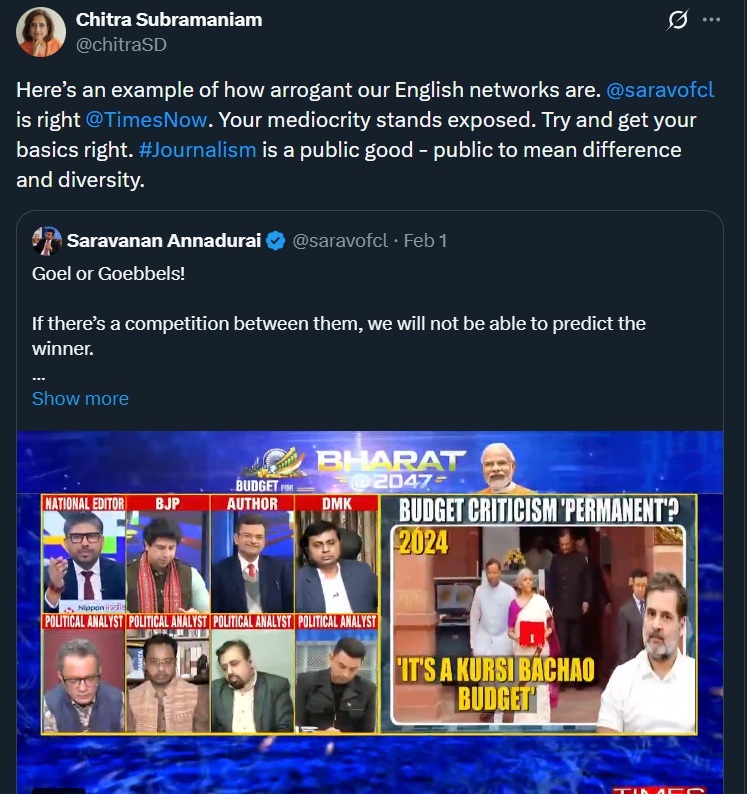
He shared a 3-minute clipping of the same debate minus the noisy laughter episode and wrote, Goel or Goebbels! If there’s a competition between them, we will not be able to predict the winner. Nepo Kid @PiyushGoyal who has ground our manufacturing is speaking about the competence of our DMK govt. Skill India program is tangled in 10,000 crore scam but gives us gyaan about corruption. BJP thy name hypocrisy.”

Chitra Subramaniam Rushes to Defend, Selectively

Enter Chitra Subramaniam, co-founder of the Leftist-Dravidianist rag The News Minute, who rushed to defend Saravanan by attacking the television channel instead.

Sharing Saravanan’s post, she wrote, “Here’s an example of how arrogant our English networks are… Your mediocrity stands exposed. Try and get your basics right. Journalism is a public good.”

On cue, she jumps in, not to ask why a major regional party’s spokesperson can’t handle a basic question, but to lecture Times Now on “arrogant English networks” and praise Saravanan.

For someone who claims to be a free speech advocate, what was conspicuously absent was any criticism of Saravanan’s conduct -no concern about evading questions, no comment on replacing debate with theatrics, and no discomfort with a spokesperson turning a national platform into a spectacle.

Chitra Subramaniam’s sudden discovery of journalistic ethics appears to activate only when the DMK or its spokespersons are embarrassed.

Her record remains silent when BJP Youth Wing Tamil Nadu State President SG Suryah was assaulted by DMK cadres masquerading as journalists. There was no public condemnation when journalists were allegedly kidnapped and thrashed by a DMK MLA and his associates for reporting on illegal quarrying. Those incidents, it seems, did not merit lectures on “journalism as a public good.”

Yet when a DMK spokesperson makes a spectacle of himself on national television, she is quick to frame it as media arrogance rather than political evasion.

The News Minute And The Question Of Credibility

The irony deepens when one considers The News Minute’s own journalistic record. The portal has repeatedly been accused of running unverified or recycled stories as fresh “exposés,” including controversial reporting on Dharmasthala that lacked substantiation and was never withdrawn or corrected.

More recently, TNM drew widespread condemnation for repackaging an old court case involving entrepreneur Sridhar Vembu as a new revelation – an exercise seen as clickbait rather than evidence-based.

For a publication frequently behaving as a DMK-friendly echo chamber, sometimes as its mouthpiece and becoming TN Murasoli often, lectures on “mediocrity” and “basics of journalism” land hollow.

Adding to the contradiction is Chitra Subramaniam’s own social-media practice: championing free speech while keeping replies disabled on her posts. The irony of condemning journalists for language barriers while refusing to engage with dissenting voices altogether was not lost.

From Bofors To Blind Spots

Chitra Subramaniam’s legacy reporting on Bofors once earned her respect. But that legacy cannot indefinitely shield present conduct. Her trajectory from exposing one of India’s biggest scandals to defending a ruling party spokesperson who collapsed into laughter when questioned represents a full circle very few would have imagined.

The episode raises a larger question: when partisan loyalty begins to dictate who deserves outrage and who deserves silence, can the claim of journalistic neutrality survive?

For many watching this debate and its aftermath, Saravanan’s laughter was embarrassing. But what followed, the instinctive, selective defence from sections of the media, may have been even more revealing.

In the end, the spectacle was not just about a spokesperson who laughed instead of answering. It was about how quickly certain commentators abandoned principles the moment those principles threatened their preferred politics.

Subscribe to our channels on TelegramWhatsApp, and Instagram and get the best stories of the day delivered to you personally.
“You Cannot Play With The Right Of Privacy Of This Country”: Supreme Court Slams Meta & WhatsApp’s Data Policy

“You Cannot Play With The Right Of Privacy Of This Country”: Supreme Court Slams Meta & WhatsApp’s Data Policy

The Supreme Court of India on Tuesday, 3 February 2026, made strong observations against Meta Platforms and WhatsApp LLC over their data-sharing practices, stating that it would not permit the exploitation of the personal data of Indian users.

The court was hearing appeals filed by Meta Platforms and WhatsApp challenging a judgment of the National Company Law Appellate Tribunal (NCLAT), which had upheld a ₹213.14 crore penalty imposed by the Competition Commission of India (CCI) over WhatsApp’s 2021 privacy policy.

The CCI had also filed a cross-appeal challenging the NCLAT order to the extent that it permitted Meta and WhatsApp to share user data for advertising purposes after holding that there was no abuse of dominance in that respect.

A Bench comprising CJI Surya Kant, Justice Joymalya Bagchi and Justice Vipul Pancholi heard the matters. Senior Advocate Mukul Rohatgi appeared for Meta Platforms, while Senior Advocate Akhil Sibal represented WhatsApp. Both informed the court that the penalty amount had already been deposited.

While agreeing to admit the appeals, CJI Surya Kant raised serious concerns regarding WhatsApp’s privacy policy and data-sharing practices. The Chief Justice even began dictating an order restraining the platforms from sharing user data. Rohatgi and Sibal intervened to submit that the NCLAT had, in fact, ruled in their favour on the issue of data sharing. This claim was contested by counsel appearing for the CCI.

Questioning the claim that WhatsApp offered users a genuine choice, the CJI observed that the platform operated as a monopoly.

“What is the choice? You have complete monopoly in the market, and you are saying I am giving a choice. It is either you walk out of WhatsApp policy, or we will share the data.”

The Chief Justice warned that interim protection would be granted only if Meta and WhatsApp gave a binding assurance.

“We may hear the appeal on merits. In the meantime, we will not allow you to share even a single piece of information. If you can give an affidavit of your management with an undertaking, we will hear, or else we will dismiss. You were bought by Facebook, tomorrow Facebook will be bought by someone else and you will transfer the data. You cannot play with the right of privacy of this country, let a clear message go on your WhatsApp. You are making a mockery of the constitutionalism of this country,” CJI Surya Kant said.

When Sibal argued that data sharing was done with consumer consent and that users had an “opt-out” option, the CJI responded sharply. “What do you mean by opt-out? You opt-out of the country, withdraw your facilities from here. Because you are creating a monopoly in the market, there is no choice for the consumer.”

When the submission was reiterated, the CJI questioned the practical effectiveness of such consent.

“A poor woman selling fruits on the streets, will she understand the terms of your policy? Can you imagine the language you use, very cleverly drafted, even some of us will not be able to understand. The policy must be formulated from the perspective of the common customer. Will your domestic help understand this? You might have taken the data of millions of persons. This is a decent way of committing theft of private information. We will not allow you to use it,” he said.

The Chief Justice further noted that there were “silent customers” who were “unorganised” and “addicted to the system” and unaware of the implications of such privacy policies.
“How will a person in a remote village in Tamil Nadu or Bihar understand this?” he asked, asserting, “We will not allow the rights of any citizen of this country to be damaged.”

The Bench made it clear that unless Meta and WhatsApp gave an undertaking that personal data of users would not be used, the court would not proceed to hear the matter.

At this stage, Rohatgi submitted that a Constitution Bench of the Supreme Court was already examining WhatsApp’s privacy policy, and that in those proceedings WhatsApp had given an undertaking that no user would be barred from the platform for refusing to accept the 2021 policy. He added that the Constitution Bench had allowed WhatsApp to continue operations in line with practices followed in other jurisdictions. Rohatgi also pointed out that the Digital Personal Data Protection Act, 2023 had granted time until May 2027 for compliance.

Justice Bagchi, however, observed that the Act had not yet come into force.

Solicitor General of India Tushar Mehta intervened to submit that “our personal data is not only sold, but also commercially exploited.” Justice Bagchi said the court intended to examine how personal data was being “rented out” and monetised.

“Every silo of data, with regard to an individual, irrespective of privacy, has a value. The DPDP Act only addresses privacy. We would like to examine what is the rent sharing of data… we are concerned about how our behavioural tendencies and trends are utilised and monetised, and thereby your parent company can leverage it for the purpose of dominance and advantage in online advertising. You will target me on that advertising. We would also like to examine the data value of the footprints of the user being shared with the Meta Platform, and Meta Platform thereby having a targeted advertising advantage,” Justice Bagchi said.

CJI Surya Kant shared a personal illustration, stating: “If a message is sent to a doctor on WhatsApp that you are feeling under the weather, and the doctor sends some medicine prescriptions, immediately what kind of messages start coming to me?”

“Within 5–10 minutes, you start getting message in your email and YouTube, that you go for this medicine, that medicine,” he added.

Rohatgi and Sibal strongly denied any such linkage, reiterating that WhatsApp messages were end-to-end encrypted and that “WhatsApp cannot see the messages sent between two users.”

Justice Bagchi responded that unlike EU regulations, the DPDP Act did not address the economic value of data. “Mr. Solicitor, you have to examine, when you examine the DPDP Act, the difference between the DPDP Act and the EU Regulation is, EU considers not only privacy but also value. If I have an empty space and you are using that space for R&D, won’t you give me rent? There is no rent sharing in the DPDP Act in respect of personal data which may not be private. I may have personal data of various shades of privacy. Privacy is lost as soon as I share data online. If privacy is lost on data, they say there is no value on the data. Is that an acceptable jurisprudential idea?” Justice Bagchi asked.

The Solicitor General said the issue would be placed before the appropriate authority. Justice Bagchi remarked that “all over the world, judiciaries will have to go into an intensive and innovative oversight into these aspects.”

Senior Advocate Samar Bansal, appearing for the CCI, submitted that the regulator had already examined these issues while imposing the penalty. “Their entire revenue comes from advertising. We are the products. It is free because of that,” he said.

CJI Surya Kant observed that while earning “legitimate income” was not objectionable, “the commercial interests of the companies cannot be at the cost of the rights of Indians.”

In response to the court’s concerns, Rohatgi stated that Meta would file a detailed affidavit explaining its activities and requested the court to decide the matter thereafter. Accepting the request, the Bench adjourned the case to next Monday and permitted Meta and WhatsApp to file affidavits. On the suggestion of Bansal, the court also impleaded the Ministry of Electronics and Information Technology as a party to the proceedings.

Background

The dispute originates from a November 2024 order of the CCI examining WhatsApp’s 2021 privacy policy update. The regulator held that WhatsApp, which enjoys a dominant position in India’s OTT messaging market, imposed a “take-it-or-leave-it” framework on users, effectively denying them any meaningful opt-out.

According to the CCI, WhatsApp made continued access to its messaging service conditional upon acceptance of expanded data sharing with other Meta group entities, amounting to abuse of dominant position under the Competition Act, 2002. The CCI imposed a penalty of ₹213.14 crore and issued remedial directions including prohibiting forced data sharing, mandating opt-in and opt-out mechanisms, and requiring detailed disclosures.

Meta Platforms and WhatsApp challenged the order before the NCLAT in January 2025. In November 2025, the NCLAT set aside the five-year restriction on advertising-related data sharing and overturned the CCI’s finding that WhatsApp had unlawfully leveraged its dominance into Meta’s advertising ecosystem. However, it upheld the ₹213.14 crore penalty imposed by the CCI.

The matter is now pending final adjudication before the Supreme Court.

Source: LiveLaw

Subscribe to our channels on TelegramWhatsApp, and Instagram and get the best stories of the day delivered to you personally.

Madras High Court Fines HR&CE Commissioner ₹50,000 For Failing To File Oversight Report Of Temple-Run Educational Institutions

Madras High Court Fines HR&CE Commissioner ₹50,000 For Failing To File Oversight Report Of Temple-Run Schools kanchipuram

The Madras High Court has imposed a ₹50,000 penalty on the Commissioner of the Hindu Religious and Charitable Endowments (HR&CE) Department for failing to file a detailed report on the division responsible for supervising educational institutions run under religious bodies.

The order was passed by Justice Anita Sumanth while hearing matters relating to the administration of the Kandhakottam Temple and the management of seven educational institutions affiliated with it.

The court noted that as early as 28 August 2025, it had directed the HR&CE Department to file a comprehensive note detailing the functioning of the wing responsible for overseeing such educational institutions. However, despite the passage of several months, no report was submitted.

When the case was taken up again on 19 January 2026, the department failed to place any report before the court. Expressing dissatisfaction, the judge observed that the department had violated the court’s directions and proceeded to impose the penalty.

The court directed that the ₹50,000 fine be paid to the High Court Legal Services Committee on or before 21 January 2026.

Justice Anita Sumanth also reiterated the earlier direction, mandating that the HR&CE Department must file the detailed report as sought by the court.

The judge further stated that additional directions regarding the constitution of a school committee would be issued during the next hearing of the case, scheduled for 17 February 2026.

Source: Sekar Reporter

Subscribe to our channels on TelegramWhatsApp, and Instagram and get the best stories of the day delivered to you personally.
Hindu IT Cell Files Complaint Against Ultra-Woke Self-Loathing ‘Feminist’ Chinmayi Over ‘Babaji–Epstein’ Remark

Hindu IT Cell Files Complaint Against Ultra-Woke Self-Loathing ‘Feminist’ Chinmayi Over ‘Babaji–Epstein’ Remark

As the Epstein files kept coming out, ultra-woke feminist singer Chinmayi chose to make use of the opportunity to once again show how much she loathed herself, especially for being a Hindu.

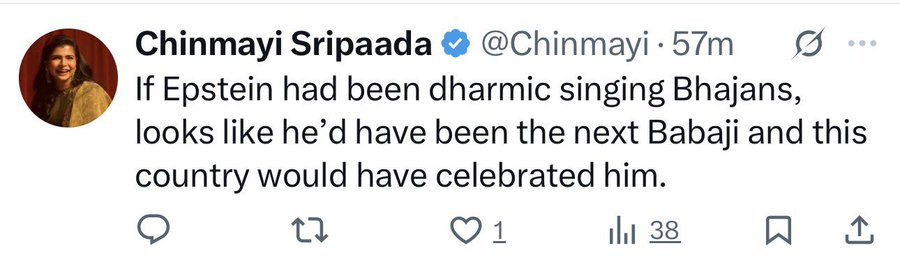
In a post on her X handle, she wrote, “If Epstein had been dharmic singing Bhajans, looks like he’d have been the next Babaji and this country would have celebrated him.”

Enraged and hurt by this, a complaint has been filed against singer and activist Chinmayi Sripaada by members of the Hindu IT Cell.

According to the complaint acknowledgement shared publicly, the matter has been registered under the category of “Online and Social Media Related Crime”, with the sub-category listed as “Provocative Speech for unlawful acts.” The complaint was filed on 2 February 2026 and includes screenshots of the post as supporting evidence.

In the complaint submitted to the authorities, the complainant stated that the tweet was “extremely insulting to Hindu dharma” and alleged that Chinmayi had deliberately compared Hindu devotional singers and religious figures to a convicted sex offender, thereby promoting hatred and religious insult. The complainant sought immediate intervention and action, describing the post as a case of purposeful insult to a religious community.

Members of the Hindu IT Cell have stated that they have invoked provisions under the Bharatiya Nyaya Sanhita (BNS), citing Sections 299 and 302, which deal with deliberate and malicious acts intended to outrage religious feelings and promote enmity.

The Hindu IT Cell also tagged Maharashtra Chief Minister Devendra Fadnavis and Deputy Chief Minister Eknath Shinde, urging the state machinery to take cognisance of what they described as a pattern of repeated provocation under the guise of “progressive commentary.”

Subscribe to our channels on TelegramWhatsApp, and Instagram and get the best stories of the day delivered to you personally.