Home Blog Page 165

Kerala: Was Kannur BLO Driven To Suicide By CPI(M) Threats? Congress Says Yes

Kerala: Was Kannur BLO Driven To Suicide By CPI(M) Threats? Congress Says Yes

The death of 41-year-old booth-level officer (BLO) Aneesh George in Kannur’s Ettukudukka has triggered widespread protests across Kerala, with government employees’ unions and political parties alleging extreme pressure linked to the ongoing Special Intensive Revision (SIR) of the electoral rolls. Aneesh, who worked as a school attendant and BLO for Booth No. 18 in the Payyannur constituency, was found hanging at his home on November 16.

Family and Neighbours Cite Severe Work Stress

Residents said that Aneesh appeared distressed due to the workload. Neighbour Shyju V K said Aneesh had taken his family to church in the morning and returned home before taking the extreme step, and that although he had struggled to identify a few houses during his BLO work, he managed with help from others. Family members said he left behind his wife and two children.

A case of unnatural death under BNSS 194 was registered at Peringome Police Station. His brother-in-law Saiju said Aneesh had not been getting enough time to eat or sleep properly and had been under significant strain to complete SIR-related tasks. He also alleged that senior officers had frequently contacted Aneesh for updates, adding that Aneesh’s father had even advised him not to worry about losing his job due to the workload. His body was handed over to the family after post-mortem.

Collector Says No Evidence of Work-Related Pressure

Kannur District Collector Arun K Vijayan, IAS, said that a preliminary inquiry had shown no indication that Aneesh was under work pressure. He stated that Aneesh had been performing well as a BLO and had completed over 77% of the first phase of the SIR exercise. The Collector added that the Chief Electoral Officer had sought a detailed report and that a consolidated version would be sent after combining inputs from the Electoral Registration Officer and the police.

The CEO’s office also said there was no established link between the suicide and SIR duties, noting that all necessary support had been provided.

Statewide Boycott by BLOs; Protests at Collectorates

The incident prompted BLOs across the state to boycott SIR duties on Monday. Government employees’ unions, including the Action Council of State Government Employees and Teachers and the Joint Committee of Teacher Service Organisations, held protests at district collectorates demanding that excessive pressure be stopped and that the SIR schedule be reconsidered.

The Kerala NGO Association also staged statewide protests calling for the suspension of SIR activities to prevent further tragedies.

Despite the boycott call, many BLOs reportedly continued their duties due to the pending workload ahead of the December 4 deadline set by the Election Commission of India (ECI).

Congress Alleges CPI(M) Pressure on BLO

The Congress claimed that Aneesh had also faced political intimidation from CPI(M) workers in his area. Kannur DCC member Rajith Narath said the CPI(M) local leadership had reportedly objected to a Congress booth-level agent accompanying Aneesh during house visits for enumeration. He alleged that the intention was to retain invalid names, including those of deceased voters, those who had shifted residences, and duplicate entries on the electoral rolls.

According to him, the area had a history of blocking non-CPI(M) booth agents during elections, and he cited concerns that votes were often cast in the names of those who were dead or no longer residing in the area. He also said that although the SIR process would help remove such names, CPI(M) workers were reluctant because it would reduce their vote base.

He added that Aneesh had filed a complaint with the District Collector days before his death but that no action had been taken.

Leaked Phone Call Fuels Controversy

A recorded phone conversation, released by the Kannur District Congress Committee, purportedly between Aneesh and a Congress booth agent Vysakh, indicated that Aneesh had told him he was under pressure not to allow the Congress agent to accompany him.

Kannur District Congress Committee president Martin George alleged that threats from CPI(M) workers had contributed to Aneesh’s suicide and that workload alone could not explain the incident. He claimed the conversation supported these allegations.

According to him, CPI(M) booth-level agent Rafeek had threatened Aneesh, and instead of allowing the officially designated BLA to accompany the BLO, a former CPI(M) branch secretary and other party workers had been accompanying him during the SIR enumeration. Martin George said the CPI(M) was attempting to retain bogus voters in the Alappadamba panchayat and that identifying such entries through the revised electoral roll could have placed Aneesh in a difficult position.

As reported in Mathrubhumi English, in the audio clip, Aneesh was heard telling Vysakh not to accompany him from the next day, reportedly saying that some individuals were strongly opposing it and intended to block his presence. When Vysakh asked who was creating the obstruction, Aneesh replied that he would explain it in person. Vysakh was heard advising him to report the matter to senior officials, arguing that he was accompanying the BLO as per Election Commission guidelines. Aneesh responded that Vysakh could file a complaint stating that he was not being allowed to join the enumeration and that the situation was difficult because the area was dominated by certain groups.

Congress leaders argued that the call reflected the political pressure Aneesh had been facing.

CPI(M) Kannur district secretary KK Ragesh dismissed these allegations, saying the incident was being misinterpreted for political gain.

Opposition Demands Accountability

Leader of Opposition VD Satheesan said initial information suggested that CPI(M) interference should be investigated and alleged that both the CPI(M) and BJP were attempting to manipulate the electoral roll. He urged the state government and the ECI to ensure the safety of BLOs and stated that the short deadline placed excessive burden on officers, most of whom were women.

KPCC president Sunny Joseph said a phone call indicated that CPI(M) workers had allegedly threatened Aneesh with a false complaint. He argued that such political pressure, combined with work strain, pushed Aneesh to suicide. Joseph also criticised the ECI for implementing SIR after local body election announcements and said the Congress would approach the Supreme Court against the process.

Subscribe to our channels on WhatsApp, Telegram, Instagram and YouTube to get the best stories of the day delivered to you personally.
Two Kerala Schools Bar Students Wearing Sabarimala Vratham Attire; Parents, Hindu Groups Protest

Two Kerala Schools Bar Students Wearing Sabarimala Vratham Attire; Parents, Hindu Groups Protest

Two separate incidents in Kerala have triggered controversy and protests after students observing the Sabarimala vratham were reportedly denied entry to classrooms for wearing black clothes, a traditional practice during the 41-day austerity period.

Guruvayoor School Bars Class 3 Student; Child Absent for 11 Days

About a week ago, on 12 November 2025, a dispute emerged at Sree Gokulam Public School in Guruvayoor, Thrissur, where a Class 3 student was reportedly barred earlier this month for wearing black as part of the vratham, as reported in India Today. The school reiterated that only the official uniform is allowed on campus.

Speaking to reporters, school principal Latha Manjo said that the school follows a strict uniform policy and that every student admitted is required to adhere to it. She said the management is obligated to take action if the policy is violated.

According to the parents, the boy has been observing the vratham since 1 November 2025 and has not attended school for 11 days following the incident. The school said the uniform policy is clarified during admissions.

Hindu Aikyavedi Holds Protest Outside School

Members of the Hindu Aikyavedi held a Namajapa Prathishedham (prayer protest) outside Sree Gokulam Public School on 11 November 2025, accusing the institution of showing insensitivity toward Hindu religious practices.

Protesters carried a banner that read: “Faith and education are rights of the students guaranteed by the Indian Constitution. What authority does Gokulam School have to deny that?”


View this post on Instagram


A post shared by PG Ginish Official (@pgginish)

BJP Pavaratty–Guruvayoor mandalam general secretary Ginish PG, who joined the protest, said schools in the region had previously allowed black attire during Mandala season. He added that a decade ago, the same school faced a similar issue which was resolved after intervention.

Ginish said discussions with the school management this time failed, and the parents have decided to transfer the child to another school. The organisation is also considering approaching the court.

Students in Thrissur Sent Out of Class for Wearing Black

On 18 November 2025, at the Alagappa Nagar Panchayat Government Higher Secondary School in Thrissur, two Plus Two science students were asked to leave the classroom after they attended school wearing black attire as part of their Sabarimala vratham, as reported in Kerala Kaumudi.

Teachers reportedly told the students they could only attend class in the prescribed uniform. The issue surfaced after the students informed their parents, prompting BJP, Congress, CPM workers and panchayat officials to reach the campus.

BJP members demanded an apology from the teachers involved. The situation was resolved after a discussion led by Puthukkad SHO Adam Khan, where school authorities agreed to allow students to wear black clothing during the vratham period.

Religious Practice and School Rules Clash

During the Sabarimala vratham, devotees traditionally wear black or dark blue as a marker of simplicity and detachment. The austerity period begins in the Malayalam month of Vrischikam and continues until the Mandala Pooja in December.

While schools insist on uniform enforcement, Hindu groups argue that temporary accommodations during the 41-day vratham are reasonable and have been previously practiced.

Subscribe to our channels on WhatsAppTelegram, Instagram and YouTube to get the best stories of the day delivered to you personally.
India’s Most-Wanted Maoist Commander Hidma Neutralised 12 Days Before Union Home Minister Amit Shah’s Deadline

India’s Most-Wanted Maoist Commander Hidma Neutralised 12 Days Before Union Home Minister Amit Shah’s Deadline

In a major breakthrough in India’s long fight against Left-wing extremism, security forces have killed top Maoist commander Madvi Hidma in the dense Pullagandi forests at the tri-junction of Andhra Pradesh, Chhattisgarh, and Telangana. The 44-year-old Maoist, considered one of the most dangerous Maoist commanders, was neutralised just 12 days before a deadline set by Union Home Minister Amit Shah for his elimination.

Home Minister’s Target Achieved Ahead of Time

According to sources present during high-level security review meetings, Shah had instructed anti-Naxal forces to eliminate Hidma before 30 November 2025. The Home Minister has also set a national deadline of 31 March 2026, for making India completely free of Maoist insurgency.

A senior official privy to the directive said: “The Union Home Minister told security agencies to eliminate Hidma before November 30. He was killed 12 days before this deadline.”

Officials added that, given the current pace of counter-insurgency operations, Left-wing extremism is likely to collapse even before the March 2026 target.

Who Was Madvi Hidma?

Born in Sukma in 1981, Hidma rose through Maoist ranks to become the commander of PLGA Battalion No. 1 and a member of the powerful Maoist Central Committee. He was the only tribal leader from Bastar to reach this top echelon.

Hidma’s name has been linked to more than 26 major Naxal attacks, making him one of the most feared insurgents in the country. He was widely described by security agencies as the “Osama of Maoist terror.”

A 29-Year Manhunt Ends

Hidma had evaded capture for nearly three decades, often disappearing into the forests moments before security forces closed in. The Bastar region, where he operated, has long been considered India’s most violent Maoist stronghold.

His death is being hailed by officials as a watershed moment.
Bastar IG Sundarraj P called it a “historic milestone in the fight against Left-wing extremism,” noting that the Maoist leadership is now reduced to a handful of senior figures.

Signals of Surrender That Never Materialised

Recent developments suggested Hidma was considering giving up arms. Chhattisgarh Deputy Chief Minister Vijay Sharma met his mother last week, urging him to surrender.

Telangana police claimed Hidma had sent “hints” of surrender. A Bastar-based journalist said Hidma contacted him to explore negotiation options. However, any such talks ended before they could begin.

A Shrinking Maoist Leadership

The year 2025 has seen record attrition at the top levels of the CPI (Maoist):

Killed:

  • Nambala Keshav Rao (General Secretary)
  • Thentu Laxmi
  • Kadari Satyanarayan Reddy
  • Katta Ramchandra Reddy
  • Chalapati

Surrendered:

  • Mallujola Venugopal Rao alias Sonu (Politburo)
  • Sujata
  • Chandranna
  • Rupesh

Those still active include Ganesh Uikey, Anal Da, Malla Raji Reddy (alias Sangram), and Ramder.

With leaders ageing, cadre strength dwindling, and movement restricted due to intense surveillance, officials believe Maoism may be approaching its “final death knell.”

A Turning Point in Counter-Insurgency?

Hidma’s killing, coming ahead of Shah’s deadline, is being viewed as one of the most significant counter-insurgency successes in recent years. Security officials say it could accelerate India’s march toward a “Maoist-mukt Bharat” well before 2026.

(Source: The Print)

Subscribe to our channels on WhatsAppTelegram, Instagram and YouTube to get the best stories of the day delivered to you personally.
BJP Leader Ashvathaman Files Complaint Against Tenkasi DMK Functionary Who Called For PM Modi To “Be Finished Off”

BJP Leader Ashvathaman Files Complaint Against Tenkasi DMK Functionary Who Called For PM Modi To "Be Finished Off"

A political flashpoint has erupted in Tamil Nadu after BJP leader and State Secretary A Ashvathaman lodged a formal complaint with the Tamil Nadu Police against DMK Tenkasi District Secretary Jayabalan, accusing him of making anti-national and seditious remarks that allegedly amounted to a death threat against Prime Minister Narendra Modi.

Ashvathaman said he was forced to send the complaint via email after the Tamil Nadu Police’s online grievance portal “became non-functional,” which he described as symbolic of the state government’s administrative failure.

Complaint Alleges Direct Death Threat

In his complaint addressed to the Commissioner of Police, Chennai, Ashvathaman stated that Jayabalan’s speech at a recent public meeting in Tenkasi district posed a serious threat to national security, public order, and democratic integrity.

According to the complaint, Jayabalan allegedly said: “Only if we finish off Modi, this nation will be good,” and “Until that decision is fulfilled, Tamil Nadu will not see good days.”

Calling the statement “dangerous, anti-national, and seditious,” Ashvathaman said such comments from a public office-bearer cannot be ignored. He described the speech as a criminal act that “threatens not only one individual but the nation’s law and order and the mindset of the public.”

“Ignoring Threats Sets a Dangerous Precedent”

In the detailed petition, Ashvathaman argued that failure to take action would embolden similar threats in the future: “Ignoring a criminal threat can have major consequences. When such people, especially public servants, engage in seditious activity or issue death threats, ignoring these threats serves as a bad example.”

He added that if government employees do not act on such threats, it “creates an unsafe environment for the public.”

Citing multiple sections of the Bharatiya Nyaya Sanhita (BNS) — including 152, 194, 197, 351(2), 352, 353, 356, and 223 — Ashvathaman urged the police to arrest Jayabalan and initiate criminal proceedings.

He wrote: “Making a death threat against the country’s Prime Minister is highly condemnable. When such threats are made by a public functionary, the consequences can be severe and long-lasting.”

The BJP leader emphasised that “immediate and strict action” was necessary to preserve social harmony and public safety.

Subscribe to our channels on WhatsAppTelegram, Instagram and YouTube to get the best stories of the day delivered to you personally.
“Don’t Be Arrogant”: BJP Leader Tamilisai Soundararajan Hits Back After Dy CM Udhayanidhi Says Only “Wise” People Hold Knowledge Festivals

“Don’t Be Arrogant”: BJP Leader Tamilisai Hits Back After Dy CM Udhayanidhi Says Only “Wise” People Hold Knowledge Festivals

A political confrontation erupted in Tamil Nadu after Deputy Chief Minister Udhayanidhi Stalin’s comments on a recently held “Knowledge Festival” drew a sharp rebuttal from BJP leader and former Telangana Governor Tamilisai Soundararajan. The exchange has quickly intensified into a public war of words, with both leaders accusing each other of arrogance and political insecurity.

What Udhayanidhi Said 

Speaking at an event, Udhayanidhi said, “A person with wisdom organizes a knowledge festival. During that knowledge festival, when we criticize them, they get angry, just like a thief fears the police… just hearing the word ‘knowledge’ shocks them.”

His comments were widely circulated on social media, drawing applause from DMK supporters but criticism from opponents.

Tamilisai Responds: “Don’t Be Arrogant”

Reacting to his statements, Tamilisai Soundararajan launched a direct attack on the Deputy Chief Minister’s political rise and credibility.

She said, “This morning I saw Udhayanidhi’s interview. He was speaking on TV, saying only knowledgeable people organize knowledge festivals, that those who lack knowledge need not worry about it. So, is Udhayanidhi claiming to be wise? Did you become the Deputy Chief Minister because you are wise? You became Deputy Chief Minister by inheritance. Don’t be arrogant!”

She further said, “Mr. Udhayanidhi, don’t be arrogant. You organized the knowledge festival, gave it a big name, and now you’re speaking as if you alone are knowledgeable, and others are not. Don’t be arrogant. Just intellect alone doesn’t make you Deputy Chief Minister.”

Countering Udhayanidhi’s ‘Thief and Police’ Analogy

Udhayanidhi’s analogy, linking critics of the festival to thieves who fear the police, also came under attack.

She added, “He had said only thieves fear the police—fear comes to a thief when he sees the police. That’s why, when they see us, they’re afraid.”

Tamilisai shot back: “I’ll turn that statement back: Why are you afraid of the SIR (Special Investigation Report/list)? You are afraid because you’re involved in vote theft. That’s why you fear the SIR.”

She went further, alleging electoral malpractice: “How did you win before? You yourself admit that you won using fake voters.”

Subscribe to our channels on WhatsAppTelegram, Instagram and YouTube to get the best stories of the day delivered to you personally.
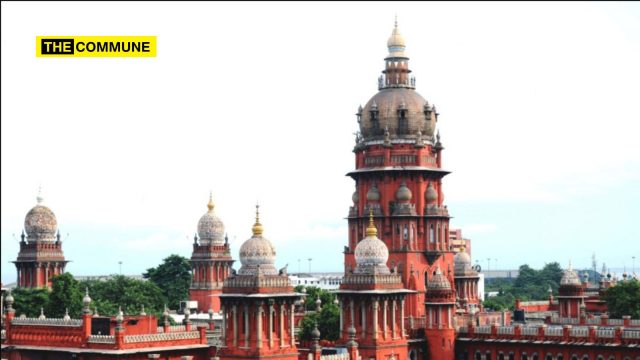
Perplexity CEO Aravind Srinivas Proves What Tamil Nadu Could Achieve, If It Looked Beyond Dravidian Limits

Aravind Srinivas Proves What Tamil Nadu Could Achieve—If It Looked Beyond Dravidian Limits

Aravind Srinivas is the Co-founder, President and CEO of Perplexity, a $20B company  at the forefront of artificial intelligence. Founded in 2022 in San Francisco, Perplexity is recognized globally for products including:

  • Answer (Search) Engine
  • Perplexity Assistant
  • Comet AI Browser
  • Perplexity Pro (for deep research)
Perplexity’s Rise as a Top AI Startup
  • Global Rankings: Top 10 AI company, Top 7 in AI search market
  • Google Substitute: Competes as a next-gen search engine, delivering quick, clear, citation-based answers free of advertisements
  • Multi-Platform: Available via web, Android app, and browser extension
Recent Highlights

Aravind and Perplexity made headlines when his Company bid for Google Chrome while Google was facing antitrust scrutiny in US. He also debuted in the Hurun India rich list as India’s youngest billionaire.

Vision and Philosophy

Unlike some Dravidian Stock entrepreneurs who focus on entertainment and media, Aravind is committed to meaningful product creation:
He believes in products that democratize knowledge, promoting universal access to education and research.
Despises corporate hierarchy and avoids fostering addiction through his products.

  • Policy Engagement: Active presence in Delhi, engineering teams in Bangalore and Hyderabad
  • Startup Support: Planning the Perplexity Fund to back Indian ventures
  • Government Collaboration: Input to central/state policy, advocacy for sovereign AI investment and GPU clusters
  • Societal Impact: Discussed with PM Modi the importance of AI in local languages, cross-referencing ancient Indian knowledge, and focusing on curiosity-driven usage rather than making people lazy.

Journey to the Top

Personal Background

Born 1994, Chennai, to Lakshminarayanan (Accountant) and Jayanthi (Central Govt employee)

Schooling: DAV Gopalapuram and DAV Public School, Velachery

Early Achievements: National Mathematics Olympiad, KVPY scholar

“Every time we would go on a bus and pass by the IIT Madras campus, my mom would point to the campus and say, ‘This is where you’re going to study.’”

His father had instilled on him the culture of being scholarly with pursuits for educational excellence and research rather than just generating wealth

JEE/AIEEE Success: AIR 980 (JEE), fourth rank TN (AIEEE). Trained by Prof. KK Anand’s SMART academy between 2008-2011. His dedication and focus for IIT JEE was spotted in his school days with Aravind focusing on JEE preparation even during regular classes.

In the JEE results, he was ranked behind his classmate R Krishnan and his other buddy group. He couldn’t secure his preferred course of Computer Science and could only get Electrical Engineering in his B. Tech course at IIT Madras. He also fell marginally short of the required CGPA by 0.01 to switch his majors to Computer Science post the first semester.

This drove him to a phase of focused vengeance leading him to study Python, Machine learning on his own watching online videos of Andrew Ng’s Stanford lectures on machine learning. This was even as he was doing his EE course at IITM. As a result, he was the class topper at IITM in Machine learning in his 3rd year.

His IIT professor B Ravindran was his guide and mentor teaching him Deep learning, Reinforcement learning even before it was the hot thing.

Campus Contributions

During his recent visit to IITM, he offered free access of Perplexity Pro to its faculty and students. This cutting-edge search engine is designed to provide a more robust and versatile search experience, empowering users to conduct more thorough investigations into topics.

Offered free access to Perplexity Pro for IITM faculty & students, driving research empowerment.

Academic and Professional Excellence

Research Papers: During his time at IIT Madras, Aravind published in top tier AI conferences like International Conference on Learning Representations (ICLR), AAAI Conference on Artificial Intelligence, and NeurIPS. Aravind collaborated with his professors and had a total of 9 papers published.

Internship: Srinivas was rewarded for his efforts when he got an internship with Canadian computer scientist and Turing Award winner Yoshua Bengio who recommended Srinivas for PhD in Computer Science and could get admissions from UC Berkeley. There he researched research spanning computer vision, reinforcement learning, transformers, and generative models.

PhD: At the University of California, Berkeley, Srinivas met research scientist John Schulman who was working with Open AI and who invented Chat GPT. He noticed his work and invited him to do an internship at Open AI where he worked on language and diffusion text models.

Industry internship: Srinivas worked with Deep Mind and Google, between 2019 and 2021, after the internship with Open AI before returning to Sam Altman’s company in 2021. His stints included OpenAI, DeepMind in London, and Google, where he contributed to models such as HaloNet, ResNet-RS, and OpenAI’s celebrated DALL·E 2.

Entrepreneurship: A year later, Srinivas decided to quit and became the co-founder CEO of Perplexity AI in August 2022. Srinivas co-founded Perplexity AI along with Denis Yarats and Andy Konwinski. The startup’s conversational search engine aims to offer fast, accurate, and trustworthy answers, positioning itself as an alternative to traditional search platform

Since 2023, Srinivas has also been active as an angel investor, backing AI ventures like ElevenLabs (text-to-speech) and Suno (text-to-music). His investments underline his broader bet on generative AI innovation.

Family: His parents are in Chennai while he stays in Bay Area with his wife.

Inspirations and Mentors

Aravind had been inspired by Sundar Pichai and though Perplexity is billed as Google Search’s key competitor, they share a good connect. He had infact changed his food habit to Lacto-ovo vegetarian after hearing Sundar’s diet in one of his videos and got permission for this change, from his mother as well.

His mentor includes Satya Nadella and calls him a phenomenal CEO and Coach. He calls Satya as a learning machine and keep speaking atleast once a month.

Views on Silicon Valley:

Aravind Srinivas views Silicon Valley as one of the few truly meritocratic places in the world, especially for outsiders. Despite challenges like immigration rules and H-1B visa fee hikes, Silicon Valley remains welcoming to those who think differently and execute relentlessly. He emphasized the critical importance of trusted mentors who can vouch for, invest in, and guide newcomers, even if they might compete with them later.

Views on India:

He wants Indian founders to create world class products rather than just managing existing firms. He works hard and has an intense work ethic. “Indians are not just meant for managing and climbing up the ladder to being CEOs… I want India to show the world that we can build companies.” Srinivas articulated pride in Indian-origin CEOs but also stressed the need to shift the mindset from managing other people’s companies to building the next Google or $1 trillion company founded by Indians, drawing parallel with the Indian cricketers who are now global icons

Tamil Nadu’s Tech Legacy

Aravind joins the ranks of Tamil Nadu-bred tech icons:

  • Sundar Pichai (Google)
  • Sridhar Vembu (Zoho)
  • N Chandrasekaran (now Chairman – Tata Group

All four of them share common culture and tradition steeped in scholarly professions and working to spread knowledge and uplifting people’s lives.

Their lineage reflects deep cultural influence of Tamil Brahmins in fostering education and enterprise, a legacy that continues to inspire new generations.

Irrespective of the controversial political ideologies in the State of Tamil Nadu, its people would continue to be inspired by these icons and focus on benefits of education and pursuit of excellence.

Baskar is a finance professional having keen interest in current affairs and Indian culture.

Subscribe to our channels on WhatsAppTelegram, Instagram and YouTube to get the best stories of the day delivered to you personally.
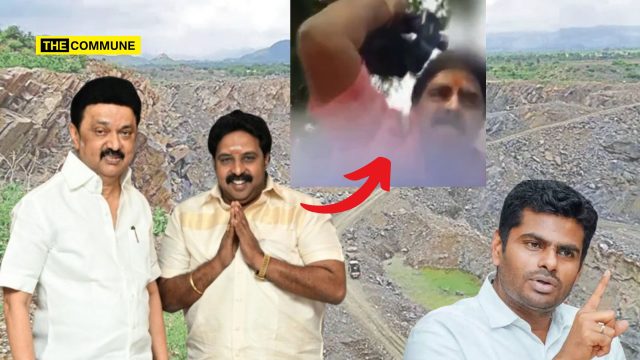
Dravidian Model: Cooperative Officer Staggers Onto Stage Drunk At Official Event Attended by DMK Minister Govi Chezhian

Dravidian Model: Cooperative Officer Staggers Onto Stage Drunk At Official Event Attended by DMK Minister Govi Chezhian

A government function held in Kumbakonam as part of the 72nd All India Cooperative Week celebrations sparked controversy on Tuesday after a cooperative society officer allegedly appeared on stage in a drunken state. The event was presided over by Tamil Nadu Minister for Cooperation Govi Chezhian and attended by Kumbakonam MLA Anbalagan.

According to eyewitness accounts, the officer, identified as Selvarajan, staggered onto the stage while MLA Anbalagan was delivering his speech. Video clips circulating online show the officer appearing unstable and struggling to maintain balance. DMK members and other staff rushed to assist him, guiding him off the stage and taking him into a separate room. The incident caused visible commotion at the venue and has since drawn sharp public attention.

Political Reaction

The episode triggered criticism from opposition parties, who blamed the DMK government’s liquor policies for the incident. Reacting to the video, BJP Youth Wing President SG Suryah questioned the state’s administrative discipline and alleged that rising TASMAC revenue had encouraged widespread alcohol dependence.

In a post on X, he wrote, “At a government function in Thanjavur, attended by Minister Mr. Govichezhian, a cooperative society officer was seen staggering in a drunken state. Where is the administration of Tamil Nadu headed? When the DMK government came to power, TASMAC (state-run liquor) revenue was ₹30,000 crore. Today, it has crossed ₹50,000 crore. As if this isn’t enough, now they hold ‘Review Meetings’ to set targets for increasing sales even further. Liquor shops have been opened everywhere, and if you turn the people and officials into drunkards, this is what happens. Today, at a government event, an official was staggering drunk. If this continues, tomorrow people might even enter temples drunk. To make money, the DMK government is ready to compromise anything. It’s a disgrace.”

There has been no official response so far from the Cooperation Department or the DMK leadership regarding the officer’s conduct or whether disciplinary action will be taken.

Subscribe to our channels on WhatsAppTelegram, Instagram and YouTube to get the best stories of the day delivered to you personally.
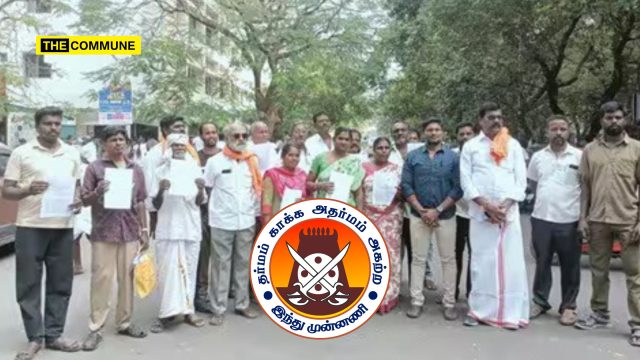
“Modi Is Another Narakasuran… Must Be Finished Off”, Says Tenkasi DMK Functionary Issues Death Threats To PM Modi Ahead Of TN Visit

“Modi Is Another Narakasuran… Must Be Finished Off”, Says Tenkasi DMK Functionary Ahead Of TN Visit

A political firestorm has erupted in Tamil Nadu ahead of Prime Minister Narendra Modi’s scheduled visit, after a leader of the ruling Dravida Munnetra Kazhagam (DMK) allegedly made remarks that the Bharatiya Janata Party (BJP) has condemned as a “death threat.”

The controversy stems from a video that went viral on social media, showing DMK South District Secretary Jaypalan making inflammatory statements during a protest in Tenkasi district.

The Controversial Remarks

In his speech, Jaypalan compared Prime Minister Modi to a demon king from Hindu mythology. “Don’t think we are shouting on the stage for you or ourselves. Modi is desperate to snatch your votes, he is another Narakasuran… Tamil Nadu can be benefited only by finishing him off (eliminating him) …We have to fight this battle unitedly and show victory,” Jaypalan is heard saying in the video.

The use of the phrase “finishing him off/eliminating him” has become the central point of the outrage, with the BJP interpreting it as a direct threat to the Prime Minister’s life.

BJP’s Sharp Reaction

The BJP reacted swiftly and sharply to the video. Tamil Nadu BJP President Nainar Nagendran shared the clip online and demanded immediate action.

He strongly condemned the speech, stating that “threatening a leader who holds one of the most important positions in the country, and is respected across the world, raises serious questions about law and order in the state.”

Nagendran also criticized Tenkasi MP Rani Srikumar and Sankarankoil MLA Raja, who were reportedly present during the event, for their silence. “Their silence reflected the violent nature of the party,” he said, and demanded that the “DMK government immediately arrest Jaipalan for making remarks that endangered the Prime Minister’s security.”

Context of the Visit

The incident casts a shadow over Prime Minister Modi’s planned one-day visit to Andhra Pradesh and Tamil Nadu. As per the official schedule, the Prime Minister will first visit the sacred pilgrimage site of Sri Sathya Sai Baba in Puttaparthi, Andhra Pradesh. He will then travel to Coimbatore in Tamil Nadu to inaugurate the Southern India Natural Farming Summit and release the 21st instalment of the PM Kisan scheme to farmers.

(Source: India TV)

Subscribe to our channels on WhatsAppTelegram, Instagram and YouTube to get the best stories of the day delivered to you personally.
Rahul Gandhi’s ‘Protector Of Constitution’ Act Falls Apart As Karnataka High Court Slams Congress For Fundamental Rights Violations

Rahul Gandhi’s ‘Protector Of Constitution’ Act Falls Apart As Karnataka High Court Slams Congress For Fundamental Rights Violations

In a stunning rebuke to the Congress-led Karnataka government, the state’s High Court has delivered a powerful defense of fundamental rights, exposing the glaring contradiction between the party’s public posturing and its authoritarian actions. While Rahul Gandhi theatrically carries a copy of the Constitution in his pocket during political campaigns, his own government in Karnataka has been caught systematically violating that very document.

The court, headed by Justice M Nagaprasanna, didn’t merely stay the government’s controversial order requiring prior permission for public gatherings – it delivered a lesson on the constitution that should embarrass the Congress leadership. The bench explicitly stated that the government’s order violates Article 19(1)(a) and 19(1)(b) of the Constitution, which guarantee freedom of speech and expression and the right to assemble peacefully.

The Anatomy of a Constitutional Violation

What makes the Karnataka government’s action particularly egregious is the court’s clear explanation: under Article 13(2), fundamental rights can only be restricted by a law passed by the legislature, not through a simple Government Order. This basic constitutional principle seems to have escaped the Congress government, which attempted to bypass legislative process and impose restrictions through executive fiat.

The court’s reasoning was unequivocal: If it violates Fundamental Rights, it becomes invalid for all, not just a few. This exposes the government’s desperate attempt to limit the stay’s application only to the petitioner as constitutionally illiterate.

The Political Agenda Behind the Constitutional Violation

The timing and context of this order reveal its true nature. The controversial directive emerged shortly after Minister Priyank Kharge wrote to Chief Minister Siddaramaiah urging a ban on RSS activities in public spaces. This wasn’t about public safety or maintaining order – it was a blatant political move disguised as administrative action.

The court saw through this charade. By extending the interim stay to everyone, not just the petitioner, the judiciary prevented the government from selectively targeting organizations while claiming the order was neutral. The bench’s refusal to play along with the government’s request to confine the stay reveals how transparent the political motivation behind this order was.

Rahul Gandhi’s Constitutional Hypocrisy

The irony is thick enough to cut with a knife. Rahul Gandhi, who has made the Constitution his favorite political prop, whose social media team meticulously documents every occasion he’s seen holding the sacred document, presides over a party that doesn’t seem to understand its most basic provisions.

While Gandhi travels the country posing as the Constitution’s defender, his government in Karnataka was busy trampling on the very fundamental rights the document exists to protect. The court’s intervention raises an uncomfortable question: has Rahul Gandhi ever actually read the Constitution he so ostentatiously carries?

The High Court’s ruling exposes the Congress party’s constitutional commitment as selective and politically convenient. They’ll invoke the Constitution when it serves their political narrative but won’t hesitate to violate it when it suits their agenda of targeting ideological opponents.

The Bigger Pattern

This isn’t an isolated incident. It’s part of a pattern where the Congress, while positioning itself as a defender of democratic values, repeatedly demonstrates authoritarian tendencies when in power. The Karnataka episode reveals a party that understands the Constitution’s symbolic value but fails to grasp – or willfully ignores – its substantive protections.

As the matter heads for further hearing on 15 December 2025, with the interim stay continuing, the Karnataka High Court has done more than just check executive overreach. It has exposed the hollow nature of the Congress’s constitutional piety and given the nation a crucial reminder: carrying the Constitution matters far less than understanding and respecting it.

(Source: The News Minute)

Subscribe to our channels on WhatsAppTelegram, Instagram and YouTube to get the best stories of the day delivered to you personally.
NYC Mayor Zohran Mamdani’s Father And Delhi Blast Suicide Bomber Umar Mohammad Speak The Same Language

News channels and social media platforms were abuzz with a chilling video of the Delhi blast suicide bomber Umar Mohammad where he called suicide bombing as “martyrdom”.

A week after the November 10 car blast near Delhi’s Red Fort killed 13 people, an undated self-recorded video of the suspected bomber, Dr. Umar Mohammad alias Umar-un-Nabi, surfaced, offering investigators the first direct insight into his radicalisation.

In the video, Umar is heard discussing what he calls “martyrdom operations”, a term often used by terror groups to describe suicide attacks. Speaking in English with a noticeable accent, Umar says“One of the very misunderstood concepts is the concept of what has been labelled as suicide bombing. It is a martyrdom operation… known in Islam. Now, there are multiple contradictions; there are multiple arguments that have been brought against it”. He further claims that a “martyrdom” operation is one in which a person assumes he will die at a particular time and place, and adds, “Don’t fear death.”

 Security officials say the video reflects deliberate ideological indoctrination and strengthens their assessment that the Delhi blast was a planned suicide mission carried out by a highly educated professional linked to a larger “white-collar” terror network.

But just rewind to a few days ago when the internet was discussing something similar.

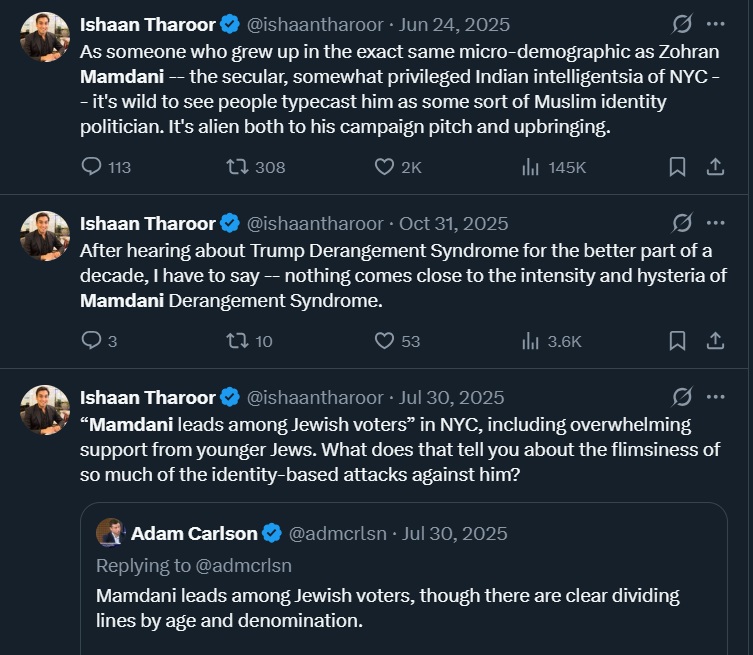
This “rationale” was what was echoed in the writings of Mahmood Mamdani, a professor at Columbia University. These surfaced in the run-up to the NYC Mayoral polls where Mahmood Mamdani’s son Zohran Mamdani was elected.

In his 2004 book, Good Muslim, Bad Muslim: America, the Cold War, and the Roots of Terror, Mamdani argued for a similar reframing of suicide bombers in the post-9/11 world.

The excerpts, from his book Good Muslim, Bad Muslim: America, the Cold War, and the Roots of Terror, read, “Suicide bombing needs to be understood as a feature of modern political violence rather than stigmatized as a mark of barbarism. We need to recognize the suicide bomber, first and foremost, as a category of soldier.”

Mamdani wrote this book just three years after the attacks that killed nearly 3,000 Americans.

In interviews following the book’s release, Mamdani further argued that suicide bombers emerge from youth revolt and political conflict, particularly referencing the Palestinian Intifada.

Calling those views “too easy and too self-serving,” Mamdani presented his own analysis, stating, “The reality is more likely the opposite; the suicide bomber is more likely born of a youth revolt than of patriarchal authority. The suicide bomber comes out of the history of the Intifadah.”

He further justified his “soldier” classification by pointing to the prolonged Israeli occupation of Palestine, which he described as a “brutal reality.” He argued that the “failure of the older generation to find a humane alternative” led to the desperation of the young.

“Even then, we need to recognize that the term suicide bomber is a misnomer. The suicide bomber is a category of soldier whose objective is to kill – even if he or she must die to kill,” Mamdani said in the interview.

Investigators in India say Umar’s newly recovered video uses similar reasoning, blending religious framing with an attempt to legitimise suicide attacks. They believe Umar was part of a transnational module involving doctors, academics and students connected to Al-Falah University and allegedly linked to Pakistan-based terror groups such as Jaish-e-Mohammed and Ansar Ghazwat-ul-Hind. Nearly 3,000 kg of explosives have been seized across multiple states in raids tied to the network.

As the investigation expands, one cannot but dismiss the parallel between Umar’s justification of suicide attacks and Mahmood Mamdani’s framing of suicide bombers as “soldiers” particularly given Zohran Mamdani’s own recent rise to political prominence in the United States.

Subscribe to our channels on WhatsAppTelegram, Instagram and YouTube to get the best stories of the day delivered to you personally.