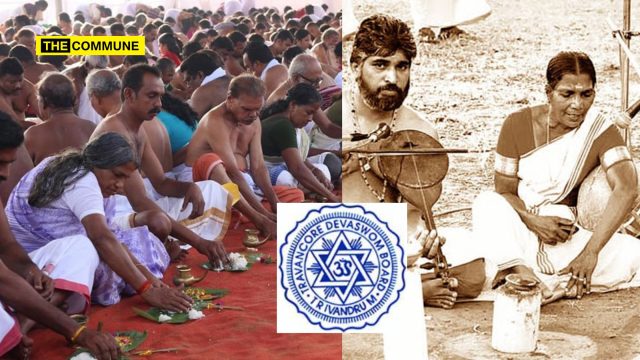
Devotees could face an additional financial burden as the Travancore Devaswom Board (TDB) has moved to impose 18 per cent Goods and Services Tax (GST) on several traditional rituals and offerings performed at temples, including Bali Tharpanam and Pulluvan Pattu.
According to an order issued by the Devaswom Board secretary, 18 per cent GST is to be collected on various services connected with traditional temple rituals at prominent temples, including Sabarimala, as reported in Janmabhumi.
Shocking! It is horrendous that Hindus have to pay GST to worship their deities and ancestors.
This is the worst side of the Travancore Devaswom Board after their previous cases about Sabarimala concerning their major theft of temple endowments, and now this.
A circular was… pic.twitter.com/dgIDwgEcw5
— Eswar RB (@rb_eswar) August 11, 2026
The move covers services such as Bali Tharpanam, Pulluvan Pattu, Neeranjanam and other temple-related services. The order also directs that GST be collected on amounts paid for such services.
The Board has also proposed collecting service tax from priests for Bali Tharpanam performed at temples. The secretary’s order states that 18 per cent GST is to be collected from priests in connection with Bali Tharpanam services.
Apart from Bali Tharpanam, GST is also proposed on Pulluvan Pattu, an important offering associated with the worship of serpent deities.
The order further lists various other services and activities, including Bali Tharpanam, Pulluvan Pattu, Neeranjanam, certain contract-based rights and services, and the collection of cloth from Pampa, among those for which 18 per cent GST is proposed.
However, direct offerings, kanikka, Thulabharam, marriage registration, Samskaram and income derived from agriculture have been excluded from GST. Some offerings conducted directly by the Devaswom Board have also been kept outside the tax net, as reported in Janam.
At the same time, contract-based rights and services that are auctioned out by the Devaswom Board have been brought under an 18 per cent GST regime. Although the tax is formally collected from contractors or leaseholders, the order’s provisions could ultimately increase the amount paid by devotees for such services.
The order was issued from the Travancore Devaswom Board headquarters on 30 March 2026. Issued in connection with the accounts section, it contains 31 directions covering various aspects of GST registration, tax collection, calculation and filing of returns.
GST on Bali Tharpanam and Pulluvan Pattu
The 18th direction in the order specifically refers to Bali Tharpanam and Pulluvan Pattu. It directs that GST be collected on the amounts paid for these services.
The Board is thus proposing a system under which revenue generated through such traditional temple-related services, when provided on a contractual or remunerative basis, would attract GST.
This comes despite the fact that service taxes are generally not applicable to traditional temple rituals and ceremonies. The Devaswom Board’s move has therefore raised concerns over the additional financial burden that could eventually fall on devotees undertaking these rituals and offerings.
While certain offerings conducted directly by the Devaswom Board have been exempted, services and rights given out on contract have been brought within the 18 per cent GST framework. Since contractors may factor the tax into the charges collected from devotees, the cost of performing such traditional rituals could rise.
Subscribe to our channels on WhatsApp, Telegram, Instagram and YouTube to get the best stories of the day delivered to you personally.