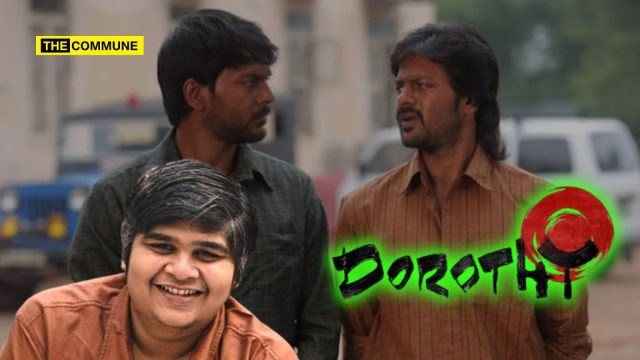
Tamil cinema has always had films that try to break barriers. But with Dorothy, Karthik Subbaraj goes full woke instead of sticking to unraveling the layers of caste and patriarchy. But the result does not feel like storytelling; instead, it feels like he is trying to shove his woke ideology down audiences’ throats.
The name itself has gay origins. Historically, if you were or asking if someone was a “friend of Dorothy”, it was considered a discreet euphemism used by LGBTQ+ individuals (specifically gay men) to safely identify each other without outing themselves to hostile or homophobic crowds.
The film, set in rural Tamil Nadu in the 1990s, begins with childhood friends Karthi and Subbu growing up amid caste divisions, violence and an aggressively masculine environment.
But the film eventually takes a dramatic turn towards gender fluidity and same-sex attraction.
At one point, a trans woman delivers the line, “Why don’t you see us as human? In 10 years, just 10 years, the world will accept us as we are. Men like you will be looked at with disgust.”
Dorothy does not merely tell a story involving a trans character and same-sex attraction. It repeatedly uses its characters and confrontational dialogue to make a broader argument about gender fluidity, patriarchy and social acceptance. The film even ends with a lip lock between Rishikanth and Sananth as if they are vindicated – for what? This, after the trans woman’s plea that society will eventually accept people “as we are.”
The film’s message is not subtle. It presents its vision of social acceptance through a story built around caste, violence, masculinity and gender fluidity. But the screenplay also becomes confusing and shaky precisely when these themes take centre stage.
What we are watching is not a film with a message. It is a message wearing a film as a disguise. And once you see it, you cannot unsee it.
This is what wokeness does to art. A film that should tell a story becomes a lecture. Characters become mouthpieces. Nuance disappears. And in the name of inclusion, the very people it claims to represent are reduced to nothing more than symbols.
And Karthik Subbaraj knows it. Those who have been observing him and his politics know that he is a woke Dravidianist. We have previously reported about his support for Rajiv Gandhi assassination convict A.G. Perarivalan, May 17 Movement founder Thirumurugan Gandhi, and protests against projects such as Kudankulam and Neduvasal. All that can be linked to his present mindset and his film’s heavy-handed messaging.
The poison of this woke “gender fluidity” phenomenon is now being mainstreamed by people like Karthik Subbaraj who is known for masterpieces like Pizza and Jigarthanda.
The poison is being pushed at a pace that should worry anyone who cares about children, families and social stability. What was once a fringe conversation has been pushed into schools, screens and public life as if it were settled science and universal morality. It is not. It is a contested, complicated issue and cinema has no business pretending otherwise.
Provocation is easy. Storytelling is hard. Dorothy chooses the easy road. And that is why, for all its noise, it will be forgotten long before the debate it tried to start is over.
Subscribe to our channels on WhatsApp, Telegram, Instagram and YouTube to get the best stories of the day delivered to you personally.