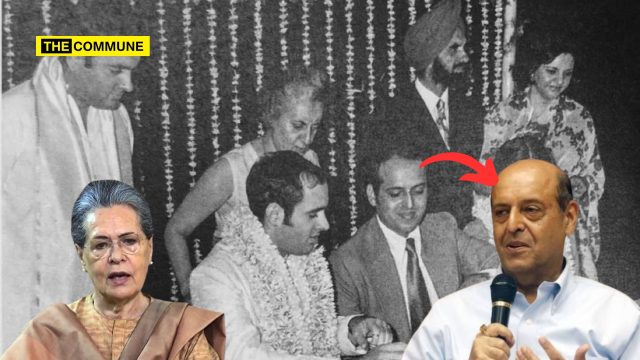
An archival photograph of Sanjay Gandhi and Maneka Anand signing their marriage register in 1974 has brought renewed attention to the controversial career of former Chief Election Commissioner (CEC) Navin Chawla, who officiated at their wedding as a magistrate.
The photograph shows Sanjay and Maneka signing the marriage register in the presence of their family members. Maneka’s parents, Lieutenant Colonel and Mrs T.S. Anand, are also seen in the photograph.
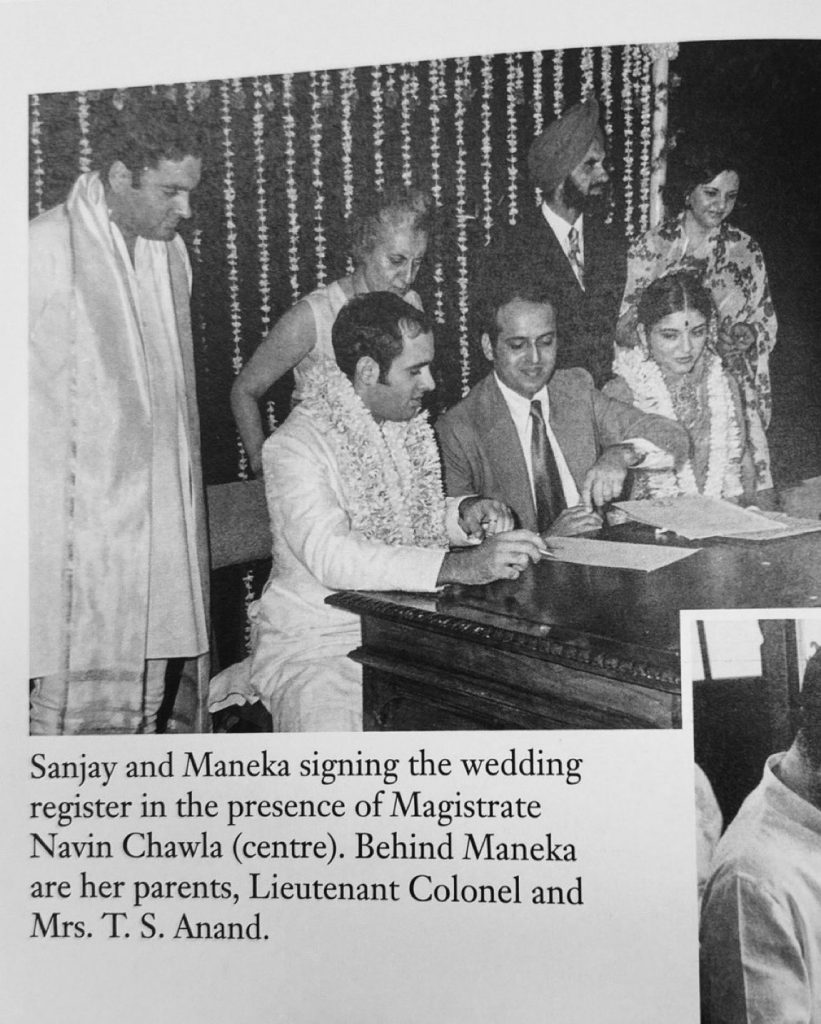
Chawla, who was then serving as a civil servant in Delhi, went on to become one of India’s most controversial Election Commissioners before eventually taking charge as Chief Election Commissioner in April 2009.
His elevation to the country’s highest election administration post came despite a 93-page recommendation by outgoing CEC N. Gopalaswami seeking his removal from the Election Commission over allegations of political partisanship and conduct favouring the Congress.
Gopalaswami’s 93-Page Indictment
On 16 January 2009, Gopalaswami submitted a detailed recommendation to President Pratibha Patil seeking Chawla’s removal as Election Commissioner under Article 324(5) of the Constitution.
The 93-page document reportedly listed 12 instances in which Gopalaswami alleged that Chawla had acted in a partisan manner favouring the Congress.
Among the instances cited were the Election Commission’s handling of the 2007 Uttar Pradesh Assembly elections, its decisions concerning the Gujarat and Himachal Pradesh elections, and Chawla’s intervention in proceedings relating to a complaint against Congress president Sonia Gandhi.
The complaint concerned Sonia Gandhi’s acceptance of a Belgian honour and whether it attracted questions regarding her eligibility to remain a Member of Parliament. Gopalaswami reportedly objected to Chawla’s decision to consult the Ministry of External Affairs while considering whether a notice should be issued to Gandhi.
Gopalaswami also alleged that Chawla had attempted to influence the deliberations of fellow Election Commissioner S.Y. Quraishi and questioned his political neutrality.
The outgoing CEC argued that the cumulative instances demonstrated a pattern of conduct that raised serious doubts about Chawla’s impartiality.
The recommendation stated that Chawla’s continuation as Election Commissioner was not justified and sought his removal under the constitutional provision governing the removal of Election Commissioners. The allegations were Gopalaswami’s assessment and were disputed by Chawla.
UPA Government Rejects Recommendation
The recommendation triggered a major political controversy ahead of the 2009 Lok Sabha elections.
On 1 March 2009, the UPA government rejected Gopalaswami’s recommendation. President Pratibha Patil accepted the government’s advice, clearing the way for Chawla’s elevation to the top post.
The government’s position was that the CEC did not have the authority to unilaterally recommend the removal of a fellow Election Commissioner and that the allegations did not warrant such action.
Following Gopalaswami’s retirement, Chawla took charge as Chief Election Commissioner on 21 April 2009, during the Lok Sabha elections. He oversaw four of the five phases of the general election.
A Controversial Appointment and the Question of Electoral Neutrality
The episode remains significant in the wake of the Congress’ claims of vote chori and anarchy caused by allegations on the independence and impartiality of the Election Commission of India in the backdrop of the BJP-led NDA government.
The controversy was particularly notable because the allegations against Chawla came from the outgoing head of the very institution he was subsequently appointed to lead. The UPA government’s rejection of the recommendation meant that Chawla went on to occupy the highest constitutional position in the Election Commission despite the objections raised by his predecessor.
Until 2023, Election Commissioners were appointed by the President on the advice of the Union government. In March 2023, the Supreme Court directed that a selection committee comprising the Prime Minister, the Leader of the Opposition and the Chief Justice of India should make recommendations until Parliament enacted a law.
Parliament subsequently passed the Chief Election Commissioner and Other Election Commissioners (Appointment, Conditions of Service and Term of Office) Act, 2023. The new law replaced the Chief Justice of India with a Union Cabinet Minister nominated by the Prime Minister on the selection committee.
Subscribe to our channels on WhatsApp, Telegram, Instagram and YouTube to get the best stories of the day delivered to you personally.