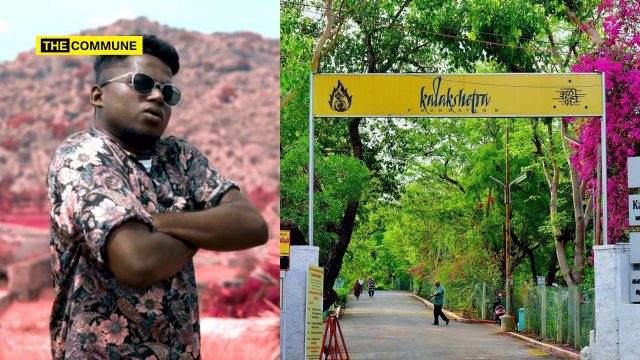
Rapper Arivu has criticised Kalakshetra after he was reportedly denied entry to the Chennai campus while exploring possible venues for an upcoming music event.
According to reports and social-media posts about the incident, security personnel and staff at the entrance told Arivu that the campus was meant for Carnatic music and related artistic activities, and that performers from other genres could not use the premises.
Arivu subsequently questioned the basis of the restriction and linked it to what he described as elitism in the treatment of different musical traditions.
“When did music acquire a caste?” Arivu reportedly asked, questioning why Carnatic music is treated as “pure” or superior while genres such as Gaana and independent Tamil hip-hop are viewed differently.
There was no mention of caste or anything remotely connected to it in the conversation. The security personnel were doing their job and informed Arivu that only specific art forms were allowed to be performed in the premises.
View this post on Instagram
Kalakshetra’s institutional mandate is considerably broader than Carnatic music alone.
Founded in 1936 by Rukmini Devi Arundale, Kalakshetra was established as an institution dedicated to Indian art and culture, with Bharatanatyam and Carnatic music forming major parts of its artistic and educational programmes.
Its Rukmini Devi College of Fine Arts currently offers programmes in Bharatanatyam, Carnatic Music and Visual Arts. The Visual Arts Department covers disciplines including drawing, painting, sculpture, ceramics, printmaking and photography.
Kalakshetra’s activities have also extended beyond these programmes. The institution has hosted performances and festivals involving other Indian classical traditions, including Kathakali.
The institution’s focus on Bharatanatyam and Carnatic music is linked to its founding philosophy. Rukmini Devi established Kalakshetra at a time when traditional Indian performing arts were undergoing major changes. The institution subsequently developed a structured system of training around Bharatanatyam, Carnatic music and allied disciplines.
Its Bharatanatyam curriculum includes dance technique, theory, music and allied subjects, while its music programme covers Carnatic vocal and instrumental traditions.
This also raises a basic question about the sequence of events: before approaching a specialised cultural institution to explore a venue for an independent music event, why not first check what the institution’s campus and facilities are intended for?
Kalakshetra publicly describes its courses, departments and artistic activities. Its official material makes clear that its principal educational programmes are centred on Indian classical performing arts and visual arts.
That information was available before the reported visit.
The dispute, therefore, is not simply about whether Gaana or Tamil hip-hop can be performed. It is also about whether the refusal of a venue by an institution with an established artistic mandate should automatically be interpreted as a statement about the caste or artistic worth of an entire musical genre.
Subscribe to our channels on WhatsApp, Telegram, Instagram and YouTube to get the best stories of the day delivered to you personally.