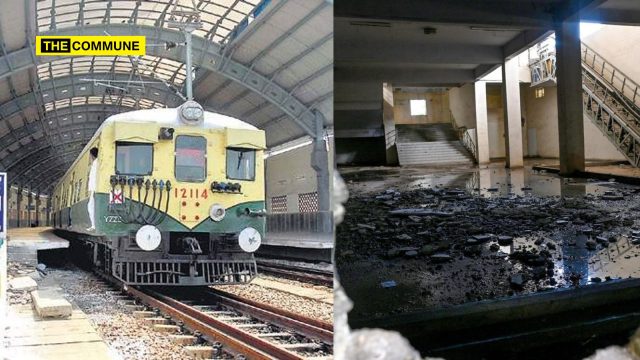
“MRTS is a dilapidated service. There’s no reason for Chennai Metro Rail to spend more money to buy MRTS.”
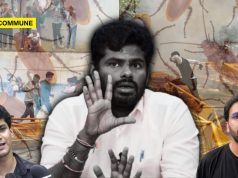
That was the argument made by Central Chennai MP Dayanidhi Maran at a District Development Coordination and Monitoring Committee meeting on 28 October 2026, as he demanded that the Mass Rapid Transit System (MRTS) be handed over to Chennai Metro Rail Limited (CMRL) for free.
Central Chennai MP Dayanidhi Maran demands free handover of MRTS to Chennai Metro as the MRTS is dilapidated.
“MRTS is a dilapidated service. There’s no reason for Chennai metro rail to spend more money to buy MRTS,” Central Chennai MP @Dayanidhi_Maran at the Disha Committee meeting.
Seems to be a fair demand? MRTS and their stations are dingy, dirty, and outright bad. https://t.co/TS2h6TNNNm
— Omjasvin M D (@omjasvinMD) October 28, 2026
The condition of Chennai’s MRTS is undoubtedly a serious concern. For years, commuters have had to contend with poorly maintained stations, inadequate facilities and an ageing transport network that has failed to live up to its potential.
But if MRTS is in such a dilapidated state, another question must be asked: why has it taken 15 years for the proposed merger with Chennai Metro to reach this stage? And what did successive Tamil Nadu governments do to move it forward?
The DMK governed the state from 2021 to 2026. But it was not the only party to have an opportunity to act. The AIADMK was in power for ten years before that, from 2011 to 2021. Neither party completed the merger during its tenure.
A Problem 15 Years in the Making
The MRTS began operations in 1995, with the aim of providing Chennai with a dedicated elevated suburban rail network. Its final extension to Velachery was completed in November 2007. Despite its potential to transform public transport in the city, the system has struggled with poor station facilities and inadequate integration with other transport systems.
The responsibility for operating and maintaining the railway system rested with Southern Railway, which comes under the Union Ministry of Railways. The DMK government cannot be held directly responsible for every maintenance failure on railway property. However, the state government still has a role in coordinating transport planning, pressing for improvements and ensuring that Chennai’s public transport systems work together.
The proposal to merge MRTS with CMRL itself dates back to 2011, towards the end of the DMK’s previous tenure. The AIADMK then governed Tamil Nadu for a decade, but the handover was not completed.
When the DMK returned to power in 2021, it inherited a proposal that had already been pending for ten years. Yet the merger remained unresolved throughout its five-year tenure as well.
In July 2023, the central government told the Rajya Sabha that the takeover could begin only after the completion of the fourth line between Chennai Beach and Chennai Egmore. In February 2026, the Railways said the detailed memorandum of understanding (MoU) was still under preparation. The Railway Board finally approved the draft MoU in August 2026, after years of delay. Source
This timeline raises questions about successive governments and administrations. The AIADMK had ten years in power to pursue the merger; the DMK had another five. The Union Railways establishment was also central to the process. The delay cannot fairly be attributed to one party alone, but neither party can claim that the problem was new or unexpected.
A Free Handover Is Not the Whole Answer
With the Railway Board’s approval of the draft MoU, the discussion has now shifted to the terms of the transfer and whether the state should pay for the railway assets.
Maran’s demand for a free handover may be a legitimate negotiating position. If the network and its stations have been allowed to deteriorate, it is reasonable to ask what CMRL would be paying for and what financial obligations would come with the transfer.
But demanding a free transfer does not, by itself, explain why the merger took so long to advance. Nor does it guarantee that the problems faced by commuters will be resolved once administrative control changes hands.
Maran has represented Central Chennai in Parliament since 2019. His demand puts an important issue on the table, but it also raises a broader question about how consistently the condition of MRTS was pursued as a public concern by elected representatives over the years.
The issue is not whether Maran should raise it now. He should. The question is whether the DMK government gave the proposed merger and the condition of MRTS the sustained attention they deserved during its five years in power—and whether the AIADMK did enough during its preceding decade.
What Chennai’s Commuters Deserve
MRTS serves commuters travelling to work, educational institutions and destinations across Chennai. They need clean and safe stations, functioning lifts and escalators, adequate lighting, reliable services and seamless connections with buses and the Metro.
The state government has a role to play in delivering those improvements even when railway assets remain under Southern Railway. Through bodies such as the Chennai Unified Metropolitan Transport Authority, it can coordinate transport agencies, identify gaps and press for time-bound improvements.
The transfer of MRTS to CMRL could provide an opportunity to improve station facilities and integrate the network with Chennai’s wider public transport system. But that outcome will require more than a change in administrative control. It will require clear timelines, adequate funding, passenger safety measures and transparent monitoring. The Railways must also fulfil its obligations under the transition arrangements.
Ultimately, commuters should not have to wait for political parties to trade demands before their transport system receives the attention it needs.
The DMK cannot be blamed for every failure of a railway network maintained by Southern Railway. But its five years in power deserve scrutiny, just as the AIADMK’s ten years do. Both had opportunities to advance the merger, and both left office without completing it.
MRTS needs urgent reform. Chennai’s commuters deserve more than political statements about who should pay for the handover. They deserve an explanation for the 15-year delay—and a concrete plan to ensure that the transfer finally delivers the improvements they have waited for.
Subscribe to our channels on WhatsApp, Telegram, Instagram and YouTube to get the best stories of the day delivered to you personally.