Chennai and Tamil Nadu residents are facing mounting pressure on household budgets, with several essential food commodities costing significantly more in Chennai than in Delhi, even as Tamil Nadu records the country’s highest retail inflation rate among major states.
According to the Ministry of Statistics and Programme Implementation (MoSPI), Tamil Nadu’s retail inflation rose to 6.81% in September 2026, up from 5.91% in August, making it the highest among states with populations exceeding 50 lakh. This was well above the all-India retail inflation rate of 5.54%. Food inflation in Tamil Nadu surged to 10.62%, compared with the national food inflation rate of 7.74%, according to the September data.
The pressure on consumers is reflected in the prices of everyday essentials. Rice costs ₹80 per kg in Chennai, compared with ₹47 in Delhi and an all-India average of ₹48.12. Potatoes are priced at ₹58 per kg in Chennai against just ₹22 in Delhi, while onions cost ₹68 in Chennai compared with ₹50 in the national capital, according to the Department of Consumer Affairs’ daily price data for October 2026.
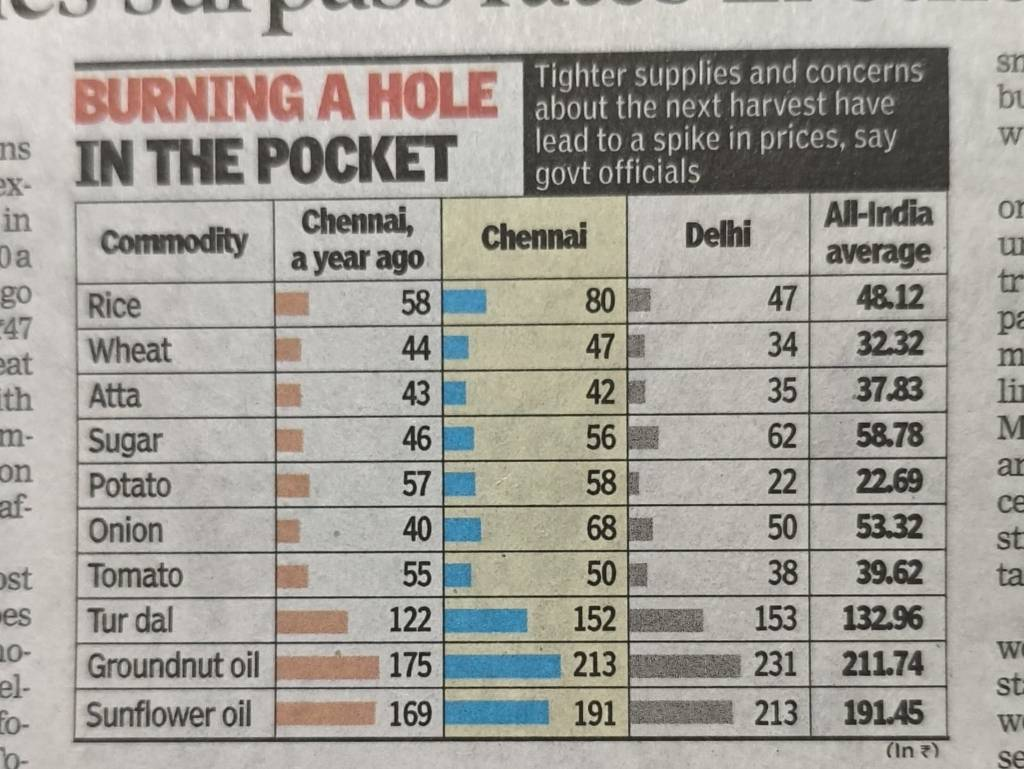
The disparity is also evident in pulses and cooking oils. Tur dal costs ₹152 per kg in Chennai and ₹153 in Delhi, against an all-India average of ₹132.96. Groundnut oil is priced at ₹213 per kg in Chennai, compared with ₹231 in Delhi, while sunflower oil costs ₹191 in Chennai against ₹213 in the national capital. Although Chennai is not more expensive across every commodity, several staples are substantially costlier than both Delhi prices and national averages.
The difference is particularly stark for rice and potatoes. Rice in Chennai costs nearly 70% more than in Delhi, while potatoes cost more than twice as much. Onion prices in Chennai are also above the all-India average of ₹53.32 per kg. For households that rely on these items every day, such price differences can significantly increase monthly grocery bills.
The strain has extended to vegetable markets ahead of Deepavali. Small onions have reportedly been selling for around ₹100 per kg in Chennai, while beans cost ₹90–100 and green peas have touched ₹200 per kg. In Tirunelveli, small onion prices have reportedly reached ₹168 per kg. Rainfall-related disruptions to arrivals, combined with increased festive demand, have contributed to the price rise.
The inflation figures provide a wider picture of the pressure on Tamil Nadu households. While national retail inflation stood at 5.54% in September, Tamil Nadu’s rate was 6.81%. Its food inflation rate of 10.62% was also substantially higher than the national figure of 7.74%. This indicates that the rise in food prices is not merely a concern in Chennai’s vegetable markets, but part of a broader inflationary trend across the state.
Supply constraints, transportation costs and disruptions in the movement of produce can all influence retail prices. Concerns over hoarding and restricted supplies have also prompted calls for closer monitoring of traders and market stocks. However, the available data does not establish how much of the price gap is attributable to transport costs, supply shortages or market practices.
With essential commodities costing considerably more in Chennai than in Delhi in several categories, the burden falls directly on consumers who cannot easily cut back on everyday food purchases. Authorities will need to monitor wholesale and retail prices, ensure adequate supplies and consider targeted sales through cooperative outlets wherever necessary.
Traders expect prices to ease after Deepavali if fresh arrivals improve, though this will depend on weather and supply conditions. Until then, Chennai households face a double squeeze: higher prices for several everyday essentials than consumers in the national capital, and a state-wide inflation rate that has climbed above the national average.
Subscribe to our channels on WhatsApp, Telegram, Instagram and YouTube to get the best stories of the day delivered to you personally.