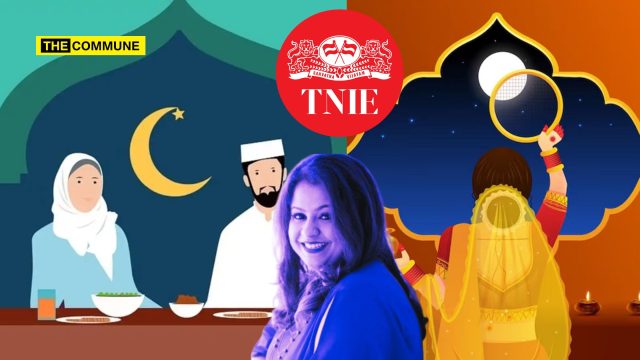
The New Indian Express wants to write differently about religious festivals especially when it is Hinduism and Islam.
What makes the contrast particularly striking is that both articles were written by the same author, Vernika Awal.
It praises one as a celebration of faith, perseverance and community, but turns another into an occasion to mock the women who observe it.
In its March 2025 article, “Feasts of Faith: The Role of Food in Ramzan,” TNIE describes Ramzan through the language of spiritual devotion, cultural identity, communal bonding and shared joy. Food becomes a bridge between faith and culture, while fasting is presented as an expression of perseverance.
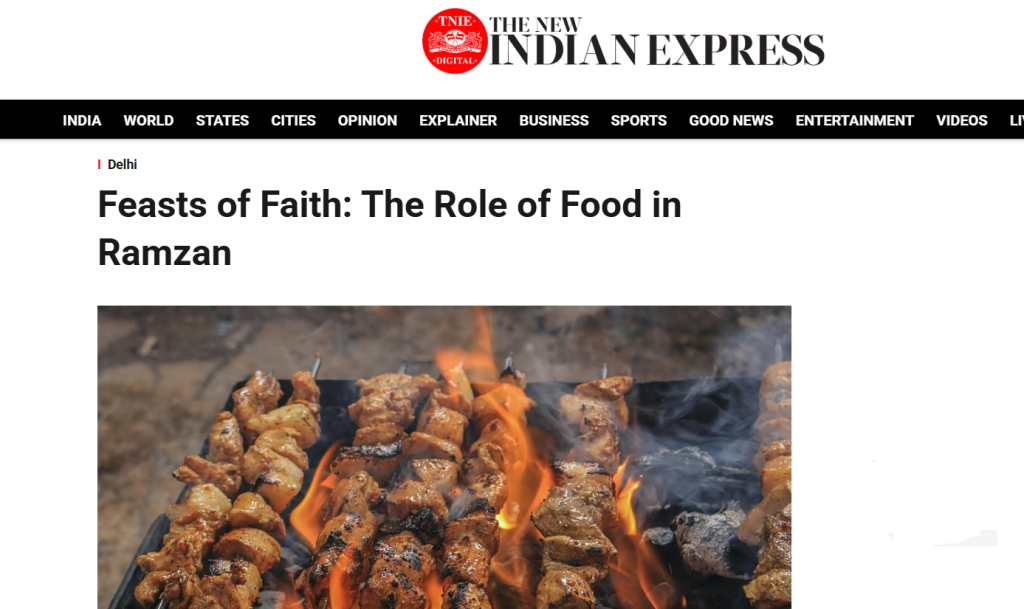
The article describes Ramzan as “a month-long celebration of faith, perseverance, and the profound connection between food and communal identity.”
It speaks of the joy accompanying the greeting “Ramzan Mubarak”, the cultural significance of iftar, the culinary traditions of Old Delhi and the sense of belonging created when families gather to break their fast.
The streets around Jama Masjid, it says, acquire “a special vibrancy” during Ramzan, as people gather over kebabs, breads, qormas and phirni. The crowds and bustle are portrayed as expressions of communal belonging, shared joy and cultural heritage.
The article goes further, describing food as a bridge between “spiritual devotion and cultural identity”.
There is nothing wrong with presenting a religious observance in a positive light. Ramzan is meaningful to its adherents, and its spiritual and cultural dimensions deserve to be explained.
But that same generosity of interpretation is conspicuously absent when TNIE turns its attention to Karwa Chauth.
Karwa Chauth: From Religious Observance to a Lecture on Entitlement
In its 29 October 2026 article, titled “The Hunger Games of Karwa Chauth”, TNIE adopts a markedly different tone.
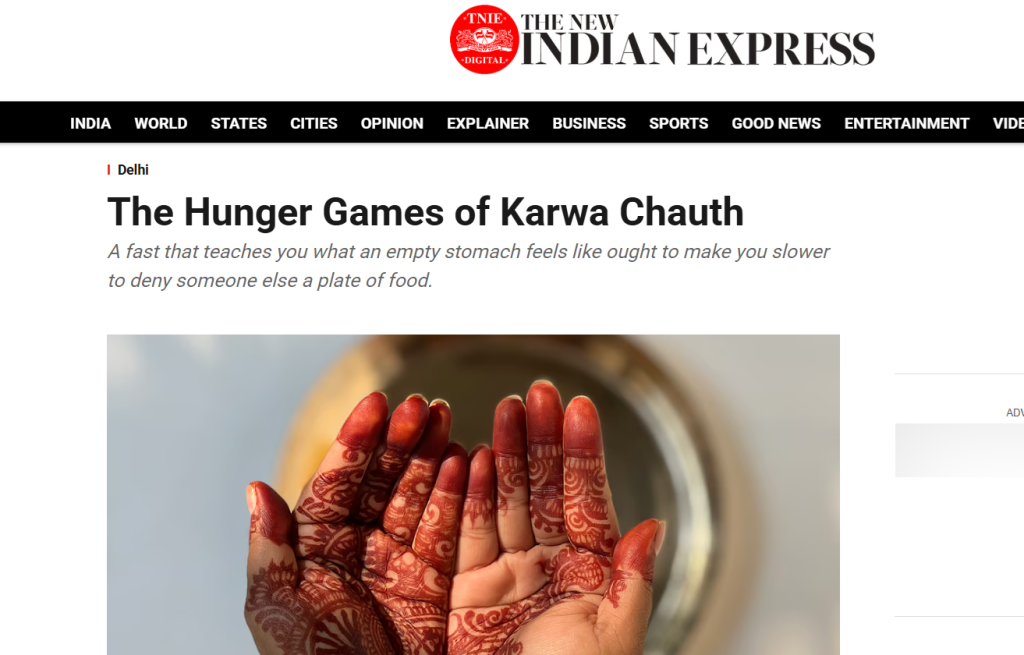
The article recounts how mehndi artists were reportedly made to work late into the night and faced objections from customers when they sought a short break to eat.
The concern is legitimate. Workers should not be expected to ignore their hunger or go without reasonable breaks simply because customers are in a hurry. Paying for a service does not entitle anyone to mistreat the person providing it.
But rather than keeping its criticism focused on the conduct of the customers involved, the article repeatedly turns its attention to the women observing Karwa Chauth—and the festival itself.
“The irony is hard to miss. This is a festival built around hunger,” it declares.
It then moves from the reported behaviour of particular customers to a broader moral judgement, “And yet humility rarely travels beyond the fast itself. Those same women, empty stomachs and all, demand that others serve their ritual on their terms, with little regard for people who do not share their social background and whose hunger counts for less.”
The article concludes: “Going hungry for a day is the easy part.”
The problem is not that TNIE criticises customers who mistreat workers. It is that the alleged behaviour of particular individuals becomes the basis for broader judgements about the humility, entitlement and moral worth of women observing a Hindu festival.
The article acknowledges that, for many women, Karwa Chauth is “a devotion freely given”. Yet it places that devotion alongside Bollywood influence and marital duty before widening its criticism to the women who observe the festival.
One Festival Gets Cultural Context. The Other Gets a Sermon.
The contrast between the two articles goes beyond tone.
In its Ramzan coverage, TNIE presents fasting as a spiritual act, food as an expression of cultural heritage and communal iftar as a celebration of faith. In its Karwa Chauth coverage, it uses the conduct of some customers to question whether the humility associated with the fast extends to the women observing it.
The distinction is particularly clear in the closing lines of the Karwa Chauth article: “Break the first one at moonrise. Try to keep the second all year.”
What begins as criticism of customers who allegedly mistreat workers ends as a moral lesson directed at women observing the festival. Karwa Chauth becomes a vehicle for a broader commentary on entitlement and hypocrisy.
Of course, a newspaper can publish different kinds of articles. But editorial choices are not beyond scrutiny. When one religious practice is presented through the faith and traditions of its adherents, while another becomes an occasion for sweeping moral judgements about its devotees, readers are entitled to question the consistency of that approach.
When TNIE could highlight the alleged mistreatment of mehndi artists, it could have done something similar for Ramzan too. But it chose not to and that says a lot about its leanings and its writer’s leanings too.
Subscribe to our channels on WhatsApp, Telegram, Instagram and YouTube to get the best stories of the day delivered to you personally.