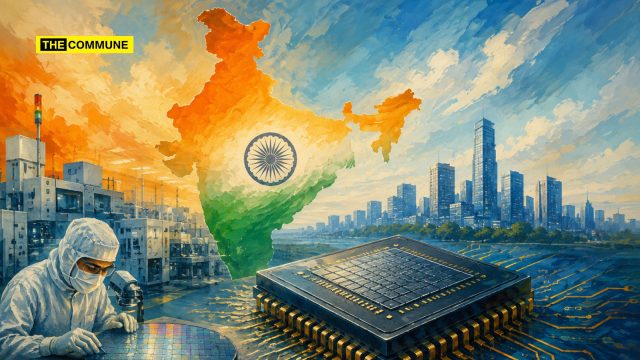
With over ₹2 trillion committed to semiconductor development, India has embarked on one of its most ambitious industrial policies in decades. The success of this initiative will depend not only on subsidies but also on building a complete ecosystem of talent, infrastructure, and innovation. If executed with consistency, India could emerge as a significant force in the global semiconductor value chain by the next decade.
Semiconductors have become the strategic resource of the twenty-first century. Much like oil defined the geopolitics of the twentieth century, computer chips now determine economic competitiveness, national security, technological innovation, and industrial growth. From smartphones and electric vehicles to artificial intelligence, defence systems, and medical equipment, every modern technology depends on semiconductors. Consequently, nations across the world are competing to secure reliable chip manufacturing capabilities.
India’s decision to invest more than $21 billion (over ₹2 trillion) in semiconductor manufacturing represents far more than an industrial subsidy. It is a declaration of intent, a recognition that technological sovereignty is no longer optional but essential. The government’s ambitious vision of establishing multiple semiconductor fabrication plants (fabs), assembly, testing, marking and packaging (ATMP) facilities, and compound semiconductor units reflects a long-term strategy to position India among the world’s leading semiconductor hubs by 2032.
The timing of this initiative is significant. The global semiconductor industry has undergone a profound transformation since the COVID-19 pandemic exposed the vulnerability of international supply chains. Chip shortages disrupted automobile production, delayed consumer electronics, and highlighted the dangers of excessive dependence on a handful of manufacturing locations. Governments in the United States, Japan, South Korea, the European Union, and China responded with unprecedented financial incentives to encourage domestic chip production. India is now joining this global race with substantial financial commitments.
Yet subsidies alone cannot guarantee success. Semiconductor manufacturing is arguably one of the most complex industrial activities in existence. Establishing a fabrication plant requires billions of dollars in investment, years of construction, highly skilled engineers, uninterrupted electricity, abundant ultra-pure water, advanced logistics, and access to sophisticated equipment supplied by only a few companies worldwide. Building such an ecosystem demands patience, policy consistency, and close collaboration between government and industry.
India’s strengths, however, should not be underestimated. The country already possesses one of the world’s largest pools of semiconductor design talent. Thousands of Indian engineers contribute to chip design for global technology companies, and many multinational semiconductor firms have established research and development centres across Bengaluru, Hyderabad, Noida, and Pune. This strong design ecosystem provides a valuable foundation upon which manufacturing capabilities can gradually be built.
The government’s approach also appears more comprehensive than previous attempts. Rather than focusing solely on fabrication plants, the policy encourages investment across the semiconductor value chain, including assembly, testing, packaging, and compound semiconductor production. These segments require comparatively lower capital investment while generating employment and technological expertise. Success in these areas can create the experience necessary to support more advanced fabrication facilities in the future.
The reported reduction of government incentives from covering as much as 70 percent of project costs to approximately 35-50 percent for fabrication plants and 25-35 percent for ATMP and OSAT facilities may initially appear concerning. However, this adjustment may actually indicate growing confidence in India’s investment environment. As global semiconductor companies increasingly view India as an attractive manufacturing destination, the government may no longer need to shoulder an overwhelming share of project costs. Sustainable industrial development ultimately depends on strong private-sector participation rather than perpetual public subsidies.
Nevertheless, India faces formidable competition. Countries such as South Korea, Taiwan, Japan, China, and the United States possess decades of accumulated expertise, deeply integrated supply chains, and well-established industrial ecosystems. Companies such as Samsung, TSMC, Intel, and SK Hynix invest hundreds of billions of dollars in cutting-edge manufacturing technologies. Their competitive advantages extend beyond financial incentives to include research capabilities, supplier networks, intellectual property, and highly specialised workforces.
India therefore should avoid measuring success solely by the number of fabrication plants established. Instead, policymakers should evaluate progress through broader indicators such as employment generation, technology transfer, domestic value addition, export growth, research collaboration, and integration into global supply chains. Becoming a trusted manufacturing partner for mature-node semiconductors, automotive chips, power electronics, and specialised packaging may prove more achievable and economically rewarding than immediately competing in the most advanced chip technologies.
Infrastructure remains another decisive factor. Semiconductor plants require uninterrupted electricity, stable water supply, modern transportation networks, efficient customs procedures, and predictable regulatory environments. Delays in land acquisition, environmental clearances, or logistics can undermine investor confidence. Therefore, state governments have an equally important role in ensuring that promised infrastructure and administrative support materialise without bureaucratic obstacles.
Equally important is human capital. India’s universities and technical institutions must expand specialised programmes in semiconductor engineering, materials science, nanotechnology, and manufacturing processes. Close partnerships between academia and industry will be essential for producing engineers capable of operating highly sophisticated fabrication facilities. Continuous skill development should accompany every stage of the industry’s expansion.
Research and innovation deserve equal attention. Manufacturing without indigenous innovation risks creating long-term dependence on imported technologies. Public research institutions, private companies, and startups should collaborate to develop intellectual property, improve manufacturing processes, and design specialised chips tailored to India’s growing digital economy. Such investments would strengthen India’s competitiveness beyond low-cost manufacturing.
Environmental sustainability should also become an integral component of India’s semiconductor strategy. Fabrication plants consume enormous quantities of water and energy while generating chemical waste. Integrating renewable energy, water recycling systems, and environmentally responsible manufacturing practices from the outset can position India as a leader in sustainable semiconductor production while addressing future regulatory expectations.
Another encouraging aspect of India’s semiconductor mission is its geopolitical significance. As global companies seek to diversify supply chains beyond traditional manufacturing centres, India enjoys increasing strategic relevance. Democratic governance, a large domestic market, improving ease of doing business, and favourable diplomatic relations with multiple major economies enhance India’s attractiveness as a long-term investment destination. If these advantages are effectively leveraged, India could become an indispensable node in the global semiconductor network.
However, optimism must be balanced with realism. Semiconductor manufacturing is not an industry that delivers immediate results. Projects often require five to seven years before reaching commercial production, and profitability may take even longer. Political commitment must therefore remain consistent across successive governments, resisting the temptation to judge outcomes through short-term electoral timelines. Industrial transformation is measured in decades, not budget cycles.
Ultimately, India’s semiconductor initiative represents more than a manufacturing programme; it embodies a broader aspiration to move from being primarily a consumer and designer of advanced technologies to becoming a producer of them. The financial commitment is substantial, but the larger investment lies in building institutions, nurturing talent, strengthening infrastructure, encouraging innovation, and fostering trust between government and industry.
If India succeeds in creating a resilient semiconductor ecosystem, the rewards will extend well beyond economic growth. It will strengthen national security, enhance technological self-reliance, generate high-quality employment, attract global investment, and position the country as a credible participant in one of the world’s most strategically important industries.
The road ahead will undoubtedly be challenging, and competition will remain intense. Yet history has repeatedly shown that nations willing to invest patiently in strategic industries often reshape their economic destinies. India’s $21 billion semiconductor bet is not merely about producing chips it is about manufacturing the foundations of its technological future. Whether this vision translates into lasting success will depend less on the size of subsidies and more on the country’s ability to execute its ambitions with discipline, continuity, and unwavering commitment.
Dr. Prosenjit Nath is a techie, political analyst, and author.
Subscribe to our channels on WhatsApp, Telegram, Instagram and YouTube to get the best stories of the day delivered to you personally.