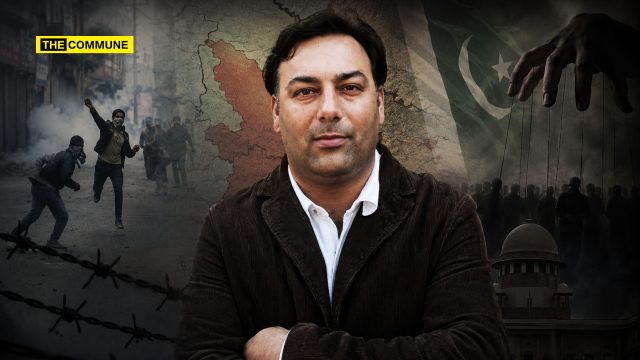
Few individuals have done more to shape international perceptions of India’s Kashmir policy than Basharat Peer. The Kashmiri journalist, author, and screenwriter has built a lucrative career pushing narratives that consistently portray India as an occupying force in Kashmir and the Indian Army as an institution of oppression.
Early Life and Privilege
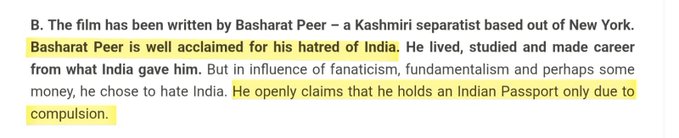
Born in 1977 in Seer Hamdan, Anantnag, Peer comes from a privileged background. His father is a retired officer of the Indian Administrative Service, placing him within the elite echelons of the Indian establishment that he would later spend his career undermining. Despite his family’s connections to the government, Peer’s work has consistently adopted an adversarial stance toward the Indian state. He studied Political Science at Aligarh Muslim University and later pursued Journalism at Columbia University in New York, institutions that would provide him the credentials to launch his anti-India campaign. Peer has publicly stated that he holds an Indian passport only due to compulsion and has moved to New York.
The George Soros Connection
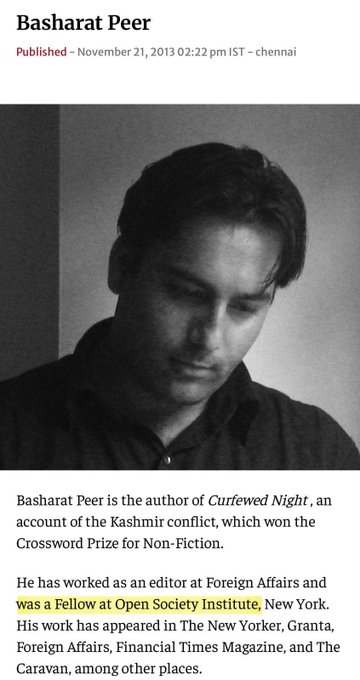
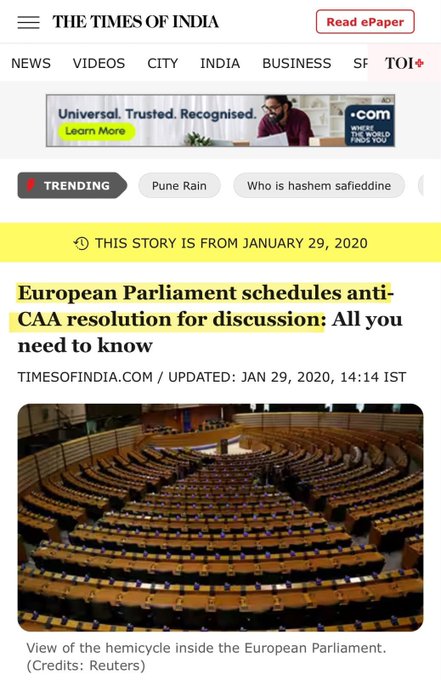
Peer was a Fellow at the Open Society Institute, established by billionaire financier George Soros. This connection places him within a network that has actively worked against Indian interests. Soros’s foundation has lobbied the European Parliament to pass resolutions critical of India’s Citizenship Amendment Act and its Kashmir policies.
The lobbying arm of the Soros Foundation in Moldova specifically pushed for EU Parliament resolutions on Kashmir, leading to six different parliamentary groups submitting draft resolutions on the CAA on the very same day. Peer operates within this very network.
The Book and Its Narrative
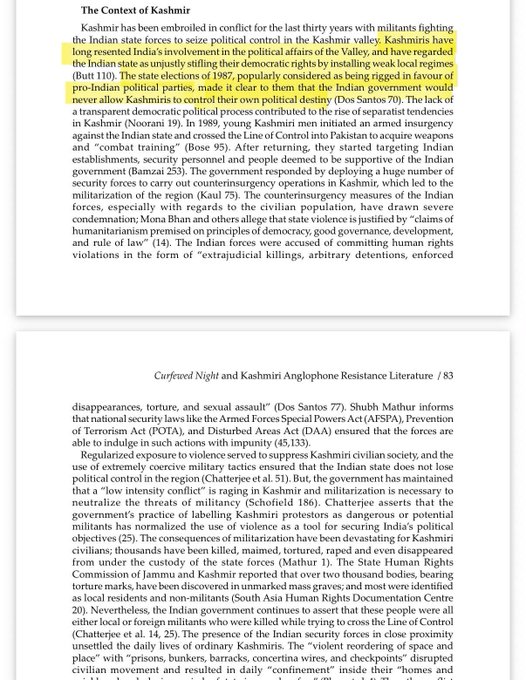
In Curfewed Night, Peer makes the case that the Kashmir insurgency was triggered by the alleged rigging of the 1987 Jammu and Kashmir elections, effectively blaming Indian institutions for the unrest. In his telling, Pakistan’s ISI and militant groups appear as consequences of Indian failures rather than as primary actors.
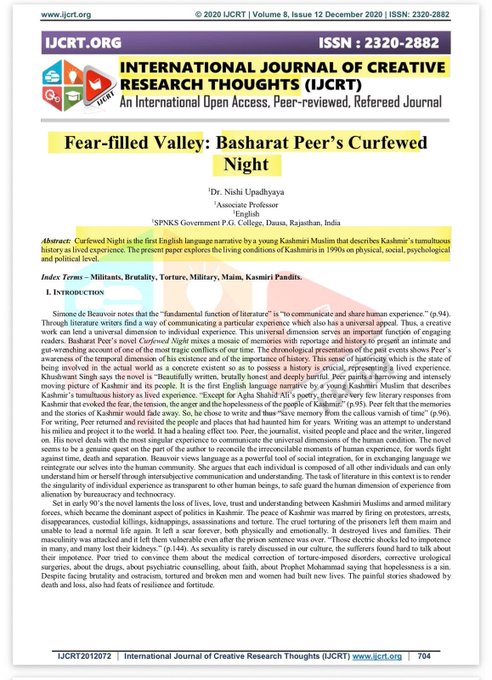
This version of history is now taught in universities across the Western world, meaning Peer’s anti-India framing of Kashmir has become academic orthodoxy for thousands of students.
Writing Haider: Propaganda Disguised as Entertainment
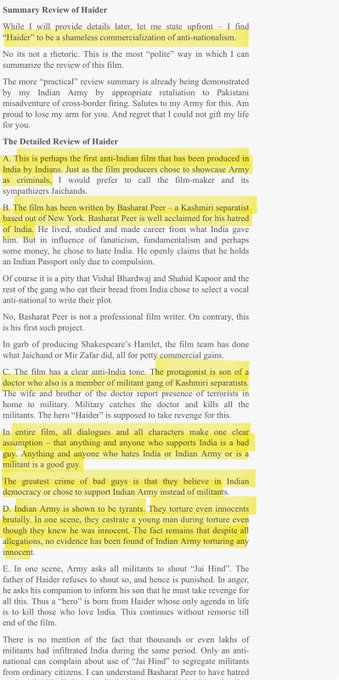
Peer co-wrote the screenplay for Haider, which transplants Shakespeare’s Hamlet to 1990s Kashmir. The film consistently depicts the Indian Army as the villain, with scenes of torture camps, enforced disappearances, abuse of detainees, and families torn apart. This is the version of Kashmir that millions have consumed as entertainment.
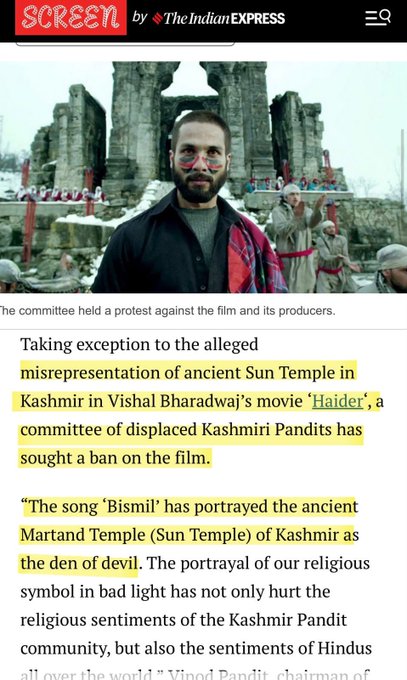
The film’s song “Bismil” features the idol of Satan placed at the entrance of the ancient Martand Sun Temple in Anantnag – one of Kashmir’s oldest and most revered Hindu shrines. The choice of this particular temple for such a scene is deeply offensive to Hindu sentiments.
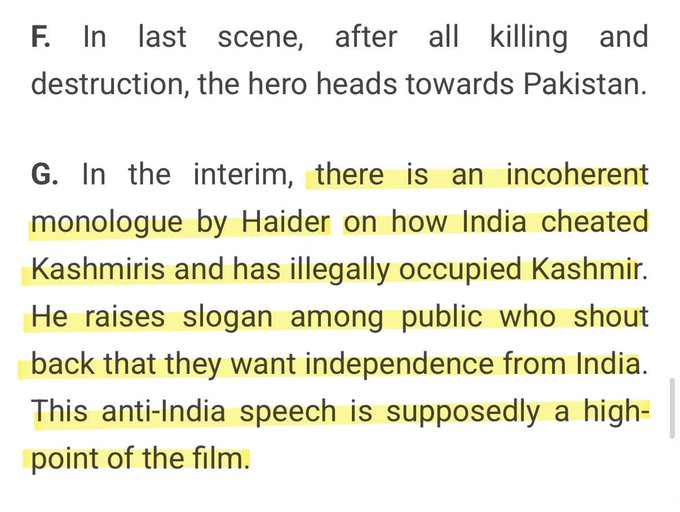
In the climax, the protagonist delivers an anti-India speech before a crowd chanting for independence. Characters connected to separatist or militant groups receive far more sympathetic treatment than any figure representing the Indian state. This moral framework is Peer’s creation.
The New York Times Articles
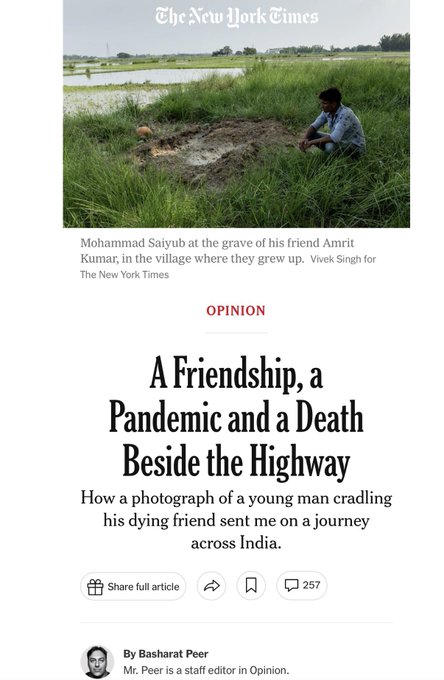
In a New York Times piece titled “A Friendship, a Pandemic and a Death by the Highway” about two migrant workers who walked home from Surat during the COVID lockdown, Peer introduced the two men by their caste and religious identities, identifying one as Dalit and the other as Muslim, immediately injecting identity politics into the narrative.
Peer claimed that the Muslim worker had fears about being a Muslim in Gujarat. However, the man himself directly contradicted this, saying: “Nobody bothered me. I did my job. I got paid.” Peer’s own source dismantled the narrative Peer was constructing.
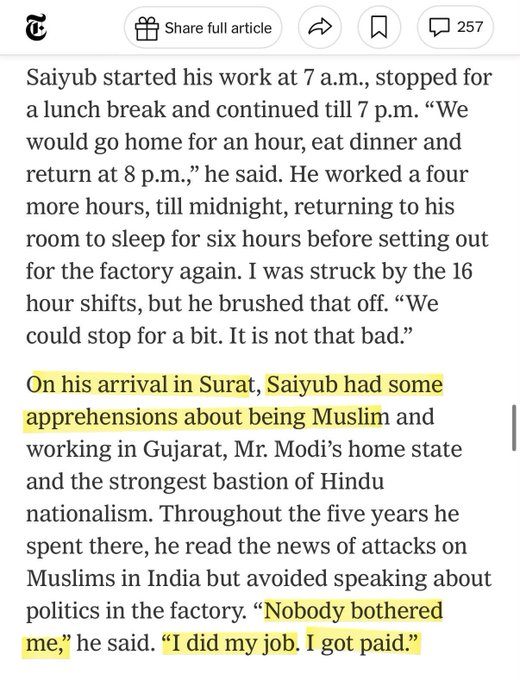
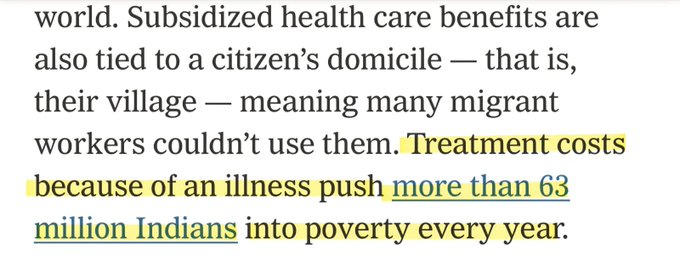
To support his claims about poverty, Peer cited a 2015 Draft National Health Policy, suggesting that healthcare costs push 63 million Indians into poverty. Writing in 2020, he conveniently ignored the Ayushman Bharat scheme, which had been launched in 2018 and covers around 50 crore people.
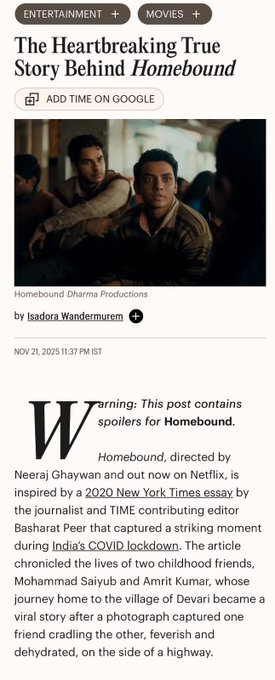
This article was later adapted into a film called Homebound, which received a nine-minute standing ovation at Cannes 2025. The reaction tells you exactly who this journalism is intended for.
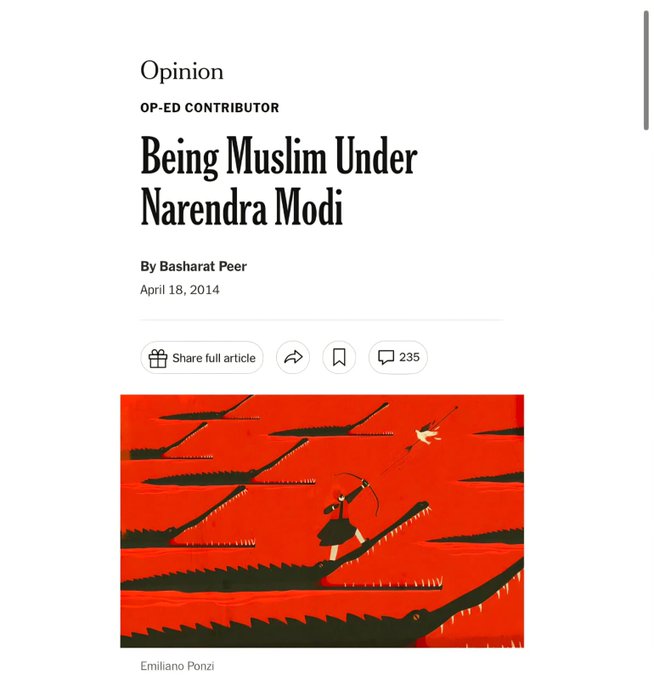
Another New York Times article by Peer, titled “Being Muslim Under Narendra Modi,” presents a narrative of systematic state-backed persecution of Muslims under the BJP government. Peer portrays an Islamophobic India to international audiences while ignoring facts that contradict his thesis.
The Consistent Separatist Pattern
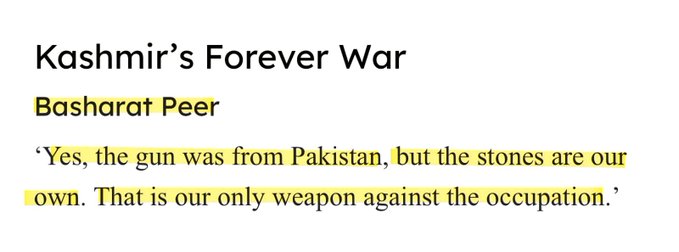
Peer consistently writes on Kashmir, stating that Kashmir has been forcefully occupied by India. He maintains that army presence in Kashmir is wrong and finds no problem with Pakistani militants and stone pelting in the region.
Under the influence of fundamentalism and money, journalists like Peer destroy the image of India. The separatist fanaticism seems to flow in their veins – the fanaticism that glorifies militancy and blames the Indian state for everything under the sun.
This article is based on an X thread by Brown Sepoys.
Subscribe to our channels on WhatsApp, Telegram, Instagram and YouTube to get the best stories of the day delivered to you personally.