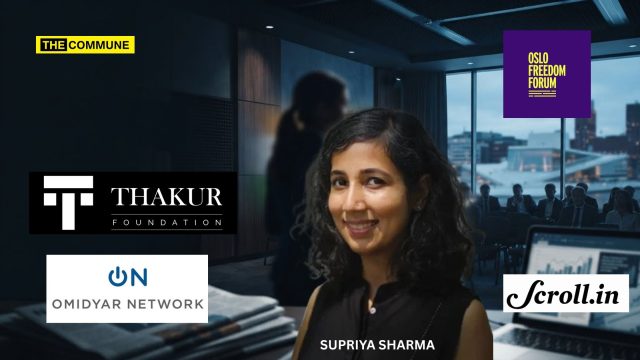
Supriya Sharma, Executive Editor of the digital news platform Scroll, recently used the platform at the Oslo Freedom Forum (OFF) in Norway to deliver a series of false and damaging allegations against the Indian state. Her remarks painted India as an authoritarian regime under Prime Minister Narendra Modi, is a part of a sustained campaign to tarnish the nation’s global image.
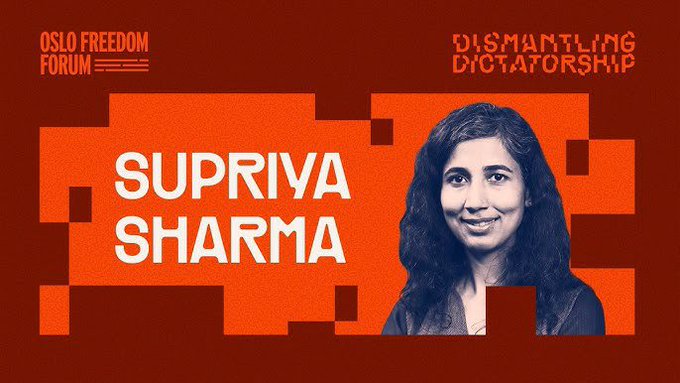
Sharma was among the speakers at the 2026 Oslo Freedom Forum, where she spoke about press freedom and the state of democracy in India.
Foreign Funding For Scroll?
Questions have been raised about the funding received by Scroll, the organisation she heads editorially.
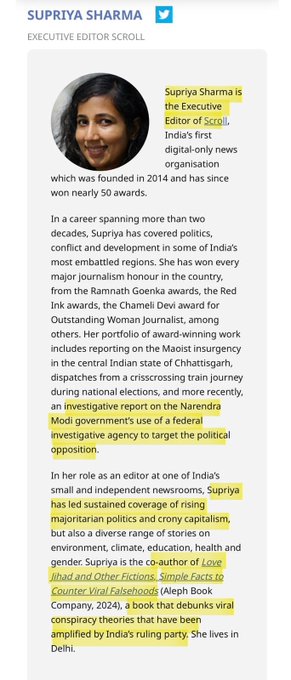
She also did her fellowship at the Reuters Institute for the Study of Journalism whose media outlet has is expert in spreading fake news about India.
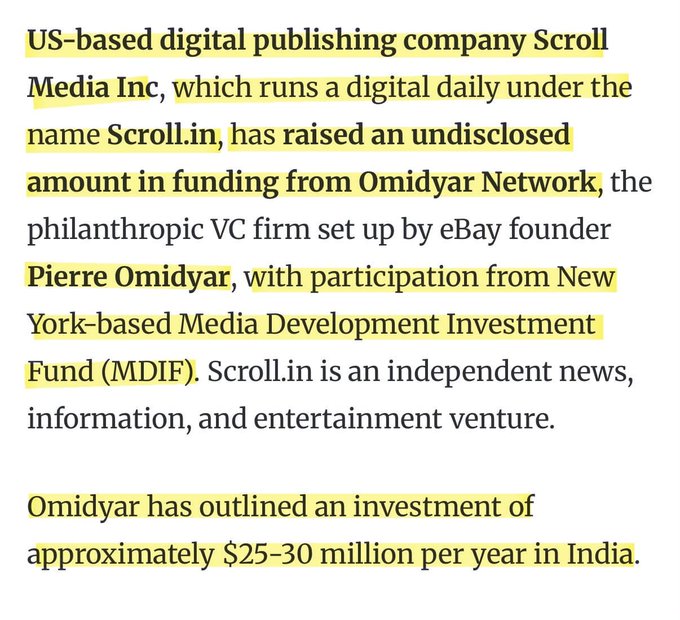
Scroll Media Inc., which operates Scroll.in, received funding from Omidyar Network in 2014, with participation from the New York-based Media Development Investment Fund. The investment was described at the time as being intended to strengthen the publication’s technology and editorial operations. Omidyar Network itself lists Scroll.in among its equity investments in India.
Additionally, Scroll is alleged to have received support from the Thakur Family Foundation and the India Philanthropy and Social Impact Media Foundation (IPSMF), which seem to have influenced the publication’s editorial positioning.
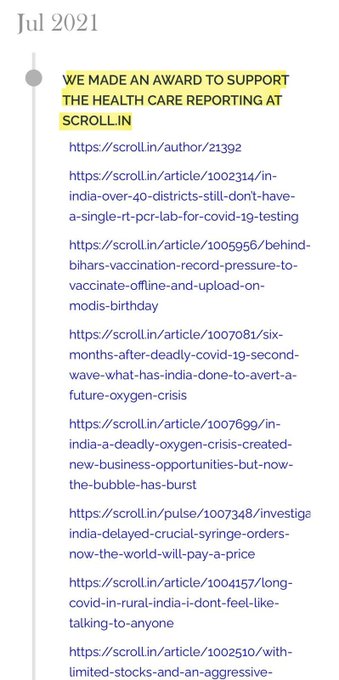
These further raise questions about the nature of the publication’s coverage of the Modi government and issues involving Hindus and ‘minority’ rights.
Sharma’s Oslo Appearance
At the Oslo Freedom Forum (OFF), Sharma presented her assessment of India under Prime Minister Narendra Modi, arguing that the country had become increasingly authoritarian.
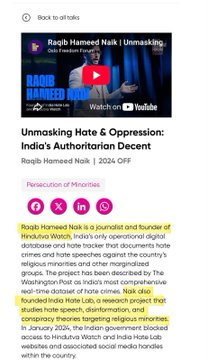
4. OFF had invited people like Raqib Hameed Naik of banned Hindutva Watch to speak against India’s policies. Sharma goes on to the same platform only to spread her propaganda that India has become authoritarian under Modi. pic.twitter.com/ouBcEL3S2V
— Brown Sepoys (@BrownSepoys) August 18, 2026
The OFF, which is organised by Human Rights Foundation, is also funded by anti-India organizations like Fritt Ord. HRF specifically invites speakers from countries it classifies as “authoritarian or hybrid authoritarian” regimes.

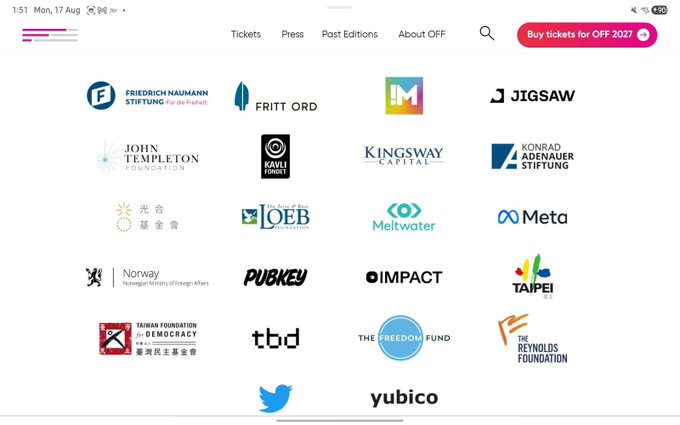
OFF had invited anti-India leftists like Raqib Hameed Naik of banned Hindutva Watch to speak against India’s policies.
Her remarks included claims that minorities were being treated as second-class citizens, dissent was being suppressed and the internet was subject to surveillance.
5. Supriya at OFF not only states that India has become authoritative under Modi but has also said that minorities are treated as second class citizens, dissent is silenced and the internet has been kept under surveillance. pic.twitter.com/9bsVhZ1TSW
— Brown Sepoys (@BrownSepoys) August 18, 2026
The manner in which Sharma presented cases involving Maoists and people charged under the Unlawful Activities (Prevention) Act (UAPA) was questionable as she described them simply as “civil rights activists”, thereby leaving out the criminal and security-related allegations against some of those facing prosecution.
6. At OFF, she misled the audience and goes on to refer the Maoists and UAPA convicts as ‘civil rights activists’, and stated they’re behind bars without any reason.
What she fails to mention is all these UAPA accused were involved in inciting riots and violence. pic.twitter.com/zzEo45zKA8
— Brown Sepoys (@BrownSepoys) August 18, 2026
She also made a reference to journalist Siddique Kappan. Sharma cited Kappan while discussing the use of anti-terror legislation against Muslim journalists.
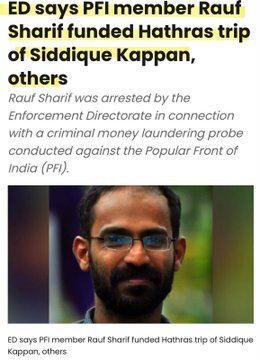
This account omitted the allegations and legal proceedings involving Kappan and Kerala-based activist K.A. Rauf Sherif, who was identified by investigators as the national general secretary of the now-banned Campus Front of India, the student wing of the Popular Front of India.
7. She cites Siddique Kappan to claim India uses anti-terror laws against Muslim journalists.
What she omits is Kappan was linked to a case involving K.A. Rauf Sherif, national general secretary of Campus Front of India, the student wing of banned PFI. pic.twitter.com/yFjuqnwGNY
— Brown Sepoys (@BrownSepoys) August 18, 2026
In fact, Kappan had confessed to the treason activities.
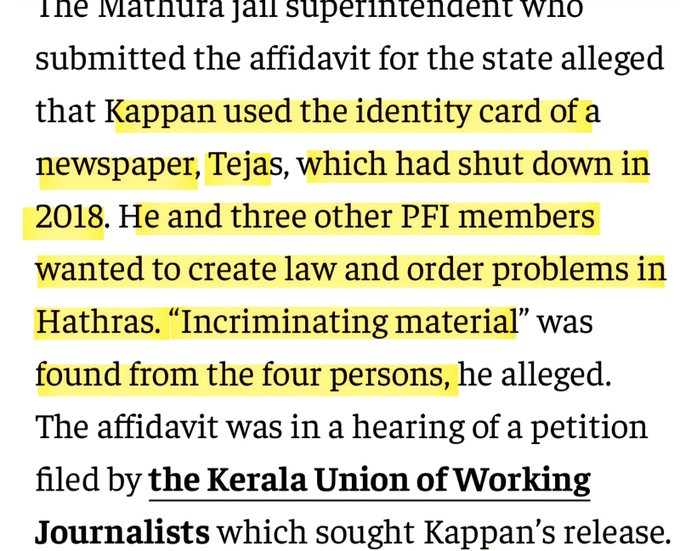
But Sharma refused to mention the prosecution’s claims concerning the wider network and activities associated with the case, while presenting Kappan primarily through the prism of press freedom.
Previous Interviews And Coverage
Sharma has also done very poor coverages of Prime Minister Narendra Modi and his government.
In July 2026, she interviewed rabid leftist anti-India writer Arundhati Roy at Jantar Mantar, a day after the protests there had ended. Scroll itself described the interaction as a conversation between Sharma and Roy. The discussion included criticism of Modi and the political establishment, with Roy discussing the protest movement and the treatment of young protesters. In this interview, Roy mentioned how she called her father ‘ch***ya’.
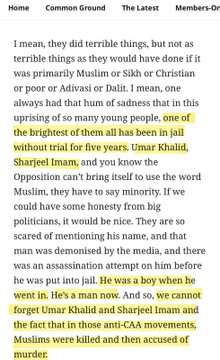
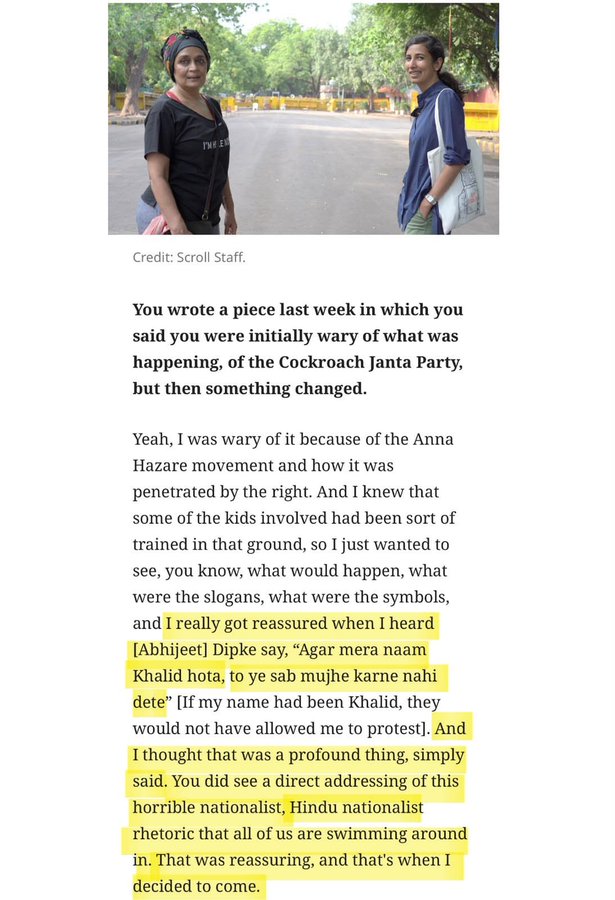
The interview is another example of what they describe as her consistent focus on the Modi government’s alleged authoritarianism and on cases involving activists such as Umar Khalid and Sharjeel Imam.
The 2020 Varanasi Report And FIR
Another controversy dates back to 2020, when Sharma reported from Domari village in Varanasi, which had been adopted by Prime Minister Modi under the Sansad Adarsh Gram Yojana.
Her June 8, 2020 report was titled “In Varanasi village adopted by Prime Minister Modi, people went hungry during the lockdown.” The report described food distress among residents during the COVID-19 lockdown.
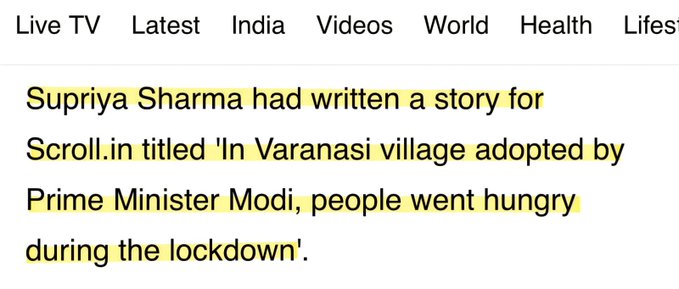
The report subsequently led to an FIR against Sharma after Mala Devi, a resident interviewed for the story, approached the police. According to the FIR, Devi alleged that Sharma had misrepresented her comments and identity and stated that she had not faced the hardship described in the report. The complaint alleged that the report had made fun of her poverty and caste.
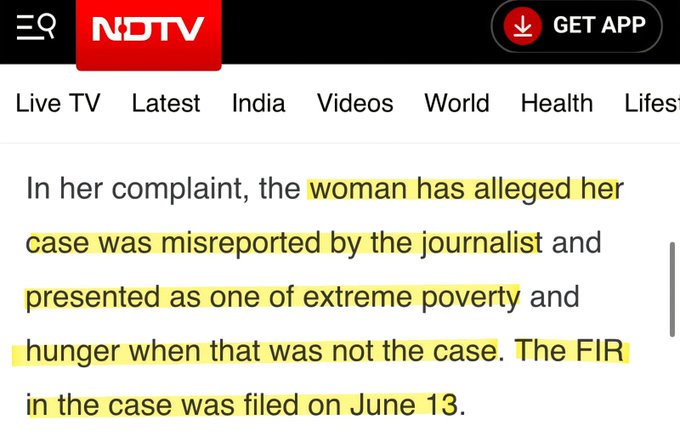
The FIR invoked provisions of the IPC and the Scheduled Castes and Scheduled Tribes (Prevention of Atrocities) Act. Sharma and Scroll denied the allegations. Scroll maintained that Devi’s statements had been accurately reported and stood by the article.
Defence From Media Circles
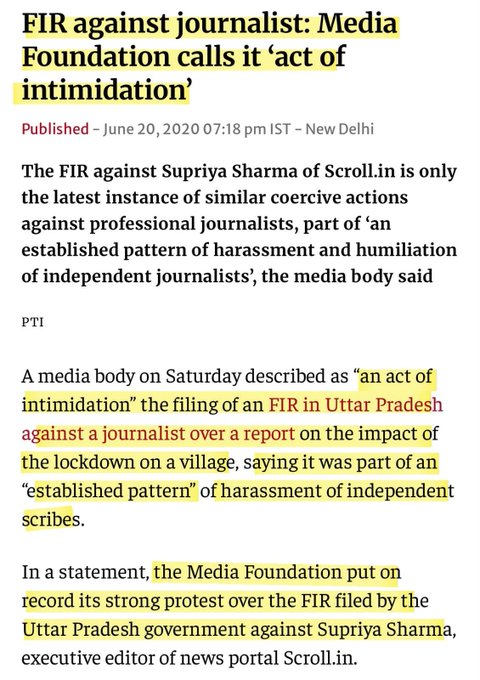
Following the controversy, Sharma received support from sections of the media and journalism community. Journalist Harish Khare who chairs Media Foundation and others defended her, and the same leftist ecosystem has previously supported individuals accused under security-related laws. The same Khare called Op Sindoor, ‘a stunted imagination’ and called UAPA terrorists as ‘intellectual architects’.
Love Jihad Book
Sharma has also co-authored the book Love Jihad and Other Fictions: Simple Facts to Counter Viral Falsehoods with Sreenivasan Jain and Mariyam Alavi.
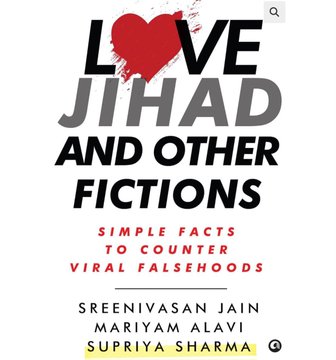
The book challenges the truth about love jihad and describes them as conspiracy theories or falsehoods promoted by sections of the Hindu right. Scroll had published excerpts from the book, including one examining the fact that Christians in Kerala first coined the term.
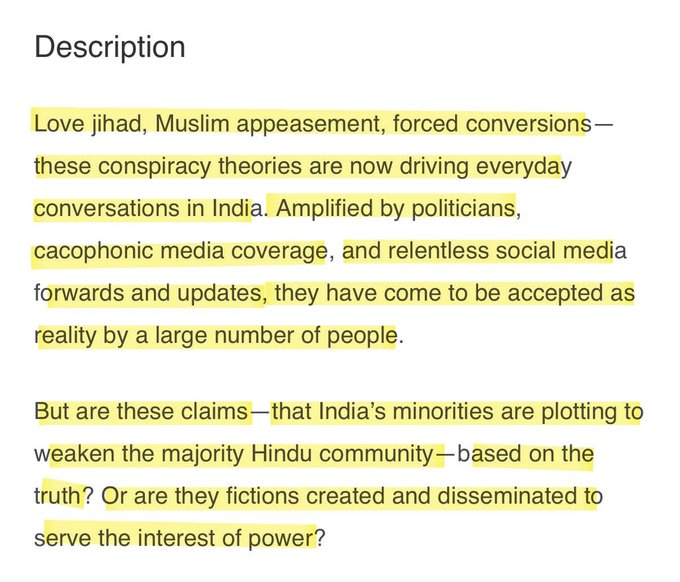
The book dismisses the love jihad narrative rather than accepting it as evidence of organised religious radicalisation.
The Oslo Narrative
Sharma’s Oslo appearance fits into a broader pattern in which her journalism and public interventions portray India as a country in democratic decline.
Her description of India as increasingly authoritarian, her references to minorities and dissent, her presentation of UAPA cases and her account of journalists such as Siddique Kappan, all add up.
This article is based on an X thread by Brown Sepoys.
Subscribe to our channels on WhatsApp, Telegram, Instagram and YouTube to get the best stories of the day delivered to you personally.