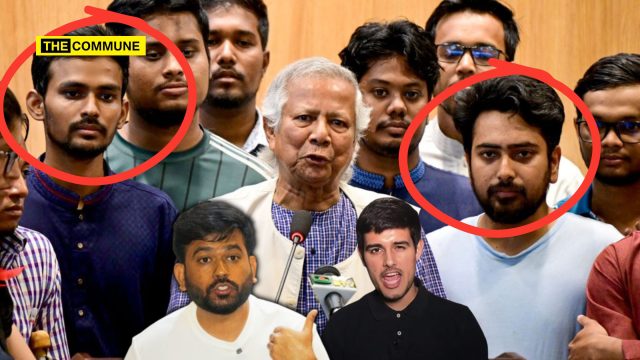
Two prominent leaders of Bangladesh’s National Citizen Party (NCP), Asif Mahmud and Nahid Islam, have expressed solidarity with the anarchic protesters in India, criticising the government’s handling of demonstrations and calling for the protection of democratic rights.
The statements come amid protests by the Cockroach Janta Party (CJP) against Chief Election Commissioner Gyanesh Kumar and the Special Intensive Revision (SIR) of electoral rolls.
Asif Mahmud, spokesperson for the NCP, shared a post titled “Release Detained Youth Protesters in India: Asif Mahmud”. In his statement, Mahmud criticised the Indian government over the arrests of young protesters.
“It is deeply disappointing that the Indian government has chosen to suppress and demean the voices of young people fighting for transparency and accountability,” Mahmud wrote, adding that he strongly condemned the arrests of young protesters.
Nahid Islam, convener of the NCP, separately issued a statement titled “Statement of Solidarity With the Youth of India”, dated 10 October 2026, in Dhaka, Bangladesh.
Addressing the youth and democratic forces of India, Islam wrote, “To the youth and democratic forces of India, We stand in firm solidarity with the young people of India demanding electoral accountability and defending their democratic rights. Recent detentions of peaceful protesters, organizers, and journalists in New Delhi, alongside internet suspensions and restrictions at Jantar Mantar, directly threaten fundamental freedoms. Concerns regarding electoral integrity and institutional independence require transparent answers, not barricades and censorship. This struggle is not yours alone. From Dhaka, we stand with you as friends bound by a common demand for accountable power, democratic institutions, and human dignity. We know this struggle intimately, because we have lived it. In July 2024, our student led movement against recruitment quotas transformed into a nationwide uprising against 15 years of authoritarian rule. The state responded with live ammunition. The United Nations later estimated that as many as 1,400 people were killed during the uprising and its suppression. We deeply remember and honor the solidarity shown by Indian students, writers, and independent voices during our uprising. We recognize India’s rich traditions of democratic resistance. The women of Shaheen Bagh defended equal citizenship through a Delhi winter, while generations of students at JNU and Jadavpur University have sustained organised dissent. These remain invaluable democratic inheritances. Today, we once again see the courage of young Indian women on the streets. In Bangladesh, women were also at the forefront of the July Revolution; their courage and sacrifices helped secure our victory. Hindutva majoritarianism, fascism, and every form of religious supremacy must not define the future of South Asia. We reject authoritarianism, communal hatred, and political intolerance in India just as we reject them in Bangladesh. Our shared future must rest on communal harmony and social justice, irrespective of religion, caste, gender, or class. No society is truly democratic while minorities live in fear, dissent is criminalized, and citizenship is conditional on identity. We call upon Indian authorities to respect the right to peaceful assembly, disclose the whereabouts and legal grounds for detaining protest organizers, immediately release those held for exercising their rights, and ensure journalists can report without intimidation or equipment seizure. Today, many young leaders have been unjustly detained. Sharjeel Imam and Umar Khalid continue to be kept behind bars for years without trial. We regard all of India’s young protesters and prisoners of conscience as comrades. Their courage inspires young people across South Asia. Our struggles are interconnected, extending to unresolved issues of border killings, water sharing, environmental protection, and national sovereignty. We seek a South Asia where nations treat each other as equals, governments remain accountable, and sovereignty is never an excuse for domination. To the democratic people of India: from Dhaka, and from the unfinished democratic aspirations of our July generation, we stand with you. Stand firm, protect one another, reject communal hatred, and refuse to surrender the future of South Asia to fascism and division. Inqilab Zindabad.”
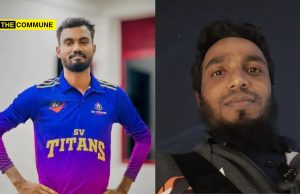
– Both are Bangladeshi jihadi leaders.
– Both were part of the Bangladeshi civil war.
– Both regularly abuse India and Hindus.
– Both have talked about cutting the “chicken neck” (Northeast India).
– Both support cockroaches in India.Do you need more proof that CJP is an anti-India movement?
— Mr Sinha (@Mrsinha) October 11, 2026
Both statements were in support of the protesters’ demands, portraying the demonstrations as a struggle for electoral accountability and democratic freedoms.
These comments came after Cockroach founder Abhijeet Dipke and YouTuber Dhruv Rathee were detained by the police for attempting to protest without permission.
Who Are Asif Mahmud And Nahid Islam?
Both of them rose to prominence during Bangladesh’s July 2024 student-led uprising against the government of former Prime Minister Sheikh Hasina.
Asif Mahmud, whose full name is Asif Mahmud Shojib Bhuiyan, was a key coordinator of the Students Against Discrimination movement. He later served as an adviser in Bangladesh’s interim government before joining the NCP, where he serves as a spokesperson.
Nahid Islam was another prominent leader of the 2024 movement. He served as an adviser in the interim government before stepping down to help establish and lead the NCP, where he serves as convener.
Anti-India & Anti-Hindu Statements By Islam & Mahmud
In the given instance, Islam has used the words “Hindutva majoritarianism”.
Asif Mahmud has also made statements critical of the BJP and Indian policies. In remarks attributed to him, Mahmud said: “The BJP is running the Government in India. They have a manifesto for Hindus, which we oppose. The people of Bangladesh do not like Hindutva.”
Mahmud has also criticised India’s Citizenship Amendment Act (CAA) and the proposed National Register of Citizens (NRC), arguing that these policies could result in Muslim immigrants returning to Bangladesh. He described the policies as being against Muslims.
In an interview with an Indian newspaper, Mahmud reportedly said that anti-India sentiment in Bangladesh was linked to India’s support for Sheikh Hasina, who remained in India after being removed from office. He argued that returning Hasina to Bangladesh would improve bilateral relations.
These remarks reflect Mahmud’s opposition to the BJP, Hindutva and Indian citizenship policies. Critics may view his framing of these issues as contributing to anti-India sentiment, although criticism of Hindutva or specific government policies is not, by itself, evidence of hostility towards Hindus as a community.
Mahmud has also been accused of downplaying attacks on minorities, particularly Hindus, in Bangladesh. In a verified Facebook post, he reportedly argued that allegations of minority persecution following Hasina’s ouster were part of a misinformation campaign aimed at maligning Bangladesh.
He claimed that Indian media had exploited fabricated allegations and said the interim government, independent fact-checkers and media workers had countered the claims with verified information.
The recent statements by Asif Mahmud and Nahid Islam raise serious questions about intervening in India’s internal political affairs and publicly lecturing the Indian government on democracy. Both are portraying the anarchic Cockroach protests as a struggle for democratic rights while condemning the Indian government’s response.
But on what basis do Bangladeshi political leaders believe they are entitled to pass judgement on India’s handling of its electoral process? Their statements are suspicious and the political motivations behind their intervention need to be looked at with a discerning eye, particularly given the wider concerns surrounding anti-India rhetoric emanating from Bangladesh.
Subscribe to our channels on WhatsApp, Telegram, Instagram and YouTube to get the best stories of the day delivered to you personally.