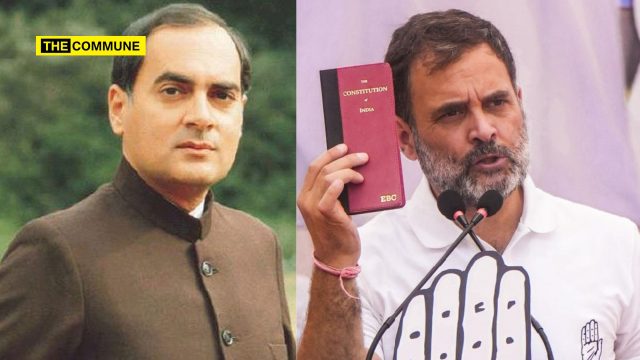
Congress scion Rahul Gandhi has once again invoked the Constitution to attack the Election Commission, accusing the authorities of “vote chori” and demanding Chief Election Commissioner Gyanesh Kumar’s resignation and a halt to the Special Intensive Revision (SIR) of electoral rolls.
In a post on X on 11 October 2026, Gandhi announced a march to the Supreme Court, claiming that young protesters had been beaten by police personnel and BJP supporters. He said the opposition would submit a memorandum to the Chief Justice of India demanding an end to alleged vote theft.
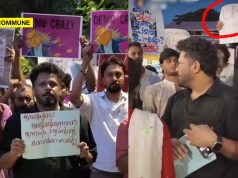
Yesterday, the nation’s young came out in Delhi to peacefully protest. They came with love in their hearts, not hatred or anger. They were beaten, both by cops and BJP goons.
This is not the India we want.
Tomorrow, we will march to the Supreme Court as Indians, united beyond party, gender, caste, community and state.
Youth, all opposition parties, civil society groups, all those who believe in democracy and stand by the Constitution of India, will walk with us.
We will submit a memorandum to the Chief Justice on behalf of the nation, demanding an end to vote chori, halting of SIR and the resignation of Gyanesh Kumar.
Narendra Modi, Amit Shah, Ajit Doval and Mohan Bhagwat cannot silence India’s voice. These cowards cannot intimidate us. They will have to step aside.
We will march together, with love, brotherhood and patriotism.
Daro mat.
Tomorrow, all of India will march to the Supreme Court.
कल दिल्ली में देश का युवा शांतिपूर्ण विरोध के लिए सड़कों पर उतरा। उनके दिलों में नफ़रत या गुस्सा नहीं, मोहब्बत थी। लेकिन उन्हें पुलिस और BJP के गुंडों, दोनों ने पीटा।
ऐसा भारत हम नहीं चाहते।
कल, सोमवार 12 अक्टूबर को, हम भारतीय होने के नाते सुप्रीम कोर्ट तक मार्च करेंगे। पार्टी, महिला-पुरुष, जाति, समुदाय और राज्य की हर दीवार से ऊपर उठकर, हम सब एक साथ चलेंगे।
देश का युवा, तमाम विपक्षी दल, सिविल सोसाइटी और लोकतंत्र में विश्वास रखने वाले, भारत के संविधान के साथ खड़े सभी लोग हमारे साथ चलेंगे।
हम देश की ओर से मुख्य न्यायाधीश को एक ज्ञापन सौंपेंगे। हमारी माँग है – वोट चोरी बंद हो, SIR पर रोक लगे और ज्ञानेश कुमार इस्तीफ़ा दें।
नरेंद्र मोदी, अमित शाह, अजित डोभाल और मोहन भागवत भारत की आवाज़ को दबा नहीं सकते। ये कायर हमें डरा नहीं सकते। इन्हें पीछे हटना ही होगा।
हम सब साथ चलेंगे – मोहब्बत, भाईचारे और देशभक्ति के साथ।डरो मत।
कल पूरा भारत सुप्रीम कोर्ट तक मार्च करेगा।
#ChaloDilli
— Rahul Gandhi (@RahulGandhi) October 11, 2026
But as Gandhi repeatedly invokes constitutional principles and demands accountability from the Election Commission, the Congress’s own record on electoral reforms offers a significant historical precedent.
One of the most consequential changes to India’s electoral system was brought about by the Constitution (Sixty-first Amendment) Act, 1988, enacted during the tenure of his father, the then Prime Minister Rajiv Gandhi. It amended Article 326 of the Constitution, reducing the minimum voting age from 21 to 18 years.
The reform expanded democratic participation by making millions of young Indians eligible to vote. However, the legislative process moved swiftly through Parliament, with the Lok Sabha debating and passing the Bill over two days in December 1988.
A Major Electoral Reform Passed In Two Days
The Constitution Amendment Bill was introduced in the Lok Sabha on 13 December 1988. The House debated and passed it on December 14 and 15. The Rajya Sabha passed it on December 20, and the amendment received presidential assent on 28 March 1989.
According to the Election Commission of India’s own historical account, 3.57 crore people aged between 18 and 21 were added to the electorate ahead of the November 1989 general election.
The amendment was a significant expansion of voting rights. Yet its passage also illustrates how a government can push through a major change to the electoral framework within a short parliamentary window.
The timing is noteworthy. The Rajiv Gandhi government was facing mounting political challenges ahead of the 1989 general election, including the departure of prominent leaders such as V.P. Singh. Whether electoral calculations influenced the government’s timing and urgency is a matter of political interpretation; the legislative timeline itself is documented.
What Happened To Congress In The 1989 Election?
The 1989 general election saw Congress’s Lok Sabha tally fall from 414 seats in 1984 to 197 seats. The National Front subsequently formed a government under V.P. Singh.
The expansion of the electorate was therefore no guarantee of an electoral victory for Congress. Nor does the chronology, by itself, establish that the amendment was intended to manipulate the election or that the newly eligible voters determined its outcome.
When Congress was in power, a major electoral reform that added crores of voters was enacted through a parliamentary process spanning just days. Today, the party is demanding extensive scrutiny of the Election Commission’s revision of electoral rolls and questioning the legitimacy of its actions.
Does Rahul Gandhi Apply The Same Standard To Congress?
Gandhi’s present demands concern alleged irregularities in the SIR process, which are distinct from the 61st Amendment’s expansion of voting rights. The historical comparison does not establish that the two exercises were equivalent or that the current allegations of electoral manipulation are false.
However, Congress’s own record is relevant when its leadership presents itself as the sole defender of constitutional principles and electoral accountability.
If the speed and consequences of electoral changes are grounds for scrutiny today, the same standard should apply when examining the decisions of previous governments, including those led by Congress.
Invoking the Constitution is not a substitute for evidence. Allegations against the Election Commission must be examined on their merits, just as the actions of past governments should be assessed against the same standards of transparency, parliamentary scrutiny and accountability.
Subscribe to our channels on WhatsApp, Telegram, Instagram and YouTube to get the best stories of the day delivered to you personally.