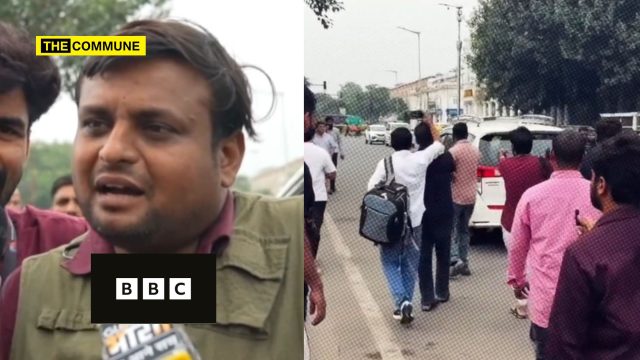
BBC Hindi correspondent Dilnawaz Pasha wants everyone to know that he is doing his job. When police stopped him near barricades during the Cockroach party protests, he challenged them.
BBC’s own social media handles show that he tried to cross the barricade.
View this post on Instagram
When nationalist journalists confronted him over his own reporting and questioned why he appeared to be showing only one side of the protests, he refused to answer and ran away in his car.
View this post on Instagram
BBC’s Islamic News journalist Dilnavaz Pasha was pushing his left-wing agenda at the Jantar Mantar protest when nationalist journalists confronted him and exposed his narrative.
He eventually fled the scene by getting into a car. https://t.co/M1gNDLWLU4
— Megh Updates 🚨™ (@MeghUpdates) October 11, 2026
Pasha wants the freedom to question the police. But can he not be questioned about his own journalism?
The question is particularly relevant given what happened to journalists covering CJP protests in July 2026. Reporters were surrounded, kicked, pushed to the ground and attacked by protesters who branded sections of the media “Godi media”. Journalist Dev Kotak reported being assaulted, while footage from the protest showed reporter Shafali Nigam being attacked as she attempted to report.
Dev Kotak, a reporter with Times Now, was attacked by protestors at Jantar Mantar. It’s absolutely unfair.
Having covered the @Cockroachisback protest for days now,this unruly behaviour towards some channels is uncalled for.
A reporter is not at fault.
This is unacceptable. https://t.co/D3S6l9EByS— Hemani Bhandari (@HemaniBhandari) July 21, 2026
View this post on Instagram
Where is the same outrage when protesters allegedly intimidate journalists, attack them for their reporting or try to silence them because they dislike what is being reported?
Pasha’s coverage places heavy emphasis on police restrictions, detentions and confrontations, while giving insufficient attention to misconduct by protesters and political activists. Police action deserves scrutiny. But so does the conduct of the crowd and the conduct of Congress leaders and supporters when they confront journalists or police. It is noteworthy that Congress scion Rahul Gandhi and his sister Priyanka Gandhi were punching and kicking women police officers.
भाई-बहन दोनों मिलकर बदतमीज़ी और मारपीट की दुकान चला रहे हैं!
प्रियंका गांधी ने महिला पुलिस कर्मी पर कोहनी से हमला कर ये साबित कर दिया कि महिला सम्मान की बात करना कांग्रेस के लिए सिर्फ दिखावा है। सत्ता की राजनीति से लेकर सड़क पर मारपीट ही कांग्रेस का असली चेहरा है।
स्कैम और लूट करने वाले अब सीधे-सीधे गुंडई और मारपीट पर उतर आए हैं… 😳
— BJP (@BJP4India) October 7, 2026
In his Eagerness to make a reel, Rahul Gandhi attempts to push a female police personnel. https://t.co/wQRzDh2DpG
— Pradeep Bhandari(प्रदीप भंडारी)🇮🇳 (@pradip103) October 7, 2026
Then came the latest confrontation. Pasha was stopped by police while trying to move past barricades and insisted that he was simply doing his job. Yet when other reporters questioned his coverage, he maintained that he was there to report, not to answer their questions.
View this post on Instagram
That is a convenient distinction. A journalist is entitled to ask difficult questions of the police. Other journalists are equally entitled to ask difficult questions of him. Reporting is not a licence to avoid scrutiny.
The BBC’s coverage has reported allegations of sexual misconduct by police against women journalists during the October protests – but these are all untrue. It got exposed on the day of the protest itself.
BBC has time and again peddled anti-India propaganda in the name of journalism. When Pasha got caught doing that, he could only run away.
Subscribe to our channels on WhatsApp, Telegram, Instagram and YouTube to get the best stories of the day delivered to you personally.