Home Blog Page 97

Congress-DMK Rift Widens: Poster War Erupts As Congress Seeks Votes In DMK-Held Madurai North

Poster War Erupts As Congress Seeks Votes In DMK-Held Madurai North

The appearance of posters seeking votes for the Congress party in the Madurai North Assembly constituency has triggered unease and anger within Dravida Munnetra Kazhagam circles, even as seat-sharing talks among alliance partners are yet to be finalised.

Congress workers have pasted posters across several localities in Madurai North urging voters to vote for the party’s hand symbol. The move has come as a surprise to the DMK, as the constituency is currently represented by a DMK MLA and no formal decision has been taken on constituency allocation within the alliance.

The posters, which prominently display slogans such as “Vote for the hand symbol” and appeal to voters in Madurai North to support the Congress candidate, do not name any individual contestant. However, the messaging has created the impression that the constituency has already been allotted to the Indian National Congress, sparking speculation and controversy.

The development follows remarks made a few days earlier by the Madurai North MLA K Thalapathi, who also serves as the DMK’s Madurai city district secretary, during a public meeting held to mark Language Struggle Martyrs’ Day. In his speech, the DMK leader had criticised the Congress and its MPs Manickam Tagore and Jothimani, alleging that the Congress secures only around 3,000 to 4,000 votes in a constituency and lacks sufficient cadres even to form booth committees.

In response, Manickam Tagore, who represents Virudhunagar in the Lok Sabha, took to social media urging Congress president Mallikarjun Kharge to ensure that the party contests the Madurai North Assembly constituency. He also raised the issue with Selva Perunthagai, the Tamil Nadu Congress Committee president, objecting to the remarks made by the DMK MLA.

It is against this backdrop that the Congress posters have surfaced in Madurai North. With the final seat-sharing arrangement for the Assembly elections still pending among alliance partners, the Congress party’s move has intensified tensions within the alliance.

Subscribe to our channels on TelegramWhatsApp, and Instagram and get the best stories of the day delivered to you personally.

“Capable Of Dividing Society”: Supreme Court Stays UGC’s New Anti-Discrimination Rules

“Capable Of Dividing Society”: Supreme Court Stays UGC’s New Anti-Discrimination Rules

The Supreme Court on Thursday, 29 January 2026, stayed the implementation of the University Grants Commission’s (UGC) newly notified anti-discrimination regulations, expressing concern over their vague provisions and potential for misuse. A Bench comprising Chief Justice Surya Kant and Justice Joymalya Bagchi issued notice to the Union government and the University Grants Commission, directing that the regulations remain on hold until further orders.

The court observed that intervention was necessary as the guidelines were “capable of dividing society” and could have a “grave impact.” It directed that the earlier 2012 UGC guidelines, which were advisory in nature, would continue to operate in the interim.

“If we don’t intervene it will lead to a dangerous impact, will divide society and will have a grave impact,” the Chief Justice said, adding, “Prima facie we say that the language of the regulation is vague and experts need to look into for the language be modulated so that it is not exploited”.

The UGC had notified the new regulations earlier this month, making it mandatory for all higher education institutions to constitute equity committees to address complaints of discrimination and to promote inclusion on campuses. Under the rules, the committees are required to include representatives from the Other Backward Classes, Scheduled Castes, Scheduled Tribes, persons with disabilities, and women.

However, the regulations exclude students from the general category from approaching the grievance redressal mechanism. This provision has been challenged before the Supreme Court and has also triggered protests by students in several states, with critics alleging that the framework is exclusionary and susceptible to misuse.

During the hearing, petitioners argued that the regulations deny institutional protection to individuals outside the SC, ST, and OBC categories. Their counsel contended that such a selective approach encourages hostility against non-reserved categories and undermines the objective of equity. Emphasising constitutional principles, the petitioners’ counsel submitted that “all citizens must be protected,” describing this as “the very mandate of the Constitution”.

Justice Bagchi said the court was keen on ensuring a “free and equitable atmosphere in universities” and raised concerns over the specific clause defining discrimination. He also questioned why provisions relating to ragging had been omitted from the 2026 regulations.

Senior advocate Indira Jaising, appearing for petitioners seeking stronger safeguards against caste-based discrimination, defended the regulations. She argued that the plea was grounded in the constitutional vision of equality and the need to create an inclusive academic environment.

The UGC framed the regulations following a 2019 public interest litigation filed by Radhika Vemula and Abeda Salim Tadvi, the mothers of Rohith Vemula and Payal Tadvi, respectively. Both students died by suicide after allegedly facing caste-based discrimination at their universities. The PIL had sought the creation of a robust institutional mechanism to address caste discrimination on campuses.

Source: India Today

Subscribe to our channels on TelegramWhatsApp, and Instagram and get the best stories of the day delivered to you personally.
Dravidian Model TN: Govt College Canteen Master Arrested For Sexual Abuse Of 22-Year-Old Woman

Govt College Canteen Master Arrested for Sexual Abuse of 22-Year-Old Woman Dravidian model TN

A canteen master has been arrested for allegedly sexually abusing a 22-year-old woman at a government college campus in Nandanam, Chennai, police said on Tuesday.

According to initial information, the woman had been working at the college canteen for the past few days. Colleagues later lodged a complaint at the Saidapet police station, alleging that the canteen master, identified as Gunasekar, a native of Pudukkottai district, had sexually harassed her on multiple occasions.

Based on the complaint, police conducted a preliminary investigation and found that the woman is reportedly a person with mild intellectual disability. Police stated that the accused allegedly took advantage of her condition and sexually exploited her. It is further alleged that he repeatedly behaved in an inappropriate manner towards her within the college premises.

Following the initial inquiry, Gunasekar was arrested and further investigation is underway. During questioning, the accused reportedly claimed that more than one person may have been involved in sexually abusing the woman.

Police sources said that a detailed investigation will be carried out at the Nandanam government college, and those found to have acted inappropriately with the woman may also be arrested in the next phase of the probe.

Subscribe to our channels on TelegramWhatsApp, and Instagram and get the best stories of the day delivered to you personally.
Okkaligar Youth Body Seeks Reinstallation Of Deities At Dindigul’s Padmagiri Hill Temple

Okkaligar Youth Body Seeks Reinstallation Of Deities At Dindigul’s Padmagiri Hill Temple

A district executive committee meeting of the Okkaligar (Kappu) Youth Association was held at the Okkaligar Bhavan headquarters in MVM Nagar, Dindigul, on Tuesday.

The meeting was presided over by district president Govindaraj, with secretary Karthikeyan and treasurer Sadaimuthu in attendance.

During the meeting, members highlighted the religious significance of Padmagiri Hill in Dindigul, which is visited every month by devotees who undertake girivalam (circumambulation) and offer prayers. However, the absence of deity idols at the temple located on the hilltop has been a longstanding source of concern among devotees.

The association passed resolutions urging the reinstallation of the idols of Abirami Amman and Padmagireeswarar at the Padmagiri Hill temple. It also called upon both the Central and State governments to take necessary steps to facilitate the consecration (pratishta) of the deities at the hilltop shrine.

Additionally, the association urged political parties to include the installation of the deities at Padmagiri Hill as an election promise.

The meeting concluded with a call for coordinated efforts to restore regular worship at the temple and address the sentiments of devotees.

Source: Dinamalar

Subscribe to our channels on TelegramWhatsApp, and Instagram and get the best stories of the day delivered to you personally.
ABVP Slams DMK For Politically Loaded And Divisive Republic Day Campaign, Calls It Constitutional Misinformation

ABVP Slams DMK’s ‘Unified India’ Campaign, Calls It Constitutional Misinformation

The North Tamil Nadu unit of the Akhil Bharatiya Vidyarthi Parishad (ABVP) issued a press statement criticising the ruling Dravida Munnetra Kazhagam (DMK) over its “Unified India, Not a Uniform India” campaign, accusing the party of misinterpreting constitutional principles and engaging in what it termed “fake politics of unity”.

In a statement released by the ABVP North Tamil Nadu State Secretary, the student organisation said the Constitution’s Preamble explicitly refers to the “unity and integrity of the nation” and argued that administrative uniformity should not be portrayed as divisive. The ABVP maintained that measures such as “One Nation, One Election” or the Goods and Services Tax were administrative in nature and should not be equated with threats to India’s diversity.

The ABVP also criticised the DMK for what it described as selective opposition to uniformity, alleging that the government had no hesitation in implementing uniform increases in taxes such as property tax and electricity tariff, while opposing uniform legal frameworks at the national level.

Responding to remarks made by the DMK Students’ Wing against the organisation, the ABVP said attempts to mock or delegitimise a student body reflected an inability to engage with dissenting views. It asserted that patriotism and national unity were central to its ideology and accused the ruling party of promoting family-centric politics.

The statement further raised concerns about higher education governance in Tamil Nadu, pointing out that vice-chancellor posts in several major universities had remained vacant for years. According to the ABVP, the failure to fill these positions had adversely affected the education system, and it questioned the government’s authority to lecture on national unity while administrative issues persisted within the State.

Citing Article 44 of the Constitution, which refers to the State’s endeavour to implement a Uniform Civil Code, the ABVP argued that opposing the idea of uniformity was inconsistent with the Constitution’s directive principles. The organisation alleged that the DMK’s campaign undermined the constitutional oath taken by those in power.

The ABVP also accused the DMK government of failing to uphold the rule of law, referring to incidents such as illicit liquor deaths and alleged atrocities against Scheduled Castes. It questioned whether the government’s emphasis on unity extended beyond political rhetoric to address governance failures affecting the public.

The ABVP said it was prepared to challenge the DMK’s political positions both legally and in the public domain, asserting that divisive politics driven by electoral considerations would not succeed.

8-Foot Iron Spear Dating To 3345 BCE Unearthed At Iron Age Burial Site In Tamil Nadu

8-Foot Iron Spear Dating To 3345 BCE Unearthed At Iron Age Burial Site In Tamil Nadu

Archaeologists in Tamil Nadu have unearthed an 8-foot-long iron spear dating back to around 3345 BCE, making it the longest Iron Age iron weapon discovered in India to date. The discovery was made at an Iron Age burial site in Thirumalapuram near Thoothukudi (Tuticorin).

The spear was found alongside a second iron spear measuring approximately 6.5 feet, as well as an urn containing gold objects. According to archaeologists, the two spears were arranged in an X-shaped formation, indicating that the burial was not ordinary and may have held ritual or symbolic significance.

Experts believe the unusually long spear may have served either as a ceremonial object or as a weapon used by ancient communities to protect cattle and stored wealth, which were considered vital assets during the Iron Age. The spear is slightly rounded at one end, possibly to facilitate handling.

The iron weapon has survived in remarkably good condition, a fact researchers attribute to the dry soil conditions in Tamil Nadu, which helped preserve the metal over thousands of years. Previous Iron Age burial sites in India have yielded weapons such as daggers, swords and knives, but no iron spear of this size has been documented so far.

Archaeologists said the find significantly enhances scholarly understanding of prehistoric metallurgy and social hierarchies in the region. Producing an iron weapon of this size would have required advanced metallurgical knowledge, as iron smelting typically requires temperatures between 1,200°C and 1,500°C, suggesting the presence of well-developed furnace technology and skilled metalworkers during the period.

To further analyse the discovery, the Tamil Nadu State Department of Archaeology has partnered with the metallurgy department of IIT Gandhinagar. The joint research initiative will examine Iron Age sites across Tamil Nadu and is expected to continue until 2028.

Source: OpIndia

Subscribe to our channels on TelegramWhatsApp, and Instagram and get the best stories of the day delivered to you personally.
Certificate Programme In Temple Management Launched Under Kanchi Kamakoti Peetham

Certificate Programme In Temple Management Launched Under Kanchi Kamakoti Peetham

A Certificate Programme in Temple Management, aimed at creating a trained, dharma-aligned cadre of volunteers to support temple administration, has been launched under the aegis of Sri Kanchi Kamakoti Peetham. The programme is already underway following an inauguration on 23 January 2026.

The initiative is inspired by the vision of His Holiness Sri Sri Sankara Vijayendra Saraswathi Swamy, the 70th Peetadhipathi of the Kanchi Kamakoti Peetham, and seeks to strengthen temple governance while preserving Agamic traditions and spiritual autonomy. The programme is designed to equip committed volunteers to assist temples in advisory, facilitative and stewardship roles without interfering in religious practices.

According to the organisers, temples today face growing administrative, financial and regulatory complexities, alongside heightened public expectations on transparency, safety and orderly management. At the same time, there is a shortage of trained, dharma-conscious individuals who can support temple functioning without transgressing religious boundaries. The programme aims to bridge this gap by providing structured guidance to devotees who wish to serve temples meaningfully.

The programme has been structured and guided by LV Subramanyam, IAS (Retd.), former Chief Secretary to the Government of Andhra Pradesh. Institutional support and administrative facilitation are being provided by Badruka Educational Society, through Badruka Educational College.

The 28-hour course will be spread over 14 weeks, with classes held every Saturday between 2 PM and 4 PM. The programme is open to Hindu graduates aged between 25 and 70 years who demonstrate a strong service orientation and faith in Dharma. Selection will be based on resume screening followed by a personal interview. There is no course fee.

Participants will be evaluated based on classroom participation, quality of engagement and a written and/or oral assessment at the end of the programme. Successful candidates will receive a certificate jointly issued by the Sri Kanchi Kamakoti Peetham and Badruka Educational College and may be considered for opportunities to associate with temples in advisory and management-support roles.

The leadership and advisory team for the programme includes administrators, scholars, educationists, temple practitioners and former senior government officials, including individuals with experience in endowments administration, Vedic scholarship and institutional management.

Organisers stated that the programme is not intended to replace priests, trustees or statutory authorities, but to strengthen the temple ecosystem through informed, disciplined and dharma-aligned participation.

Subscribe to our channels on TelegramWhatsApp, and Instagram and get the best stories of the day delivered to you personally.
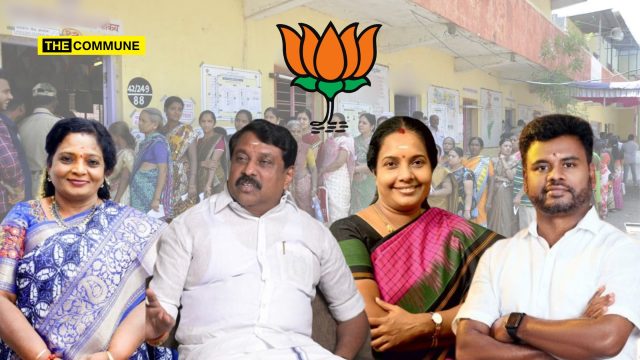
Another DMK ‘Prestige Project’ Under Scrutiny: Structural Red Flags In Kilambakkam Skywalk

Another DMK ‘Prestige Project’ Trips: Structural Red Flags In Kilambakkam Skywalk

The DMK government’s pet project, the Kalaignar Centenary Bus Terminus (KCBT) has been under the scanner for several issues over the years. This time, the pedestrian skywalk, has come under scrutiny.

The construction of the pedestrian skywalk connecting the Kalaignar Centenary Bus Terminus (KCBT) at Kilambakkam with a proposed suburban railway halt has come under scrutiny following observations raised by the Centre for Urbanisation, Buildings and Environment (CUBE), a Centre of Excellence housed at the Indian Institute of Technology Madras.

CUBE flagged concerns relating to design fragmentation, unauthorised execution, and deviations from the approved construction methodology in the 275-metre-long skywalk project. Chennai Metropolitan Development Authority (CMDA) officials confirmed receipt of the observations and stated that corrective works would be undertaken under CUBE’s supervision. Officials, however, maintained that the structure is safe and indicated that the skywalk and the newly added railway halt are likely to be opened to the public after the Assembly elections.

In a detailed letter to CMDA, the government-backed technical body highlighted structural and procedural lapses in the execution of the skywalk, which was originally designed by CUBE as a single, integrated structural system consisting of 55 grids. The project faced delays after private landowners challenged the acquisition of nearly one acre of land along GST Road, following which a stay order from the Madras High Court halted construction. This led authorities to revise the alignment to reduce private land acquisition by almost half.

Subsequently, CMDA appointed a separate structural consultant through a tender process to redesign key sections of the skywalk, particularly the spans between 20 metres and 100 metres, including portions crossing GST Road and the national highway. CUBE stated that its original drawings were ultimately used only for a limited segment within the bus terminus, between Grids 21 and 25, and that design responsibility for the remaining sections was formally transferred to the new consultant.

CUBE noted that it had no role in the revised structural scheme or construction methodology beyond that point. In its communication, the centre warned that the first long-span steel truss erected over the national highway exhibited visible sagging, a condition that can occur in truss bridges if erection-stage forces are inadequately analysed or monitored.

The centre also raised concerns regarding a staircase structure, stating that no “Good for Construction” drawings were issued due to unresolved discrepancies between architectural drawings and actual site levels. Despite this, reinforcement and slab works reportedly proceeded, resulting in a deck plate failure around September 2025. CUBE stated that this incident was not reported to it at the time. It further observed that the subsequent addition of crossbeams indicated possible structural inadequacy in the original design.

Additional deviations highlighted by CUBE included shifted beam bearings, altered weld connections, and departures from the approved erection methodology. While the skywalk was designed for ground-level fabrication followed by lifting, construction was carried out using in-situ erection methods, potentially introducing unaccounted structural stresses.

Following multiple site inspections, CUBE recommended that a single empowered authority reassess the skywalk as a unified structural system to ensure overall safety and integrity.

CMDA officials reiterated that remedial measures would be implemented based on the recommendations and that the facility would be opened to the public only after the necessary corrections and clearances are completed.

Source: The New Indian Express

Subscribe to our channels on TelegramWhatsApp, and Instagram and get the best stories of the day delivered to you personally.
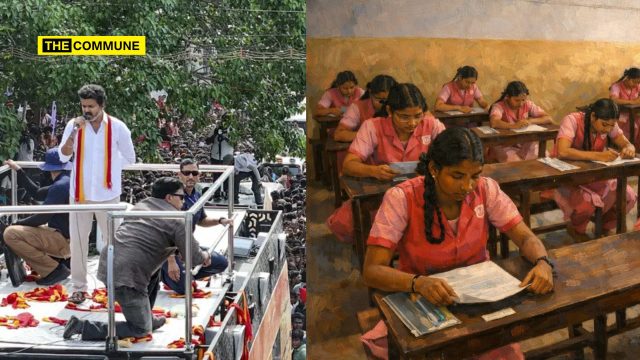
Dravidian Model TN: 75-Year-Old Woman Sexually Assaulted By 24-year-Old Ganja-Intoxicated Youth In Vellore

Dravidian Model TN: 75-Year-Old Woman Sexually Assaulted By 24-year-Old Ganja-Intoxicated Youth In Vellore

A 24-year-old man has been arrested for allegedly assaulting and sexually abusing a 75-year-old woman at her residence in Paravakkal village near Gudiyattam in Vellore district.

The accused has been identified as Ajith Kumar, son of Pandu, a resident of Paravakkal village. Ajith Kumar, who works as a melam (traditional percussion) artist, is alleged to have entered the elderly woman’s house in an inebriated condition a few days ago.

According to police sources, the elderly woman, who lives alone, was at home when the accused trespassed into her house late at night and demanded money for his expenses. When she told him that she did not have any money, an argument reportedly broke out. It is alleged that the accused then assaulted the woman and sexually abused her. During the incident, the woman lost consciousness.

Believing that the woman had died, the accused allegedly fled the spot. The following day, neighbours noticed that the woman’s house was found open and became suspicious. Upon entering the house, they found her lying unconscious with serious injuries. The woman’s son was informed, following which he rushed to the spot and took her to the Gudiyattam Government Hospital.

After initial treatment, the woman was discharged and taken home. However, her son noticed that she remained fearful and distressed, especially during the night. On questioning her further, the woman reportedly disclosed that a young man named Ajith Kumar had entered her house under the influence of alcohol, demanded money, assaulted her, and sexually abused her.

She was subsequently re-admitted to the Gudiyattam Government Hospital, where she is currently undergoing treatment.

Based on a complaint lodged at the Gudiyattam Taluk Police Station, police registered a case and launched an investigation under the direction of Gudiyattam Deputy Superintendent of Police Suresh. The probe was led by Taluk Inspector Sivashankaran and his team.

During the investigation, police stated that the allegations against Ajith Kumar were substantiated. It was further revealed that the accused was under the influence of ganja at the time of the incident. He was arrested and later produced before a judicial magistrate, who remanded him to judicial custody.

Source: ABPLive

Subscribe to our channels on TelegramWhatsApp, and Instagram and get the best stories of the day delivered to you personally.

DMK Mouthpiece Sun News Spreads Fake News – Claims TN As First State To Roll Out HPV Vaccine Programme; Several Other Indian States Have Achieved This Years Ago

DMK Mouthpiece Sun News Spreads Fake News - Claims TN As First State To Roll Out Cervical Vaccine Programme; Several Other Indian States Have Achieved This Years Ago

On 27 January 2026, a social media post published by DMK mouthpiece Sun News claimed that the Tamil Nadu Chief Minister was launching the first-ever cervical cancer vaccination programme for young women in India in Chennai.

But this claim is incorrect and Sun News, claiming to be a news portal, is spreading fake news.

According to official records and previous government announcements, multiple Indian states had introduced cervical cancer vaccination programmes several years prior to Tamil Nadu’s initiative.

Punjab launched the Human Papillomavirus (HPV) vaccination programme in 2016, with technical support from the World Health Organization (WHO). The programme was formally rolled out in the districts of Bathinda and Mansa, and Punjab became the first state in the country to include HPV vaccination in its immunisation programme.

Sikkim followed with a statewide HPV vaccination drive between 2018 and 2019, which has since been cited as a best-practice model for multiple-age cohort vaccination in India.

Bihar introduced a cervical cancer vaccination programme in 2024, while Maharashtra launched a similar public health initiative in December 2025.

Sun News post did not reference these earlier programmes while describing the Tamil Nadu initiative as the first of its kind in the country. The omission rendered the claim misleading and false.

Subscribe to our channels on TelegramWhatsApp, and Instagram and get the best stories of the day delivered to you personally.