Home Blog Page 96

When NDTV Journalist Padmaja Joshi Faced Casteist Attacks Over Her Brahmin Identity

The 2026 UGC rules set of several claims and counterclaims by its supporters and dissenters. Among those claims made, many kept holding on to a claim that caste discrimination was not applicable to the upper caste category. Many even said that those with ‘upper caste surnames’ would never face any kind of discrimination.

Quoting such a statement, NDTV news anchor Padmaja Joshi shared screenshots of vile casteist comments for a post she made in 2023 when she was associated with Times Now.

A handle that went by the name Neelam Sumbrui had written, “A Brahmin woman anchor claiming that caste doesn’t exist and there are no statistics to back it up! @PadmajaJoshi You yourself are a statistic. Just draw a caste representation of @TimesNow employees and you will get the data where it is overwhelmingly upper caste.”

Quoting a screenshot of this post, Joshi wrote, “Convenient that people don’t bat an eyelid before reducing a person to just her caste. I am what I am not because of being a woman, or a Brahmin..but because I work hard. And the same applies to scores of my colleagues in office.”

And the comments abusing Joshi for her caste came in the dozens.

In 2026, when the UGC debate is ongoing with the Supreme Court putting the rules in abeyance because it found the rules vague and could lead to some other problems, Joshi shared screenshots of those comments with the quote, “‘Upper caste social capital makes you immune to caste abuse’. Meanwhile…”

This goes to show that people saw Brahmins by their caste name rather than the work they have done and these abuses also show that whether or not one has a Brahmin or an OBC surname, the abuse is inherent. This disproves the theory and claim that upper caste surname leaves one immune to caste abuse when it is clearly not.

Subscribe to our channels on TelegramWhatsApp, and Instagram and get the best stories of the day delivered to you personally.
“He’s A Good Actor, But We’re The Better Politicians, Politics Is Not A Movie”, EPS Slams TVK Vijay

vijay eps aiadmk admk tvk madurai conference

AIADMK General Secretary and former Chief Minister Edappadi K Palaniswami on Thursday launched a sharp attack on actor-turned-politician Vijay, questioning his political credentials and readiness to enter public life, citing the recent stampede at a Vijay-led public event in which 41 people lost their lives.

Addressing reporters at a press conference, Palaniswami said that political leadership required years of experience, administrative grounding and an ability to respond decisively in moments of crisis, qualities he said Vijay had not demonstrated.

“He is a good actor, there is no second opinion about that. But as good politicians, that is us. As for serving the people, that is also us,” Palaniswami said.

Referring to the stampede incident, the AIADMK leader said the tragedy exposed a lack of organisational preparedness and leadership.

“Forty-one people who came to see him and listen to his speech lost their lives. What should have been done? He should have gone there directly. Irreplaceable lives are gone. It is tragic. You could not even offer condolences — then what party are you going to run?” he asked.

Palaniswami said politics was not about crowd mobilisation alone, but about responsibility and accountability.

“Experience is needed. This is not an ordinary matter. Because it was done without planning, 41 families have been devastated today,” he said.

‘Politics Is Not a Film Set’

Drawing a contrast between film stardom and governance, Palaniswami said public adulation could not substitute for administrative competence.

“Till now he was acting in films. Only now has he come out. Politics is not a movie. This is about the livelihood of eight crore people. When a government comes, how it functions matters,” he said.

The former Chief Minister also questioned Vijay’s claims of having walked away from immense personal wealth to enter politics.

“You say you left behind tens of thousands of crores. For whom did you leave it behind? Will such a person survive in politics?” Palaniswami asked, adding that he was responding directly to questions posed by journalists.

Cites Crisis Governance Record

Defending the AIADMK’s record in governance, Palaniswami cited the party’s handling of natural disasters and the COVID-19 pandemic, contrasting it with what he described as Vijay’s absence from crisis situations.

“During the Corona period, I personally went to 32 districts. Even doctors advised me not to travel, but I went. Had it been him, would he have come out of his house?” Palaniswami said.

He also recalled the AIADMK’s response during the tsunami and Cyclone Gaja, saying ministers remained on the ground for months to oversee relief operations.

“That is how a government should function. That was the AIADMK government,” he said.

TVK’s Political Plans

Vijay recently launched the Tamilaga Vettri Kazhagam (TVK), which is yet to announce a formal alliance for the upcoming Tamil Nadu Assembly elections. The party has described the Congress as a “natural partner” based on shared secular values.

TVK is expected to formally roll out its election campaign in the first week of February and has been allotted the ‘whistle’ election symbol. The party is planning a large state-level conference, along with three major public meetings across different regions of Tamil Nadu, all of which Vijay is expected to address. Party sources said an alternative plan involving five regional public meetings has been drawn up in case logistical constraints delay the larger event.

Meanwhile, the stampede case remains under investigation by the Central Bureau of Investigation, with the possibility of summons and court proceedings potentially affecting Vijay’s political schedule in the coming weeks.

Concluding his remarks, Palaniswami said entering politics was anyone’s right, but leadership could not be improvised.

“This is a free country. Anyone can start a party. But when a crisis comes, how will they handle it?” he asked.

Source: NDTV

Subscribe to our channels on TelegramWhatsApp, and Instagram and get the best stories of the day delivered to you personally.
DMK Rejects Congress’ Demand For Power Sharing, Alliance Dangling

High-level negotiations between the ruling Dravida Munnetra Kazhagam and the Indian National Congress over a pre-poll alliance for the forthcoming Tamil Nadu Assembly elections have reached a stalemate, following the Congress’ insistence on power-sharing arrangements and a substantially higher seat allocation.

Sources familiar with the talks said the impasse deepened after the Congress pressed for a share in the Tamil Nadu Cabinet in the event of an electoral victory, sought an allocation of 41 Assembly seats, and demanded two Rajya Sabha nominations. The DMK, however, has categorically rejected any proposal involving power-sharing in Tamil Nadu.

Kanimozhi Meets Congress Leadership in Delhi

In an attempt to arrest the growing friction, DMK MP and Deputy General Secretary Kanimozhi Karunanidhi met senior Congress leaders, including Rahul Gandhi and Sonia Gandhi, at their residence in New Delhi.

During the meeting, Kanimozhi is learnt to have conveyed the DMK leadership’s firm position that the party would not be in a position to allot more than 27 Assembly seats to the Congress. In the 2021 Assembly elections, the Congress had contested 25 seats as part of the DMK-led alliance and won 18.

She is also said to have ruled out the Congress’ demand for a share in the Tamil Nadu government, making it clear that the DMK would continue to head the government independently if the alliance were to retain power.

DMK Offers Rajya Sabha Seat, Puducherry CM Post

While rejecting the demand for Cabinet berths in Tamil Nadu, the DMK reportedly offered the Congress a Rajya Sabha nomination and the Chief Minister’s post in Puducherry, which is also due to go to polls alongside Tamil Nadu.

Congress leaders, however, conveyed that they were keen on expanding the party’s organisational base and political visibility in Tamil Nadu, and therefore wanted a larger number of constituencies to contest. They also reiterated their position that a share in power was essential to rebuild the party in the State.

Kanimozhi is said to have assured the Congress leadership that their demands would be conveyed to the DMK high command, which would respond after internal consultations.

Social Media Escalation and Madurai North Flashpoint

Despite the high-level talks, tensions continued to play out publicly, particularly on social media. Virudhunagar MP Manickam Tagore shared posts reiterating the Congress’ claim over the Madurai North Assembly constituency, including photographs of wall posters declaring that the Congress would field a candidate there.

The demand for Madurai North, a seat currently held by DMK MLA K Thalapathi, had earlier triggered a sharp backlash from the DMK, with party leaders pointing out that several Congress MPs had secured their electoral victories only with the backing of the DMK’s organisational machinery.

Veiled TVK Overtures Add Pressure

The situation was further complicated by statements from senior Congress functionaries, including Professionals’ Congress chairman Praveen Chakravarty, which were widely interpreted as a veiled signal that the party was open to exploring an alternative alliance with the Tamilaga Vetri Kazhagam (TVK).

While a section of Congress leaders, including Chakravarty and AICC Tamil Nadu in-charge Girish Chodankar, are believed to favour keeping the TVK option open, several senior leaders in the State unit have reportedly argued in favour of continuing say the DMK alliance, citing electoral arithmetic and stability.

DMK sources, meanwhile, expressed strong reservations about Chodankar’s public statements over the past few months, describing them as brusque and counterproductive. Party insiders noted that it was Chodankar’s initial public demand for a significantly higher number of seats — based on claims of rising Congress popularity — that first opened the current rift.

Rahul Gandhi’s Conditions Reportedly Rejected

According to sources briefed on the Delhi discussions, Rahul Gandhi conveyed that the Congress leadership was seeking 41 seats, two Rajya Sabha positions, and a share in the Tamil Nadu Cabinet as part of any renewed alliance arrangement.

Kanimozhi reportedly informed him that the DMK leadership had unequivocally rejected the demand for power-sharing in Tamil Nadu, reiterating that ministerial positions in the State were non-negotiable.


View this post on Instagram


A post shared by Tamil Janam (@tamiljanam)

Alliance Dangling In The Air, High Command to Decide

With neither side willing to concede ground on the key issues of seat-sharing and power participation, the alliance remains in a delicate balance. The DMK has made it clear that it cannot accede to the Congress’ demands, while the Congress leadership is yet to formally communicate its final decision.

Party sources indicated that while negotiations would continue, the ultimate call would rest with the Congress high command. Both parties are conscious that a prolonged public standoff could weaken their bargaining positions, particularly with the TVK also awaiting clarity on potential realignments.

For now, despite reassurances from Congress leaders that the DMK alliance remains their preferred option, the lack of a concrete agreement has left the future of the coalition uncertain, with the clock ticking toward the Tamil Nadu Assembly elections.

Source: OneIndia Tamil

Subscribe to our channels on TelegramWhatsApp, and Instagram and get the best stories of the day delivered to you personally.
‘State Has No Business To Deploy Temple Funds Unilaterally, Crime Against Deity’, Madras High Court Slams DMK Govt, HR&CE Dept Over Illegal Use Of Temple Funds In Kallazhagar Temple ‘Iconic Project’

kallazhagar temple hr&ce madras high court dmk

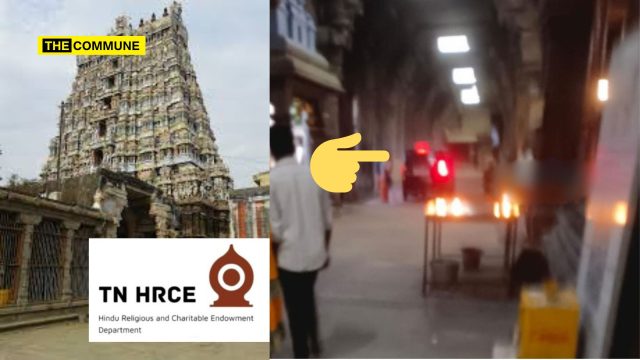
In a scathing and unprecedented judgment, the Madurai Bench of the Madras High Court has delivered a comprehensive indictment of the Tamil Nadu government and the Hindu Religious and Charitable Endowments (HR&CE) Department for illegally usurping the management of the historic Sri Kallazhagar Temple and diverting its funds for large-scale construction projects without authority of law.

A Division Bench comprising Justice Anita Sumanth and Justice C. Kumarappan struck down G.O. Ms. No.135 dated 8 March 2024 and consequential proceedings dated 11 October 2024, holding that the State had “no business” deploying temple funds unilaterally and had acted in gross violation of constitutional guarantees, statutory provisions, and Supreme Court precedents.

‘Temple is Not a Government Project’

At the heart of the case was the State’s decision to include the 108 Divya Desam Sri Kallazhagar Temple under its so-called ‘Iconic Project’, announcing civil works worth nearly ₹92 crore, later revised to ₹40 crore, for construction of toilets, dining halls, guest houses, shops, parking facilities, sewage treatment plants and other infrastructure using temple surplus funds.

The Court categorically rejected the very premise of the project, observing that the HR&CE Department had reduced the temple to a mere real-estate development site.

“The Department has envisioned the temple as a ‘project’ requiring development and upgradation, concepts that are alien to a temple,” the Bench held, warning that such an approach dilutes the sanctity of religious institutions.

State Has ‘No Role’ in Envisioning Temple Projects

In one of its strongest rebukes, the Court ruled that the Tamil Nadu government has no authority whatsoever to conceptualise or announce development projects for temples, especially when such projects involve massive financial implications.

“It is not for the State to make grandiose announcements relating to the deployment of temple funds… They have, to put it bluntly, no business to deploy temple funds unilaterally,” the judges declared.

The Bench held that only the Board of Trustees of a temple is legally empowered to propose, evaluate and approve any project involving temple property or finances, reiterating that Articles 25 and 26 of the Constitution protect religious autonomy from executive overreach.

13 Years Without Trustees: ‘Travesty of the Act’

The Court came down heavily on the HR&CE Department for failing to constitute a Board of Trustees for over 13 years, despite the temple earning several crores annually and clearly falling under Section 47(iii) of the HR&CE Act.

“To have such a temple managed by a Fit Person and an Executive Officer is a travesty of the scheme of the Act,” the judgment stated, describing the arrangement as a gross statutory violation.

The Bench noted that during this period, the Executive Officer appointed in 1966 continued indefinitely, directly contradicting Supreme Court rulings that such appointments must be temporary and crisis-specific.

Budgets, Audits, and Accountability: A ‘Casual and Careless’ Regime

The judgment exposes a systemic collapse of financial discipline within the HR&CE Department. The Court found:

  • No proper budgets prepared as mandated under Section 86 of the Act
  • No transparency in sanctioning or approving expenditures
  • No evidence of audits conducted for the last three financial years
  • Massive depletion of temple surplus funds without statutory approval

The Bench described the approach of the authorities as “casual and careless”, stating that there was nothing on record to show that officials were even aware of the statutory limits governing temple finances.

₹45 Crore Vanished in One Year

One of the most damning findings relates to the temple’s accumulated surplus funds. The Court recorded that the temple’s reserves fell from approximately ₹107.6 crore in 2023 to ₹62 crore in 2024, a drop of nearly ₹45 crore in a single year.

“This reduction represents expenditure without budgeting and without authority,” the judges observed, calling it a serious matter of concern and an instance of illegal appropriation and diversion of temple funds.

‘Crime Against the Deity’

Invoking its parens patriae jurisdiction, the Court underscored that temple funds belong to the deity, not to the State, the HR&CE Department, trustees, or ministers.

“The entirety of the funds, current or accumulated, vests in the deity,” the judgment held, adding that the unauthorised spending amounted to a “crime against the deity”.

Government Orders Quashed, Constructions Halted

Concluding that the impugned Government Order and work proceedings constituted a “usurpation of the role of temple management by the State”, the Court:

  • Quashed G.O. Ms. No.135 dated 08.03.2024
  • Set aside the work order dated 11.10.2024
  • Upheld the stay on further construction
  • Issued detailed directions to ensure future compliance with constitutional and statutory limits

The ruling makes clear that development cannot override dharma, law, or constitutional boundaries, and that temples cannot be governed by executive fiat masquerading as welfare or modernization.

Statewide Implications

Legal experts note that the 91-page judgment has far-reaching implications across Tamil Nadu, where hundreds of temples remain under prolonged HR&CE control without properly constituted trustee boards.

By reaffirming that “power to regulate does not mean power to supersede”, the Madras High Court has drawn a firm constitutional line against State overreach into Hindu religious institutions, a line the government and HR&CE Department have now been judicially warned not to cross again.

Subscribe to our channels on TelegramWhatsApp, and Instagram and get the best stories of the day delivered to you personally.
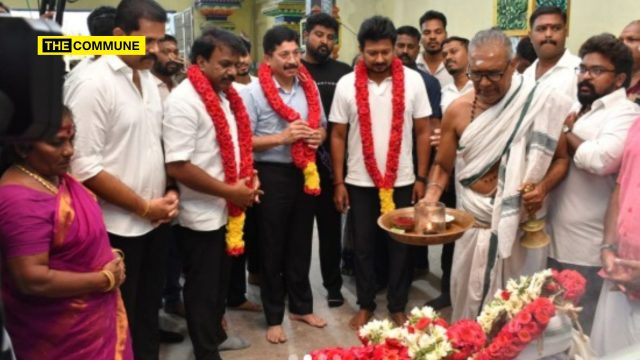
Tax Evader Vijay Has The Audacity To Call Others Corrupt

Actor-politician Vijay had launched a sharp attack on All India Anna Dravida Munnetra Kazhagam (AIADMK), dubbing them as “corrupt slave forces” and accusing them of having “cheated the people repeatedly”, while declaring that his party, the Tamilaga Vetri Kazhagam (TVK), would contest the 2026 Tamil Nadu Assembly elections “confidently” with or without allies.

Addressing a meeting of TVK office-bearers at a resort in Mamallapuram, Vijay, who spoke at a political gathering after a gap of 38 days, said he would never “buckle” under political pressure. The speech, which lasted 17 minutes, marked Vijay’s strongest criticism of the AIADMK so far, with the actor referring to the party as a “corrupt-slave force” alongside the DMK.

Political observers interpreted Vijay’s remarks as a clear signal that the TVK was shutting the door on any possible alliance with the Edappadi K Palaniswami-led AIADMK, which currently heads the NDA in Tamil Nadu.

During his address, Vijay assured the public that he would not indulge in corruption, unlike the two major Dravidian parties that have ruled the state alternately. “I won’t indulge in corruption like those who ruled before (AIADMK) or those ruling now (DMK). I won’t touch even a paisa. I don’t need it at all. I won’t let corruption take place in my regime. You might ask, is this a movie where Vijay can come and clean the system in a day? It might not be possible practically, but it is a process, right?” he said.

In his speeches, Vijay has accused both the DMK and the AIADMK of having “cheated the people repeatedly”, alleging that the two parties protect each other because they are “all corrupt and in the same boat”. He projected the TVK as a “clean and pure” political alternative, arguing that corruption in politics functions like a virus that hides behind ideology and culture. He described such leaders as “corrupt hypocrites” who are currently ruling Tamil Nadu.

Is Vijay Really Clean?

Vijay’s assertions of clean politics come amid a history of Income Tax actions and tax-related cases involving him, which have repeatedly surfaced in public discourse.

Puli – Undisclosed Income

In September 2015, ahead of the release of his big-budget film Puli, Income Tax officials conducted searches at Vijay’s residence in Neelankarai and at several other film industry-related premises. Officials claimed they found evidence that Vijay had failed to disclose around ₹15 crore of income linked to Puli, which was subsequently treated as undisclosed income during assessment proceedings. As part of the broader raids conducted during that operation on actors and producers, cash and gold worth approximately ₹2 crore each were reportedly seized.

Based on the findings from these proceedings, the Income Tax Department later imposed a penalty of ₹1.5 crore under Section 271AAB(1) of the Income Tax Act, which deals with penalties on undisclosed income. Vijay challenged this penalty before the Madras High Court, and orders in the related writ petition were reserved in January 2026.

Bigil – Undisclosed Income

In February 2020, Income Tax officials carried out a round of large-scale searches at about 38 premises linked to AGS Entertainment, the production house behind Vijay’s film Bigil, financier GN Anbu Chezhiyan, and Vijay himself. During the operation, Vijay was questioned regarding his remuneration for Bigil and his property investments, with officials examining whether part of his payment had been routed through unaccounted channels via the financier.

From the premises linked to Anbu Chezhiyan, the IT Department seized approximately ₹65-77 crore in unaccounted cash along with gold. Officials stated that the group admitted to tax evasion or concealment of around ₹165 crore, with overall concealment potentially exceeding ₹300 crore for the financier-producer group. Media reports and departmental sources at the time described Vijay as being under investigation or enquiry in connection with the group’s alleged tax evasion, rather than as the primary holder of the seized unaccounted cash.

However, there is no public record of a final prosecution or conviction specifically branding Vijay as a tax evader, with the matter largely remaining at the stage of searches, questioning, and departmental proceedings linked mainly to the financier and producers.

Rolls-Royce Tax Evasion

Another case that has frequently been cited in debates surrounding Vijay relates to the import of his Rolls-Royce Ghost from the United Kingdom in 2012. The issue concerned a delay in the payment of entry tax or road tax to the Tamil Nadu government for the luxury vehicle. In 2021, while granting relief to Vijay on certain aspects of the matter, the Madras High Court made strong observations, stating that “tax evasion is anti-national”, using the case to criticise celebrities who seek to avoid or delay the payment of tax dues on luxury imports. The case pertained to state entry or road tax and not central income tax.

Following the raids and assessment proceedings between 2015 and 2017, the Income Tax Department passed orders treating parts of Vijay’s income as undisclosed. The ₹1.5 crore penalty imposed on the alleged ₹15 crore of undisclosed income remains under challenge, with Vijay contesting it primarily on limitation and technical grounds.


View this post on Instagram


A post shared by Tamil Janam (@tamiljanam)

In response to the earlier Income Tax actions, Vijay had publicly denied allegations of tax evasion, stating that he had complied with the law and that the accusations were exaggerated. Income Tax officials, however, told the media at the time that the actor had evaded tax and that the dues would be collected.

It is noteworthy that a former IRS (Income Tax) officer, KG Arunraj, joined Tamilaga Vetri Kazhagam as its propaganda and policy chief in mid‑2025. DMK alleged that it was the same Arunraj who led or took part in the 2020 raids on Vijay.

Subscribe to our channels on TelegramWhatsApp, and Instagram and get the best stories of the day delivered to you personally.
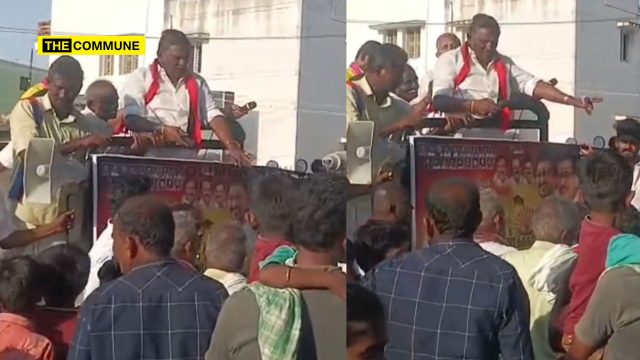
Chanakyaa-Dinamalar Survey Reveals Massive Anti-Incumbency Against DMK Govt, Performance Of Both MK Stalin And His Son Rated Worst

With the 2026 Tamil Nadu Assembly election approaching, a joint opinion survey conducted by Dinamalar and Chanakyaa has sought to map the prevailing public mood across the State, covering voter preferences, assessments of governments at the Centre and State, leadership ratings, and key issues such as law and order.

The survey, conducted in January 2026, is the first collaborative effort between Dinamalar and Chanakyaa. According to the organisers, the exercise was designed to capture voter sentiment at a time when political alignments, campaign narratives, and public perceptions were still evolving.

Methodology And Sample

The survey covered a final sample of 3,821 respondents drawn from across Tamil Nadu. Survey teams initially reached out to more than 4,500 individuals, of which around 4,480 responses were received. These were subsequently filtered to remove duplicate entries, incorrect sampling, and responses that did not reflect ground realities, following standard psephological scrutiny, to arrive at the final sample size.

Respondents were selected from a wide geographical spread, ranging from Chennai to Kanyakumari, and across multiple Assembly constituencies. These included urban and semi-urban seats such as Chepauk-Thiruvallikeni, represented by Deputy Chief Minister Udhayanidhi Stalin, as well as constituencies like Saidapet, Dindigul, Sriperumbudur, Thirupparankundram, Tiruvannamalai, Central Madurai, Chengalpattu, Pudukkottai, and Thali near Hosur.

The constituency selection was not random but based on factors such as past electoral performance, regional sentiment, and demographic diversity, to ensure representativeness.

Voting Recall And Sample Validation

As part of sample validation, respondents were asked whom they had voted for in the 2024 general election. The responses showed:

  • 43% said they voted for the Dravida Munnetra Kazhagam (DMK) alliance
  • 30% for the All India Anna Dravida Munnetra Kazhagam (AIADMK) alliance
  • 14% for the Bharatiya Janata Party (BJP) alliance
  • 13% for Naam Tamilar Katchi

The survey team noted that these figures broadly aligned with the actual vote shares recorded in the 2024 election, indicating that the sample reflected the broader electorate reasonably well.

Assessment Of The Central Government

When respondents were asked to rate the performance of the Union government, opinions were divided:

  • 29% rated it as “very good”
  • 31% rated it as “bad”
  • 31% described it as “okay” or neutral

On the performance of Prime Minister Narendra Modi, responses showed a similar pattern:

  • 32% rated his performance as “very good”
  • 30% rated it as “bad”
  • 38% said it was “okay” or neutral

The survey noted that compared to earlier election cycles, when negative ratings for the Centre and the Prime Minister were significantly higher, the current split indicated a more even and stabilised perception.

Centre–State Relations

On whether the Modi-led Union government was discriminating against Tamil Nadu, public opinion was evenly split:

  • 32% said the Centre was discriminating against the State
  • 32% said it was not
  • 36% said they were unsure

Survey analysts pointed out that the near-identical ratios across questions on Union government performance, the Prime Minister’s performance, and perceptions of discrimination suggested internal consistency in responses.

Performance Of The DMK Government

Turning to the State government, the survey found a less favourable assessment of the DMK’s four-and-a-half-year tenure. Asked about the performance of the DMK government:

  • 22% rated it as “very good”
  • 30% said it was “okay”
  • 48% rated it as “bad”

The survey highlighted that even among voters who had supported the DMK in the previous election, a relatively small proportion rated the government’s performance as “very good”.

Leadership Ratings

Chief Minister M K Stalin fared slightly better than his government as a whole:

  • 26% rated his performance as “very good”
  • 30% said it was “okay”
  • 44% rated it as “bad”

Deputy Chief Minister Udhayanidhi Stalin recorded the highest negative rating. His performance was rated as:

  • 20% “very good”
  • 29% “okay”
  • 51% “bad”

Survey organisers noted that the focus on the Deputy Chief Minister reflected the prominence he has acquired in political discourse, particularly amid opposition allegations of dynastic politics and speculation about future leadership succession within the DMK.

Law And Order

Law and order emerged as a major area of concern. Despite official data cited earlier by former Director General of Police Shankar Jiwal indicating a reduction in certain crime categories based on National Crime Records Bureau statistics, public perception remained sharply negative.

Respondents rated the law-and-order situation in Tamil Nadu as follows:

  • 17% “very good”
  • 28% “okay”
  • 55% “bad”


Subscribe to our channels on TelegramWhatsApp, and Instagram and get the best stories of the day delivered to you personally.
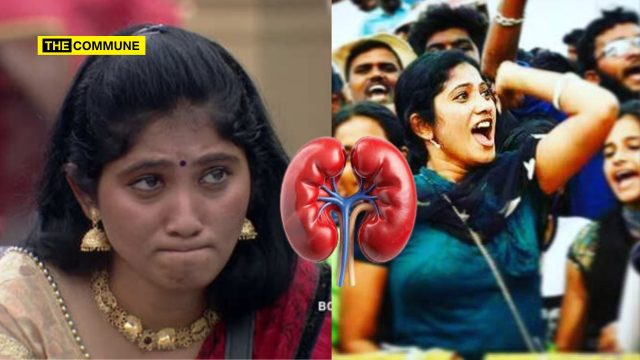
DMK Govt Faces Backlash Over Picking Adult Content Creator For Children’s HPV Awareness Campaign Video

At the Tamil Nadu Global Women Summit 2026 held in Chennai on Tuesday, Chief Minister MK Stalin launched the Tamil Nadu Women Employment and Safety (TNWESafe) Project and the State’s Human Papillomavirus (HPV) vaccination programme, aimed at improving women’s employment opportunities, safety, and health outcomes. However, the launch was soon followed by controversy after an awareness video released as part of the HPV campaign drew criticism over the choice of the content creator featured in it.

The TNWESafe Project, financed through a World Bank loan, is a five-year initiative with a total outlay of ₹5,000 crore, including ₹1,185 crore in external funding. The programme is designed to promote inclusive economic growth through interventions in education, employment, entrepreneurship, and safety for women.

Alongside this, the Chief Minister flagged off the HPV vaccination programme, which is expected to cover 3,38,649 girls above the age of 14 across the State. In its first phase, the programme is being rolled out in four districts – Ariyalur, Dharmapuri, Perambalur, and Tiruvannamalai, covering 30,209 girls. The government also reiterated its earlier initiatives, including the deployment of ‘Wellness on Wheels’ vehicles for free breast cancer screening across all 38 districts.

However, the launch has been overshadowed by controversy surrounding the awareness video released as part of the HPV vaccination campaign.

Backlash Over Choice of Content Creator

Public criticism erupted on social media after viewers identified the woman featured in the official awareness video as a social-media content creator who, critics allege, runs subscription-based adult or explicit content on other platforms, including YouTube.

Several users pointed out that while her Instagram account appears relatively neutral, her broader online footprint on YouTube includes paid “members-only” content, with critics claiming that a significant portion of her material is inappropriate for association with campaigns aimed at school-going children. Screenshots and links shared online also alleged that search results for her name lead to explicit images and videos.

YouTube Videos Screenshot

Screenshots of her videos appear in Google search and in porn websites, reddit, etc.


The lady in question was confirmed to be the same person in the adult videos after it emerged that she shared the same awareness video on her Instagram account, further amplifying scrutiny of her digital history.

Critics Question Government Vetting

Sections of the public questioned the DMK government’s vetting process for campaign ambassadors, arguing that featuring a creator associated with adult content in a School Education–linked awareness programme sends the wrong message, particularly when the campaign is targeted at adolescents.

The controversy has also led to reactions on social media, where some users questioned the decision to feature a social media influencer in an awareness campaign linked to the School Education Department.

Subscribe to our channels on TelegramWhatsApp, and Instagram and get the best stories of the day delivered to you personally.
Madras High Court Stays All Civil Works In Heritage Temples Across Tamil Nadu

Madras HC Stays All Civil Works in Heritage Temples Across Tamil Nadu

In a significant development, the Madras High Court has ordered a stay on all civil works, including construction, renovation and other development activities, in heritage temples and in areas impinging upon heritage temples across Tamil Nadu, until proper statutory safeguards are put in place.

The interim order was passed by a Division Bench of the Madras High Court while hearing a writ petition challenging the construction of a shopping complex in front of the ancient Sri Arunachaleswarar Temple in Tiruvannamalai. The petition contended that the construction violated heritage norms and threatened the architectural and cultural integrity of the historic temple precincts.

Earlier, on 9 October 2025, the High Court had directed the Tamil Nadu government to constitute the Heritage Commission as mandated under the Tamil Nadu Heritage Commission Act, 2012. The court had initially granted one month’s time for compliance. Subsequently, the Hindu Religious and Charitable Endowments (HR&CE) Department and the State government sought an extension of another month.

When the matter was taken up again, the State sought an additional three months to complete the process. During the hearing, it also emerged that the government had issued a notification calling for applications from heritage experts only through an internal departmental website, without mentioning a clear date and without wider public notice. The court was informed that the website itself was inaccessible when the Bench attempted to verify the notification.

Taking serious note of this, the Division Bench directed the State government to issue a fresh notification within one week through all leading newspapers, inviting applications for membership in the Heritage Commission. The court further ordered that applicants be given two weeks’ time to submit their applications.

The Bench directed that the Heritage Commission must be formally constituted within one month thereafter. It also made it clear that no civil works, construction or renovation activities in ancient or heritage temples, or in areas affecting them, shall be undertaken without obtaining approval from the duly constituted Heritage Commission.

The order is expected to have statewide implications, effectively placing a temporary halt on temple-related construction activities until the statutory body is in place and functional.

Subscribe to our channels on TelegramWhatsApp, and Instagram and get the best stories of the day delivered to you personally.
Hindu Devotees Slam Pattimandram Moderator Solomon Pappaiah Who Objected To Lighting Lamp Atop Thirupparankundram Deepathoon Saying ‘Only Murugan Must Come And Say’ 

Hindu Munnani Slams Pattimandram Speaker/Moderator Solomon Pappaiah Over ‘Murugan Must Come And Say’ Remark

Hindu Munnani has strongly condemned controversial remarks made by noted pattimandram speaker and moderator Solomon Pappaiah regarding the Thirupparankundram Deepam issue during a public debate held in Madurai in late January 2026.

The condemnation followed Pappaiah’s comments on the long-running dispute over where the ceremonial Deepam should be lit at the Tirupparankundram hill. Referring to the issue while moderating a pattimandram, Pappaiah reportedly remarked that if anyone claimed the Deepam should be lit on the hilltop instead of its traditional location, “only Lord Murugan himself should come and say it.”

The remark drew sharp reactions from Murugan devotees and Hindu organisations, who said the statement amounted to ridicule of faith and trivialised a matter that has already been adjudicated by the courts.

‘Did Anyone Ask You?’ – Hindu Munnani’s Response

In a strongly worded reaction, Hindu Munnani leaders questioned Pappaiah’s authority to comment on Hindu religious matters.

“Did anyone ask you? Did anyone ask whether the lamp should be lit here or there? What is your religion? Mind your own business,” a Hindu Munnani representative said in a video response circulating on social media.

The organisation accused Pappaiah of speaking in a manner that undermined Hindu beliefs while appearing to justify a government that, according to them, has shown reluctance to implement court verdicts in the Thirupparankundram issue.

They further alleged that his comments reflected animosity towards Hinduism. “What we are seeing now is that the hatred you carry in your heart against Hinduism has come out in the open,” a speaker associated with the organisation said.

Accusations of Mocking Faith and Judiciary

Hindu Munnani members said that Pappaiah’s reference to Lord Murugan “coming and deciding” the matter amounted to mockery of religious belief and disrespect to judicial institutions.

They pointed out that the Tirupparankundram hill has been legally recognised as belonging to Lord Murugan and questioned why objections were being raised to lighting the Deepam on the hilltop following the court verdict.

“After the court has ruled that the hill belongs to Murugan, what is wrong in lighting the Deepam on the hilltop?” they asked, adding that the remarks appeared to belittle a judgment delivered by a bench of three judges.

Call to Refrain From Commenting on Hindu Religious Matters

Hindu Munnani also criticised what they described as unsolicited interference in Hindu religious affairs.

“Why are you unnecessarily interfering in Hindu religious matters? Do we enter your religion and debate about the Virgin Mary or question Christian beliefs?” a representative asked, urging Pappaiah to refrain from commenting on Hindu traditions.

At the same time, they acknowledged his stature as a Tamil scholar and senior public figure, stating that he had earned respect for his contribution to Tamil discourse, but warned that such remarks risk eroding that respect.

Pappaiah Responds

Responding to the backlash, Solomon Pappaiah said the issue was being politicised. He questioned whether instructions about where the Deepam should be lit came from Lord Murugan himself or from individuals external to the tradition.

He also asked whether it was appropriate to issue opinions beyond a court verdict and said he was prepared to explain his remarks to those who opposed them.

“I am ready to offer an explanation to those who object to my views,” Pappaiah said.

Subscribe to our channels on TelegramWhatsApp, and Instagram and get the best stories of the day delivered to you personally.

“Govt Appears Keen To Protect Errant Officials,” Madras High Court Pulls Up DMK Govt Over Police Lapses In Anna Nagar Minor Sexual Assault Case

“Govt Appears Keen To Protect Errant Officials,” Madras High Court Pulls Up TN Govt Over Police Lapses In Anna Nagar Minor Sexual Assault Case

The Madras High Court on Tuesday directed the Tamil Nadu government to file a detailed status report on the departmental action taken against police personnel accused of assaulting the parents of a minor sexual assault survivor in the Anna Nagar case.

The court had taken up the matter suo motu following allegations that the parents of a 10-year-old girl, who was sexually assaulted in Chennai’s Anna Nagar, were attacked by personnel of the Anna Nagar All-Women Police Station when they went to lodge a complaint. The High Court observed that the incident raised serious concerns, noting that the police, who are entrusted with enforcing the law, had themselves violated provisions of the Protection of Children from Sexual Offences (POCSO) Act.

The case, along with a petition filed by the victim’s mother seeking compensation and action against the police officers involved, came up for hearing before a Division Bench comprising Justices Velmurugan and Jothiraman. During the hearing, the Bench questioned the State on the steps taken against the officers who allegedly failed to follow mandatory POCSO procedures.

Responding to the court, the State informed that criminal cases had been registered against the concerned police personnel. However, the judges expressed dissatisfaction, pointing out that their query pertained specifically to departmental action and not merely the registration of criminal cases. The government subsequently stated that departmental proceedings had been initiated against the officers in 2024.

The Bench observed that nearly 15 months had elapsed since the initiation of departmental action and questioned the progress made so far. Describing the situation as akin to “the fence grazing the crop,” the judges remarked that the police force, which is expected to protect the law, had repeatedly violated POCSO provisions. The court also recorded its concern over the apparent lack of awareness among police personnel regarding the procedures mandated under the POCSO Act.

The judges further noted that suspension alone does not amount to punishment and questioned why the government appeared eager to shield officials who had committed serious lapses. The Bench directed the police department to file a report detailing the nature of departmental action taken against the officers concerned and the current status of those proceedings.

The matter has been posted for further hearing tomorrow.

Subscribe to our channels on TelegramWhatsApp, and Instagram and get the best stories of the day delivered to you personally.