Home Blog Page 98

Vijay Vs Suryah In Velachery? The Ground Reality Tells A Story

There is a growing buzz in Tamil Nadu’s political circles that Vijay, founder of Tamilaga Vettri Kazhagam (TVK), is likely to contest the 2026 Assembly election from Velachery. For TVK insiders, the choice is being sold as strategic: a young, urban, tech-heavy constituency close to Vijay’s Panaiyur residence, electorally fluid, and demographically aligned with his fan base.

But on the ground in Velachery, another name has already been circulating for years – SG Suryah. And the contrast between the two could not be sharper.

This is shaping up not merely as a contest of personalities, but as a clash between presence and projection, between street-level politics and stage-managed politics, between someone who shows up when it floods and someone who may show up only when the election calendar demands it.

Velachery: Why Vijay Wants It

Velachery is one of Chennai’s youngest and most fluid urban constituencies, packed with IT employees, mall staff, gig‑economy workers and apartment‑dwellers, with voting patterns far less caste‑anchored than in rural belts. In 2021, Kamal Haasan’s MNM took over 13% of the vote here, well above its state average, showing that an urban, educated electorate is willing to experiment with new entrants. It is also a short drive from Vijay’s Panayur residence, giving him logistical ease and a high‑visibility urban stage if he contests from here.

Within TVK, leaders have openly discussed Velachery as a strategic launchpad: an urban, media‑friendly arena where a Vijay candidature can maximise youth turnout, debutant excitement and national attention, even if the party doesn’t sweep seats statewide. News media touting it as “V for Vijay, V for Vetri, V for Velachery” – seems to capture the way astrology, branding and demographics are being fused to justify this choice.

Suryah’s Record: On The Ground, Year‑Round

While TVK has not yet held a major flagship event in Velachery, SG Suryah has spent the last few years branding himself as the the go-to person in Velachery for the BJP and doing some great NGO work through NaMo Vasavi Foundation in South Chennai.

Examples of constituency‑linked work include:

Continuous fieldwork and door‑to‑door outreach

Connecting with people and creating awareness of PM Modi’s schemes.

Distributing sunshade umbrellas to street vendors and pushcart traders

Distributing umbrellas to those who need it.

Meeting young achievers and ensuring there is no obstruction on their path to success

Ensuring welfare reaches the most deserving

Providing scholarship and college fee assistance to deserving students.

Interacting with the youngsters and encouraging them to play sports

Spreading happiness by distributing Pongal goodies to those who deserve it

More importantly, celebrating the festival with the people.

Now contrast this with Vijay who didn’t even celebrate the Pongal festival with his own cadres!

Suryah also regulary raises issues that are plaguing the public. Here are a few instances:

It’s not enough if you just do welfare work for your constituents. How do you convert them to your voters? That needs constant and consistent efforts to convince people that you are for them no matter what. You need to build a party structure from the bottom up – from the street, to the ward and the larger area. You need to make sure that the people in-charge of the party make voters in their respective booth to vote for BJP.

And 2024 was the election where SG Suryah proved his organizational skills. Across different Assembly seats under South Chennai Lok Sabha constituency, Suryah ensured that BJP came first or second.

In the Velachery Assembly constituency, BJP was the leading party in 80 booths and was at second place in 106 booths.

Velachery’s Reality: Water, Roads, and Relentless Crises

Velachery is not an abstract “urban constituency” defined by polling data alone. It is a lived, stressful geography, one that floods repeatedly, chokes on traffic, struggles with stormwater drains, and oscillates between rapid development and civic neglect.

Every monsoon, Velachery becomes a test of who is actually present. And this is where SG Suryah has quietly built political capital since well before 2024.

During floods, Suryah and his volunteers are routinely seen coordinating relief, arranging food packets, water, medicines, and transport. He does not limit himself to Velachery, he covers a larger part of the Sholinganallur constituency every single time. Here is an example from 2023 floods.

He repeated this in 2024 too, despite not being given a ticket for South Chennai MP constituency that many citizens were expecting.

Here’s an example from 2020 during COVID-19 pandemic.

A bal-Swayamsevak, Suryah has never shied from getting his clothes dirty when it came to doing seva.

Over time, this has created something rare in Chennai politics: recognition without spectacle. People in Velachery may not agree with Suryah on everything, but they know who he is—and more importantly, where he was when things went wrong.

Vijay’s Model: Centralised, Controlled, Distant

Vijay’s political appeal may seem real. His fan base is vast, emotionally invested, and especially strong among youth and first-time voters. TVK’s internal assessments are not wrong in identifying Velachery as fertile ground for a high-profile urban launch.

But the problem is not arithmetic. It is method.

Until now, Vijay’s political functioning has followed a consistent pattern:

Public meetings where he does not go anywhere near the public

Speeches such as in Karur from his van, safely away from the public

Vijay chose to conduct flood-relief activity from the TVK office at Panaiyur on the East Coast Road, rather than visiting inundated neighbourhoods. Affected families were asked to come to the Panaiyur office, where relief materials were distributed.

Vijay even summoned the kith and kin of the Karur stampede deceased and injured to a resort rather than visiting them personally. He did this one month after the incident at a place outside Chennai, not in Karur.

There is little evidence of Vijay walking streets, visiting flood-hit homes, standing knee-deep in water, or engaging unscripted public interaction.

In a constituency like Velachery, that absence is not theoretical. It is noticed. When floods hit and names are remembered, the list is short and Vijay’s is not on it.

Two Ideas of Politics, One Constituency

What Velachery is now witnessing is the collision of two fundamentally different political philosophies:

S G Suryah

Built on repeated micro‑contact: meeting thousands of residents, standing with vendors, distributing umbrellas, hosting cultural and welfare programmes, and using his NGO to entrench a service‑politics ecosystem.

Helps create awareness of BJP’s national schemes and he ensures it reaches people directly.

Treats Velachery/South Chennai not as a launchpad but as a long‑term base, where he will to be seen in both election and off‑season.

Vijay

Built on statewide brand equity, fan clubs, and the promise of a “third force” beyond DMK-AIADMK.

Relies on the idea that Velachery’s urban youth and middle class are ready to vote for a familiar face who speaks their frustration with corruption and status quo politics, even if his physical engagement with their streets has been limited so far.

Treats Velachery as a high‑value stage: win here, and you project viability across Tamil Nadu.

This is not about charisma versus competence. It is about who feels real to voters when the camera is off.

Not a Fan War, But a Political Question

This is not about dismissing Vijay or romanticising Suryah. It is about recognising that political legitimacy is no longer built only on fame.

In today’s Chennai, especially in constituencies like Velachery, legitimacy is built through:

  • Repetition
  • Physical presence
  • Responsiveness
  • Memory

S G Suryah has been building that memory quietly. Vijay has not, yet.

If Vijay truly wants Velachery, he will eventually have to do what cinema stardom has allowed him to avoid: go to the people, not summon them. Until then, the real story in Velachery is not just who might contest, but who has already been there.

Velachery needs someone who hits the ground, mingles shoulder to should with people and is available for them 24×7. It doesn’t need someone one who appears once in a bluemoon, escapes and shut himself in his house at the first sign of trouble.

Subscribe to our channels on TelegramWhatsApp, and Instagram and get the best stories of the day delivered to you personally.

Thanjavur Farmers Show Black Flags To MK Stalin On His Arrival, Annamalai Slams DMK Govt For Arresting Farmers Protesting Over Unpaid Dues

‘Delta Farmer In Name Only’: BJP Leader Annamalai Slams DMK Over Arrest Of Thanjavur Sugarcane Farmers Protesting Unpaid Dues

Sugarcane farmers from Thanjavur district staged a black-flag protest on Wednesday against Chief Minister MK Stalin, alleging failure to ensure the disbursal of long-pending dues by the Thiru Arooran Sugar Factory. The protest took place near the Vembakudi toll plaza when the Chief Minister was travelling to Kumbakonam to participate in an Indian Union Muslim League (IUML) conference.

According to sources, the farmers have been protesting since 30 November 2022, demanding the release of pending payments with interest from the Tirumandangudi-based Thiru Arooran Sugar Mill. As the farmers attempted to wave black flags at the Chief Minister’s convoy, police personnel on duty detained and arrested them.

Reacting to the arrests, PR Pandian, president of the Coordination Committee of All Farmers Associations, said that the farmers had been fighting for their rights for the past three years. He stated that they were facing severe hardship after banks recovered loans taken by the sugar factory in the farmers’ names, resulting in poor CIBIL scores and denial of crop loans. He added that the Chief Minister should take steps to resolve the issue and ensure the immediate release of the arrested farmers.

BJP leader K Annamalai also condemned the arrests in a post on X. He wrote, “I strongly condemn the DMK government for resorting to repression and arresting sugarcane farmers who staged a black-flag protest today near the Vembakudi toll plaza in Thanjavur district against the Tamil Nadu Chief Minister during his visit to Kumbakonam. The protest was to urge the fulfillment of Thanjavur district election promise No. 57, which includes waiving fraudulent bank loans taken in the names of farmers by a private sugar mill, immediately paying the arrears due to farmers, and having the government take over and run the sugar mill. Why is Chief Minister Mr. @mkstalin, who has conferred upon himself the title of “Delta farmer,” showing no concern or thought for farmers? By failing to fulfill election promises such as increasing the Minimum Support Price for paddy and sugarcane, and by invoking the Goondas Act against farmers in Tiruvannamalai district who fought to protect their lands, the DMK government has betrayed farmers throughout these 60 months. Even as its term nears its end, the government continues on the same path. Immediate steps must be taken to fulfill all the key demands of farmers who have been protesting continuously for over a thousand days to have their demands met. Further, I urge the DMK government to release all the arrested farmers and to ensure that no cases are pursued against them in connection with this issue.”

Source: DTNext

Subscribe to our channels on TelegramWhatsApp, and Instagram and get the best stories of the day delivered to you personally.
Kerala: Woman Offers Namaz On Busy Palakkad Road, Disrupts Traffic

Kerala: Woman Offers Namaz On Busy Palakkad Road, Disrupts Traffic

A woman offering namaz while standing in the middle of a busy road in Kerala’s Palakkad district has triggered debate on social media over public order and religious practices.

According to short news posts shared by News Tamil 24×7’s video, a veiled woman was seen standing in the middle of the roadway and performing Islamic prayer, causing confusion and commotion among motorists passing through the stretch. The brief clip shows vehicles slowing down and moving around her as she continues praying. The location is said to be the busy IMA junction in Palakkad. It is reported in Malayalam news channels that the woman has been taken into police custody. It was later revealed that the woman prayed on the road in order to bring the dispute over family property to the attention of the people.

Subscribe to our channels on TelegramWhatsApp, and Instagram and get the best stories of the day delivered to you personally.
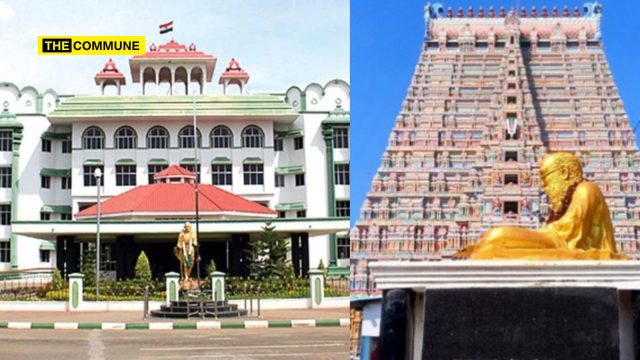
Public Roads Have No Religious Character, Says Madras High Court Ordering Removal Of Roadside Christian Shrine

Madras HC increased security in court campus after country bombs were exchanged among suspects in the Armstrong murder case. Christian shrine

The Madras High Court on 22 January 2026 ordered the removal of a roadside Christian shrine in Chennai, holding that public roads cannot be encroached upon by any structure, irrespective of its religious significance. The Court observed that streets and roads are meant exclusively for public use and “do not carry any religious character.”

Justice V. Lakshminarayana passed the order while hearing a writ petition filed by A. Sarath, a resident of Thiru Vi Ka Nagar, who purchased a property in November 2024. Sarath informed the Court that at the time of purchase, he noticed a raised structure near the entrance of the property and was told it was temporary and would be removed.

However, while undertaking renovation work and preparing for a housewarming ceremony, Sarath discovered that a statue of Mother Mary had been installed inside the structure, effectively converting it into a permanent shrine. He contended that the shrine obstructed the main entrance to his house, inconvenienced pedestrians using the public pathway, and that electricity was being illegally drawn from a nearby house to power lights and sound equipment at the site.

After his representation dated 13 September 2025, failed to prompt action from civic authorities, Sarath approached the High Court seeking directions for removal of the encroachment.

The Court noted that the shrine occupied approximately eight square metres of land classified as “sarkar poramboke street,” which is public road property. Justice Lakshminarayana held that the nature or purpose of the structure was irrelevant, stating that “any encroachment on public land has to be removed.”

During the proceedings, a private individual, R. Daniel, sought to intervene, claiming that he had installed the shrine in 1995 and that it had functioned for nearly three decades as a place of faith and emotional support for local residents. He argued that no objections had been raised until the petitioner purchased the property and contended that removal of the shrine would hurt religious sentiments and disturb communal harmony.

Daniel also alleged selective targeting, pointing to another structure used for Hindu worship in the area, and raised allegations about the petitioner’s activities. The Court clarified that such claims could be addressed separately through appropriate legal remedies and were not relevant to the issue of encroachment.

Referring to settled Supreme Court jurisprudence, the High Court reiterated that religious sentiments cannot be invoked to legitimise encroachments on public roads. Citing Section 128 of the Local Bodies Act, the Court said it is the statutory duty of the Municipal Commissioner to remove unauthorised structures from public places after issuing due notice.

Since notices had already been issued in the present case, the Court directed the Greater Chennai Corporation to proceed with the removal of the shrine, holding that the petitioner was entitled to relief as the structure stood on public road land.

Source: OpIndia

Subscribe to our channels on TelegramWhatsApp, and Instagram and get the best stories of the day delivered to you personally.
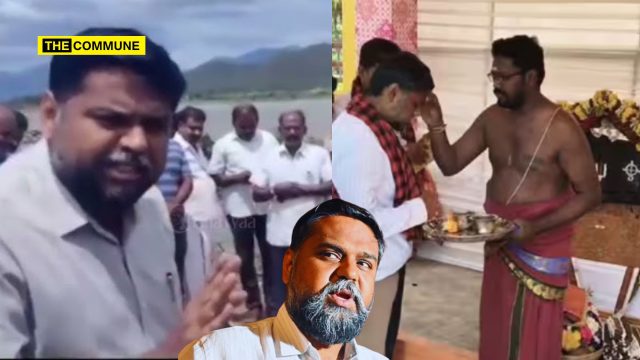
Supreme Court Seeks DMK Govt Report Over Defamatory Campaign Targeting Justice GR Swaminathan After Thirupparankundram Deepam Order

Supreme Court Seeks DMK Govt Report Over Defamatory Campaign Targeting Justice GR Swaminathan After Thirupparankundram Deepam Order

The Supreme Court of India on Wednesday (28 January 2026) issued notice in a public interest litigation seeking action against protestors accused of making defamatory and caste- and religion-based remarks against Justice GR Swaminathan of the Madras High Court, following his judicial orders related to the lighting of Karthigai Deepam at the Thirupparankundram Subramaniya Swamy Hill Temple in Madurai.

A Bench comprising Justice Aravind Kumar and Justice P.B. Varale heard the matter and issued notice to the Chief Secretary of Tamil Nadu, the Home Secretary, the Director General of Police, and the Commissioner of Police, Chennai.

The PIL has been filed by Advocate G.S. Mani, associated with the Bharatiya Janata Party. Appearing in person, Mani alleged that protestors had made defamatory remarks targeting Justice Swaminathan with the intent to disturb social harmony and provoke law-and-order and communal unrest. He submitted that several representations had been made to the Tamil Nadu police regarding protests conducted outside the Madras and Madurai Benches of the High Court.

According to Mani, individuals affiliated with parties supporting the ruling DMK, including Communist parties, along with certain lawyers, had carried out illegal and unauthorised demonstrations in public places and repeatedly protested outside court premises. The protestors were alleged to have demanded the resignation of a sitting High Court judge and attributed improper motives to his judicial orders.

Mani further alleged that the State Government and police authorities had remained passive and failed to take action against those involved, despite complaints being submitted to the Chief Secretary, Home Secretary, Director General of Police, Commissioner of Police, Chennai, and the Registrars of the Madras High Court at both Chennai and Madurai.

However, Justice Aravind Kumar observed that the Court would not issue notice on emotive arguments alone. The Bench then asked Tamil Nadu State Counsel Advocate Sabarish Subramanian to appear to enable the Court to assess the present situation.

Subramanian informed the Court that the Tamil Nadu police had taken action on Mani’s representations. He added that the Commissioner of Police, Chennai, had sent communications to service providers directing them to preserve the URLs of links alleged to contain defamatory content against Justice Swaminathan, along with details of individuals involved in circulating such material.

Taking note of the submissions, the Bench directed the State to file a status report. The order recorded: “Issue notice. Learned standing counsel for State of Tamil Nadu accepts notice and is permitted to file status report in regards to steps taken pursuant to representation on 6.12.25 and 8.12.25, if any.”

Mani has sought directions from the Supreme Court to compel the Tamil Nadu Government and police authorities to initiate strict legal action, including criminal proceedings, against those responsible for the alleged acts.

The case arises from events following Justice Swaminathan’s order dated December 1, directing the management of Arulmighu Subramaniya Swamy Temple to light a lamp on a stone pillar atop the Thirupparankundram hill near a dargah. Subsequently, he reprimanded the State Government for obstructing the implementation of the order.

After the State failed to comply, a contempt petition was filed. On 3 December 2025, Justice Swaminathan allowed devotees to proceed to the hill and light the deepam themselves, with CISF protection. He also quashed the prohibitory order under Section 144 CrPC and directed the State’s Chief Secretary and the Additional Director General of Police (Law and Order) to appear before the Court.

The Tamil Nadu Government challenged the contempt order through a letters patent appeal, which was dismissed by a Division Bench. The State then approached the Supreme Court. Separately, opposition MPs have also moved an impeachment motion against Justice Swaminathan.

The Supreme Court is scheduled to hear the matter further on Monday, 2 February 2026.

Source: LiveLaw

Subscribe to our channels on TelegramWhatsApp, and Instagram and get the best stories of the day delivered to you personally.

Dravidian Model Tamil Nadu: Bihar Migrant Worker, Wife And Child Killed In Chennai, Bodies Dumped In Different Locations

Six Murdered In One Day Raising Concerns About Deteriorating Law And Order

What initially appeared to be the murder of a migrant worker whose body was found stuffed inside a gunny bag in Adyar has now unfolded into a far more brutal triple murder, with police confirming that the victim’s wife and young child were also killed and their bodies disposed of at different locations.

On the morning of 26 January 2026, residents of First Avenue in Indira Nagar, Adyar, noticed a sack dumped along the roadside with blood oozing from it and alerted the police. A team from the Adyar police station rushed to the spot, opened the sack, and found the body of a man, tied up and bearing multiple bleeding injuries to the head and face, clearly indicating homicide. The body was sent to Government Royapettah Hospital for post-mortem examination.

Subsequent investigation led to the arrest of five persons on Monday. During interrogation, the accused made a shocking disclosure, stating that they had not only murdered the man found in the sack but had also killed his wife and their young child.

Police later identified the deceased man as Gaurav Kumar, a migrant worker from Bihar, aged around 24 years (some reports say he was 35 years), who had come to Chennai seeking employment. He was working as a security guard in the Adyar area and was in the process of taking up work with another security agency. His wife, Munita Kumari, had also accompanied him, and the couple had a young child.

According to police sources, the family had approached the accused in connection with a security guard job. During this period, a dispute arose. Initial police findings indicate that the woman was sexually assaulted in the Taramani area, and when Gaurav Kumar questioned the act, an altercation broke out, leading to the murder of all three family members.

Investigators said CCTV footage from the neighbourhood showed two men arriving on a motorcycle around midnight on Sunday and dumping the sack containing Gaurav Kumar’s body before fleeing. Based on the motorcycle’s registration details, police tracked and detained suspects, leading to the arrests.

Following the confessional statements of the accused, police launched extensive search operations at multiple locations. Searches were carried out at the Perungudi dump yard and along the banks of the Cooum river. With assistance from the fire and rescue services, police recovered the body of the couple’s 2-3-year-old child from a riverbank area near Madhya Kailash. The child’s body has also been sent for post-mortem examination.

The search for Munita Kumari’s body is continuing, with police teams combing several locations based on information provided by the accused. Officials said that the bodies of the three victims were dumped at different places to avoid detection.

Source: DT Next

Subscribe to our channels on TelegramWhatsApp, and Instagram and get the best stories of the day delivered to you personally.

“Another Way Of Fraud”: Supreme Court Cracks Down On General Castes Converting To Buddhism For Quota Claims

Supreme Court Constitutes SIT To Probe Chennai Minor Sexual Assault Case. statehood ncpcr muslim girl marriage free speech

The Supreme Court on Tuesday, 27 January 2026, raised serious concerns over what it described as a possible attempt by two general caste candidates to misuse the Buddhist minority quota to secure admission to postgraduate medical courses.

A Bench comprising Chief Justice of India Surya Kant and Justice Joymalya Bagchi was hearing a writ petition filed by two candidates from Haryana seeking admission under the Buddhist minority quota to a postgraduate medical course at Subharti Medical College in Meerut, Uttar Pradesh. The institution has been recognised as a Buddhist minority educational institution.

The petitioners claimed they had converted to Buddhism and relied on minority certificates issued by a Sub-Divisional Officer to establish their eligibility as members of the Buddhist minority community.

During the hearing, the Chief Justice noted that the petitioners belonged to the Punia caste and asked, “Punias can be in the Scheduled Caste category, Punia can be Jat also which is general category. Which Punia you are?”

When counsel replied, “We are Jat,” the Chief Justice questioned, “Then how you become [minority]?”

The counsel responded, “We have converted to Buddhism. Anybody can convert to Buddhism.”

Expressing scepticism, the Chief Justice remarked, “This is another way of fraud…you want to snatch the rights of some genuine bona fide minority….you are one of the richest, best located, upper caste communities…holding agricultural lands and having facilities…you should be proud of your merit….instead of taking the rights of who are actually deprived…”

When counsel maintained that the petitioners had genuinely adopted Buddhism, the Chief Justice cautioned, “Then everybody will start…upper castes will start adopting…. Don’t compel us to make further comments…”

The Bench noted that both candidates had appeared for NEET-PG 2025 as general category applicants and had explicitly declared that they did not belong to the Economically Weaker Sections. In this context, the Court questioned how minority certificates could have been issued to them.

In its order, the Bench observed, “We have ascertained form the counsel that the candidates are actually born as general category candidates. It appears that the issuance of certificates by SDO requires a deeper probe by the higher authorities, especially in light of the fact that in NEET-PG 2025, candidates appeared as general category candidates, and they further categorically mentioned that they do not belong to the Economically Weaker Sections of society. Then how do they become candidates belonging to the minority community?”

The Court directed the Chief Secretary of Haryana to submit a report within two weeks clarifying:
(i) the guidelines governing the issuance of minority certificates.
(ii) whether an upper-caste candidate who is not part of the EWS category and who declared general category status in the 2025 examination can be treated as belonging to a Buddhist minority community; and
(iii) if not, the basis on which the Sub-Divisional Officer issued the certificates in question.

The Supreme Court dismissed the petitioners’ application seeking admission under the minority quota.

The petition, filed by Nikhil Kumar Punia and Ekta, had sought directions to allot 50 per cent of seats in Subharti Medical College to Buddhist minority candidates, relying on an interim order passed by the Supreme Court on 20 October 2022, in SLP (C) No. 17003 of 2022. The petitioners also referred to the minority status granted to the college by the National Commission for Minority Educational Institutions in 2018.

The Court, however, declined to grant any relief, holding that the matter raised serious questions warranting further examination by state authorities.

Source: LiveLaw

Subscribe to our channels on TelegramWhatsApp, and Instagram and get the best stories of the day delivered to you personally.
‘Conversations On Culture’: A New Forum On Art, Heritage And Living Traditions To Open In Chennai

A new cultural dialogue platform titled Conversations on Culture is set to make its debut on 7 February 2026, at the Kalakshetra Foundation, bringing together scholars, artists, and practitioners for a full-day engagement on art, heritage, and living traditions.

Curated and presented by Avalamba Foundation in collaboration with Kala Sadhanālaya, the initiative has been conceived as a forum for sustained and reflective conversations on India’s cultural inheritance, contemporary practice, and knowledge systems. Organisers said the platform evolved from informal discussions into a structured series aimed at examining culture not merely as history, but as living and relevant knowledge with present-day implications.

The inaugural edition will feature a day-long schedule of talks, panel discussions, and performances by noted speakers and artists from diverse disciplines.

Programme Highlights

The event will open at 10.00 AM with an inauguration by the Chief Guest, followed by a series of sessions beginning at 10.30 AM. The programme includes:

  • “Folk Art All Around Us”, a talk by Nagraj Paturi
  • “Archiving India’s Living Culture”, a talk by S Jayakumar
  • “Tradition Meets Technology”, a talk by Arun Menon
  • “Living Epics, Living Voices”, a talk and performance by Ramaa Bharadvaj
  • “Beyond Display: Museums as Living Cultural Experiences”, a panel discussion with Anupam Sah and Ahalya Matthan
  • “Preserving Heritage and Art: A Policy Perspective”, a panel discussion featuring Raghava Krishna, A K Sriram, and Ketu Ramachandrasekhar
  • “Who Owns the Past?”, a conversation with historian Vikram Sampath

The day will conclude with “Raga Sangamam”, a concert by Carnatic vocalists Ranjani and Gayatri.

Platform Vision

According to the organisers, Conversations on Culture seeks to create space for pause and reflection on what societies inherit, what they forget, and what continues to shape collective identity. The platform aims to connect scholarship, practice, and public engagement, while also exploring Indian Knowledge Systems and cultural continuity through dialogue rather than prescription.

The organisers have described the first edition as the beginning of a longer series, with future editions planned around similar themes. Cultural enthusiasts and the general public have been invited to follow official updates and block their calendars for the February 7 event at Kalakshetra Foundation.

Subscribe to our channels on TelegramWhatsApp, and Instagram and get the best stories of the day delivered to you personally.
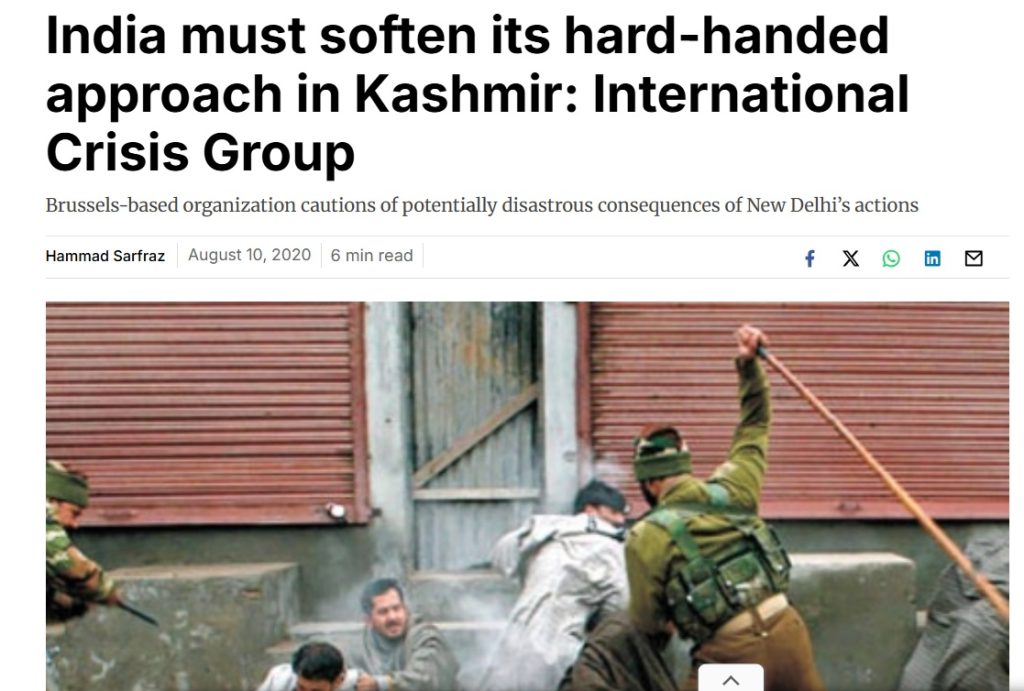
Booked For Pookkalam, Backed By Devotees: RSS-Linked Bhaktajana Samithi Sweeps Muthupilakkad Sri Parthasarathy Temple Poll

Booked For Pookkalam, Backed By Devotees: RSS-Linked Bhaktajana Samithi Sweeps Muthupilakkad Sri Parthasarathy Temple Poll

A controversy that began with police action against RSS workers over an Operation Sindoor floral decoration near the Muthupilakkad Sri Parthasarathy Temple in Sasthamkotta in September 2025 has now culminated in a dramatic political shift within the temple’s administration, with a devotees’ panel securing a clean sweep in the latest committee elections.

Case Over Floral Decoration

On 4 September 2025, the Sasthamkotta police registered a case against 27 Rashtriya Swayamsevak Sangh (RSS) sympathisers and workers for laying a floral carpet (pookkalam) bearing the inscription “Operation Sindoor” and a saffron flag-like floral design on the main road leading to the Sri Parthasarathy Temple.

According to the police, the floral arrangement was made without the permission of the temple committee and in alleged violation of a court order that prohibited the erection of flags, decorations, or flex boards in and around the temple premises if such acts were likely to create unrest.

The First Information Report (FIR), lodged by Asokan C, an office-bearer of the temple committee, stated that the accused had also installed a flex board carrying an image of Chhatrapati Shivaji about 50 metres from the temple and that their actions were intended to provoke clashes between workers of different political parties.

The case was registered under Sections 223 (disobedience to an order duly promulgated by a public servant), 192 (provocation with intent to cause riot), and 3(5) (criminal acts done by several persons in furtherance of common intention) of the Bharatiya Nyaya Sanhita.

The police action drew sharp political reactions. The Bharatiya Janata Party condemned the FIR, describing it as an attack on an expression meant to honour Operation Sindoor. BJP leaders accused the Kerala police of overreach and demanded that the case be withdrawn, arguing that the floral decoration symbolised national pride and the valour of the armed forces.

Temple Committee Election

The episode became a major point of contention in the subsequent administrative committee election of the Muthupilakkad Sri Parthasarathy Temple, held recently in Sasthamkotta.

In the election, conducted by dividing the temple area into nine wards, the Bhaktajana Samithi secured all 27 of the 27 seats, defeating the CPI(M)–Congress combine that had previously controlled the temple administration.

For several years, the temple had been administered by a Left–Congress alliance. Following the election results, representatives of Bhaktajana Samithi described the verdict as a response from devotees against political intervention in temple administration. They stated that the committee would prioritise temple-related matters, act in accordance with devotees’ interests over the next three years and focus on the development of the temple and the surrounding area.

They also alleged that dissatisfaction among devotees over previous administrative decisions, including opposition to religious and cultural expressions and court petitions against symbols such as saffron flags, had contributed to the electoral outcome.

Subscribe to our channels on TelegramWhatsApp, and Instagram and get the best stories of the day delivered to you personally.

UGC Equity Rules: Done With Bashing BJP? Here’s How Ultra-Leftist Lawyer Indira Jaising Engineered The Rewriting Of A Balanced Draft

indira jaising Done With Bashing BJP? Now Direct Outrage At This Person Whose Courtroom Campaign Drove The UGC Equity Rules

For weeks, protests against the UGC Equity Regulations, 2026 have followed a familiar script. Anger has been aimed at the BJP, at the Modi government, at the Education Ministry. Hashtags accuse the regime of authoritarianism. Editorials warn of institutional overreach.

But that outrage is misdirected.

The real story of how the UGC Equity Regulations, 2026 came to be is not one of ideological zeal or secret backroom bargaining. It is a story of courtroom pressure, strategic litigation, and bureaucratic capitulation where a balanced, defensible policy drafted by the Education Ministry itself was dismantled and rewritten under judicial supervision.

If critics want accountability, they need to follow the paper trail.

A Draft That Proved Better Policy Was Possible

In February 2025, the Ministry of Education and the University Grants Commission released a draft titled the University Grants Commission (Promotion of Equity in Higher Education Institutions) Regulations, 2025. That draft now reads like a document from another universe.

Measured. Cautious. Procedurally fair.

It squarely addressed caste discrimination against Scheduled Castes and Scheduled Tribes, the precise concern raised in a long-pending Supreme Court case, while preserving due process, institutional autonomy, and equality before law. Complaints were to be investigated with evidence from both sides. There were no automatic punishments. No presumption of guilt.

Most strikingly, the draft included a safeguard almost unheard of in contemporary Indian policy: penalties for demonstrably false or malicious complaints.

This was a recognition of reality. Universities are competitive ecosystems, riddled with personal rivalries, ideological factions, and career stakes. Any grievance mechanism without abuse safeguards becomes a weapon.

The draft also avoided rigid identity-based silos. Equity Committees were broad-based, chaired by institutional heads, and included representation without converting them into caste-exclusive tribunals.

Observers across the spectrum acknowledged that, with refinements from the 391 public suggestions it received, the February 2025 draft could have become a model anti-discrimination framework.

So, what went wrong?

The Case That Changed Everything

The origins of the regulations lie in tragedy.

After the deaths of Rohith Vemula in 2016 and Payal Tadvi in 2019, their mothers, Radhika Vemula and Abeda Salim Tadvi, filed a Public Interest Litigation in August 2019. Represented by senior advocate Indira Jaising, the petition did not demand radical new law. It sought enforcement of the existing 2012 UGC equity regulations: functional Equal Opportunity Cells, real monitoring, and integration with accreditation bodies like NAAC.

The Supreme Court issued notices. And then, nothing. For nearly five years, the PIL gathered dust.

That changed in January 2025, when a bench led by Supreme Court of India Justices Surya Kant and Ujjal Bhuyan demanded answers. The UGC was rebuked for non-compliance and asked to produce data. Under judicial prod, the February 2025 draft emerged.

At this point, the system had done its job. But the equilibrium didn’t last.

15 September 2025: When Balance Collapsed

At a hearing on 15 September 2025, Indira Jaising pressed for ten specific changes. These included grievance committees with heavy “marginalised” representation, withdrawal of grants for non-compliance, explicit anti-segregation clauses, and stronger punitive powers.

The bench set an eight-week deadline and made it clear that omissions would be scrutinised.

The Education Ministry now faced a choice. It could defend its draft, explain why safeguards against misuse were essential, and argue that equity does not require abandoning due process. Or it could surrender.

It chose surrender.

13 January 2026: The Rules Become Unrecognisable

When the final UGC (Promotion of Equity in Higher Education Institutions) Regulations, 2026 were gazetted on January 13, the transformation was stark.

Every major demand raised in court had been absorbed. Sections now included debarment powers, explicit anti-segregation mandates, mandatory counselling, confidentiality rules, anti-retaliation clauses, Equity Squads, Equity Ambassadors, and committees packed with SC/ST/OBC/PwD/women representation.

What vanished entirely were the safeguards.

The penalty for false complaints? Deleted.
Procedural symmetry? Gone.
Equality of protection? Abandoned.

The final regulations define “caste-based discrimination” exclusively as acts against SC, ST, and OBC students. General category students are not covered by the same framework. They cannot file equivalent complaints under the same rules. They face institutional machinery without reciprocal protections.

This is asymmetry by design.

The Minister’s Assurances Don’t Change the Text

Union Education Minister Dharmendra Pradhan broke his silence on 27 January 2026, assuring the public that no one would be harassed and that misuse would not be tolerated.

But policy is not governed by press statements. It is governed by gazette notifications.

The notification is unambiguous. Only certain groups can claim caste-based discrimination. Only one side enjoys institutionalised protection. The ministry’s own February 2025 draft proves this was not inevitable, it was a conscious reversal.

Why the Blame Game Misses the Point

This is why indiscriminate BJP-bashing misses the real failure.

The Education Ministry did not ideologically engineer this outcome. It already had a better policy on the table. The final rules emerged not from partisan obsession, but from an unwillingness or inability to defend that policy under judicial pressure.

This was not policymaking. It was policymaking by attrition.

Senior advocate Indira Jaising has since dismissed protests as an “upper caste reaction” and insists the regulations remain inadequate. That position is telling. It confirms what critics fear: that the framework is not meant to be neutral, but corrective in only one direction.

A Lost Opportunity

The tragedy is not that India tried to address caste discrimination in universities. That was necessary and overdue.

The tragedy is that the state abandoned the principle that justice must bind everyone equally.

The February 2025 draft showed that it was possible to protect vulnerable students without dismantling due process, without creating two classes of citizens, and without turning equity into a zero-sum contest.

That draft died not because it was unjust but because it was not defended.

If outrage is to mean anything, it should be directed where it belongs: at the process that turned a careful reform into a divisive instrument, and at the actors who insisted that balance itself was unacceptable.

Until that reckoning happens, the controversy over the UGC Equity Regulations will remain not a debate about discrimination but a warning about how policy is captured in plain sight.

Source: Swarajyamag

Subscribe to our channels on TelegramWhatsApp, and Instagram and get the best stories of the day delivered to you personally.