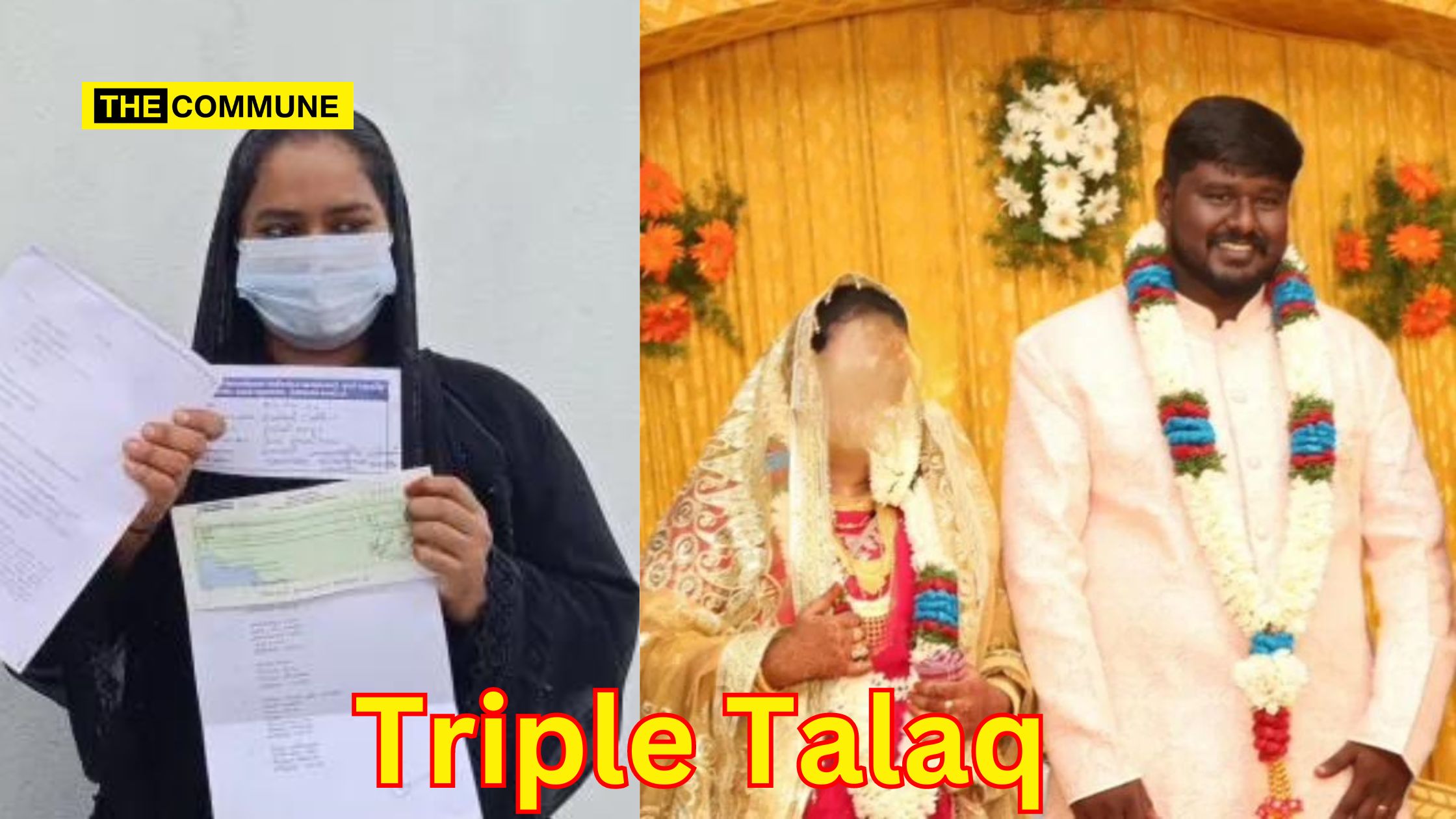
In a troubling development in Tamil Nadu, Nasreen Fathima, a Muslim woman, has been served a Triple Talaq notice by her husband, Khader Riyaz, in Turupur. Despite the existence of The Muslim Women’s (Protection of Rights on Marriage) Act of 2019, where the police declined to file a case, citing unfamiliarity with the Triple Talaq law.
Nasreen Fathima, aged 31 and from Palani, Dindigul district, married Khader Riyaz of Tirupur in August 2022. Within days, issues arose in their marriage, leading to mistreatment by Khader Riyaz’s family and demands for a dowry of several lakhs in gold. Subsequently, Nasreen was sent back to her family in September 2022.
Subsequently, Nasreen’s family had filed a dowry complaint against Khader Riyaz at the All-Women’s Police station in Palani but faced disappointment as no action was taken. They pursued legal avenues, resulting in an FIR being filed against Khader Riyaz and a court order for a police raid on his residence to recover the 32-sovereign gold jewelry Nasreen had brought into the marriage. Shockingly, all the jewelry was found missing during the raid.
In this backdrop, Khader Riyaz has issued the notice and also sent a minimal alimony of ₹1500 to Nasreen for her 28-days stay with him from August to September 2022. Expressing their frustration, Nasreen’s brother stated multiple complaints were lodged with the Women’s Commission and Human Rights Commission without response. The Deputy Superintendent of Police assured the family he would review the Triple Talaq law online but no action has followed. Media coverage of the Triple Talaq issue has been scant, with only a few outlets reporting on Nasreen’s case despite a press interview on 6 July 2024 that drew limited attention.
The family of Nasreen Fathima has brought this matter to the chief minister’s attention, seeking justice. However, they received a disappointing response indicating no immediate action could be taken, despite the legal protections in place against Triple Talaq. Unfortunately, this incident has received limited media coverage, further complicating efforts to address it.
The Hindu Munnani criticized the police for their inaction in a social media post, calling for Khader Riyaz to be prosecuted under the Triple Talaq law, underscoring the urgency of addressing such cases.
The state government’s inaction suggests reluctance, possibly due to concerns about backlash from Muslim organizations, given their historical opposition to the Triple Talaq bill. This raises doubts about the government’s commitment to women’s rights and equality. Additionally, the behavior of the Tamil Nadu police has been criticized for prioritizing action against social media dissent while neglecting rising crime rates and crucial issues like Triple Talaq, undermining public trust.
Overall, the lack of media coverage and government response highlight the need for more proactive measures to address Triple Talaq cases and uphold justice for affected women. Until there is genuine commitment and action from the government, Muslim women facing such injustices are unlikely to receive the justice they deserve.
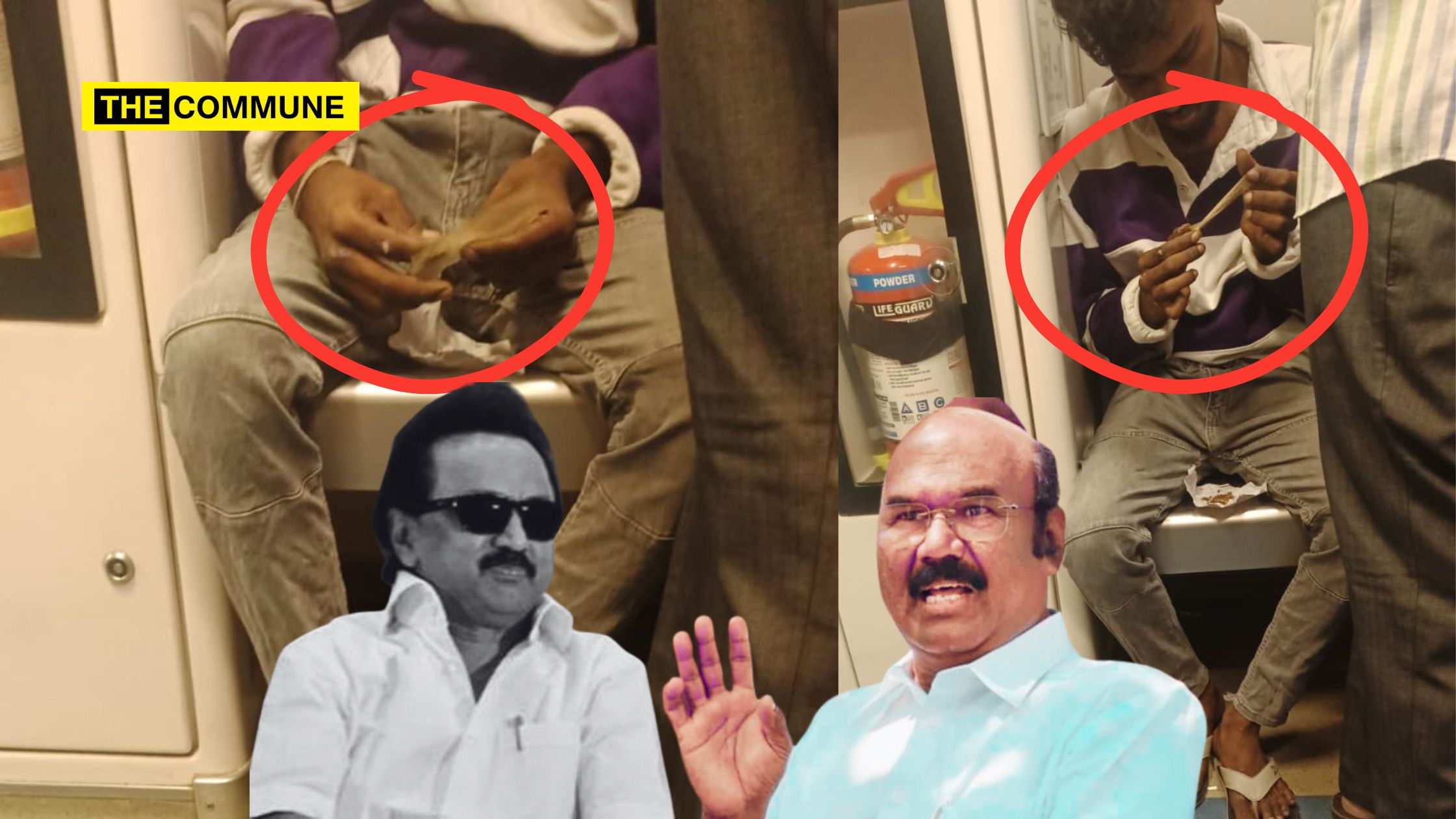
A viral photo of a young man allegedly using ganja on a crowded Chennai Metro train has ignited a heated debate over drug control and law enforcement in the state. Opposition parties have long accused the Tamil Nadu government of failing to curb the spread of drugs, including ganja, which they claim are being sold even in petty shops.
In response, the Tamil Nadu government has maintained that it is taking stringent measures against drug peddlers and users. Officials have emphasized that serious action is being taken by the police to control the drug issue in the state.
The controversy intensified when former AIADMK leader D. Jayakumar posted pictures of a youth allegedly using ganja on the metro on his X account. In his post, Jayakumar criticized Chief Minister M.K. Stalin, questioning the efficacy of his administration’s efforts to combat drug abuse. He wrote, “A youth used ganja on a crowded metro train in Chennai. Trafficking of prohibited drugs in Tamil Nadu is increasing and drug addicts are challenging law and order. Will Stalin, who only does empty advertisements like Ganja Hunt 2.0, 3.0, 4.0, focus on law and order from now on?”
பரபரப்பாக இயங்கும் சென்னையில் மக்கள் அதிகம் கூடும் மெட்ரோ ரயிலில் கஞ்சா பயன்படுத்திய இளைஞர்.
தமிழ்நாட்டில் தடைசெய்யப்பட்ட போதை பொருட்களின் புழக்கம் அதிகரித்து சட்டம் ஒழுங்குக்கு சவால் விடும் போதை ஆசாமிகள்.
Notably, ganja is being seized by the law authorities almost daily in various parts of the state. Interestingly and rather unfortunate, the development is that ganja is now readily available along with other synthetic drugs in some of the remotest parts of Tamil Nadu.
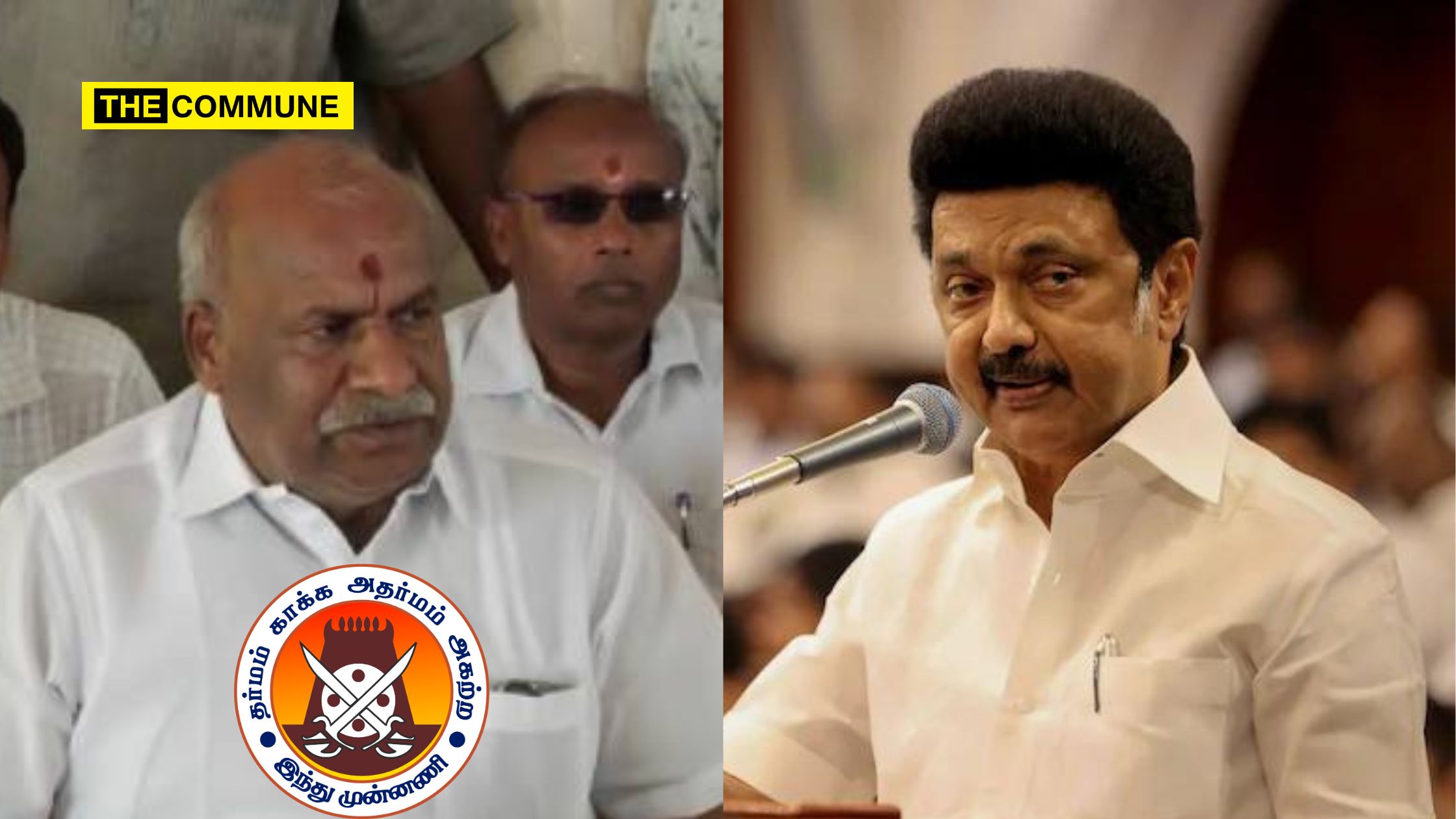
The Hindu Munnani state president, Kadeswara Subramaniam, has strongly criticized the Tamil Nadu government for neglecting the Jamaath administrations’ operation as parallel governments within the state. He warned that such occurrences could undermine public trust in democracy and break law and order. These remarks were prompted by the Kanyakumari Jamaath’s involvement in a Katta Panchayat (kangaroo court) to suppress a child abuse issue.
In his statement of condemnation, Kadeswara Subramaniam reported that a 60-year-old man allegedly raped a girl in the Thiruvithankodu area of Kanyakumari district. Still, the Muslim Jamaath officials did not inform the police. Instead, they convened a Katta Panchayat, demanding that the accused be confined to the Jamaat office, his house be sold, and three lakh rupees be paid to the victim.
Following public outcry on social media, a case under the POCSO Act was registered against the accused. However, Subramaniam questioned why the Tamil Nadu Police did not take action against the Jamaat administrators, despite a High Court directive for strict measures against those conducting Katta Panchayats. This has raised doubts among the public.
The Hindu Munnani chief urged the Tamil Nadu government to address the encroachment of Muslim Imams acting as quasi-governments across the state, warning of detrimental effects on democracy. He demanded that the police initiate a case and take independent action, rather than citing lack of formal complaints against the Jamaat involved in this incident.
Furthermore, he called for direct investigations by the District Child Welfare Officer and the District Collector, emphasizing the need for stringent action against the responsible Jamaat administrators. Subramaniam cautioned that if such attitudes persist, they could lead to law-and-order issues and undermine public trust. He urged the government to consider the evolving situation and take proactive steps accordingly.
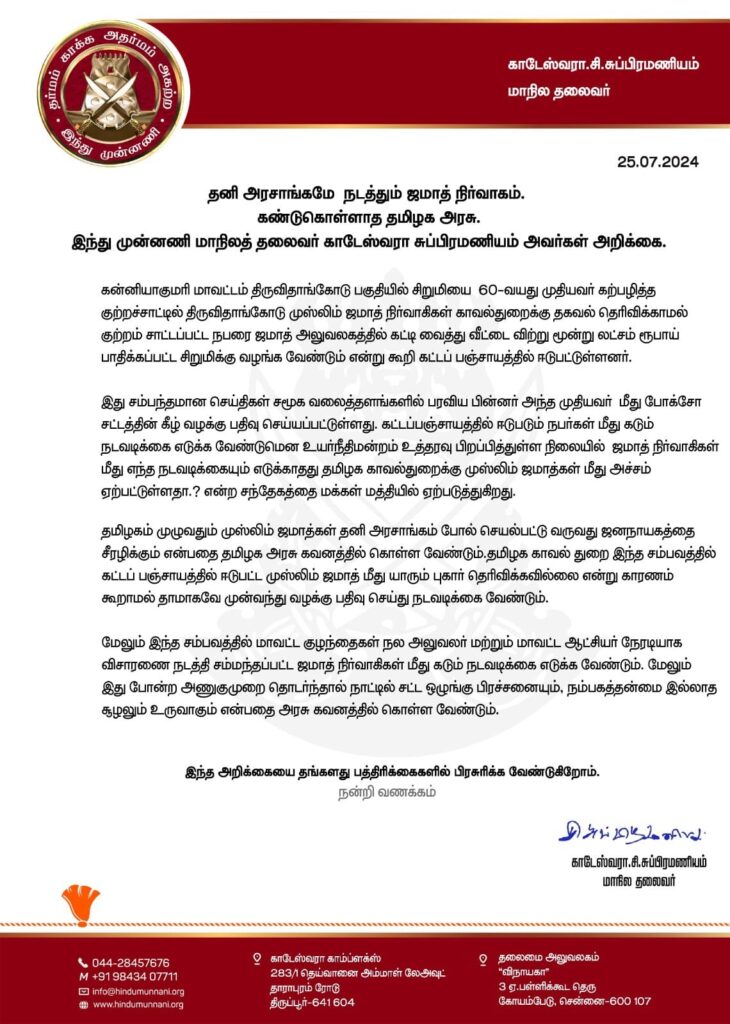
The condemnation communique read, “In the case of the rape of a girl by a 60-year-old man in Kanyakumari district’s Thiruvithankodu area, the officials of the Muslim Jamaat in Thiruvithankodu have engaged in a Katta Panchayat without informing the police, demanding that the accused person be tied up in the Jamaat office and the house should be sold, and three lakh rupees should be paid to the victim girl.
A case has been registered against the old man under the POCSO Act after the related news spread on social media. However, while the High Court has issued an order to take stringent action against those involved in Katta Panchayats, It causes doubt among the people whether the Tamil Nadu Police refrained from acting against the Jamaat administrators, fearing the Muslim Jamaats?
The Tamil Nadu government should take serious note that the Muslim Jamaat’s are acting like a separate entity throughout Tamil Nadu, which will spoil the democracy. The Tamil Nadu Police Department should register a case and take suo motto without giving any reason that no one has filed a complaint against the Muslim Jamaat involved in the Katta Panchayat in this incident. Also, the District Child Welfare Officer and the District Collector should directly investigate the incident and take strict action against the concerned Jamaat administrators.
And the government should consider that if this kind of attitude continues, an environment lacking in credibility and law and order problem will develop in the country.”
Subscribe to our channels onTelegram, WhatsApp, and Instagram and get the best stories of the day delivered to you personally.
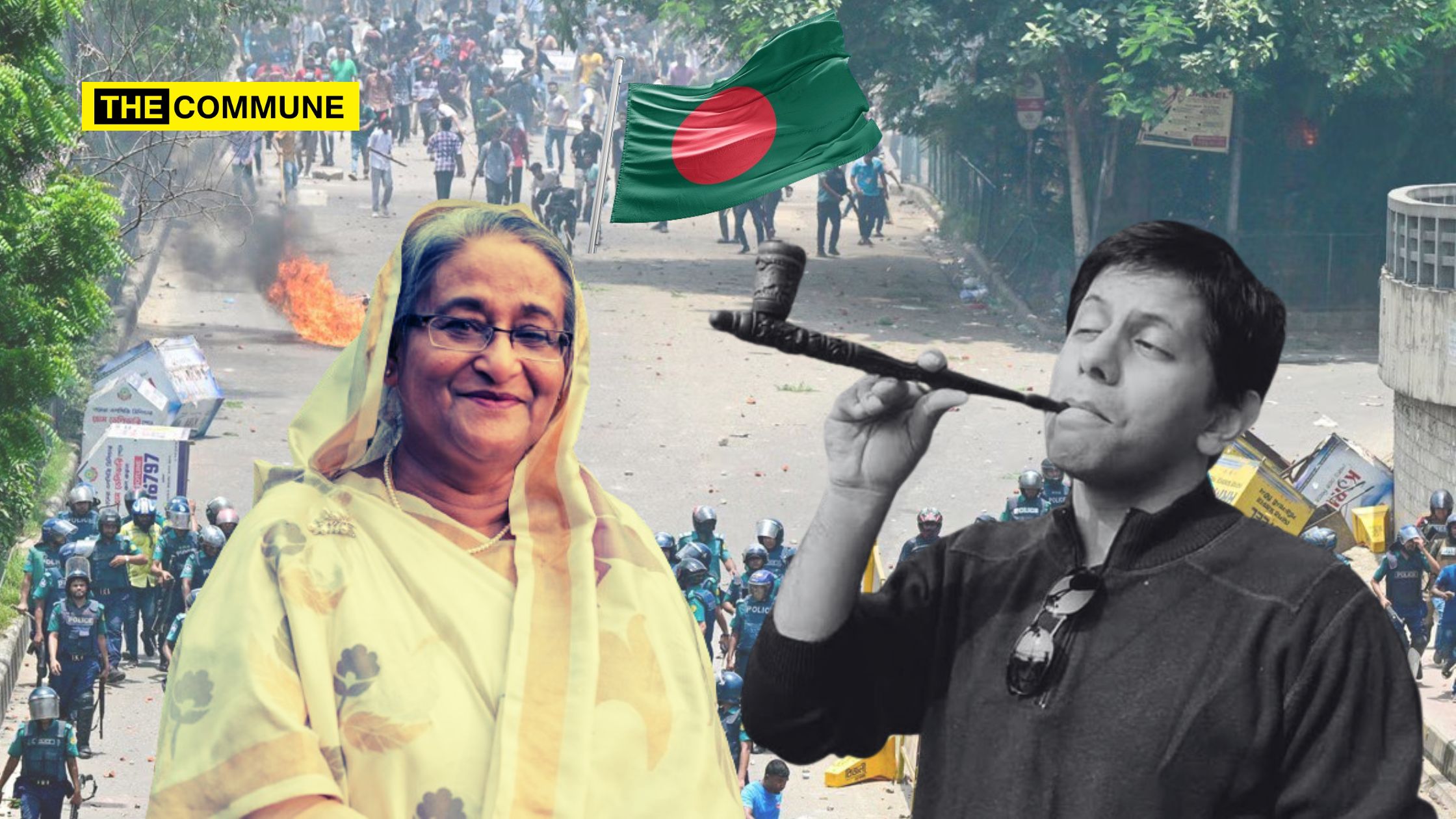
In a live stream episode of The Deshbhakt YouTube Channel in 2023, Akash Banerjee is asked by a viewer to talk about the post-Panchayat-poll violence in West Bengal that year. To this, Banerjee replied, “What is very very fascinating is that in that negative sense is that, violence is in the DNA of West Bengal.”
In July 2024, when the violence (student protests) broke out in Bangladesh, Banerjee released a video titled ” Bangladesh Student Protests | What Is ‘Dictator’ Sheikh Hasina Afraid Of?”
"Deshbhakt" Akash Banerjee on
Panchayat poll violence in WB (2023) : Violence is in DNA of West Bengal
Violence in Bangladesh (2024) : Sheikh Hasina is a dictator
Thus begins the portrayal of Bangladesh Prime Minister Sheikh Hasina as a dictator.
As the video begins, the screen reads, “This episode is dedicated to the thousands of Bangladeshi student protestors who stood up to a dictator to ask for what is right. Many of them had to pay the ultimate price of speaking up…”
Banerjee also claimed“Sheikh Hasina government has declared war against the youth of its country. We don’t know how many such incidents will happen, there is no calculation for it. This is being called one of the worst episodes of slaughter in the history of Bangladesh.”
He further says, “The curfew is in progress in the whole of Bangladesh. There is a complete internet blackout, at the time of recording this video. That is why many videos andmany incidents have not been able to come out. In the history of Bangladesh, another chapter is being writtenand the credit for this goes to “Tana Shah” Sheikh Hasina. But, in front of the students, this Tana Shah has had to bow, as student demands could not be suppressed.”
All through the video, he keeps emphasizing the fact that Sheikh Hasina is a dictator, further stating, “Why did Sheikh Hasina behave so brutally and dictatorially against students, even though this is only a student protest?”
He claimed that, in reality, Sheikh Hasina was using the quota system to give jobs to her favourite people, that she was making her own cadre in the government, and that the youth of Bangladesh was being deceived in the name of this reservation.
Banerjee could not understand the logic behind continuing the reservation for the children and grandchildren of freedom fighters.
He further claimed, “Sheikh Hasina was accused of making fake freedom fighter certificates for her favourites, so that she can make a Godi civil servant cadre. After that, the whole system can be in her hands.”
Would he care to talk about the reservation in India? Well, he justifies it by saying that the freedom fighter quota is not based on economic or social backwardness. He says, “There is a difference, especially this 30% freedom fighter quota. In India, reservation is done for caste-based social justice, according to the population and according to the study of social backwardness. Reservation is a system that is made so that SC, ST, andOBC communities get government jobs and education so that caste oppression, which is a historical disadvantage, anddiscrimination, can be reduced to some extent. There is no debate.”
Then he comes once again to “expose” the “dictatorial” face of Sheikh Hasina. He says, “It is important to understand the kind of dictatorial rule in Bangladesh. In January 2024, Sheikh Hasina got a historic victory That was no election. Only Awami League contested the election and the opposition did not participate. Too much fakiri going on. And this is what a well-known global anti-corruption organization, Transparency International, says that the elections in Bangladesh were one-sided and fake. Sheikh Hasina’s Godi Election Commission made a voter list, poll schedule, andconstitution delimitation in her favour. Godi Judiciary convicted more than 1,500 opposition leaders a few months before the elections. Through the Cyber Security Act, the government tried to silence independent media outlets, put journalists in jail, and even the Nobel laureate, Yunus Muhammad, whose micro-financing model brought an economic miracle to Bangladesh, Sheikh Hasina’s government did case after case on him, a formula you may know. In the 2024 elections, the opposition parties said that they would boycott the election and embarrass you. They said that they would not participate in the elections until the independent election commission was formed. They wanted to corner Sheikh Hasina. Sheikh Hasina has a different Fakiri. She said that they will hold the elections without opposition. An Opposition-free Bangladesh. Sheikh Hasina has control over every institution in Bangladesh. Everything is under his control. When the High Court reintroduced the quota system on 5 June 2024, students were convinced that it was not an independent decision It was an order of Sheikh Hasina. She just wanted to get her decision read by the judiciary and put a judicial stamp. She wanted to re-introduce quota to make civil servants her own.”
He further says, “She said in a press conference that if not for the grandchildren of freedom fighters, then do the protesters want us to give quota to the grandchildren of the Razaqars? Basically, student protesters were called pro-Razaqar. Now, for context, Razaqar were those people who helped the Pakistan army in the 1971 Liberation War. That is, they gave the highest level of anti-national tag to student protesters. Razaqar is such a powerful word in Bangladesh. Tukde Tukde Gang, Khan Market Gang, Soros Gang, Libtard, Secular, Gaddar, Anti-National – mix them up – then you have Razaqar insult which is the worst of all these insults. Students were hurt, students were angry, andprotests intensified even more.”
He further claimed that this type of name-calling and targeting has become an old part of the dictator toolkit to delegitimize the protesters, to call them traitors, to demotivate them.
He tries to compare Sheikh Hasina’s dictatorial rule to what he perceives as the dictatorship in India under Prime Minister Modi. Frequent references indicate as you can see for yourself – calling media as Godi media, anti-nationals, labelling, etc.
He also keeps referring to Hasina as Tana Shah all through the tirade. He says, “The legitimate demands of the protesters did not need to be suppressed by violence But what happens is that Tana Shah consider themselves to be God They think that what do these small people know, but they know everything. And according to that, they take action. Sheikh Hasina has now used the dictatorial digital toolkit. On 18th July, the internet was shut down overnight in the whole country. A complete curfew was also imposed in the cities of the country. Army troops deployed on 19th July. We don’t know how many students have died or how many have been injured. Because information blackout is still going on.”
Is Banerjee Referring To Sheikh Hasina Because She Is India’s Ally? Or Is There More To It?
Banerjee’s labelling of Sheikh Hasina as a “dictator” and calling her Tana Shah repeatedly indicate that since Bangladesh’s PM is a good friend of India, and also there have been reports of the US trying to meddle with the Bangladeshi political scene, certain things add up.
It is noteworthy that Banerjee has been invited to be part of a programme conducted by the US Embassy in India titled “Influence to Impact”.
Are you a social media influencer or a content creator curious about impactful content that drives real change? Here's your chance to learn from the best! Join us at American Center New Delhi for "Influence to Impact" with @TheDeshBhakt Akash Banerjee.
With the kind of narrative Banerjee is setting about Bangladesh and his participation in the event conducted by the US Embassy, it might be perceived that the US is trying to use “Influencers” like Banerjee to influence the Indian audience about Bangladesh and the student protestors. We had also reported how foreign bots and propaganda media channels were trying to fuel the student protests in Bangladesh.
In the whole video, Banerjee has been supporting the protests, and calling Hasina the dictator. Is he setting a precedent for something ominous that might happen in India in the near future? Time will tell.
Subscribe to our channels onTelegram, WhatsApp, and Instagram and get the best stories of the day delivered to you personally.
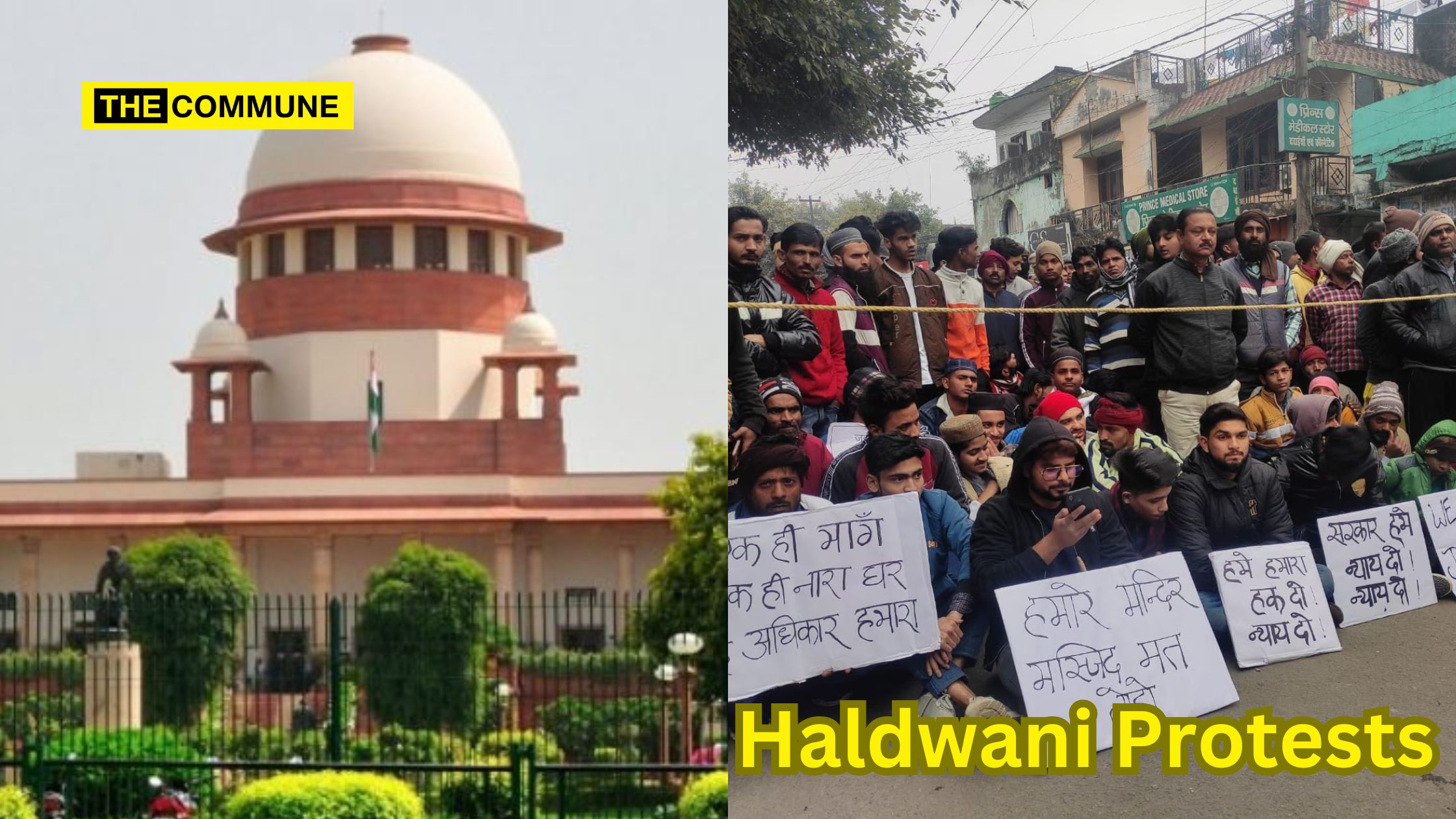
On 24 July 2024, the Supreme Court, providing relief to 50,000 Haldwani residents, emphasized the need to ensure the rehabilitation of individuals before evicting them to make way for the development of Haldwani railway station in Uttarakhand. A bench comprising Justices Surya Kant, Dipankar Datta, and Ujjal Bhuyan addressed an application from the Government of India and Indian Railways seeking modification of an order that had halted the eviction of approximately 50,000 people accused of infringing on railway properties in Haldwani.
The railways argued that urgent access to a strip of land was necessary following the destruction of a retaining wall by the Ghuala River during last year’s monsoon, which endangered railway operations. However, the bench questioned the railways’ approach, criticizing their reliance on public interest litigation rather than pursuing statutory procedures against long-standing occupants of the land.
Notably, the Uttarakhand High Court had ordered initially evictions in December 2022 through a PIL, a directive that was later stayed by the Supreme Court in January 2023 and periodically extended. During the proceedings, the bench queried the railways on whether they had issued notices to the encroachers and expressed concern over the humanitarian implications of displacing residents who have lived there for decades.
“Assuming they are encroachers, still the ultimate question is…they are all human beings. They are residing for decades. These are all pucca houses. Courts can’t be ruthless, but at the same time, courts cannot encourage people to encroach. You as the State, when everything has been happening before your eyes, you also had to do something. The fact remains that people have been living there for 3-5 decades, perhaps even before independence. What you have been doing all theses years?” Justice Kant said.
Additional Solicitor General Aishwarya Bhati informed the court about pending proceedings under the Public Premises (Eviction of Unauthorised Occupants) Act, 1971. Justice Surya Kant highlighted the inadequacy of PILs in resolving complex factual disputes concerning property rights claimed by long-time residents.
The bench underscored the humane considerations amidst the legal complexities, urging the authorities to act responsibly given that many affected families had resided in the area for generations. They directed the Union of India and the State of Uttarakhand to undertake several steps, including identifying necessary land and affected families and proposing suitable rehabilitation sites.
In response, the bench mandated the Chief Secretary of Uttarakhand to coordinate a meeting with railway authorities and the Ministry of Housing and Urban Affairs within four weeks to develop a fair and acceptable rehabilitation scheme. The case is scheduled to be heard next on 11 September 2024.
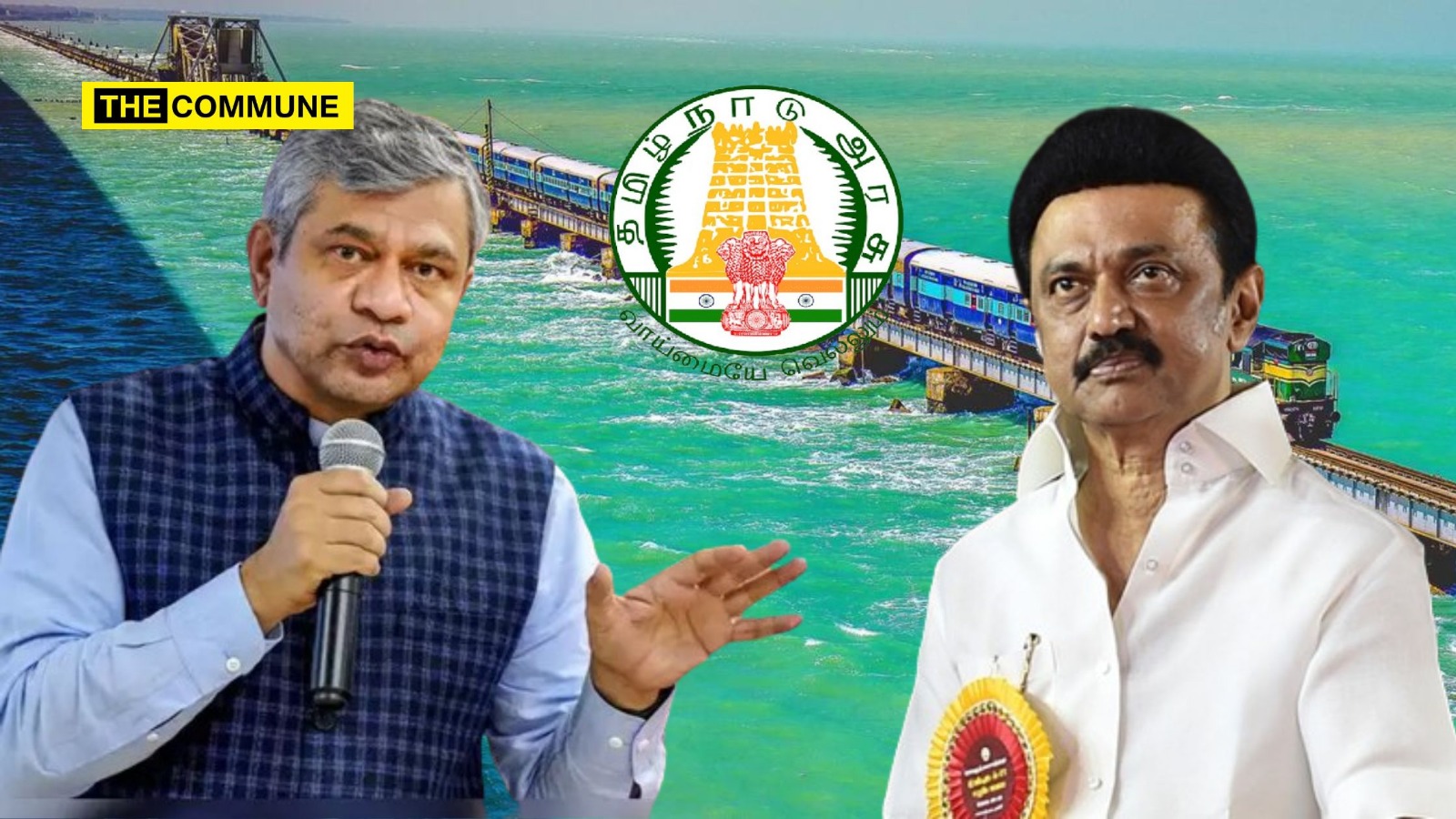
Tamil Nadu has formally communicated to the railway ministry its request to cancel the proposed 17-km rail line project from Rameshwaram to Dhanushkodi, according to Union minister Ashwini Vaishnaw’s statement on 24 July 2024.
Responding to inquiries about project delays in the state, Vaishnaw emphasized the central government’s commitment to accelerating nationwide projects, contingent on state cooperation in land acquisition. Although specifics of the state’s request were not detailed, sources indicated Tamil Nadu’s concerns about the ecological sensitivity of the project area. The initiative to establish a broad-gauge rail line has stalled due to the railways’ challenges in acquiring necessary land.
Dhanushkodi holds significance as a Hindu pilgrimage site where devotees traditionally conclude their pilgrimage by bathing in its waters, believed to mark the beginning of Ram Sethu. The railway station in Dhanushkodi was rendered unusable after being ravaged by the 1964 Rameshwaram cyclone, transforming the once-thriving tourist destination into an abandoned ghost town.
Earlier in the day, the railway ministry informed the Lok Sabha that several critical infrastructure projects in Tamil Nadu are delayed primarily due to land acquisition issues. In a written reply, Vaishnaw stated that only 807 hectares of the required 2,749 hectares have been acquired so far, attributing the shortfall to unsuccessful efforts by the railways. He underscored the need for Tamil Nadu’s cooperation to expedite land acquisition.
Later, Vaishnaw informed reporters that the central government has substantially increased budgetary allocations for all states, including Tamil Nadu, with an allocation of ₹6,362 crore for the current fiscal year, significantly higher than the average annual allocation during the previous administration’s tenure.
Supporters of this project believe that this stretch would have given a big boost to not only religious tourism in Rameswaram but also provide a logistical advantage to the marine security forces to maintain a strategic vigil along the coastal stretch.
On 21 July 2024, POTUS Joe Biden announced that he would not run for President for one more term in the upcoming elections and endorsed support to Vice President Kamala Harris as the Democrat Presidential Candidate.
My fellow Democrats, I have decided not to accept the nomination and to focus all my energies on my duties as President for the remainder of my term. My very first decision as the party nominee in 2020 was to pick Kamala Harris as my Vice President. And it’s been the best… pic.twitter.com/x8DnvuImJV
Once again, several Indians rejoiced over the fact that a person with Indian roots was going to (possibly) be POTUS. The “ancestral” village of Kamala Harris’smother’s side went one step ahead.
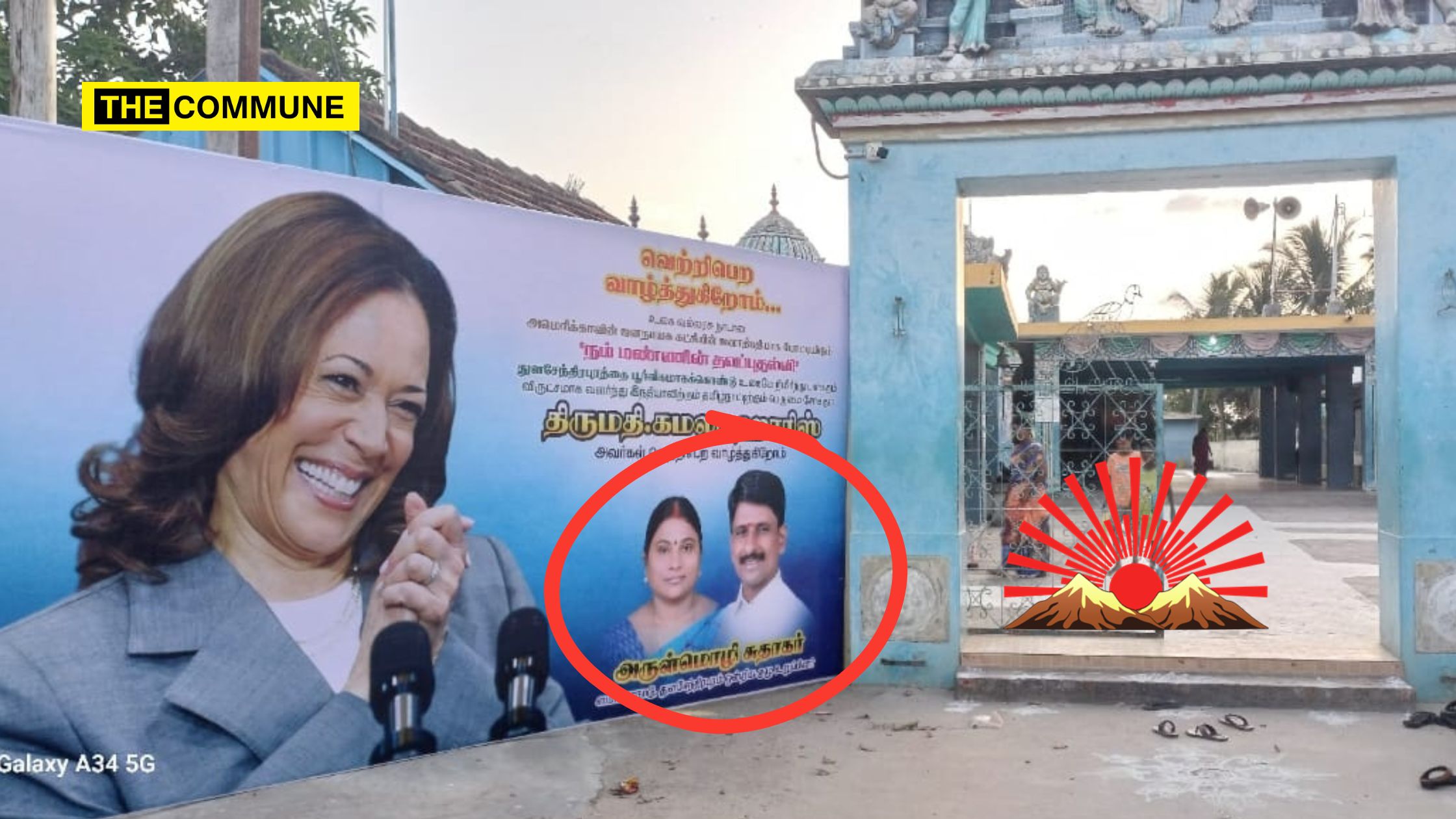
Thulasendrapuram in Tiruvarur, Tamil Nadu, which is believed to be the ancestral village of Kamala Harris’mother has erected a huge billboard outside the Sri Dharma Sastha Temple, wishing her all success in winning the Presidential Race.
#KamalaHarris ancestral village Thulasendrapuram in #Tiruvarur#TamilNadu has erected a huge billboard, wishing her all success to win the Presidential Race…
Upon scrutinising the billboard closely, one can spot a husband-wife duo at the bottom of the flex banner. It has come to light that the couple belongs to DMK – Arulmozhi Suthakar and her husband J Suthakar. It is noteworthy that Arulmozhi is the 21st ward councillor of a nearby village named Painganadu.
“It is the desire of the residents of Thulasendrapuram and Painganadu that a woman of Indian origin and that too from Tiruvarur district in Tamil Nadu should occupy the highest position in the USA, which will be a matter of great pride for all women,” said Arulmozhi to The Hindu.
“We feel overjoyed that Ms. Harris is one step close to occupying the highest office in the United States of America and her victory will be the greatest moment for Thulasendrapuram and Tamil Nadu,” said J. Suthakar, Arulmozhi’s husband.
However, M Natarajan, the priest of the Sri Dharma Sastha temple, speaking to The Hindu also noted that none of Kamala Harris’ family members live in the village.“No one from the family of Kamala Harris resides at Thulasendrapuram. Her maternal grandfather P.V. Gopalan left the village several decades ago. Nevertheless, Kamala Harris is a household name not only at Thulasendrapuram but in the nearby villages after she became the Vice President of the global superpower,”he said.
Natarajan also highlighted Harris’s connection to the temple, mentioning her donation for its kumbhabhishekam (consecration) in 2014. Her name is inscribed on a stone tablet listing donors, a testament to her contribution.
This is indeed the ancestral village& family deity of #KamalaHarris maternal family… Kamala's grandfather PV Gopalan had donated to the temple, so has Kamala's aunt Dr. Sarala(who donated in the name of KH) #Tamil names of PV Gopalan and Kamala Harris on temple donors list👇 https://t.co/x4XCPNvxnppic.twitter.com/jvwyQ8vP5s
Special poojas, abhishekams, and archana were performed in her name at the Sri Dharma Sastha Temple on the morning of 23 July 2024, with villagers fervently praying for her victory.
Subscribe to our channels onTelegram, WhatsApp, and Instagram and get the best stories of the day delivered to you personally.
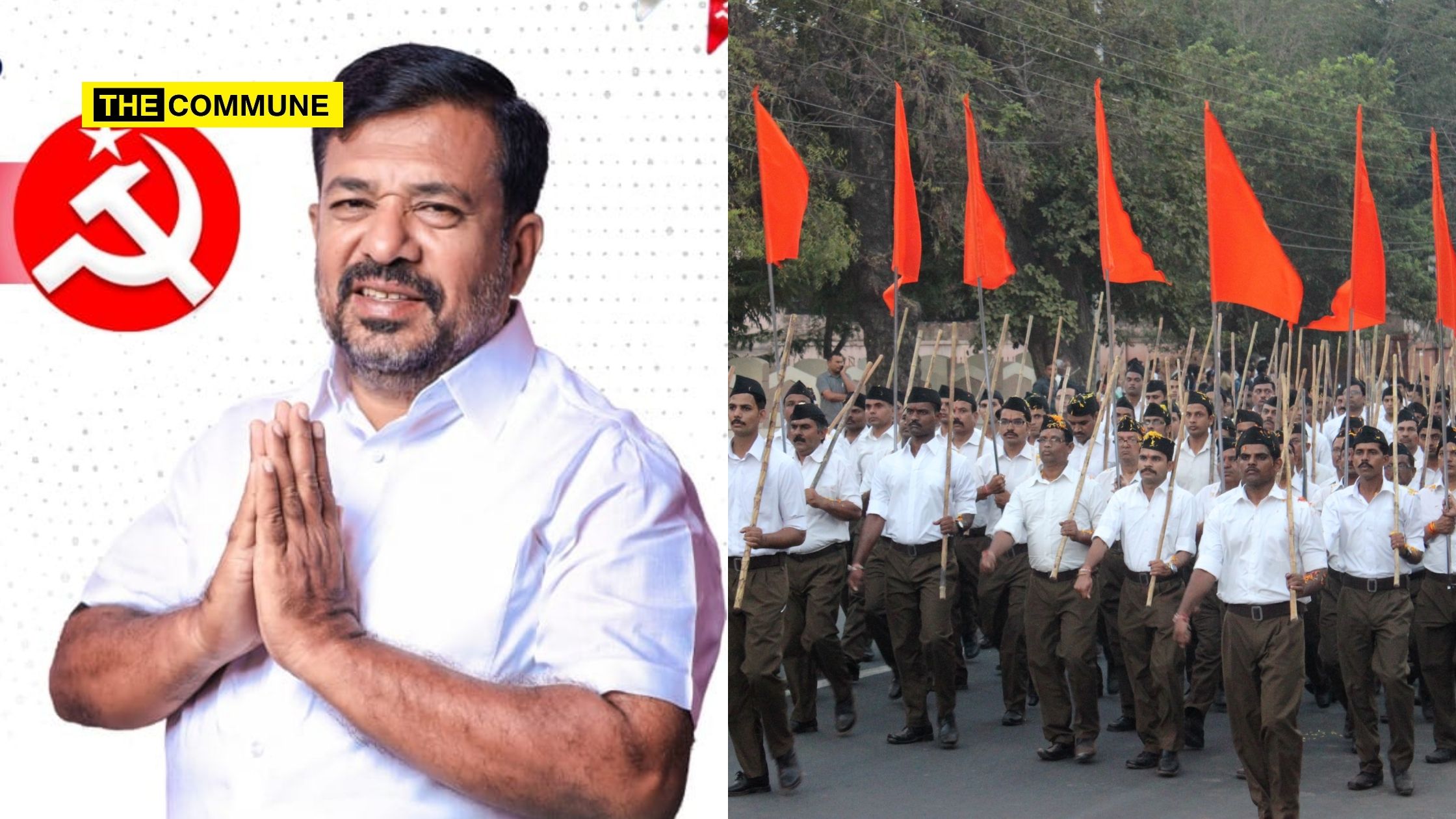
In a recent statement, Sriram, Secretary of the South Indian Media Department of the RSS, condemned the Dindigul constituency Communist MP Sachidanandam for his slanderous remarks associating the RSS with the assassination of Mahatma Gandhi. The RSS has demanded an unconditional apology from the MP, warning of strict legal action if he fails to comply.
Sriram highlighted the RSS’s long-standing dedication to national reconstruction, patriotism, and piety through Hindu unity over the past 99 years. He noted that the RSS is the world’s largest charitable organization, with 1.5 lakh service works being conducted across India by its volunteers.
He also recounted historical events, stating that the British government had initially issued an order prohibiting civil servants from joining the RSS to prevent the instillation of patriotism among the youth. This order was lifted post-independence, aligning with the constitutional freedoms of expression and association.
However, in 1966, Prime Minister Indira Gandhi reinstated a similar order barring central government employees from joining the RSS. This order, seen as contrary to democratic norms, was recently rescinded by the current central government, marking a significant victory for freedom of expression.
Sriram pointed out that RSS volunteers have made remarkable contributions in various fields, including politics, spirituality, culture, trade union, service, and agriculture. Despite these achievements, two Tamil Nadu MPs from the CPI-M party have opposed the government’s removal of the restrictive order, with MP Sachidanandam falsely accusing the RSS of Gandhi’s assassination.
He reminded the public that when Mahatma Gandhi was assassinated in 1948, the RSS was initially banned. However, the Supreme Court later ruled that the RSS had no involvement in the murder, leading to the lifting of the ban. Various inquiry commissions have since corroborated this ruling.
Sriram also noted that Mahatma Gandhi had visited an RSS camp in Wardha, Maharashtra, in 1934 and acknowledged the organization’s practices. Despite this, opponents of the RSS continue to propagate false narratives linking the organization to Gandhi’s murder, often retracting their statements in court when faced with legal challenges.
After the 1962 Sino-Indian War, Nehru invited the RSS to participate in the Republic Day parade, indirectly supporting nationalist organizations linked to Savarkar.
He emphasized that prominent Congress leaders, including Sitaram Kesari, Arjun Singh, and Digvijay Singh, have faced defamation cases for similar false accusations. Recently, Congress President Rahul Gandhi had to apologize in court for his defamatory remarks.
The RSS has warned MP Sachidanandam sternly to retract his slanderous comments and apologize unconditionally, failing which he will face legal consequences.
Subscribe to our channels onTelegram, WhatsApp, and Instagram and get the best stories of the day delivered to you personally.
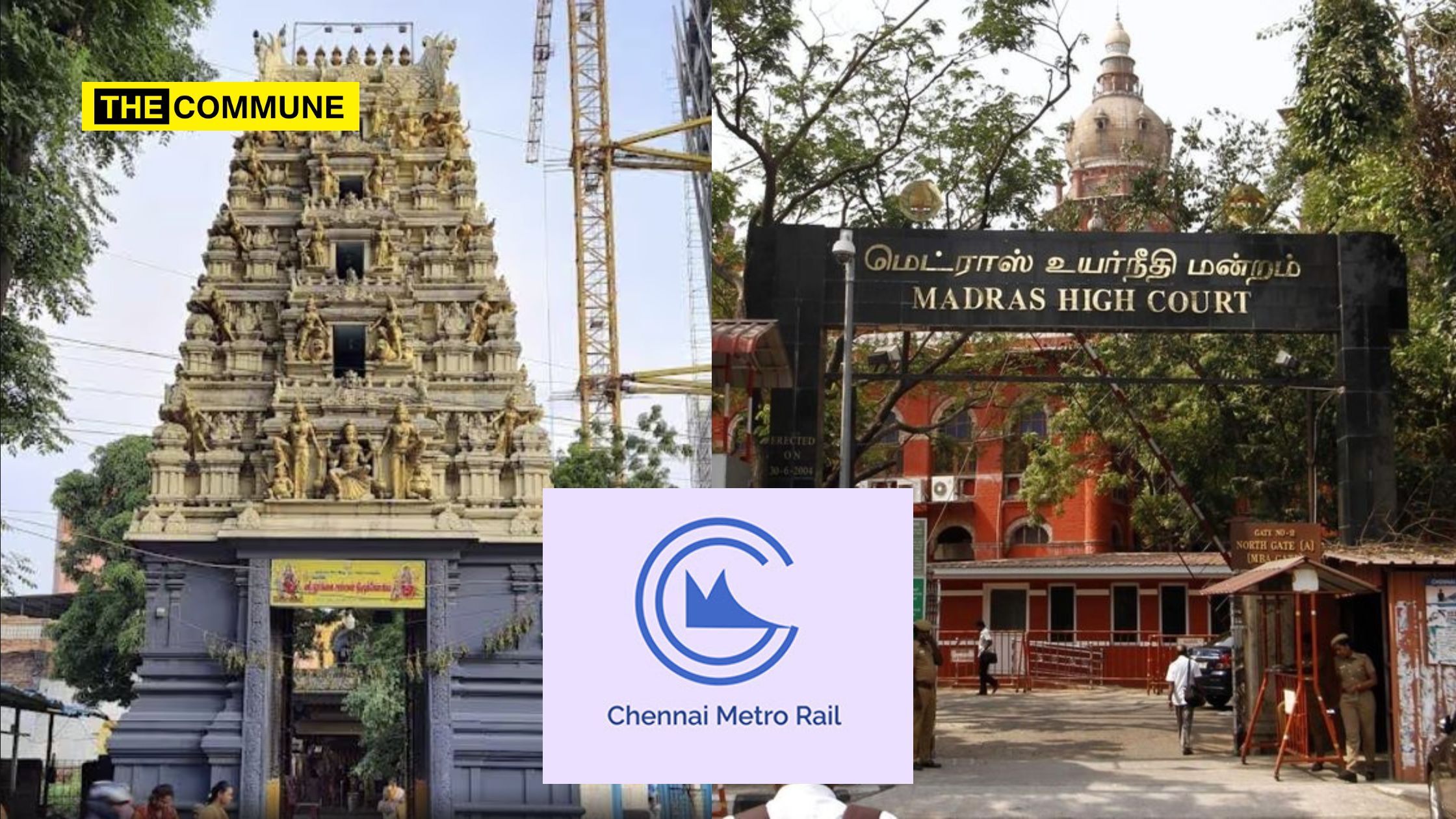
Chennai Metro Rail Ltd (CMRL) has been accused of violating an interim stay order issued by the Madras High Court, which halted construction activities near the Sri Rathina Vinayagar Temple and Sri Durgai Amman Temple on Whites Road, Chennai. The stay order announced on 32 July 2024, was in response to significant opposition from Royapettah residents and aimed to protect these ancient structures from demolition as part of the Metro Phase II project.
Residents and devotees, represented by the Aalayam Kappom Foundation, initiated protests and legal actions against CMRL’s plans to demolish the five-tier Raja Gopuram of the Sri Rathina Vinayagar Temple, a structure approximately 30-40 years old, while the temple itself has a history spanning over 250 years. The temple, also known as Sri Durgai Amman Temple, is unique for being the only Durga Temple in Chennai facing North. The gopuram’s demolition was seen as a significant cultural and historical loss.
The Madras High Court previously directed CMRL and the Hindu Religious and Charitable Endowments (HR&CE) department to consider relocating the gopuram using advanced technology. However, CMRL officials expressed doubts about the feasibility of this solution.
In response, the residents and devotees filed a Public Interest Litigation (PIL) through the Aalayam Kappom Foundation. On July 23, 2024, temple activist TR Ramesh announced on social media that the High Court had issued a stay order, halting any construction or demolition activities by CMRL around the ancient temples.
Good (interim) news!
Hon'ble 1st Bench of Madras High Court stays any construction or demolition work by Chennai Metro Rail in and adjacent to the ancient temples of Sri Durgai Amman, Whites road and Sri Rathina Vinayagar – ancient temples that are found mentioned in… pic.twitter.com/luCuyimrrB
Advocate Muthuraj Ramamoorthi, representing the foundation, emphasized the historical significance of these temples, noting their mention in records dating back to British India over 100 years ago.
Despite the stay order, CMRL has continued work for Chennai Metro in the temple’s vicinity, prompting accusations of contempt of court. The HR&CE department, typically responsible for temple oversight, has been criticized for its inaction in enforcing the court’s directive and protecting the temple.
Chennai Metro Rail Ltd – brazenly violates the Interim Stay Order issued by Hon'ble 1st Bench of the Madras High Court – and carries work near Sri Durgai Amman Temple, Whites Road, Chennai
The stay order requires CMRL to reassess its plans and consider alternative sites for the Metro line to avoid interfering with these historically and culturally significant temples.
Subscribe to our channels onTelegram, WhatsApp, and Instagram and get the best stories of the day delivered to you personally.
Amazon India has come under scrutiny for promoting and selling the controversial e-book “The Inevitable Split – Documents on State sponsored ethnic cleansing in Manipur, 2023,” published by the Zomi Students Federation (ZSF) and ITLF on its Kindle platform. This book has sparked widespread controversy for allegedly spreading misinformation through Kuki propagandists, which certain sections of the Indian media have uncritically amplified. Critics argue that the book on Amazon unfairly demonises the Meitei community while portraying the Kuki community as victims of minority persecution.
The books calls for a “Separation Only Solution” for Manipur that borderlines on secession from India.
In response to these developments, the Commissioner (Home) of the Manipur Government directed the Director General of Police (DGP) of Manipur on 8 July 2023, to take legal actions against the ZSF and to ban the book. The government’s concern stems from the potential of this publication to mislead the international community by presenting a distorted narrative of Manipur’s history, its people, languages, cultures, and religions.
The conflict in Manipur between the Meitei and Kuki communities has escalated into violent ethnic clashes, triggered in part by the Meitei community’s demand for inclusion in India’s Scheduled Tribes list, which the Kuki community opposes. The situation worsened on 3 May 2023, when Kuki communal organizations organized a “Tribal Solidarity March” that turned violent. This led to armed Kuki militants and mobs attacking Meitei neighborhoods, resulting in casualties, property damage, and forced displacements. Retaliatory attacks followed from Meitei groups in the valley districts.
Recent unrest in Manipur intensified following the Manipur High Court’s 19 April 2024 directives, with the All Tribal Students’ Union of Manipur organizing a “Tribal Solidarity March” against the Meitei ST status demand. This march led to violent clashes, prompting the deployment of the Indian Army and other central forces. The state government issued “shoot at sight” orders in extreme cases to control the violence.
Other contributing factors to the unrest include growing tensions between the Meiteis and tribes like the Kukis, disputes over state government notices declaring certain villages as illegal settlements, concerns about the delimitation process, and the impact of the Myanmar military coup causing a refugee crisis. Additionally, there are allegations of a sudden increase in villages in Churachandpur district and claims that some tribal groups are obstructing anti-drug efforts.
Subscribe to our channels onTelegram, WhatsApp, and Instagram and get the best stories of the day delivered to you personally.