Home Blog Page 944

“Every Karyakarta In Coimbatore Should Become Annamalai”: PM Modi’s Msg To BJP Karyakartas In Coimbatore Ahead Of Lok Sabha Elections

Prime Minister Narendra Modi possesses a remarkable ability to connect with people at the grassroots level, gaining a deep understanding of their concerns and adapting his actions accordingly. He consistently uplifts and motivates those he encounters with his affable demeanor, leaving a lasting impression that inspires heightened dedication. Ahead of the upcoming elections, he recently engaged with party workers from the Booth committee in Tamil Nadu, demonstrating his commitment to understanding the ground realities directly from those involved.

On 29 March 2024, Prime Minister Narendra Modi engaged with BJP members via the Namo App, focusing on grassroots efforts for the upcoming Lok Sabha elections. He urged them to delve into booth-level activities and strategize effectively to ensure victory for the party.

During the ‘Enathu Booth Valimaiyana Booth’ (My booth is the strongest booth) event, he urged party members to focus on securing victory for BJP and NDA candidates in the upcoming election. Narendra Modi said, “I understand you are facing a paucity of time owing to the general election scheduled for April 19 in Tamil Nadu. You hardly have 15-16 days left (since election campaigning ends 48 hours before polling day). Organize yourselves well, connect with the voters, highlight our achievements and hold tiffin or lunch meetings amongst you to discuss the next step,” 

Speaking about the government’s emphasis on fostering women-led development, Modi inquired from a party member about the schemes that have resonated most with women and garnered significant attention. The Prime Minister expressed satisfaction with the party member’s dedication to grassroots efforts. A female participant from Tiruvarur highlighted the effectiveness of initiatives like the Pradhan Mantri Ujjwala Yojana (PMUY) and Jal Jeevan Mission. She emphasized that as agricultural laborers, these schemes have greatly facilitated their work. During the interaction, he expressed concern about not having Tamil as his native language and being unable to speak it fluently, and that it deeply affected him. Nevertheless, he said that the party remained dedicated to promoting the language globally.

Reflecting on his early days within the party, Modi encouraged booth-level workers to form small groups comprising three members, ensuring at least one female member in each group. He urged them to engage with 10 families daily, drawing from his own experiences to underscore the importance of such outreach efforts. Modi advised, “Sit with those families, discuss with them and even extend what help you possibly could. And in the night discuss among yourselves the people’s requirements and plan your strategy accordingly”

Modi also instructed them to convene meetings every three or four days involving various groups such as women, first-time voters, fishermen, farmers, and beneficiaries of government schemes. These gatherings were intended to disseminate the achievements of the BJP administration. Furthermore, they were urged to capitalize on the dissatisfaction with the current DMK government. Criticizing the opposition in Tamil Nadu, Modi remarked that Tamil Nadu’s governance had deteriorated significantly under the DMK government and its allies. He alleged that the ruling party was accountable for corruption, law enforcement issues, and the proliferation of drugs.

Highlighting the devastating impact of drugs on the youth, he stated, Our children’s lives are being ruined by drugs and expressed concern over recent large-scale drug seizures with connections to Tamil Nadu and urged efforts to raise awareness and combat this menace.

He mentioned that political experts anticipate a reversal of fortune for the BJP in Tamil Nadu, asserting that the dissatisfaction with the current ruling party in the state would find expression during the upcoming election. He criticized dynastic political parties, describing them as entities solely serving the interests of a particular family, encapsulating their nature as “of the family, by the family, and for the family.”

During the interaction with party workers in Tamil Nadu while speaking to VT Murugesan, the booth president of Coimbatore South constituency, PM Modi said, “Murugesan ji, I have given Annamalai the task of the entire state. That is, we have to win the entire Tamil Nadu. So Annamalai will not have time to work in his constituency. In this scenario, every karyakarta there is equivalent to Annamalai for me. You all have to become Annamalai and win Coimbatore seat. That’s why, you must tell Annamalai that he should travel all over Tamil Nadu and he need not spend time in Coimbatore, each karyakarta together will win Coimbatore so that Annamalai can travel all over Tamil Nadu.”

The upcoming Lok Sabha Elections 2024 mark the first instance where Tamil Nadu BJP is contesting polls without the support of Dravidian parties in Tamil Nadu. In the state, BJP has formed alliances with AMMK and PMK, and other parties.

For the election, BJP has selected K Annamalai, the state president, as its candidate for Coimbatore. Former Telangana governor Tamilisai Soundararajan will contest from Chennai South, and Union Minister L Murugan will contest from Nilgiris. TR Paarivendhar, founder of IJK and current MP has been fielded for Perambalur constituency, Pon Radhakrishnan for Kanyakumari, Vinoj P Selvam for Central Chennai,  AC Shanmugam for Vellore, C Narasimhan for Krishnagiri, and Nainar Nagendran for Thoothukkudi.

(with inputs from IE)

Subscribe to our channels on TelegramWhatsApp, and Instagram and get the best stories of the day delivered to you personally.
Savouring Success: Journey To The ‘House Of Idlies’

In the heart of Chennai, nestled amidst the bustling streets and aromatic flavors of South Indian cuisine, lies a culinary haven known as the House of Idlies. But what’s the story behind this humble yet thriving eatery? Meet Umesh Vaidyanathan, the visionary behind House of Idlies, whose journey from a small terrace kitchen to a renowned restaurant is nothing short of inspiring. 

Umesh’s tale begins in 2016, when he and his wife Sadhna Shankar embarked on a mission to share the flavours of home-cooked podi idlies with the world. Armed with recipes passed down through generations, they set out to make a mark in the culinary landscape of Chennai. But theirs was not a journey paved with gold; it was a labour of love, fuelled by passion and dedication.

As Umesh reminisces about those early days, a glimmer of nostalgia dances in his eyes. “We started from my home, with a terrace kitchen,” he recalls. “The recipe of the podi, the batter – all of it was from my mom. It was my wife’s idea to distribute packed podi idlies to retail outlets.”

Umesh’s wife, a Chartered Accountant, was the brain behind the idea to start the business – from packed podi idlies delivered to outlets like Madras Coffee House and Chai Kings or catering to the customers over Swiggy or Zomato to dine-in restaurants in Chennai. 

Their venture, initially named Only Idlies, soon gained momentum, with patrons flocking to savour the authentic flavors of South Indian cuisine. But it wasn’t just about the food; it was about preserving tradition, honouring family recipes, and sharing a piece of home with every bite.

Over the years, House of Idlies evolved, growing from a modest delivery model to a flagship restaurant in T Nagar. But amidst the expansion and success, Umesh has remained grounded, never forgetting his roots or the values that shaped his journey.

“We wanted to create something that felt like home,” he explains. “All our podis and masalas come from our own kitchen, crafted with love and care. We wanted to maintain that homemade essence, that feeling of comfort and familiarity.”

One dish that embodies this sentiment is the signature Podisa – a unique twist on the traditional dosa/uthappam, crafted with precision and passion. 

“With no hefty marketing budget and lacking the grandeur of established restaurants, we knew we had to offer something truly unique to captivate people’s attention.” Recalling their early marketing efforts, Umesh recalled their grassroots approach, utilising platforms like WhatsApp and Facebook to spread the word about their culinary creations. “We wanted to stay true to our South Indian roots while offering something fresh and distinctive. That’s where the idea of introducing ‘podisa’ came into play.”

“You see, we wanted to add a new dimension to the classic dosa experience,” he recounted the genesis of podisa. “But we knew that as a delivery brand, replicating the traditional dosa served on a banana leaf would be a challenge. So, we took inspiration from uthapam, blending it with our own twist. Our rectangular packing boxes became the canvas for our culinary innovation. With no dosa masters at our disposal, we improvised. We crafted a special die to shape the batter and cooked it in an iron pan until it was irresistibly crispy at the bottom.”

“Just like the uthapam you’d enjoy at home, but with a twist. We wanted a name that would capture people’s imaginations, and ‘podisa’ seemed to fit perfectly – a nod to its resemblance to pizza and its unique appeal. And thus, Podisa was born.”

The Cheppankezhangu (Colacasia) fries also stay true to their original form – an Indian equivalent to the French Fries snack but that which reminds you of your home. 

Reminiscing on the genesis of their menu innovations, Umesh enthusiastically tells us about the items on his menu. “Take, for instance, our latest addition – the Railway chutney. It’s not just a dish; it’s a nostalgic journey, evoking memories of train travels with its spicy, runny chutney atop soft idlies.”

With each dish, the team at House of Idlies aimed to deliver more than just flavours – they aimed to offer comfort and familiarity. “Our Rasam sadham, a lunchtime favorite, is like a warm embrace, it’s the taste of home, the taste of comfort that keeps our customers coming back,” Umesh shared. 

In discussing the predominantly sattvik nature of their menu, Umesh revealed a deeply rooted philosophy. “It’s not about avoiding onion or garlic consciously,” he explained thoughtfully. “Rather, it’s about honoring tradition and simplicity. Our dishes like arisi upma and morkali thrive on the purity of their ingredients, without the need for additional embellishments.”

Reflecting on the evolution of their brand, Umesh’s eyes sparkled with admiration for the innovative concepts they had introduced. “We realized that to truly resonate with our customers, we needed to offer more than just traditional idlies and dosas,” he shared with a sense of pride. “That’s where the idea of verticalizing our brand into three distinct entities – Bowled, Kitchen Stories, and Dunked – was born.”

As he spoke, there was a reverence for the importance of customer convenience and satisfaction. “In today’s fast-paced world, people crave convenience,” Umesh explained thoughtfully. “Whether they’re working from the office or on the go, they want meals that are filling, healthy, and easy to consume.”

He continued, painting a vivid picture of their menu offerings and the inspiration behind them. “Take, for example, our Dunked concept – mini idlies and vadas served with various sides, it’s not just about the flavors; it’s about recreating nostalgic experiences, like enjoying a train journey with spicy chutney atop soft idlies,” Umesh described with enthusiasm.

In recounting their journey, there was a palpable sense of reverence for the past and optimism for the future. “While we may be relatively young in the industry, our experiences have taught us invaluable lessons. With each decision we make, we strive to be more calculated and focused, knowing that our ultimate goal is to delight our customers and leave a lasting impression on their taste buds,” Umesh reflected. 

But House of Idlies isn’t just about food; it’s about community, about giving back, and about empowering those who work tirelessly behind the scenes. “Our team is like family,” Umesh emphasizes. “We prioritize their growth and well-being just as much as we do our customers.”

As Umesh shared the aspirations for expanding House of Idlies beyond Chennai, there was a sense of reverence for the journey they had undertaken. “We envision expanding our brand, much like any other, but with a careful approach. Our recent venture, Dunked, is still in its pilot phase, as we seek to perfect the model before scaling up.”

Talking about their staffing philosophy, Umesh spoke with admiration for the individuals who formed the backbone of their operation. “When it comes to hiring, we have an open-door policy,” he shared with a sense of pride. “Nearly half of our employees are women, many of whom are single mothers, like Kasthuri, our first employee.”

As he spoke of Kasthuri’s dedication and resilience, there was a palpable sense of reverence for her contribution to the House of Idlies family. “Kasthuri joined us to pack our podis at our terrace kitchen, supporting her two daughters as a single mother,” Umesh recounted with admiration. “Her story is just one example of the incredible potential we see in every individual who joins us.”

With each anecdote, Umesh conveyed a deep sense of appreciation for the values that guided their hiring practices. “At House of Idlies, we believe in providing opportunities to those who seek them,” he remarked thoughtfully. “Our employees are not confined to specific roles; rather, they’re empowered to contribute in whatever capacity they excel.”

Our conversation had turned to the inevitable topic of criticism – a shadow that occasionally darkened even the brightest kitchens. “Some find our dishes a tad too spicy for some of our customers. But that’s the beauty of feedback – it’s as diverse as the flavours we serve.” Umesh spoke of the intricacies of maintaining consistency, of the delicate dance that chefs performed each day as they recreated the magic of the previous day’s successes. 

The topic then shifted to the early days, marked by opposition and uncertainty. Umesh deliberated on those initial hurdles with a mixture of reverence and understanding. “Yes, there was opposition, especially from family,” he confided, his voice carrying the weight of past struggles. “We weren’t from a business background. My father, a Vedic purohit, had envisioned a different path for me.”

He recounted the disappointment his father felt when he chose to pursue his own dreams rather than follow the conventional path of secure employment. “At first, there were doubts, but with time, as our vision took shape and our efforts bore fruit, that skepticism transformed into pride.”

Umesh recalled his foray into the world of marketing. “It was during my time with Chinmaya Mission that I felt a calling for something different. I craved a role that would offer both challenge and opportunity for creativity.”

Through his experiences, Umesh found inspiration in the mundane, conceptualizing innovative solutions like the bucket batter, born out of a desire to minimize waste and enhance convenience for consumers.

As he spoke of ideation and the journey from concept to reality, there was a sense of admiration for the resilience and ingenuity that fuelled his entrepreneurial spirit. “Starting something new is no small feat, but sometimes, amidst the chaos of ideas, the simplest solution emerges.”

Amidst the anecdotes and reflections, one question lingered: What was his favorite dish? Umesh’s voice breaks into a warm smile as he answers without hesitation, “Podi idli!”

Here was a man who not only served food but poured his heart and soul into every aspect of his craft. It was a testament to the power of passion and perseverance, a reminder that even in the face of criticism, true greatness shines through. And as House of Idlies continues to thrive, one thing remains certain – their commitment to quality, authenticity, and above all, to the spirit of home-cooked goodness that has captured the hearts of Chennai’s food lovers. 

Those looking to try out their delicious fare can visit their outlet at Bazullah Road in Chennai or check out their website for more information.

Subscribe to our channels on TelegramWhatsApp, and Instagram and get the best stories of the day delivered to you personally.
DMK Candidate Thanga Tamil Selvan Faces Severe Questions From Theni Constituents; Prompted To Stop Campaign

Over the past year, there has been growing dissatisfaction among the public towards the incumbent DMK MPs, as they feel their election promises have gone unfulfilled. Their discontent has reached a point where anyone associated with the DMK flag is now subjected to a barrage of questioning from the public. Previous instances have seen DMK MPs such as Tamizhachi Thangapandian, Kalanidhi Veerasamy, Dayanidhi Maran, and Congress Jyothimani being surrounded by people demanding answers. The trend continues with newcomers like Thanga Tamil Selvan, who despite lacking previous positions, secured a seat in the 2024 Lok Sabha elections through the DMK.

Campaigning for the Theni Lok Sabha Constituency is in full swing after filling nomination, DMK candidate Thanga Tamil Selvan campaigned over 28 villages in Periyakulam North Union of Theni District. He was engaging in gathering votes in various villages, including Pudhupatti Panchayat, Keezhavadakarai Panchayat, and Vadugapatti. Eventually, his campaign led him to Alagarsamipuram village in Keezhavatakarai Panchayat.

During this time, a young man named Jagatheesh from Alagarsamipuram interrupted the campaign vehicle to voice concerns about the lack of road facilities in his area for over two decades. Thanga Tamil Selvan, who was seen as astonished by this, later acknowledging the issue, expressed fatigue from speaking all day and requested calmness, continuing his campaign.

Despite this, the young man persisted with his inquiry about road facilities, prompting Thanga Tamil Selvan to briefly conclude the campaign session and depart in his car. Subsequently, DMK officials surrounded the youth, leading to an altercation, until police, responsible for security, intervened, escorting the youth home and dispersing the gathering, causing unrest in the area.

When a candidate is questioned by young people, it is their responsibility to clarify the issues and outline their approach to solving the problem. However, instead of doing so, the candidate attributed their lack of response to fatigue from speaking all day and then left the scene. This behavior has led the public to doubt the candidate’s competence as a representative in the area.

Thamizhachi Thangapandian, vying for her second term from the DMK in the South Chennai constituency, faced a challenging situation. A commotion erupted in Mylapore as the public expressed their grievances, alleging that the MP was only visible during elections and remained oblivious to ongoing issues otherwise. The campaign vehicle of Thamizhachi Thangapandian on the 2nd day of her campaign was obstructed by agitated residents who bombarded her with questions. They accused her of neglecting the damaged Bharathidasan Nagar Housing Board despite assurances to rectify the situation over an extended period. Residents voiced their frustration, shouting, “Go, come next time, go away now,” while women questioned if her visits were merely to ascertain their well-being. Others angrily pointed out the significance of their votes, emphasizing the MP’s self-serving motives and questioning who suffered the consequences. The demand for the prompt repair of the damaged housing board intensified, causing a stir that prompted the MP to alter her course.

During Dayanidhi Maran’s campaign on Adams Road, residents blocked his vehicle, expressing anger over his unfulfilled promise to build housing board houses for Lock Nagar. Maran caught off guard, attempted to justify himself to a woman who questioned him over not getting houses constructed for the residents there. However, amidst the crowd, another woman expressed disbelief and frustration, remarking, “They come just to ask for votes.” 

When the Congress candidate Jyotimani, an incumbent MP, went to seek votes for re-election, she faced tough questions from constituents during her campaign in Kodankipatti Adi Dravidar residential area. A woman, holding an aarti plate, confronted Jyotimani, questioning her absence, over the past five years and expressing skepticism about her sudden appearance seeking votes. She said, “I haven’t seen you for five years. Never came here. Now you have come only to ask for votes.” The exchange caused a stir, with DMK officials intervening to defuse the situation.

Subscribe to our channels on TelegramWhatsApp, and Instagram and get the best stories of the day delivered to you personally.
How A Bangladeshi Journalist With Ties To George Soros Is Trying To Meddle In India’s Internal Affairs

The United Nations (UN) has expressed concern over the arrest of Delhi Chief Minister Arvind Kejriwal in the liquor scam and the freezing of Congress’s bank accounts, urging the Government of India to safeguard political and civil liberties.

During a press briefing on 28 March 2024, Stéphane Dujarric, spokesperson for the UN Secretary-General, addressed the accusations from rights groups alleging a crackdown on opposition activities in India ahead of the national elections. These concerns were raised in light of Kejriwal’s arrest and the financial difficulties faced by the Congress party.

Dujarric emphasized the importance of protecting the rights of all individuals, including their political and civil freedoms, during election periods. He stressed the necessity for an environment conducive to free and fair voting.

This marked the initial statements from foreign entities, with previous comments from the US and German representatives touching upon India’s internal affairs, specifically regarding the arrest of Arvind Kejriwal. The Ministry of External Affairs (MEA) responded sharply to this interference in India’s sovereignty. Subsequently, the United Nations raised concerns about India summoning senior diplomats from the US and German embassies in New Delhi due to expressed worries about these developments preceding the elections.

The sudden attention from the USA and the UN can be attributed to a Bangladeshi journalist whose focus on Indian affairs, particularly the arrest of Kejriwal, seems to align with an agenda aimed at tarnishing India’s image internationally. This journalist’s inquiries about internal matters in India, such as fair trial procedures, are perceived as politically motivated, especially in light of the upcoming Lok Sabha elections. However, the arrest and financial investigations do not appear to be directly linked to the election, as the Supreme Court is actively overseeing all relevant petitions.

The questions raised by the US State Department and the UN were prompted by Mushfiqul Fazal Ansarey, a Bangladeshi journalist affiliated with SA Perspectives and Just News BD, serving as a WH/UN correspondent. Ansarey, also associated with JDN and Right to Freedom, seems to have a vested interest in Indian affairs. JDN, operated by OCCRP, which received funding from Soros and the Ford Foundation, has been implicated in actions against the Adani Group.

Image

X bio of Mushfiqul says he is a JDN fellow and Executive Director at Right to Freedom What’s JDN? Journalism Development Network is the entity that operates OCCRP Yes, the same Soros and Ford Foundation funded OCCRP which attempted hitjob on Adani Group 2/n

Right to Freedom, a Washington-based non-profit, appears to be linked to US interests in South Asia, particularly Bangladesh, given its leadership and associations. William B. Milam, a former US Ambassador to Bangladesh and Pakistan, serves as the President of Right to Freedom.

Image

He is also a Senior Policy Scholar at the Woodrow Wilson Center — which has received funds from Open Society Foundations & Ford Foundation

Image

Notably, Right to Freedom has partnered with the National Endowment for Democracy (NED), known for its involvement in regime change operations and funded by the US Congress. Ansarey’s association with such entities suggests a collaboration with the US deep state, raising suspicions about the motives behind his inquiries into Indian affairs, particularly during the critical period preceding the Lok Sabha elections.

Image

The US Department of State has commented twice on Kejriwal’s arrest, drawing strong reactions from India each time. A State Department spokesperson called for a fair and transparent legal process in Kejriwal’s case, prompting a response from the Indian Ministry of External Affairs, which rebuked the comments and warned against undermining India’s legal procedures.

On 27 March 2024, the Ministry of External Affairs strongly objected the remarks of US spokesperson stated, “We take strong objection to the remarks of the Spokesperson of the US State Department about certain legal proceedings in India. In diplomacy, states are expected to be respectful of the sovereignty and internal affairs of others. This responsibility is even more so in case of fellow democracies. It could otherwise end up setting unhealthy precedents. India’s legal processes are based on an independent judiciary which is committed to objective and timely outcomes. Casting aspersions on that is unwarranted.”

Similarly, the German federal foreign ministry expressed expectations for the application of judicial independence and basic democratic principles in Kejriwal’s case. India swiftly reacted by summoning the deputy chief of mission of the German embassy and conveying its strong protest against Berlin’s statements.

On 23 March 2024, the Ministry of External Affairs (MEA) issued a cautionary notice to the spokesperson representing Germany and issued an official statement, “The German Deputy Chief of Mission in New Delhi was summoned today and conveyed India’s strong protest on their Foreign Office Spokesperson’s comments on our internal affairs. We see such remarks as interfering in our judicial process and undermining the independence of our judiciary. India is a vibrant and robust democracy with rule of law. As in all legal cases in the country, and elsewhere in the democratic world, law will take its own course in the instant matter. Biased assumptions made on this account are most unwarranted.”

Kejriwal’s arrest the Enforcement Directorate on 21 March 2024 stems from allegations of involvement in a liquor policy scandal dating back to 2021-22, which has since been scrapped.

(with inputs from Pamphlet)

Subscribe to our channels on TelegramWhatsApp, and Instagram and get the best stories of the day delivered to you personally.
The Hindu’s Frontline Justifies The Genocide Calls Of EVR

The vocalist sister duo Ranjani Gayatri ignited a storm by withdrawing from participating in the highly anticipated Music Academy’s conference slated for 2024. Not only that, but they have also pulled out from presenting their scheduled concert on 25 December 2024.

Their reason for doing so was that TM Krishna who was being conferred the Sangita Kalanidhi sang in praise of a man who called for the genocide of Brahmins – the community that TM Krishna himself belonged to. 

The Sangita Kalanidhi is conferred by The Music Academy in which N. Murali, the brother of N. Ram, Director of The Hindu Publishing Group is a trustee (or whatever is his designation).

After the controversy became a national issue with the genocide calls of EVR getting exposed, The Hindu’s Frontline has now come in defence of the hate spewed by EVR.

The Hindu Frontline came up with an article that justifies this genocide call. Despite there being clear evidence of the genocide calls by EV Ramasamy, the writer insists on calling it an “alleged” act. 

The byline reads “In hierarchical societies, reformers challenge the status quo with provocative and uncivil speech. Accusing them of hate speech is ill-intentioned.” The writer’s attempt to downplay his calls for genocide as merely provocative and uncivil speech reveals a lot about his intentions.

The Commune has collated instances of EVR’s writings and speeches where he indeed called for the genocide of Brahmins

How Does Frontline Justify & Whitewash The Genocide Call?

Here’s how they do it. In the article, the writer says, “His rationale was that it was meant to raise indignation among the backward and oppressed castes of their lowered position in society. He further said that there was no violent action that followed his words.”

So since there was no “real violence” following this genocide call, it is not exactly hate speech. The writer also adds, “…his (EVR) emphasis on non-violent forms of protest to show that Periyar never stood for violence against Brahmins.”

Non-violent forms of protest included cutting the janeu and the Shikha of Brahmins – no one actually died so these protests are non-violent?

Then the writer goes on to define what constitutes hate speech. He writes, “Hate speech and offensive speech are ruptures in civility. But, importantly, both are not the same.”

The writer quotes Malcolm X, “To take a more radical example, Malcolm X referred to whites as devils and crackers. There are occasions where he called on African Americans to resort to violent means of protest. He lampooned the media who portrayed him negatively: “The press calls us racist and people who are ‘violent in reverse’. … They make you think that if you try to stop the Klan from lynching you, you’re practising violence in reverse” (Malcolm X Speaks, page 165). The language he used was offensive, provocative, and inflammatory. But while it contributed to Black militant assertion, it posed little or no threat to white lives or property.”

It is noteworthy that Malcolm X stopped using vituperative language about whites once he moved away from the Nation of Islam.

The writer also quotes Maraimalai Adigal and Iyothee Dasa Pandithar as figures who even before EVR would criticise the Brahmins in modern Tamil politics. They vehemently opposed Brahmin claims to superiority, with Thass even denouncing Brahmins as impostors (fake), while in the late 19th and early 20th century, various religious and secular thinkers, writers, and political leaders “challenged” Brahmin privilege.

It must be noted that Maraimalai Adigal was a progenitor of a Vellala supremacist interpretation of culture and language, hardly a subaltern activist. Iyothee Dasa Pandithar claimed apex ritual status for his community, calling them the original “Parppanar” and the Brahmins of Tamil Nadu, the usurpers. This is a fringe theory that has few takers today. It is again a supremacist take, hardly an egalitarian or subaltern one.

Then the writer quotes Namdeo Dhasal, a Dalit activist, “Dalit Panther leader Namdeo Dhasal’s poetry subverted conventions of Marathi literature and was brutally explicit in its denunciation of caste. In his “Man, You Should Explode”, the poet writes: “One should blow with cannonballs all priests/ And inscribe epigraphs with a cloth soaked in their blood” (Velivada, January 15, 2016).”

In reality, Namdev Dhasal advocated militant action against specific caste enemies akin to the approaches of Marxists of the USSR and Cambodia. Can such words be justified? 

Coming back to TM Krishna, being a Brahmin if he engaged in promoting the people who called for the genocide of his own clan it does not make it right. Take the case of Bobby Fischer, though a Jew himself, engaged in anti-Semitism and Holocaust denial. His being a Jew did not make antisemitism or Holocaust denial okay. This applies to the likes of TM Krishna too. Just because the call for genocide did not result in genocide does not make it alright. 

EVR himself has said many times that he really meant what he said and he wasn’t just trying to cause trouble or start arguments. Saying we should all act against a whole group of people and making harsh generalizations about them are examples of hate speech, no matter why it’s said or who it’s said to. Hate speech isn’t alright in any situation in a civilised society.

Subscribe to our channels on TelegramWhatsApp, and Instagram and get the best stories of the day delivered to you personally.
Coimbatore Collector Faces Backlash For Responding/Amplifying Old Video Of Annamalai Giving Cash To Woman Shared By EPS Supporter

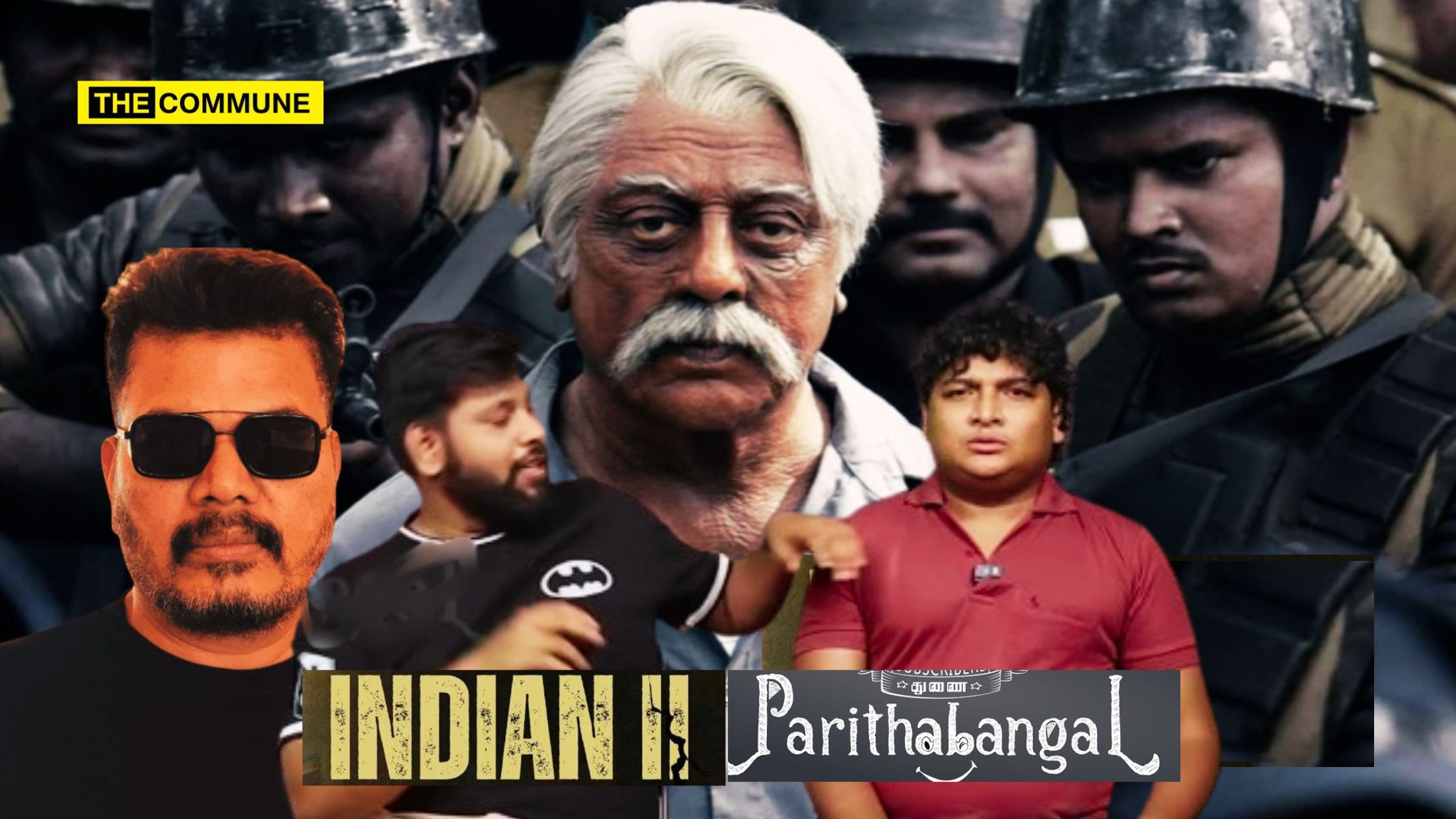
The District Collector of Coimbatore Kranthi Kumar Pati IAS finds himself in the midst of a controversy for responding to an old video which shows BJP Tamil Nadu Head and Coimbatore MP candidate K. Annamalai giving cash in the hands of a woman who took aarti.

The video was taken 8 months ago in July 2023 during the ‘En Mann, En Makkal’ yatra of BJP leader Annamalai.

In the video, a woman can be seen taking aarti (a traditional welcome ritual of Tamil Hindus) to Annamalai as he visits their home. It is customary/tradition for the visitor to give some money to the person taking the aarti. Annamalai can be seen giving money to the woman after she takes aarti.

This clip was circulated and shared by a supporter of Edappadi K. Palaniswami’s ADMK insinuating that BJP leader Annamalai was violating the Model Code of Conduct and was not walking the talk on not giving cash for votes.

The District Collector immediately jumped the gun saying that he had taken cognizance of the video and would be sending it for police verification.

However, the video was found to be old and the same was brought to light by BJP supporters on social media.

Following this, K. Annamalai too retaliated at the Collector for jumping the gun saying “With all the resources at the disposal of the Coimbatore District Collector, instead of checking on the authenticity of a video, he decides to respond to something that was shot on 29.07.2023 during our En Mann En Makkal Yatra in the Ramanathapuram District.

He also pointed out that it is the Tamil tradition to reward those who take aarti but he or his party won’t do the same during elections.

We only wish Coimbatore District Collector be vigilant when the actual exchange of cash happens by parties who are today spreading lies.“, Annamalai said.

Following the massive backlash, the District Collector issued a clarification saying that the complaint to act against false claim has been forwarded to police department for further action.

Subscribe to our channels on TelegramWhatsApp, and Instagram and get the best stories of the day delivered to you personally.
NIA Releases Details Of Rameshwaram Cafe Blast Terrorists, One Abdul Matheen Using Hindu Name As Facade

After apprehending a key figure in the Bengaluru cafe bombing case, the NIA declared a reward of ₹10 lakh for any information leading to the whereabouts of the two suspects involved in the incident, assuring anonymity for informants.

The blast, occurring on 1 March at a Rameshwaram Cafe outlet, caused injuries to 10 individuals through an Improvised Explosive Device (IED). Muzammil Shareef was arrested as a co-conspirator after raids in Karnataka, Tamil Nadu, and Uttar Pradesh.

The NIA disclosed the identities of the suspects, Mussavir Shazeeb Hussain and Abdul Matheen Taha, providing their photographs and known aliases.

The agency highlighted the use of forged documents by the accused to conceal their identities, with Taha adopting a Hindu name – Vignesh D and Sumit.

Information on the suspects can be shared with the NIA via email or phone.

The blast prompted the Karnataka Police to register a case under the Unlawful Activities (Prevention) Act and Explosives Substances Act. The NIA, established in 2008 after the Mumbai terror attacks, specializes in investigating terrorism-related cases.

Home Minister G Parameshwara noted the prime suspect’s movement towards Tumakuru post-explosion, with officials tracing his movements to Ballari.

He clarified that while similarities exist between the Bengaluru and Mangaluru blasts, it doesn’t necessarily imply the same group’s involvement.

Subscribe to our channels on TelegramWhatsApp, and Instagram and get the best stories of the day delivered to you personally.
Madan Lal Dhingra: The 25 Year Old Young Lad Who Struck Terror In The Hearts Of The British

One of the important characters in Veer Savarkar’s life was Madan Lal Dhingra, a hero who actually deserves a biopic of his own. 

Hailing from Amritsar, the sixth born of the city’s Civil Surgeon, two of his brothers were doctors, while two others were barristers. Coming from a well-to-do and influential family, Dhingra could have settled into a life of luxury and comfort. Yet he was restless, driven by the call for Swadeshi, right from his student days at the Government College, Lahore in 1904. He led the student protest there against having to forcibly wear a blazer made of imported cloth, which led to his expulsion in turn. 

Having extensively studied about poverty and famines in India, he felt that only Swaraj (Self-government) was the solution. For some time, he worked as a clerk at a Tanga service in Kalka, Shimla, where his attempts to organize a union came to naught.

It was then on the advice of his brother, he went to London, to study the Diploma Course in Civil Engineering at University College between 1906-09. A very illustrious institution of learning where Dadabhai Naoroji taught and Tagore was a student.

Like most other Indian students in England, he was a regular to the India House founded by Shyamji Krishna Verma. His initial days were spent in frolic and fun, and his good looks ensured, he was in the company of women mostly.

The turning point came, at a meeting in India House that was addressed by Savarkar. Dhingra along with his friends, was making a noise in the adjacent room, which forced Savarkar to intervene.

“What is the matter? You only talk of action and bravery, and avoid coming to our weekly meetings. Is this your bravery?”

The rebuke by Savarkar had its desired effect, and for quite some time Dhingra was not seen around India House.

Too ashamed to show his face, and fearful of facing Savarkar’s wrath, he kept away. Until one day, summoning all the courage, he came face to face with Savarkar again at India House.

Savarkar however had moved on from the past incident and spoke normally with Dhingra. A much assured Dhingra asked him, “Has the time for sacrifice come?”

And then Savarkar gave one of the best replies ever. “If you have made up your mind and are ready, it is generally understood that the time for sacrifice has come.”

This would guide Dhingra’s course of action. Having made up his mind, Dhingra now joined the National Indian Association, founded by Surendranath Banerjee and Ananda Mohan Bose in 1876. The Association was primarily a gathering of moderate Indian nationalists, who believed in peaceful negotiation with the British. Dhingra acted as a double agent of sorts, publicly denouncing Savarkar in front of the British, to win their favor. He soon won the trust of Ms.Emma Josephine Beck, the secretary of the Association, and got to know the timings of visits of important officials. He had a fake “falling out” with Savarkar to convince the British officials, and also left India House. Staying for some time at Ledbury Road, in 1909, he began to plot the assassination of one of the most important British officials, Lord Curzon Wylie. Dhingra had earlier attempted to assassinate Lord Curzon, the British viceroy universally hated for his Partition of Bengal. However, Curzon escaped twice, thanks to late arrival at the venue.

It was then that Dhingra decided to target Curzon Wylie, and not just because of the name. Wylie was one of the top-ranking officers in the British Government. Serving the British Army in 1866, Wylie entered the Political Department in 1879.

He had earned a distinction for his role in the 1879 Afghan War, and later in Avadh, Nepal, and above all in Rajputana. He was appointed the Political Aide-De-Camp to the Secretary of State for India, but above all, he was regarded as the “eyes and ears of the government”. Wylie headed the Secret Police, a fact not known to anyone, except those in the upper echelons of the British Government. He, in turn, was keeping an eye on Savarkar and other revolutionaries at the Indian House.

He even appointed an informer, Kirtikar at the Indian House, to get information. Kirtikar was however found out by Savarkar who gave him all the information about the police operations under force. On the home front, things were not going too well. Savarkar’s elder brother Babarao, was arrested and sentenced for life to the dreaded Cellular Jail in the Andamans. His home was confiscated, and Babarao’s wife Yesu died a destitute, homeless on the streets. The other factor was Savarkar being denied access to the Bar after he completed his studies in 1906. Savarkar was charged with encouraging sedition by circulating pamphlets, advocating armed revolution, and assassination. Given time till 22 May, the trial was conducted on 26 May 1909, on camera. 

New charges were pressed, the letters by Savarkar were examined, and he was disallowed. The deportation of Babarao to Cellular Jail and Savarkar’s trial enraged the revolutionaries further. Dhingra knew Wylie personally, having met him earlier on 13 April 1909 based on a recommendation from his brother Kundan Lal. Dhingra wanted to discuss the letter, but in reality, he aimed to get closer to Wylie and win his confidence. The moment came when a meeting of the Association was to be organized on 1 July 1909 that would be attended by a large number of Indians and Englishmen, in honor of Lady Lyall, the wife of Sir Alfred Lyall. Dhingra met Savarkar on 29 June 1909 at Bipin Chandra Pal’s home in London and discussed the plans for the assassination with him. Savarkar asked Niranjan Pal to type out the statement, Dhingra would make after the assassination and then gave him a Belgian make Browning pistol.

“Do not show me your face again if you fail this time,” said Savarkar to an emotionally overwhelmed Dhingra, as he took his leave. Accompanied by another revolutionary Koregaonkar, he had an early lunch and tea, left at 2 PM, cradling the revolver in his hands. He also bought a brand new dagger in a leather casket, placing it in his pocket. It was evening 7 PM, when the function started, Dhingra was dressed in a lounge suit and blue Punjab turban. He placed a Colt revolver in the right pocket of his coat, and the Browning gifted by Savarkar in another. He took a cab and arrived at the Institute, where Koregaonkar came also, with his pistol. When the time came for Wylie to leave, Dhingra approached him on the pretext of talking something. Just at the landing, coming closer to Wylie, Dhingra pulled out his Colt and fired two bullets point blank. As Wylie reeled, Dhingra fired two more bullets, and a Parsi doctor, Cawas Lalkaka, who tried to save Wylie was also shot. However, Dhingra’s plan to commit suicide failed, as he was overpowered by the security guards around. He managed to even bring down one of the guards but was ultimately subdued, and arrested. He was taken to the Walton Street Police Station, where the Police Officer asked him if any of his friends knew about this. To which Dhingra calmly replied, “There is no need, they will know about my arrest tomorrow in the newspapers.” 

It was a smart strategy, which ensured none of his friends would be implicated. Post the assassination of Wylie, Dhingra, was vilified, repeatedly in the British media. An ex-army officer at Broadhurst Gardens, Capt Charles Rolleston, even made allegations that Dhingra assassinated Wylie under the influence of “Bhang”. 

The psychiatrists who examined him, his landlady however testified that Dhingra seemed absolutely normal, and gave no indication of the act he would commit. During the interrogation, Dhingra expressed deep regret for the shooting of Dr.Lalkaka, saying he had no reason to shoot him, and it happened as he came in between.

Dhingra was produced before Mr. Horace Smith, the Magistrate of Westminister Police Court, and he told him clearly, ” I do not plead for mercy: nor do I recognize your authority over me…” On being sent to the Sessions Court, Dhingra asked in a trial, in which Indians were not allowed. “I do not want to say anything in defence of myself, but simply to prove the justice of my deed. As for myself, no English law court has got any authority to arrest and detain me in prison or pass a sentence of death on me. That is the reason I did not have any counsel to defend me. I hold the English people responsible for the murder of eighty millions of Indian people in the last fifty years, and they are also responsible for taking away ₤100,000,000 every year from India to this country.

I am surprised at the terrible hypocrisy, the farce, and the mockery of the English people. They pose as the champions of oppressed humanity—the peoples of the Congo and the people of Russia—when there is terrible oppression and horrible atrocities committed in India.

I have told you over and over again that I do not acknowledge the authority of the Court, You can do whatever you like. I do not mind at all. You can pass sentence of death on me.

I do not care. You white people are all-powerful now, but, remember, it shall have our turn in the time to come when we can do what we like.”

-Madan Lal Dhingra during his trial.

Though Dhingra willed that all his belongings, clothes, and books be sold and the money, be given to the National Fund, it was not followed by the London Police. The police said that since Dhingra made no official will, his belongings were the property of the British Government.

Sadly Dhingra was disowned by his own family. His brother Bhajan Lal, who was in London, condemned him publicly in a meeting. His father publicly apologized and disowned his son.

All his family members dropped Dhingra from their surname and adopted Lal, to avoid trouble with the British. The only person who actually stood by Madan Lal Dhingra was Savarkar, who visited him in prison. He was emotionally overwhelmed when Savarkar told him, “I have come here to seek your darshan”. 

For someone disowned by his family, it meant a lot that somebody out there still cared for him. The Indian Association held a public meeting on 5 July 1909 to condemn Dhingra’s assassination of Wylie. The meeting was chaired by Aga Khan, and as he was prepared to pass the resolution, one hand raised in protest.

It was Savarkar who said, “No, not unanimously. There are opponents of the motion as well. Take down my name, Savarkar. I oppose the motion.”

The meeting went into a commotion, after Savarkar’s lone defiance and he was assaulted by other members. Surendranath Banerjee was outraged at the assault and left the meeting in anger. The police had to rush in and prevent the situation from going out of control.

That very night Savarkar wrote a letter to the Times, saying that since the matter of Dhingra was “subjudice”, no one had the right to discuss the case in public and using terms like criminal.

Predictably most Congress leaders like Gokhale and NC Kelkar condemned Dhingra’s act. Some like Hyndman, said that though Dhingra’s act was not acceptable, the allegations he raised against the British Govt, could not be swept away.

The media now turned their focus on Savarkar, claiming him to be the mastermind of the entire act. His relatives and colleagues in India were persecuted by the Govt, and students going to London for studies had to produce certificates from the local government.

Dhingra meanwhile had some other admirers like W.T.Stead, editor of Reviews, an admirer of Savarkar, and believed in India’s freedom. Stead himself was arrested and put in prison for three months.

Savarkar wanted that Dhingra’s ashes to be sent to various parts of India. On the other hand, members of the Secretary’s Morley Council favored life imprisonment, as they felt execution would rather make him a martyr and ignite the volatile atmosphere even more.

“No Christian martyr ever faced his judges more fearlessly or with greater dignity…if India could produce five hundred men, as resolutely without fear, she would achieve her freedom.” – Wilfrid Blunt on Madan Lal Dhingra.

The Irish supported Dhingra with leaflets titled “Ireland Honors Dhingra” pasted all across the country.

17 August 1909, Pentonville Prison.

Finally, the date had come, and many of Dhingra’s friends requested to meet him for one last time. JS Master, requested the Under Sheriff of London and Home Office, stating he was Dhingra’s close friend and needed to meet him.

Dhingra however remained calm and composed, slept well on his last night, and after performing his chores, was ready for the hanging. As the clock struck nine, he walked to the gallows.

When a Christian preacher Hudson, walked up to him, for the last prayer, Dhingra turned him down, saying he was born as a Hindu and would die as one. Metcalfe, the Dy. Under Sheriff of London, read out the death warrant to Dhingra, and asked him the usual questions.

He just ignored and walked calmly to the noose, to Officer Pierpoint who was waiting for him there. The noose was put around his neck, and the levers pulled, the life of a brave revolutionary was snuffed out. 

JS Master who attended Dhingra’s post-mortem, requested that he be taken the body for funeral rites. Dhingra wanted to be cremated as per Hindu custom, but his request was turned down.

As desired by Gyan Chand Verma, Dhingra’s last statement was published on a postcard by Sardar Singh Rana in Paris, along with his photograph. The statement was underlined by Vande Mataram.

The copies of this statement were sent by Rana to Savarkar in London, who in turn sent a large number of them to India. Though banned, nevertheless the last statement titled “Challenge” became popular with the public.

“I admit the other day; I attempted to shed English blood as a humble revenge for the inhuman hangings and deportations of patriotic Indian youths. In this attempt, I have consulted none but my own conscience; I have conspired with none, but my own duty.

I believe that a nation held down in bondage with the help of foreign bayonets is in a perpetual state of war. Since open battle is rendered impossible to a disarmed race, I attacked by surprise; since guns were denied to me, I drew forth my pistol and fired.

The only lesson required in India at present is to learn how to die and the only way to teach it is by dying ourselves. Therefore I die and glory in my martyrdom! This war of Independence will continue between India and England.

My only prayer to God is: May I be reborn of the same Mother and may I redie in the same sacred cause, till the cause is successful and she stands free for the good of humanity and the glory of God.

-Madan Lal Dhingra’s statement called “Challenge”.

Gandhi predictably condemned Dhingra’s action, calling him and other revolutionaries “anarchists” saying “Is killing honourable? Is the dagger of an assassin a fit precursor of an honourable death?”

“Dhingra, the immortal, has behaved at each stage of the trial like a hero of ancient times. England thinks she has killed Dhingra; in reality, he lives forever and has given the death blow to English Sovereignty in India.” – Lala Hardayal in Vande Mataram in 1909. 

Finally on 12 December 1976, in the presence of Natwar Singh, the then High Commissioner of India, Madan Lal Dhingra’s coffin was exhumed, and his mortal remains were brought back to India. Sadly his family or descendants still refuse to accept him. Madan Lal Dhingra, a forgotten hero, was disowned by his own family and even his descendants later on. A truly selfless patriot. This man deserves a full-fledged biopic on him, what a life he lived.

(This was originally published on social media platform X and has been republished here with permission.)

Ratnakar Sadasyalu is a blogger with a passion in movies, music, books, and history. A techie by profession, and a writer at heart. Author of City of Victory a book on Vijayanagar Empire.

Subscribe to our channels on TelegramWhatsApp, and Instagram and get the best stories of the day delivered to you personally.
‘String’ Channel Seeks ₹2 Cr Compensation, HC Serves Notice to Google Over Account Suspension

The Andhra Pradesh High Court, in a significant development on 28 March 2024, acknowledged a petition filed by M Vinod Kumar, who ran a YouTube channel known as String, against Google LLC, the owner of YouTube, regarding the alleged arbitrary suspension of its accounts. 

Presiding over the case, Justice B. Krishna Mohan’s bench issued notices to both the Centre and Google, directing them to submit their responses within a stipulated period of four weeks. However, it is noteworthy that the Court refrained from granting any interim relief to String at this juncture. String, which purportedly generated a substantial monthly revenue ranging from ₹4 to 5 lakhs through its suspended channels, has further sought ₹2 crore in compensation from the concerned parties. Advocate Shashank Shekhar Jha, representing String before the Court, emphasised the gravity of the situation, asserting that it involves the violation of a fundamental right. He stressed that as a YouTube journalist, String’s accounts were arbitrarily suspended by Google, warranting prompt action and redressal.

In response to the arguments presented by String’s counsel, the Court meticulously deliberated on the matter, ultimately deciding to issue notices to both Google and the Centre. This legal maneuver underscores the seriousness with which the Court views String’s allegations of arbitrary account suspension, signaling the commencement of legal proceedings in this regard.

It is crucial to delve into the background of the case to understand the intricacies involved. On 20 September 2023, YouTube undertook stringent measures against the “String” channel, permanently deleting it from the platform due to multiple violations. YouTube justified this drastic action by citing severe or repeated breaches of their Community Guidelines as the primary rationale for the channel’s removal. In an email screenshot shared by String, YouTube emphasized its obligation to take such actions to “protect other users” on the platform. The platform’s policy explicitly states that channels found violating Community Guidelines or Terms of Service may either receive a strike or face termination.

In response to the suspension, Vinod, the owner of the String channel, initiated legal action by filing a petition at the Andhra Pradesh High Court, demanding compensation of ₹2 Crores from Google for arbitrarily removing the channel from YouTube. The Writ Petition has been filed under Articles 226 and 227 of the Constitution of India and is being pursued through a Writ Petition by the Petitioner.

Significantly, the String had previously published a video titled “Video: Bill Gates EXPOSED Rockefeller Funds Fertility Vaccine SCAM I#BirthControl,” following which the account faced a one-week suspension. Subsequently, the video was reposted on “String Hindi,” after which all channels owned by the petitioner were indefinitely terminated.

Additionally, the petitioner has been prohibited from creating a new channel with the same name and barred from uploading videos. Furthermore, channels that bore no connection to the video titled “Video: Bill Gates EXPOSED- Rockefeller Funds Fertility Vaccine SCAM I#BirthControl” were also terminated by YouTube without providing any justification.

Vinod’s legal battle against YouTube’s actions is multifaceted and indicative of broader implications concerning freedom of speech and digital rights. As per media reports, YouTube announced that it had removed over 2.25 million videos for breaching its Community Guidelines in India during the fourth quarter of 2023, spanning from October to December. Additionally, globally, YouTube stated that it had taken down over nine million videos for violations of Community Guidelines during the same period. Notably, YouTube highlighted that more than 96% of these removed videos worldwide were initially flagged by automated systems rather than human review.

Citing the same report, Vinod contended that his channel was removed due to mass reporting and not community guidelines violations. He shared a post by self-proclaimed fact-checker Mohammad Zubair from Alt-News who boasted and took credit for removing the String Channel from YouTube.

Following the suspension of Vinod’s channel, Zubair wrote on X, “This String guy had shared a video on his YouTube channel targeting me, @dhruv_rathee, @khanumarfa and @RanaAyyub. We sent an email to YouTube reporting his videos. And the rest is history” 

Speaking to Organiser, Vinod said the standard format for getting a channel removed is by having a strike thrice in a month. However, Vinod’s channel faced no such strike even once, still, his channel was removed by YouTube in the name of community guidelines, which is bizarre. Vinod, who had a start-up company and employed as many as seven employees, is now jobless. His employees left the company following the suspension of the channel. He started a new OTT platform but it is still in the budding phase. He says he has now started working independently. But the suspension has hit him hard not only career-wise but financially as well. Vinod is determined to fight the legal battle and get his channel back on YouTube.

The intricacies of this legal battle underscore the broader discourse surrounding digital rights and the power dynamics between content creators and tech giants like Google and YouTube. Vinod’s case reflects the growing concerns regarding online censorship and the need for robust legal frameworks to safeguard freedom of expression in the digital age. 

(with inputs from Organiser)

Subscribe to our channels on TelegramWhatsApp, and Instagram and get the best stories of the day delivered to you personally.
The OPS Conspiracy: Are DMK And ADMK Fielding Dummy Candidates Against OPS To Confuse Voters?

Former Tamil Nadu Chief Minister O. Panneerselvam is set to contest as an independent candidate in the Ramanathapuram constituency amidst an unusual scenario where a total of 6 candidates bearing the name Panneerselvam have filed nominations.

However, during the consideration process on 28 March 2024, only the former Chief Minister’s nomination was scrutinized, while the other five did not appear. It is speculated that three of these candidates are affiliated with the AIADMK and two with the DMK. It is noteworthy that the 5 candidates’ nominations have been accepted.

The filing of nominations for the Lok Sabha elections in Tamil Nadu commenced on 20 March 2024 and concluded on 27 March 2024. In Ramanathapuram, 42 individuals filed 56 petitions, out of which 28 were accepted after scrutiny by District Collector and Election Officer Vishnu Chandran and Election Inspector Bhandari Yadav.

Among the accepted nominations were former Chief Minister O. Panneerselvam as an independent candidate in the BJP alliance, AIADMK candidate Jayaperumal, DMK alliance candidate Nawaz Ghani from the Indian Union Muslim League, and Chandraprabha from the Naam Tamil Party.

The presence of five additional candidates with the same name as the former Chief Minister has raised concerns among supporters, who fear confusion among voters during symbol allocation and voting. O. Panneerselvam’s son, Jayapradeep, addressed the issue, alleging that supporters of the Edappadi faction were behind the additional nominations to sow confusion.

According to reports, the five candidates did not attend the nomination consideration process, with speculation suggesting they may be under pressure to withdraw their nominations due to potential threats to their safety. The situation remains tense as the election date approaches, with voters urged to remain vigilant and informed.

(with inputs from Tamil One India)

Subscribe to our channels on TelegramWhatsApp, and Instagram and get the best stories of the day delivered to you personally.