Home Blog Page 90

“A Parasite, Stuck To CM’s Car Like A Lizard, Behaves Like A Rowdy”: BJP Leader Annamalai’s Ruthless Roast Of DMK Min Sekar Babu

“Lizard On Arivalayam Wall To CM’s Jeep”: Annamalai Mocks DMK Min Sekar Babu

BJP leader Annamalai launched a sharp personal attack on Tamil Nadu Hindu Religious and Charitable Endowments (HR&CE) Minister P K Sekar Babu, triggering fresh political controversy between the BJP and the ruling Dravida Munnetra Kazhagam.

Speaking to reporters, Annamalai made a series of derogatory remarks targeting the minister’s political conduct, temple visits, and proximity to the state leadership.

“But I am not like Sekar Babu – I am not a parasite that survives by clinging to someone, brother. If you look at a lizard, it sticks to the wall and roams around inside the house. You notice it only when it makes a sound. In the same way, if you want to see Sekar Babu today, he will be stuck to the side of the Chief Minister’s jeep like a lizard.”

He added, “In Srirangam temple, people buy ₹4,000 tickets to go see the ‘Sorgavasal’. That same Sekar Babu, who used to be a Chennai rowdy 20 years ago, is still behaving like the same rowdy inside temples even today, despite being the HR&CE Minister. ‘All of you move aside, move aside’. Why? Because Sekar Babu and his family need to go first and see Perumal first. It seems they are going to wash away all the sins they committed in the temple. When Kumbabhishekam happens, it is conducted with small donations – ₹5, ₹10, ₹20 from local devotees. But someone with no connection comes wearing a saffron dhoti and clings on from above like a lizard. If you look at who that is – it is Sekar Babu.”

He further said, “I don’t want to lower my standards by responding to that man. The wall-clinging lizard, the lizard on the Arivalayam wall, and the creature stuck to the side of the Chief Minister’s jeep – all three are the same. That name is Sekar Babu.”

Subscribe to our channels on WhatsAppTelegram, Instagram and YouTube to get the best stories of the day delivered to you personally.
“Shameless Liar”: BJP’s SG Suryah Slams DMK Stooge Kamal Haasan For Pushing EVR’s Slander Against Tamil As Nirmala Sitharaman’s Words

A fresh political confrontation erupted in Parliament after BJP leaders accused DMK stooge Kamal Haasan, a newly inducted Rajya Sabha MP backed by the Dravida Munnetra Kazhagam, of deliberately misrepresenting remarks made by Union Finance Minister Nirmala Sitharaman during a parliamentary debate on Tamil language politics.

The controversy followed Kamal Haasan’s maiden speech in the Rajya Sabha, in which he alleged that Sitharaman had insulted the Tamil language by claiming that it was unfit even for begging. BJP leaders said the allegation was false and amounted to attributing to the Finance Minister statements that were, in fact, quotations from Dravidian ideologue E V Ramasamy.

According to parliamentary records and video footage from the March 2025 debate, Sitharaman had cited EV Ramasamy’s published writings to highlight what she described as an internal contradiction within Dravidian politics. She had referred to statements attributed to Ramasamy in which Tamil was described as a “barbaric language” and as being useless even for begging, while also stating that these views angered her as a Tamilian. Sitharaman had argued that parties claiming to champion Tamil continued to venerate Ramasamy despite those remarks.

She said, “Sir, for just saying your protests are uncivil, they made the education minister withdraw his statement. When a man repeatedly says Tamil is a barbaric language, kaatumirandi bashai. Look at the hypocrisy. They keep his photo in every room. I’m sure even in the parliament office of that party, his photo is there. They garland him and they worship him and they say he’s the icon of the Dravidian movement. But he said Tamil is kaatumirandi bashai. So, sir, I’m saying unbelievable that this person is worshipped, but our poor Dharmendra Pradhan just said don’t do uncivil protest, he’s being accused. And if their love for Tamil is so much, how can they worship somebody who said Tamil is a kaatumirandi bashai phrase]?”

During his speech on 4 February 2026, Kamal Haasan launched personal attacks on Sitharaman, using religious and cultural references that BJP leaders later described as casteist and derogatory. He went on to suggest that Sitharaman herself had demeaned Tamil and contrasted that claim with assertions about his own political integrity and refusal to “sell” votes.

Reacting sharply, BJP Tamil Nadu Youth Wing President SG Suryah issued a statement calling Kamal Haasan a shameless liar for lying on the floor of Parliament. Suryah wrote, “”They compelled Education Minister Shri. @dpradhanbjp to retract his remark merely for describing the protest as uncivil. Yet, the individual who repeatedly labelled Tamil a barbaric language is celebrated, garlanded, and projected as the face of the Dravidian movement. The double standards are glaring.” These were the words of FM @nsitharaman. Shameless liar @ikamalhaasan, will you acknowledge the facts, or continue to ignore them?”

“They compelled Education Minister Shri.@dpradhanbjp to retract his remark merely for describing the protest as uncivil. Yet, the individual who repeatedly labelled Tamil a barbaric language is celebrated, garlanded, and projected as the face of the Dravidian movement. The double… https://t.co/OJ5NP6bYTY pic.twitter.com/S98N5xnu2C

Subscribe to our channels on TelegramWhatsApp, and Instagram and get the best stories of the day delivered to you personally.
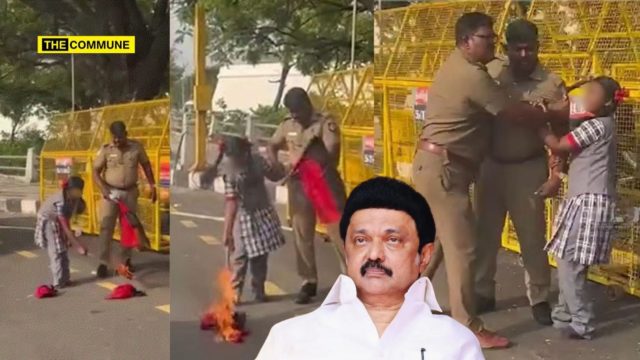
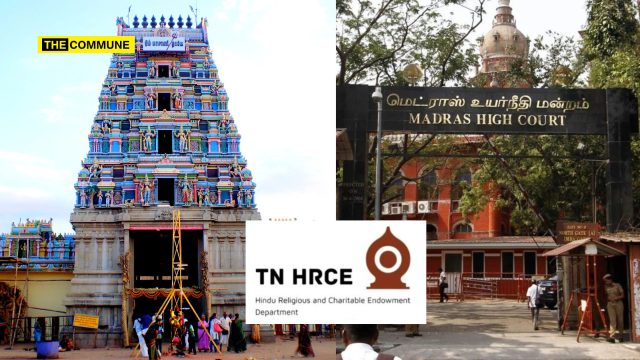
After Narikuravar Children Allegedly Denied Partaking Annadhanam At Nellaiappar Temple, HR&CE Books Activist For ‘Misinformation’

After Narikuravar Children Allege Denial Of Annadhanam At Nellaiappar Temple, HR&CE Books Activist For ‘Misinformation’

A controversy that erupted over the alleged denial of free temple meals to Narikuravar community children at the Nellaiappar Temple has now escalated, with the Hindu Religious and Charitable Endowments (HR&CE) Department filing a police complaint against the activist who brought the issue to light.

Activist David Raja, who recorded and shared the now-viral video of the children narrating their ordeal, has been accused by the department of “spreading misinformation.” The complaint comes even as questions continue to be raised over whether the children were denied entry during the annadhanam organised on 3 February 2026 to mark former Chief Minister CN Annadurai’s death anniversary.

HR&CE Department Releases Select CCTV Clip

In response to the backlash, HR&CE officials released an eight-minute CCTV clip showing David Raja arriving at the meal distribution area with four children. Temple staff are seen speaking to him before he leaves with them.

According to the department, the footage proves that no discrimination took place. Officials stated that the commemorative meal service (Samabandhi) had concluded by the time Raja arrived with the children.

They claimed:

  • Free meals began at 12:30 PM
  • Around 792 people were served
  • Additional crowds arrived later by 1:45 PM
  • By 1:48 pm, when Raja brought the children, the event had ended

On this basis, the department alleged that the activist falsely portrayed the situation as caste-based denial.

Activist Disputes Official Version

David Raja has strongly contested the department’s claims, maintaining that the viral video captured only the aftermath, not the children’s initial attempt to access the meal.

He asserted that the children had already been turned away once before he intervened and that their first attempt was denied without explanation. He stated that the second denial cited food shortage and that officials have released only a partial CCTV segment.

Raja has demanded that the full, unedited footage, including recordings from other cameras, be made public, arguing that his oral complaint to HR&CE officials would also have been captured.

Inquiry vs Police Action

While HR&CE Joint Commissioner Kavitha initially said CCTV footage spanning nearly two hours would be reviewed to ascertain facts, the filing of a police complaint against the whistle-blower has drawn attention.

The move shifts focus away from the core allegation, whether marginalised children were prevented from participating, and instead targets the individual who amplified their claims.

Officials Deny Allegations

Temple authorities, along with local political functionaries present at the event, have denied any wrongdoing. They insist the issue stems purely from timing and logistical constraints, not discrimination.

Source: The New Indian Express

Subscribe to our channels on TelegramWhatsApp, and Instagram and get the best stories of the day delivered to you personally.
Washington Post Purge: India Bureau Chief Axed, Journalists Behind ‘Hit Pieces’ On India Shown The Door

In a dramatic purge at one of America’s most influential newspapers, the Washington Post has terminated its entire India bureau and several foreign desks, dismissing over 300 staff in a brutal restructuring move announced via Zoom by owner Jeff Bezos. Among the high-profile casualties are reporters whose work has been repeatedly flagged by Indian analysts as constituting a sustained, malicious campaign to defame India’s economic rise, political sovereignty, and global standing.

Executive Editor Matt Murray described the move as a structural reset driven by technological shifts and audience changes.

Those laid off included Pranshu Verma, Gerry Shih, Ishaan Tharoor (Congress MP Shashi Tharoor’s son).

India Bureau Chief Among Those Laid Off

Among the prominent exits is Pranshu Verma, the newspaper’s India Bureau Chief. During his tenure, Verma reported extensively on India’s big business houses and billionaire wealth, India’s oil trade with Russia amid the Ukraine war, deportation drives involving illegal Bangladeshi immigrants, and tech regulation and digital governance in India.

In a post on X, he wrote, “Heartbroken to share I’ve been laid off from The Washington Post. Gutted for so many of my talented friends who are also gone. It was a privilege to work here the past four years. Serving as the paper’s New Delhi bureau chief was an honor.”

It is noteworthy that a few days ago, he literally begged Jeff Bezos to exclude him from the layoffs. On 27 January 2026, he wrote, “.@JeffBezos since I came to India early last summer to be the The Post’s India bureau chief, one thing was abundantly clear: in India’s media ecosystem very few outlets can do accountability reporting without fear of government censure. The Post is one of them. Since August, we showed the ways Indian billionaires got treated far better than others; the role of Indian conglomerates in fueling Russia’s war in Ukraine; India’s draconian deportation campaign of Muslims to Bangladesh and stories unpacking the breakdown in diplomatic relations between Washington and New Delhi. We in New Delhi want to keep doing our jobs so The Post readers can understand the South Asia region better — a wish we hope you share.”

This admission lays bare the transactional nature of his journalism: his value to the Washington Post was his willingness to craft narratives that serve a geopolitical agenda hostile to India’s interests.

He kept tagging Jeff Bezos in every report he was sharing as if to say he was worthy of retaining.

An analysis of the output from these journalists reveals a clear, disturbing pattern. Every Washington Post finalist in the 2024 Pulitzer Prize International Reporting category focused exclusively on negative stories about India. The series, co-authored by Verma and Shih, included reports accusing the Indian government of “undermining democracy,” allegedly “inflaming” social media, and “taming Twitter.” Verma’s recent article attempting to link the Adani Group and India’s state-owned LIC to unsubstantiated malfeasance is seen as the latest chapter in this orchestrated narrative.

Gerry Shih’s Reporting Also Under Spotlight

Washington Post journalist Gerry Shih, who previously served as China correspondent and later took senior editorial roles linked to India coverage, has also been at the centre of criticism from Indian strategic commentators.

His work has included reports on ‘religious polarisation, digital censorship allegations, online nationalism and political mobilisation.

While such reporting earned international recognition and award nominations, critics in India, including former diplomats and intelligence officials, argued that it reflected a recurring negative framing of India’s democracy and social fabric.

The layoffs also claimed Ishaan Tharoor, son of Congress MP Shashi Tharoor, known for his ideological leanings.

Here is a look at how Tharoor backed Islamo-fascist NYC Mayor Zohran Mamdani.

Claire Parker, another reporter focused on biased coverage of Kashmir and domestic Indian affairs.

Parker wrote against India, especially on the Kashmir issue, and supported the Hijab issue.

The body of work of these laid-off journalists is not coincidental criticism but as a soft-power warfare toolkit. The goal is to discredit the Modi government’s democratic mandate, instill doubt about India’s economic institutions like LIC and major corporations, and ultimately slow India’s ascent as an independent global power. The Pulitzer recognition for such one-sided reporting is nothing but evidence of a deeply entrenched institutional bias within sections of the Western media-academy complex, for whom a confident, civilizational-state India is an inconvenient truth.

The Fallout and the Future

The mass firings, while reportedly driven by the Post’s financial woes, have inadvertently validated the Indian government’s and public’s long-held skepticism about foreign media outlets. It has demonstrated that the careers of these journalists were inextricably tied to producing a specific, negative genre of India coverage that appealed to their editors and funders abroad.

Subscribe to our channels on TelegramWhatsApp, and Instagram and get the best stories of the day delivered to you personally.
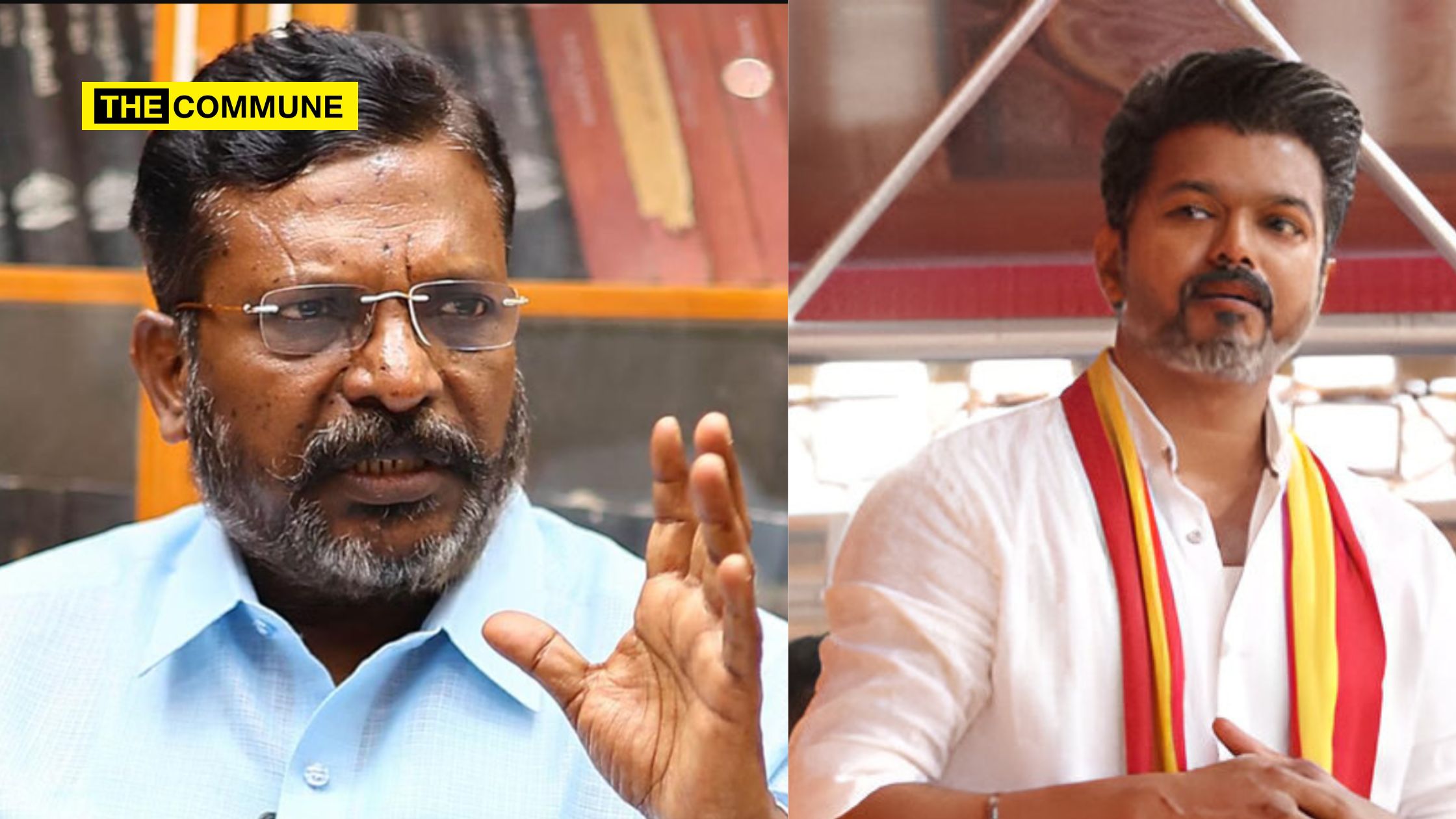
DMK Stooge Kamal Haasan Makes Casteist Jibes Against Nirmala Sitharaman in Parliament, Pushes EVR’s Slander Against Tamil As Her Words

DMK stooge MP Kamal Haasan delivered what can only be described as a fiery but fundamentally flawed retort to Union Finance Minister Nirmala Sitharaman in his maiden Parliament speech.

The actor-turned-politician, who owes his Rajya Sabha seat to the benevolence of the Dravida Munnetra Kazhagam (DMK), attempted to defend the Tamil language with a ‘passionate’ speech.

However, in doing so, he exposed his own ignorance—or perhaps willful distortion—of the facts, turning into a spectacle of embarrassing himself.

The controversy stems from Nirmala Sitharaman’s address in Parliament, where she highlighted the hypocrisy embedded in Dravidianist politics.

Quoting the rabid anti-Hindu, anti-Tamil Dravidianist demagogue E.V. Ramasamy (hailed as ‘Periyar’ by his followers), Nirmala Sitharaman pointed out EVR’s own disparaging remarks about Tamil.

In a 1943 publication in Viduthalai, EVR had stated that learning Tamil was so useless that it wouldn’t even aid in begging (“Tamil padithaal pichai kuda edukka mudiyadhu”).

She further cited EVR’s description of Tamil as a “barbaric language” (kattumirandi bhashai) in a 1968 piece, arguing that those who worship EVR while protesting minor slights against Tamil are engaging in selective outrage.

Nirmala Sitharaman’s intent was clear: to underscore the inconsistency of parties like the DMK and Dravidian Stocks who claim to stand for Tamil but venerate EVR.

She explicitly clarified that these EVR’s words, not her own, and even expressed her personal anger as a Tamilian at such views. The full video of her speech, widely circulated on social media, leaves no room for ambiguity.

Enter DMK Stooge MP Kamal Haasan, who, in his maiden Rajya Sabha speech, launched into an 11-minute tirade making casteist jibes at Nirmala Sitharaman and insinuating that she had insulted Tamil.

“Dear Sirster, Bhavathi Biksham Dehi, She’ll be able to hear it.”, Kamal Haasan said.

Brahmins and Hindu ascetics use Bhavathi Bhikshamdehi during bhiksha rituals to conquer ego and sustain through voluntary giving.

“Bhavathi Biksham Dehi, the great maestro Saint Thyagarajar, sang songs in Telugu. You know that the coins taken from his begging bowl will not have any value for the modern day world. You learning in the British education system is definitely testimony to your camphor intellect. But it’s been decades since it vapourized into thin air. After that your begging bowl was given a different shape. The begging bowl became a big Hundi. Those who break that Hundi to shore up finances, what are they telling about Tamil and Tamilians?”, Kamal Haasan said.

He further goes on to peddle fake news in the house of the Parliament, misattributing EVR’s rants against Tamil as Nirmala Sitharaman’s.

“Tamil won’t even help in begging? True to an extent. You gave me a piece of advice. You can beg for yourself in English or Hindi to shore up funds. Tamil will not help in begging, Tamil will not help in stealing. Tamilian will not beg, especially not accept your alms. Sister, this Kamal Haasan will never sell his vote and country.”, said Kamal Haasan who pledged his entire party at Arivalayam for a Rajya Sabha seat.

Unable to counter facts, Kamal Haasan chose the familiar Dravidianist refuge: caste slurs aimed at a Brahmin woman and fake quotes peddled as truth in Parliament—turning his debut speech into an exercise in intellectual dishonesty.

What Kamal Haasan ultimately delivered was not a defence of Tamil, but a disgraceful mix of casteist dog-whistling against Nirmala Sitharaman’s Brahmin identity and the deliberate peddling of falsehoods on the floor of Parliament—demeaning both the House and himself in the process.

Subscribe to our channels on WhatsAppTelegram, Instagram and YouTube to get the best stories of the day delivered to you personally.
 

DMK Stooge & MP Kamal Haasan Rambles Confusing Nonsense In His Maiden Speech In Rajya Sabha

DMK stooge and MNM party founder, Rajya Sabha MP Kamal Haasan made his maiden speech in the Upper House today, 4 February 2026.

As with his posts on social media platforms, this speech came across as highly incoherent, confusing and pathetic.

His approximately 12-minute speech was not a speech in any meaningful parliamentary sense. It was a self-indulgent, metaphor-stuffed monologue that left an ordinary listener asking one basic question again and again: What exactly is he talking about?

The speech moved rapidly between unrelated themes: personal gratitude, cinema, Tamil identity, constitutional ideas, historical figures, electoral issues, generational commentary, and philosophical reflections. These shifts occur without clear transitions or explanation.

For a common listener, this is garbled nonsense. It is not clear what the central argument is meant to be, or how one part of the speech connects logically to the next. In fact, it felt like multiple half-written speeches stitched together without a spine. There is no guiding thread, no structured progression, no sense of destination. One couldn’t tell where the speech began, where it peaked, or where it ended.

And 5 minutes in is only when the listener realises that Haasan is supposedly speaking about voter deletion and electoral roll errors. Even then, the issue arrives buried under metaphors and autobiography.

Instead, we get vague claims of “living dead,” speculative numbers, and sweeping alarms, without explanation, evidence, or procedural demand. The result is anxiety without understanding.

Haasan leans heavily on dramatic language: “living dead”, “emotional tornado”, “juggernaut of democratic India”, “resurrection without miracles”. 

These phrases may sound poetic, but for an ordinary citizen they obscure rather than illuminate. They sound impressive but do not explain anything clearly. A parliamentary speech is meant to inform, persuade, and move action. This one performs and stops there.

Large portions of the speech are consumed by Haasan’s personal story: his childhood, his ideological journey, his emotions, his trembling, his rationalism, his mentors, his sense of loss.

From a layman’s perspective, this becomes exhausting. The House is not there to hear a personal manifesto or emotional memoir. It exists to hear public grievances articulated with precision.

Instead of placing citizens at the centre, Haasan places himself there.

Haasan claims to be a high-school dropout, unqualified in economics, a “pedestrian” in lofty politics. Yet in the same breath, he presents himself as the ideological heir of giants, a moral sentinel of democracy, and a voice warning governments of their mortality.

This contradiction does not read as humility. It reads as performance – self-effacing rhetoric paired with self-elevating posture. To a common listener, it rings hollow.

For a maiden speech in the Upper House, this lack of discipline is not endearing. It is embarrassing.

Ultimately, the speech sounds less like a legislative intervention and more like a cinematic monologue – heavy on cadence, symbolism, and self-drama, light on precision and accountability.

Another source of confusion is the constant switching between languages. The speech begins in English, moves into Tamil references, then unexpectedly introduces French (to explain the meaning of “Durai”, briefly brings in Telugu, and later returns to Tamil. None of these shifts are explained or connected to the issue being discussed.

For an ordinary listener, this creates unnecessary distraction. Instead of helping different audiences understand the point, the language changes interrupt the flow of the speech and make it harder to follow what is being said and why it matters in a parliamentary context.

This was not a bold debut but a missed opportunity.

For all its emotion and references, Kamal Haasan’s maiden Rajya Sabha speech failed at the most basic level: it did not clearly say what needed to be said, to whom, or for what action.

In a House meant for lawmaking and accountability, nonsense delivered eloquently is still nonsense.

Subscribe to our channels on WhatsAppTelegram, Instagram and YouTube to get the best stories of the day delivered to you personally.
“There Is No ‘They’, It Is ‘Our’ Government”: Centre Justifies NSA Action Against Anarchist Sonam Wangchuk

'Climate Activist' Sonam Wangchuk’s Hunger Strike Turns Violent, BJP Office, CRPF Vehicle Torched; Blames Gen-Z While Hiding HIAL Land Defaults leh violence ladakh protest arrest

The Centre on Tuesday, 3 February 2026, defended the detention of climate activist Sonam Wangchuk under the National Security Act (NSA) before the Supreme Court, arguing that his reference to the Union government as “them” and the people of Ladakh as “us” was sufficient to invoke the preventive detention law.

Appearing for the Union government and the Union Territory of Ladakh, Solicitor General Tushar Mehta submitted, “There is no us and them. We are all Indians.”

Quoting from Wangchuk’s speeches that led to his detention, Mehta told the court that the activist should not be allowed to “spit venom”. He accused Wangchuk of instigating Gen Z to “indulge in bloodbath” and “civil war,” and of wanting Ladakh to face agitation and violence similar to what transpired in Nepal and Bangladesh.

By doing so, Mehta argued, Wangchuk was attempting to bring international focus to the Ladakh agitation. According to the Centre’s top law officer, Wangchuk’s use of the words “them” and “us” “betrayed secessionist tendencies”.

With these submissions, Mehta opened arguments on behalf of the Centre and the Union Territory, opposing the plea filed by Wangchuk’s wife challenging his detention. A Bench of Justices Aravind Kumar and P.B. Varale is hearing the matter.

Wangchuk was detained under the NSA in September last, following protests in Leh over demands for statehood and Sixth Schedule status for the Union Territory of Ladakh.

Senior advocate Kapil Sibal, appearing for Wangchuk’s wife Gitanjali J. Angmo, has concluded his arguments. He told the Bench that Wangchuk has a democratic right to criticise and protest against the government and that such sentiments do not threaten the security of the State so as to warrant his detention.

Countering this, Mehta told the court that Wangchuk “wants Ladakh to become Nepal or Bangladesh?”, drawing the court’s attention to violent incidents in neighbouring countries. He said, “The moment you say ‘ours’ and ‘theirs’ in this country, you are doing something against the country. There is no ‘they’. It is ‘our’ government.”

Responding to Wangchuk’s claim that he invoked Mahatma Gandhi in his speeches, Mehta said it was done as a cover-up. “His speech at the beginning and end is always Gandhiji. But in the middle, whatever you say, you use Gandhiji as a cover. This is usually done when inflammatory speeches are made,” he submitted.

Defending the detention order, the Solicitor General asserted the authority of the District Magistrate, stating that the officer had examined various factors holistically before passing the order. “The Court cannot question the sufficiency of the grounds of detention for subjective satisfaction,” he said.

“One line, one word, one sentence cannot be couched in a manner that I was preaching what Gandhiji said. This Gen Z has their own dictionary,” Mehta added, accusing Wangchuk of misleading the younger generation and hoping for a riot-like situation similar to Nepal.

The hearing also saw arguments on Wangchuk’s alleged reference to the Arab Spring. Taking exception, Mehta said the reference was to the bloodbath during the Arab revolution involving self-immolation attempts.

“This is what he wants Gen Z to do. It is an invitation to indulge in civil war with bloodbath! He says, why can’t we self-immolate? This is how he’s instigating impressionable youth,” Mehta argued.

Highlighting Ladakh’s strategic sensitivity and proximity to China, the Solicitor General said the region was crucial for maintaining supply chains to the armed forces stationed along the borders.

He further told the Bench that Wangchuk had made statements about holding a referendum in the region, contending that the case was squarely covered under the NSA.

“The climate activist Sonam Wangchuk wanted the Union Territory to face an agitation and violence similar to what transpired in Nepal and Bangladesh,” Mehta submitted.

Opposing the plea, he added that Wangchuk wanted Ladakh to “become Nepal or Bangladesh”. He said, “We all know what happened in Bangladesh. He is targeting the impressionable youth. The moment you say ‘ours’ and ‘theirs’ in this country, you are doing something against the country.”

Wangchuk is currently lodged at the Jodhpur Central Jail in Rajasthan.

In an earlier hearing, Wangchuk denied allegations that he had made statements seeking to overthrow the government like the Arab Spring. Through his counsel, he asserted that he has a democratic right to criticise and protest against the government and that such expressions do not threaten the security of the State.

Senior advocate Kapil Sibal submitted that there was no case of violence against Wangchuk. “Whatever he has done is purely in a peaceful manner. No violence, only through peaceful means,” he told the court.

Source: The Print

Subscribe to our channels on WhatsAppTelegram, Instagram and YouTube to get the best stories of the day delivered to you personally.
Dravidian Model Tamil Nadu: Retired Teacher Turned School Administrator, Brother Of Former MLA, Arrested Under POCSO For Sexually Harassing Class 7 Student In Tenkasi

Retired Teacher Turned School Administrator, Brother Of Former MLA, Arrested Under POCSO For Sexually Harassing Class 7 Student In Tenkasi

A private school administrator was arrested under the Protection of Children from Sexual Offences (POCSO) Act for allegedly sexually assaulting a Class 7 girl at a school in Tenkasi.

The arrest was made by the Alangulam All Women Police Station. The accused, Selva Soundar Pandian (63), is a retired Tamil teacher who is currently working as a school administrator at the private school where the incident allegedly occurred.

According to police sources, the accused is the brother of a former MLA. His wife is employed at the same school as the headmistress. The alleged incident took place within the school premises.

Based on a complaint lodged by the parents of the minor student, the police registered a case under relevant provisions of the POCSO Act and arrested the accused on Tuesday (3 February 2026) evening. He was later produced before a court and remanded to judicial custody.

Following the incident, relatives of the affected student staged a protest by laying siege to the Alangulam All Women Police Station, demanding swift and strict action against the accused.

Police officials said further investigation into the case is underway.

Subscribe to our channels on WhatsAppTelegram, Instagram and YouTube to get the best stories of the day delivered to you personally.
Madras High Court Stays ECR Elevated Corridor Tender Amid Claim That Successful Bidder Was Blacklisted

interim maintenance madras high court

The Madras High Court on Tuesday (3 February 2026) stayed the tender award for the proposed 14.2-km-long elevated corridor from Tiruvanmiyur to Uthandi on the East Coast Road (ECR) in Chennai, restraining the Tamil Nadu government and the Tamil Nadu State Highways Authority (TANSHA) from issuing any work order until further orders.

The interim order was passed by the First Division Bench comprising Chief Justice Manindra Mohan Shrivastava and Justice G. Arul Murugan on a writ appeal filed by Dilip Buildcon Limited, challenging the award of the ₹2,100-crore project to KNR Constructions Limited and the rejection of its own technical bid.

The Bench directed that the work order should not be issued until the next date of hearing and instructed the High Court Registry to list the appeal on 12 February 2025. The judges clarified that the interim order would not prevent TANSHA from communicating to Dilip Buildcon the reasons for rejecting its technical bid on 24 December 2025.

The appeal arose from the dismissal of a writ petition by a single judge on 29 January 2025, in which Dilip Buildcon had sought a direction to TANSHA to reconsider its technical bid.

Senior counsel C Manishankar, assisted by advocate M. Ashwin Kumar, contended that the rejection of the company’s technical bid was done without assigning any reasons and that no qualitative assessment of the bid had been undertaken. The petitioner further alleged that it was kept completely in the dark regarding the manner in which the technical evaluation was carried out.

Dilip Buildcon claimed it had quoted a bid that was ₹600–700 crore lower than that of KNR Constructions. It also pointed out that one of the conditions prescribed in the Request for Proposal (RFP) required that bidders should not be blacklisted or debarred from participating in tender processes.

In this context, the appellant alleged that KNR Constructions had been blacklisted in May 2025 by the Union Ministry of Road Transport and Highways, and that the National Highways Authority of India (NHAI) had disallowed KNR from participating in any ongoing or future bidding processes following the collapse of a road on NH-66. Despite this, KNR’s bid was accepted, the petitioner submitted.

Opposing the appeal, Advocate General PS Raman, appearing for the State government and TANSHA, reiterated that the Tamil Nadu Transparency in Tenders Act, 1998 does not contemplate disclosure of reasons for rejection prior to the award of the tender. He submitted that negotiations were underway with KNR Constructions to reduce the quoted amount and that the reasons for rejecting Dilip Buildcon’s technical bid would be uploaded on the tender bulletin board only after the award was finalised. He also argued that the tender process could not be stalled at an intermediate stage.

Senior counsel Vijay Narayan, appearing for KNR Constructions and assisted by advocate Vaibhav R Venkatesh, denied allegations of preferential treatment. He submitted that KNR was fully eligible to participate in the tender when the notification was issued on 25 August 2025, and that the extension of the bid submission deadline was only to clarify doubts raised by bidders and not to accommodate his client. He further pointed out that KNR Constructions had executed several major infrastructure projects across the country, including a 10.10-km elevated highway along Avinashi Road in Coimbatore.

Source: The Hindu

Subscribe to our channels on WhatsAppTelegram, Instagram and YouTube to get the best stories of the day delivered to you personally.
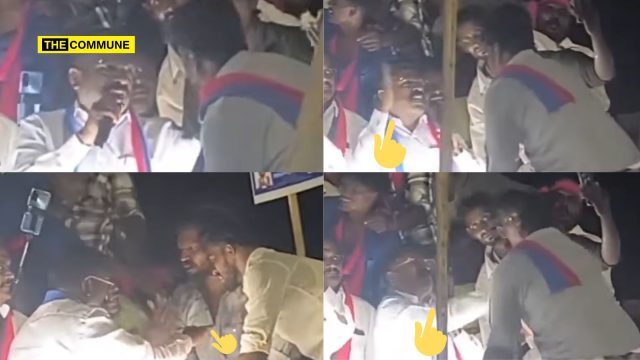
Video Shows DMK MLA Palaniyandi Brutally Assaulting Journalists Probing Illegal Quarry; Annamalai Slams DMK

Video Shows DMK MLA Palaniyandi Brutally Assaulting newa tamil Journalists Probing Illegal Quarry; Annamalai Slams DMK

A few days back, we had reported about the journalists who were allegedly kidnapped and assaulted by goons of DMK MLA Palaniyandi.

Now a video reportedly showing DMK MLA Palaniyandi assaulting journalists during a reporting assignment at an allegedly illegal stone quarry in Karur district has gone viral and has triggered widespread outrage and sharp political reactions.

The incident occurred on Friday, 30 January 2026, at Sivayam village near Krishnarayapuram in Karur, when a team from News Tamil 24×7 was filming quarry operations allegedly linked to Palaniyandi, the DMK MLA from Srirangam.

Five persons were injured in the attack, including News Tamil reporter Kathiravan and videographer Sebastian, along with social activist Sudalai Kannu, advocate Thirumalai Rajan, and his assistant Rajamanickam. According to police, the group had travelled around 8 km from the Kulithalai–Manapparai highway and used a drone to document quarry activity for nearly two hours.

The situation escalated after quarry workers allegedly noticed the drone footage being recorded. Around 50 men, believed to be quarry staff, reportedly attacked the group with iron rods and wooden logs. The assailants are accused of severely beating the journalists, damaging or stealing two cameras, a drone, microphones, live kits, and mobile phones, and briefly holding the victims against their will. The value of the damaged and stolen equipment has been estimated at approximately ₹25 lakh.

A video circulating widely on social media has now become the central focus of the controversy. Journalists involved in the reporting allege that Palaniyandi himself was present at the scene and initiated the assault, after which others accompanying him joined in what they described as a “blind attack”. They further claimed that the violence could have been prevented had the MLA chosen to intervene.

For over two hours following the attack, colleagues were unable to contact the victims, prompting an alert to Karur Superintendent of Police Jose Thangaiah. Acting on his instructions, a police team led by Kulithalai DSP Senthilkumar located Kathiravan and Sebastian and brought them to the Kulithalai police station. Advocate Thirumalai Rajan and Rajamanickam, who sustained serious injuries, were admitted to the Government Hospital in Kulithalai, while the journalists are undergoing treatment at the Tiruchirappalli Government Hospital.

However, News Tamil reported that despite a detailed written complaint being submitted on the day of the incident, no arrests or concrete action have been taken so far. The complaint reportedly named those involved, described the assault, and detailed the destruction and theft of equipment. The alleged police inaction has drawn sharp criticism.

The controversy has further intensified with the circulation of multiple audio recordings on social media and television broadcasts. These recordings, aired by News Tamil, are claimed to contain conversations allegedly involving the MLA’s son and others connected to the quarry, discussing the incident and the destruction of evidence. While the authenticity of the audios has not been officially verified, the channel maintains that they shed light on events at the quarry site.

Reacting to the viral video, BJP leader Annamalai, launched a scathing attack on the ruling DMK. Sharing the footage, Annamalai said the visuals showing a “murderous attack” allegedly carried out by Palaniyandi on journalists amounted to an insult to democracy and an attack on the fourth pillar of the democratic system.

He questioned Chief Minister MK Stalin over the incident, asking whether the position of a DMK MLA had become a licence to illegally mine mineral resources and carry out violent attacks. Annamalai also alleged that the Karur district police had attempted to shield the MLA, pointing out that Palaniyandi’s presence was not mentioned in the official police communication despite allegations of an attempt to murder.

Annamalai demanded that attempt-to-murder cases be registered against Palaniyandi and all others involved and called for their immediate arrest.

The incident has also revived scrutiny of Palaniyandi’s past. In 2023, the Karur district administration reportedly imposed a ₹23 crore penalty on quarry operations linked to violations, raising renewed questions about the continuation of mining activities and alleged political patronage.

Subscribe to our channels on TelegramWhatsApp, and Instagram and get the best stories of the day delivered to you personally.