Home Blog Page 89

‘Caste-Neutral Means No Discrimination? What Is The Point Then?’ Asks Adv Disha Wadekar Defending New UGC Rules

‘Caste-Neutral Means No Discrimination? What Is The Point Then?’ Asks Adv Disha Wadekar Defending New UGC Rules

Amid the intensifying national backlash over the University Grants Commission’s new equity guidelines, advocate Disha Wadekar, one of the key figures associated with the regulatory framework has publicly defended the rules, attributing the protests largely to “misinformation” and misreading of the provisions.

Speaking in a YouTube interview following the Supreme Court’s decision to stay implementation of the guidelines, Wadekar maintained that critics had exaggerated both the scope and consequences of the regulations.

While she sought to reassure critics that the rules are limited to civil remedies and grounded in due process, her reasoning, particularly on caste discrimination, has drawn sharp scrutiny from legal observers, students, and policy commentators.

However, her arguments were weak and based on flawed assumptions. We break it for you.

“Only Civil Remedies” – But Very Real Punishments

Wadekar repeatedly reassures viewers that the regulations are harmless because they do not create new crimes.

“Firstly, this whole idea that these regulations are going to put our kids in jail and behind bars is completely unfounded. These are completely regulations that operate in civil realm. Okay? No equity committee has the power to put someone behind the bars or to incarcerate someone,” she says.​

This framing quietly equates “no jail” with “no serious problem.” But on a campus, the most life‑altering sanctions are non‑criminal: suspension, expulsion, loss of hostel facilities, permanent adverse entries in a student’s file, or withdrawal of degrees. These are all “civil” or administrative measures, yet they can destroy a young person’s career as effectively as a conviction.

By focusing only on imprisonment, she downplays the very real coercive power that equity committees will wield over students’ futures.

“Nothing New” About Going To The Police?

On the question of police involvement, Wadekar argues that the regulations change nothing substantial: “The one provision that UGC has added which is that the college will have to approach the police if a penal provision is attracted – that is anyway there… it’s not like there will be a suicide on campus and that suicide complaint will go to the committee and the committee will decide… it will have to… lodge an FIR… So it’s not like these regulations have brought something new.”

Formally, suicide has always been an IPC matter. But the moment the regulator writes that institutions “will have to approach the police” whenever they think a penal section “is attracted,” it converts a discretionary judgement into a mandatory obligation. In real life, administrators will err on the side of over‑reporting even marginal cases to protect themselves from later accusations of non‑compliance.

To say “this is anyway there” ignores how written duties reshape behaviour. The text may look familiar; the incentives will not.

Who Counts As a Victim Of Caste Discrimination?

The sharpest controversy is over the definition of caste‑based discrimination. Wadekar defends the clause that ties it specifically to SC, ST and OBC students: “Clause 3C defines caste discrimination as discrimination based on caste or race against scheduled caste, scheduled tribes and OBCs… Everyone has a problem with… who should it include? If that should be a caste‑neutral definition… then what is the point of that provision… then there is no discrimination, right?”

She doubles down with an analogy: “It’s like saying that in the definition of gender‑based discrimination, you should have men who say that I am being discriminated on the basis of gender. The basis is important.”

There are several problems here.

She sets up a false choice – either the law protects only SC/ST/OBC students, or “there is no discrimination.” In reality, one can acknowledge that these groups suffer structural oppression and still allow any student to complain if they are abused or excluded purely on caste grounds.

Her gender analogy is misleading. Modern equality law accepts that both women and men can, in specific situations, be victims of gender discrimination. Recognising that possibility does not deny patriarchy; it simply keeps the definition even‑handed while applying it with context‑sensitive judgement.

By insisting that critics of the SC/ST/OBC‑only wording are objecting to the mere inclusion of caste, she avoids the real issue: a built‑in asymmetry where some students can invoke a special definition and others cannot, even if the underlying conduct is similar.

When she says, “So I am not understanding the selective outrage against the inclusion of caste‑based discrimination,” she collapses a nuanced concern about drafting into a crude anti‑caste backlash, which is not what many critics are arguing.

An Idealised Picture of Committees

To address fears of misuse, Wadekar offers a textbook description of how equity committees will function: “It’s not like the complaint is going to be taken on its face value and suddenly the committee is going to be like now you will be punished… If they don’t find any merit… they will dismiss that complaint right, then and there… If they think that there is some merit… they will have to issue notice to the respondent… Their side will be heard. The complainant side will be heard. Both sides will be equally heard… after following all principles of natural justice… they will then suggest a proportionate punishment.”

This is an ideal picture. She assumes that committees are independent and immune from campus factionalism; that they never succumb to political pressure, media storms or administrative preferences; that they apply evidence standards consistently and resist the temptation to “send a message.”

Anyone who has seen internal complaints committees or disciplinary bodies at Indian universities knows that reality can look very different: ex parte interim orders, leaks, social ostracism based on mere allegations, and decisions framed more by ideology than by facts.

By repeatedly invoking “principles of natural justice” as though their presence in the rulebook guarantees their observance, Wadekar appeals to an imagined best‑case scenario, not the messy world in which students actually live.

Labelling Dissent as “Misinformation”

Throughout the interview, Wadekar returns to a familiar refrain: “There is a lot of misinformation around the regulations… hyperbole and hyperactive ways in which people are talking about these regulations… from the responses I feel that the regulations have not even been read properly.”

Later she calls it “complete and utter lies” to say the regulations are only for SC/ST/OBC students. ​

Of course, some social‑media outrage is poorly informed. But to fold all criticism into “misinformation” is to poison the well. Many objectors, including faculty, lawyers, and students who have read both the 2012 and 2026 texts, are raising precise questions about the breadth of committee powers, the asymmetric caste definition, the chilling effect on ordinary interactions and classroom debate and the risk of politicised enforcement.

These are not “utter lies”; they are contestable but serious concerns. A regulator who is confident in her framework should engage them directly instead of treating dissent as proof of ignorance.

“Every Protective Law Faces Backlash”

At one point, Wadekar contextualises the protests as just another conservative reaction: “Honestly this is also a backlash that every protective law we’ve seen in this country has faced.”

This statement smuggles in a conclusion: because other protective laws (say, anti‑dowry or anti‑harassment laws) faced opposition and later proved necessary, the current regulations must belong in the same moral category. But some “protective” laws have also been overbroad, poorly drafted, or misused, and have needed serious judicial trimming.

Whether these UGC regulations are justified cannot be inferred from the fact that they are called protective. It must be assessed from their text, their structure, and their likely implementation. Invoking the history of other laws is a rhetorical shield, not a substitute for that analysis.

The Real Debate, Not the Straw Man

The interview shows that Disha Wadekar is right about one thing: the issues at stake are serious. Caste, gender, religious and disability‑based discrimination on campuses is real, and institutions have failed victims far too often. But that reality does not automatically validate any particular regulatory design.

When she says “there are no extreme consequences… this is only civil remedies” and caricatures critics as people who think committees will “suddenly… be like now you will be punished,” she sets up a straw man. The real worry is more nuanced: powerful committees, armed with vague definitions and operating in politicised environments, can inflict severe non‑criminal penalties on young people without the robust checks that accompany regular courts. ​

If the goal is genuine equity, the conversation must move beyond slogans about “misinformation” and “backlash” to an honest examination of how these rules will work in the hands of real administrators on real campuses, not in the idealised setting imagined by their drafters.

The same Disha Wadekar was also against EWS reservation. In an older interview, she is heard saying how absurd the need for EWS reservation is. In this clipping circulating on social media, she says, “Women get reservation in local bodies. Patriarchy is a reality; it has not ended, and we don’t know for how many more years it will take to end. So, if we have given 33% reservation to women there, suppose tomorrow the government brings a new law, Parliament brings a new law, which says that men will get reservation – that economically weaker men should get reservation. What will happen then? However absurd that sounds, EWS reservation is just as absurd, because it is based on the same logic. My argument is that this EWS reservation is not economic reservation at all. It is “economic” only in name – what is this supposed economic criterion? If you actually look at the language of it, no one wants to name it, but it is upper‑caste reservation, that much is clear. So, as I was saying, this is the only caste‑based reservation for the upper castes.”

Disha Wadekar’s defence of the UGC equity guidelines has only deepened public distrust. By downplaying harsh campus penalties as “only civil,” defending an asymmetric caste definition, and dismissing critics as misinformed, she appears to minimise genuine due-process concerns. Her earlier opposition to EWS reservation further reinforces perceptions of ideological bias rather than neutral regulatory design. The debate, therefore, is no longer about whether discrimination must be addressed, but whether the framework does so fairly.

Subscribe to our channels on TelegramWhatsApp, and Instagram and get the best stories of the day delivered to you personally.
AIADMK Alleges DMK Govt Intimidating Media In Tamil Nadu By Interfering In Editorial Decisions To Run Favourable News

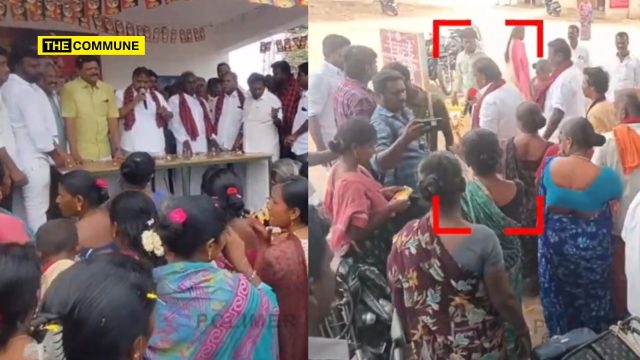
The AIADMK on Thursday. 5 February 2026, accused the Tamil Nadu government of attempting to stifle press freedom, citing messages shared in a WhatsApp group of visual media editors linked to the State’s Department of Information and Public Relations (DIPR).

Referring to a conversation in the “Visual Media Editors – DIPR TN Budget” group, the AIADMK stated that concerns had been raised internally about pressure being exerted on media houses over news coverage.

In a statement on its social media handle, the party questioned the nature of governance in the State, asking: “Is what is happening in Tamil Nadu today democracy or monarchy? Is it democratic rule or authoritarianism?”

Calling the media “the voice of the people,” the AIADMK said any attempt to suppress that voice was “an act against the very philosophy of democracy.”

The party alleged that interference in media freedom, coupled with officials being used to issue threats and pressure, reflected what it termed the government’s “high-handed and anarchic functioning.”

Citing the WhatsApp exchange, the statement said a senior television editor had directly expressed anger against what was described as the government’s “repressive approach,” terming it a sign of mounting frustration within journalistic circles.

The AIADMK further asserted: “Deciding how and for how long a news item should be broadcast is the professional right of media editors. Interference in that is an authoritarian mindset.”

Recalling the recent incident where journalists were attacked by a DMK MLA for investigating and reporting on the illegal quarrying, the party said the episode had already exposed the government’s “anti-media face,” adding that such acts amounted to attacks on citizens’ right to information.

Issuing a warning to officials, the opposition said those “drawing salaries from taxpayers’ money and acting at the behest of the regime” should remember that political change was inevitable.

The party also addressed Chief Minister MK Stalin directly, urging the government to “immediately abandon such anti-democratic attempts to suppress the media.”

It concluded by assuring that if neutral media organisations or journalists faced intimidation, the AIADMK would stand “as a protective shield” to defend press freedom.

Subscribe to our channels on TelegramWhatsApp, and Instagram and get the best stories of the day delivered to you personally.
“Very Dangerous, Makes Hate As Investment”: Two-Bit Actor Kishore Derogates PM Modi Who Has Been Elected Thrice Consecutively

"Very Dangerous, Makes Hate As Investment": Two-Bit Actor Kishore Derogates Indian PM Modi Who Has Been Elected Thrice

Actor Kishore, whose latest film Mellisai recently hit theatres, has stirred political debate following remarks he made against PM Modi during an interview with a YouTube channel while promoting the film.

When asked what he would change if given an opportunity, Kishore responded with a sharply political answer.

“I don’t know if you’ll telecast it, but I’ll say it anyway. I’ll go back to 2014 and change the Prime Minister. Will you telecast this? Go ahead, let’s see. India itself would have been different. So the amount of hatred we see today, oh, it’s very dangerous. It will take decades to change this. If it continues like this, very dangerous people.”

He went on to link what he described as rising hatred to global political trends.

“No, now even in this movie we are promoting, we talk about that love/affection. Without love, nothing exists. Humans can’t even live together without it. So, if you hate each other, how can you live together? That hatred is what they invest in to, and one man comes to power. So, they are very dangerous people. For any community, whether a small community, a country, or the whole world, very dangerous. Such people are in power now. Everywhere, majority it is them. Look at Trump, look at him (Modi), everyone’s like that. So, it’s quite dangerous for social animals like human beings.”


View this post on Instagram


A post shared by Indiaglitz Tamil (@indiaglitz_tamil)

Speaking about the Jana Nayagan issue and political participation, Kishore said he had not been able to take part in protests physically.

“I did not have time to go on the ground and protest so we only indulge in online activism. But everyone must have a chance. Anybody who wants to enter public life, politics isn’t a power position; it’s a job serving people. They are working for the people, servant.”

Drawing comparisons with past leaders, he added: “Jawaharlal Nehru said the same thing. He said he was the Pratham Sevak – the first servant. Modi said ‘Pradhan Sevak’ – when you say Pradhan, it indicates you are the main one. Jawaharlal Nehru said otherwise, in the socialist movement that is what happened.”

Kishore further spoke about democratic participation and institutional functioning.

“Everyone must have a chance. Anybody who wants to serve the people must have a chance. Politics that is curbing that is on the rise these days. Be it misusing democratic institutions, all this is there.”

He concluded by reiterating that his film’s core message of love and coexistence also applied to politics.

“Mainly the biggest damage they are doing is manufacturing hatred between people. We are living in one country, we cannot live without each other, we cannot sideline/exclude anyone, we have to live together and see each other daily, like a family. That is how we relate to the film Mellisai and the politics, how love and affection are important and if we destroy that, it is like destroying a house. All politicians are doing only that.”

Subscribe to our channels on TelegramWhatsApp, and Instagram and get the best stories of the day delivered to you personally.
‘₹35,701 Cr Projects Hit By Land Delays’, BJP Leader Annamalai Hits Back At DMK MP Kanimozhi’s “Skewed Priorities” Charge On Budget Allocation For TN

annamalai kanimozhi dmk

A political war of words has erupted between the BJP and the DMK over railway budget allocations to Tamil Nadu, after DMK MP Kanimozhi alleged that the state had been sidelined in Union Government funding priorities.

The controversy began after a post highlighting railway budget allocations noted that Maharashtra had received the highest outlay, nearly ₹24,000 crore, under the Union Budget 2026–27 for railway projects.

Reacting to the figures, Kanimozhi wrote “Tamil Nadu, a key contributor to India’s growth, receives less than one-third of Maharashtra’s Railway Budget allocation, clearly revealing the Union Government’s skewed priorities. BJP seeks the Tamil people’s votes, but not their development.”

Her remarks drew a sharp rebuttal from BJP leader K Annamalai, who accused the DMK of misrepresenting facts and deflecting responsibility for project delays.

Responding on social media, Annamalai wrote, “DMK MP Smt @KanimozhiDMK is ignorant of the facts, as always, and has no clue what is happening in Tamil Nadu under the Corrupt leadership of her brother & TN CM Thiru @mkstalin.

₹35,701 Crore worth of Railway projects are currently underway in Tamil Nadu, but their execution is delayed due to the Government of Tamil Nadu’s failure to expedite land acquisition. Of the 4,326 Hectares of land required to carry out these railway projects, the Tamil Nadu Government has, as of December 2025, acquired only 24% of the required land. There are plenty of projects that have been pending for land acquisition for almost 5 years now. 

The same applies to the National Highway projects sanctioned for Tamil Nadu. The roadblocks deliberately imposed by the Corrupt DMK Government have caused exorbitant delays in the execution of the already sanctioned project. Instead of peddling lies all day, Smt Kanimozhi should ask her brother why there is a delay in acquiring lands to complete the already sanctioned projects.”

Supporting his claims, Annamalai cited parliamentary data and railway ministry documents indicating that multiple railway infrastructure works in Tamil Nadu, covering sanctioned track length of over 2,400 km were facing delays primarily due to land acquisition bottlenecks.

Official figures presented in Parliament also indicated that out of 4,326 hectares required for railway projects in Tamil Nadu, only about 1,052 hectares, roughly 24%, had been acquired as of late 2025, leaving a substantial portion pending.

Subscribe to our channels on TelegramWhatsApp, and Instagram and get the best stories of the day delivered to you personally.
“My Son Was No Thief – Nikitha Gave False Complaint, Arrest Her”, Custodial Death Victim Ajithkumar’s Mother Pleads

“My Son Was No Thief - Nikitha Gave False Complaint, Arrest Her”, Custodial Death Victim Ajithkumar's Mother Pleads

In a harrowing account that casts a severe shadow over police conduct, Malathi, the mother of 28-year-old Ajithkumar, has broken her silence, detailing the alleged brutal torture that led to her son’s death in police custody last year. Her testimony follows a recent High Court order that denied bail to the five accused policemen and confirmed that the complaint which triggered the arrest was false.

Ajithkumar, a guard at the Manappuram Badrakaliyamman Temple, died on June 27 last year after being summoned for questioning by the Thirubhuvanam Special Branch police. The summons was based on a theft complaint filed by a college professor, Nikitha, alleging he had stolen jewellery.

Speaking to reporters, a grief-stricken Malathi posed searing questions about the legality and morality of her son’s treatment. “Was my son a terrorist that he had to be beaten so cruelly? Is there any place in the law for such brutal interrogation?” she asked.

Her narrative paints a picture of profound systemic failure and alleged sadism. She revealed that the incident at the temple occurred around 11 AM, but she was not informed. “They took him to the station only by 2 PM, telling him he was needed because he was ‘sweating a lot’. Why wasn’t I informed immediately? I only got the news by 4:30 PM,” she stated.

The case took a significant turn during the bail hearing for the five accused policemen – Kannan, Raja, Anand, Prabhu, and Sankaramanikandan before Justice Srimathi at the Madurai Bench of the Madras High Court. The CBI, which is now investigating the case, submitted that Ajithkumar’s death was “definitely caused by the police personnel” and that “there is no truth in the complaint given by Nikitha.”

Rejecting the bail pleas, Justice Srimathi made strong observations, stating, “A person has been beaten to death for a matter where there was no crime at all. Isn’t the complainant also responsible for this? Whoever it is, let them remain in jail until the case is over. This incident is deeply painful. The court will teach a lesson to the police department.” The case was adjourned to 17 February 2026 for further hearing.

Malathi’s account aligns with the gravity implied by the court. The methods of torture used defy basic humanity. “They tortured an innocent man who knew nothing. They sprinkled chili powder, denied him water, and beat him with such cruelty,” she said, her voice trembling. “Is there any place in the law for all this? They tied him to a tree and hung him. They even forced him to urinate. My son would have died crouching and shrinking in pain.”

She also raised critical questions about the chain of command, alleging the accused policemen claimed to be acting on orders from a “higher-up.” “They say they did it on the orders of a ‘big place’. Who is this ‘big place’? I need to know,” she demanded, calling for an expansion of the probe.

While expressing a sliver of solace that the court had established her son’s innocence, Malathi’s primary focus remains on complete justice. She insisted that the false complainant, Nikitha, must be arrested and questioned to uncover who instigated the complaint. “Nikitha gave a false complaint. Who told her to give it? She must be arrested,” Malathi asserted.

She also highlighted the plight of four other individuals, Naveen Kumar, Pravin, Pravina Kumar, and Arun who were allegedly assaulted by the police during the same episode but are yet to receive compensation ordered by the court.

With the CBI having filed a nearly 90-page charge sheet and the judiciary taking a stern view, the case is poised for a crucial trial. The victim’s family and their lawyers have emphasized that the investigation must now trace the conspiracy to its roots, identifying all superiors who may have sanctioned or turned a blind eye to the brutal custody that led to an innocent man’s death.

Source: Dinamani

Subscribe to our channels on TelegramWhatsApp, and Instagram and get the best stories of the day delivered to you personally.

“Beaten To Death For Nothing”: Madurai Bench Of Madras High Court Denies Bail To TN Cops In Ajithkumar Custodial Death Case

custodial death torture ajithkumar temple guard police postmortem report

The Madurai Bench of the Madras High Court has refused bail to police personnel arrested in the custodial death case of temple security guard Ajithkumar, observing that the judiciary would “teach a lesson to the police” and expressing anguish that a man had been “beaten to death for nothing.”

Hearing bail petitions filed by some of the arrested officers, Justice Sreemathi adjourned the matter to February 17 and directed that the accused remain in custody until the conclusion of trial.

The case relates to the death of Ajithkumar, who was working as a security guard at the Madapuram Badrakali Amman Temple near Tiruppuvanam. He was picked up for inquiry on 27 June 2025, following a complaint that jewellery had gone missing from the temple. He died the next day, June 28, after alleged custodial torture.

The Central Bureau of Investigation (CBI), which is probing the case, informed the High Court that its inquiry had confirmed Ajithkumar’s death as a custodial killing. The agency also told the court that the jewellery theft complaint lodged against him had no factual basis and had been closed.

Video footage of the assault had surfaced earlier. A postmortem examination documented around 40 injuries on Ajithkumar’s body, confirming severe physical abuse.

Five members of a special police team, Anand, Kannan, Raja, Prabhu and Sankar Manikandan were arrested in connection with the case and lodged in Madurai Central Prison. During the hearing of their bail pleas, the CBI submitted that Ajithkumar’s death was a confirmed custodial death and that as many as ten officials named in the FIR were linked to the incident.

According to the agency, those facing cases include a DSP, an Inspector, a Head Constable and members of the special team involved in the inquiry.

Questioning the basis of the original complaint, the judge asked whether action would be taken against the complainant, noting that an innocent man had been brutally assaulted in a case that did not exist. The court also sought to know whether there had been any prior enmity between the victim and the officers.

The CBI informed the court that there was no prior enmity and that the assault occurred during questioning carried out on the instructions of senior officials.

Observing that a person had been beaten to death over a baseless case, the court said the accused must remain in prison and stressed the need to send a strong message to law enforcement authorities.

The High Court had earlier ordered interim compensation of ₹25 lakh to Ajithkumar’s family. Tamil Nadu Chief Minister M K Stalin had transferred the investigation to the CBI, stating that the probe must be beyond reproach, and had publicly apologised to the victim’s family.

Source: NDTV

Subscribe to our channels on TelegramWhatsApp, and Instagram and get the best stories of the day delivered to you personally.

Dravidian Model Tamil Nadu: 13 Illegal Bangladeshi Nationals Arrested For Staying & Working Without Documents In Tiruppur

12 Bangladeshi Illegals Arrested In Tiruppur, Nearly 98 Arrested In January 2025 Alone

Thirteen Bangladeshi nationals who had allegedly entered India illegally and were staying in Tiruppur for about a year were discovered and arrested by police.

Police said the foreign nationals had been residing in areas including College Road–Ranganathapuram and SP Nagar in the city and were working in baniyan manufacturing companies.

During inspections conducted by Velampalayam Police, four persons identified as Yasin Miya (26), Nupur Khatun (25), Mohammed Dugin (40), and Mohammed Ismail (38) were arrested.

Police also arrested nine more Bangladeshi nationals, aged between 26 and 38, who had been staying in Mudalipalayam and Vijayapuram under the limits of Nallur Police Station.

Police said that during raids conducted in three locations in the city, Bangladeshi nationals who had been staying illegally without valid documents were arrested.

Source: Dinamalar

Subscribe to our channels on TelegramWhatsApp, and Instagram and get the best stories of the day delivered to you personally.

NHRC Steps In Over Netflix’s ‘Ghooskhor Pandat’ That Attempts To Normalize Brahmin Hate

NHRC Steps In Over Netflix's 'Ghooskhor Pandat' That Attempts To Normalize Brahmin Hate

The National Human Rights Commission of India (NHRC) has intervened in a growing controversy surrounding a proposed Netflix film/series titled Ghooskhor Pandat, directing the Ministry of Information and Broadcasting to conduct an expedited inquiry into allegations that the show promotes caste-based stereotyping and could trigger social discord.

Taking suo motu cognisance of a formal complaint, the Commission issued a notice under provisions of the Protection of Human Rights Act, 1993, asking the ministry to submit a detailed Action Taken Report within two weeks. The directive places scrutiny on the content review and compliance mechanisms of streaming platform Netflix in the Indian regulatory context.

The complaint was filed by Sanjeev Newar, founder of the social media entity Gems of Bollywood. He alleged that the proposed title, “Rishwatkhor Pandit” (also referenced in the complaint as “Ghooskhor Pandit”), which translates to “a Brahmin who is habitually corrupt and takes bribes,” is inherently discriminatory.

The complaint argued that the title derogatorily associates a specific caste group with criminal and immoral conduct, going beyond satire into what it termed public humiliation and psychological harm. It further contended that in a socially sensitive environment, such portrayals could inflame tensions, disturb public order, and amount to a violation of dignity and human rights.

An NHRC bench presided over by member Priyank Kanoongo found prima facie merit in the allegations, prompting issuance of notice to the concerned authorities.

In a post on X, Kanoongo stated: “I have received a complaint from GemsOfBollywood stating that NetflixIndia OTT platform is planning to broadcast a program titled ‘Ghooskhor Pandit’.

Such titles and programs target specific castes and communities, subjecting them to criticism and ridicule, shaming the community, and fostering animosity in society. This constitutes a form of psychological violence that threatens to disrupt public order and harm human lives. Therefore, a notice is being issued to the concerned department for necessary action.”

The Ministry of Information and Broadcasting is now expected to examine the allegations, seek clarifications where necessary, and report back to the Commission within the stipulated timeframe. Netflix has not yet issued a public response to the notice at the time of publication.

Source: The Mooknayak

Subscribe to our channels on WhatsAppTelegram, Instagram and YouTube to get the best stories of the day delivered to you personally.
“She Changes Character Every Now & Then. Is She Speaking As Ambi, Anniyan Or Remo?” Annamalai Roasts DMK MP Kanimozhi Over Pre-Poll Promise To Shut TASMAC

annamalai kanimozhi dmk

BJP leader Annamalai roasted DMK MP Kanimozhi Karunanidhi over the party’s, especially her pre-poll promise, to shut down TASMAC liquor outlets, accusing the ruling party of going back on its assurances after coming to power.

Responding to a question on the DMK’s earlier stance on prohibition, Annamalai said the promise had not been implemented despite the party forming the government.

In a sarcastic remark, he said the DMK had “executed it brilliantly,” before turning his criticism directly toward Kanimozhi.

“Kanimozhi should go see a good psychiatrist, must go see a good doctor. Show her these 15-year videos to Kanimozhi akka. If you’ve seen some clips from some films – they have a split personality – be someone in the morning and someone else at night – Remo, Ambi, Anniyan – that character changes every now and then. Kanimozhi akka has become that character.”

He continued his criticism by referring to the DMK’s election messaging and manifesto commitments.

“Before elections, ‘I’ll shut down TASMAC’; after elections, escape. Then, five years later, as the head of DMK’s election manifesto committee, if you ask for the 2021 white paper of promises, they’ll laugh and won’t talk about it. So, we don’t know how Kanimozhi speaks – is she speaking as Anniyan, Ambi, or Remo? She has become an amazing politician who speaks in changing ways, our dear akka Kanimozhi.”

The remarks come amid continuing political exchanges between the BJP and the ruling Dravida Munnetra Kazhagam over prohibition policy and the functioning of Tamil Nadu State Marketing Corporation, the state-run liquor retail network.

While the DMK had, during previous election campaigns, spoken about steps toward reducing liquor dependence and regulating sales, opposition parties including the BJP have repeatedly alleged that no substantive move has been made toward shutting TASMAC outlets.

DMK leaders have previously defended the government’s position, citing revenue dependence and regulatory challenges, though no immediate response was issued to Annamalai’s latest remarks at the time of publication.

Subscribe to our channels on WhatsAppTelegram, Instagram and YouTube to get the best stories of the day delivered to you personally.
“North Indians Come Here To Clean Tables, Sell Panipuri, Do Construction Jobs,” Says DMK Min MRK Panneerselvam

With only months remaining for the Tamil Nadu Assembly elections, a fresh political controversy has erupted after Tamil Nadu Agriculture Minister MRK Panneerselvam made contentious remarks about migrant workers from northern states, reigniting the long-running debate over language policy and north–south political narratives.

Speaking at a public event, Panneerselvam contrasted employment patterns of North Indian migrants with Tamil youth, linking the issue to the state’s two-language policy and its opposition to the three-language formula advocated by the Centre.

He said people from the north, “having learnt only Hindi”, had limited job opportunities in Tamil Nadu and ended up in menial work, while Tamilians benefitted from the state’s two-language policy, learnt English and secured jobs abroad.

He said, “People from North India come here to clean tables. Why do they come here? Since they only know Hindi, they lack job opportunities there. They come here as construction workers, table cleaners, pani puri sellers.”

He further added, “But our children have gone abroad… as we follow a two-language policy and learned English well. They are going abroad and getting opportunities to earn in crores… in USA, London.”

DMK members have frequently made use of the ‘panipuri seller’ jibe against North Indian migrant workers. Here are a few instances:

In February 2025, DMK MP A Raja made a similar comment.

Speaking at an event in Coimbatore, Raja went on the offensive and made derogatory remarks about Hindi speakers. He said, “The several thousand crores that are due for us (TN) has not yet come. If we demand, they tell us to study Hindi and only then would we get it. We oppose the Union government that demands that we in Tamil Nadu study Hindi in order to receive the funds. It is alright if you do not give us our funds, we will not give up on our state’s culture and language. We will continue with the two-language policy only. There is only one Chief Minister who has the audacity to say so and it is none other than our CM. They say if we learn Hindi, we will get jobs. But the Hindi speakers who have come here are only doing construction labour jobs or in fields. Earlier they were only selling panipuri. Now they are working in farms.”

He further proudly stated, “Children from TN who studied English and Tamil are studying in America, England, Australia. So why should we study Hindi? The right to ask that question has been given to us by our Chief Minister.”

DMK’s MSME Minister, TM Anbarasan in March 2025, made contentious remarks at a DMK event, stating that Hindi speakers in his household are engaged in cattle herding. His comments were seen as disparaging towards migrant laborers who earn their livelihood through hard work and perseverance.

He said, “Where are the ones who studied Hindi? Where are they? those who studied Hindi are rearing cows at my home. I’m not joking, It’s true. They are selling Panipuri, mason, carpenters. If we study Hindi we also have to go to North India and sell Panipuri.” 

DMK Organizational Secretary RS Bharathi sparked a controversy by saying that North Indians sell panipuri in Tamil Nadu and the Governor is also like them. He also compared the Governor to a migrant worker from Bihar and said that he would not have left without being beaten had Jayalalitha been alive.

He said“I had earlier stated that those who sell Soan papdi and Panipuri don`t know the pride of Tamil Nadu. I said this in a meeting. I came to know that many have come from Bihar and I think the Governor (RN Ravi) has similarly come by train,”. 

Speaking at the convocation ceremony of Bharthiar University in Coimbatore on 13 May 2022, Tamil Nadu Higher Education Minister K. Ponmudy said that it is not necessary to learn Hindi as speakers of that language can be found selling only Pani Pooris.

“In Tamil Nadu, there are two languages – English and Tamil. While English is an international language, Tamil is a local language. We were told that learning Hindi would fetch us jobs, did we get (jobs)? You go and see in our state, in Coimbatore, who sells pani puris? They are Hindi speakers,”, the DMK Minister said.

This is not the first time that Ponmudy took to ridicule Hindi speakers as ‘Pani Poori Sellers’.

Many say that if you study Hindi, you will get a job. But, many are coming to work in Chennai from northern states. A few are selling pani puri here.”, Minister Ponmudy said while addressing members of the DMK Students Wing on 30 April 2022.

Subscribe to our channels on WhatsAppTelegram, Instagram and YouTube to get the best stories of the day delivered to you personally.