Home Blog Page 854

BJP-Led NDA Govt Tables Waqf (Amendment) Bill 2024 – A Look At The Proposed Amendments

Modi govt introduces Waqf Amendment Bill

The NDA government under PM Modi plans to present the highly discussed Waqf (Amendment) Bill, 2024, in the lower house of Parliament on 8 August 2024. The proposed legislation seeks to revise the Waqf Act of 1995, which governs Waqf boards. The Bill proposes 44 amendments intended to repeal specific provisions of the current Waqf Act.

These changes aim to adjust the existing regulations overseeing Waqf boards substantially. Significantly, the Bill seeks to increase the representation of Muslim women and non-Muslims in Waqf boards, demonstrating a commitment to inclusivity and diversity.

Advocate Vishnu Shankar Jain who has been very vocal about the misuse of the Waqf Act welcomed the proposed Bill. He took to his X handle and wrote, ” Very well researched waqf amendment bill 2024 has been prepared by the central govt. I thank the government for understanding the issue and bringing legislative changes. This bill will solve the issue and stop the illegal activities under the garb of waqf.”

A look at the amendments in question:

Aghakhani And Bohra Waqf

Amendment of Section 3: This amendment introduces new definitions and modifies existing ones, including definitions for “Aghakhani waqf” and “Bohra waqf,” as well as terms like “Collector,” “Government Organisation,” and “Government property.” It also specifies that waqf creation must be formal and introduces a “portal and database” for waqf information.

Amendment of Sections 6 and 7: This amendment includes Aghakhani and Bohra waqfs in the list of disputes and removes the clause making the Tribunal’s decisions final, aligning the Tribunal’s dispute resolution authority with the broader judicial system.

Amendment of Sections 13 and 14: This change establishes separate Auqaf Boards for Bohras and Aghakhanis and expands the composition of the State Waqf Boards to include non-Muslim members, ensuring broader representation.

Does the Govt Own The Land Or Is It The Waqf?

New Sections 3A, 3B, and 3C: These sections set conditions for creating a waqf, requiring the creator to be the legal owner and capable of transferring the property. They also mandate the registration of waqf properties on a central portal within six months, including detailed information about the property, creator, deed of waqf, management, income, and expenses.

According to Section 3C:

  1. Any property identified or declared government property before or after this Act begins will not be considered waqf property.
  2. If there is any question about a property’s status as government property, it will be referred to the Collector, who will investigate, determine the property’s status, and report to the State Government. Until the report is submitted, the property will not be treated as waqf’s.
  3. If the Collector concludes that the property is government property, corrections will be made in the revenue records, and the report will be sent to the State Government.
  4. Following receipt of the Collector’s report, the State Government will instruct the Board to update the records accordingly.

Amendment of Section 4: This change replaces Survey Officers with the Collector for conducting waqf surveys in compliance with State revenue laws.

Amendment of Section 5: New sub-sections require uploading the list of auqaf on the central portal and issuing a public notice before deciding on land mutations.

Central Waqf Council To Include Non-Muslims

Amendment of Section 9: This amendment expands the Central Waqf Council to include non-Muslim members, promoting inclusivity.

The Council shall consist of the following members:

  • The Union Minister in charge of waqf, serving as the Chairperson ex officio.
  • Three Members of Parliament, including two from the House of the People and one from the Council of States.
  • Members appointed by the Central Government from among Muslims, including:
    • Three individuals representing significant Muslim organizations.
    • Chairpersons of three Boards, appointed on a rotating basis.
    • One person representing mutawallis of waqf with an annual income of five lakh rupees or more.
    •   Three prominent scholars in Muslim law.
    •   Two former Supreme Court or High Court judges.
    •   One nationally renowned advocate.
    •   Four distinguished individuals in the fields of administration or management, financial management, engineering or architecture, and medicine.
    •   The Additional Secretary or Joint Secretary from the Union Ministry dealing with waqf matters, serving ex officio.
    •   Two of the members appointed must be women.
    •   Additionally, two members must be non-Muslims.

Amendment of Section 16: This change introduces conviction with a sentence of two years or more as a reason for disqualification from the Board.

Amendment of Section 17: This amendment mandates that the Council must convene at least once a month.

Omission of Section 20A: Section 20A is entirely removed from the Act.

Amendment of Section 23: The new sub-section requires the Board to have a full-time Chief Executive Officer appointed by the State Government, at least at the rank of Joint Secretary to the State Government.

Amendment of Section 32: Sub-section (2), clause (e) removes the Explanation and proviso. Sub-section (3) eliminates the finality of the Tribunal’s decision.

Amendment of Section 33: Sub-section (4) removes the Tribunal’s power to stay the Chief Executive Officer’s orders. Sub-section (6) is also omitted.

No Registration On Waqf Portal If Property Is Disputed

Amendment of Section 36: Starting with the Waqf (Amendment) Act, 2024, a waqf deed is required to create a waqf. Registration must be completed through the central portal, with details specified by the Central Government. If a waqf deed is missing, full details are not required. The Collector will verify the validity of the application. Disputed or government-owned properties will not be registered until resolved by a court. The previous rule on registration details has been removed. Additionally, once a waqf is registered, a certificate will be issued through the portal, and no legal action can be taken for unregistered waqfs six months after the Act begins.

Amendment of Section 37: Sub-section (1) requires details to comply with rules set by the Central Government and changes “provided by regulations” to “prescribed by the Central Government.” Sub-section (3) now mandates a public notice before altering land records. This notice must be published in two daily newspapers, including one in the local language, giving affected individuals the opportunity to respond.

Waqf Will Not Decide Which Property Belongs To Them

Amendment of Section 40: This amendment removes the section that granted the Board the authority to decide if a property is waqf property.

All Financial Reports To Be Submitted To Centre

Amendment of Section 46: This change adjusts the deadlines and details required for submitting financial reports to the central government.

Amendment of Section 47: This amendment alters the requirements for audits and the process for appointing auditors for waqf properties. It stipulates that audits may be conducted by a panel appointed by the State Government or directed by the Comptroller and Auditor-General of India, with audit reports published as specified by the Central Government.

Amendment of Section 48: This amendment introduces provisions for how audit reports should be published and how notices for objections should be issued.

Who Can Be A Mutawalli?

Insertion of Section 50A: A new Section 50A disqualifies individuals from being appointed or continuing as a mutawalli if they:

  • Are under 21 years old,
  • Are mentally unsound,
  • Are an undischarged insolvent,
  • Have been convicted of a crime and sentenced to at least two years in prison,
  • Have encroached on waqf property,
  • Have previously been removed as a mutawalli or by a court/tribunal for mismanagement or corruption.

Amendment of Section 52: In sub-section (4), the provision making the Tribunal’s decision on appeals final has been removed.

Punishment For Violators

Amendment of Section 52A: Changes include replacing “rigorous imprisonment” with “imprisonment”. It also includes returning property to the waqf rather than the Board. Also, it removes sub-sections (2) and (4).

Amendment of Section 55A: The clause stating finality of the Tribunal’s decision has been removed.

Amendments to Section 61: This section updates penalty rules, imposing fines between twenty thousand and fifty thousand rupees for failing to meet requirements without justification. New penalties include imprisonment of up to six months and fines ranging from twenty thousand to one lakh rupees for mutawallis who do not hand over property, follow instructions, provide accounts, or upload details. Some previous clauses (e) and (f) have been removed.

Amendments of Section 64: The rules for maintaining accounts have been updated. Penalties will be applied for improper account keeping or failure to submit yearly statements within a year. Additionally, members of unlawful associations under the Unlawful Activities (Prevention) Act of 1967 are now disqualified. The provision making the Tribunal’s decision on appeals final has also been removed.

Amendment of Section 65: Sub-section (3) specifies that tasks must be completed within six months.

Amendment of Section 67: It allows a 60-day period to appeal to the Tribunal. It also removes the provision that the Tribunal’s decision is final.

Amendment of Section 69: One rule has been eliminated, and a new requirement has been added for public notice and inviting objections before making decisions.

Amendment of Section 72: The interest rate has been revised from seven to five per cent, and the provision making the Board’s decisions final has been removed.

Amendment of Section 73: The rule that makes the Tribunal’s decision on appeals final has been removed.

Tribunal Or High Court To Handle Waqf Disputes

Amendment of Section 83: Other Tribunals may now be assigned to handle this Act. If no Tribunal functions, appeals can be made to the High Court. Tribunals must have two members: a District Judge (Chairman) and a Joint Secretary. The Chairman can act alone if the other member is absent. The Chairman and member can serve for a maximum of five years or until they turn 65, whichever comes first. The provision making Tribunal decisions final has been removed, allowing appeals to the High Court within 90 days.

Amendment of Section 84: Decisions must be made within six months of the application, with an additional six months allowed if reasons are recorded.

Amendment of Section 91: References have been updated from the old Land Acquisition Act to the 2013 Act, and the decision-making period has been shortened from three months to one month. New rules delay orders if the Board claims the property.

Amendment of Section 100: The term “Survey Commissioner” has been replaced with “Collector.”

Amendment of Section 101: All references to “Survey Commissioner” have been changed to “Collector.”

Amendments of Sections 104 and 107: These amendments omit the Act’s application to properties donated by non-Muslims and the provision making the Limitation Act, 1963, inapplicable to waqf property recovery.

Amendments of Sections 108 and 108A: They remove sections concerning special provisions for evacuee waqf properties and the Act’s overriding effect.

Insertion of Section 108B: This new section grants the Central Government the authority to create rules under the Act.

Amendment of Section 109: It modifies the power to create rules, specifying matters for which rules can be established.

Amendment of Section 110: It revises the Board’s power to make regulations. It also includes procedural and administrative details such as notifications and notices.

Financial And Delegated Legislation

The financial memorandum indicates that no additional financial expenditure is required. Its provisions for delegated legislation allow the Central Government to make detailed rules for the Act’s implementation. The bill is expected to pass both houses of Parliament before being signed into law by the President.

Since its inception, the Waqf has faced significant scrutiny due to legal disputes and irregularities. There have been widespread demands for its abolition or a revision of the relevant legislation. The proposed amendments address these concerns by increasing government oversight and enhancing transparency and accountability in Waqf operations.

(With inputs from Organiser)

Subscribe to our channels on TelegramWhatsApp, and Instagram and get the best stories of the day delivered to you personally. 
From 1946 To Date – 78 Years Of Persecution: The Continuous Struggle Of Bangladesh’s Hindu Minority

History Of Persecution: Continuous Struggle Of Bangladeshi Hindus

The Hindu community in Bangladesh has endured severe persecution over the decades, starting with the Direct Action Day in 1946 and continuing through various violent periods such as the Noakhali genocide in 1946, the 1971 Bangladesh Liberation War, and recurrent pogroms, including those in 1992 and 2024. These atrocities, characterised by massacres, rapes, abductions, and systematic destruction of Hindu properties, have led to a significant decline in the Hindu population from 28% in 1940 to 8.96% in 2011.

The history of atrocities against Hindus in Bangladesh underscores a persistent pattern of systemic violence and persecution over decades. This ongoing persecution highlights the continuous struggle of Hindus for safety and rights from the earliest days.

1946 – Direct Action Plan

On 16 August 1946, the Muslim League Council declared ‘Direct Action Day’ to emphasise their demand for a separate Muslim homeland following the British departure from the Indian subcontinent. The date was chosen because it marked the anniversary of the Battle of Badr, a significant early victory for Islam. The All-India Muslim League aimed to use violence to intimidate Hindus and their leaders into conceding a separate Muslim-majority country after the British exit.

SN Usman, the Mayor of Calcutta and Secretary of the Calcutta Muslim League distributed a leaflet in Bangla that ominously read:

Kafer! Toder dhongsher aar deri nei! Sarbik hotyakando ghotbe!” (“Infidels! Your end is not far off! There will be a massacre!”).

The ominous day began with a massive public meeting of the Muslim League at the Calcutta Maidan. Muslim workers from the jute mills of Howrah flocked into the city, heading toward Ochterlony’s needle monument for the grand meeting to ‘celebrate’ Direct Action Day. No representatives from the non-Muslim press attended the gathering. During the event, Suhrawardy, then the Premier of Bengal, boldly declared that he would challenge the British to prevent Mr. Nehru from ruling Bengal. He emphasised that Direct Action Day would mark the initial step in the Muslim struggle for emancipation.

The assembly included a significant number of Muslim hoodlums, whose numbers grew as the meeting concluded. These individuals moved towards the city’s shopping centres, immediately looting Hindu shops and houses. They spread through the town, shouting battle cries such as “Allahu Akbar,” “Pakistan Zindabad,” “Muslim League Zindabad,” “Lekar Rahenge Pakistan,” and “Ladke Lenge Pakistan.”

Then, the torching began. Hindu-populated areas such as the southern part of Amherst Street, Bortola, and Jorasanko were engulfed in flames within no time. Fires blazed through the night, accompanied by war cries of “Allahu Akbar, Ladke Lenge Pakistan.” This persecution continued unabated the next day. An Additional Judge of Alipore Court was killed while trying to save a young boy fleeing from the hoodlums. Until midmorning on the 17th, there was no sign of any policemen.

A mob of violent Islamists attacked Victoria College. All the girls were raped in the classroom, then killed and hung naked from the windows. The naked bodies of Hindu girls were displayed from hooks at Raja Bazar beef shops. Many rapists were armed with iron bars and lathis.

The brutality of the Razakars affected Hindus in Kolkata across various sections, castes, and professions. For example, Rajab Ali led a Muslim mob from Kasai bustee (slum) that set fire to two Hindu slums in Sasthitala, inhabited mainly by Dalits, the so-called lower castes. Suhrawardy personally visited the slum and areas around Narkeldanga main road and Maniktala main road to organise groups of Hindu hunters, ensuring a bloodbath of Hindu corpses.

In another shocking anti-Hindu persecution incident in Metiaburuz, around seven hundred Bihari and Odiya labourers were butchered by a Muslim mob led by local Communist Party leader Sayed Abdulla Farooqui.

On 17 August, Farooqui, President of the Garden Reach Textile Workers’ Union, along with Elian Mistry, a hardline Muslim League hooligan, led a vast armed mob into the mill compound of Kesoram Cotton Mills in the Lichubagan area. Hindu labourers, who were also part of the same union, showed their union cards to the bloodthirsty mobs, only to be laughed at and murdered. Their bodies were chopped and thrown into the river.

In the early hours of 17 August, a Muslim mob ransacked a Hindu household at 25 BudhuOstragar Lane, murdering 25 out of 37 members, looting, and setting the house on fire.

From 18 August, Muslim goons began facing retaliation. Hindu Kalwars from Bihar and U.P. led the charge, soon joined by Sikhs and Hindu Bengalis. Armed with crowbars, swords, and other weapons, they sought to avenge the killings with a ferocity previously unseen. As with Hindu dwellings, there was widespread torching in Muslim areas as well.

Gopal Chandra Mukhopadhyay, affectionately known as Gopal ‘Patha,’ became a symbol of Hindu resistance. He shattered Jinnah and his Muslim League Islamists’ dreams of forcibly including Hindu-majority Calcutta and its surrounding districts in East Pakistan by unleashing a mass genocide during the infamous Direct Action call on 16 August 1946.

Gopal, along with his group of Hindu boys, fought back against the Islamist terrorists starting on 18 August, thus saving millions of Bengali Hindu men, women, and children from certain extinction.

Unfortunately, many of the children of the poor and helpless Bengali Hindu women saved by Gopal in 1946 from the rapist and murderous Islamist gangs during Direct Action in Calcutta have been drawn into communist politics and now defame their saviour as a ‘dacoit’ or a ‘goonda‘. It is crucial to share the true story of this unsung hero of Bengal and India.

Gopal ‘Patha’ saved Hindus from being massacred by the Islamist terrorists of Suhrawardy and Jinnah during Direct Action in 1946.

1946 – Noakhali Genocide

The Noakhali Genocide was a series of organised massacres, rapes, abductions, and widespread looting and arson of Hindu properties. These atrocities were perpetrated by the Muslim community in the districts of Noakhali in the Chittagong Division of Bengal (now in Bangladesh) during October-November 1946, just a year before India’s independence from British rule.

The Noakhali Genocide affected areas covering more than 2,000 square miles, which are under the jurisdiction of Ramganj, Begumganj, Raipur, Lakshmipur, Chhagalnaiya, and Sandwip police stations in Noakhali district and Hajiganj, Faridganj, Chandpur, Laksham, and Chauddagram police stations in Tipperah district.

The massacre began on October 10, coinciding with Kojagari Lakshmi Puja, and continued for about a week. During this period, around 50,000 Hindus were trapped in the affected areas under strict Muslim surveillance, rendering the local administration powerless. In some regions, Hindus had to obtain permits from Muslim leaders to travel outside their villages.

When elections were held in the provinces of India in 1937, the provincial power of Bengal shifted to the Muslims. However, under British rule, Hindus primarily held positions of authority (such as control of zamindari). They were also more advanced in education and economics. With the new Muslim government, educated and financially advanced Hindus were forced to comply with many new laws in various ways.

On August 29 that year, during the occasion of Eid, a group of Hindu fishermen were attacked with deadly weapons while fishing in the Feni River. One fisherman was killed, and two others were seriously injured. In another incident, nine Hindu fishermen from Charuriah were severely assaulted with deadly weapons, resulting in seven being admitted to the hospital.

The Partition Of 1947

After the British departed, the Partition of India created three regions: Bharat, East Pakistan, and West Pakistan. Despite the populations of East and West Pakistan being nearly equal, political power and decision-making were predominantly centralised in West Pakistan.

During the discussions about partition, the then-Prime Minister of Bengal in British India (1946-1947) proposed an independent and united Bengal. However, this proposal was not accepted, and the partition proceeded according to Mountbatten’s plan.

Once the boundaries were established, Pakistan emerged as two geographically and culturally distinct areas, with India situated between them. The authorities in West Pakistan viewed the Bengali Muslims in the East as “too ‘Bengali'”. They considered their interpretation of Islam to be “inferior and impure,” leading to perceptions of the Bengalis as unreliable “co-religionists.” Additionally, Bengali Hindus were often targeted. The West Pakistani authorities attempted to assimilate the Bengali culture into their own.

In March 1948, during a civic reception in Dhaka, Pakistan’s founder, Jinnah, declared that “Urdu and only Urdu will remain as the state language of Pakistan.” This announcement sparked immediate protests from Dhaka University students in front of Jinnah, which led to a military crackdown in East Pakistan.

Army units were deployed to villages, specifically targeting Hindu communities. It was a common practice to kill Hindu men, as the absence of circumcision could identify them. Virtually no area was untouched by this persecution, and there were instances where Hindu women were also massacred.

1971 Genocide

The “71’s genocide” was the horrific ethnic cleansing of Bengalis, particularly Bengali Hindus, in East Pakistan (now Bangladesh) during the Bangladesh Liberation War. This atrocity was carried out by the Pakistan Armed Forces and their allied militia, the Razakars.

On 16 December 1971, Bangladesh achieved independence following a brutal genocide and a protracted liberation struggle against the West Pakistani army. During this period, Hindus across Bangladesh were targeted, with many being killed and their women abducted and raped.

The genocide began on 25 March 1971, when the Pakistani military launched a ten-month campaign against the Bengali and persecution of Hindu communities in East Pakistan. This campaign constituted a clear case of genocide as outlined by the United Nations Genocide Convention. The conflict led to the Bangladesh Liberation War and a subsequent 13-day Indo-Pakistan War. Both wars concluded on 16 December 1971, with Pakistan’s surrender.

To the Pakistani military, Hindu, Bengali, and Indian identities were viewed as interchangeable. Although Hindus were mainly targeted, Bengali Muslims, Christians, Buddhists, and other religious groups also suffered greatly. By the end of March 1971, around 1.5 million Bengalis were displaced, and by November 1971, approximately 10 million Bengalis—predominantly Hindus—had sought refuge in India.

While exact figures are challenging to determine, estimates suggest that around 3 million people were killed and at least 200,000 women were raped. Bangladeshi journalist and policy analyst Anushay Hossain notes that some experts estimate the number of raped women and girls to be closer to 400,000.

Pakistani imams declared Bengali Hindu women as “war booty,” and fatwas were issued, legitimising them as spoils of war. Many of these women either died in captivity, committed suicide, or fled to India.

Countless women were subjected to looting and rape by the Pakistani army during this period. Hindu massacres occurred with disturbing frequency, including the notorious Burunga massacre. On 26 May 1971, the Pakistani military brutally murdered 94 Hindus at Burunga High School. This atrocity is just one of many horrific acts perpetrated against the Hindu population in Bangladesh.

The Pakistani army killed thousands of people, including academics, students, and even sleeping rickshaw pullers, often at close range. Among the notable victims were the respected scholar GC Dev and the eminent academic Jyotirmoy Guhathakurta. Overall, an estimated 3 million people were killed, and more than 10 million were forced to seek refuge in neighbouring India.

How Did It Start?

In 1970, East Pakistan was struck by the devastating Bhola cyclone, and the Pakistani government’s slow response exacerbated the crisis. In the subsequent elections, the Awami League, led by Sheikh Mujibur Rahman, secured a national majority, dominating East Pakistan. However, the West Pakistani establishment obstructed their efforts to form a government.

With encouragement from Zulfikar Ali Bhutto, President Yahya Khan banned the Awami League and imposed martial law. During this period, the Pakistani Army destroyed the Ramna Kali Mandir (temple) and killed around 85 Hindus. On 22 February 1971, General Yahya Khan is reported to have said, “Kill three million of them, and the rest will eat out of our hands.”

In March 1971, the Pakistani Army launched ‘Operation Searchlight’ to suppress Bengali separatist sentiments. The Pakistani state justified this operation by citing anti-Bihari violence by Bengalis earlier in the month. However, political instability in East Pakistan followed, with both Sayyed Mohammad Ahsan, the Pakistani governor, and his successor, Sahibzada Yakub Khan, resigning from their positions. This turmoil allowed Bengali protesters and the Awami League to gain control.

Originally scheduled to begin on March 1, the operation commenced on 25 March. Targets included Jagannath Hall, a dormitory for non-Muslim students at Dhaka University, Rajarbagh Police Lines, and Pilkhana, the headquarters of the East Pakistan Rifles. Neighbourhoods in old Dhaka with significant Hindu populations were also attacked. On that night, American journalist Robert Payne estimated that 7,000 people were killed and 3,000 were arrested.

The first report on the Bangladesh genocide was published by West Pakistani journalist Anthony Mascarenhas in The Sunday Times of London on June 13, 1971, under the headline “Genocide.” Mascarenhas wrote: “I saw Hindus hunted from village to village and door to door, shot on sight after a cursory ‘short-arm inspection’ revealed they were uncircumcised. I heard the screams of men bludgeoned to death in the compound of the Circuit House in Comilla. I saw truckloads of other victims and those who tried to help them being hauled away ‘for disposal’ under the cover of darkness and curfew.”

During the war, a fatwa from West Pakistan declared that the Bengali freedom fighters were Hindus, and their women could be considered “booty of war.”

By early December 1971, Pakistani forces began a campaign of retaliation, targeting and killing around 1,000 intellectuals and prominent Bangladeshis. However, on 16 December 1971, West Pakistan’s military forces surrendered abruptly as tensions between India and West Pakistan reached a critical breaking point.

1992: Babri Demolition Led To Temple Destruction In Bangladesh

The 1992 Bangladesh pogroms were a series of violent attacks against Bengali Hindus carried out by Islamist groups in response to the demolition of the Babri Masjid. This persecution, fueled by long-standing hatred and a desire for revenge dating back to 1947, began in December 1992 and continued until March 1993.

On 7 December 1992, the Dhakeshwari Temple was attacked, and the Bholanath Giri Ashram in Dhaka was looted. Hindu-owned jewellery shops in old Dhaka were also looted, and Hindu houses in Rayerbazar were set on fire. The novelist Taslima Nasreen described the attack on the Dhakeshwari Temple in her book ‘Lajja’, noting that the main temple was burned.

The riots disrupted the SAARC Quadrangular cricket tournament. On 7 December, a mob of around 5,000 Muslims armed with iron rods and bamboo sticks attempted to storm the Dhaka National Stadium during a match between Bangladesh and India A. The police responded with tear gas and rubber bullets, but the game was abandoned after 8.1 overs. Although the match was rescheduled for December 10 and the final between India A and Pakistan A for December 11, both were ultimately cancelled.

On 8 December 1992, violence against Hindus erupted in Kutubdia Upazila in Cox’s Bazar District. Muslim mobs attacked 14 Hindu temples, burning eight and damaging six. In Ali Akbar Dale, 51 Hindu houses were destroyed, and another 30 in Choufaldandi were also attacked. In Sylhet, one house was set on fire in the town centre, and ten temples were torched. In Chittagong District, the villages of Fatikchari and Mireswari were wholly burned, and five Hindu temples, including Panchanan Dham and Tulsi Dham, were attacked and damaged.

By the time the violence subsided, it was reported that ten people had been killed, and numerous Hindu temples and homes had been destroyed. Jamaat-e-Islami, an ally of the ruling Bangladesh Nationalist Party (BNP), was involved in the persecution.

In October 1990, over two years before the actual demolition of the Babri Masjid, a rumour spread in Bangladesh that the structure had been destroyed. This led to widespread violence, resulting in the demolition of over 3,500 temples and sexual assaults on more than 2,400 Hindu women. Hindu properties were set ablaze, and the ‘Human Rights Congress for Bangladesh Minorities (HRCBM) reported that these attacks occurred in the presence of police authorities. The report detailed that during 1989-90 alone, over 1,000 women were raped, hundreds of temples were demolished, and Hindu homes were looted and burned.

2021 – Bangladeshi Hindu Genocide Following Lies Spread About Blasphemy

On 11 October 2021, the Hindu festival of Durga Puja began, celebrating the goddess Durga’s victory over evil. The festivities were marred by violence starting on 13 October 2021 when a provocative Facebook post surfaced, showing a Durga idol with her foot on the Quran instead of the devil’s body. This post, believed to have been intentionally created to incite violence, led to widespread unrest.

Investigations revealed that Iqbal Hossain, a Muslim man with psychological issues, had placed the Quran in the Hindu temple. However, the inflammatory post incited violence that continued beyond the Durga celebrations. Over 100 people were injured, at least six were killed, and mobs of up to 500 people attacked 80 Hindu temples. Additionally, 66 homes were vandalised, and 22 were set on fire by 19 October 2021.

Unabated Persecution of the Hindu Community In Bangladesh

In the lead-up to the Bangladesh elections, the Hindu community faced increasing political persecution. Many Hindu families in Shailkupa Upazila, Khulna Division, were forced to leave their homes and sell them at low prices to escape religious persecution.

According to a report by Kalbela News, the minority community was subjected to persecution threats from Islamist groups, leading many Hindu families to migrate to other parts of the country. Over the past few years, there have been reports of more than 1,000 attacks on temples and Hindu homes, as well as thousands of sexual assaults on Hindu women.

Bangladesh Hindu Population

The Hindu population in Bangladesh has experienced a steady decline over the years, falling from 28% in 1940 to 8.96% in 2011. This decline includes two significant periods: the first around the time of partition and the second during the 1971 Bangladesh War, which led to the country’s liberation.

Despite Bangladesh’s overall population more than doubling over the past 50 years, the number of Hindus has decreased by approximately 7.5 million (75 lakh). In contrast, the numbers of Buddhists, Christians, and individuals of other religions have remained relatively stable.

Violence Against Hindus In 2024

Approximately 500 people have died in violent protests related to quota demands, with the majority being Hindus. These protests are also being used as an excuse for Hindu persecution.

Anti-government demonstrators marched to Dhaka and stormed the Prime Minister’s palace, resulting in a weekend of violence that left dozens dead. In response, the military imposed an indefinite curfew, and authorities cut off internet access to curb the unrest.

In Bangladesh, Muslim mobs have caused significant havoc for minority Hindus. Reports from 27 districts indicate widespread minority persecution attacks, including the burning of Hindu homes, looting of shops, and vandalism of temples.

The protests, which began in July with students opposing a controversial quota system for government jobs, have attracted hundreds of thousands. The situation turned violent on July 16 when clashes erupted between protesters, security officials, and pro-government activists. The Supreme Court intervened to reverse the decision, but renewed anti-government demonstrations continued through the weekend, sparking further violence.

The ongoing protests have become a significant crisis for Prime Minister Sheikh Hasina, ending her 15-year rule. On 5 August 2024, fearing for her safety, Hasina fled the country on an Air Force jet and resides in India.

Following her departure, on 6 August 2024, separate Dhaka Metropolitan Magistrate Courts granted bail to 2,200 members of the Bangladesh Nationalist Party (BNP) and the banned Jamaat-e-Islami. These individuals had been jailed due to the recent turmoil over the quota reform movement.

BNP standing committee members Amir Khasru Mahmud Chowdhury, Nazrul Islam Khan, Senior Joint Secretary General Ruhul Kabir Rizvi, Shamsur Rahman alias Shimul Biswas, Saiful Alam Nirob, Rafikul Alam Maznu, Jamaat Secretary General Mia Golam Parwar, and Bangladesh Jatiya Party Chairman Andaleev Rahman Partho were among those granted bail.

Other released inmates include members of the banned Islamist group Jamaat-e-Islami Bangladesh, which has been causing chaos on the streets following Sheikh Hasina’s ouster and targeting minority communities, particularly Hindus.

Since Sheikh Hasina’s fall, Jamaat-e-Islami members have been compiling lists of Hindu businesses and homes for persecution. Hindus, fearing for their safety, have reported that many are unable to relocate due to the presence of armed Jamaat-e-Islami and other Islamist groups patrolling the streets.

Jamaat-e-Islami, an Islamist organisation inspired by the Muslim Brotherhood, was founded in 1941 by theorist Syed Abul Ala Maududi in British India. After the partition of India, the organisation evolved into Jamaat-e-Islami Hind, Jamaat-e-Islami Pakistan, Jamaat-e-Islami Bangladesh, and Jamaat-e-Islami Kashmir.

The historical and ongoing pattern of persecution of the Hindu community in Bangladesh is a deeply troubling chapter in India’s neighbourhood. The persistent violence, persecution, discrimination, and displacement of these Hindus are a stark reminder of the fragility of Hindu lives in such countries that don’t curb the radical Islamist’s hatred for non-Muslims.

Subscribe to our channels on TelegramWhatsApp, and Instagram and get the best stories of the day delivered to you personally. 

TN Congress Leader Arrested In BSP Chief Armstrong Murder Case

TN Youth Congress Leader N Aswathaman Arrested In BSP Chief Armstrong Murder Case, Aswathaman

The State General Secretary of  Tamil Nadu Youth Congress, N Aswathaman, was apprehended by Sembium Police on 7 August 2024 in connection with the slaying of Bahujan Samaj Party (BSP) leader K. Armstrong. Armstrong was brutally murdered by a gang on 5 July 2024 close to his residence in Perambur.

A high-ranking official from Chennai City Police confirmed that Aswathaman, serving as the state general secretary of the Tamil Nadu Youth Congress, is the offspring of north Chennai don Nagendran, presently incarcerated in Puzhal penitentiary.

Upon probing, it was revealed that Aswathaman, a lawyer, had longstanding animosity with Armstrong. At one juncture, Aswathaman had menaced Armstrong with a firearm some months earlier during a dispute over a piece of land in Morai near Sholavaram. Nagendran, recently released on parole, attempted to mediate in the land quarrel by contacting Armstrong, who, however, declined to engage with him, as stated by the police official.

Following an inquiry conducted by the special police unit with Aswathaman on Tuesday, he was detained on Wednesday, 7 August 2024. In connection to the Armstrong homicide case, a total of 22 individuals, including Aswathaman, have been taken into custody, with one of the suspects, Thiruvengadam, meeting his demise in a police encounter near Madhavaram on 14th July.

TNCC’s Dismissal Of Aswathaman

Following his arrest, Aswathaman was ousted from membership of the Tamil Nadu Youth Congress promptly. In an announcement, M. Lenin Prasath, the president of the Tamil Nadu Youth Congress, declared that Aswathaman’s actions prompted the expulsion. These actions were judged incompatible with the values and principles of their party.

The Tamil Nadu Youth Congress is dedicated to upholding the utmost standards of honesty and discipline among its members,” the statement outlined.

Insiders within the Tamil Nadu Youth Congress revealed that Aswathaman, a general secretary of TN Youth Congress, also held the position of president in the National Students Union of India, the student faction affiliated with the Indian National Congress.

Bahujan Samaj Party President Armstrong

K Armstrong, the Tamil Nadu state unit president of the Bahujan Samaj Party (BSP), was brutally murdered on 5 July 2024 evening near Perambur in Chennai. He was attacked by a gang of six assailants while chatting with friends and supporters near his residence. The attackers, armed with machetes and sickles, threatened anyone who tried to intervene, causing Armstrong’s friends to flee. His family rushed to the scene upon hearing his cries, only to find him grievously wounded and lying in a pool of blood. They quickly took him to a nearby private hospital, where doctors pronounced him dead.

The police are exploring the possibility of a rivalry with a criminal from North Chennai, currently incarcerated, as a motive for the murder. In August 2023, Arcot Suresh and his associate Madhavan were assaulted by a gang near Pattinampakkam in Chennai.

During the incident, Arcot Suresh tragically lost his life, while Madhavan survived. Five months later, Madhavan died in another attack by a separate gang. Ponnai Balu, the brother of Arcot Suresh, has been implicated in the murder of BSP leader Thennarsu back in 2015. His other brother, known as bomb Saravanan, is suspected in the murder of Arcot Suresh last year, according to police sources.

Currently, Ponnai Balu is accused in the murder case of BSP leader Armstrong. He is the sibling of Arcot Suresh, a notorious criminal who was slain by a rival gang in Chennai the previous year. Chennai police have arrested Arcot Balu, along with seven others, in connection with Armstrong’s murder, a senior police official confirmed.

Armstrong, a lawyer, had a troubled past with previous criminal cases, though his legal troubles reportedly ceased a decade ago. So far in connection to the crime, 22 individuals have been arrested by the police.

(With inputs from The Hindu)

Subscribe to our channels on TelegramWhatsApp, and Instagram and get the best stories of the day delivered to you personally. 

Madras HC Overturns Acquittals Of DMK Ministers In Disproportionate Assets Cases

Madras HC overturned exoneration of DMK Ministers in disproportionate assets cases and mandated a prompt trial.

In a surprising turn of events in Tamil Nadu, the Madras High Court on 7 August 2024, approved two suo motu criminal revision petitions that were taken up last year, overturning the exoneration of Revenue Minister K.K.S.S.R. Ramachandran and Finance Minister Thangam Thennarasu, along with their family members, in two separate disproportionate assets cases from 2011 and 2012.

Justice N. Anand Venkatesh revoked a ruling made by a special court for MP/MLA cases on 20 July 2023, which had cleared DMK Revenue Minister Ramachandran, his wife R Adhilakshmi, and friend K.S.P. Shanmugamoorthy, reinstating the disproportionate assets case back to the special court’s docket. He mandated the trial court to formulate charges and proceed in line with the law.

The judge specified that due to his orders in the suo motu proceedings, any discharge petitions previously filed by the accused before the trial court would be dismissed. He instructed all three accused to appear before the special court on 9 September and provide a bond. He emphasized the need for the trial to be conducted daily and finalized promptly, independent of his prior observations in the suo motu proceedings.

Moreover, in a separate decision regarding DMK’s Finance Minister Thennarasu, the judge referenced a quote by James Jeffrey Roche, underscoring the strength and reach of the law in capturing wrongdoers. The judge nullified a previous ruling by the special court on 12 December 2022, discharging the Minister and his wife T. Manimegalai, returning the disproportionate assets case to the trial court. Observing the availability of prima facie evidence to frame charges, he directed the special court to move forward with charge framing.

The defendants were instructed to attend the special court on 11 September 2024, where a bond under Section 88 of the Code of Criminal Procedure should be obtained as necessary. Justice Venkatesh insisted on a daily trial process for the 2012 disproportionate assets case to swiftly reach completion, maintaining independence from any prior observations made in the suo motu proceedings.

On 23 August of the previous year, Justice Venkatesh had initiated suo motu criminal revision proceedings following a discharge of the two Tamil Nadu ministers in the disproportionate assets cases by a special court. Recognizing the balanced play between the accused and prosecution, the judge issued notices to Ramachandran and Thennarasu, who had been absolved from the said cases in July 2023 and December 2022, respectively.

(With inputs from The Hindu)

Subscribe to our channels on TelegramWhatsApp, and Instagram and get the best stories of the day delivered to you personally. 
Zia’s Return: Did Tarique Rahman, ISI And A Foreign Hand Lead To The Bangladesh Turmoil?

Did BNP orchestrate Bangladesh turmoil with Pakistan's ISI?

Opposition leaders, including Tarique Rahman of the Bangladesh Nationalist Party (BNP), may be reportedly involved in clandestine meetings with Pakistan’s Inter-Services Intelligence (ISI) officials in Saudi Arabia to strategise violent regime change in Bangladesh.

These reports highlighting potential foreign interference in Bangladesh’s political dynamics emerge after BNP chief Khaleda Zia’s recent release.

Turmoil in Bangladesh

As we have been observing over the past few days, in a dramatic turn of events, Bangladesh’s political landscape has been upended, with Prime Minister Sheikh Hasina resigning and fleeing the country amid widespread protests. The upheaval, which led to over 300 deaths and many more injuries, was sparked by a controversial quota system for government jobs. It quickly morphed into a broader anti-government movement.

The Quota Controversy And Its Fallout

The unrest began with protests against a job quota system that allocated up to 30% of government positions to the families of veterans from Bangladesh’s 1971 war of independence against Pakistan. Despite a Supreme Court ruling reducing the quota to 5%, the discontent grew, culminating in demands for Hasina’s resignation. Violence escalated on 4 August 2024, leading to significant casualties and a crisis that forced Hasina to flee to India.

Intelligence Reports Point To Foreign Involvement

According to intelligence reports, the blueprint for regime change in Bangladesh was drafted in London with alleged involvement from Pakistan’s Inter-Services Intelligence (ISI). India Today reported evidence that meetings occurred between BNP’s Tarique Rahman, Khaleda Zia’s son, and ISI officials in Saudi Arabia. It is claimed that the ISI, in collaboration with China, aimed to destabilise Hasina’s government and reinstate the BNP, which is perceived as pro-Pakistan.

The protests were further fueled byanti-Bangladeshhandles on social media, with over 500 negative posts targeting Hasina’s government, many originating from Pakistani accounts. The ISI-backed Islami Chhatra Shibir (ICS), the student wing of Jamaat-e-Islami Bangladesh, reportedly played a key role in escalating protests. Intelligence sources indicate that significant funding for these activities came from Chinese entities operating in Pakistan.

The Re-entry Of Khaleda Zia

In the wake of Hasina’s resignation, Bangladesh’s President Mohammed Shahabuddin announced the dissolution of Parliament and the formation of an interim government. Khaleda Zia, leader of the BNP and a long-time rival of Hasina, was released from house arrest.

Zia, who served as prime minister for two non-consecutive terms, now faces the challenge of navigating Bangladesh through this crisis. The release of Zia marks a new chapter in theBattle of the Begums,a rivalry that has long dominated Bangladeshi politics.

Battle Of The Begums

Khaleda Zia assumed BNP leadership in 1981 after her husband, then-President Zia-ur Rahman, was killed in a military coup. A decade later, she became Bangladesh’s first female prime minister. Her tenure as prime minister was marked by significant political and economic shifts, including introducing a parliamentary system and changes in foreign investment policies. Despite her contributions, her terms were marred by corruption allegations and the rise of Islamist militants. During her time in office, from 1991 to 1996 and again from 2001 to 2006, Zia’s administrations were frequently tainted by corruption allegations. As part of a negotiated arrangement to facilitate her return to politics, her two sons, who were also implicated in corruption charges during her second term, moved to the United Kingdom. At 78 years old, Khaleda Zia was convicted of corruption in 2018 and sentenced to 17 years in prison.

Sheikh Hasina, leader of the Awami League, was in power since 2009. Her tenure was characterised by economic growth and development, but a narrative of human rights abuses and corruption allegations also made the rounds. The intense rivalry between Hasina and Zia has often led to violence and political instability.

With Hasina’s departure and Zia’s return to prominence, the political dynamics in Bangladesh are likely to shift significantly. The interim government is expected to oversee elections soon, but the political landscape remains uncertain. The recent violence and unrest have highlighted ongoing issues in Bangladeshi politics, including allegations of foreign interference and domestic discontent.

The international community is watching closely as Bangladesh navigates this tumultuous period. These changes will affect regional stability and relations with neighbouring countries like India.

With Khaleda Zia now released, coupled with the news of her son and Muhammad Yunus flying into the country, it will be interesting to see how things unfold in Bangladesh.

Subscribe to our channels on TelegramWhatsApp, and Instagram and get the best stories of the day delivered to you personally. 
“NEET Pushes Inequality In Name Of The Process”, Says DMK MP Arun Nehru, Union FM Nirmala Sitharaman Rebuts False Claims

Union FM Sitharaman blasted MP Arun Nehru's fake claims on NEET causing inequalities.

Union Finance Minister Nirmala Sitharaman delivered a point-by-point rebuttal to Perambalur DMK MP Arun Nehru’s maiden speech in Parliament, where he falsely claimed that the NEET exam fosters inequality and was disadvantageous to the economically underprivileged.

Sitharaman pointed out that the NEET exam was introduced by the Congress-led UPA government, with the DMK as a coalition partner, and was defended by the then Additional Solicitor General. She emphasised that the DMK was part of the government that initiated NEET.

During the debate on Budget 2024 in the Rajya Sabha, Finance Minister Nirmala Sitharaman stated, “NEET was notified in December 2010. It was led by the then DMK Minister Gandhi Selvan, who served as MoS for Health and Family Welfare as part of the Congress-led UPA II Government. In 2012, the UPA 2.0 introduced NEET (Undergraduate) for medical admissions. And in 2013, the first exam took place. The then ASG had defended NEET and said that “the earlier system of multiple examinations was neither in the national interest nor in the interest of maintaining the standards of medical education, nor did it serve the interest of poor/middle-class students who had to buy forms of several examinations and travel across the country to appear in multiple examinations”.

Sitharaman asserted, “NEET doesn’t disadvantage anyone; in fact, it expands opportunities. Tamil Nadu students secure 85% of seats with 69% reservation upheld & can also go 15% seats in other states also. They benefit from the All-India Quota. In 2011, when the DMK rule concluded in Tamil Nadu, it had just 1945 medical seats. Presently, there are 10,425 medical seats, a remarkable surge of 8480 seats over the past 11 years.”

She further added, “NEET has ensured cost-effective medical education for families. It has hurt vested private interests, particularly those in the medical education field because no longer ‘selling’ of medical seats is possible, therefore it has hurt the lot of people, that’s why a particular lobby was against NEET, even before the NEET leak issue has come up. In the year 2022-23, 12,997 Tamil Nadu Government School Students wrote the NEET exam. Out of them 3982 students passed. It is noteworthy that the pass percentage has increased from 27% last year to 31%. Before NEET came in, only students from few schools from a selected regions of Tamil Nadu could get medical seats but now it’s across the board.”

The FM pointed out that government school students from humble backgrounds have successfully cleared the NEET exam. She listed several examples:

  • Kanimozhi from Mayiladuthurai, daughter of a coolie and taxi driver.
  • Annapurani from Singampunari, Sivaganga district, daughter of a construction worker.
  • Arivunidhi from Vilali Malai, Pudukottai district, son of a laborer and coolie.
  • Divya Bharathi from Thalavaadi, Erode district, daughter of a laborer.
  • Kaviyarasan from Karambakudi, Pudukottai district, son of a farm laborer.
  • Jeevith Kumar from Periyakuma, Theni district, son of a goat rearer.
  • Kavipriya from Cheyyar, daughter of a farmer.
  • Santhanam from a farming labor background.
  • Ramya from Karamadai, an Irula community member, daughter of a laborer.

Subscribe to our channels on TelegramWhatsApp, and Instagram and get the best stories of the day delivered to you personally. 

Madras HC Urges TN Govt To Consider Leasing Temple Land To Families Displaced By Tsunami

Consider Leasing Temple Land To Tsunami Families : Madras HC
On 5 August 2024, the first bench of the Madras High Court directed the Hindu Religious and Charitable Endowments (HR&CE) Department to consider converting families occupying temple land on East Coast Road (ECR) after being displaced by 2004 Tsunami into tenants, provided they apply and pay rent.

The bench issued these instructions in response to petitions from 37 individuals, including Sandiran, who challenged the HR&CE commissioner’s dismissal of their petitions against a 2022 eviction order due to delay.

The court stated that the petitioners would be given time if they agreed to vacate the land. Alternatively, the department could consider converting them into tenants if they applied and were willing to pay rent. The case was then adjourned. The sitting bench stated, “Either identify a land in the nearby locality to relocate the residents or consider leasing out the temple land to the encroachers.”

The petitioners, displaced by the 2004 tsunami, had encroached on land belonging to the Alavanthar Trust, which manages temple land across three villages. In 2022, the HR&CE department issued eviction notices, which the petitioners challenged, but their petitions were dismissed due to delay.

Dravidian Model Conspiracy To Seize Temple Lands In Tamil Nadu

Tamil Nadu’s HR&CE department is already facing allegations that private Hindu temple lands in Tamil Nadu, particularly in urban centres like Chennai, are increasingly being targeted by local political groups for systematic expropriation.

Activists involved with temple affairs warn that these issues are not confined to these temples alone. They point to Government Order 221 issued by the Tamil Nadu government on 4 May 2023 under the Natham settlement and land records policy. This order specifies that public lands without hereditary rights can be declared government property (“sarkar lands”), potentially paving the way for irregular practices where such lands could later be allocated to politically connected private entities for profitable purposes.

(With inputs from TNIE)

Subscribe to our channels on TelegramWhatsApp, and Instagram and get the best stories of the day delivered to you personally. 
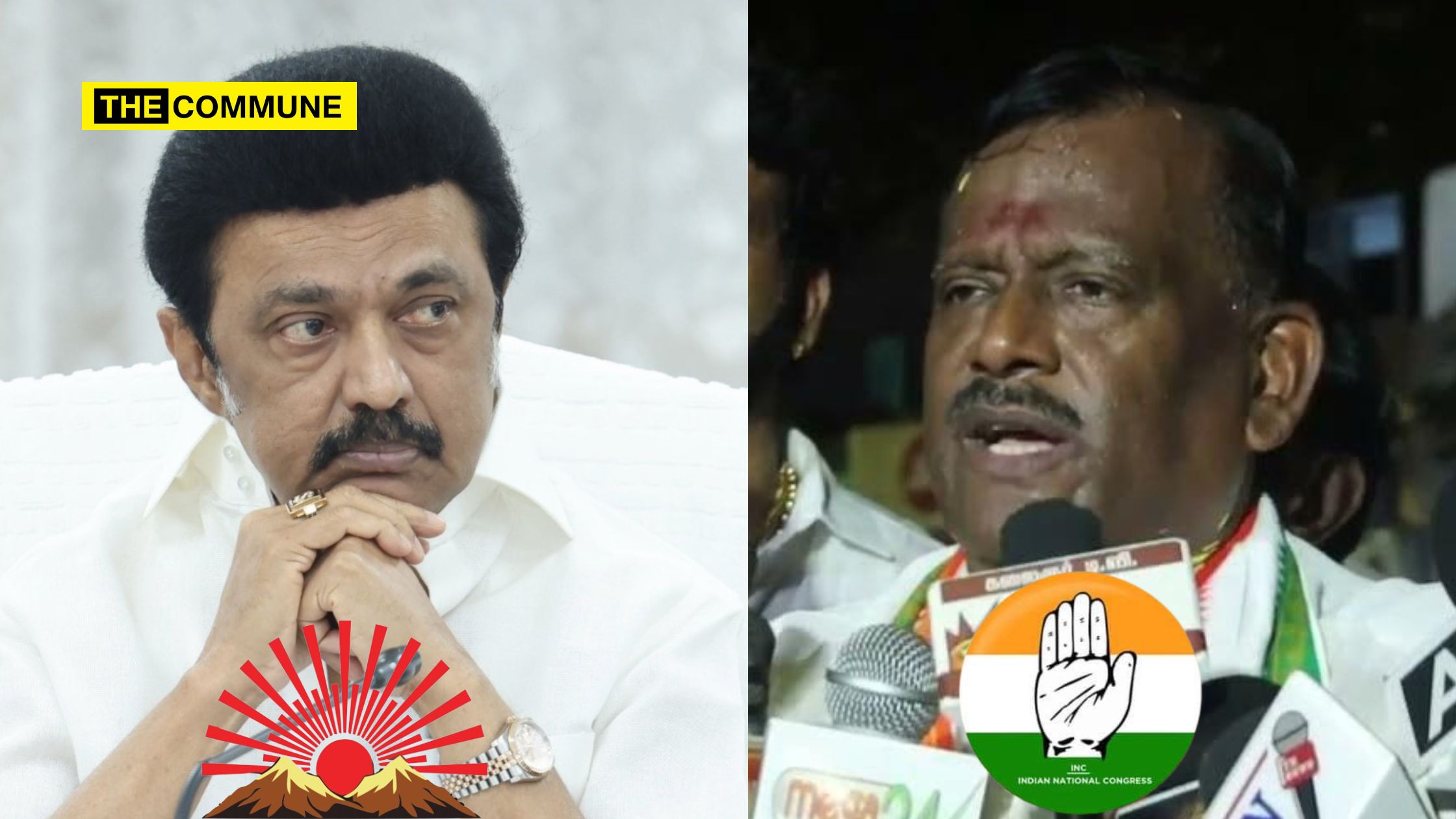
Bangladesh Turmoil: Controversial Nobel Laureate Yunus Poised To Lead Bangladesh – A Look At His Background

Controversial Nobel Laureate Yunus Poised To Lead Bangladesh after Sheikh Hasina fled.

Muhammad Yunus, the founder of Bangladesh Grameen Bank and Nobel Prize laureate, has emerged as a central figure amid a political crisis in Bangladesh. Following Prime Minister Sheikh Hasina’s resignation and the subsequent call for an interim government, the “key organisers” of the student protests that sparked the upheaval have proposed that Yunus lead the transitional administration.

This development has stirred significant attention and debate, particularly given Yunus’s contentious relationship with Hasina and his views against India’s role in the crisis.

Sheikh Hasina flees to India.

The turmoil in Bangladesh began with a violent student movement, reportedly instigated by the opposition. Under increasing pressure, Hasina resigned and fled to India. She left in a situation eerily similar to one 49 years ago when her father, Sheikh Mujibur Rahman, was assassinated in a military coup. At that time, Hasina and her sister survived because they were in Germany.

Now, once again, she has sought refuge in India, which has angered anti-Hasina factions in Bangladesh.

Muhammad Yunus

Muhammad Yunus’s name has been making the rounds since the turmoil began.

Notably, thekey organisersof Bangladesh’s student protests announced that Nobel Peace Prize laureate Muhammad Yunus should lead an interim government following Hasina’s resignation and departure. Nahid Islam (26), a sociology student who led the protest movement against quotas in government jobs, shared in a social media video post that Yunus has agreed to assume the role.

But who is Muhammad Yunus?

The Bangladesh Grameen Bank founder counts among prominent voices against Hasina and India in Bangladesh. Yunus has a contentious relationship with Hasina and has been a vocal critic of her leadership. He accused Hasina of dictatorial rulesupported by India” and has expressed discontent with India’s view of the crisis as an internal matter. Yunus, potentially poised to become the chief advisor of a new interim government, believes India should play a role in restoring democracy in Bangladesh.

Muhammad Yunus’s Criticism And Legal Troubles

His criticism of India and Hasina is not new. He claims India’s support has enabled Hasina’s extended rule.

Yunus’s controversies include a recent conviction for violating labour laws in Bangladesh. However, he remains a significant figure in some circles. Yunus has been critical of India’s non-interventionist approach during Bangladesh’s recent unrest, arguing that as a neighbouring country and SAARC member, India has aresponsibilityto help restore democracy.

What Is Yunus’s Relationship With The West

He has faced numerous legal challenges in Bangladesh, including a conviction for failing to establish a welfare fund for Grameen Telecom employees. Despite these issues, he is celebrated in the West, receiving prestigious awards like the Nobel Peace Prize, the Presidential Medal of Freedom from Obama, and the Congressional Gold Medal. These accolades have bolstered his international standing even though he has strained relations with the Awami League-led government in Bangladesh.

The Nobel laureate, known as thefatherof microcredit and founder of Grameen Bank, was interviewed by Reuters recently, revealing his aspirations to return to politics and potentially lead the government of Bangladesh. This interview portrays Bangladesh as aone-party stateunder Prime Minister Sheikh Hasina and questions the legitimacy of recent elections, claiming they were boycotted by the main opposition party, BNP, which is connected to Al Qaeda and has faced severe legal repercussions. Under Khaleda Zia and her son Tarique Rahman, the BNP has attempted unconstitutional methods to regain power, with alleged support from the Biden administration.

The interview sheds light on Yunus’ controversial history, including high interest rates on loans to poor borrowers, misuse of funds, and significant political influence. Despite his Nobel recognition, Yunus’ promises to eradicate poverty have not materialised, with many borrowers falling into deeper financial distress. Additionally, Yunus has faced criticism for his close ties with Hillary Clinton, who allegedly pressured the Bangladeshi government and World Bank to support Yunus amidst corruption investigations.

Yunus and the Clintons see this interview as part of a broader strategy to destabilise the Hasina government and promote Yunus as a political leader.

In another interview with CNN following Bangladesh PM (former) Sheikh Hasina’s resignation on 5 August 2024, Yunus expressed his desire for the military to transfer control of the country to a civilian government. He criticised Hasina and said, She has tortured us. She has made this country unlivable for people.”

Possible Impact On India-Bangladesh Relations

Yunus’s anti-India rhetoric and the possibility of him playing a vital role in a new government could strain relations between the two countries. His comments echo those of Muhammad Muizzu in the Maldives, whose anti-India stance led to deteriorating bilateral relations. The situation in Bangladesh could follow a similar trajectory if Yunus gains more influence.

With Yunus poised to lead the interim government, it remains to be seen how the relationship between India and Bangladesh will develop.

Subscribe to our channels on TelegramWhatsApp, and Instagram and get the best stories of the day delivered to you personally. 
NIA Chargesheets Four In 2022 Coimbatore Car Bombing Case; Annamalai Slams DMK’s Sluggish Handling Of Terrorism For Vote Bank Appeasement Politics

BJP Annamalai slams DMK for minority appeasement in 2022 Coimbatore blasts case. DMK for minority appeasement in 2022 Coimbatore blasts case. NIA arrests 4

The Tamil Nadu BJP president, K Annamalai, strongly criticised the DMK for downplaying the Coimbatore car bombing outside a temple in October 2022 and framing it as a mere cylinder blast for minority appeasement. He accused the DMK of using media narratives to appease minority sentiments instead of taking decisive action.

However, his comments come a day after the National Investigation Agency (NIA) arrested four persons allegedly responsible for the blasts.

NIA arrests ISIS recruiters

On 6 August 2024, the National Investigation Agency (NIA) pressed charges against four individuals in connection with an Islamic State (IS) radicalisation and recruitment case. This case was uncovered while investigating the 2022 car explosion outside the Sangameswarar Temple in Kottaimedu, Coimbatore.

The defendants, Jameel Basha, Mohammed Hussain, Irshath, and Syed Abdur Rahman, were charged under the Indian Penal Code and the Unlawful Activities (Prevention) Act. The NIA’s Chennai branch registered the case in August 2023 based on findings from the car explosion probe.

The NIA reported that the accused were involved in recruiting susceptible youth into IS to perpetrate illegal and terrorist activities. They conducted religious indoctrination at an Arabic language centre named Madras Arabic College in Coimbatore, which was later renamed Kovai Arabic College, according to an NIA press release.

Basha, the patron and chief mentor, instructed his former students to set up Arabic language centres at the district level. Hussain and Irshath established the centre in Coimbatore. The release stated that the radicalization of youth took place through social media platforms and classroom sessions, featuring live or pre-recorded sermons by Basha.

The release further mentioned, “The vehicle-borne IED attack outside the temple was part of the violent jihad endorsed by the accused. Jamesha Mubeen (deceased), who had pledged allegiance to Darul-e-Islam/IS, executed the blast as part of IS’s anti-India campaign after being radicalised by Syed Abdur Rahman.


BJP slams DMK over vote bank politics

In this context, the Tamil Nadu BJP chief criticized the ruling DMK through his official X account, stating, “The NIA has charged four more radical terrorist elements, a blight on our society, as part of the ongoing investigation into the Coimbatore suicide bombing case in October 2022. The DMK may persist in labelling it a mere cylinder blast, but today, Tamil Nadu is now suffering the consequences of electing a party that has sacrificed the state’s law and order for the sake of petty vote bank politics.”

The 2022 Coimbatore Bomb Blast Terror Attack

The 2022 Coimbatore Bomb Blast is a terrorist attack where an LPG cylinder burst inside a Maruti 800 car at around 4.30 am on 23 October 2022, causing the vehicle to explode. Jamesha Mubeen drove the vehicle carrying the improvised explosive device. The blast happened outside the famous Kottai Eshwaran Temple.

The explosion was initially believed to be an accident. However, an investigation revealed that the cylinder explosion was a terrorist attack committed by Islamic terrorists during the Diwali festival. Nails and ball bearings supposedly meant for inflicting maximum casualties were also recovered from the spot.

Investigators had recovered handwritten paper documents from Jamesha Mubeen’s house. These documents listed the popular spots in Coimbatore that they had plans to recce or were already done. Chemicals used for making crude bombs were also found at his house.

Subscribe to our channels on TelegramWhatsApp, and Instagram and get the best stories of the day delivered to you personally. 
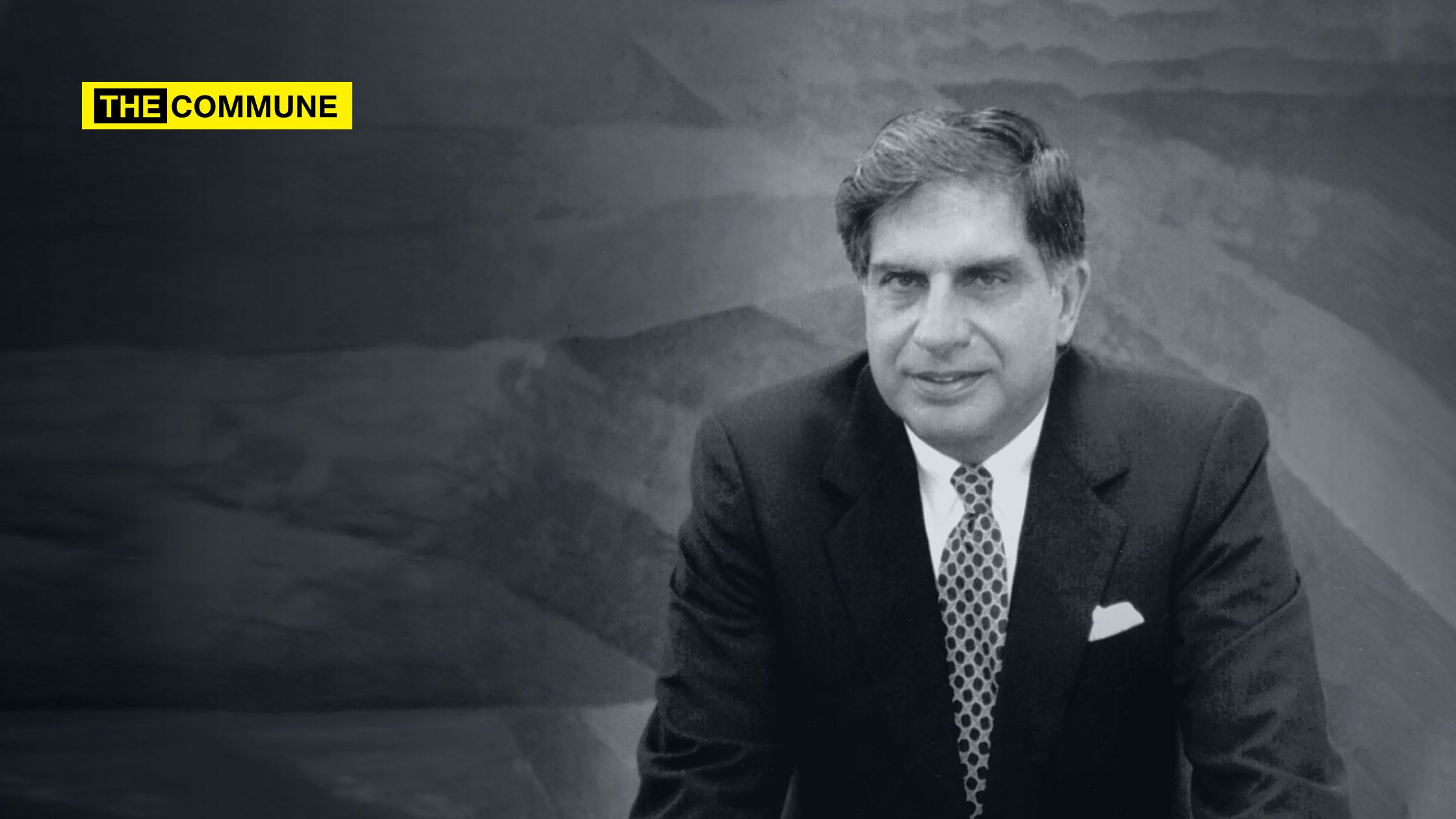
“Tamil Nationalism Is Contained In Opposing Sanatana”: VCK MP Thirumavalavan after praising Hamas

VCK MP Thirumavalavan praising Hamas

Thirumavalavan, leader of the Viduthalai Chiruthaigal Katchi (VCK) and Member of Parliament from Chidambaram, has sparked controversy once again by referring to HAMAS, the Palestinian Sunni Islamist political and military organisation, as freedom fighters. Several governments, including the United States and the European Union, have designated HAMAS a terrorist organisation.

At the book release event for Kasi Anandan’s “Breaking the Chains” (Vilangai Udaithu) on 3 August 2024, held at the Sir PT Thiyagarajan Auditorium, VCK leader Thirumavalavan began his speech by recounting how he became acquainted with the author, Kasi Anandan, an exile from Sri Lanka’s Tamil Eelam. Thirumavalavan’s speech focused on his involvement in supporting and promoting the Tamil Eelam movement. He lauded Kasi Anandan as a pioneering figure in the Tamil Eelam struggle, comparing him to LTTE chief Prabhakaran.

During the book release event for the autobiography of Tamil exile poet Kasi Anandan, Thirumavalavan delivered an extensive speech reflecting on various aspects of the book, which detailed Anandan’s life. He then shifted to a controversial discussion, arguing that religious and ethnic nationalism poses a threat to language-based nationalism, as both tend to suppress linguistic identities. To illustrate his point, he drew parallels between the situation in India and the imposition of the Sinhalese language on Tamil Eelam’s population by the Buddhist-majority government in Sri Lanka.

Thirumavalavan asked, “What is the true enemy of Tamil nationalism? Is it Telugu nationalism, Kannada nationalism, Malayalam nationalism, or Indian nationalism?” He elaborated, “We should understand the basics that Indian nationalism opposes linguistic-based nationalism, and conversely, linguistic-based nationalism stands in opposition to Indian nationalism. Indian nationalism will never accept the emergence of distinct national identities based on linguistic groups such as Kannadigas, Malayalis, Telugu, Tamils, Marathis, and Gujaratis. Similarly, fundamentalists also reject linguistic-based nationalism. Therefore, how can Telugu nationalism be an enemy of Tamil nationalism? It simply cannot be.”

He then clarified that, without directly naming Indian nationalism, the real threat to Tamil nationalism is any form of nationalism that denies linguistic-based identity, national and ethnic rights, state rights, and state autonomy. He drew a parallel to Sri Lanka, where Buddhist Sinhalese nationalism is viewed as the adversary to Tamil nationalism.

Later, the VCK MP asserted, “Tamil nationalism is contained in opposing Sanatana, Tamil nationalism is contained in egalitarian politics, Tamil nationalism is contained in Women’s freedom.”

At the same event, Chidambaram MP Thirumavalavan claimed that Indira Gandhi’s Congress party had supported the LTTE militants by providing warfare assistance and weapons training, which significantly bolstered their movement. He argued that successful liberation wars typically require strong backing from a sovereign government. Thirumavalavan noted that Hamas’s ongoing struggle is similarly supported by a sovereign government, which plays a crucial role in such conflicts. He emphasized that even if a militant organization operates independently, it benefits from the support of a sovereign government to achieve its objectives.

Thirumavalavan said, “The liberation struggle has been won only by the support of any government to the liberation movements at the global level. Today, if we say that the Hamas organisation is fighting against the country Israel means it is a fact that they cannot fight this as a group, we should understand that they are supported by some sovereign government. So, whether it is Eelam liberation struggle or any national liberation struggle, even if the liberation movement is strong enough to run alone, the liberation movement and the militants needs the favor of the government in some corner of the world, it needs their support.”

Later he said, “So if we ask which country’s support is essential for us first, the bitter truth is India’s support.”

(This speech was not included in the full video on YouTube or in the MP’s posts on X but was featured in one of his Facebook posts)

Who is HAMAS?

Hamas, short for “Harakat al-Muqawama al-Islamiya” (Islamic Resistance Movement), is a Palestinian Sunni Islamist political and military group that has governed parts of the Gaza Strip since 2007. Founded by Palestinian imam Ahmed Yassin in 1987, Hamas emerged from his 1973 Islamic charity, Mujama al-Islamiya, which was affiliated with the Muslim Brotherhood.

In the 2006 Palestinian legislative elections, Hamas won a majority in the Palestinian Legislative Council by promising to combat corruption and advocating for resistance against Israeli occupation. Following the Battle of Gaza in 2007, Hamas took control of the Gaza Strip from the rival Fatah faction and has since governed the area independently of the Palestinian National Authority. In response, Israel intensified its blockade of Gaza, and Egypt also began its own blockade in 2007. This has led to multiple conflicts with Israel, including major clashes in 2008-09, 2012, 2014, 2021, and 2023.

Initially, Hamas sought to establish a state in all of Mandatory Palestine, but by 2005-2007, it began to accept the 1967 borders in agreements with Fatah. A 2017 charter supported a Palestinian state within these borders while not recognising Israel. Despite offering long-term truce proposals based on the 1967 borders, some view Hamas’s long-term goal as still seeking a single state over the entire former Mandatory Palestine. The 2017 charter removed antisemitic language from its 1988 predecessor, focusing instead on a struggle against Zionism rather than Judaism.

Hamas has engaged in extensive armed conflict with Israel, attacking civilian targets and launching rockets. The conflict involves issues such as the Israeli occupation, Jerusalem’s status, Israeli settlements, and Palestinian rights. On 7 October 2023, Hamas launched a significant attack on Israel, resulting in the deaths of 1,139 people and the capture of approximately 250 Israeli civilians and soldiers. Several countries, including Australia, Canada, Israel, Japan, New Zealand, the United Kingdom, and the United States, have designated Hamas as a terrorist organisation due to its militant activities. In 2018, a UN motion to condemn Hamas was not passed.

Subscribe to our channels on TelegramWhatsApp, and Instagram and get the best stories of the day delivered to you personally.