DMK supporters, Dravidianists, Dravidian stocks – whatever you call them, they start having a meltdown when there is a Brahmin in the picture. Their meltdown reached new heights when two Brahmin MLAs were elected by the people. And to add to insult to their injury, the two ministers have been inducted as ministers in the newly formed TVK government led by Joseph Vijay.
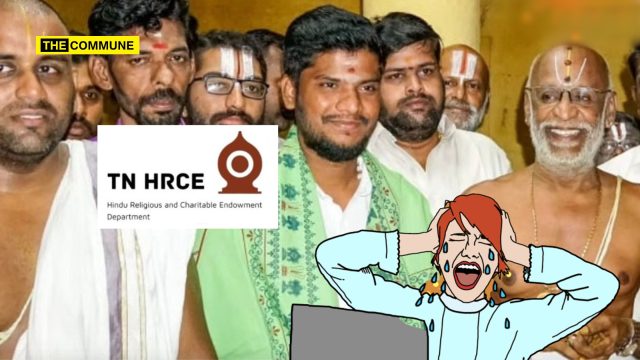
On 21 May 2026, Ramesh who won the election from Srirangam, a Brahmin from reportedly humble background, was sworn in as the minister for Hindu Religious & Charitable Endowments Department (HR&CE).
Ramesh is not an unelected outsider parachuted into office. He is the elected MLA from Srirangam, having won the 2026 Assembly election for Tamilaga Vettri Kazhagam by a margin of 33,590 votes, polling 1,03,235 votes against the DMK’s S. Durairaj. Yet the online reaction to his appointment has been marked by alarm, sarcasm and caste-coded hostility, with the Dravidianists framing the move as if temple administration itself has been handed over to a hostile force.
For decades, Dravidian parties and their ecosystem claimed they were expanding democracy by dismantling hereditary and caste monopoly in public institutions. But the outrage now surfacing suggests that equality has an invisible ceiling: representation is celebrated only when it excludes the so-called “wrong” community.
Here are some of the reactions.
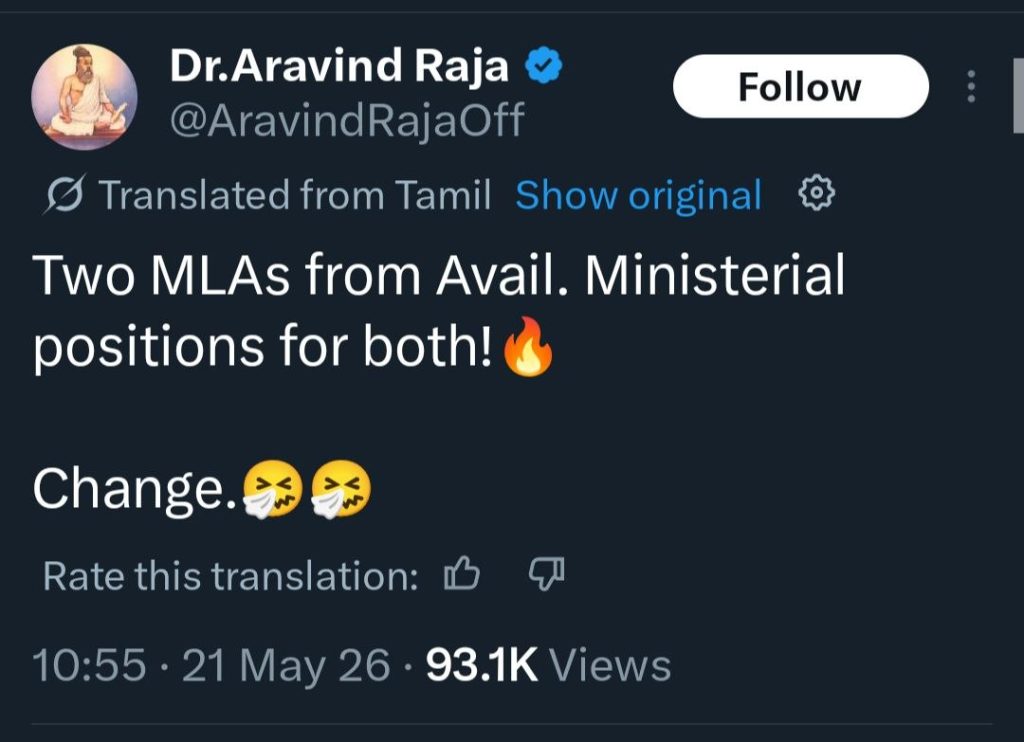
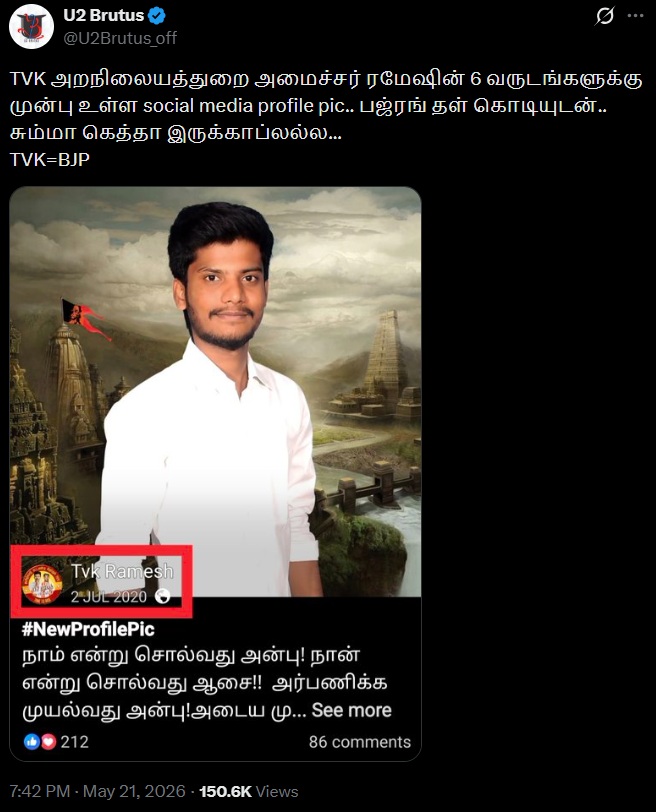
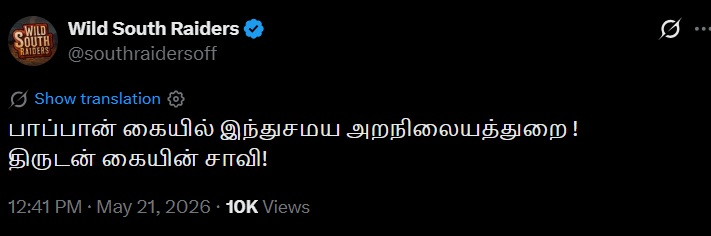
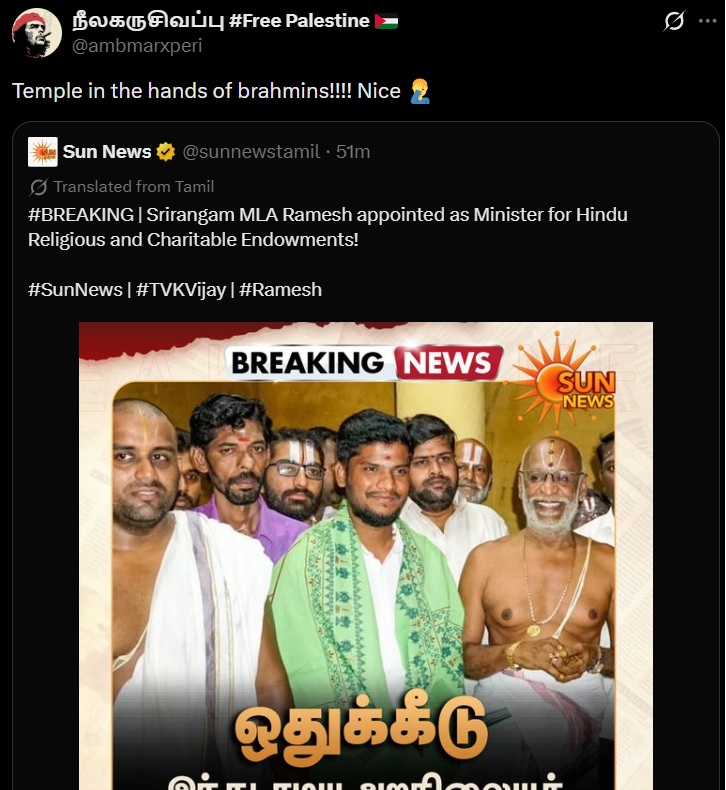
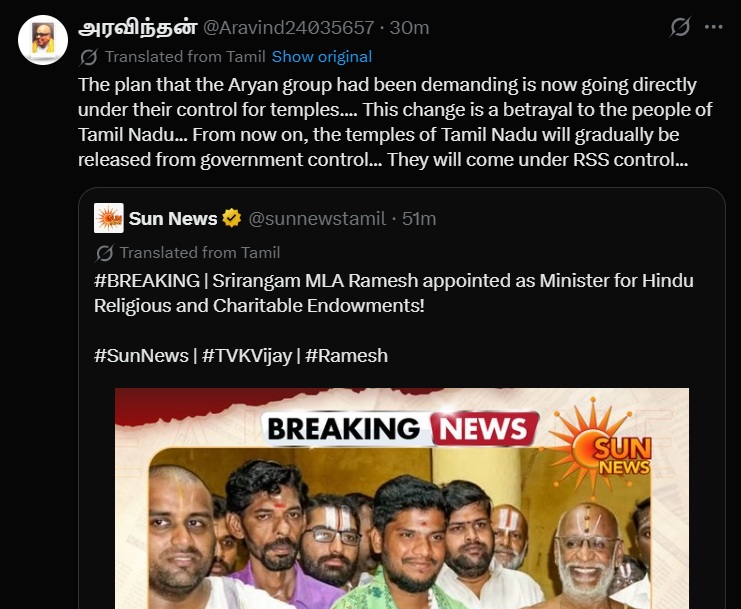
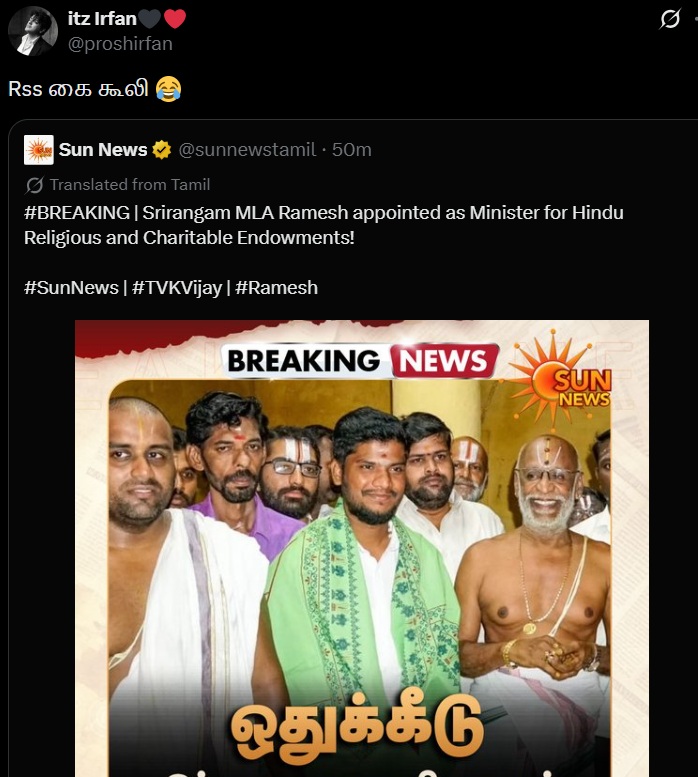
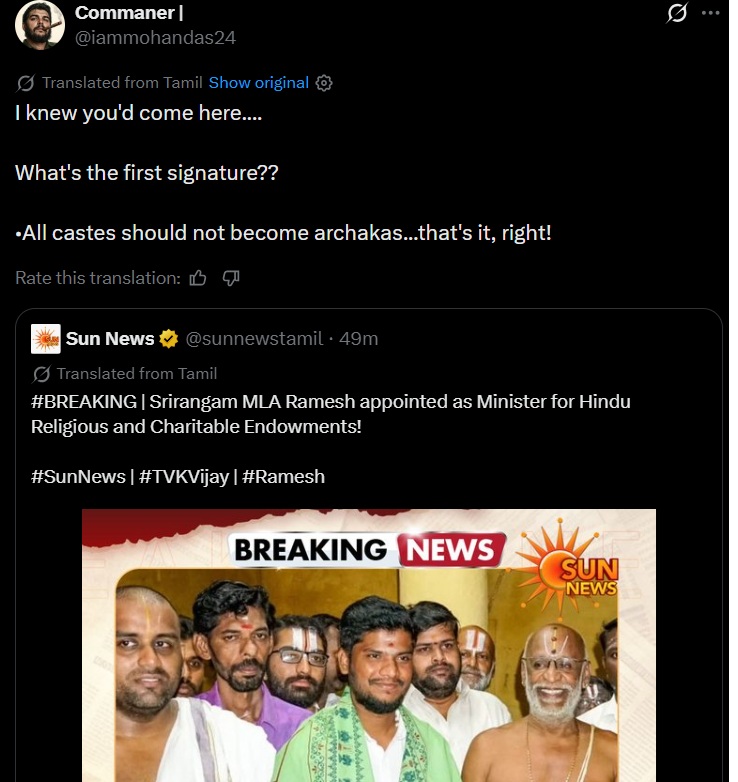
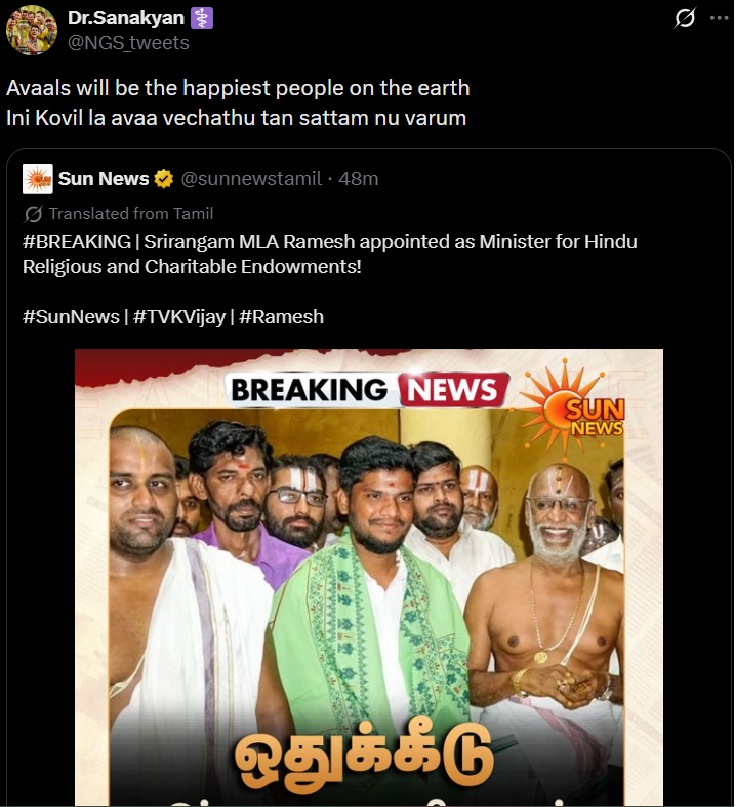
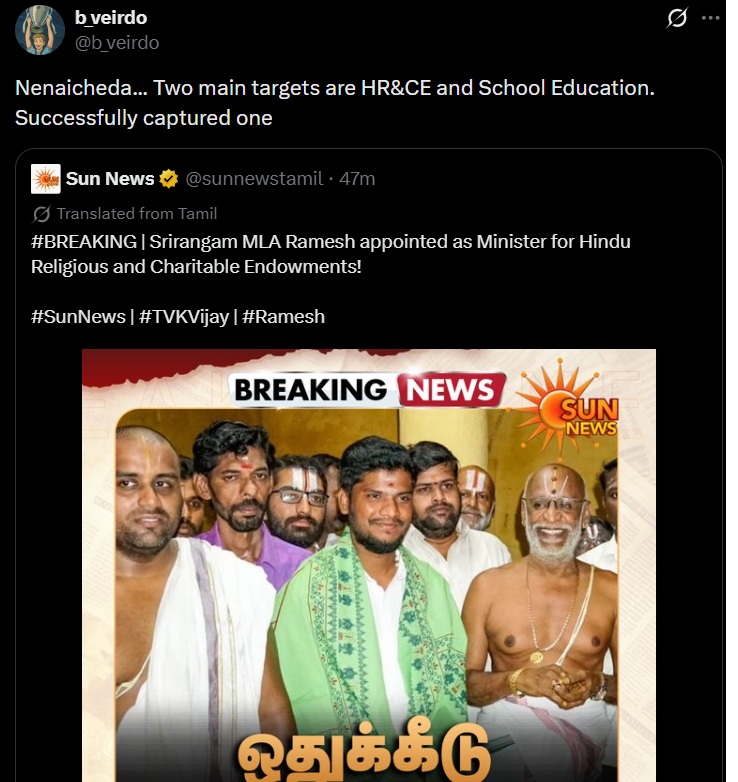
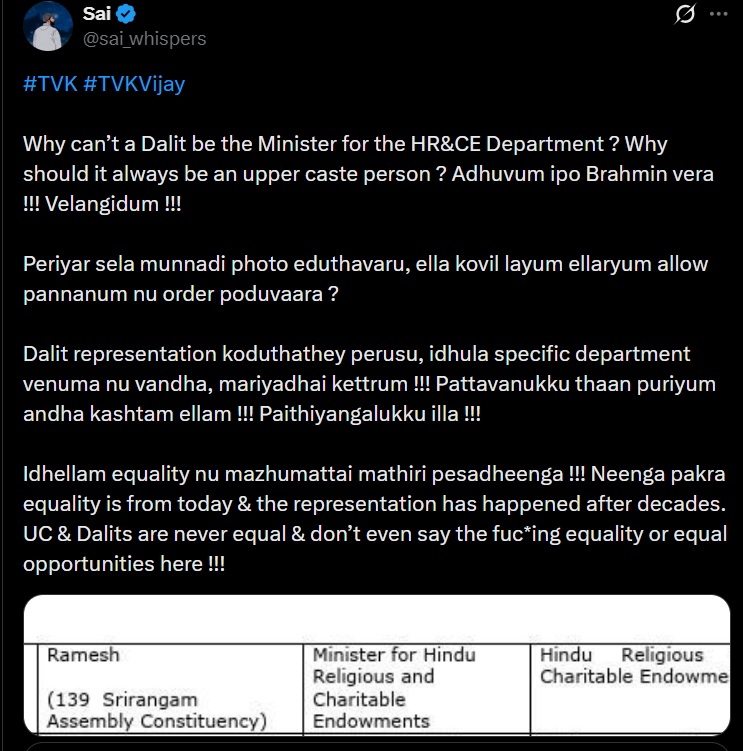
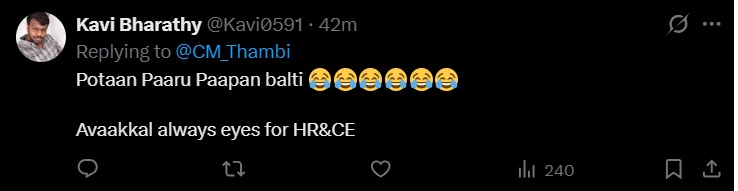
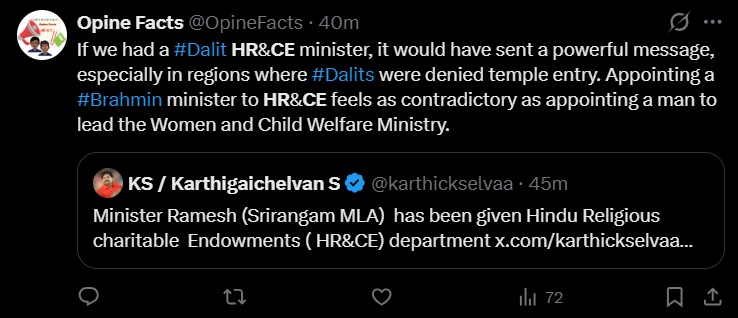
The reaction also carries a contradiction. The same political culture that routinely speaks the language of social justice is now unable to tolerate the simple fact that an elected Brahmin legislator can hold ministerial responsibility in a democratic government. In practice, this turns anti-dominance politics into something else entirely: not the removal of hierarchy, but the normalization of exclusion.
It is less a debate over one man or one file and more a test of whether Tamil Nadu’s political class can accept genuinely broad representation, or whether some sections still believe that the Brahmin community may vote, contest and win, but should never be allowed to govern certain institutions.
Subscribe to our channels on WhatsApp, Telegram, Instagram and YouTube to get the best stories of the day delivered to you personally.