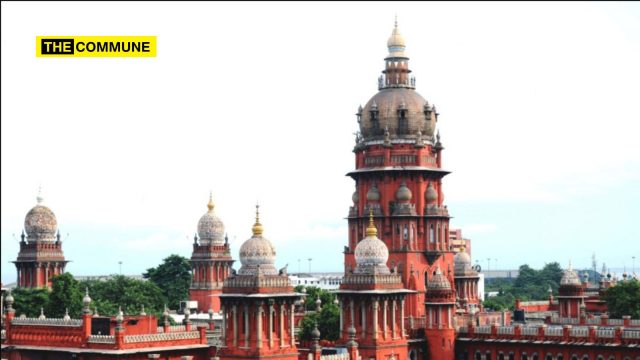
Madras High Court on Wednesday, 20 May 2026, agreed to hear a public interest litigation (PIL) challenging a Tamil Nadu government order permitting surplus temple funds to be deposited with two State-controlled non-banking financial companies (NBFCs), raising serious concerns over financial risk and statutory compliance, as reported in Bar and Bench.
The PIL, filed by petitioner TR Ramesh, challenges a Government Order dated 17 February 2026, issued by the DMK-led State government. The order amended the Religious Institutions (Custody, Investments and Lending or Borrowing of Moneys) Rules, 1963, allowing temple surplus funds to be invested in Tamil Nadu Power Finance and Infrastructure Development Corporation Limited and Tamil Nadu Transport Development Finance Corporation Limited.
A Division Bench comprising GR Swaminathan and V Lakshminarayanan expressed sharp reservations during the hearing, questioning the rationale behind routing temple funds into these NBFCs.
“TANGEDCO is also empty, huh? Then you are planning to empty the temple along with it?” the Bench orally remarked, indicating concern over the financial health of State-linked entities.
The petitioner argued that the amendment violates Section 116 of the Tamil Nadu Hindu Religious and Charitable Endowments Act, 1959, which restricts the State’s rule-making powers to safeguarding temple properties. According to the plea, the government has effectively converted temple funds into a financing source for its own corporations.
The petition further contended that the amendment is arbitrary and violates Articles 14, 25, and 26 of the Constitution. It pointed out the absence of safeguards such as credit rating thresholds, depositor protection mechanisms, or risk assessment frameworks.
Serious concerns were raised about the financial condition of the two NBFCs. The petitioner stated that TNPFC carries a BBB(-) credit rating and has faced multiple audit flags, including misclassification of deposits, understatement of liabilities, overstated profits, and disputed tax liabilities exceeding ₹850 crore.
Similarly, TNTDFC was said to be facing structural financial stress, including a going-concern qualification, heavy exposure to loss-making State Transport Undertakings, unresolved RBI inspection issues, and liquidity risks.
The plea also alleged that temple deposits were being classified as “other deposits” instead of public deposits to bypass RBI-imposed limits on deposit-taking by NBFCs.
During the hearing, Senior Advocate Ravi Seshadri, appearing for the petitioner, submitted that these NBFCs were not previously approved institutions for temple fund deposits. He also informed the Court that a legal notice had been issued on January 19, 2026, following which the State introduced the amendment.
The Bench questioned why temple funds could not continue to be placed with safer options such as scheduled banks or cooperative banks.
“Co-operative bank, scheduled district co-operative bank, okay. Why this Tamil Nadu Transport Development Corporation, other Finance Corporation?” the Court asked.
The petitioner further pointed out that there is no explicit government guarantee backing these deposits. He also highlighted that nearly 92 percent of TNPFC’s deposit portfolio is linked to Tamil Nadu Generation and Distribution Corporation, raising concerns over concentration risk.
An interim application in the case has sought directions to restrain the State and the Hindu Religious and Charitable Endowments (HR&CE) Commissioner from depositing or renewing temple funds in NBFCs or instruments rated below AAA.
The petitioner warned that approximately ₹2,700 crore worth of deposits is due for renewal shortly and urged the Court to intervene to prevent further exposure.
The Court declined to pass interim orders immediately but indicated that it would take up the matter for final disposal next week. It directed that the concerned officials be informed about the pendency of the writ petition and the interim application.
Subscribe to our channels on WhatsApp, Telegram, Instagram and YouTube to get the best stories of the day delivered to you personally.