The hypocrisy of the United States is evident when it comes to its national interests. It often acts like a dictator, telling other sovereign nations what to do, yet when those nations pursue their own interests, the US suddenly champions democracy and freedom of speech and what not!
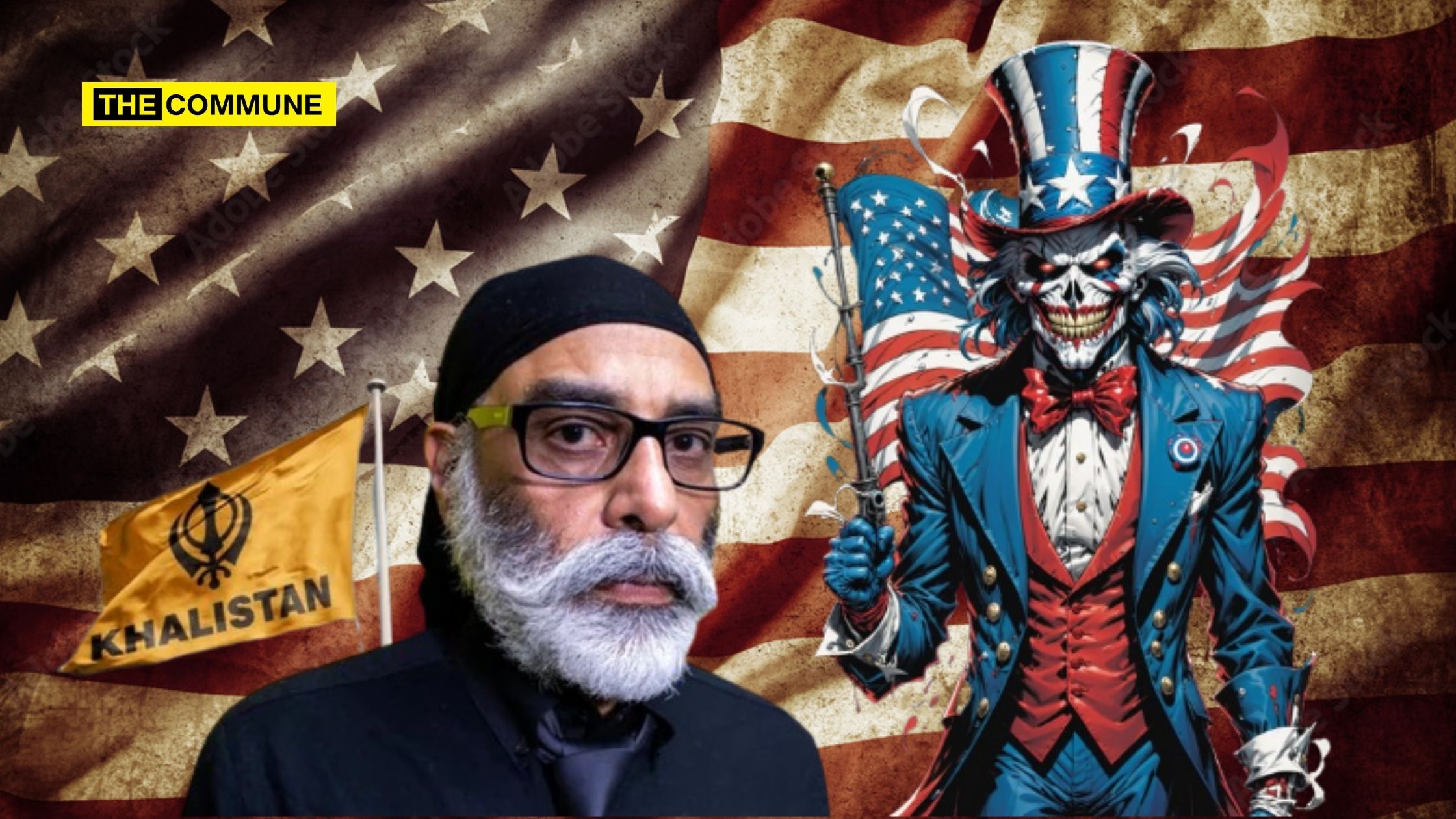
What’s even more concerning is that the US is currently harboring the terrorist Gurpatwant Singh Pannun, the leader of Sikhs for Justice (SFJ), a US-based terrorist group advocating for a Sikh state called Khalistan in India. Ironically, the US has previously taken action against terrorists on foreign soil, even using Navy SEALs to eliminate threats. Now, it supports a terrorist as its citizen while accusing India of plotting murder against him.
Despite Gurpatwant Singh Pannun, a Khalistani terrorist, openly threatening India on multiple occasions, the United States still refers to him as a “victim and activist.” He has made alarming threats in videos, including calls to blow up Air India aircraft and demands for Hindus to leave the US and Canada. Nevertheless, he remains unpunished in both countries, enjoying protection as a dual citizen of the US and Canada. In contrast, the US Justice Department has announced criminal charges against Vikash Yadav, a former Indian government employee, accusing him of attempting to orchestrate a failed plot to kill Pannun. This double standard is deeply troubling.
Here’s the list of instances where the U.S. has eliminated terrorists on foreign soil
Anwar al-Awlaki (2011): The U.S. conducted a drone strike in Yemen that killed the American-born al-Qaeda cleric. He was the first American to be hunted and killed without trial by his own government since the Civil War.
Osama bin Laden (2011): The U.S. conducted a raid in Abbottabad, Pakistan, leading to the death of the al-Qaeda leader.
Abu Muhammad al-Adnani (2016): The spokesperson for ISIS was killed in a U.S. airstrike in Aleppo, Syria.
Abu Bakr al-Baghdadi (2019): The leader of ISIS was killed during a U.S. special operations raid in Idlib, Syria.
Jamal al-Badawi (2019): The U.S. killed the key suspect in the USS Cole bombing in a drone strike in Yemen.
Qassem Soleimani (2020): The Iranian general was killed in a U.S. drone strike near Baghdad International Airport in Iraq.
Ayman al-Zawahiri (2022): The al-Qaeda leader was killed in a U.S. drone strike in Kabul, Afghanistan.
Who is Gurpatwant Singh Pannun?
Gurpatwant Singh Pannun is a main figure in the Khalistan movement, which seeks to establish a separate state based on religious identity, carved out from Punjab and surrounding regions in India, to be called Khalistan. He serves as the legal advisor and spokesperson for Sikhs for Justice (SFJ), a US-based terrorist group advocating for this separate Sikh state.
In July 2020, the Ministry of Home Affairs of India designated Pannun as a terrorist due to charges of sedition and secessionism, and has sought an Interpol red notice for his arrest.
Pannun’s Threats To India
In September 2024, Gurpatwant Singh Pannun, leader of the banned group Sikhs for Justice (SFJ), made threats to Hindus in Canada, urging them to return to India. In a video, he declared, “Indo-Canadian Hindus, you have abandoned your allegiance to Canada and its Constitution. Your place is in India. Leave Canada and go home.”
In October 2023, Pannun released a video threatening a “Hamas-like” attack on India. He warned Prime Minister Narendra Modi to “learn from the Israel-Palestine conflict,” suggesting that a similar response could occur in India. He stated, “We will carry out a Hamas-like attack on India,” adding that if India continues to “occupy” Punjab, there would be consequences, and “India and PM Modi will be responsible for it.”
On 4 November 2023, Pannun urged Sikhs to avoid flying on Air India flights after 19 November, citing potential threats to their safety. He ominously claimed that the Indira Gandhi International Airport (IGIA) would be closed on that date.
In January 2024, he issued a direct challenge to PM Modi, daring him to attend the Republic Day parade without security. “I dare Modi to come to Delhi on R-Day without protection. If you are a popular leader, show up unguarded, and SFJ will avenge the assassination of Shaheed Nijjar by raising the Khalistan flag,” he threatened in a video.
Additionally, he threatened to disrupt the Indian stock markets on 12 March to harm “India’s economy.”
Following PM Modi’s visit to the US in September 2024, Pannun released a video message urging Indians to return with Modi. He stated, “Take your Indo-Americans back to India. Those who organized and funded the event are followers of Modi’s Hindutva ideology.”
Pannun has been on the radar of India’s National Investigation Agency (NIA) since 2019, when the agency registered its first case against him. Despite his numerous threats and ongoing investigations, both the US and Canada continue to provide him protection.
Notably, Pannun acknowledged that his group, SFJ, has been in contact with Canadian Prime Minister Justin Trudeau’s office, sharing information against India in the aftermath of his aide Hardeep Singh Nijjar’s killing. He made these claims during an interview with CBC News, stating he provided Trudeau with details about what he called India’s spying network in Canada.
Subscribe to our channels onTelegram, WhatsApp, and Instagram and get the best stories of the day delivered to you personally.
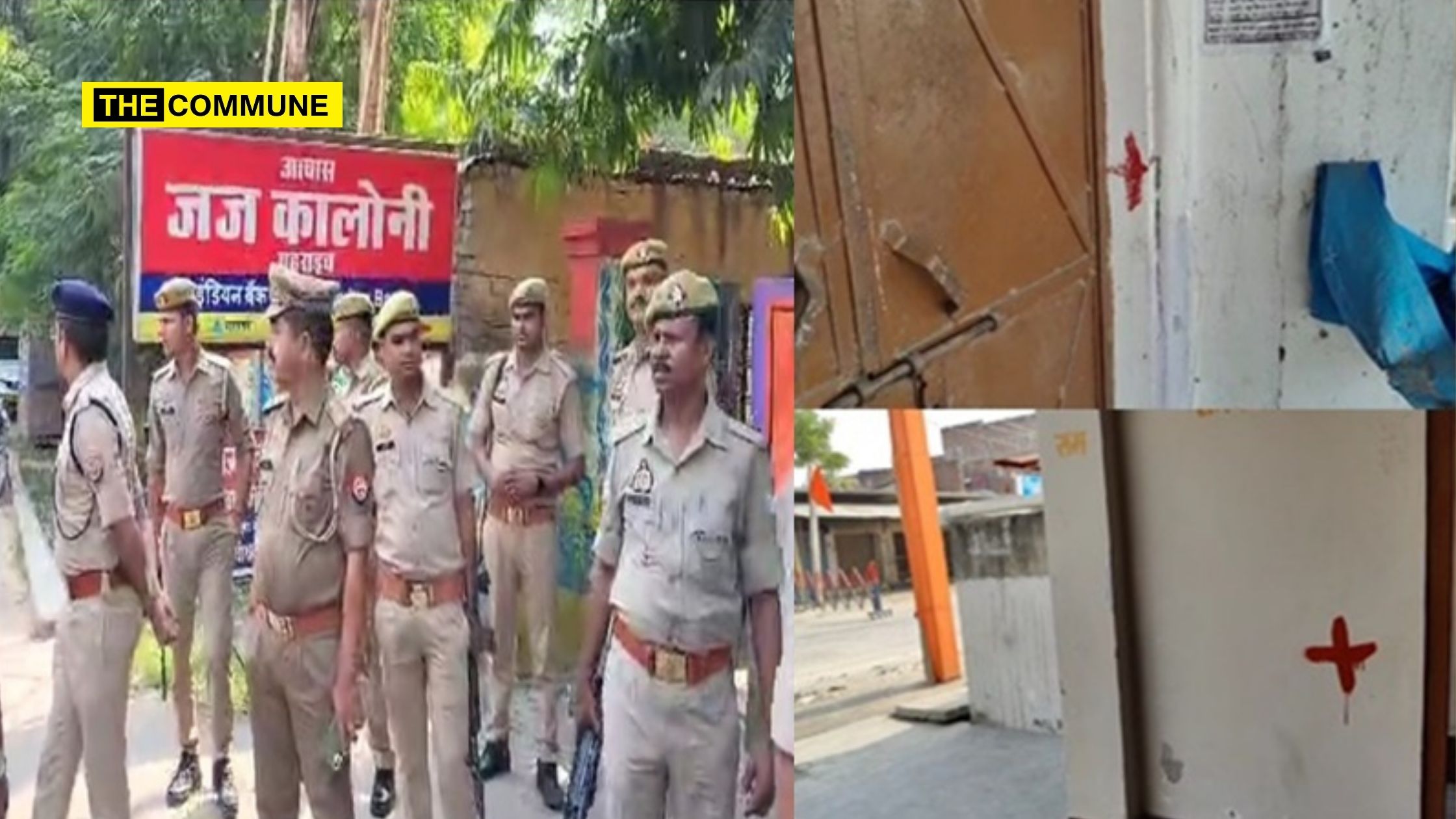
In a significant move, the Public Works Department (PWD) has marked a couple of houses in Bahraich with red signs.
The houses which have been marked in the red include that of key accused Sarfaraz and others, believed to have been involved in the murder of Ram Gopal Mishra.
Bahraich police have apprehended more than 52 individuals till date, in connection with 11 separate cases filed after the incident. The move to mark houses in the red comes almost a week after the communal violence shook Bahraich’s Maharajganj (October 13) and is being seen as a precursor to bulldozer action.
The main accused Sarfaraz was gunned down in a police encounter on Thursday while attempting to flee to Nepal. The marking of homes has sparked widespread fear and anxiety among the locals, particularly those whose houses have been tagged. Many residents are in a state of panic, fearing the demolition of their homes.
A woman named Mahmoodan claimed that her husband was taken away by police without giving any valid reason. “We were sitting quietly when they suddenly dragged him away without saying a word. He was forcibly taken, beaten, and hasn’t been released yet.”
Other residents are also anxious and worried about the chaos and unrest after Bahraich communal violence and claim that the unruly crowd is ransacking their houses.
One woman, whose husband escaped arrest by the police said, “He ran away after panicking. He is 60 years old, and I have no information on whether he is dead or alive. I’m worried because I have small children, and I don’t know how to handle this situation.”
Another woman voicing fears about the recurring unrest said, “People break into my house anytime and cause destruction. Where am I supposed to go? My grandchildren are unwell, and I can’t even find their medication. What should I do?” Bahraich witnessed a heated argument between two communities during the Durga idol immersion procession on October 13, which later intensified into a communal flare-up and violent clashes.
Ram Gopal Mishra, a 22-year-old man was shot dead by other community members in the Mahrajganj area in Bahraich’s Mansoor village, leading to widespread demonstrations and protests.
The state government promised stern action against the accused and nabbed key accused Sarfaraz and his associate Talib, while the duo tried fleeing to Nepal.
–IANS
Subscribe to our channels on Telegram, WhatsApp, and Instagram and get the best stories of the day delivered to you personally.
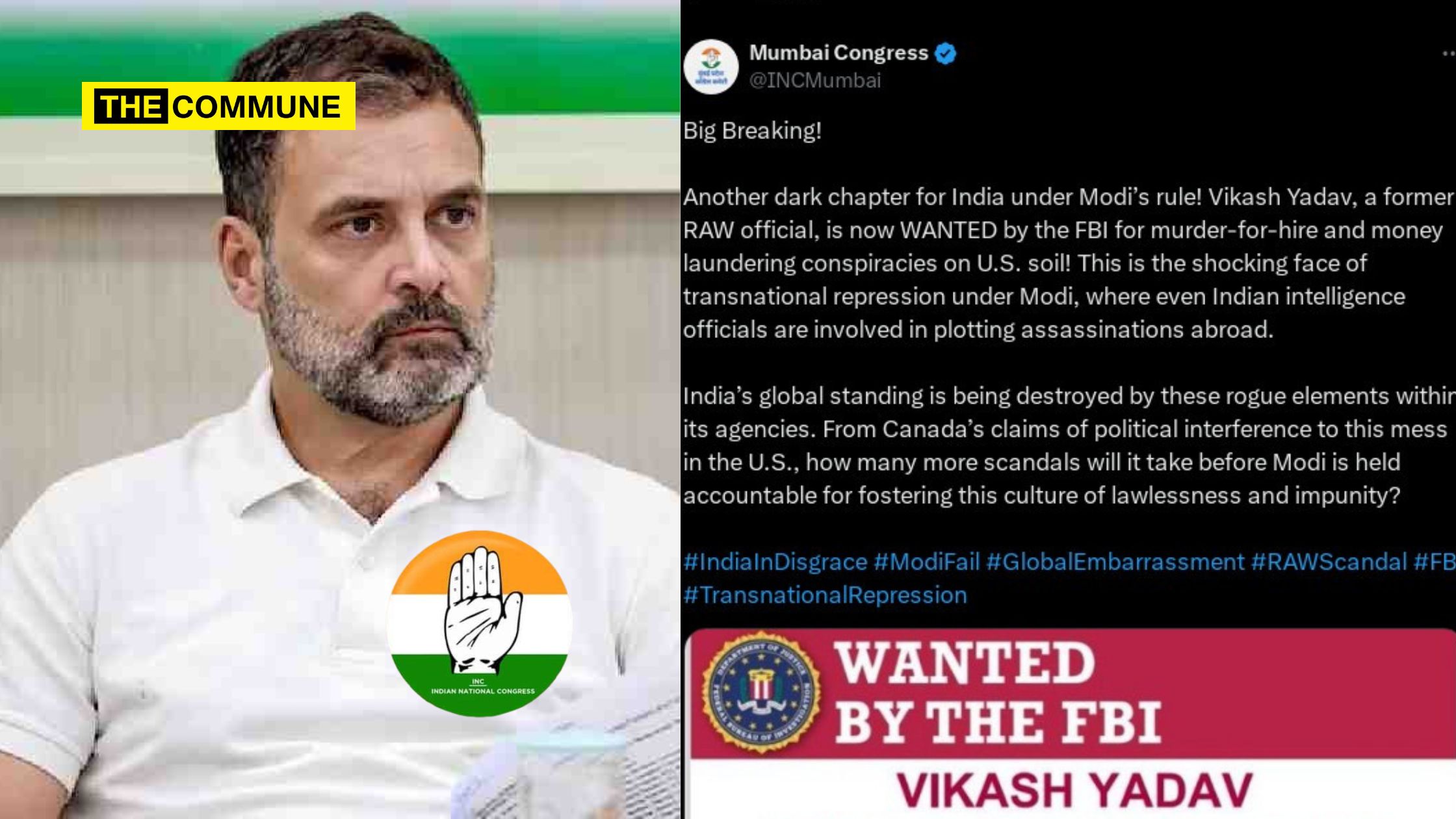
The age-old Indian National Congress appears to struggle with the notion of India as a proud nation on the global stage. Whenever they have the opportunity, their party leaders and common cadres express anti-India sentiments and often support foreign interests over domestic ones. This was evident in a recent post shared by the Mumbai Congress, which ridiculed India for the FBI wanting Vikash Yadav, a former RAW official, instead of questioning the foreign motives and not understanding what RAW specializes in or the implications behind the actions of the USA.
Despite the Ministry of External Affairs (MEA) confirming that Vikash Yadav, the individual named in the U.S. Justice Department’s indictment, is no longer employed by the Indian government, the Congress party seized the opportunity to criticize India and the Modi government. Yadav, a former Indian government employee, is alleged to have been involved in a plot to assassinate Khalistani terrorist Gurpatwant Singh Pannun, a U.S. citizen, according to the Federal Bureau of Investigation (FBI). The Congress party described this situation as a “dark chapter” for India.
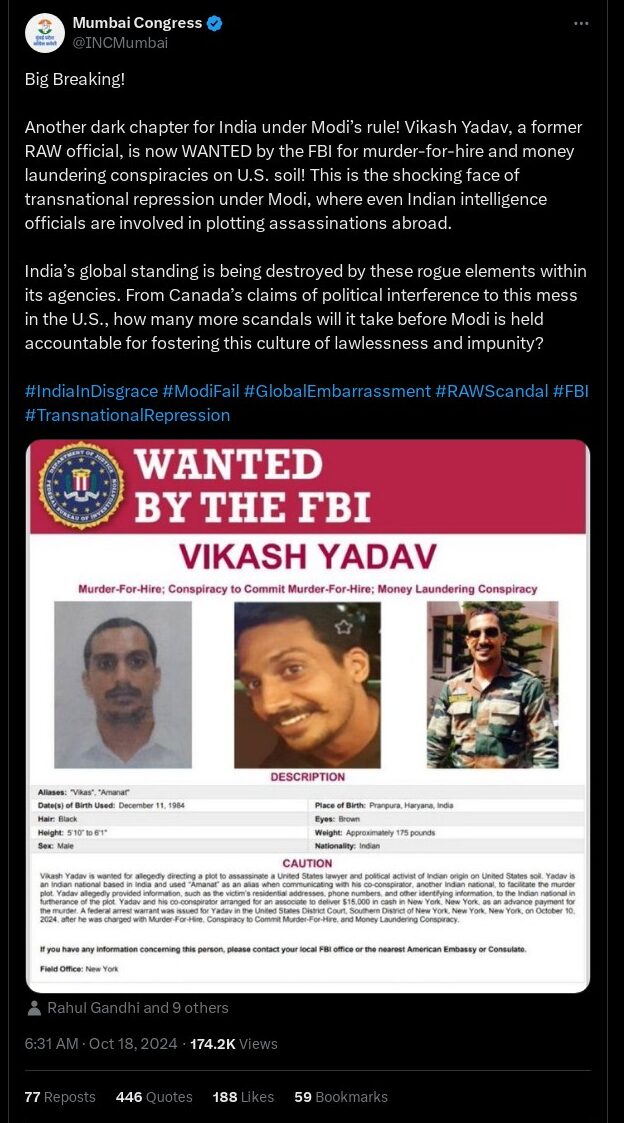
On 18 October 2024, the Mumbai Congress shamelessly posed a question through its official X account, stating, “Big Breaking! Another dark chapter for India under Modi’s rule! Vikash Yadav, a former RAW official, is now WANTED by the FBI for murder-for-hire and money laundering conspiracies on U.S. soil! This is the shocking face of transnational repression under Modi, where even Indian intelligence officials are involved in plotting assassinations abroad. India’s global standing is being destroyed by these rogue elements within its agencies. From Canada’s claims of political interference to this mess in the U.S., how many more scandals will it take before Modi is held accountable for fostering this culture of lawlessness and impunity?”
Who Is Vikash Yadav?
Vikash Yadav, born in Haryana in 1984, is named in a wanted poster by the FBI as the second Indian implicated in a conspiracy. He is also known by the names Vikas and Amanat, used to communicate with co-conspirator Nikhil Gupta, who has pleaded ‘not guilty’ to the charges. The U.S. Justice Department states that Yadav was employed by the Cabinet Secretariat, which includes the Research and Analysis Wing (RAW) of India’s foreign intelligence service. Yadav has described his role as a “senior field officer,” responsible for “security management” and “intelligence.” He has also mentioned prior service in India’s Central Reserve Police Force, along with officer training in “battle craft” and “weapons.”
What Is Vikash Yadav Accused Of?
According to the U.S. Department of Justice, Yadav allegedly recruited Gupta to plan the assassination of Khalistani terrorist Gurpatwant Singh Pannun. Under Yadav’s direction, Gupta contacted someone he believed to be a criminal associate, who was actually a confidential source working with the DEA, for help in hiring a hitman to kill Pannun in New York City. This source introduced Gupta to a supposed hitman, who turned out to be an undercover DEA officer. Yadav purportedly agreed to pay the undercover agent $100,000 for the murder. On or around June 9, 2023, Yadav and Gupta arranged for an associate to deliver $15,000 in cash as an advance for the assassination, which was handed over in Manhattan.
Yadav allegedly provided Gupta with personal information about Pannun, which Gupta relayed to the DEA undercover agent. Yadav instructed Gupta to give regular updates on the plot, which Gupta did by sending surveillance photos of Pannun. Gupta urged the undercover agent to carry out the murder promptly but specifically requested that it not occur during the official state visit of the Indian Prime Minister to the U.S.
Following a related murder, Gupta told the undercover agent that there were “so many targets,” implying that they could proceed without delay. Yadav then sent Gupta a news article about Pannun, emphasizing that the mission was now a “priority.”
What Are The Charges Against Vikash Yadav?
Yadav and Gupta face multiple charges, including murder-for-hire, which carries a maximum penalty of 10 years; conspiracy to commit murder-for-hire, also with a maximum penalty of 10 years; and conspiracy to commit money laundering, which could lead to a maximum of 20 years in prison. A federal district court judge will determine the sentence, taking into account U.S. Sentencing Guidelines and other relevant factors.
The U.S. Justice Department has clarified that an indictment is merely an allegation and that all defendants are presumed innocent until proven guilty in court. Gupta, who was extradited from the Czech Republic, has pleaded ‘not guilty.’ In response to the security concerns raised by the U.S. government, India has established a high-level inquiry committee, with the Ministry of External Affairs emphasizing the seriousness of such inputs as they relate to national security interests.
Anti-India Stance Of Congress
The Congress manifesto for Jammu and Kashmir, which calls for the restoration of Article 370 and full statehood, garnered praise from Pakistan’s Defence Minister Khawaja Asif. He remarked, “The alliance has made the restoration of Article 370 a key election issue. Pakistan and the Congress-National Conference alliance are aligned on reinstating Articles 370 and 35A in Jammu and Kashmir.” Despite the fact that Article 370 and the Kashmir issue were considered settled matters, Congress continues to stoke the flames of this controversy.
Whenever Congress embarks on foreign visits, they often find themselves embroiled in controversy due to their inclination to engage with anti-Indian sentiments. During a recent trip in September 2024, Congress leader Rahul Gandhi faced sharp criticism for meeting and engaging with Pro-Pakistani Ilhan Omar in the United States. Omar has a history of introducing anti-India resolutions in Congress (US Parliament), opposing the abrogation of Article 370, and violating India’s sovereignty by visiting Pakistan-occupied Kashmir on a trip funded by Pakistan. Additionally, she met with Imran Khan and others to discuss issues like “Islamophobia” in India.
Following the Pulwama terrorist attack in 2019, several Congress leaders faced criticism for questioning the government’s retaliation and advocating for dialogue with Pakistan. More recently, in April 2023, the party called for a White Paper on the Pulwama attack, seeking transparency and accountability regarding the incident.
Subscribe to our channels on Telegram, WhatsApp, and Instagram and get the best stories of the day delivered to you personally.
The family of a life insurance policyholder cannot be denied a claim after his or her death on the grounds of non-disclosure of pre-existing health conditions if the so-called “suppressed information” is not related to the cause of death, the National Consumer Commission has ruled.
The apex consumer court’s judgment promises to offer relief to the kin of thousands of life insurance policyholders who are denied insurance claims on flimsy grounds. Justice Sudip Ahluwalia, presiding member, the National Consumer Disputes Redressal Commission (NCDRC), delivered the decision against Bajaj Allianz Life Insurance Company which had challenged a verdict of the State Consumer Commission in favour of the family of deceased Delhi resident Sunil Kumar.
“In this case, Sunil Kumar’s death was due to natural causes, and not due to diabetes or the bypass surgery he had allegedly undergone,” the National Commission said in a recent order, rejecting the insurance company’s allegation that he made a false declaration about his health condition in the Insurance Proposal Form submitted by him for taking the life insurance cover for ₹3 lakh in 2007.
The insurance company can now challenge the NCDRC decision in the Supreme Court. The National Commission rejected the company’s claim that Sunil Kumar did not disclose pre-existing medical conditions, which was why it rejected the claim.
The company had claimed that in the proposal form, Sunil Kumar stated nothing about any disease/disorder of the Cardio Vascular System and also represented that he had not received any medical advice, nor undergone any advanced medical tests or investigation in the last five years, nor had taken any medical advice on health, or care in the hospital.
The National Commission accepted the contention of Sunil Kumar’s wife Anju Kumari who, citing an earlier decision of the Commission, claimed that the onus to prove that the insured was suffering from a pre-existing disease lies with the insurance company.
She said the insurance company had not provided any medical evidence or testimony from any doctor to prove that her husband was suffering from such a condition at the time the policy was taken in January 2007.
Anju Kumari’s lawyer also relied upon a Supreme Court order in which it was held that unless the ailment the deceased was suffering from could be linked to the cause of death, it should not be a ground for rejecting the insurance claim.
Earlier, a District Forum had in April 2011 ruled in favour of Sunil Kumar’s wife and directed the insurance company to pay ₹3,00,000 with interest at 9 per cent per annum from December 6, 2007, till realisation, along with ₹5,000 towards mental agony and ₹2,000 towards the cost of litigation.
The insurance company later filed an appeal before the State Commission which affirmed the order of the District Forum. Rejecting the insurance company’s appeal, National Commission’s Justice Ahluwalia said, “This Commission finds no grounds whatsoever to interfere with the concurrent decisions of both the Ld. fora below. The revision petition is therefore dismissed.”
–IANS
Subscribe to our channels on Telegram, WhatsApp, and Instagram and get the best stories of the day delivered to you personally.
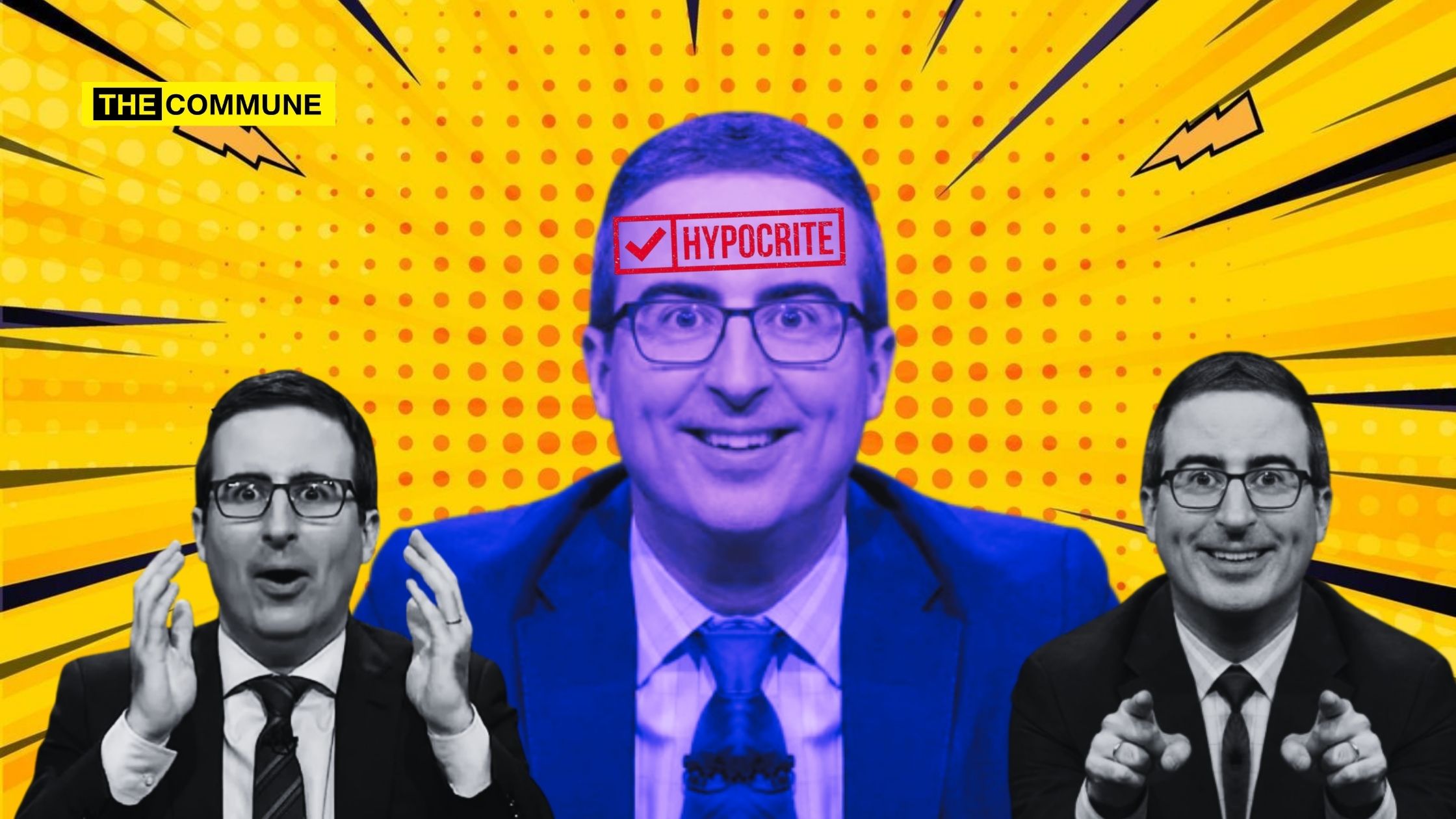
A Western propagandist who is nothing but a glorified (White) Dhruv Rathee – John Oliver is that liberal lapdog who barks when commanded against India and especially Prime Minister Narendra Modi. In this article, we will expose how true he is to his liberal masters in hating Modi and India.
In June 2024, following the Lok Sabha polls in India, he released a video on the Indian Elections, in which John Oliver directed a pointed critique at Prime Minister Narendra Modi, presenting what was a one-sided attack on his leadership. Oliver framed his commentary around allegations of voter suppression and electoral irregularities, suggesting that Modi is set to secure a third term through dubious means. He argued that Modi has been“strategically quiet about his pseudo-authoritarian, pro-Hindu vision of India,“implying that the Prime Minister utilizes anti-Muslim rhetoric for political gain.
Oliver accused Modi of undermining democratic institutions and stifling political opposition, mocking the Prime Minister’s infrastructure and food distribution programs by likening them to“Lyndon Johnson rebranding food stamps.” He dismissed India’s economic growth, highlighting widening inequality and claiming that“1 million people now control about 80% of India’swealth,”while criticizing the country’s poor performance on the Global Hunger Index.
The episode also spotlighted the alleged rising anti-Muslim sentiment and violence under Modi, citing instances of police brutality against Muslims and making a provocative statement that such violence“is not a bug of Modi’s leadership, it is a feature.”Oliver urged the international community to adopt a more critical view of Modi, stating,“It should be possible to acknowledge the good things that Modi has managed to do for India, while also acknowledging that many Indians live in active fear of what he seems more than happy to represent.”
Given this background, let us take a look at his hypocrisy when it comes to talking about the elections in the US or the policies or the Democrats.
Kamala Harris is such a clueless opportunist that she regurgitates the same tired political talking points John Oliver mocked seven years ago, presenting them as if they were groundbreaking ideas. Oliver once said, “Small startup businesses hold a special place in America’s heart. Politicians from across the political spectrum love to talk about how important they are,” while poking fun at the cliché, “Small businesses are the backbone of our economy.”Unfortunately for him, Kamala Harris recently echoed this sentiment, stating, “… Small businesses are the backbone of America’s economy.”
Kamala Harris is such a dimwitted phony that she repeats tired typical political talking points that John Oliver was making fun of 7 years ago as if they are profound and original thoughts. pic.twitter.com/SyDfG5CVpn
In a video on his channel titled “Election Subversion 2024: Last Week Tonight with John Oliver (HBO)”, he accuses the opposition in USA of using mistakes in vote counting to push lies about the election process! So by his logic, if you question the mistakes in the vote count, you are bad. He says, “In August and September incredibly late in this election cycle the board passed a bunch of new rules that will make it much easier to so doubt in the certification process one of them requires a full hand count of ballots in each Precinct to take place either the night of the election or the next day and which must be done by just three individuals per Precinct which might sound reasonable to you but as experts have explained that has the potential to cause chaos.”
He then shared the video of Georgia State Director Kristin Nabers who says,“I’ve brought with me 1,872 pages of paper representing what a stack of ballots could look like on a busy counting day and busier larger precincts may have even more than this number. If I were to hand this stack of paper to three random people in this room, especially at the end of a long voting day, and ask them to arrive at the same total number, do we think that’s feasible? Counting large numbers of anything one by one is an incredibly tedious process and not one humans are well equipped for. People doing a hand count are going to make mistakes which can then be exploited to spread lies and so further distrust in our elections and our election officials.”
Oliver continues, “Yeah of course if you handed three exhausted people that stack of paper and told them to have the exact same number by morningyou’re not guaranteed the same answer. At best, you get a scenario that would give most people a panic attack and the count an instant orgasm.”
Meet John Oliver … peak of American godi media!
Now he accuses opposition in America of using mistakes in vote counting to push lies about election process!
Think about that logic … opposition is to blame for questioning mistakes in vote count!
In a previous episode, John Oliver mocked Prime Minister Modi for being asked rather whimsical questions during an interview about how he eats a mango, if he carries a wallet in his pocket, if he has a best friend, etc. Now, as the upcoming election looms in his adopted country, the USA, it raises the question: will Oliver turn his satire toward fellow comedian Stephen Colbert? In a recent episode of The Late Show, Colbert asked Vice President Kamala Harris light-hearted questions about her favorite beer and football team. The real test will be whether Oliver dares to mock Kamala Harris in the same vein. Or does he only reserve his critiques for Modi?
Remember John Oliver mocking Modi because he was asked how he eats mango?
Now election coming in John Oliver's home country USA
US media interviewing Kamala Harris on her favorite beer & football team
In a video from July 2024 titled, “Trump’s Second Term: Last Week Tonight with John Oliver (HBO)”, Oliver shares a video where Trump takes a vow. He says “We will root out the Communists, Marxists, fascists and the radical left thugs that live like Vermin within the confines of our country that lie and steal and cheat on elections and will do anything possible, they’ll do anything whether legally or illegally to destroy America and to destroy the American dream.”
Oliver had to make a joke here so he asks if Trump was falling asleep when he clearly wasn’t.
He further says,“You think wellokayTrump’s making big scary promises but he did that in 2016 too and he broke a lot of them that is true, although he did also go on to do a lot of damage – he blew up the Iran nuclear deal, withdrew us from the Paris climate agreement, slashed access to food stamps and gave a huge tax cut to corporations, he separated children from their families at the border, suggested they cure Covid with bleach or a bright light, summoned an Insurrection and put in three Supreme Court Justices who helped overturn Roe v. Wade and seems to have no intentions of stopping there, but it is true that a lot of his other major policy goals from ending the Affordable Care Act to getting Mexico to pay for his border wall remained out of reach. Trump as president was sort of like a hamster in an attack helicopter.”
John Oliver claimed to be speaking “truth to power” regarding Prime Minister Modi during the Indian elections. However, as elections approach in his home country, the USA, he seems to be cozying up to the ruling Democrats while attacking Donald Trump, the opposition candidate. Doesn’t this make John Oliver the “godi media” of the USA?
Remember John Oliver?
He was speaking "truth to power" of PM Modi during Indian elections
Now election is coming in his home country USA
So John is bootlicking ruling Democrats and attacking Trump, who is opposition candidate!
How do US liberals truly “speak truth to power”? John Oliver has taken jabs at various world leaders, including India’s Modi, the UK’s Boris Johnson, Brazil’s Bolsonaro, and even the leader of Turkmenistan.
But do you know which world leader John Oliver has never dared to critique? Joe Biden.
What’s particularly striking is that Oliver’s segment against Modi is his most vicious yet, labeling him a “symbol of hate.” He hasn’t employed such strong language against even the dictators of China or Saudi Arabia.
The true viciousness of liberals seems to emerge only when targeting Hindus—a notably softer target.
What is interesting is that John Oliver's segment against Modi is his most vicious ever
He called Modi a "symbol of hate"
Oliver has not used such strong words even for dictators of China or Saudi Arabia.
True viciousness of liberals comes out only against Hindus (soft target) https://t.co/JPadmmOXWk
A few years ago, “comedian” John Oliver challenged Trump with serious policy questions. But now that Biden is president, Oliver and his liberal counterparts are focused on trivial topics, like the cost of concert tickets. This is how American liberals claim to speak truth to power.
Few years ago, "comedian" John Oliver used to ask serious policy questions to Trump
But now liberal Biden is president
So his liberal spokespersons like John Oliver are doing shows about the cost of music concert tickets
This is how American liberals speak truth to power.
All the liberals in India acting holier-than-thou about “speaking truth to power” are missing the mark. Just look at US liberals: no tough questions for Biden. Instead, they’re busy debunking Fox News and “exposing” Meghan McCain on The View. Meanwhile, Biden’s mouthpieces like John Oliver are discussing breakfast cereal!
All liberals playing holier than thou in India about "speaking truth to power" are spewing nonsense.
See US liberals.
No questions for Biden.
They are debunking Fox and "exposing" Meghan McCain on The View
Biden spokespersons like John Oliver are discussing breakfast cereal!
Shows like those of John Oliver often seems well-researched until they tackle subjects where viewers have more firsthand experience than the media or academia. For instance, his episode on the power grid contained inaccuracies that were pointed out by experts in the field.
If you thought Dravidianists were known for buttressing the DMK the best, think again. John Oliver went on to even cancel standardized testing. He even began criticizing fundamental statistical concepts. Probability distributions, which can model various situations—including livestock populations—were dismissed by him. Why did he take this stance? It appears he is aligned with teachers’ unions that contribute to his ‘bosses‘ in the Democratic Party. This raises questions about his objectivity, and his criticisms of science are definitely influenced by political motives.
In the episode titled “Standardized Testing: Last Week Tonight with John Oliver (HBO)“where he explains how standardized tests impact school funding, the achievement gap, andhow often kids are expected to throw up, he says,“…that teacher lives in Florida which uses this formula to assess teachers, a formula which looks like the kind of thing that aliens carve into an anti-semite cornfield and many of these formulas on which teachers careers depend were partly inspired by research and this is true that modeled the reproductive trends of livestock. Basically, we judge the nuance of what happens in the complicated world of a child’s mind the same way that we judge that we judge this.”
This was John Oliver's lowest point, when he started bashing basic statistical formulae. Because probability distributions can be used to model almost any situation, including populations of livestock.
Here’s another example. Propaganda looks like this – With Biden in office, everything is just too great in America. So great that his mouthpieces, like John Oliver, focus on why America needs a hilarious new breakfast cereal. These “comedians” once tackled “real issues” during the Trump era.
Do you know what propaganda is?
With Biden elected, things are just too awesome in America.
So awesome that his spokespersons like John Oliver are doing shows on why America needs a funny new breakfast cereal.
These "comedians" used to tackle "real issues" under Trump.
And did you know John Oliver sat in conversation with our very own Ravish Kumar and Vinay Shukla to discuss the “award-winning” documentary, While We Watched? This conversation was truly unsettling to witness John Oliver act as a staunch propagandist for America’s ruling Democrats. Yet, he comfortably sits down with Ravish Kumar to critique the Indian media for not questioning its government.
The underlying message seems to be that the Indian government should face scrutiny, while the U.S. government should be exempt from such questioning. What’s alarming is the boldness of liberals in this double standard.
In India, liberals advocate for challenging the ruling party. Conversely, in America, they expect unquestioning loyalty to the ruling party, urging everyone to sing its praises without dissent.
He says,“You talk about the general state of the Indian media and you ask what’s the point of distracting people with these imaginary problems, it’s pretty clear you know like, what the point is especially because you later answer your own question when you say, the sweet smell of nationalism has masked the stench of our reality. What has been more disappointing to you – the fact that Indian media has been so complicit in spreading that sweet smell or that it’s worked?”
Ravish replies,“This media is out to kill opposition in any form – be it a political party, be an author Arundhati Roy, or any students leader.”
This is so terrifying to watch
John Oliver is a hardcore propagandist for America's ruling Democrats
But John sits with Ravish Kumar and discusses that Indian media does not question the govt!
John Oliver loudly criticizes Modi, and back home in America, he serves as a lowly propagandist for the Democrats. He wants you to believe that his favored liberal politician, Democratic Congresswoman Katie Porter, is too poor to afford an ambulance. The reality? She has a net worth of $1.5 million!
In the video on Medicare for All, he says,“As a practical matter most of us don’t choose our health insurance, we get what we get through our employer and because of that choices like changing jobs can become significantly harder and not just that. Oftentimesyour choice of doctors and hospitals is severely limited by which ones your insurance will cover. Going out of your insurance network can be prohibitively expensive. That is why people bend over backwards to stay in-network and even when they do that it can still all go horribly wrong.”
The scene then cuts to show his favorite politician. The narrator says,“While campaigning in 2018 Democratic congresswoman Katie Porter’s appendix burst. Her first thought – how much would it cost? “I didn’t call an ambulance cuz I knew it could cost a lot if you call an ambulance specifically had my manager drive me not to the closest hospital but to the in-network hospital,” says Katie Porter.
The narrator continues,“Even though the hospital was in her network, the surgeon who helped save Porter’s life was not and she got a bill for nearly three thousand dollars,”
Meet John Oliver, who does big talk against Modi
But back home in America, he is a 2 paisa propagandist for Democrats
Here he wants you to think some liberal politician he likes is too poor to afford an ambulance
It is noteworthy that John Oliver’s episode mocking the UK’s ruling party during the UK elections was not aired on TV in the UK. The UK did not tolerate interference from outside, not even from a British comedian living in the US. This episode was not available on regular TV due to impartiality rules set by Ofcom but was streamed in the UK through Sky Comedy.
It is also important to note that the YouTube link was inaccessible in the UK due to the elections. Unlike Sky, YouTube wasn’t licensed to stream it there. Interestingly, John Oliver didn’t even make the episode available on YouTube in the UK.
Yet, Indian liberals were upset when his video on PM Modi faced delays in India. The West seems to only aim to interfere in India’s elections while never daring to try the same in the UK.
Every Indian should know
John Oliver's episode on UK elections mocking UK's ruling party was NOT shown on TV in UK
UK does not allow nonsense from outside…not even from British comedian living in US
But Indian liberals cried when his video on PM Modi was delayed in India
Liberals in the US, like John Oliver, often unleash their disdain for Modi. Meanwhile, liberals like Bernie Sanders have praised Stalin’s USSR and Fidel Castro’s Cuba without any criticism. It’s telling that they reserve their harshest criticism for a democratically elected leader like Modi, despite his commitment to democratic processes.
As usual liberal robots in the US like John Oliver are spewing hatred against Modi.
Liberals like Bernie Sanders have kind words for Stalin's USSR and Fidel Castro's Cuba.
Liberal privilege looks like this – While around 2,000 people are dying from COVID every day in the U.S., John Oliver chooses to criticize how the President of Belarus handled the pandemic. With Biden in office, American liberals seem more focused on “speaking truth to power” in Belarus than addressing pressing issues at home!
Do you know what liberal privilege is?
Some 2000 people are dying from Covid every day in USA
But John Oliver has done a video criticizing how President of Belarus handled Covid!
With Biden in office, American liberals busy speaking "truth to power" of President of Belarus!
Media bootlicking looks like this – Joe Biden’s spokespersons, like John Oliver, focus on the issue that opposition-led states like Texas lack air-conditioned prisons. Meanwhile, they ignore the real issues that Americans are facing!
Do you know what media bootlicking is?
Joe Biden's spokespersons like John Oliver are now raising the issue that opposition ruled states like Texas don't have air conditioned prisons!
In his video on “Trade: Last Week Tonight with John Oliver (HBO)” about 6 years ago, he says, “The overwhelming consensus among economists is that trade between countries, generally speaking, can create jobs, lower costs and be a net benefit to both nations.”
Who would have thought we’d see the day when liberals are actually praising free trade? What a twist!
John Oliver:"The overwhelming consensus among economists is that trade between countries,generally speaking,can create jobs,lower costs and be a net benefit to both nations."
Who knew a day would come when liberals would be reduced to praising free tradehttps://t.co/G5ntOTkC7Z
John Oliver only gets to rub shoulders with the likes of Ravish Kumar who have been reduced to creating poems on Monu and whining on their individual YouTube channels. Sucking up to his liberal masters seems to be the only way out for him to earn his daily dinner and thus he remains the most loyal lapdog of the Western liberals.
This article is based on various X posts and video snippets by Abhishek Banerji.
Subscribe to our channels onTelegram, WhatsApp, and Instagram and get the best stories of the day delivered to you personally.
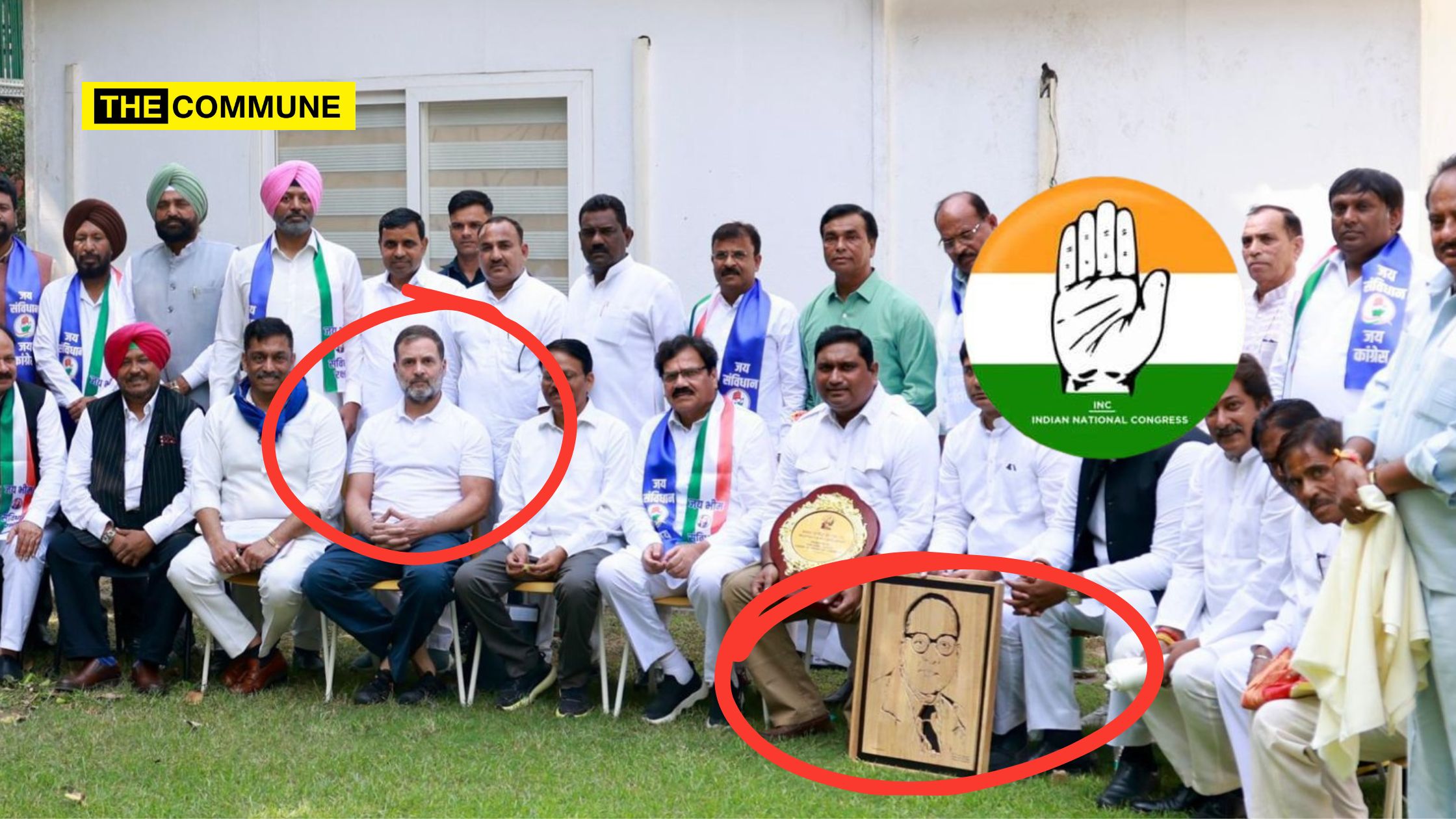
Rahul Gandhi, the Leader of the Opposition in the Lok Sabha and scion of the Congress party, faced intense backlash on social media from netizens for allegedly disrespecting BR Ambedkar, the father of the Constitution. Criticism erupted after a photo emerged of him posing for a photo with Ambedkar’s picture placed on the floor during a recent meeting with representatives of the Valmiki community at his mother’s residence in Janpath.
The criticism directed at Rahul Gandhi arises in the context of his recent visit surrounding Valmiki Jayanti on 17 October 2024. On this occasion, he visited the Valmiki Temple on Mandir Marg to offer prayers and later met with the representatives of the Valmiki community at his mother Sonia Gandhi’s residence.
During a meeting with delegations, members brought souvenirs and gifts to Rahul Gandhi and took photos with him. These images were shared by Gandhi and the Congress on their respective social media platforms. However, one picture drew significant backlash: it showed a photo of Dr B.R. Ambedkar carelessly placed on the ground among the attendees. This caused considerable outrage, as many felt it disrespected Ambedkar’s legacy.
Netizens criticized Gandhi, pointing out the contradiction between his praise for Ambedkar and the perceived disrespect in the photo. The incident went viral, with many expressing their disappointment over what they saw as hypocrisy while honoring Maharishi Valmiki, a respected figure among Dalit communities and the author of the Ramayana, they felt it was wrong to disregard Ambedkar in the same setting.
नेता विपक्ष श्री @RahulGandhi ने आज वाल्मीकि समाज के प्रतिनिधिमंडल से मुलाकात की।
Rahul Gandhi also shared his experiences on the social media platform X, stating, “Best wishes to all of you on the birth anniversary of the creator of the epic Ramayana, Adi Kavi Maharishi Valmiki ji. This morning, on this auspicious occasion, I visited the Valmiki temple in Delhi. Mahatma Gandhi had spent a lot of time with the Valmiki community in this complex – I stayed for some time at Bapu Niwas and gained inspiration. Salute to the great ascetic Maharishi Valmiki ji who showed humanity the path of truth, justice and harmony with love and compassion.”
महाकाव्य रामायण के रचनाकार, आदिकवि महर्षि वाल्मीकि जी की जयंती पर आप सभी को शुभकामनाएं।
आज सुबह इस सुअवसर पर दिल्ली में वाल्मीकि मंदिर में दर्शन किए। इस परिसर में महात्मा गांधी जी ने वाल्मीकि समाज के साथ काफी वक्त बिताया था – बापू निवास में कुछ समय रुककर प्रेरणा प्राप्त की।… pic.twitter.com/63onni4JQb
A netizen demanded an apology, stating, “Babasaheb Ambedkar means our respected father just one request to every political party and their leaders to respect our gods and respect our feelings… such disrespect by foolish people for their gains… we condemn this act and an apology by @INCIndia @RahulGandhi is required have the Audacity to come on stop such acts… shall challenge till he gives our an apology and bows down to Babasaheb won’t let him enter Maharashtra!!! Yeh Shivsena ka challenge hai… yaad rakhna…”
Babasaheb Ambedkar means our respected father just one request to every political party and their leaders to respect our gods and respect our feelings… such disrespect by foolish people for their gains… we condemn this act and an apology by @INCIndia@RahulGandhi is required… https://t.co/2WHVsdPqkO
Another netizen criticized, stating, “Ambedkar kept near feet on ground Rahul Gandhi on chair This explains the hate of Gandhi family and congress for dalits and Ambedkar Who can forget Ambedkar was humiliated and sidelined by Nehru and thus he resigned from Nehru cabinet and left Congress. While Nehru and Indira gave Bharat Ratna to themselves and Rajiv Gandhi too was given Bharat Ratna immediately after his death, but it took 40 years for Ambedkar and Sardar Patel to get Bharat Ratna, that too when there was a non-Congress govt at center.”
Ambedkar kept near feet on ground
Rahul Gandhi on chair
This explains the hate of Gandhi family and congress for dalits and Ambedkar
Who can forget Ambedkar was humiliated and sidelined by Nehru and thus he resigned from Nehru cabinet and left Congress . While Nehru and… pic.twitter.com/aPOfWtWJRn
Another netizen stated, “The Respect Rahul Gandhi has for Baba Saheb Ambedkar can be seen in this photo! Rahul and Congress has insulted Every Dalit of India! It was not a coincidence that Mr Jawaharlal Nehru worked over time to defeat Baba Saheb in his first election, & Congress never gave him Bharat Ratna.”
The Respect Rahul Gandhi has for Baba Saheb Ambedkar can be seen in this photo!
Rahul and Congress has insulted Every Dalit of India!
It was not a coincidence that Mr Jawaharlal Nehru worked over time to defeat Baba Saheb in his first election, & Congress never gave him Bharat… pic.twitter.com/yDKpFiMs9W
— Pradeep Bhandari(प्रदीप भंडारी)🇮🇳 (@pradip103) October 17, 2024
Congress Party’s Historical Disregard For Dr. B.R. Ambedkar
The Congress party has long exhibited an anti-Ambedkar sentiment, dating back to the era of Jawaharlal Nehru. Nehru’s Congress treated Dr. B.R. Ambedkar with contempt, actively working to ensure his defeat in the 1952 parliamentary elections in North Bombay and the 1954 by-election in Bhandara. Notably, it was only in 1990, under the National Front government supported by the BJP, that Dr. Ambedkar’s portrait was finally placed in the Central Hall of Parliament. For decades, the Congress also denied him the Bharat Ratna, which was conferred on him only by the National Front government in 1990.
Recently, Rahul Gandhi’s mentor, Sam Pitroda, insulted Dr. Ambedkar by endorsing a tweet that outrageously claimed that the greatest falsification of modern history was the idea that Ambedkar was the father of the Indian Constitution.
This is absolutely shocking! Rahul Gandhi’s close aide and mentor Sam Pitroda insults Baba Saheb Ambedkar, undermines his contribution to framing India’s Constitution, and like all things Congress, gives credit to Nehru. Congress’s hate for Dalits and Dr Ambedkar, an erudite man,… https://t.co/UU9MAzYfnHpic.twitter.com/B2ZG8bQNsh
The Congress party’s approach to Ambedkar’s legacy is a notable aspect of its political strategy. There are several factors contributing to the shortcomings of Rahul Gandhi’s social justice efforts. While the party publicly supports a caste census and calls for greater representation for political gain, its actual practices tell a different story; Congress-led states have not demonstrated any commitment to these principles. Recently, during his visit to the USA, Rahul Gandhi suggested moving away from reservations in India, a remark that sparked considerable backlash, as it contradicts Ambedkar’s vision for upliftment and the protections enshrined in the Constitution.
In stark contrast, Prime Minister Narendra Modi paid a heartfelt tribute to Ambedkar during his 125th birth anniversary, marking the first-ever celebration of Constitution Day. He introduced the term “Panchteerth,” committing to develop five significant locations related to Ambedkar’s life into pilgrimage sites and declared Samvidhan Diwas. In 2018, Modi granted constitutional status to the BC Commission, supported the election of India’s first tribal woman president, and led the passage of a constitutional amendment to ensure women’s reservations.
Subscribe to our channels on Telegram, WhatsApp, and Instagram and get the best stories of the day delivered to you personally.
India is projected to have 1.2 billion smartphone connections by 2030, with half of the users on 5G smartphones, according to a new report.
According to global mobile network body GSMA, the country is projected to have over 641 million 5G subscribers by 2030, growing at 49 per cent.
“India will see an unprecedented growth in the number of 5G mobile subscribers, and an explosion of data usage in the next six years,” according to GSMA Intelligence projections.
This stupendous growth in 5G subscribers will also lead to a huge expansion of data consumption, impelling Indian telcos to make large investments.
The data consumption per subscriber is likely to grow at a CAGR of 15 per cent between 2023 and 2029, to reach 68 GB per month per subscriber in India.
In the Asia-Pacific region, India and Indonesia are uniquely positioned to leverage digitalisation to drive economic resilience, job creation, and innovation.
According to the latest ‘GSMA Mobile Economy Asia Pacific 2024 Report’, India is projected to have 1.2 billion smartphone connections by 2030, while Indonesia is expected to reach 387 million connections by the same year,” said the organisation.
Furthermore, mobile technologies and services generated 5.3 per cent of GDP across the APAC region in 2023, contributing $880 billion in economic value, and supporting approximately 13 million jobs across the region.
“India and Indonesia are not just the largest democracies in the APAC region; they are the future engines of digital and economic growth for the region. By fostering partnerships and collaboration, we are laying the foundation for a more resilient, inclusive, and sustainable digital future for both nations.” said Mats Granryd, Director General, GSMA.
Meanwhile, the widespread availability of spectrum for 5G is likely to contribute about $27 billion to India’s gross domestic product (GDP) by 2030, according to a recent GSMA report.
The organisation, which represents mobile networks worldwide, said the upper 6 GHz band must also be part of the spectrum roadmap of the country. The launch of 5G has emerged as a significant catalyst for the growth in data usage.
–IANS
Subscribe to our channels onTelegram, WhatsApp, and Instagram and get the best stories of the day delivered to you personally.
The Supreme Court has dismissed a habeas corpus petition filed by a father who claimed that his two daughters were being held against their will and brainwashed at the Isha Yoga Centre.
The court noted the statements of the two women, aged 39 and 42, confirming that they are legal adults and are voluntarily staying at the ashram, with the freedom to leave whenever they wish. As a result, the court concluded that no further action was necessary, and the case was closed.
During the hearing, the bench personally interacted with the two women, who affirmed that they were free to move and had participated in various activities at the Ashram. The Court noted that one of the women had even recently completed a 10-kilometer marathon.
However, the court clarified that the closure of this habeas corpus case does not exempt the Isha Yoga Centre from fulfilling any other legal or regulatory obligations.
The Supreme Court also criticized the Madras High Court’s previous decision to direct a police inquiry into other allegations against the Isha Yoga Centre based on the habeas corpus petition. The bench, led by Chief Justice DY Chandrachud and comprising Justices JB Pardiwala and Manoj Misra, noted that the High Court overstepped its jurisdiction, stating, “Since both women are adults, and the purpose of the habeas corpus petition has been fulfilled, no further directions are needed from the High Court.”
The petition, originally filed by the father of the two women, claimed that his daughters were being held against their will and brainwashed by the Ashram. However, Senior Advocate Mukul Rohatgi, representing the Isha Foundation, pointed out that the Tamil Nadu police’s status report indicated the women were staying at the Ashram voluntarily. Rohatgi also argued that the High Court’s directions for an inquiry were unwarranted, given the nature of the habeas corpus petition.
Senior Advocate Siddharth Luthra, representing the Tamil Nadu government, requested the Court to clarify that the closure of the habeas corpus petition would not prevent the police from investigating other allegations related to regulatory compliance at the Isha Foundation. The bench agreed, stating that the closure of the habeas corpus case would not affect any ongoing or future regulatory requirements that the Foundation must comply with.
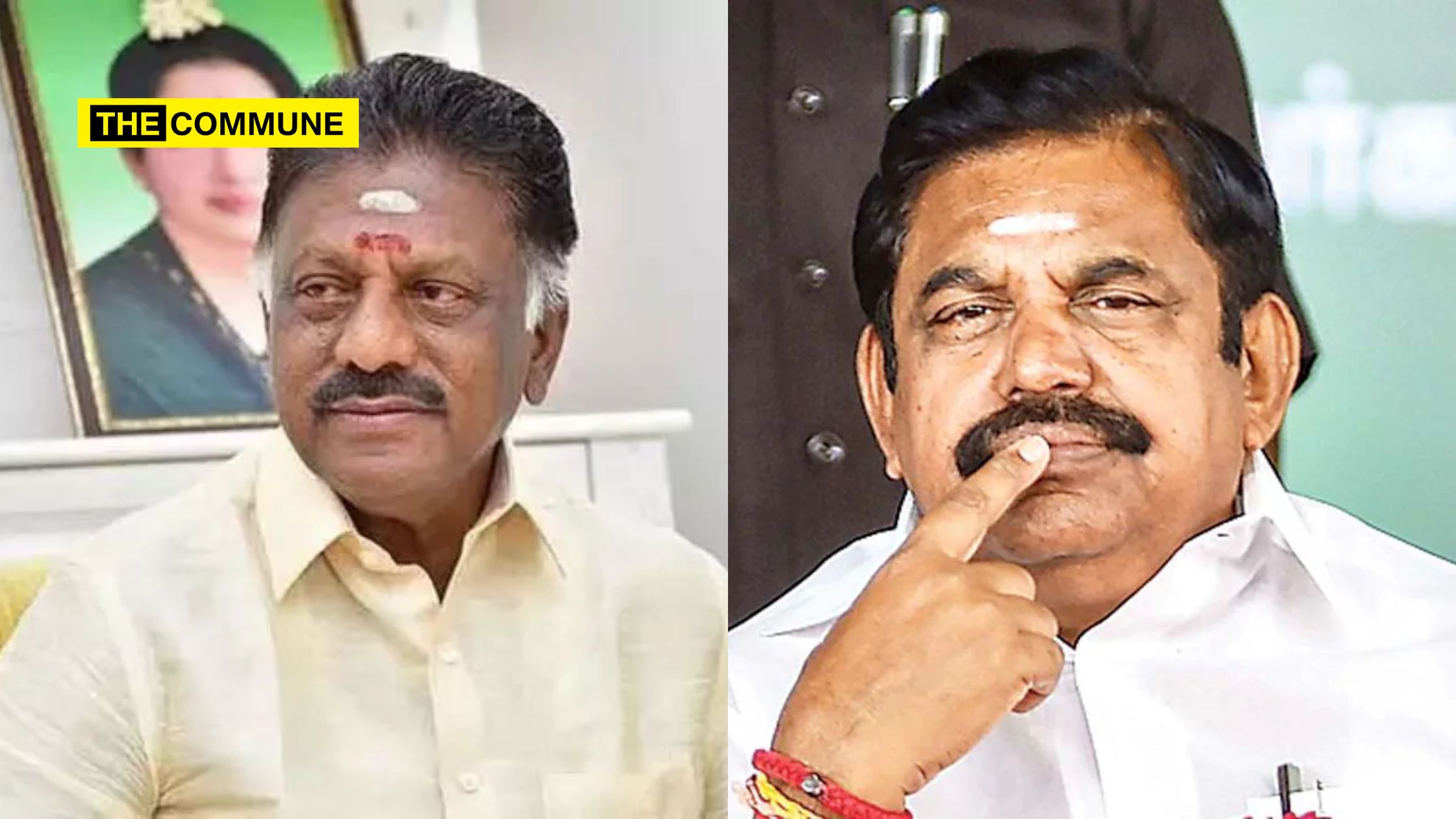
On 18 October 2024, O Paneerselvam, the former Chief Minister of Tamil Nadu and ousted senior leader of the AIADMK, sharply criticized party General Secretary Edappadi K. Palaniswami for his forgetfulness of past support and perceived betrayal. He urged party members to unite and work diligently in preparation for the 2026 state assembly elections to restore the party’s influence, warning that otherwise, all the efforts of previous leaders would be in vain.
This appeal comes as the AIADMK celebrates its 53rd anniversary on 17 October 2024. Founded by MG Ramachandran (MGR), the party has historically been a major force in Tamil Nadu politics, winning a majority in the state assembly seven times. However, since 2019, it has faced significant electoral setbacks, failing to win any recent elections and placing third in various regions during the 2024 Lok Sabha elections, indicating a decline in popularity.
In this context, O. Paneerselvam, through his official X account, stated, “Let us all work together in the general assembly election of 2026 to fulfill the idea of the honorable revolutionary leader Amma, ‘Even after me, no matter how many centuries come, the All India Anna Dravida Munnetra Kazhagam will work for the people’ and pledge to put the All India Anna Dravida Munnetra Kazhagam in power.”
The statement read, “Speaking about betrayal and sacrifice is like Satan reading scriptures! All India Anna Dravida Munnetra Kazhagam, a great people’s movement that was started by revolutionary leader MGR to give golden rule to the people of Tamilnadu, formed the government under the leadership of revolutionary leader MGR for three consecutive terms. The revolutionary leader MGR achieved various milestones such as the Nutritious meal scheme, increased the reservation for the backward from 31 percent to 50 percent, created various universities including Tamil University in Thanjavur, introduced the free Dhothi and Saree scheme, and held the Fifth World Tamil Conference.”
“After the death of the revolutionary leader MGR, the revolutionary leader Amma took over as the general secretary of the organization and formed the All India Anna Dravida Munnetra Kazhagam regime in Tamil Nadu for four terms. They achieved success by implementing various welfare programs like Cradle Baby Scheme, All Women Police Station, Women Self Help Groups, Free Rice, Free Education. Hon’ble Amma is credited with making the All India Anna Dravida Munnetra Kazhagam the third largest party in the Lok Sabha.” the statement added
“After the demise of the honorable revolutionary leader Amma, as a result of treachery entering in, unrighteousness increased and treacherous acts became rampant and the party went to the bottom. The All India Anna Dravida Munnetra Kazhagam, which was the third largest party in the parliamentary Lok Sabha, now appears empty due to its status as a party for all being undermined by the treacherous mob. All India Anna Dravida Munnetra Kazhagam met with a heavy defeat in the Lok Sabha elections which ended with loss of deposit in seven Lok Sabha constituencies, third place out of 12 constituencies, fourth place in Kanyakumari and fourth place in Puducherry Union Territory.” the statement accused.
“From this, it is clear that the people are not ready to trust the traitor who has backstabbed everyone: the person who recommended for the post of Chief Minister, the person who appointed him as the Chief Minister, and those who supported him to continue as the Chief Minister. Due to this treacherous act, the vote bank which was 45 percent during the regime of revolutionary leader Amma has reduced to 20 percent today. To speak of such a “betrayal” sacrifice seems Satan reading Scriptures.” the statement further said.
“If this situation continues, not only will the All India Anna Dravida Munnetra Kazhagam not be able to form a government for many years, but its vote percentage will decrease and the fruit of victory will become unattainable. Thinaiththunai Nandri Seyinum Panaiththunaiyaak Kolvar Payandheri Vaar’ That is, Thirukkural says that even if the help given to him is the size of a millet, the gentleman will consider it as the size of a palm. If the All India Anna Dravida Munnetra Kazhagam wants to rise, the divided people must unite. if the separated are to unite a able man must come to leadership.” the statement further said.
At this moment, I would like to point out the words of Valluvar “Ennandri Kondraarkkum Uyvuntaam Uyvillai Seynnandri Kondra Makarku” Thiruvalluvar says whoever commits any sin has a way to escape from it but there is no other way to get rid of the sin of forgetting the help done. Hence, let us all work together in the general assembly election of 2026 to fulfill the idea of the honorable revolutionary leader Amma, ‘Even after me, no matter how many centuries come, the All India Anna Dravida Munnetra Kazhagam will work for the people’ and pledge to put the All India Anna Dravida Munnetra Kazhagam in power.” the statement further said.
“எனக்குப் பின்னாலும், இன்னும் எத்தனை நூற்றாண்டுகள் வந்தாலும், அனைத்திந்திய அண்ணா திராவிட முன்னேற்றக் கழகம் மக்களுக்காகவே இயங்கும்” என்ற மாண்புமிகு புரட்சித் தலைவி அம்மா அவர்களின் எண்ணத்தை நிறைவேற்றிட, 2026-ஆம் ஆண்டு சட்டமன்ற பொதுத் தேர்தலில் நாம் அனைவரும் ஒன்றிணைந்து களப்… pic.twitter.com/ZU1L2p2Laf
On 17 October 2024, Andhra Pradesh Deputy Chief Minister and Jana Sena Party leader Pawan Kalyan also extended greeting on the 53nd anniversary of the All India Anna Dravida Munnetra Kazhagam (AIADMK) expressing his admiration and support for the party. In a heartfelt message, he paid tribute to AIADMK founder M.G. Ramachandran (MGR), whom he praised as a “revolutionary leader” whose visionary policies significantly transformed Tamil Nadu, particularly for the disadvantaged.
Kalyan emphasized MGR’s commitment to enhancing the lives of ordinary people, noting how his leadership propelled Tamil Nadu to become one of India’s foremost states. He also recognized the contributions of MGR’s successor, Jayalalithaa, commending her as an exceptional leader whose efforts earned her the endearing title of “Amma.”
In his message, Kalyan extended his best wishes to Edappadi K. Palaniswami (EPS), the current AIADMK leader, expressing hope that the party would continue to realize MGR’s vision for the state’s development and welfare. He also notably commended O. Panneerselvam (OPS) for his leadership as Tamil Nadu’s Chief Minister, highlighting how he effectively guided the AIADMK government during and after the passing of Puratchi Thalaivi Selvi Jayalalithaa, genuinely continuing her legacy. Then highlighted the cultural ties between Tamil Nadu and Andhra Pradesh, acknowledging Jayalalithaa’s respect and affection for the Telugu-speaking community.
On the 53rd anniversary of @AIADMKOfficial, I extend my sincere congratulations to the party leadership, members, and supporters. Founded on October 17, 1972, by the legendary “Puratchi Thalaivar” Thiru MG Ramachandran (MGR) Avl. #AIADMK rapidly became a formidable political… pic.twitter.com/YFXbXZcngz
After leaving the AIADMK in 2017, O. Panneerselvam and his supporters appealed to the Election Commission for action against party General Secretary V.K. Sasikala and Chief Minister Edappadi K. Palaniswami. Panneerselvam argued for the party’s iconic two-leaf symbol to contest in the RK Nagar election. In response, Palaniswami’s faction also lodged complaints, but the Election Commission dismissed both appeals, assigning different symbols to each faction.
In August 2017, the factions led by Edappadi K. Palaniswami and O. Panneerselvam came together, with Panneerselvam becoming Deputy Chief Minister and taking on the finance portfolio.
Leadership Struggle with Edappadi K Palaniswami
On 14 June 2022, amid ongoing electoral challenges, AIADMK district secretaries and senior members advocated for a shift away from the “dual leadership” system, calling for a single, strong leader to strengthen the party.
Supporters of Palaniswami initiated a political maneuver against Panneerselvam, who was losing influence within the party. Reports indicated that only about 10 of the AIADMK’s 75 district secretaries backed Panneerselvam, and among the 66 MLAs, only five were reportedly on his side. Less than 20% of the general council members supported him ahead of a pivotal meeting 23 on June 2022, aimed at establishing a unitary leadership.
On 30 June 2022, Palaniswami sent a letter to Panneerselvam, stating that the latter was no longer the party coordinator, as changes made to the party bylaws in December 2021 were not recognized in the 23 June general council meeting. On 11 July 2022, the AIADMK General Council formally abolished the dual leadership model and empowered Palaniswami as the party leader.
Expulsion from the AIADMK
On the same day, Panneerselvam was expelled from his roles as Party Treasurer and primary member due to alleged “anti-party” activities. Dindigul Sreenivasan succeeded him as Party Treasurer. On 17 August 2022, the Madras High Court ruled Panneerselvam’s expulsion and the General Council’s decisions as invalid. However, on 2 September 2022, a division bench of the High Court upheld the General Council’s actions from 11 July, effectively restoring unitary leadership.
The Supreme Court later dismissed Panneerselvam’s appeal against the Madras High Court ruling, which handed leadership to Palaniswami. On 23 February 2023, the Supreme Court affirmed the 11 July 2022 General Council decisions, reinforcing Palaniswami’s leadership. Subsequently, on 28 March 2023, the Madras High Court ruled in favor of Palaniswami and dismissed Panneerselvam’s challenges regarding the General Council resolutions. On that same day, AIADMK announced Palaniswami’s election as General Secretary, which the Election Commission recognized on 20 April 2023.
Subscribe to our channels on Telegram, WhatsApp, and Instagram and get the best stories of the day delivered to you personally.
India is poised to become the content creation capital of the world, with the market projected to grow from the current $30 billion to $480 billion by 2035.
Addressing a panel discussion during the ‘India Mobile Congress 2024’ in the national capital, Union Minister for Communications Jyotiraditya Scindia emphasised the democratisation of information access and India’s readiness to embrace next-gen technologies like 6G to lead the digital revolution. According to a recent report by EY, the Indian content industry was expected to hit $30.6 billion this year.
The experts emphasised that AI in content creation is an opportunity to expand revenue streams, reduce costs and tap into new markets, especially in tier 2 and 3 cities in India where content consumption patterns are evolving. As AI facilitates real-time personalisation and interaction with audiences, the creative economy is set to grow exponentially, they added.
The conversation centred on AI’s ability to complement, not replace, human creativity. AI is enhancing regional content, with 95 per cent of YouTube consumption in India now being in regional languages, reflecting a shift from the predominantly English-speaking digital sphere just a few years ago.
AI-driven content can help educate and raise awareness, offering unprecedented opportunities for spreading meaningful information, said industry experts.
The 8th edition of the ‘India Mobile Congress’ was kicked off with its inauguration by Prime Minister Narendra Modi at Bharat Mandapam in the national capital. PM Modi took a walkthrough of the exhibition area before officially inaugurating the event.
The ‘India Mobile Congress 2024’ is hosting over 400 exhibitors, about 900 startups and participation from over 120 countries. The event is also showcasing more than 900 technology use case scenarios, hosting more than 100 sessions with over 600 global and Indian speakers. India is also hosting the prestigious World Telecommunication Standardisation Assembly (WTSA) 2024 from October 14-24.
–IANS
Subscribe to our channels onTelegram, WhatsApp, and Instagram and get the best stories of the day delivered to you personally.