Home Blog Page 831

Modi Cabinet Approves ₹3,300 Crore Semiconductor Unit In Gujarat

Minister Jitin Prasada said semiconductor tech will make India the world's third-largest economy with 85,000-strong semiconductor workforce.

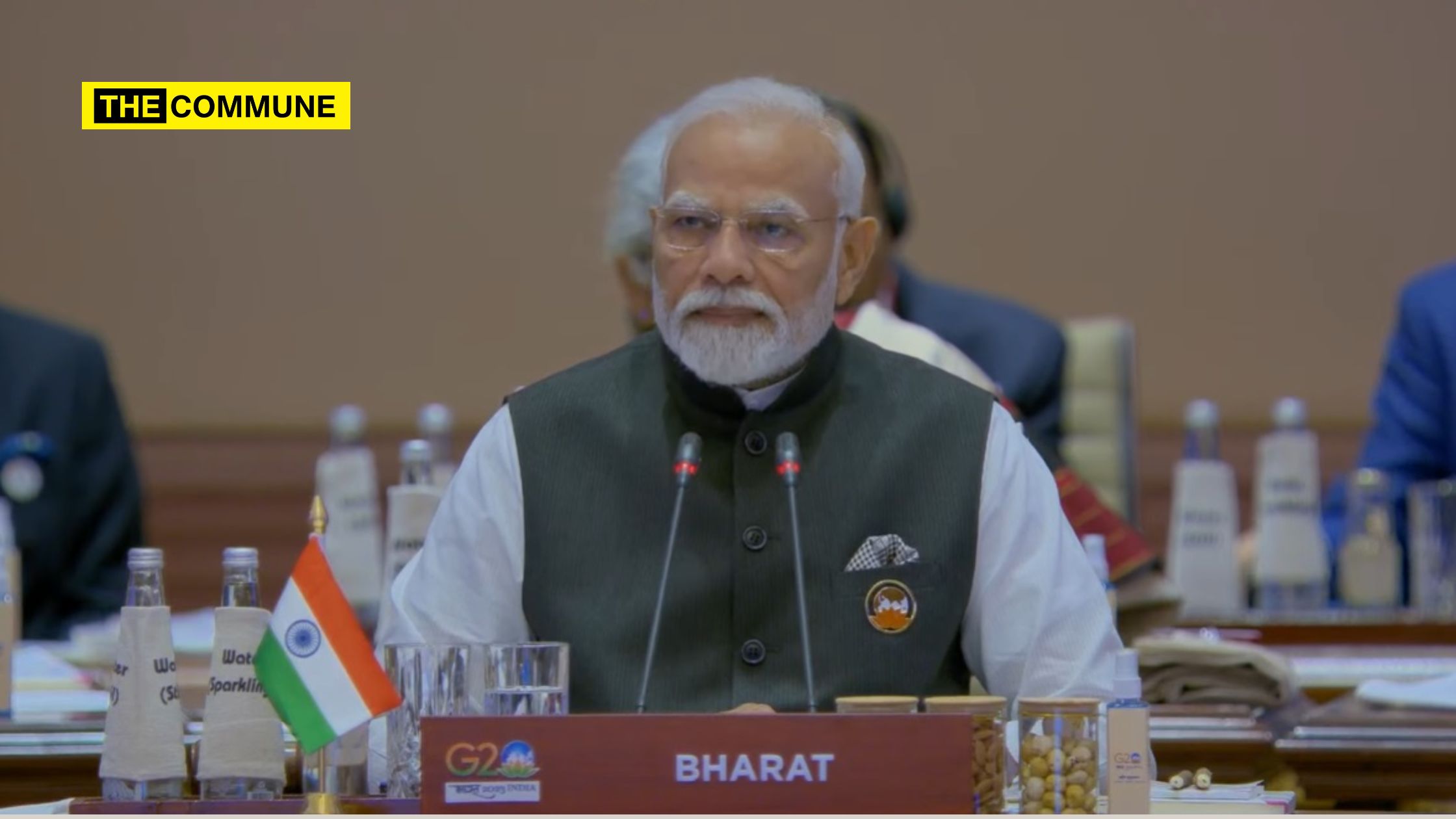
The Union Cabinet, chaired by Prime Minister Narendra Modi, on Monday approved Kaynes Semicon Pvt Ltd’s proposal to set up a semiconductor unit in Sanand, Gujarat, with an investment of ₹3,300 crore.

The proposed unit, under the India Semiconductor Mission (ISM), will produce nearly 60 lakh chips per day. The chips produced in this unit will cater to a wide variety of applications, including industrial, automotive, electric vehicles, consumer electronics, telecom, and mobile phones.

According to PM Modi, the country has the potential to fulfil the dream of developing a ‘Made in India’ chip for every piece of equipment. The first indigenously-developed chip is set to arrive in the country by the end of this year. In March, PM Modi laid the foundation stone of three semiconductor projects worth ₹1.25 lakh crore.

Tata Electronics is setting up a semiconductor fab in Dholera, Gujarat and one semiconductor unit in Morigaon, Assam.

CG Power is setting up one semiconductor unit in Sanand. These units will produce lakhs of direct and indirect jobs. According to the Ministry of Electronics and IT, construction of all four semiconductor units is progressing rapidly and a robust semiconductor ecosystem is emerging near the units. “These four units will bring an investment of almost ₹1.5 Lakh crore.

The cumulative capacity of these units is about 7 crore chips per day,” according to the ministry. The Programme for Development of Semiconductors and Display Manufacturing Ecosystem in India was notified in 2021 with a total outlay of ₹76,000 crore. As per reports, India’s semiconductor-related market will reach $64 billion in 2026, nearly triple the size in 2019. Union Railways and IT Minister Ashwini Vaishnaw said recently that in the next five years, the country will become one of the biggest semiconductor hubs in the world.

–IANS

This story is based on an IANS-syndicated feed. 

Subscribe to our TelegramWhatsApp, and Instagram channels and instantly get the day’s best stories.

Viral Videos Uncover Aavin Milk Scandal: Water Adulteration And Theft Lead To Salary Suspension Of Whistleblower In Madurai

Amidst ongoing controversies surrounding irregularities at Aavin, Tamil Nadu’s state-operated milk company, a recent incident has sparked outrage in Madurai. An official inspection revealed a video, which went viral, showing a man mixing water into Aavin milk cans during transport.

In the Sathamangalam area of Madurai, Aavin procures 1.93 lakh litres of milk daily from the surrounding region to supply to Madurai city and its outskirts. Recently, there has been a notable increase in complaints about the quality of Aavin milk packets, with allegations of water being added to the milk.

In response, Justin John Devasakayam, an extension officer at Aavin in Chellambatti, inspected after receiving numerous complaints about the milk quality. During a surprise visit, he discovered that a transport vendor was adulterating the milk by adding water to the cans before delivery. Devasakayam recorded the incident and released the video, which went viral and showed him confronting the situation and calling for police intervention to address the corruption affecting dairy farmers.

In the video, he confronted the driver, asking, “What are you doing? Get down from the vehicle,” the officer ordered while the driver was mixing water into the milk cans. Then the officer pointed fingers at the driver and said, “He is Koppampatti DMC’s driver. There have been many complaints from people that the milk lacks quality and quantity. Today, we came and checked. We found that they parked the vehicle in a society (milk booth), filled water in the bucket, and poured it into the milk can.” The extension officer shouted madly, asking, “Why did he pour water in the can?”

The driver replied, “Based on his friend’s instruction, he did. ” Then, the officer instructed another individual to call the police to the scene.

Following his expose, Devasakayam faced repercussions, including the suspension of his salary, after he revealed the irregularities and accused higher authorities of complicity. Devasakayam stated, “My salary has been suspended despite my commitment to addressing irregularities and working for the benefit of both milk producers and consumers. Last month’s and this month’s salaries were withheld. Before joining the firm, I had a depo that I transferred to another entity (not owned by me or sold). They appear to have used this timing to target me with a summons/memo.”

In addition to the officer’s viral video, another video showed Aavin milk packets being transported to a secluded location for illicit activities. The video uncovered several irregularities, including the theft of milk packets, incomplete trays, and broken packets not replaced by authorities. Additionally, it revealed that diesel fuel was being stolen from the transport vehicles, further fueling the controversy.

The dairy department has been urged to take appropriate action. Officials confirmed that water was indeed being mixed with milk during transportation from Aavin’s Koppampatti factory to Madurai, resulting in the confiscation of the adulterated milk.

Subscribe to our TelegramWhatsApp, and Instagram channels and instantly get the day’s best stories.

Congress MP Karti Chidambaram Demands White Paper From DMK Govt On Cooum River Restoration

Congress MP Karti Chidambaram Demands White Paper From DMK Govt On Cooum River Restoration

Congress MP Karti Chidambaram has called for a comprehensive white paper detailing all initiatives to clean up the Cooum River. The demand, made by the DMK ally, follows revelations from Chennai Mayor R Priya that ₹529 crore has been spent out of the ₹750 crore allocated for the river’s restoration.

Taking to social media platform X, Karti Chidambaram urged the Chennai Rivers Restoration Trust (CRRT) to provide detailed information on the progress and effectiveness of these schemes. “A white paper on all the schemes to date that promised to clean up the Cooum is needed! Chennai Rivers Restoration Trust must release it,” Chidambaram wrote.

In a letter to the Mayor, Karti Chidambaram wrote made a formal request for a white paper on the Cooum River restoration efforts, reflecting concerns over the river’s severe pollution. Noting the historical significance of the river to Chennai, he mentioned how the Cooum River is currently plagued by extremely poor water quality, including high levels of bacterial contamination and heavy metals, starkly contrasting its once-pristine state. He wrote, “In your recent response to the Zonal chairman, you mentioned the ongoing efforts, including the provision of technical assistance and funds from US authorities. However, there seems to be a lack of clarity regarding these efforts” and requested for a comprehensive white paper from the Chennai Rivers Restoration Trust detailing all restoration schemes, their objectives, timelines, expenditures, and outcomes.

Chidambaram also called for an update on the river’s current status, financial assessments, future plans, and public engagement mechanisms. He also raised concerns about the high levels of untreated sewage entering the Cooum and similar issues affecting the Buckingham Canal and Adyar River.

He stated, “Releasing this white paper will not only enhance transparency but also foster greater public confidence and support for ongoing and future restoration efforts.”

What Does Chennai Corporation Say On Cooum River Restoration

Chennai Mayor R Priya recently revealed that ₹529 crore has already been spent on the restoration of the Cooum River. The Mayor also announced that U.S. authorities have agreed to offer technical assistance and funding for the ongoing project.

The Mayor’s comments were in response to a query raised by Nolambur Zonal Chairman V Rajan during a council meeting. Rajan noted that the Cooum River was relatively clean until the 1980s and mentioned that Chief Minister M.K. Stalin, during his tenure as Mayor, had involved a Singapore-based firm in early restoration efforts.

What Is The Cooum River Restoration Project?

The Cooum River, which originates from the surplus course of the Cooum tank in Tiruvallur District, flows eastward for about 65 kilometres before emptying into the Bay of Bengal downstream of Napier Bridge. Approximately 20 kilometres of the river pass through Chennai city limits.

The eco-restoration efforts for the Cooum aim to curb pollution, protect the river through sustainable methods, and encourage inter-sectoral coordination for comprehensive planning and management.

The Chennai Rivers Restoration Trust, responsible for the river’s revival, has acknowledged that the Cooum River has effectively become an urban sewer within the city limits, receiving untreated municipal and industrial wastewater and refuse from nearby settlements. The Trust highlighted that the river’s heavily polluted state has led to public apathy and the improper disposal of solid waste on the riverbed, further degrading water quality and oxygen levels downstream.

Subscribe to our TelegramWhatsApp, and Instagram channels and instantly get the day’s best stories.

DMK Cadres’ Biryani Obsession: Tiruvallur Membership Meeting Disrupted Over Missing Chicken Pieces

The obsession with chicken biryani among DMK cadres seems unending. Recently, at a DMK General Membership Meeting held in Tiruvallur, a DMK member launched into a heated argument and used harsh language against the suppliers and the function managers for biryani served without ‘piece’.

The incident happened in Tiruvallur, and the meeting was organized by East District DMK Gummidipoondi at a private hall in Thachur. T. J. Govindrajan, the Gummidipoondi MLA and Tiruvallur East District DMK Secretary, chaired the session, which was attended by several district councillors and chairpersons. R. S. Bharathi, the DMK’s organizing secretary, was the chief guest.

Over 5,000 people attended the meeting, and a non-vegetarian feast was planned to accommodate everyone. However, following the event, DMK union representative and cooperative credit union manager Yuvraj entered into a fight that the biryani served lacked chicken pieces. The words quickly escalated into a heated confrontation, with inappropriate language exchanged and physical pushing occurring among those involved.

This incident has become fodder for online trolls by opposition parties, who mockingly suggest that whenever biryani is served, a DMK member will inevitably cause a fuss over the chicken pieces.

This criticism is backed by a history of disputes involving DMK functionaries and cadres over missing chicken pieces in their biryani. Here is a list of such incidents:

  • In 2023, DMK cadre Ajith Kumar and his associates destroyed a hotel in Tambaram after being refused free chicken fried rice, attacking the owner and staff, and causing significant damage.
  • In 2020, DMK office bearer Karthikeyan, after being refused biryani by Krishnan, the owner of ‘Karur Biryani Centre,’ due to the shop being closed, returned with his brother to vandalize the establishment. They caused significant damage by throwing stones and breaking equipment, an act captured on a nearby CCTV camera.
  • Earlier in August 2018, Yuvraj, a DMK youth wing secretary and another party member named Dhivakar thrashed a hotel staff after he refused to give them free biryani.

Subscribe to our TelegramWhatsApp, and Instagram channels and instantly get the day’s best stories.

Netflix India Content Head Summoned Amid Controversy Over IC 814 Web Series On 1999 Hijacking

Netflix India Content Head Summoned Amid Controversy Over IC 814 Web Series On 1999 Hijacking

The Union Information and Broadcasting Ministry has summoned the content head of Netflix India following a growing controversy surrounding the web series IC 814, which depicts the 1999 hijacking of an Indian Airlines flight by Pakistan-based terror outfit Harkat-ul-Mujahideen.

The Netflix web series, directed by Anubhav Sinha, has sparked outrage on social media, with hundreds of users accusing the creators of deliberately altering the IC 814 hijackers’ names to “Bhola” and “Shankar.” The series is inspired by the book Flight Into Fear: The Captain’s Story, co-authored by Devi Sharan, the captain of the hijacked flight, and journalist Srinjoy Chowdhury.

The series portrays the harrowing events of 24 December 1999, when Indian Airlines flight IC 814, carrying 191 passengers, was hijacked shortly after taking off from Kathmandu, Nepal, en route to Delhi. The hijackers, posing as passengers, took control of the aircraft, which subsequently landed in Amritsar, Lahore, and Dubai before being flown to Kandahar, Afghanistan.

Under immense pressure, the Indian government, led by then-Prime Minister Atal Bihari Vajpayee, was forced to release three notorious terrorists—Masood Azhar, Ahmed Omar Saeed Sheikh, and Mushtaq Ahmed Zargar—from Indian prisons to secure the release of the hostages. Reports indicate that Taliban authorities assisted the hijackers and the released terrorists in reaching Pakistan.

A Union Home Ministry statement from 6 January 2000 identified the hijackers as Ibrahim Athar, Shahid Akhtar Sayed, Sunny Ahmed Qazi, Mistri Zahoor Ibrahim, and Shakir. However, the statement also noted that during the hijacking, passengers addressed these hijackers as “Chief,” “Doctor,” “Burger,” “Bhola,” and “Shankar”.

(With inputs from NDTV)

Subscribe to our TelegramWhatsApp, and Instagram channels and instantly get the day’s best stories.

Chaos At Chennai’s Formula 4 Night Race: Delays, Safety Concerns, Frustrated Fans Mar Inaugural Event

The much-anticipated “Formula 4” night race, part of the Indian Racing Festival (IRF) and backed by DMK scion Udhayanidhi Stalin, faced a rocky start at the Chennai F4 Racing Street Circuit on 31 August 2024. Due to mounting technical and legal challenges, what was intended to be a thrilling debut for night street racing turned into a frustrating ordeal for teams, drivers, and fans.

Failed To Get Clearance On Time

Racing Promotion Private Limited (RPPL) organized the event, which hit a snag when it failed to secure the necessary clearance from the Federation Internationale de l’Automobile (FIA) by the noon deadline set by the Madras High Court. As a result, RPPL petitioned the court for a six-hour extension.

RPPL explained to the special bench that unexpected rain on the evening of 30 August had delayed some critical work. They had invested over ₹200 crore into the event, with more than 5,000 tickets sold. They argued that not granting the extension would cause significant prejudice and hardship. A special bench of Justices R. Suresh Kumar and P.B. Balaji granted an extension until 8 p.m. when the FIA clearance was finally received.

Spectators Left High & Dry

The delay was particularly exasperating for fans who had braved the sweltering heat only to be met with uncertainty. Information about the delay was scarce, leaving many spectators wondering when the event would commence.

One attendee, who had paid around ₹20,000 for tickets for himself and his two children, expressed frustration. “We were excited about the night race coming to Chennai, but the organization has been a letdown. My kids followed car racing closely and were looking forward to this,” he said.

This year’s Formula 4 championship in India has been held over five rounds, with the second round ending in Chennai. On 1 September, the turnout was notably lower compared to 31 August, as only those with tickets attended. The previous day had seen a large crowd, many of whom thought entry was free.

K Shiva, who travelled from Kumbakonam to watch the Formula 4 event, expressed frustration, “We were told either entry would be free, or ticket prices would be low. However, there was a lack of clear guidance from the authorities, and we ran from gate to gate without proper information.” As a result, nearly half of the attendees from Saturday left after discovering that admission was not free.

Information for ticket holders was scarce, leaving many spectators confused and frustrated.

Circuit Not Well Done – Safety Issues

The day’s schedule included free practice and qualifying sessions for the Indian Racing League (IRL), Formula 4 Indian Championship (F4IC), and the JK Formula LGB 4 categories. The F4 free practice session, initially set for 1:45 p.m., was delayed after an FIA inspection at 11 a.m. revealed that two corners of the circuit were not up to standard and needed modifications for approval. RPPL then rushed back to court for an extension, granted at 5 p.m. when the FIA approved the circuit for a G3 licence.

The FIA’s statement clarified that while the circuit licence ensured a minimum level of safety, it did not guarantee absolute safety for the event, which remained the responsibility of the circuit owners and event organizers. As a result, the entire tournament schedule was shifted, with 31 August 2024 night’s qualifying sessions moved to 1 September 2024.

The chaos finally subsided around 9 p.m., and spectators could finally at least enjoy the practice sessions. The roar of engines and the sight of cars racing through the illuminated streets restored excitement for the event.

Car Collision

In the main race on 1 September 2024, a collision between two cars during the final lap caused the race to be temporarily halted. Dark Don Racing’s T.S. Diljith, who had maintained the lead throughout the race, was declared the winner after the interruption.

Overall, the DMK’s Formula 4 event was marred by hype and haste, resulting in considerable frustration among fans and enthusiasts. The execution fell short of expectations, revealing the DMK’s inability to manage a sporting event effectively. It appeared that the event was treated more like a DMK affair than a professional racing competition, with the FIA’s approval coming only at the last minute, placing the burden of responsibility on the organizers.

The collision between cars during the race was not fully explained or investigated, leading political commentators to criticize the DMK for allegedly downplaying the issue.

Stray Dogs Loitering On Circuit, Bikers Performing Stunts

Organizers seemed unprepared for behaviours, such as stray dogs running on the track and bikers using it for stunts. Such activities further compounded the chaos before the Formula 4 event finally began.

(With inputs from TOI & TNIE)

Subscribe to our TelegramWhatsApp, and Instagram channels and instantly get the day’s best stories.

Saint Or Yogi Can Never Be A Slave Of Power: CM Yogi 

Uttar Pradesh Chief Minister Yogi Adityanath on Sunday said that no saint, mahatma, or yogi can ever be power-hungry; rather, such people inspire the society to follow in their footsteps.

“At the same time, all the achievements and sadhana (meditation) of saints and sanyasis lie in the national interest, social interest and human welfare. Baba Keenaram had presented the same ideals to everyone through divine meditation 425 years ago. The country became a slave because foreign invaders succeeded in dividing the country and society,” the Chief Minister said while speaking at the 425th incarnation ceremony organised at the birthplace of Aghoracharya Baba Keenaram.

He paid tribute to Baba Keenaram, expressing that although his program was initially scheduled for Sonbhadra, he felt privileged to be at Baba Keenaram’s birthplace due to divine grace.

He spoke of Baba Keenaram as a divine figure from birth, born into an aristocratic family, who attained spiritual enlightenment through intense practice and meditation. “Despite his elevated status and spiritual accomplishments, Baba Keenaram used his powers not for personal gain but for the nation’s and its people’s welfare,” the Chief Minister said.

Baba Keenaram played a crucial role in uniting Dalits, tribals, and various other sections of society, fostering a spirit of equality and non-discrimination – a feat possible only by a saint, Aghoracharya, or Yogi, he added.

Reflecting on Baba Keenaram’s life, the Chief Minister highlighted that despite his aristocratic lineage, Baba Keenaram initiated numerous programs to improve the lives of the tribal communities and residents. He also stood up against the Mughal rulers, particularly Shah Jahan, asserting his strength and independence from political power.

“These actions demonstrate that a true saint or yogi can never be a slave to authority. Baba Keenaram’s legacy includes numerous miracles and the establishment of Kriin Kund in Kashi, where he integrated various spiritual practices from across India. The purity and power of his spirit remain evident even now,” he added.

He also mentioned that when a medical college was planned in Chandauli, party MPs and MLAs suggested naming it after Baba Keenaram. He agreed, recognising the college as a fitting tribute to Baba’s legacy, one that would contribute to the health and well-being of the people. He stated that any achievements were made possible only through Baba’s inspiration and expressed his joy at visiting a place that welcomes people from all sections of society.

Baba Keenaram’s social reform initiatives continue today through the Aghor Peeth, including efforts to promote widow remarriage, women’s education, care for leprosy patients, and support the poor and oppressed. The Chief Minister also urged that all actions should serve the nation, with the spirit of “nation first” guiding their work.

The event was graced by Aghoracharya Baba Siddharth Gautam Ram, former Union Minister and former MP of Chandauli Mahendra Nath Pandey, Rajya Sabha MP Darshna Singh, Sadhna Singh, MLA Sushil Singh, Kailash Kharwar, Ramesh Jaiswal, Surya Mani Tripathi, District Panchayat President Bhimanand Sharma, BJP District President Kashinath Singh, along with devotees associated with Baba Keenaram’s Aghorpeeth.

This story is based on an IANS-syndicated feed. 

Subscribe to our TelegramWhatsApp, and Instagram channels and instantly get the day’s best stories.

Germany’s Anti-Immigration & Eurosceptic Party AfD Wins First-Ever State Election

Germany's Anti-Immigration & Eurosceptic Party AfD Wins First-Ever State Election

In a significant political shift, the German far-right Alternative for Germany (AfD) party has secured its first-ever victory in a state election. According to preliminary results released on Sunday night, the party garnered 32.8 per cent of the vote in East Germany’s state of Thuringia, becoming the strongest force in the state parliament.

The AfD’s triumph comes amidst growing discontent with the current federal government, a coalition of the Social Democratic Party, the Greens, and the Free Democratic Party, Xinhua news agency reported.

The conservative Christian Democratic Union (CDU), with 23.6 percent of the vote, trailed behind the AfD in Thuringia. However, the AfD’s path to forming a government is difficult. Other major parties have ruled out any possibility of collaboration with the AfD.

The AfD demonstrated similar strength in Saxony, where elections were also held on Sunday, narrowly trailing the CDU. Additionally, the newly formed Sahra Wagenknecht Alliance (BSW) came third in both Thuringia and Saxony.

Most of the BSW’s founding members had belonged to the Left Party. Another eastern German state, Brandenburg, is scheduled to hold state elections later this month. Polls indicate that the AfD is currently leading as well.

Nevertheless, the established “firewall” against cooperating with the AfD maintained by other parties suggests that the subsequent coalition negotiations in these states will likely be fraught with complexities.

This story is based on an IANS-syndicated feed. Only the headline has been changed.

Subscribe to our TelegramWhatsApp, and Instagram channels and instantly get the day’s best stories.

Concerned About Waqf Board Claiming Ownership Of Your Land? Here’s What Citizens “Must” Do

Maharashtra government will soon be geo-mapping Waqf properties to clarify discrepancies in property data.

The Joint Parliamentary Committee (JPC) is reviewing the Waqf (Amendment) Bill, 2024 and inviting feedback from the general public, NGOs, experts, stakeholders, and institutions.

The Lok Sabha Secretariat issued a press communique on Friday, 30 August 2024, announcing this call for suggestions.

“The Waqf (Amendment) Bill, 2024, introduced in the Lok Sabha, has been referred to the Joint Parliamentary Committee for examination and report. Given the broad implications of the proposed Bill, the Committee, chaired by Jagdambika Pal, has decided to invite memoranda containing views and suggestions from the public, NGOs, experts, stakeholders, and institutions,” the statement read.

Individuals or organizations interested in submitting written suggestions can send them in English or Hindi to the Joint Secretary (JM), Lok Sabha Secretariat, Room No. 440, Parliament House Annexe, New Delhi-110001. Suggestions can also be emailed to jpcwaqf-lss@sansad.nic.in.

The statement specified that all submissions regarding the proposed Bill must be received within 15 days from the date of the advertisement’s publication. The Waqf (Amendment) Bill 2024 text is available in both Hindi and English on the Lok Sabha website.

According to the Lok Sabha advertisement, the memoranda and suggestions submitted to the JPC will become part of the committee’s official records. They will be treated as ‘confidential‘ and enjoy the privileges associated with the committee. Those wishing to appear before the committee must make a specific request in addition to submitting their written suggestions. However, the final decision on such requests will rest with the committee.

In this regard, Vishwa Samvaad Kendra Tamil Nadu organized a talk on the Waqf Amendment Bill in Chennai on 1 September 2024. Ramaswamy Meiyappan, an advocate in the Madras High Court, explained the basics of Waqf, the various Waqf amendments made over the years, the contentious 1995 Waqf Act, and the unfettered powers it enjoys. A Q&A session was also held after the talk.

About Waqf & Its Historicity

Waqf, a concept deeply rooted in Islamic tradition, though not explicitly mentioned in the Quran, embodies the spirit of charitable giving. It involves the endowment of property or wealth for public or religious purposes to benefit those in need. While the concept of Waqf is prevalent in many Islamic countries, its practice varies depending on local cultures and legal frameworks. In India, the practice of Waqf has a unique historical and legal trajectory, mainly through the evolution of laws and amendments over the years.

The idea of Waqf in India has been shaped by centuries of Islamic influence, with the 1913 Mussalman Waqf Validating Act as a significant milestone. This act was primarily introduced to resolve disputes related to Waqf properties. It provided a legal framework that recognized the validity of Waqf for public purposes, such as establishing schools, mosques, and burial grounds. However, the act did not address the complexities of Waqf related to inheritance, particularly the “Waqf al-aulad,” where the Waqf is created to benefit one’s descendants.

Post-independence, the Waqf Act of 1995 marked a significant shift, granting extraordinary powers to the Waqf boards to administer and manage Waqf properties. This act was seen as an attempt to streamline the functioning of Waqf institutions, but it also brought several challenges. Some viewed the amendments made in 2005 and 2013, aimed at improving transparency and accountability, as extreme and inadequate in resolving existing issues. These amendments highlighted the need for better registration, verification, and scrutiny of Waqf properties, particularly in cases where land ownership was disputed. Amendments also were made to allow non-Muslims to donate to the Waqf Board.

The Role Of Waqf In Indian Society

In India, Waqf is practised in two primary forms: as a charitable endowment for public purposes and as a means of inheritance (Waqf al-aulad). The latter is particularly significant in the context of the Hindu Succession Act, which governs inheritance laws for Hindus. Unlike Waqf, where the endowment is intended for public or religious purposes, Hindu inheritance laws are primarily concerned with the distribution of property among legal heirs. This distinction is crucial, as Waqf allows for donating uninherited property, making it a unique and flexible tool for charitable giving. The diversity in Waqf practices across different countries reflects the cultural and legal contexts in which they are embedded. In India, however, the focus has traditionally been on immovable property, such as agricultural land, factories, and buildings.

The 2024 Amendment Bill

The introduction of the Waqf Amendment Bill in 2024 has sparked considerable debate. Muslim organizations argue that the government’s involvement in religious matters, particularly in the administration of Waqf properties, raises concerns about the separation of religion and state. While some believe that the government’s role should be limited to auditing and cross-verifying records, others question whether the Waqf board and tribunal members should be selected based on religious affiliation or expertise.

One key issue with the current Waqf system is the lack of a standardized process for identifying and registering Waqf properties. The existing parallel registry maintained by Waqf boards is often criticized for its lack of transparency and accountability. The 2024 amendment bill addresses these issues by introducing stricter criteria for registering, verifying, and scrutiny of Waqf properties. However, whether these measures will effectively resolve the long-standing issues associated with the Waqf administration remains to be seen.

Challenges

The challenges facing the Waqf system in India are manifold and extend beyond the Muslim community. Issues related to Waqf properties affect people of all faiths, as disputes often arise over the ownership and management of these properties. The government’s involvement in resolving these disputes is necessary, but it should be done to respect the religious and cultural sensitivities of the communities involved.

Suggestions For Waqf (Amendment) Bill 2024

To make it easier for the general public to write to the JPC, here are a few suggestions that they can consider including in their email.

Reevaluation of the Waqf Act’s Existence

  • Consider whether the Waqf Act itself should continue to exist in its current form.
  • Evaluate if its functions can be better handled under existing civil laws.

Transparency in Waqf Board and Tribunal Appointments

  •   Ensure transparency in the appointment process for Waqf board and tribunal members.
  •   Implement transparent and fair criteria for selecting members to enhance trust and accountability.

Reverting to the 1913 Waqf Act for Dispute Resolution

  • Consider reverting to the 1913 Waqf Act, focusing solely on resolving disputes related to waqf properties.
  • Limit the scope of the Act to its original intent, reducing complexities and potential misuse.

Land Records Maintenance and Transparency

  •   Enforce the maintenance and transparency of land records, as mentioned in the amendment.
  •   Establish a dedicated agency to oversee land records, ensuring accuracy and public access.

Fair Dispute Resolution Mechanisms

  • Include clear rules and regulations that define the powers and capabilities of the Waqf board and tribunal.
  • Ensure that dispute resolution processes are fair and unbiased, involving members from the Muslim community and outside.

Property Disputes Jurisdiction

  •   Clarify that civil courts should handle property disputes involving waqf claims.
  •   Ensure that any government or private lands wrongfully claimed by Waqf are returned after properly examining documents.

Uniform Process for Land Resumption

  •   Establish a uniform process for resuming government or private lands claimed by Waqf.
  •   Ensure the process is fair, transparent, and based on thorough documentation and verification.

Other Points To Consider

  • Define the tribunal’s powers and procedures
  • Rationale for Government Aid
  • Reevaluate the reasons and necessity for the government to grant aid to waqf properties or institutions.
  • Ensure that aid, if provided, is transparent and serves clear public or charitable purposes.

Request To Public

The public is urged to make an effort to write to the Waqf JPC at the email address (at least) provided above with their suggestions. While many oppose Waqf, they can put that in writing, requesting the government to repeal the Act and give the government and the JPC an idea of the public sentiments.

Citizens can also request the JPC to consider reverting to the 1913 Waqf Act, which was mainly set up for dispute resolution.

There is strength in numbers—if citizens don’t express their thoughts and sentiments on issues at the right time, there’s little use in complaining later that the government didn’t act according to their wishes.

Subscribe to our TelegramWhatsApp, and Instagram channels and instantly get the day’s best stories.

Thousands Of Farmers Camp In Chandigarh To Protest Against AAP Govt In Punjab

Thousands of farmers and farm labourers belonging to the Bharti Kisan Union-BKU (Ugrahan) and the Samyukta Kisan Morcha (SKM), a group of 37 unions, camped here on Monday to protest the Punjab’s AAP government’s failure to implement the agriculture policy.

Farmers belonging to the BKU (Ugrahan) will march towards the Punjab Legislative Assembly, which is assembling on Monday for the three-day long monsoon session, to lodge their protest.

However, farmers belonging to the SKM, who also gathered along with the BKU (Ugrahan) at the protest site at Sector 34 ground, the city’s hub, will hold a ‘mahapanchayat’ (farmers’ convention) later in the day.

The protesters have been allowed to stage a protest at the camping site under the banner of the BKU (Ugrahan) and the Punjab Khet Mazdoor Union.

As per their plan, the farmers are expected to camp here until September 5, the day they decide their future course of action. In addition to implementing the agriculture policy, the demands of the BKU (Ugrahan) include a delay in land distribution to landless labourers and farmers and a debt waiver for farmers and labourers.

Contractual employees’ unions will also attend these rallies. A faction of the Democratic Teachers’ Front will also attend to support the “Kheti Niti Morcha” (agriculture policy).

However, the SKM, among other demands, has been demanding fair distribution of canal water across Punjab and the resumption of trade with Pakistan through the Wagah and Hussainiwala borders.

“We have been demanding promotion of chemical-free crops, compensation to the families of farmers who committed suicide, and curbing the drugs problem in the state,” Punjab Khet Mazdoor Union general secretary Lachhman Singh Sewewala told the media. BKU (Ugrahan) general secretary Sukhdev Singh Kokrikalan said the farmers would march towards the Vidhan Sabha to hand over a memorandum of their demands to the Chief Minister and Opposition leaders.

The Chandigarh Police have issued a traffic advisory asking people to avoid certain routes as they will face traffic jams throughout the day on roads leading to Sector 34, the protest site, a hub of coaching institutes and a few private hospitals, besides the Regional Passport Office.

This story is based on an IANS-syndicated feed.

Subscribe to our TelegramWhatsApp, and Instagram channels and instantly get the day’s best stories.