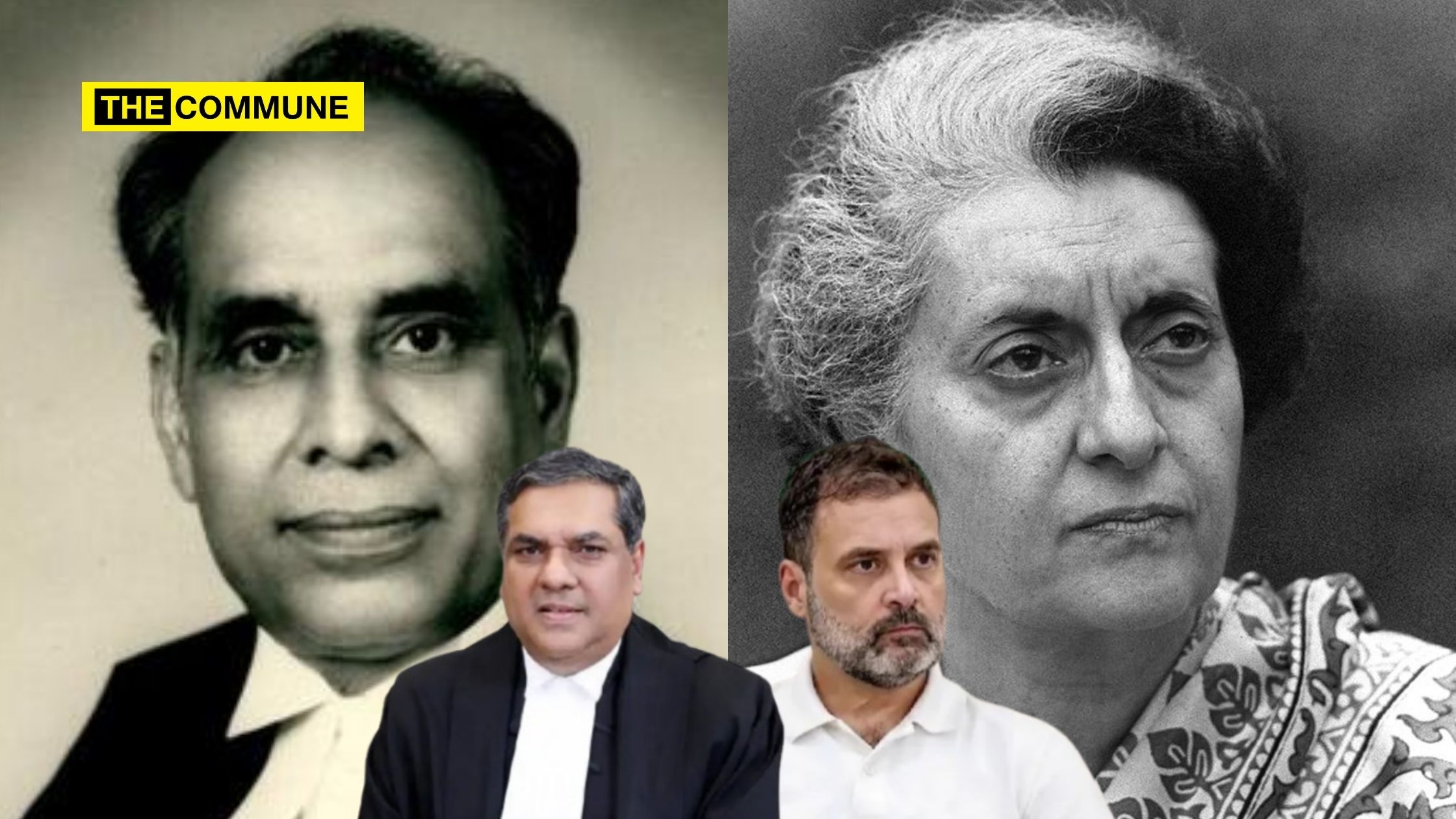
The Supreme Court on Monday set aside a decision of the Madras High Court, which had held that watching pornography involving children in private would not fall within the scope of the Protection of Children from Sexual Offences (POCSO) Act.
The judgment authored by Justice J.B. Pardiwala suggested that the Parliament should seriously consider substituting the term “child pornography” with “child sexual exploitative and abuse material” (CSEAM), and in the meantime, the Union government may bring an ordinance to amend the POCSO. Further, the top court asked all the courts across the country not to use the term “child pornography” in any judicial order or judgment and instead endorse the term “child sexual exploitative and abuse material (CSEAM).”
In its judgment, the Supreme Court said that an offence under Section 15 of the POCSO is in the nature and form of an inchoate offence, which penalises the mere storage or possession of any pornographic material involving a child when done with a specific intent prescribed thereunder, without requiring any actual transmission, dissemination etc. The CJI D.Y. Chandrachud-led Bench, in March this year, issued a notice on the plea challenging the Madras High Court order which had held that downloading and possessing child pornography does not amount to any offence.
The Madras High Court, in its impugned judgment, had quashed the FIR and criminal proceedings against a 28-year-old Chennai man, holding that watching child pornography in private would not fall within the scope of the POCSO Act. A Bench of Justice N. Anand Venkatesh reasoned that the accused had merely downloaded the material and watched the pornography in private. It was neither published nor transmitted to others. “Since he has not used a child or children for pornographic purposes, at best, it can only be construed as a moral decay on the part of the accused person,” it said.
The Chennai police registered an FIR under Sections 67 B of the Information Technology Act and Section 14(1) of the POCSO Act after it seized the phone of the accused and discovered that he had downloaded and possessed child sexual exploitative and abuse material.
–IANS
Subscribe to our Telegram, WhatsApp, and Instagram channels and get the best stories of the day delivered to you personally.
Defence Minister Rajnath Singh on Monday inaugurated the Shri Bhawani Niketan Sainik School in Jaipur, which will operate under the Public-Private Partnership (PPP) model. He emphasised the need for public-private partnerships to advance the nation through education combined with soldiery discipline.
Addressing the inauguration ceremony of Sainik School run under Shri Bhavani Niketan Shiksha Samiti located on Sikar Road in Jaipur, Rajnath Singh described himself fortunate to inaugurate the Sainik School here. He reflected on his own background as a teacher and said that it was a special honour to be present at the inauguration of a Sainik School. “I am happy that I have been a teacher,” he added. Further speaking on the rich history of Rajasthan, he said, “The land of Rajasthan is known not only for bravery but also for culture. Heroes like Maharana Pratap, Prithviraj Chauhan, Surajmal and Sawai Jai Singh were born here. Opening of Sainik School on the land of Rajasthan is no less than a blessing.”
He added: “Some people might think that many Sainik Schools are already running in the country. So, why was there a need to open 100 new Sainik Schools?” The Defence Minister replied to this query, “Actually, the Sainik Schools that have been in the country till now were established with the joint efforts of the Central and state governments. The state government used to allocate land, and the central government played other roles. All the old Sainik Schools of the country were running similarly. But, the 100 new Sainik Schools that PM Modi has set a target of establishing in the country are not being run through the partnership of the Central and state governments but based on the PPP model, i.e. Public-Private Partnership.”
He then emphasised the role of private entities in shaping the Indian economy and said, “The PPP model suits our system as it helps to bring in the strength of public and private sector together.” “Private sector contributes to over 50 per cent of the country’s economy, and hence PPP can be termed Private-Public Partnership.” Rajnath Singh also quoted the ancient education system, saying, “In our ancient education system, the focus has been on literature, science and mathematics along with spirituality.” He also quoted the lines spoken by former PM Atal Behari Vajpayee and said he used to say, “A person with a small mind can never become great, a person with a broken mind can never stand up. As the mind expands, happiness and joy will increase.” The Defence Minister praised Rajasthan’s historical significance, noting that the state has always played a key role in every era.
He highlighted Rajasthan’s reputation not only for its bravery but also for its rich traditions. Speaking of Jaipur, he emphasised its renowned architecture, cultural heritage, and popular tourist attractions, which make it a must-visit destination for anyone travelling to India. He also paid homage to the legendary figures of the state, including Maharana Pratap, Prithviraj Chauhan, Maharaja Surajmal, and Sawai Mansingh.
Rajnath Singh also highlighted the vital characteristics of Sainik Schools and said that they inculcate commitment towards values and discipline and hence a student gets comprehensive development which inspires him to take his country forward. “Sainik Schools have delivered renowned talent. Our Army Chief is a passout from Sainik School. In fact, students here can choose a career as per their choice; they can be doctor, engineer, banker, civil servant and others, however their learnings from Sainik schools will stay with them, this is what I believe,” he said.
Rajasthan Deputy Chief Minister Diya Kumari expressed gratitude to PM Narendra Modi and Defence Minister Rajnath Singh and said that after 2014, a strong defence shield has been created in the country. “The government is completely with the soldiers. PM Modi also celebrates Diwali with the soldiers. I am proud that I am a soldier’s daughter,” she said.
–IANS
Subscribe to our channels on Telegram, WhatsApp, and Instagram and get the best stories of the day delivered to you personally.
In a chilling case of crime that has left Bengaluru and the nation in horror, the dismembered body of 29-year-old Mahalakshmi was discovered inside a refrigerator at her rented apartment in Vyalikaval, Malleshwaram on 21 September 2024. Her body, which had been cut into more than 30 pieces, was found after her mother, Meena Rana, filed a missing complaint with the police.
Mahalakshmi, a team leader at a costume outlet in Malleshwaram, had been living separately from her husband, Hemant Das, due to ongoing domestic disputes.
The police have identified a suspect allegedly named Ashraf, believed to be from West Bengal, and efforts are underway to apprehend him. Karnataka’s Home Minister, G. Parameshwara, confirmed the investigation is progressing, stating that the police have collected crucial details but cannot share them publicly. The suspect is reportedly not from Karnataka, and authorities are confident of making an arrest soon.
Mahalakshmi had filed a complaint against her husband in February, accusing him of assault, while Hemant had also accused her of having an extramarital affair. The couple had been separated for nine months, with their daughter living with Hemant in Nelamangala. The police had previously registered a Non-Cognisable Report (NCR) concerning the domestic disputes between Mahalakshmi and her husband, Hemant Das, with family members attempting to mediate and resolve the issues.
On Sunday, 22 September 2024, Hemant shared that he and Mahalakshmi had been married for six years and had a daughter. He claimed that an extramarital affair triggered the couple’s separation Mahalakshmi allegedly had with a barber from Uttarakhand.“They both had an extra-marital affair, which led to the problem, and I discovered it somewhere in April-May last year. We were separated for the last nine months, and I do not know whether she was in contact with the man. He was also told not to meet her when she separated, but I did not know if he met her. For the first four months, my daughter stayed with her (Mahalakshmi), and later, she lived with me in Nelamangala,” Hemant said, as reported in Indian Express.
He also mentioned that Mahalakshmi visited Nelamangala about a month ago to see their daughter. “She was calm and did not talk much about her life,” he added.
Mahalakshmi’s brother recounted, “I visited her in July and stayed with her for a few days in another house. After I left, she rented a new place and started living there.” He also mentioned that they had planned to meet on 15 August 2024 to celebrate Independence Day together. Mahalakshmi’s brother mentioned that she had been unreachable since 4 September 2024.
Bengaluru Police Commissioner B. Dayananda, while addressing the media, confirmed that the prime suspect hasbeen identified. However, the police are still determining whether more individuals were involved in the murder. Mahalakshmi’s body was handed over to her family following a post-mortem examination. Authorities have registered a case under Section 103 (1) of the Bharatiya Nyaya Sanhita (BNS) as the investigation continues.
The case has drawn attention to concerns over women’s safety in Karnataka. Home Minister Parameshwara assured the public that the state is continuing efforts to ensure security through programs like Nirbhaya, with measures including increased CCTV installations.
The investigation remains ongoing as authorities work to arrest the suspect and uncover further details behind the gruesome murder.
Shocking Revelation in Bengaluru Murder Case: A woman's Body was found chopped in 32 Pieces, Stored in Fridge.
As per @IndiaToday report, victim has been identified as Mahalaxmi. Her husband has alleged that she was involved in an extramarital affair with a man named Ashraf. pic.twitter.com/sfRpLpp8Ix
In November 2022, the nation woke up to a spine-chilling murder case of Shraddha Walkar by her live-in partner, Aftab. Aftab Ameen Poonawalla and Shraddha were living in Delhi’s Mehrauli area. Both of them worked together at a call centre in Mumbai. He got to her through a dating app. The two started dating and moved in to live together. Since Shraddha’s family disapproved of the relationship, the couple eloped to Delhi.
Aftab strangled the 26-year-old Shraddha on 18 May 2022, following a heated argument as she had asked him to marry her. He then dismembered her body with a sharp weapon into 35 pieces and bought a fridge to store them. He then threw the butchered body parts at 18 different locations in Delhi over the next 18 days. To avoid being caught, he reportedly left the house in the wee hours carrying 1-2 body parts in a plastic bag.
Since Shraddha did not communicate or update her social media accounts, her concerned father came to Delhi to check her flat, which was found locked. He then filed a missing person complaint with the Mumbai police and also told them about his daughter’s relationship with Aftab, whom he suspected to be behind her disappearance. Her last location was found to be in Delhi.
In a statement, the Delhi police said that the Mehrauli Police had solved the six-month-old case and arrested Aftab for killing Shraddha, chopping her into pieces and disposing of them. Ironically, Aftab, on his social media, had shared posts positioning him as a champion of women and gay rights.
Subscribe to our Telegram, WhatsApp, and Instagram channels and get the best stories of the day delivered to you personally.
Senior Congress leader Rahul Gandhi said on Monday in J&K’s Poonch district that the Congress party has “psychologically defeated” the Prime Minister.
Addressing a large NC-Congress election campaign rally in the Surankote area of Poonch district, Rahul Gandhi said, “BJP and RSS people in J&K and other states spread hatred and violence. They make brother fight against brother. They only know to spread hatred and their politics is based on hatred. Hatred cannot be defeated by hatred. It can only be defeated by love. On one side are people spreading hatred, and on the other side are we, those who want to open the shop of love. During our Bharat Yatra, we opened the shop of love in every state in India.”
“Narendra Modi of today is not a shade of what he was in the past. They bring laws, and we oppose them, and they cannot pass laws now. We have defeated the psychology of Narendra Modi. When he came under pressure during the Lok Sabha polls, he said he was not ‘biological’ pretending to be in direct connection with God. This shows we have broken him psychologically by defeating his hatred with our love,” said Gandhi, the opposition leader (LoP) in the Lok Sabha.
“In India, UTs are made out of states, states are divided into two states, but never in our constitutional history has a state been downgraded into a UT. Today, your democratic right has been snatched. We will put enough pressure on them to restore your statehood,” said Rahul Gandhi.
“Today, all your decisions are taken from Delhi, but we want your decisions to be taken in J&K. We wanted statehood before the election, but they did not. They divide people based on region, language, and community. They are trying to divide Gujjars and Paharis. We will carry everybody together, give all of them their rights and move forward together,” said the Congress leader. While commenting on the job scenarios, he alleged, “In the entire country, Narendra Modi helps only two to three billionaires. He has waived off Rs 16 lakh crore of billionaires’ loans. He has finished small industries, and because of this, employment is not available in the country, including for J&K. A congress candidate is fighting from here, and NC is supporting us. I appeal to all my workers to support NC candidates wherever they fight elections,” said Gandhi.
National Conference president Dr Farooq Abdullah also accompanied Rahul Gandhi to Surankote, where he addressed the Congress poll rally. Abdullah said, “The future PM of India, Rahul Gandhi, is here today, and our war is against the hatred spread by BJP and RSS. They first tried to divide people based on religion and now they want to divide us in the name of communities. This PM says Muslims are intruders, and they produce a lot of children. He tells our Hindu sisters and daughters that Muslims will snatch their ‘Mangalsutra’. We joined hands to fight this. I request that the BJP candidate, Chowdhary Akram, withdraw from the contest and support the NC-Congress candidate in Surankote. If you want to end hatred, vote for the Congress.”
“Rahul Gandhi says he wants to stop the shop of hatred, but we add to his words that we want to sink the boat of hatred,” Abdullah further said. He appealed to voters to vote in favour of the Congress candidate in this Assembly constituency, Shahnawaz Choudhary.
–IANS
Subscribe to our Telegram, WhatsApp, and Instagram channels and get the best stories of the day delivered personally.
Union Home Minister Amit Shah said the Congress has constantly disrespected Dalit leaders, be it Ashok Tanwar or Kumari Selja, and even did not give Dr B.R. Ambedkar Bharat Ratna when it was in power. Minister Shah said this on Monday at a public meeting in Tohana town in Haryana’s Fatehabad district.
“If there is anybody who can protect the SC (Scheduled Caste) and OBC (Other Backward Class) reservation, it is PM (Narendra) Modi,” he said while slamming Congress leader Rahul Gandhi over his remarks on the reservation. In the last ten years of the BJP government in the state, Shah said, “Haryana has become free from corruption and hooliganism and is rapidly progressing on the path of development.”
The districts of Rohtak, Sonepat, Jind, and Hisar are known as the state’s Jat heartland, although the community also has a formidable presence in Jhajjar, Bhiwani, Sirsa, and Fatehabad. Jats constitute about 25 per cent of the state’s electorate and have traditionally dominated politics.
Eyeing to woo the voters in the region, who essentially constitute Sikhs, HM Shah asked Rahul Gandhi, “What are you talking about? You have a history of disrespecting the Sikh community. Thousands of Sikhs were killed on roads during the Delhi riots, and your party was at the helm. Even children and mothers were not spared…Rahul baba, if you want to do something, wear a turban, go to a gurdwara and apologise to our Sikh brothers.”
Minister Shah was addressing a Jan Ashirvaad Rally in Haryana to support BJP candidates Devender Singh Babli from Tohana and former parliamentarian Sunil Duggal from Ratia, with top party leaders in attendance. Clarifying the recruitment of all Agniveers from Haryana in government jobs after retirement from the Indian Army, Shah said, “About Agniveer, Rahul Baba is misguiding the youth. I am firm in what I say, and today, I am saying that none of the Agniveers of Haryana will be left. The Haryana government will provide them jobs equivalent to their pension,” he said.
Shah said middlemen in Delhi are waiting for the Congress to come into power in Haryana. “I want to ask the people of Tohana if they want to give Haryana to the middlemen?”
The BJP leader said the Congress governments were there to make “Delhi’s son-in-law happy. Farmers’ land was allotted at cheap rates. In (Bhupinder) Hooda Saheb’s government, (property) dealers have much say, the son-in-law has a say, and the corrupts have a say. The BJP has ended the government of the dealer and son-in-law”. “Hooda Saheb has promised to give two lakhs jobs. It’s in the manifesto of the Congress and I want to ask the leaders of the Congress party that these two lakh jobs will be given on the ‘kharchi-parchi’ (corruption-favouritism) system,” Shah said in his 25-minute address in Hindi.
Haryana will go to the polls for the 90-member assembly on October 5 with the counting on October 8. In the 2019 Assembly elections, the BJP, which won 40 seats, well below the 75-plus target, and was six short of a majority in the 90-member Assembly, announced an alliance with the Jannayak Janta Party (JJP) led by Dushyant Chautala, a great-grandson of former Deputy Prime Minister Devi Lal.
The rival Congress won 31 seats, while the less-than-year-old JJP, which broke away from the state’s once major regional Indian National Lok Dal (INLD) owing to family disputes, won 10 seats. Seven Independents and one each of the INLD and the Haryana Lokhit Party had also won. In the 2014 Assembly polls, BJP had won 47 seats and formed the government in the state for the first time.
–IANS
Subscribe to our channels on Telegram, WhatsApp, and Instagram and get the best stories of the day delivered to you personally.
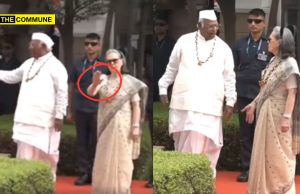
Cardinal Oswald Gracias, the Archbishop of Bombay, on Monday, praised Prime Minister Narendra Modi for pursuing inclusivity in all spheres of his governance and said that his concern for everyone instils a feeling of confidence even among minorities.
Speaking to media persons after the ‘Ek Ped Ma ke Naam’ programme in Mumbai, Archbishop Gracias said PM Modi is concerned about everyone, including minority communities. “I am confident that he has the interests of every minority, including the Christian community, in mind in all his plans and progress.”
He also hailed India’s diversity and called it a key pillar of its greatness. “Our greatness lies in our diversity — people, cultures, languages, and religions. I believe no other country has our richness,” he said.
Sharing his views on the celebration of ‘Sewa Pakhwada’ to mark PM Modi’s birthday, Cardinal Gracias said, “Today was a very significant event as a part of the Sewa Pakhwada 2024. We had a programme to encourage our youth and everybody else also to make sure Earth’s resources are very wisely used.
“The sapling plantation today symbolised our continuous commitment to care for the Earth and nature for future generations. We hope a movement begins here in the country and the world. I am happy that the government of India has taken the initiative to do this, and I am thankful to the Prime Minister for encouraging this movement (tree plantations).”
The Christian community of Maharashtra organized a ‘Sewa Pakhwada’ on Monday to celebrate PM Modi’s 74th birthday with a ‘prayer for peace’. Notably, Sewa Pakhwada is a 15-day event, organised every year from September 17 to October 2, to mark PM Modi’s birthday. The period as part of the party’s devotion to poor and marginalised sections. During this period, various activities, from health camps to blood donation drives to cleanliness drives, are organised throughout the country.
–IANS
Subscribe to our Telegram, WhatsApp, and Instagram channels and get the best stories of the day delivered to you personally.
Viduthalai Chiruthaigal Katchi has been showing increasing displeasure with the DMK for quite a while now. The cracks in the alliance seem to be becoming more and more visible as the days pass.
Recently, an interview between Aadhav Arjuna, Deputy General Secretary of the VCK, and Thanthi TV seemed to endorse these fissures even more. Responding to the question about Thirumavalavan’s recent ‘power-sharing’ comment, he said, “The cadre wanting to address issues faced by the community suggested that it would be nice if Thirumavalavan could become the Chief Minister or have a Cabinet position.”
Aadhav Arjuna added, “In 46 constituencies, there are not many good schemes announced by the government for Dalits. They are in extreme poverty, there are education-related issues, andno one could enter the professional education system. Everyone knows about it but we cannot turn a blind eye to it because we are not in power – VCK or Dalits.”
The anchor said VCK had to contest independently and not piggyback on some other party’s vote bank to achieve it. Arjuna said, “If you take a look at DMK’s history, Anna won in 1967 for several reasons, such as creating a campaign against central government policies like the Hindi language policy. It is believed that MGR had a role to play in such matters. The main reason for this was Rajaji’s Swatantra party. DMK opposed Rajaji their whole life, but they allied with the same Rajaji, winning 18 MLA seats. Anna also wins with a majority – can you call this statecraft or election politics?”
To this, the anchor questioned, “But Rajaji did not ask for a share in power“.Arjuna replied, “The situation did not arise. We should learn about that from Kalaignar. In 2004, he created a big alliance and won 40/40 seats. It is a coalition in the centre and their government in the state. At that time, there was a need for 272 MPs to stay in power, so DMK was a part of this alliance and won 40 seats. DMK, on its own, won only 16 seats.This is about 6% on a national level. But for this, they got 8 minister posts – 4 cabinet ministers. So if DMK can do it, why do we think it is wrong if some other party does it? And if Thirumavalavan speaks about this in public, why is it wrong? He has been in politics for 40 years, a PhD holder, he is a Periyarist, Ambedkarite, well-read, he can read without any form of paper in hand for 2 hours but if he wants to come to power, everyone belittles him and talks him down.”
Subsequently, the anchor threw a hypothetical question and said if VCK, which had only a 2% vote share in the recently concluded LS polls, depended on a party such as ADMK or DMK, which has a 30% vote share, how was it right to ask for a share in power. Arjuna reversed the question, put it back to the anchor,and said, “Let me reverse this to you: if your party has a 30% vote share, why don’t you contest the polls by yourself and win? Why do you need 2% and 6% to add to that ‘big’30% vote share? Because there is an alliance, we are contesting only two seats. You can contest alone. In 2014, Madam Jayalalithaa contested alone and did not speak to anyone. Like that, you can contest all 234 constituencies alone. Both DMK and VCK need each other. If there were no alliance, DMK would not have won. Take ADMK for example. In 2021, ADMK had a 33% vote share. I was a part of the campaign. Dalit and minority votes dropped because it allied with the BJP.”
Aadhav Arjuna further said, “This is like Maamannan film, which allows people to understand the point easily. My leader (Thirumavalavan) is taking things slowly. But the cadre are eager to see their leader in power, they wonder why he has to slog so much more. Someone who was in the film industry yesterday wants to become the Chief Minister, someone who came to politics yesterday is going to become the Deputy CM they say, so why is my leader still not one? VCK’s ground-level cadres have this sentiment and I am addressing that. What is wrong with having a share in power or having a Dalit CM? Why are you stressing on Dalit CM? Just call it Chief Minister. We have to create a Chief Minister for the public.”
He further said, “What can VCK’s principles be? Should it be what DMK thinks and acts upon? Or should we focus on how to improve the party and make it grow, focus on how to make VCK members minister? We want to focus on making our leader the Dy CM or Chief Minister. What DMK think about that, will DMK suffer because of that, or what ADMK or other parties will think is not our cadres’ job?”
He continued, “When a party has grown, why should we ask for seats in the alliance? There is no big party here. If they are a big party, they must contest alone in all 234 constituencies. We will come together, form an alliance based on an agenda, and decide how governance should be. When policies are not right in governments, we must raise questions. We recently voiced out against the Murugan Conference. Why did we do it? As per DMK’s ideology, you conduct a Periyar Conference andtalk about his equality principles, but instead of doing that, we were the first ones to question why they conducted the Murugan Conference. You cannot say that we raised this question because of our comment on share in power.
Even today, when Vijay has entered politics, people speak about him becoming CM but no one talks the same of Thirumavalavan. Why is everyone looking at him with a casteist mindset?”
Regarding VCK being a 2.5% vote bank, Aadhav Arjuna said, “In the north constituencies in TN, without VCK’s vote bank, DMK cannot win. You can check statistics for yourself. We have that much of an influence. If DMK has to win 50 out of 58 constituencies in north TN, they can win in the delta region, in the south it is 50-50, in the west it is difficult, only then they can cross 120. Since 1996, they have never formed a majority government. The victory in the northern constituencies is important for the DMK and VCK has a 60% share in it. 100% votes from Dalits and OBCs will vote for VCK. Everyone fights for the elections and wins but the victory is enjoyed only by DMK.”
Notably, Aadhav Arjuna is the son-in-law of ‘Lottery King Santiago Martin. Arjuna, who recently became the president of the Basketball Federation of India (BFI), surprised many with his switch to VCK. He was previously associated with a group led by Sabareesan, the son-in-law of Tamil Nadu CM M.K. Stalin.
In this interview, too, Arjuna insisted that he had nothing to do with his father-in-law’s business and had not inherited any wealth from Martin. He claims to be a self-made entrepreneur. He joined VCK during their ‘Vellum Sananayagam’ conference in Trichy, which saw large crowds and praise from party leader Thol. Thirumavalavan thanked Arjuna for supporting the event.
Subscribe to our Telegram, WhatsApp, and Instagram channels and get the best stories of the day delivered personally.
Andhra Pradesh Chief Minister Chandrababu Naidu recently alleged that animal fat was being mixed with ghee to make prasadam in Tirupati. Thiswas supported by a test reportwhich seemed to prove the same. This shocked the nation, especially Hindus, raising concerns about the sanctity and quality of the temple’s offerings.
To gain historical insight into such allegations, Dinamalar consulted Munirathnam, Director of the Inscriptions Department, Mysore Division, Central Archeology Department. Munirathnam, who has transcribed numerous inscriptions at the Tirupati Tirumala temple, shed light on ancient practices related to temple offerings and their preparation.
According to Munirathnam, the Tirupati Tirumala temple boasts over 1,150 inscriptions spanning from the 8th to the 18th century. He has personally transcribed 100 of these inscriptions at Ananda Nilayam. Many of these inscriptions detail donations made by Tamil, Telugu, and Kannada rulers, as well as wealthy individuals, to the Tirumala temple. The inscriptions provide intricate information about the ingredients and methods used in preparing food offerings made to Lord Venkateswara, reflecting the high importance given to the purity and quality of the food.
For instance, the inscriptions specify the exact quantities and types of ingredients used in offerings and record generous donations made to support these practices. Pallava queen Kanavan Perundevi is documented to have donated 4,176 gold coins. At the same time, Vijayanagara ruler Krishnadevaraya and his consorts, Thirumaladevi and Chinnadevi, are noted for visiting the temple seven times and donating golden vessels for anna daanam.
Furthermore, inscriptions highlight the rigorous oversight of food preparation at the temple. Inspectors were tasked with monitoring the cleanliness of the kitchen, the quality of food ingredients, and the adherence to traditional customs by those preparing the offerings. Any deviations from the established norms were met with severe punishments.
Munirathnam recalled one particular incident, recorded in the inscriptions, where a temple worker involved in food adulteration and another responsible for the adulteration of temple jewellery were discovered. In both cases, their entire lineage was permanently excluded from any work associated with the Tirumala temple. At the time, this punishment was considered the ultimate form of social exclusion. These strict measures underscore the high standards maintained by the temple authorities throughout history to ensure the sanctity of offerings made to Lord Venkateswara.
The recent allegations regarding the Tirupati laddus have raised questions about the temple’s current practices, but historical evidence suggests that the temple’s custodians have long taken the quality of food preparation seriously, with severe consequences for any infractions.
As the controversy unfolds, it remains to be seen how the temple administration will address Chandrababu Naidu’s concerns. The historical record stands as a reminder of the stringent measures enforced in the past to maintain the sanctity of the Tirumala temple’s offerings.
Subscribe to our channels on Telegram, WhatsApp, and Instagram and get the best stories of the day delivered to you personally.
Mocking and deriding our heads of state for being Hindu is a habit, especially for the Dravidianists in Tamil Nadu. Leading the pack would be Viduthalai Chiruthaigal Katchi member’s wife and DMK supporter Dr Sharmila.
In a post on her X handle, Sharmila shared a picture of President Draupadi Murmu, who is seen meditating, wearing religious marks on her forehead, and adorning a rudraksha mala. The caption mocks President Murmu, and Sharmila wrote, “I thought it was the soothsayer lady (akin to God woman) we see in TV serials,but on second glance, I found it was our President.”
— Saravanaprasad Balasubramanian (Modi ka Pariwar) (@BS_Prasad) September 22, 2024
She has indulged in mocking Hindus and Hindu customs for a very long time despite being a Hindu and Tamil Brahmin herself. She is the wife of VCK MLA SS Balaji, who had peddled fake news on her X handle addressing Prime Minister Modi in singular.
Following the Tirupati laddoo controversy, Sharmila also mocked Hindus making such a post as below.
In a TV debate held in 2023, she made misleading claims while advocating for the DMK alliance. She incorrectly asserted that late DMK patriarch M. Karunanidhi established India’s first women’s police station in 1973 whenitwas actually initiated by AIADMK leader J. Jayalalithaa in 1992. She also misattributed the creation of a female commando force to the DMK, which was established by Jayalalithaa in 2003. Additionally, Dr. Sharmila falsely claimed that the DMK ensured 50% representation of women in local body elections, a measure actually introduced by Jayalalithaa’s AIADMK in 2016.
Dr.Sharmila of VCK is not only a rogue woman but a perennial bluffer of the first order. pic.twitter.com/gZuuOAz5Ob
This dravidian casteist is insulting the looks and attire of President of India, she must be arrested under PCR . This is true nature of Dravidian racist thugs. https://t.co/q3AD3hxoA4pic.twitter.com/FXmuFfBO90
Author and historian TS Krishnan recently published a Tamil translation of Ganga Devi’s Madhura Vijayam. The book is titled கங்கா தேவியின் மதுரா விஜயம் (Ganga Deviyin Madhura Vijayam). Before getting into his translation, here is some history. Beyond being a passionate Madurai-ite and a history buff, a few other things drew me close to Ganga Devi and her work around fifteen years ago. My interest was kindled by a few usual tropes that people use to deride Sanatana Dharma: Education for women was (only) made possible by the Dravidian movement, no one but Brahmins had access to Sanskrit, are some of the popular ones still being peddled.
Sanskrit And Women
We don’t have to go way back into the Vedic age to cite the examples of Gārgī Vāchaknavī, Vadava Pratitheyi, and Sulabha Maitreyi to prove our point. Many women scholars of Sanskrit existed around the time of Ganga Devi, and most were not Brahmins. Rajasekara, a dramatist from 950 CE, says that gender isn’t a determining factor; it is the inner genius.
Women like Tirumalambika, who lived around 1530 CE, wrote a Champukavya, Varadambikaparinaya, immortalising Achutadevaraya’s marriage to Varadambika. Achutadevaraya was the successor of Krishnadevaraya, the emperor of Vijayanagara. We then had Ramabhadrambal in Thanjavur, who wrote Raghunathabhyudaya, honouring her husband, Raghunatha Nayak (1600 CE), who was part of the Thanjavur Nayak Dynasty. His court also patronised another woman, poet Madhuravani, who translated into Sanskrit the Mahakavya that Raghunatha Nayak wrote in Telugu, Valmikicharitram.
Historically, numerous women poets and scholars of Sanskrit stood as tall as their male counterparts. Most of these great women were not Brahmins, dispelling the Dravidian trope that non-Brahmins were prohibited from studying Sanskrit.
Madhura Vijayam – Real History and Some Personal History
Madhura Vijayam or Virakamparayacharita is the history of Kumara Kampana, the prince of Vijayanagara and the son of Bukka I, the emperor who succeeded his brother, Harihara I, as the emperor of the Vijayanagara empire. The work traces Kumara Kampana from birth to his conquering and liberating Madurai from the tyrannical Islamic Sultanate. The author of this book is Kumara Kampana’s Queen consort, Ganga Devi, a Sanskrit poetess par excellence.
The work dates from around 1380 CE but was considered lost until about 108 years ago. In 1916, Pandit Ramasvami Sastriar discovered a palm-leaf manuscript of this great work in Trivandrum. But that wasn’t the complete work. There are many incomplete parts. It is unclear how much of this great work is lost. Apart from this manuscript, there are supposed to be two more, one in Lahore and another in Trivandrum (a second).
This great work was salvaged, printed in Trivandrum, and made available in 1924. The original, which was edited and published by Harihara Sastri and Srinivasa Sastri in 1924, retailed for twelve Annas, a book whose PDF version I could read.
The other two—the First, “The Conquest of Madhura by Ganga Devi,” translated by Dr. Shankar Rajaraman and Venetia Kotamraju—were published in 2013. This beautiful translation in English has the Sanskrit verses side by side and is a lovely book I lost before one of the translators, Dr. Shankar, was kind enough to send me an autographed (in Sanskrit) copy in 2021. The second is a Tamil translation கங்காதேவியின் ‘மதுராவிஜயம்’ (Gangadeviyin ‘Maduravijayam’) by Srivaishnavasri. A. Krishnamacharyar, published in 2010. This work starts with some background history and then goes into the Tamil translation of the verses.
கங்கா தேவியின் மதுராவிஜயம் – The Translation By TS Krishnan
This is an excellent, easy-to-handle Tamil translation of the verses of Ganga Devi’s work. Krishnan, an IT professional and history buff, knows the syntax of presenting translations. He doesn’t jump straight into the work but provides you with a lot of history and background before he takes you to visit Ganga Devi’s work. The background he gives is like a perfect starter before the main course is served, the Tamil translation of the great work.
The translation covers the nine cantos of the work. Each canto starts with a summary of what one can expect, followed by the verse-by-verse translation of the work. Krishnan also provides timely interludes between verses, explaining certain things implied by the author but that a person reading a translation might not grasp. The author’s extensive research is apparent in his presentation.
Why Read The Book?
This is in lucid Tamil prose anyone can read, understand, and appreciate.
Understand our real history and start discerning good from bad.
To realise what our ancestors have gone through to save our temples and culture and start working towards restoring Bharat’s glory.
So, if you read Tamil and want to learn more about our history and culture. Grab this book.
Let us not forget
धर्मो रक्षति रक्षितः
Tiruvalluvar says this more directly
அறத்தினூஉங்கு ஆக்கமும் இல்லை அதனை
மறத்தலின் ஊங்கில்லை கேடு.
Thirukkural (Chapter 4, The Glorification of Righteousness, 31)
There is no greater good than Righteousness, nor no greater evil than the forgetting of it.
The Kural or The Maxims of Thiruvalluvar by VVS Aiyer
Raja Baradwaj is a marketing communications professional who works with a leading technology multinational company. He is an avid reader, history buff, cricket player, writer, and Sanskrit and Dharma Sastra student.
Subscribe to our Telegram, WhatsApp, and Instagram channels and get the best stories of the day delivered to you personally.