Home Blog Page 740

DMK & VCK Seek To Intervene In Supreme Court Challenging Places Of Worship Act, 1991

DMK & VCK Seek To Intervene In Supreme Court Challenging Places Of Worship Act, 1991

The ruling DMK in Tamil Nadu, along with its ally, the VCK, has submitted an application to the Supreme Court to intervene in a petition challenging the constitutional validity of the Places of Worship Act, 1991. This Act mandates maintaining the status quo of religious sites as they existed on 15 August 1947.

A bench comprising Chief Justice Sanjiv Khanna and Justices Sanjay Kumar and K.V. Viswanathan is currently hearing a series of petitions both challenging and supporting the Act. The legislation has become a central issue in disputes over the ownership of religious sites, including cases involving the Gyanvapi Masjid and Sambhal Mosque.

The lead petition, filed by BJP leader Ashwini Kumar Upadhyay, contests certain provisions of the Act. The petitioner argues that these sections violate constitutional principles, undermine secularism, and deny judicial remedies for alleged historical injustices.

In response, the DMK, represented by Senior Advocate P. Wilson, has sought to support the Act, presenting its case before the bench led by the Chief Justice.

During 12 December’s hearing, the Supreme Court issued a significant directive, restraining courts across the country from entertaining or passing orders on lawsuits seeking relief under the 1991 Act, including requests for surveys of religious sites. The court emphasized, “We are examining the vires, contours, and ambit of the 1991 Act,” and instructed other courts to refrain from intervening until further notice. Additionally, the bench ordered that no new suits related to the Act be filed or registered until further instructions are issued.

(With Inputs From India Today)

Subscribe to our channels on Telegram, WhatsApp, and Instagram and get the best stories of the day delivered to you personally.

Telangana: Tahsildar Letter To Collector Reveals Former Congress MLA Sampath Kumar’s Interference In Illegal Church Construction & Caste Certificate Misuse

Telangana: Tahsildar Letter To Collector Reveals Former Congress MLA Sampath Kumar's Interference In Illegal Church Construction & Caste Certificate Misuse

A startling revelation has come to light through a communication from the Tahsildar to the District Collector, exposing that former Congress MLA from Alampur, Sampath Kumar, interfered with authorities to halt the investigation into the illegal construction of churches and questioned the validity of caste certificates issued to converted Christians.

According to the report, the MLA instructed officials to refrain from taking action against unauthorized church buildings and the alleged misuse of caste certificates by individuals who had converted from Hinduism to Christianity but continued to hold Scheduled Tribe (ST) status.

The Tahsildar’s report, submitted to Jogulamba Gadwal District Collector, provides details of a complaint from local residents regarding illegal church construction in Manopad town. The complaint, lodged on 13 May 2024, raised concerns about churches being built without proper permits. It specifically highlighted that members of the Hindu community obstructed a church constructed on Sy No 294/1A/1, but construction had resumed despite the lack of approval from the authorities. The petitioners also pointed out that one Sri Gudem Yejra Samuel, a pastor from Jallapuram Village, had obtained an SC (Madiga) caste certificate despite converting to Christianity.

In response, the Tahsildar had referred the matter to the Mandal Girdawar for an inquiry. The Revenue Inspector’s report confirmed that an individual named Sri Mathaiah, a Christian preacher, was building a church without the necessary permissions, with only the foundation stage of construction completed.

The Tahsildar report states, “I invite kind attention to the references cited wherein Additional Collector, (Revenue) has instructed to submit a detail report in the above subject matter on 14.09.2024 an the representation of Sri Vadla Raghy and others. In this regard I submit that Sri Vadla Raghu and others have represented in their petition on 13.05.2024 that in Manopad town some illegal churches are being constructed without obtaining any permission from the concerned authorities and further it is represented that in Sy. No. 294/1A/1 a church has been constructed, which was obstructed my Hindu Community people, again the same church is being constructed and requested to take action to stop the construction of the church which is being constructed without any permission from the concerned authorities.”

“Further the applicants in the representation requested that one Sri Gudem Yejra Samuel, Pastor belongs to Jallapuram Village having two children G. Arpitha and G. Stephen Paul has been issued S.C. (Madiga) caste certificate and requested to take action. In this regard the matter was referred to Mandal Girdawar for inquiring into the matter and to report. Accordingly the Revenue Inspector has submitted his report which reveals that from Manopad village to Chennipadu Village road one Sri Mathaiah, Christian religion preacher is constructing church which is in starting stage, foundation work and the church construction has no permission from the concerned authorities. Further it is requested that Sri Gudem Yejra Samuel who is staying Manopad village since (20) years working as Pastor in Christian Sangam Church since (25) years. He has taken Baptism in 2014 and even took Baptism for his children also.” He explained

The controversial part of the report states that notices were issued to both Sri Mathaiah for building a church without authorization and to Sri Yejra Samuel for obtaining an SC (Madiga) caste certificate despite his conversion to Christianity. They were given until 7 October 2024, to respond, but no explanations were received. Instead, the Tahsildar reports that former MLA Sampath Kumar instructed them not to take any further action in the matter.

“In this regard a notice has been issued to Sri Mathaiah for constructing Church in Manopad village without taking any permission from concern authorities and another notice was issued to Sri Yejra Samuel for obtaining caste certificate of SC (Madiga) even ofter taking Baptism and even after Convertinig from Hindu Religion to Christianity and instructed them to submit their explanation, given date for submitting explanation was 07.10.2024 but so for no explanation was received from them, instead I have been instructed not to take any further action in the matter by the former MLA, Alampur Constituency Sri Sampath Kumar. This is submitted for favour of kind information.” the report states.

The report concludes by highlighting that the MLA’s intervention prevented any further action from being taken, and the issue remains unresolved despite clear instructions from the authorities to investigate the matter further.

Subscribe to our channels on Telegram, WhatsApp, and Instagram and get the best stories of the day delivered to you personally.

DMK Govt Agrees To Kerala Govt’s Conditions For Mullaiperiyar Dam Maintenance

DMK Govt Agrees To Kerala Govt's Conditions For Mullaiperiyar Dam Maintenance

In a move sparking political and legal debate, the DMK government has agreed to Kerala’s conditions for Mullaiperiyar Dam maintenance, raising concerns over Tamil Nadu’s rights and compliance with Supreme Court rulings.

The DMK government, which frequently advocates for protecting Tamil Nadu’s rights from the Central Government, now appears to have conceded some of those rights to Kerala. Amid escalating political tensions over claims that Kerala is obstructing Tamil Nadu’s maintenance work at the Mullaiperiyar Dam, K. Manivasan, Additional Chief Secretary of Tamil Nadu’s Water Resources Department (WRD), announced on December 13, 2024, that Tamil Nadu will proceed with the maintenance under conditions set by Kerala.

One key condition requires that Kerala’s Executive Engineer from the Minor Irrigation Department oversee the maintenance operations. “Our main priority is to complete the dam’s maintenance work. However, we will consult legal experts before deciding on our next course of action,” Manivasan stated in a report.

Earlier in the day, Theni Collector R.V. Shajeevana confirmed that the Kerala Forest Department had granted permission for Tamil Nadu’s Public Works Department (PWD) vehicles to transport materials and equipment for the dam’s maintenance work.

In the Tamil Nadu Assembly, Water Resources Minister Duraimurugan had earlier disclosed that discussions would be held with Kerala regarding the dam’s upkeep.

Back on 7 May, Tamil Nadu’s PWD submitted a comprehensive proposal outlining 13 types of maintenance work for both the Mullaiperiyar main dam and the baby dam. Engineers from Tamil Nadu had written to Kerala and also met with their counterparts to emphasize the importance of the planned work. Additionally, engineers from Kerala had visited the site six months ago. The maintenance was initially slated for completion before the onset of the northeast monsoon but was delayed due to the lack of approval from Kerala.

On 4 December, the Kerala Forest Department blocked two Tamil Nadu PWD trucks carrying sand at the Vallakadavu check post in the Periyar Tiger Reserve area. After being stalled for four days without the required clearance, the trucks were forced to return to Tamil Nadu.

Sources revealed that on 14 December 2024, Levins Babu Cottur, Kerala’s Executive Engineer for Mullaiperiyar, sent a letter to the Deputy Director of the Periyar Tiger Reserve outlining the conditions under which Tamil Nadu could proceed with the work. This letter was also forwarded to Tamil Nadu officials.

Ranjithkumar, a Tamil Nadu Farmers’ Association representative, strongly criticized Kerala’s actions, calling the conditions “unprecedented.” He argued that it was improper for Kerala’s Minor Irrigation Department to impose restrictions on Tamil Nadu’s PWD, claiming this was contrary to a Supreme Court ruling. “Kerala is gradually undermining Tamil Nadu’s authority over the maintenance of the Mullaiperiyar Dam,” he said. “If Tamil Nadu accepts these conditions, Kerala could use this as a legal precedent to approach the Supreme Court and secure a favorable decision.”

(With Inputs From TNIE)

Subscribe to our channels on TelegramWhatsApp, and Instagram and get the best stories of the day delivered to you personally.

Madras High Court Allows ₹1 Lakh Award In MS Subbulakshmi’s Name To Woke Leftist Musician TM Krishna Despite His Hitjob Article On Her Legacy

Madras High Court Allows ₹1 Lakh Award In MS Subbulakshmi's Name To Woke Leftist Musician TM Krishna Despite His Hitjob Article On Her Legacy

On 13 December 2024, a Division Bench of the Madras High Court overturned an interim injunction issued by a single judge that had prevented the Music Academy and ‘The Hindu’ from awarding a cash prize of ₹1 lakh under the title “Sangita Kalanidhi MS Subbulakshmi Award” to leftist musician TM Krishna.

The Bench, comprising Justices S.S. Sundar and P. Dhanabal, allowed an appeal by ‘The Hindu’, which challenged the single judge’s order prohibiting the use of M.S. Subbulakshmi’s name for the award. The Music Academy has given this award since 2005, honouring recipients of the prestigious Sangita Kalanidhi title.

In their ruling, the judges emphasized that awarding a prize in the name of a legendary figure, such as M.S. Subbulakshmi, to recognize an individual’s accomplishments is not illegal. “The conferment of an award by an organization or trust in memory of a legend is a form of acknowledgement, not prohibited by law,” the court noted. The Bench questioned how such an award could be considered a violation of Subbulakshmi’s wishes if it was intended as a tribute rather than an exploitation of her legacy.

The musician’s grandson, V. Shrinivasan, filed the lawsuit and argued that Subbulakshmi had left a will specifying that no memorial, trust, or foundation should be created in her name. The single judge had interpreted the term “memorial” to include awards and cash prizes, concluding that they should not be named after her. However, the Division Bench disagreed with this interpretation. “Had it been the intention of the testatrix that no award should bear her name, it would have been stated explicitly. A contrary interpretation is not legally tenable,” the Bench observed.

In delivering the judgment, Justice Sundar explained that the will’s language suggested Subbulakshmi was concerned about misusing her name for fundraising or creating memorials, not honouring her legacy through awards. The court also noted that several institutions had already established awards and even auditoriums in her name without Shrinivasan’s objection, raising questions about the genuineness of his claim.

The Bench remarked that the ongoing litigation appeared motivated by personal reasons against T.M. Krishna, and they expressed concern that such legal actions might undermine the cultural respect accorded to Subbulakshmi. They concluded, “This case is likely to be shocking to many musicians and artists who revere her. The plaintiff seems to lack bona fide grounds for this litigation.”

Although the Division Bench declined to dismiss the lawsuit outright, it found that Shrinivasan had failed to establish a prima facie case for an interim injunction, allowing the Music Academy and ‘The Hindu’ to proceed with the award. The court also remarked that while family members of M.S. Subbulakshmi might hold her legacy in esteem, it was unlikely that all would share Shrinivasan’s position.

Minutes after the Division Bench’s ruling, senior counsel N. Venkataraman, also Additional Solicitor General in the Supreme Court, sought an urgent hearing before the Chief Justice of India (CJI) for an appeal. The CJI declined, suggesting that the matter could only be addressed the following Monday, and noted that the award could be rescinded if the appellant’s case was upheld.

Meanwhile, senior counsel R. Sankaranarayanan requested that the Division Bench stay its order until the Supreme Court heard the matter. However, senior counsels representing ‘The Hindu’ and the Music Academy opposed this, arguing that the plaintiff could not simultaneously pursue appeals in both courts. Justice Sundar clarified that the order would stand, and the plaintiff could take the necessary legal steps as per the law.

(With Inputs From The Hindu)

Subscribe to our channels on Telegram, WhatsApp, and Instagram and get the best stories of the day delivered to you personally.

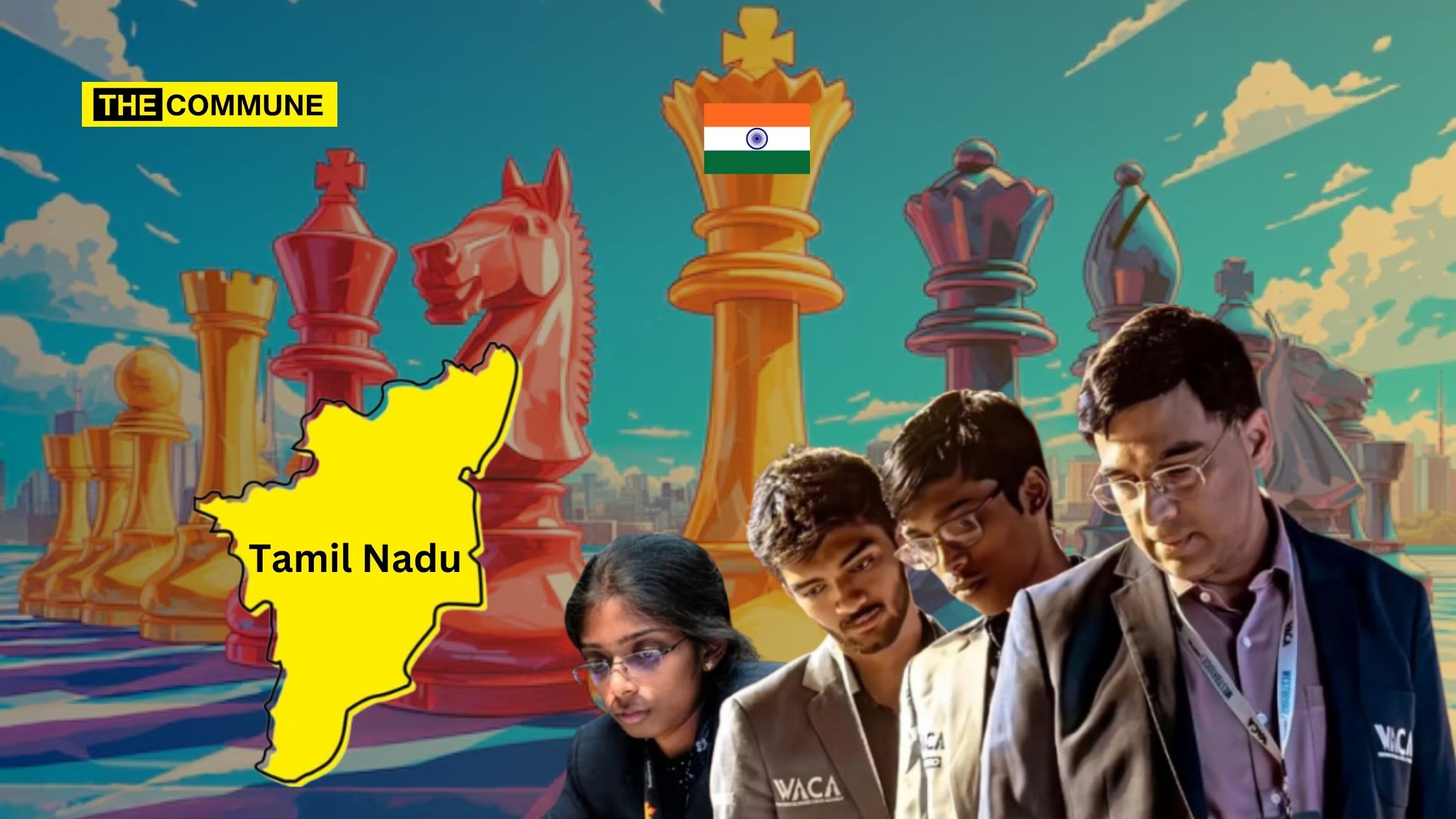
How Tamil Nadu Became India’s Chess Powerhouse

Tamil Nadu, India’s chess capital, has produced legends like Anand, Gukesh, and 29 GMs, powered by strong mentors, schools, and initiatives.

Tamil Nadu has always been a chess-conscious state. Not many know that the great son of Bharata Mata, Maharishi V V S Aiyer, was a big chess player. He was so prominent that the chess problems he solved were published in chess magazines in England and Holland. It is said that the earliest chess club in Chennai was the Mylapore Solar Chess Club, established around 1920 by K S Subramanya Aiyer. Manuel Aaron became the first Indian FIDE International Master (1961).

He did his best in various capacities for the Tamil Nadu Chess Association and the Indian Chess Federation; he was also a journalist. Not many know that one of the first corporates to support chess in India was also from Tamil Nadu. It was the great philanthropic industrialist from Pollachi, Dr N. Mahalingam of the Sakthi Group. A chance meeting with Aaron in 1966 pushed Dr. N. Mahalingam into the chess scene. He later became the president of the Tamil Nadu Chess Association and partnered with Aaron to promote chess.

Tamil Nadu – The Chess Master Factory

The second FIDE IM, V. Ravikumar (1978), was also from Tamil Nadu. The third IM, Raja Ravi Sekhar (1981), was also from Tamil Nadu. India had to wait for its first Grandmaster until 1988, when Viswanathan Anand stormed into the scene. The Russian Culture Center in Kasuri Rangan Salai was home to the Tal Chess Club, the sanctuary of the chess-crazed Tamil Nadu. There is this very famous story about when Vishy Anand was introduced to the Russian President, Vladimir Putin, in May 2012. This was before his World Championship match against Boris Gelfand of Israel at the Tretyakov Gallery in Moscow in 2012. Anand is said to have told President Putin that he learnt his ropes at the Tal Chess Club at the Russian Culture Center in Chennai. The president is supposed to have quipped, “So we brought this upon ourselves.”

1988, the year Vishwanathan Anand became a FIDE Grandmaster, proved to be a watershed moment. His success further galvanised the Tamil Nadu Chess scene, with many, like GM R. B. Ramesh, crediting their taking up competitive chess after Anand. Today, Tamil Nadu boasts 29 out of the 83 FIDE Grandmasters. We are also home to eight Women Grandmasters. If we take a leaf from the Canadian writer Malcolm Gladwell, Vishwanathan Anand was The Tipping Point of not just the Tamil Nadu chess scene but for the whole of India.

Post Tal Chess Club

Tal Chess Club folded with the breakup of the USSR. GM R. B. Ramesh and many other able hands have since filled the vacuum. Ramesh needs a special mention, as he retired as a player very early when he was only 32. Another story is that he became a coach when he was 22, taking charge of the Indian Junior Chess Team that attended the Asian Junior Chess Championships (1998) in Iran. He struck gold right from his first assignment as a coach, returning with winners in both the boy’s and girls’ categories – Tejas Bakre and Vijayalakshmi Subburaman, respectively. 1999 saw Ramesh coaching Aarthie Ramaswamy to a World U-18 Championship. It is another story that Aarthie and Ramesh are married now, and together, they successfully run Chess Gurukul, the academy in Chennai that nurtures and mentors most of the top chess talents from India.

Vishy Anand – The Father Of Indian Chess Boom

Vishy Anand’s role as a mentor and a pillar of support for chess in India cannot be downplayed. Every Indian chess player looks forward to the fabled visit to Vishy Anand’s trophy room when they become a GM, where Anand spends time with the new GM discussing his/ her game. Many have rightly called Anand, the father of the Indian chess boom. His Westbridge Anand Chess Academy (WACA) has been at the forefront of making many champions, including the reigning World Chess Champion, D. Gukesh. Gukesh had this to say after his win, “Vishy Sir was never officially a part of the team but we all know he was supporting me. He attended one of the days during the training camp and also helped remotely for a few sessions”.

The other Chennai institution that deserves credit for promoting chess in a big way is Velammal Vidhyalaya. This school nurtures many precious chess talents from India, including Grandmasters, D. Gukesh, R. Praggnanandhaa, S. P. Sethuraman, Leon Mendonca, K. Priyadharshan, B. Adhiban, Vishnu Prasanna and R. Vaishali and Women Grandmaster, V. Varshini and Women International Master, R. Rakshitta. This school has been the powerhouse of Indian chess since 2005. They have won the World School Chess Championships five times, with D. Gukesh and R. Praggnanandhaa being part of the winning team in 2021.

Former TN CM J Jayalalithaa’s Contribution

Amma J Jayalalitha is another person who did her bit to promote chess in Tamil Nadu. Some of us remember Amma using Assembly Rule 110 to announce a series of welfare schemes and policies during her term as the Chief Minister. One of her famous announcements was the school reforms in August 2011. Part of that was a plan called the “7 to 17 program” to take chess to all the government schools in Tamil Nadu among children aged 7 to 17. She also brought the World Chess Championships 2013 to Chennai, where Magnus Carlsen defeated Vishwanathan Anand to win the title.

Amma’s fondness and support for sports in Tamil Nadu is well known. Therefore, her championing of the cause of chess shouldn’t come as a surprise. Then came the 44th Chess Olympiad, which happened in Mahabalipuram, Tamil Nadu, in 2022, opened by the Indian Prime Minister Narendra Modi. India 2, coached by GM R. B. Ramesh, included D. Gukesh, Nihal Sarin, R. Praggnanandhaa, B. Adhiban, and Raunak Sadhwani won the bronze medal in the team championship. D. Gukesh made his mark here winning the gold medal for Board 1. The Indian women, Koneru Humpy, Harika Dronavalli, R. Vaishali, Tania Sachdev and Bhakti Kulkarni also won the bronze.

Tamil Nadu has always been the chess capital of India. With D. Gukesh winning the World Chess Championships 2024 and great mentors and ambassadors of the game like Vishwanathan Anand, R. B. Ramesh, Aarthie Ramaswamy, etc. propelling the game, we are going to see many champions from the state in the coming years. The following Thirukkural fits the chess scene in Tamil Nadu perfectly.

நிலவரை நீள்புகழ் ஆற்றின் புலவரைப்
போற்றாது புத்தேள் உலகு. (Fame, 234)

“Behold the man that hath won a lasting, worldwide fame: the Gods on high prefer him even before saints.” – The Kural Or The Maxims Of Tiruvalluvar – V V S Aiyar.

Raja Baradwaj is a marketing communications professional who works with a leading technology multinational company. He is an avid reader, history buff, cricket player, writer, and Sanskrit and Dharma Sastra student.

Subscribe to our TelegramWhatsApp, and Instagram channels and get the best stories of the day delivered personally.

Rao Saheb M. C. Madurai Pillai: A Forgotten Hero Of Social Reform And Sanatana Dharma

Rao Saheb M. C. Madurai Pillai: A Forgotten Hero Of Social Reform And Sanatana Dharma

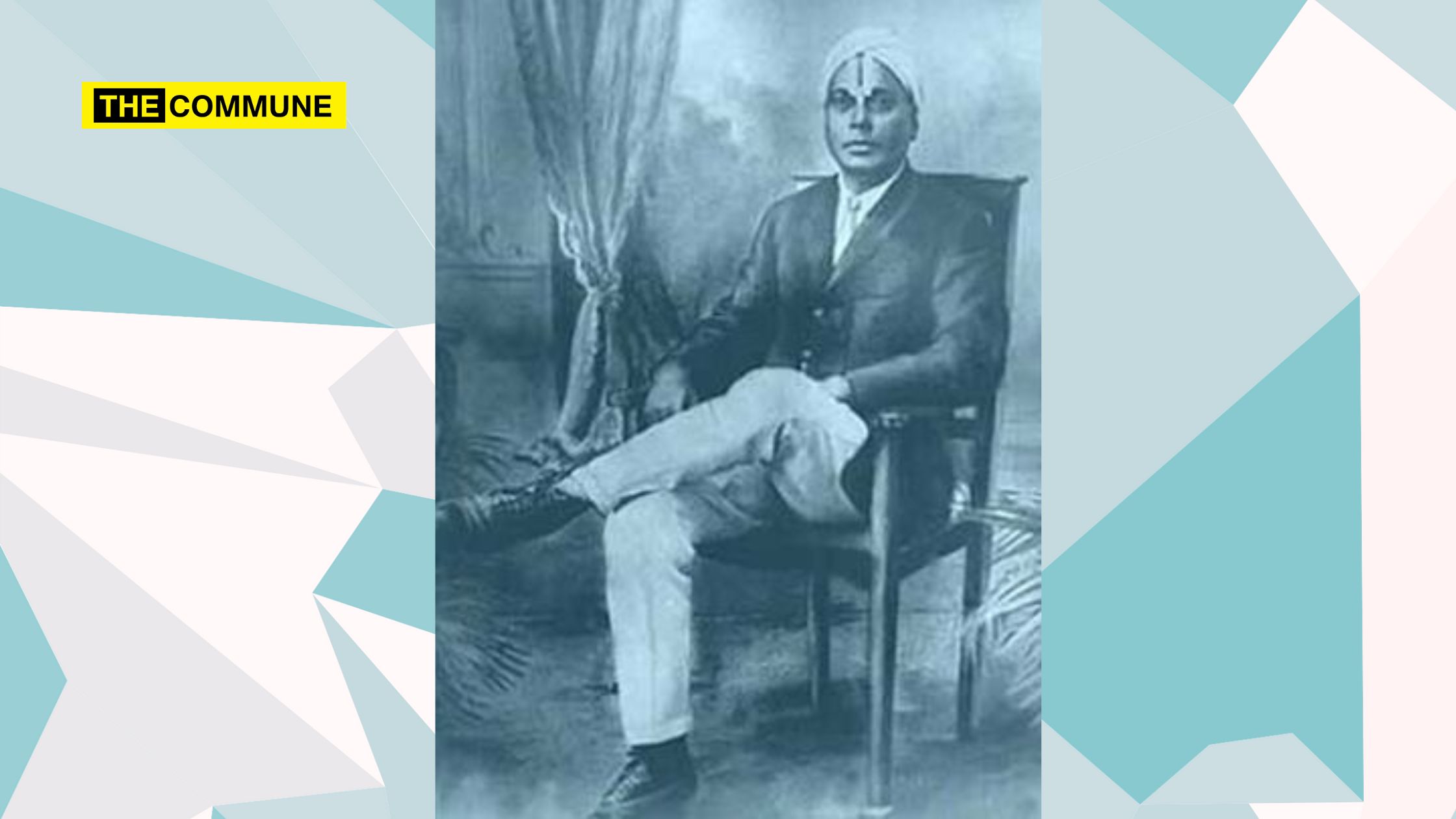
A select few and their cabal traditionally controlled the narrative of India’s history. All these years, they decided who should be spoken about and who would be pushed to obscurity, as well as the quantity and quality of what would be spoken. Great people who wouldn’t fit their definition went into the footnote, or if they were lucky, as an obscure statue in a nondescript corner. One of these forgotten heroes is Sri. M. C. Madurai Pillai (not to be mistaken with another great son of Bharata Mata, Sri. P. M. Madurai Pillai).

We know little about Sri. M. C. Madurai Pillai’s childhood. He was born into a Dalit Paraiyar-Valluvar family. He worked in the Kolar Gold Fields (KGF) in Karnataka. In those days, many workers there belonged to the Scheduled Caste community from Tamil Nadu, especially from the northern districts. Even Swami Sahajananda’s family from Arani moved to Kolar and found work in the KGF.

A Public Face In Madras And Kolar

Sri M. C. Madurai Pillai grew with the KGF and became a key leader and businessman. By his twenties, he was one of the KGF’s leading contractors. Kolar and Madras were home to him, and he shuttled between these two places. Soon, he was among the few successful businessmen in Madras and Kolar. His philanthropic bent of mind pushed him into public service at an early age.

He served as a member of the Madras Municipality (much before the Madras Corporation days) and the Saidapet Taluka Board and later became a Chengalpet Zilla Council Board member. The government feted him with the Rao Saheb award and title. He was also appointed an Honorary Magistrate of Madras City.

He understood the value of education in elevating lives, which led the government to appoint him to the province’s Education Council. In 1919, he was instrumental in starting Sri Namperumal Primary School in both Robertsonpet and Andersonpet in Kolar. These two schools were later elevated as Middle Schools. Later, he became a Member of the Madras Presidency Legislative Council in 1925.

A Devout Vaishnava

He was a devout Vaishnava and a staunch Sanatani. Once, while on a visit to Sri Ranganatha temple in Srirangam, he chanced a Kata Kalaksheba (discourse) on Srimad Bhagavata Purana by Sri Ubhaya Vedhaantha Pravarthaga Srimath Arulmaari Thiruvengada Varayogi Swamigal. Mesmerised, he wanted to become a disciple of the Swami and take the Pancha Samskara ritual to formally enter the Sri Vaishnavism portals. The Swami’s disciples enquired about his antecedents, and knowing he was from the Pariyar community, they refused him access to the Swami. Unperturbed, he started a fast until the Swami gave him Pancha Samskara.

The Swamiji, pleased with Sri Madurai Pillai’s focus and dedication, initiated him into Sri Vaishnavism, giving him the Pancha Samskara and the name “Madurakavi Ramanujadasar.” The Guru also visited his Shishya’s abode in Kolar, which started a new chapter in the district’s history, reeling under Christian missionaries’ influence. Sri. Madurai Pillai established “Sri Udayavar Sabhai” in Andersonpet in Kolar, making it the fulcrum of Sanatana Dharma in the region. Many people from across all communities were initiated with Pancha Samskara. Sri Madurai Pillai also built a splendid Nam Perumal Ranganatha Swamy Temple in Kolar.

Worked For Marginalised And Oppressed

He acted as the voice of the marginalised and oppressed. He established Adi Dravida Mahajana Sabha to work for the oppressed community. It is said that Sri Madurai Pillai coined the word Adi Dravida to refer to the marginalised community. He published a magazine, Dravidian. Sri. Veeraiyan, designated Vaduganambi Dasar during his Pancha Samskara, was Dravidian’s Editor. He was a great scholar of the Sri Vaishnava philosophy and was called “Sri Hari Katha Prasanga Vedantha Rathnakara”. Sri. Madurai Pillai was also passionate about worker health and welfare. He did many Silicosis awareness campaigns and medical camps. Silicosis is a deadly respiratory disease that affects the lungs, which was prevalent among the miners.

In 1921, the Buckingham and Carnatic Mills workers went on strike. This strike soon became a class issue between two sets of workers, resulting in the infamous “Pulianthope riots,” which resulted in significant loss of lives and property for both sides. Sri. Pillai worked for the relief and rehabilitation of both sides without any fear or favour. His neutral stand and his great work are unparalleled. He was a pillar of support for “Thatha” Rettaimalai Srinivasan, who went as a delegate to the first roundtable conference in London. He telegrammed Babasaheb Ambedkar, wishing him success at the roundtable.

The Legacy Of Sri. M. C. Madurai Pillai

Sri. M. C. Madurai Pillai passed away on December 14, 1934. He had done more for the community, culture, and Sanatana Dharma than anyone would have done in a century. His descendants, now the hereditary Dharmakarta (trustees) of the Nam Perumal Ranganatha Swamy Temple Trust in Kolar, are carrying forward his great work.

Let us remember and pay our respects to Sri. M. C. Madurai Pillai, another great son of Bharata Mata and a savant of Sanatana Dharma, today.
பிறப்பொக்கும் எல்லா உயிர்க்கும் சிறப்பொவ்வா
செய்தொழில் வேற்றுமை யான்.
(Greatness, Kural 972)

The manner of birth is the same for all men, but their reputations vary because they differ in their lives – The Kural or The Maxims of Thiruvalluvar by VVS Aiyar.

Raja Baradwaj is a marketing communications professional who is currently working with a leading technology multi-national company. He is an avid reader, a history buff, cricket player, writer, Sanskrit & Dharma Sastra student.

Subscribe to our channels on TelegramWhatsApp, and Instagram and get the best stories of the day delivered to you personally.

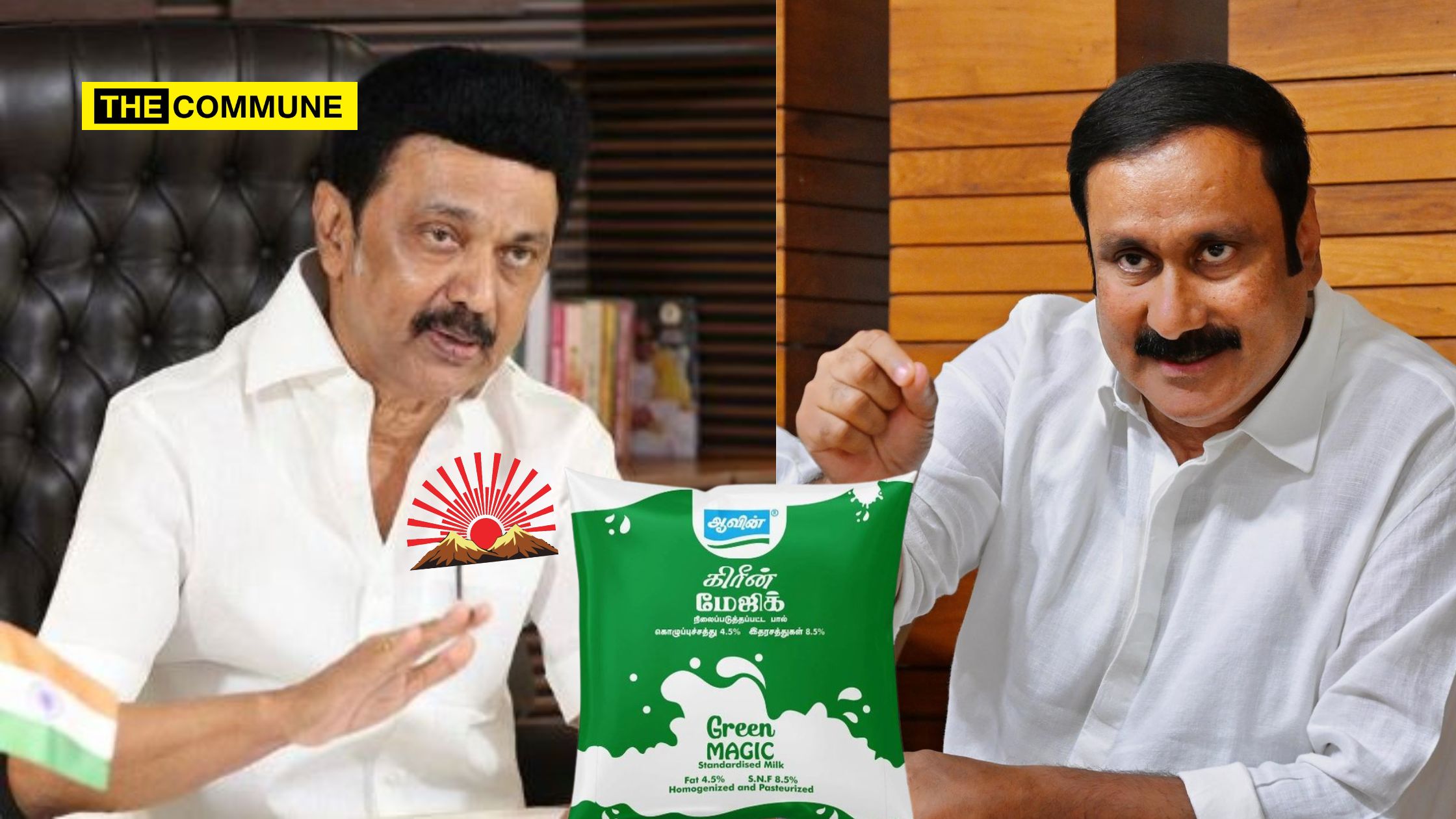
“Is Deceiving People The Dravidian Model?” Asks PMK Leader Anbumani Ramadoss, Criticizing Aavin’s Green Magic Plus Launch Over Alleged Deceptive Pricing And Reduced Quantity

PMK Leader Anbumani Ramadoss, Criticizing Aavin's 'Green Magic Plus' Launch Over Alleged Deceptive Pricing And Reduced Quantity

Under the DMK government, the state-owned cooperative Aavin has again been scrutinised after launching a new milk variant, “Green Magic Plus.” The product’s announcement lacked transparency regarding its quality and pricing, only mentioning the addition of Vitamins A and D, which has drawn widespread criticism.

Pattali Makkal Katchi (PMK) president Anbumani Ramadoss strongly criticized the DMK government, claiming that alarming details emerged when Aavin officials were questioned about the new product. According to Ramadoss, aside from a smaller pack size and a higher price, Green Magic Plus offers no significant difference from the existing Green Magic milk.

Dr. Anbumani Ramadoss pointed out that the original Green Magic milk priced at ₹22 for 500 ml, containing 4.5% fat and 9% non-fat solids. However, the newly introduced Green Magic Plus, priced at ₹50 for 900 ml, contains the same nutritional content but is sold at ₹55 per liter, which is ₹11 more than the original product.

Ramadoss described the price hike as “daylight robbery,” accusing Aavin of misleading consumers by simply adding the word “Plus” and increasing the price. He pointed out that Aavin has reduced the original Green Magic milk distribution by 80% in Tamil Nadu, pushing consumers towards the higher-priced Green Magic Plus.

Furthermore, Ramadoss expressed concern over Aavin’s marketing strategy, which raises prices while reducing the quantity, calling it a clear case of fraud. He demanded that the government and Aavin explain the changes and why no public opinion was sought before launching the new product. In his statement, Ramadoss urged the government to abandon plans to discontinue the original Green Magic milk and continue selling it at its current price, stressing that innovations should not come at the expense of deceiving the public.

Criticizing the DMK through his official X account, PMK chief Anbumani Ramadoss said, “Aavin has announced the launch of a new green packet milk called “Green Magic” in the districts of Kanchipuram, Tiruvallur, Coimbatore, and Salem in Tamil Nadu starting from the 18th. However, the press release issued by Aavin does not contain any details about the quality or price of the milk; instead, it only states that vitamins A and D have been added. When Aavin officials were questioned about the features of the new milk, shocking facts were revealed. Apart from the reduction in quantity and increase in price, there is nothing new in the new milk.”

Currently, Aavin Green Magic Milk is sold at ₹22 per 500 ml. It contains 4.5% fat and 9% non-fat solids. The newly introduced milk also contains the same nutrients in the same amount and is said to have added vitamins A and D. The benefits and costs to Aavin are not significant. However, while Green Magic is sold at ₹44 per liter, it has been announced that Green Magic Plus 900 ml will be sold at a price of ₹50. While Green Magic milk 500 ml is sold at ₹22, Green Magic Plus 450 ml will be sold at ₹25. If we look at it that way, the price of Green Magic Plus milk is ₹55 per liter. This is ₹11 more per liter than the price of Green Magic milk. Charging ₹11 more just to add the word Plus to Aavin Green Magic milk is daylight robbery.” He added.

“If Aavin Green Magic Plus milk had been introduced as an additional type, it could have been ignored, with only those who wanted to buy it actually purchasing it. However, the distribution of Aavin Green Magic milk has been reduced by 80% across Tamil Nadu. While Green Magic Plus milk has been introduced in the districts of Kanchipuram, Tiruvallur, Coimbatore, and Salem in the first phase, Aavin plans to expand it across the state at a lower price and discontinue Green Magic milk, which is currently sold at ₹44 per liter. This move will force consumers to buy Aavin green milk under a different name at a higher price. Raising the price of a packet by ₹3 and reducing the quantity of milk by 50 ml to cover up the increase in milk prices is a blatant fraud.” He further added.

Aavin, a public sector company, cannot be allowed to indulge in such frauds. It is welcome that the government and public sector companies introduce innovations to benefit the people. However, such innovations should not be introduced to deceive the people. The government and Aavin should explain whether deceiving the people by changing the name is the Dravidian model?” He slammed.

“Last October, it was reported that Aavin Green Magic Plus milk had been introduced in the Trichy region. I issued a statement on October 18th opposing that, and Aavin, in response, said, ‘Only a study is being conducted to introduce a new type of milk in the market that is enriched with Vitamin A and D, and slightly increased in other fat content, which everyone wants. The public will be asked for their opinions.’ On the contrary, no public opinion was asked; fat content was also not increased. How is it fair to reduce the quantity and increase the price? Aavin did not release any information about the quality of the milk and the price in the press release about the introduction of the new milk in order to hide this fraud. What should we call this behavior? The government should abandon the plan to introduce the high-priced Aavin Green Magic Plus milk. Aavin Green Magic milk, which is sold at a price of ₹44 per liter, should not be discontinued and should continue to be sold as it is now.” He urged.

Subscribe to our channels on Telegram, WhatsApp, and Instagram and get the best stories of the day delivered to you personally.

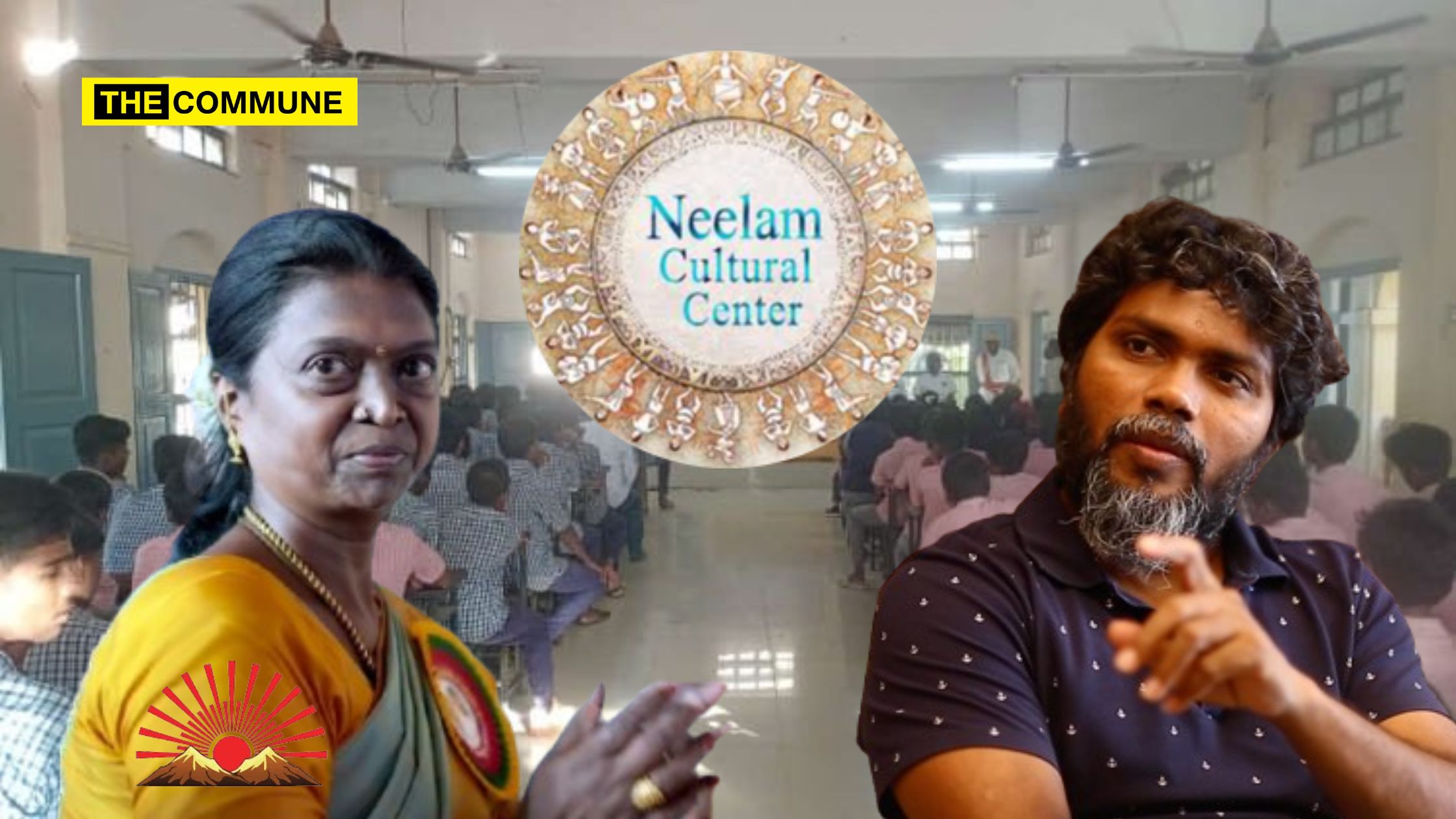
Controversy Erupts As ‘Neelam Cultural Centre’ Celebrates Dravidianist Director Pa. Ranjith’s Birthday In Tamil Nadu Government School

Controversy Erupts As 'Neelam Cultural Centre' Celebrates Dravidianist Director Pa. Ranjith's Birthday In Tamil Nadu Government School

Controversy erupted over the celebration of “triple flop” Dravidianist director Pa. Ranjith’s birthday at a Tamil Nadu government school in Pudukkottai district.

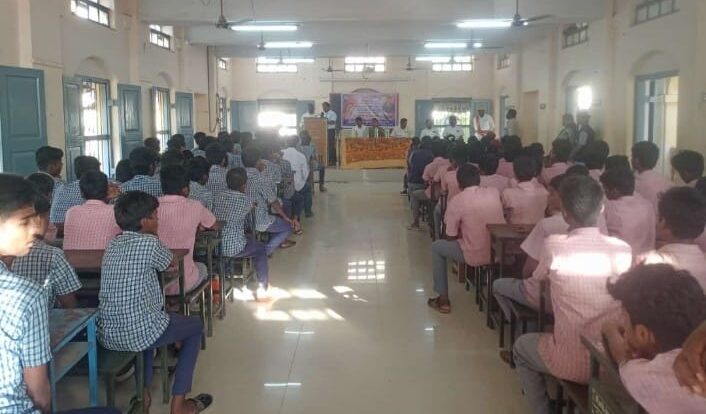
The incident occurred on 6 December 2024, two days ahead of Pa. Ranjith’s birthday. The event, organized by the ‘Neelam Cultural Centre,’ an organization headed by the director, was held at Jagathambal Government Higher Secondary School, disrupting the students’ regular studies for the day.

Adding to the controversy, the event was presided over by Pudukkottai district DMK Mayor Thilagavathi Senthil. The incident has drawn widespread criticism from educators and the public, who have questioned how the school management allowed such a program, especially in light of previous directives from the DMK Education Minister Anbil Mahesh that schools should be used strictly for educational purposes.

Activist and advocate Rajendran has filed a formal complaint with the Education Secretary, demanding an inquiry into how permission was granted for the event and calling for strict action against the school in-charge and the organisers of the meeting.

The incident has sparked significant outrage and criticism, primarily because the event’s organizers, the ‘Neelam Cultural Centre,’ previously provided a platform to Gana singer Isaivani, who faced backlash for her controversial song “I Am Sorry Iyyappa,” which disrespected the Hindu deity Lord Ayyappan. Despite widespread condemnation from various religious communities, the Neelam Cultural Centre did not express remorse or issue an apology for hurting the sentiments of devotees. Instead, they doubled down by openly supporting Isaivani. Adding to the controversy, despite multiple cases filed against Isaivani, the DMK government has not taken any action to arrest her, further aggravating public anger.

Pa. Ranjith, the head of the Neelam Cultural Centre, has faced widespread criticism for his consistent portrayal of anti-Hindu sentiments and his efforts to promote the Dravidianist ideology of his political patrons for personal and professional gain. Through his films, he promotes his personal “woke” ideological views, often setting poor examples for the younger generation. His portrayals frequently present misguided perspectives on love and relationships, particularly influencing how males perceive and approach females, sparked resentment among various sections of the public.

In his movie “Attakathi”, he even included dialogues that framed pre-marital sex as an “achievement.” For instance, when a character advises the protagonist about his love life, he says, “You should first go and have sex; then she will not go away.”

In his recent film Thangalaan, there was the usual Dravidianist stereotyping of Brahmins as vile and cunning and de-Hindufying village deities.

In Kaala, he subtly weaves anti-Hindu sentiments, portraying Hinduism and its symbols as inherently oppressive. The movie’s villains are given distinctly Hindu names, reinforcing negative stereotypes associated with the religion. Ranjith contrasts Hindu traditions with Buddhist and Communist ideals, favoring the latter as symbols of compassion and justice. Hindu icons like Ram and Krishna are used to depict antagonists, while Marxist symbols and EVR are praised. The film tries to pit Buddhists against Hindus by showing bowing to elders, as hierarchical, while Buddhist traditions are celebrated. Ranjith’s portrayal of characters and symbols paints the Hindus in a negative light while valorizing Communist and Buddhist beliefs.

Ranjith, although he proved worthy of a filmmaker in ‘Madras,’ a political film that traversed the landscape of Dravidian politics, his other film, ‘Sarpatta Parambarai’, peddled Dravidian propaganda. One should also note that Ranjith had also supported Udhayanidhi Stalin for his ‘eradicate Sanathana Dharma’ remarks.

Educationists and activists have expressed outrage, questioning how a government school could promote an individual known for propaganda, religious hatred, and distorting narratives and facts, thereby setting a poor example for students.

Subscribe to our TelegramWhatsApp, and Instagram channels and get the best stories of the day delivered to you personally.


“10 Months Later, Now They Object”: BJP TN Chief Annamalai Criticizes DMK Govt’s Stance On Tungsten Mining Project

BJP TN Chief Annamalai Accuses DMK Of Hiding Archaeological Sites In Tungsten Mining Dispute.

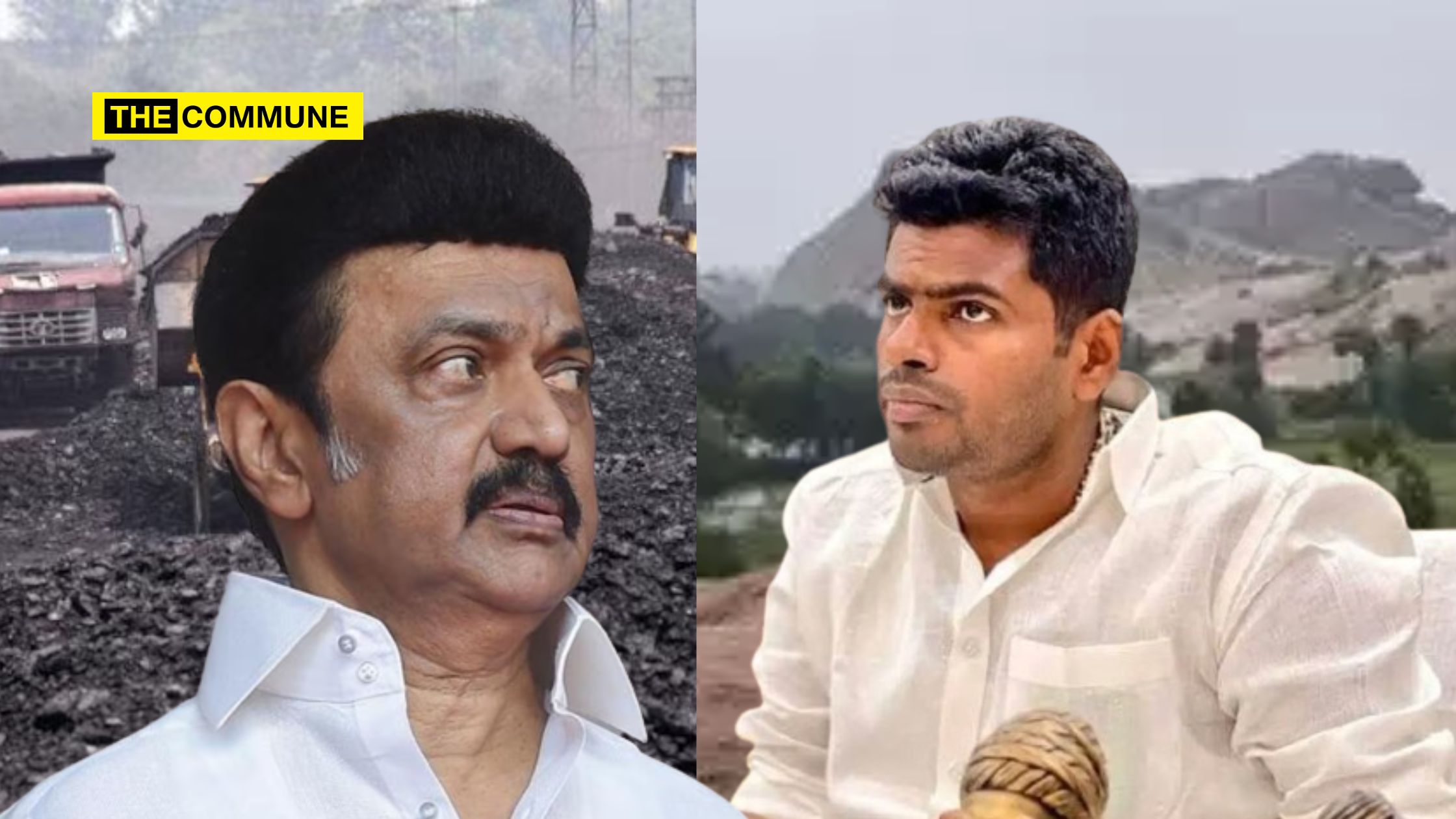
In spite of the DMK government’s delayed objections to the contentious Tungsten mining project in Madurai, BJP Tamil Nadu President K Annamalai has expressed confidence in resolving the issue following a meeting with Union Ministers L Murugan and G Kishan Reddy. Annamalai criticized the DMK for not raising objections earlier despite the project’s approval and growing local protests over potential environmental and displacement issues. The project, which involves mining in the Arittapatti and Nayakarpatti blocks, has seen Tamil Nadu Chief Minister MK Stalin and Congress leaders calling for its cancellation.

Speaking to reporters in Delhi, Annamalai said, “The DMK is the one creating the problem. The BJP is giving a solution to the problem. For example, Tungsten mining. If you look at this issue, the Arittapatti block, Nayakarpatti block – the Ministry of Mines has written on 25 September 2023 to the government about the auctioning of the Nayakarpatti Tungsten block. The TN government kept saying they never told. But on 8 February 2024, the TN government gave detailed input to the centre on the Tungsten block mining. I am not revealing the name of the officer who wrote this otherwise the TN government will pounce on him. Based on the input given, the centre brought about this mining in the second and fourth tranche, and the preferred bidder was selected on 7 November 2024. After all this happened, 10 months after it was put forth, the TN government says we have nothing to do with this. Despite having such a long time period – 1 year and 2 months, they never objected even a bit. They never said no anywhere. Yesterday Union Minister of State L Murugan and I met the Union Minister for Coal and Mines G Kishan Reddy. We will soon hear a good decision. It is our continuous criticism that DMK having these many MPs for strength are using them only for politics and not for any constructive work.”

He further said, “As far as India is concerned, as far as our country’s minerals are concerned, there are 3 categories – major, minor and critical. If you consider the Tungsten block in Nayakarpatti, it is a critical mineral. Not even one rupee from the sale will go to the central government. The central government is a facilitator. The Geological Survey of India (GSI) goes to each state and analyses what minerals are present in each state. They apprise the state and central government of the findings. Then if the central government wants to auction it, they will ask the state government. That is how our central government asked the state government in September 2023. Before that, in 2021, the GSI had already informed the state government about the tungsten. This is something that both governments should do together. Unlike what is claimed by some politicians in TN, not one rupee goes to the central government from this. It all goes to the state government. You can take the case of Odisha – their budget money comes from minerals only. The central government only facilitates this. When they asked first, the state government did not object. Then, when the tender conditions were put forth, the state government did not object nor did they object when the tender was put in place. 10 months later, after the tender was won by the Hindustan Zinc company, the people of the region started protesting, and only after that did the state government register an objection. The state government could have informed the centre of the Jain burial sites in September 2023 or about the Alagar Malai or about the megalithic burial site. They did not raise objection anywhere. Even the related officer did not raise any objection with regard to the site but did tell about the area size, and the biodiversity hotspot and also said no problem at the 18 sqkm. This was their input.”

The Tungsten mining project in Madurai has sparked strong opposition from local residents, who are raising concerns about its potential environmental impact and the risk of displacement. Communities have organized protests, fearing threats to agriculture, water resources, and their livelihoods.

The issue was recently brought to the forefront in the Tamil Nadu Assembly, where a heated debate took place over the Centre’s approval for the Vedanta group to mine tungsten in the region. The Assembly ultimately passed a resolution opposing the project, with Water Resources Minister Durai Murugan introducing the motion in response to protests from Arittapatti residents.

Tamil Nadu Chief Minister MK Stalin has also weighed in, writing to Prime Minister Narendra Modi to urge the cancellation of the mining approval. Additionally, Congress MP from Sivaganga, Karti P Chidambaram, expressed his concerns in a letter to Union Minister for Coal and Mines, G Kishan Reddy, emphasizing the detrimental effects of allowing Vedanta to proceed with the mining project.

Subscribe to our channels on Telegram, WhatsApp, and Instagram and get the best stories of the day delivered to you personally.

“The Final Word Belongs To The Supreme Court”: Former CJI DY Chandrachud Responds To Ayodhya Verdict Criticism By Ex Justice Rohinton Nariman

Former CJI DY Chandrachud Responds To Ayodhya Verdict Criticism By Ex Justice Rohinton Nariman hinduphobe

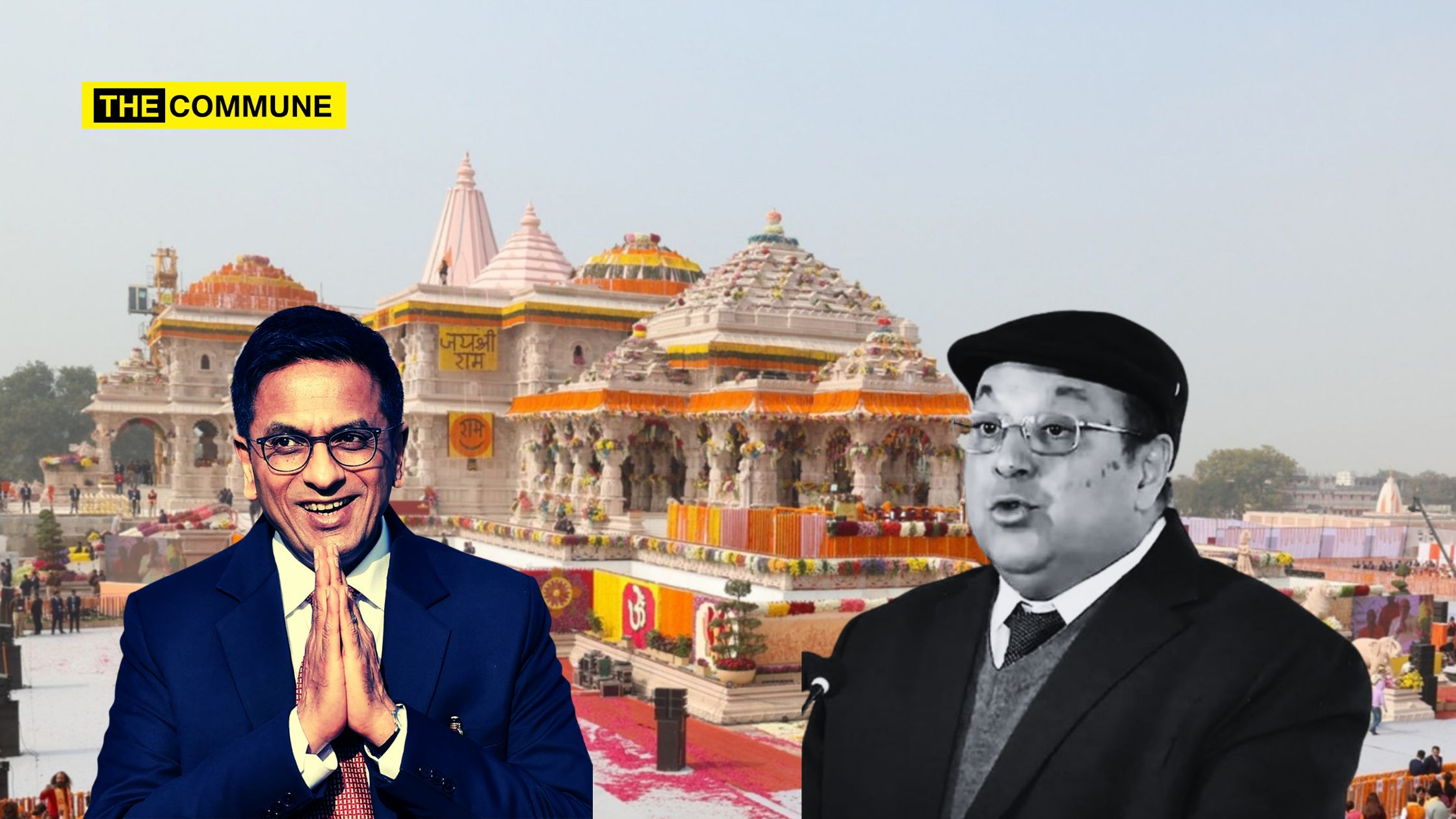
Former Chief Justice of India DY Chandrachud recently addressed critiques of the Supreme Court’s 2019 Ayodhya verdict, including remarks by Justice Rohinton Nariman, who termed the decision amockery of justice” and that secularism was not given its due at all. Speaking at the Times Network India Economic Conclave, Chandrachud emphasized that judgments, once delivered, become public property and are open to discussion and critique.

Justice Nariman, a former Supreme Court judge, had criticized the verdict for not giving due consideration to secularism. He argued that while the judgment acknowledged the illegality of the mosque’s demolition, it awarded the disputed land in a way he found inconsistent. Nariman also noted that while the court mentioned the structure under the mosque was not Islamic, it stopped short of definitively identifying it as a Ram temple.

Responding to these remarks, Chandrachud acknowledged Nariman’s freedom to critique the decision.Justice Nariman, whom I respect deeply and count as a good friend, is a free citizen of a free nation. In contrast, I am a disciplined soldier of the institution I have served, he said. Chandrachud reiterated that it is not the role of a judge to defend or critique a judgment once it has been delivered, adding, The judgment is now the public property of the nation, and it is for others to critique.”

He addressed the concerns about secularism raised by Nariman, framing them as a testament to the vibrancy of secular principles in India. One of the critical principles of secularism is the freedom of conscience, and Justice Nariman exercised that freedom through his critique. The fact that people in our society can express such opinions is a reminder that secularism is alive and well in India,Chandrachud said.

The former CJI emphasized that the Ayodhya verdict was a collective decision made by the five-judge bench, with each judge standing by the reasoning presented in the detailed judgment. He also noted the importance of diverse perspectives. Addressing concerns over secularism being sidelined, particularly coming from a judge belonging to a minority community, Chandrachud said, “Well that’s a perception and there would be other perceptions across the spectrum and that’s why you have a situation where courts decide on issues of the moment the issues, they decide on issues which confront the nation. Citizens are entitled to comment, to critique, to discuss, that’s part of the dialogical process in a democracy. That’s one perspective with Justice Nariman has and I’m sure everyone respects a perspective. but surely that perspective does not reflect a monopoly of Truth. the final word is the word of the Supreme Court.”

(With inputs from LawTrend)

Subscribe to our channels on Telegram, WhatsApp, and Instagram and get the best stories of the day delivered to you personally.