Home Blog Page 69

Madras High Court Orders CBI Probe Into ₹397 Crore Transformer Tender Scam During Senthil Balaji’s Tenure As Electricity Minister

Madras High Court Orders CBI Probe Into ₹397 Crore Transformer Tender Scam During Senthil Balaji’s Tenure As Electricity Minister

The Madras High Court has ordered a probe by the Central Bureau of Investigation into allegations of a ₹397 crore scam in the procurement of transformer tenders during the tenure of V. Senthil Balaji as Minister for Electricity and Prohibition and Excise between 2021 and 2023, as reported in LiveLaw.

A division bench comprising Chief Justice Sanjay A. Dharmadhikari and Justice G. Arul Murugan directed the Tamil Nadu Directorate of Vigilance and Anti-Corruption (DVAC) to transfer all files related to the case to the officer in charge of the investigation. The officer is to be appointed within two weeks from the date of the order.

The court further directed the CBI to conduct a de novo investigation based on the materials placed before it. It also instructed the State government, Tamil Nadu Generation and Distribution Corporation, and the DVAC to extend full cooperation to the central agency to ensure an effective investigation, including placing all relevant documents before it.

The bench also directed the CBI to take earnest steps to carry out the probe effectively and submit a report.

The petitions in the case were filed by Arappor Iyakkam and members belonging to other political parties, seeking a direction to the State to register an FIR against those involved. The petitioners submitted that despite sending representations to the State, no action had been taken, prompting them to approach the court.

During earlier hearings, the bench had called for details of the preliminary enquiry conducted by the DVAC. The petitioners also contended that there had been a delay in granting sanction under Section 17A of the Prevention of Corruption Act for initiating prosecution against the former minister.

The State, however, opposed the petitions, stating that the sanction had since been granted. It also argued that the petitions were filed with ulterior motives by individuals belonging to political parties, particularly with elections approaching, and urged the court to dismiss them.

Responding to this, the court observed that the mere fact that the petitioners belonged to political parties could not be a ground for dismissal when serious allegations were involved. The bench had subsequently directed the State to place all materials related to the preliminary enquiry, tender documents, and other relevant records before it.

While pronouncing its order on Wednesday, 29 April 2026, the court clarified that its observations were limited to the necessity of an independent investigation and would not affect the merits of the case.

Subscribe to our channels on WhatsAppTelegram, Instagram and YouTube to get the best stories of the day delivered to you personally.

Crowd Mismanagement: Valid Ticket Holders Denied Entry At HR&CE-Administered Madurai Meenakshi Amman Temple Tirukalyanam Event

Crowd Mismanagement: Valid Ticket Holders Denied Entry At HR&CE-Administered Madurai Meenakshi Amman Temple Tirukalyanam Event

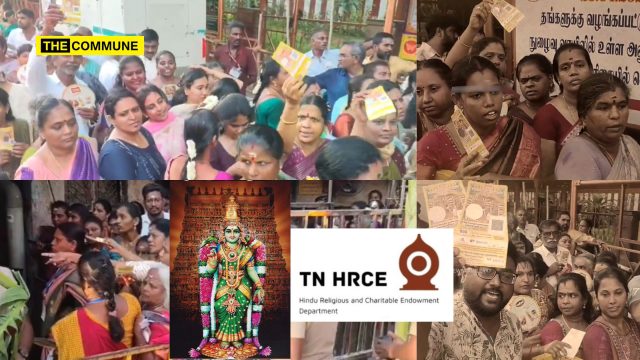
Chaos and anger marked the annual Thirukalyanam ceremony at the Meenakshi Amman Temple after several devotees holding valid paid passes were allegedly denied entry, triggering protests and heated arguments with officials.

The event, organised under the supervision of the Hindu Religious and Charitable Endowments (HR&CE) Department, saw the issuance of online passes priced at ₹200 and ₹500. According to multiple attendees, thousands of devotees had booked these passes in advance and arrived at the venue as early as 4 AM to witness the ceremonial divine wedding.

However, officials reportedly stopped entry at a certain point, citing that the seating capacity inside the temple premises had already been filled. This left many devotees, despite holding valid tickets, stranded outside for hours.

Several devotees expressed anger and distress over the situation. One devotee stated that they had been waiting since early morning after purchasing a ₹500 ticket but were denied entry, questioning why tickets were sold beyond capacity. The devotee reportedly said that if access was restricted, tickets should have been limited or reserved accordingly, adding that common people were being treated unfairly despite coming with devotion.

Another attendee suggested that the system should have included time-slot-based entry along with tickets to prevent overcrowding. The devotee stated that authorities should fix a specific time window for each ticket and stop issuing passes beyond that limit, pointing out that many had travelled long distances like Chennai to attend the event.

A third devotee called for an immediate halt to such practices, while others highlighted the physical strain caused by prolonged waiting. One attendee stated that their family had booked passes two months in advance but were made to wait for hours even after reaching early. The devotee added that elderly individuals, children, and those with medical conditions such as diabetes and blood pressure issues were forced to stand without adequate arrangements, raising concerns about safety and basic crowd management.

Devotees also criticised the lack of planning, stating that different pricing tiers could have been accompanied by staggered entry timings to manage crowds efficiently. Some attendees described the situation as dehumanising, alleging that people were made to stand outside in large numbers without clarity, despite travelling from various places and taking time off work to attend the religious event.

As tensions escalated, several devotees reportedly engaged in arguments with officials and police personnel deployed at the site. Many demanded refunds for the ticket amounts, stating that they were unable to have darshan despite paying for access.

Devotees criticised the HR&CE department questioning why excess tickets were issued despite clear knowledge of venue capacity. Some attendees argued that if the authorities had limited ticket sales appropriately, many could have chosen to watch the ceremony remotely rather than face inconvenience and disappointment.

Heavy police presence was reported in the area to control the situation as crowds grew restless. The incident has raised fresh concerns over crowd management and ticketing practices during major temple festivals in Tamil Nadu.

Subscribe to our channels on WhatsAppTelegram, Instagram and YouTube to get the best stories of the day delivered to you personally.
TVK Candidate Sinora Ashok Alleges Threat To Life, Names DMK’s Sekar Babu In Complaint

TVK candidate Sinora ashok alleges threat, names DMK's Sekar Babu In Complaint

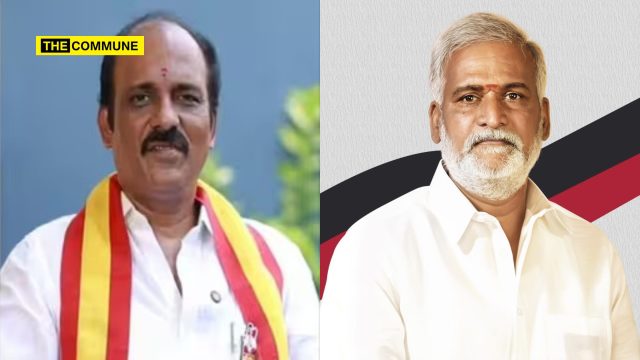
Harbour constituency candidate of Tamilaga Vettri Kazhagam (TVK), Sinora Ashok, has filed a complaint alleging threat to life and has named DMK minister PK Sekar Babu in connection with the allegations. The complaint was submitted online to the office of the Commissioner of Police.

According to the complaint, Sinora Ashok stated that his life was in danger and expressed apprehension over possible attacks, including on the day of vote counting. The complaint further alleged that individuals accompanying the minister had attacked him on April 23, the polling day.

The allegations stem from an incident reported in the Harbour constituency during polling hours on April 23. Tensions were reported between supporters of the TVK and the Dravida Munnetra Kazhagam, which escalated into a confrontation at a polling location where the minister was present.

According to reports, a heated argument between cadres of both parties escalated into a physical altercation. They alleged that attempts were made by DMK supporters to influence or capture polling booths after 3 PM, which led to the escalation. When Sinora Ashok intervened, a direct confrontation reportedly took place between him and the minister.

In his account to reporters, Sinora Ashok alleged that PK Sekar Babu issued threats and physically assaulted him during the altercation. He stated that he was pushed and struck multiple times, while individuals accompanying the minister allegedly verbally abused him and attempted to force him to leave the location. He further stated that he refused to leave and subsequently staged a protest at the site.

The situation reportedly intensified with the arrival of police personnel. TVK members alleged that the state police acted against their cadres instead of de-escalating the situation, leading to further confrontation. They also claimed that central forces were not present at the time of the incident.

Visuals from the location showed supporters of both the DMK and TVK engaged in aggressive exchanges, with the situation nearing a larger clash. Following the incident, heavy police deployment was reported in the area to bring the situation under control.

TVK functionaries have accused the minister and his supporters of engaging in intimidation during the election process and called for action.

Subscribe to our channels on WhatsAppTelegram, Instagram and YouTube to get the best stories of the day delivered to you personally.
BJP Leader Annamalai Steps In As Ramanathapuram Family Struggles To Repatriate Father’s Mortal Remains From Bahrain

BJP Leader Annamalai Steps In As Ramanathapuram Family Struggles To Repatriate Father’s Mortal Remains From Bahrain

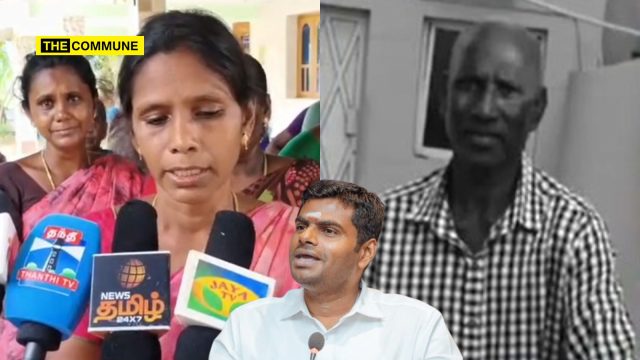
A family from Arasathur village in Thiruvadanai taluk has expressed deep gratitude to BJP leader K Annamalai for his assistance in bringing back the body of their father from Bahrain, enabling them to perform his last rites.

In a statement, the daughters of the deceased recounted their father’s long years of hardship abroad. “We are the daughters of Subbu, who lives in Arasathur village, Thiruvadanai taluk. We are three sisters. Our father, wanting to educate us and make us successful in life, went to Bahrain for construction work. He stayed there for 29 years, because his documents were never renewed, he was unable to return. But throughout this time, he helped us in every way, supporting our education and for our children and doing everything he could for us to become established in life.”

They said their father passed away unexpectedly, leaving the family struggling to repatriate his body. “Then, suddenly, he passed away due to health issues. We struggled a great deal to bring his body back. We reached out in the name of former BJP state president Annamalai Anna. Through his help, we were able to bring our father’s body back, and today we are able to conduct his last rites. We benefited greatly from his assistance.”

Expressing their gratitude, the family added, “For this, we are deeply indebted to him. On behalf of my family, we express our heartfelt gratitude to him. We will never forget this. We are so grateful that we got the opportunity to see our father’s body. Thank you very much, Annamalai. We are forever grateful to him.”


View this post on Instagram


A post shared by Polimer News (@polimernews)

Subscribe to our channels on WhatsAppTelegram, Instagram and YouTube to get the best stories of the day delivered to you personally.
Who Built Tamil Nadu’s IT Sector?

On 26 April 2026, a clipping of DMK YouTuber Senthilvel went viral. In the clipping, he is seen abusing voters who happen to be IT employees for having voted for TVK.

He said, “Many people who work in IT companies have voted in Chennai for TVK. If someone is sitting with a plate of rice in front of them and eating that rice, and eating it with salt, that rice was given to them by the DMK. I’m using a slightly harsh word here, and I do not care about anything.” 

He further said, “Because in Bihar, Uttar Pradesh, and Madhya Pradesh, there are no IT companies, boss. Did your grandfather and father study computers? No. When the computer was invented in the world and began slowly spreading to many countries, it was Rajiv Gandhi who brought computers into India. That’s right, he introduced it. But sadly, he was assassinated. After that there were many regime changes, forget all that. But in Tamil Nadu, during the early days of computers, one state understood that this was the computer age and that computers would be everything. That state brought computers into school textbooks, introduced computer education, introduced computer science courses, established computer colleges in every district and every town, educated you in computers, and then brought TIDEL Park and other huge IT parks into Tamil Nadu so that the children who studied computers could get jobs. The root of all that was laid by the DMK. Today, you go abroad from here, you go on onsite and offshore assignments, you go to America, get green cards, and settle there. All of that was seeded by the DMK. At that time, when Karunanidhi was planning computer education and computer studies, actor Vijay was dancing in songs with Sangavi. Actor Vijay was dancing with Simran. I’m not saying that’s wrong; that was his profession. But it was the DMK that built a computer empire so that you could study and become somebody important. You say you don’t want DMK, you don’t want AIADMK, but you will support 100 candidates who came from AIADMK, and if you think that is called change, then are you a bunch of educated fools or not? I’m saying it again: you are not going to win – that’s another matter. Leave that aside and speak honestly.”

He defended the party’s role in IT development under former leader Karunanidhi. The video clipping gained traction on social media platforms as the state waits for the results of the just concluded 2026 TN Assembly polls.

Let us take a look at who laid the foundation for IT development in Tamil Nadu, and no, it is not the DMK.

Foundational Decades: Pre-TIDEL Era

The IT landscape in Chennai began taking shape long before the TIDEL Park opened in 2000. Major global and domestic firms established operations in the city throughout the 1980s and 90s, catalyzed by earlier policy initiatives:

1965: The Congress-led government under Chief Minister Bhaktavatsalam established the Tamil Nadu Industrial Development Corporation (TIDCO), creating the state’s industrial framework.

1978: The M.G. Ramachandran (MGR) administration implemented the 10+2 school education system and established Anna University, pivotal steps in preparing a workforce.

1982–1984: The state introduced Computer Science and Engineering courses at Anna University, authorized private engineering colleges with government quotas, and established the Madras Export Processing Zone (MEPZ), creating the essential pipeline of talent and infrastructure.

Early IT Entrants: Firms like TCS (1983), CTS (1992), Polaris (1995), and Zoho (1996) were already active in Chennai before the TIDEL Park was ever commissioned.

These early firms relied on private funding and talent pools created by state education policies, rather than government-funded parks. The assertion by DMK supporters that IT companies arrived only after the DMK’s tenure is factually incorrect, as several key players had been operating for over a decade before the park’s inception.

The Myth of the DMK “Empire”

The DMK’s narrative often centers on TIDEL Park as the genesis of Tamil Nadu’s IT success. While TIDEL Park was indeed a significant state-funded infrastructure project, it was one node in a larger development story. By the time of its 2000 launch, it was building upon the environment fostered by the 1998 National Task Force on IT (constituted by the BJP government) and decades of educational reform.

Recent AIADMK administrations have also been instrumental in shaping the state’s modern technological and startup ecosystem. Initiatives formulated during their tenure include:

TANSIM (2018): Established to support startup innovation.

Startup Policy (2018): A key driver behind Tamil Nadu’s top-tier ranking in the 2021 national startup ecosystem assessment.

EV Policy (2019): A strategic push that helped diversify the state’s high-tech industrial portfolio.

Intellectual Appropriation or Development?

The DMK’s rhetoric, which often frames the IT sector as a personal achievement of the party or its leaders, is increasingly viewed as an act of political appropriation. By positioning TIDEL Park as the singular “birth” of IT in the state, the party obscures the contributions of predecessors and contemporary rivals alike.

The reality is that Tamil Nadu’s position as an IT powerhouse is the result of long-term continuity in governance, spanning Congress, AIADMK, and DMK administrations. The state’s competitive advantage was not “gifted” by any one party; it was built through cumulative investment in education, infrastructure, and SEZs over sixty years. Attempting to claim sole credit for a state-wide transformation is a political farce that ignores the collaborative, multi-generational effort that truly defined Tamil Nadu’s progress.

Subscribe to our channels on WhatsAppTelegram, Instagram and YouTube to get the best stories of the day delivered to you personally.
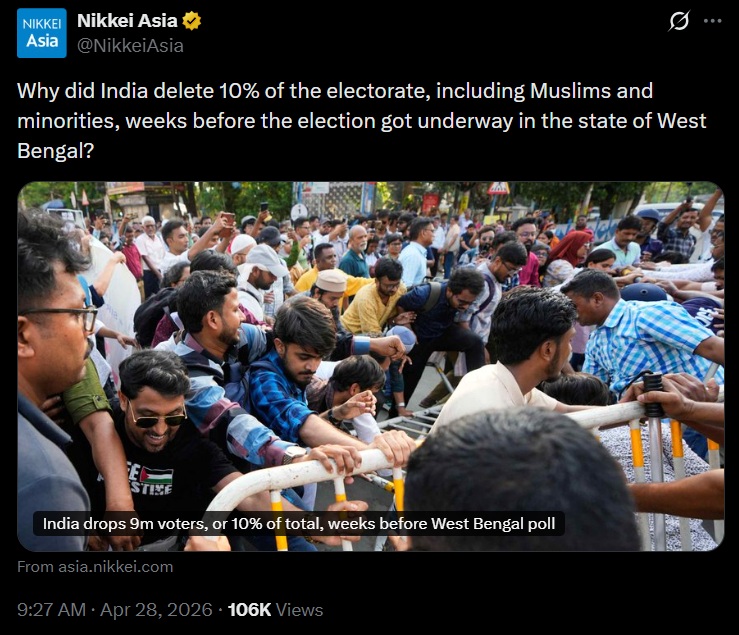
Quratulain Rehbar’s Article In Nikkei Asia On Bengal SIR Ignores Data, Frames Muslim Victimhood

Quratulain Rehbar's Article In Nikkei Asia On Bengal SIR Ignores Data, Frames Muslim Victimhood

A recent Nikkei Asia article on West Bengal’s Special Intensive Revision (SIR) of electoral rolls follows a now-familiar template: selectively frame an Indian electoral process through a Muslim victimhood lens, rely on partisan sources, ignore inconvenient data, and publish it in prestigious foreign outlets for maximum reputational damage to India abroad.

Who is the author you ask? The piece was written by Quratulain Rehbar, a Jammu-based freelancer whose byline regularly appears in Al Jazeera, The Wire, Article 14, TRT World and VICE.

What the Article Gets Wrong

The piece’s central claim, that the SIR disproportionately targeted Muslims, collapses under its own data. 63% of all deletions were Hindu voters, and only 34% were Muslim, per data published even by outlets sympathetic to the opposition narrative. Muslims constitute 27% of West Bengal’s population yet account for 34% of deletions – a marginal over-representation in a process that removed far more Hindus in absolute terms. The article buries this inconvenient figure while amplifying the “disproportionate” framing.

The SIR was not invented for West Bengal or for Muslims. It was first conducted in Bihar in 2025, then rolled out across 13 states and union territories. The last SIR in West Bengal was conducted in 2002, over two decades ago, meaning the existing rolls had accumulated over 20 years of deaths, duplications, and migration errors without a comprehensive clean-up. The ECI’s stated rationale is documented and publicly available. Rehbar’s article presents it as a sinister novelty without this context.

The 58 lakh deletions in Phase One were specifically categorised as deceased, duplicate, or permanently shifted voters – not arbitrary exclusions. The draft rolls were published booth-wise online with deletion reasons, and a formal claims and objections window was provided from December 2025 to January 2026. These are not the actions of an opaque process; they are standard electoral procedure. The article does not mention the objections window or online verification mechanism.

Partisan Sources Presented as Neutral Experts

The article leans entirely on Mamata Banerjee’s government narrative, TMC-aligned analysts, and a Kolkata-based political scientist, while presenting them as neutral observers. Banerjee’s claim that the SIR was “a scam done with the help of artificial intelligence” is quoted without challenge. The Supreme Court of India, after examining the controversy, allowed elections to proceed, a fact the article frames as “unusual” rather than as a judicial endorsement of the process’s legality.

Notably, even the BBC’s own coverage of the same story acknowledges that approximately 80% of those removed are Hindus, predominantly Hindi-speaking communities from North India – a figure that directly contradicts the Muslim-targeting narrative. Rehbar’s Nikkei piece does not include this.

The Author’s Track Record

Quratulain Rehbar is not a neutral elections reporter. Her biography explicitly states she covers “anti-Muslim hate” as a beat, so we are assured about the lens through which she approaches every story involving Muslims in India. Her bylines in leftist rags like The Wire, VICE etc., are outlets that have repeatedly published pieces constructing India as a Hindu nationalist state systematically persecuting minorities. This is not journalism; it is advocacy published in journalistic format.

The pattern is consistent: take a legitimate administrative process, find Muslim voices expressing fear, quote partisan political analysts as neutral experts, omit majority-community impact data, and pitch it to a foreign editor hungry for India-as-democracy-in-crisis content.

The Bigger Pattern

India’s electoral machinery, despite its scale and complexity, is routinely subjected to this treatment in Western media: processes that would be reported as routine administrative updates in any European country become evidence of democratic backsliding the moment they occur in India. The SIR was challenged legally, heard by the Supreme Court, and allowed to proceed. Elections were conducted on 23 April 2026, with record voter turnout – which itself undermines the narrative of mass disenfranchisement. Bengal has Phase 2 to go on 29 April 2026.

That a booth-level officer’s family names were temporarily missing from draft rolls, a correctable administrative error in a process involving 76 million voters, becomes the human-interest hook for an international story alleging systemic Muslim exclusion is not journalism. It is narrative construction. And Quratulain Rehbar, Nikkei Asia, and the broader ecosystem that publishes, amplifies and funds this template bear responsibility for the damage it does to India’s international standing – damage built not on facts, but on selective omission.

Subscribe to our channels on WhatsAppTelegram, Instagram and YouTube to get the best stories of the day delivered to you personally.
Tamil Nadu Votes Like Never Before: Who Gains, Who Loses?

Massive Turnout, Massive Claims: Is TN Headed For A Political Upset?

Voter turnout in Tamil Nadu and Bengal, phase I – This is due to the Election Commission. Hats off to the Election Commission for doing a phenomenal job despite so much pressure from all quarters, including from the Supreme Court. SIR is the hero & EC is the boss of Indian Elections. For the first time in Indian History – 85% in Tamil Nadu and 92% in WB. In certain areas, it has crossed 95% in WB. Yes, imagine 95%. The EC BLO have proved that they are the gatekeepers and custodians of our democracy. Now, let’s analyse:

A. Whether there was Vote Chori – Answer is NO.

B. Whether there was EVM manipulation – Answer is NO.

C. Whether there was an election favouring the Central Government – Answer is NO.

D. Whether in Tamil Nadu & West Bengal-Phase I Election has been successfully conducted – Yes.

E. Whether common people’s faith in elections and democracy is present, it’s at an all-time high, irrespective of the results.

F. Whether the SIR exercise is required as a necessity – it’s an Emphatic success – right medicine for our Democracy.

G. Whether EC has captured the hearts of people beyond the candidates- Yes, today every voter is proud of EC & our democracy.

⁠Impact of Vijay

Vijay has made an impressive debut. Even if it’s 0 or 2 to 7 or even 8 seats that he gets, he has proved that in his debut election, his party has done extremely well. It’s quintessentially clear that he is most definitely the disruptive factor in this election in TN. Now let’s analyse:

A. Whether Vijay will become Chief Minister & form the government with a simple majority – Answer is definitely NO.

B. Whether Vijay party will cross 1 crore voters – Just might – every possibility indicates only that scenario.

C. Whether Vijay will himself win in Perambur or Trichy East: probably yes, at least in one seat, definitely.

D. Whether Vijay will earn the tag as the Vote cutter – Yes – including that of disrupter in Chief

E. Whether votes for Vijay have consolidated to such an extent that he will be a recognised party – Yes

F. Whether in many seats his candidates will get a deposit – 50% of the seats, nearly 125 seats, TVK will lose the deposit.

G. Whether Vijay will form an alliance with ADMK or DMK- in case of hung assembly- Slightly in favour of ADMK or abstention.

H. Whether Sengottayan will win – Yes, so will his supporters – that will be the seats TVK will win

I. In how many seats will TVK come second: At least 38-40

J. In how many seats will TVK win: 6-8 maximum.

Stalin CM & DMK gameplan

Confident & undefeated & determined with positive outlook. DMK has an immediate advantage of narrative, media power, advertisement, and even on websites, on YouTube, in their favour. Anti-Modi is DMK. Booth-level DMK strength is impenetrable. Money, Money & more money & in this election – DMK has spent money like never before.

Despite owning the narrative, it could do nothing against Vijay’s popularity & EPS grassroots campaigning. 2019, 2021, 2024 – decisive dominant victory by DMK, but this is where it stops. DMK was marching as unopposed & was unquestionably the victor. But now, despite it being a three-way contest, DMK is facing heat due to its own mishandling of the women’s issue, law & order & drugs in the state. Now, let’s analyse:

A. Whether there is anti-incumbency – Definitely YES. So much anger

B. Whether the DMK will get majority & Stalin continue as CM – Answer is clearly NO.

C. Whether DMK with coalition will form the next government- NO

D. Whether DMK combine as an alliance will get beyond 100 seats – NO

E. Whether DMK will cross 43% vote share – NO

ADMK – Original Thalaivar of TN is MGR

This is his party. 12 defeats in a row – EPS now emerges as the single-point leader of AIADMK & also that of NDA. Post February, the pickup & the true engine of the old actual ADMK against DMK could be visible on the ground. Despite all the factionalism & politics, EPS controls the show & NDA.

Less in number, more in quality – NDA campaigning gelled seamlessly & beautifully on the ground at the grassroots compared to DMK & its coalition. For this, hats off to ADMK & EPS. EPS did something no other politician did in this election. Connect to grassroots, more specifically, farmers & labourers in rural areas.

EPS successfully ensured the core base of ADMK & NDA is still intact, which was the point of jealousy & envy of DMK & their allies. On the campaign trail, EPS has shown that he is a master strategist and campaigner, with grassroots connect. He proved one thing – there can be no replacement for campaign hard work & visiting people. His flight took off & hit the peak at the right place, right time with right people – his core voter- the humble self-made farmer across Tamil Nadu villages. South & Kongu belt campaigning was simply superb, especially the people’s warmth towards his rallies & campaign. All pass; EPS echoed with Amma Canteen.

The ultimate straw was DBT of Rs. 5,000 & free refrigerator. Unfulfilled promises of DMK ensured that EPS connected this beautifully in the campaign. Best highlight was EPS reply to Udayanidhi about his Sasikala remark & attack against Udayanidhi about his sexcapdes. This hit back against DMK & Udayanidhi flipped the game as it supercharged the most bankable ADMK vote base.

The introduction of TTV by EPS was the ultimate surprise. Rural people, especially in Kongu & South, were shocked to see both EPS & TTV in a single Van campaigning, which further brought a sense of optimistic signal to the ADMK core voter base that revitalised the question of stability & bankability towards EPS & NDA combine on the whole. This, coupled with severe anti-incumbency, is in favour of the party of the true Thalaivar of Tamil Nadu- MGR. Now let’s analyse:

A. Will EPS be able to break the jinx of continuous defeat – this time, YES

B. Will ADMK form the government with a simple majority – Yes. ADMK will be the single largest party in this election.

C. Has consolidation of party leadership helped EPS & ADMK – Yes, it brought in stability, continuity & removed the cloud of ambiguity over leadership in ADMK.

D. Increase in poll percentage factor to help NDA – slightly yes

E. EPS will be the next CM & continue for the next 5 years – Yes.

F. Did Fridge do the trick – Yes, along with sustained Campaign & dedicated hard work with targeted grassroots connect with masses

G. Has ADMK retained its core vote base – in rural areas, largely YES.

H. Did alliance arithmetic & combination work – Seamlessly on the ground, there was fantastic coordination in grassroots.

I. Whether EPS & TTV & Anbumani Vs Sasikala & Ramadoss – causing damage in ADMK outcome: Dent is there but not hurting that much as in 2021.

J. Whether in Perception battle: ADMK lost & concentrated on vote share arithmetic-Who won? ‘Baldoil’ comeback made the difference & the balance tilted perception in favour of EPS – grassroots, self-made leader in rural TN – where it matters the most.

Arithmetic & Numbers – How ADMK Wins Despite Vijay Factor & DMK Money Power

This is mind-boggling. For the first time in the history of Independent India, TN had witnessed a solid triangular fight with the highest voter turnout in the history of the State, pull of Vijay star power being decisive. In this three-way contest in rural areas, Vijay gets 20-25% & 4% with NTK. Remaining between DMK & ADMK & TVK & NTK loses deposits. In cities – Vijay TVK- in certain seats gets 30% & wins with more than 50% in 2 seats.

Sengottayan & his people win in 3 seats. That’s all. Vijay gets 1.25 crore votes out of the total 4.75 crore votes polled. However, the arithmetic is in minute details. DMK won in 2019, 2021, 2024 & other elections as they received solid backing from new voters, a certain section of women, non Vanniyar & Gounders & Dalits after 10.5% reservation, 100% consolidation of minorities & anti-Modi votes in favour of DMK.

In this election, due to anti-incumbency, DMK’s vote share is below 40% as the anger of the public is visible. Entry of Vijay splits minority votes & anti-Modi votes straight in the middle. Non-Vanniyars & Non-Gounders as a caste consolidate with ADMK. Farmers with ADMK in rural areas. The invincibility of DMK has been smashed in the face & the glass ceiling has been shattered to smithereens with the EPS grassroots campaign. ADMK vote share is intact.

It plays out like this – in most of rural areas – in more than 185 seats, where it’s the real deal. Out of 100% of total votes polled:

  • ADMK: 38%
  • DMK: 36%
  • TVK: 20%
  • NTK: 5%
  • Others: 1%

In this context, vote disruption is caused by TVK, wherein the majority of DMK votes are dented & pierced by TVK.

In layman’s terms, out of 10, 7-5 votes of DMK go to TVK & only 2-4 votes of ADMK go to TVK.

This disruption affects the incumbent, especially when the minority vote consolidation is split right in the middle, helping the ADMK, as their traditional core voter base is unaffected.

Also, TVK vote consolidation is split across 234 seats, peaking mostly in urban areas. TVK has vote consolidation but not vote concentration, which ensures that the vote doesn’t convert into seats in many areas, but will certainly be the key disruptor in chief, outcome favouring ADMK.

However, the margin of victory in many constituencies – more than 40 seats- will be less than 1000 votes, leading to many recounts and election petitions filed in the Madras High Court.

The aforementioned scenario points in one direction – in that of ADMK victory with less margins.

Therefore, ADMK emerges as the clear winner with a simple majority & ADMK is the single largest party & EPS becomes the CM.

B Jagannath is an advocate at Madras High Court and has authored the book The First Native Voice of Madras.

Subscribe to our channels on WhatsAppTelegram, Instagram and YouTube to get the best stories of the day delivered to you personally.
14-Year-Old Girl Drugged, Gang-Raped By Schoolmate In Mettur; Omalur Police Register Case Only After SP Office Complaint

19-Year-Old Scheduled Caste Girl Raped And Murdered In Karnataka, 3 Arrested College Student Allegedly Gang-Raped Near Coimbatore Intl Airport; Three Men on the Run

A 14-year-old Class 11 student from Thentiyur Colony near Kuttampatti, Mettur, Salem district, was allegedly drugged and gang-raped by her schoolmate Ezhumalai, son of Kuttiappan from the same area, and his friends. The case has sparked massive outrage across Thangaveli, Mettur, and Mecheri areas, with women’s organizations and political parties demanding immediate action.

Ezhumalai and the survivor studied at the same school and had known each other for over a year. Over that period, Ezhumalai allegedly lured the girl with promises of love, repeatedly took her to secluded places under the pretext of affection, and sexually assaulted her multiple times. Last month, Ezhumalai invited her to a friend’s house, allegedly mixed something into a cold drink, and after she lost consciousness, he and his friends sexually assaulted her. Reports indicate that more than one person committed the assault.

When the survivor’s health deteriorated, her parents questioned her, and she revealed what Ezhumalai had done. The parents rushed her to a private doctor in Jalakantapuram for a scan, which confirmed she was pregnant. The survivor stated that Ezhumalai had claimed to be in love with her, assaulted her multiple times, and on the specific occasion last month had invited her to his friend’s house, given her a cold drink laced with something, after which he and his friends sexually assaulted her.

The survivor and her parents first filed a complaint at Omalur All Women Police Station, but no action was taken. Following the continued inaction, women’s organizations and members of various political parties filed a complaint at the Salem District SP office today, demanding immediate arrest of Ezhumalai and his friends involved in the gang rape, proper financial compensation to the survivor, and a honest and thorough investigation into all accused.

Marxist Communist Party Thangaveli Union Secretary Krishnameni, the survivor’s parents, and local residents stated that if immediate action is not taken, they will launch further protests.

Only after parents filed the SP office complaint did Omalur All Women Police register a case and commence investigation. Locals have demanded that the investigation be conducted honestly, and that all students involved be held accountable.

Subscribe to our channels on WhatsAppTelegram, Instagram and YouTube to get the best stories of the day delivered to you personally.
Krishnagiri: Water Tank Destroyed By DMK Goons But Complainant Arrested

Krishnagiri: Water Tank Destroyed By DMK Goons But Complainant Arrested

In Krishnagiri district, a controversy has emerged after a man who lodged a complaint alleging that DMK members vandalised a public drinking water facility was himself arrested by police.

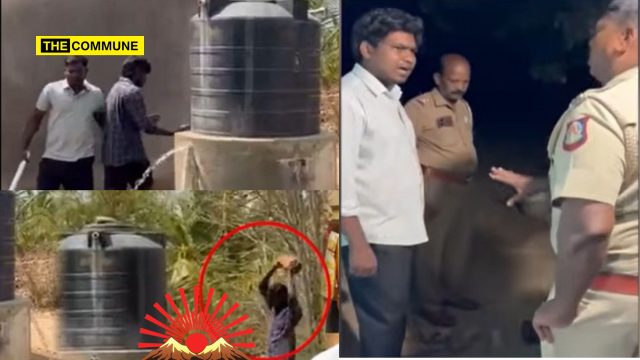
The incident occurred near Uthangarai, in Thilirkuppam village, where more than 30 families reside and depend on an overhead tank for drinking water. Residents alleged that a group of over 50 individuals led by Perumal, husband of a former panchayat president from K. Ettipatti and associated with the Dravida Munnetra Kazhagam, entered the area.

The group allegedly confronted residents, stating that they had not voted for the DMK in the previous election and had again failed to support the party. Following this, they allegedly damaged drinking water pipelines connected to the overhead tank.

Residents further alleged that when some individuals attempted to intervene, they were threatened and faced attempts of physical assault. It was also reported that abusive language was used, including caste-based insults. The damage to the pipelines led to water flowing onto the road and being wasted, resulting in a shortage of drinking water in the area.

Despite informing authorities, residents stated that no immediate action was taken. The villagers subsequently undertook repairs to the damaged pipelines themselves.

Ilavarasan, district secretary of the Democratic Youth Federation of India in Krishnagiri, filed a complaint at the Samalpatti police station regarding the incident. However, according to local accounts, no action was initially taken by the police.

The matter gained attention after being reported by Tamil Janam television, following which higher authorities and DMK leadership reportedly directed that action be taken. Police then stated that cases would be registered against both sides.

In a subsequent development, a police team comprising more than 30 personnel reached Ilavarasan’s residence around 5 a.m. and attempted to arrest him. During the operation, Ilavarasan reportedly questioned the action, stating that those accused of damaging public property and attempting to assault residents had not been arrested, while action was being taken against him for filing a complaint and circulating video evidence.

Videos of the confrontation between Ilavarasan and the police have since circulated on social media. Police later detained him and took him to the Samalpatti police station, where an inquiry is underway.

The arrest has triggered reactions among several organisations, including groups within the DMK alliance, particularly the Democratic Youth Federation of India. Local residents have alleged that the incident has caused unrest within the alliance.

Residents have demanded immediate action against those accused of damaging the drinking water infrastructure and called for the arrest of Perumal. They have also warned of protests if authorities fail to take action.

Subscribe to our channels on WhatsAppTelegram, Instagram and YouTube to get the best stories of the day delivered to you personally.
Arvind Kejriwal’s Satyagraha Drama Against A Judge To Cover Up His Lost Case

Arvind Kejriwal Calls Court Proceedings Boycott ‘Satyagraha’ - Drama To Cover Up Recusal Plea Defeat?

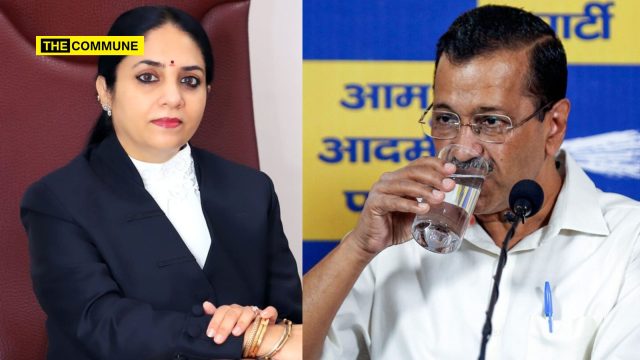
Arvind Kejriwal’s dramatic boycott of Justice Swarana Kanta Sharma’s court, framed as “Satyagraha”, is less about judicial ethics and more about evading accountability in the Delhi Excise Policy case. After personally arguing (and losing) his recusal plea on 20 April 2026, Kejriwal’s April 27 letter and video conveniently ignore the affidavit’s glaring weaknesses while amplifying unproven inferences through leftist and AAP-aligned voices masquerading as journalists like Saurav Das. This isn’t constitutional courage; it’s a calculated sympathy play ahead of political battles.

Affidavit’s Core Flaws Exposed

Kejriwal’s argument hinges on Justice Sharma’s children’s empanelment as Central Government panel counsel and Solicitor General Tushar Mehta’s role in case allocation. But it leaps from structure to conflict without evidence: no proof that Ishaan or Shambhavi Sharma handled any CBI/Delhi Excise matters before their mother, let alone cases linked to Kejriwal. RTI figures (2,487 cases for Ishaan in 2023) span all government departments across courts – zero tie to this prosecution. Group C empanelment for Shambhavi is routine admin work, not a “financial nexus.”

Courts demand direct apprehension of bias, not vague “proximity.” In Ranjit Thakur v. Union of India (1987), the Supreme Court held the test is “reasonableness of apprehension in the mind of the party” based on objective facts, not subjective fear. In Supreme Court Advocates-on-Record Association v. Union of India (2015), the Court ruled pecuniary interest requires automatic disqualification, but only when a judge has direct financial stake in the case outcome, like shareholding in a litigant company. Kejriwal admits no actual bias, only “perception”, yet boycotts anyway, reducing a serious doctrine to forum-shopping.

Justice Sharma’s April 20 Judgment Destroys Kejriwal’s Case

In her detailed 20 April 2026 judgment refusing recusal, Justice Sharma systematically dismantled every claim. She held, “Recusal would not be prudence but abdication of duty”, citing constitutional obligation to decide without fear or favor.

“The test of apprehension of bias cannot rest entirely upon the subjective perception of a litigant who merely fears that the Judge may not grant him relief in view of adverse orders suffered by him in the past”

“Appearance of justice must not be seen through the eyes of the applicant, but on the standard of a reasonable and informed person”

“The litigants have put me and the [judicial] institution on trial”

She rejected Kejriwal’s claims about her 9 March 2026 prima facie observations (standard in revision petitions), her alleged RSS event participation (unproven), and procedural complaints about IO stay orders (which didn’t affect accused rights). The judgment exposed Kejriwal’s real motive: avoiding unfavorable rulings by attacking the judge, not presenting facts.

Procedural Claims Overstated

Kejriwal gripes about leaving court at 3:45 PM while CBI argued till 7:00 PM, denying his rejoinder. Fair point, but the order records his exit and closure, a standard procedural call in high-stakes hearings. No evidence of malice; former CMs don’t get veto power over schedules. Justice Sharma noted this “grave denial” narrative pads a weak hand when Kejriwal personally argued for 90 minutes before leaving with leave.

Saurav Das: Leftist/AAP Propagandist, Not Independent Reporter

Crediting “legal reporter” Saurav Das whitewashes his documented AAP ecosystem bias; extensive pro-Kejriwal coverage, opinion-laced “reports,” and selective activism. Das is a propagandist masquerading as journalist who frames opinions as facts and builds prosecutorial-style narratives against judges using selective facts and biased interpretation.

Key revelations:

Das routinely avoided public criticism of Delhi CM Arvind Kejriwal or Punjab government over pollution/stubble burning while attacking UP CM Yogi Adityanath

His “shocking allegations” against Justice Sharma rest on inference, not proof: comparing her rulings in opposition vs BJP cases “ignores basic legal reality: no two cases are identical”

His central claim of “reasonable apprehension of bias” is itself an opinion, not established conclusion that “a different observer could look at the same material and see nothing unusual at all”

Kejriwal shared Das’s post to win brownie points and prove loyalty, raising questions about coordinated narrative-building

Kejriwal’s team relied on Das’s 9 April post (with annexed RTI) without disclosed verification. Government can rightly probe: Was the RTI Das’s solo effort, or fed by interested parties? Sourcing via a partisan X thread undermines court exhibits; neutral filers face no such scrutiny.

Legal Doctrine Confirms Kejriwal Lost

The Supreme Court’s recusal framework is clear:

  • Financial interest = automatic disqualification (SC Advocates-on-Record, 2015)
  • Other interests require “real danger” or “reasonable apprehension” inquiry – tested objectively, not by litigant’s subjective fear
  • Recusal cannot be forced; rests on judge’s conscience (Subrata Roy Sahara v. Union of India, 2014)
  • Bias from prior adverse orders alone insufficient – else every losing litigant could demand new judges

Kejriwal presented zero evidence of pecuniary nexus to this case, only structural proximity. Courts reject that leap. Justice Sharma correctly applied Ranjit Thakur and SC Advocates-on-Record tests and Kejriwal now manufactures a constitutional crisis because he lost on law.

The Ecosystem’s Orchestrated Push: Amplifying Kejriwal’s Flawed Narrative

The moment Kejriwal announced his judicial boycott on 27 April 2026, a well-oiled ecosystem swung into action to legitimize what Justice Sharma herself called an attempt to “put the judge and institution on trial”. Leftist and AAP-aligned “journalist” Saurav Das, whose RTI data formed the affidavit’s backbone, immediately hailed it as “something to watch,” praising Kejriwal for “not budging” against a judge where “conflict-of-interest is as clear as daylight” despite providing zero evidence of actual case linkage.

Senior lawyer Prashant Bhushan, a longtime AAP ally, declared the boycott “correct & justified” and the apprehension of bias “reasonable,” offering no legal analysis of why the April 20 judgment was wrong but lending institutional heft to political theatre.

Congress-supporting handles erupted with “Checkmate by Kejriwal” posts, falsely claiming he was “clean bowled” the judiciary when in fact he lost the recusal plea on law, not drama. Blue-tick accounts fabricated figures—”10 crores from 5,900 dockets!”—conflating empanelment with corruption, while others recycled debunked claims about Justice Sharma attending “RSS events” (never proven) and “magical” case allocation (standard roster procedure).

Opinion pieces from SC advocates suddenly flooded platforms calling for recusal guidelines – sensible in isolation, but timed to suggest Kejriwal exposed a systemic flaw rather than lost a legal argument.

Das himself was lauded for “shining light” on judicial ethics, with Kejriwal’s letter citing past judges who recused themselves, conveniently ignoring those involved actual conflicts like family litigation, not structural proximity.

The ecosystem’s playbook was transparent: convert a rejected recusal plea into a constitutional crisis, frame a former CM’s courtroom walkout as Gandhian resistance, and drown Justice Sharma’s detailed, precedent-backed judgment under a flood of emotive posts, manufactured statistics, and coordinated outrage, ensuring the public never scrutinizes the affidavit’s central void: no proof Ishaan or Shambhavi Sharma touched a single CBI case, let alone this one. When facts fail, activate the narrative machine.

Following Kejriwal, Sisodia has also decided to ‘boycott‘ the case proceedings.

Bench Hunting, Contempt Risk, and the Social Media Weapon

Kejriwal’s boycott is, at its core, a textbook case of bench hunting – the practice of pressuring a court into reconstituting a bench by making adjudication before the existing judge politically untenable. The Supreme Court explicitly warned against this in Indore Development Authority v. Manoharlal (2020), holding that recusal cannot be converted into “a device for bench hunting or forum shopping merely because a judge had expressed a prior view on law.”

Kejriwal lost the recusal plea on 20 April 2026. Rather than pursuing the only legitimate remedy available, an appeal to the Supreme Court, he chose a public theatrical boycott. Manish Sisodia has since joined the bandwagon, signalling that this is not a matter of individual conscience, but a coordinated political strategy dressed in Gandhian language. Both acts, on their face, risk crossing into Contempt of Court – specifically, scandalising the court and lowering the authority of the judiciary in the eyes of the public. When a litigant publicly declares a sitting judge unfit via social media videos and open letters after losing a formal legal challenge, it does not become protected speech merely because the word “Satyagraha” is attached to it.

The appropriate and constitutionally prescribed course was clear: file a Special Leave Petition before the Supreme Court challenging Justice Sharma’s April 20 order. That remedy exists, is accessible, and is specifically designed for situations where a litigant believes a High Court judge has erred. Kejriwal himself acknowledges this option remains open. Yet he refuses to use it while simultaneously refusing to participate in proceedings – having it both ways, keeping the legal door ajar while maximising political optics at the judiciary’s expense.

Most dangerously, this episode has normalised social media as a tool to browbeat the judiciary. Kejriwal’s video, Das’s amplification, Bhushan’s endorsement, fabricated financial calculations, and coordinated hashtag campaigns all served a single purpose: to make Justice Sharma’s continued adjudication politically costly enough that either she steps aside or her eventual rulings are pre-delegitimised in the court of public opinion. This pressure tactic strikes at the foundation of judicial independence – which requires that judges decide based on law and record, not on the volume of outrage manufactured outside the courtroom. When a legal remedy is available and ignored in favour of a social media offensive, it is no longer a free speech issue; it is an institutional threat.

As Advocate Naveen Murthi puts it, “When a legal remedy is available, this pressure tactic of using social media and narrative building as a tool has to be nipped in the bud.”

Real Motive: Sympathy, Set Narrative Against ‘Unfavourable Judges’, & Not Justice

Kejriwal’s Gandhian cosplay – conscience, Satyagraha, follows discharge reversal, not ethics epiphany. Supreme Court guidelines urged in opinion pieces are sensible but post-hoc; Kejriwal exploits the gap for PR, not reform. Public trust erodes when politicians publicly “boycott” judges over losing arguments, not facts. As Justice Sharma warned: “Can’t let politician judge judicial competence”.

If bias exists, appeal to the Supreme Court, Kejriwal admits keeping that option open. But appealing doesn’t grab headlines like “Satyagraha against biased judge.” This leap from affidavit to courtroom walkout exposes the rot: accountability-dodging dressed as judicial cleansing. Kejriwal bets politics, not law; the judiciary holds.

Subscribe to our channels on WhatsAppTelegram, Instagram and YouTube to get the best stories of the day delivered to you personally.