Home Blog Page 68

Not Just Photo-Ops: The Hard Strategy Behind Modi’s City Diplomacy Push

Moving beyond the traditional confines of the Delhi Durbar and the bureaucratic fortress of the ‘South Block’, India’s foreign policy has definitively reached a new dimension today. For several decades, whenever foreign heads of state visited India, their itinerary was remarkably predictable and confined to a very narrow geographic and cultural circle. This standard diplomatic route usually began at the airport, moved to the Rashtrapati Bhavan, continued to Hyderabad House for official dialogues, and concluded with a customary photo opportunity at the Taj Mahal.

However, since the geopolitical shift in 2014, this stagnant situation has been completely turned upside down.

Under the leadership of Prime Minister Narendra Modi, the Indian government has strategically diverted its high-stakes diplomatic meetings. These engagements have been moved out of the air-conditioned, sterile rooms of New Delhi and decentralized into India’s vibrant cultural and commercial centers.

Today, every major city in India has evolved into an important piece on the global political chessboard. This is evidenced by events such as the roadshow with the Japanese Prime Minister in Ahmedabad, the beach stroll with the Chinese President in Mamallapuram, the spiritual Ganga Aarti worship in Varanasi, and the signing of critical defense agreements with the French President in Mumbai.

This deliberate structural shift in statecraft is termed ‘Para-Diplomacy’ or ‘City Diplomacy’. What exactly is the political, economic, and cultural strategy operating behind this framework? Let us examine it in detail.

Decentralization of Power: India Beyond Delhi

For a very long time, the mere mention of India brought only the political power of Delhi and the historical monument of Agra to the minds of foreign observers. But India is by no means a single monoculture. It is a vast, diverse subcontinent. Every individual state within this union possesses a highly unique economic profile and a distinct cultural identity.

Prime Minister Modi’s decentralized approach to hosting international leaders is a fundamental part of the “Cooperative Federalism” philosophy. By physically taking foreign leaders out to various states, the government ensures that the specific investment opportunities of those respective regions are taken directly to world leaders. Therefore, this city-hopping approach is not merely tourism; it is a calculated and highly effective economic strategy.

Ahmedabad: The Center of Personal Chemistry

Guests: Friedrich Merz (Germany – 2026), Shinzo Abe (Japan – 2017), Xi Jinping (China – 2014), Donald Trump (USA – 2020)

Gujarat’s commercial hub, Ahmedabad, has today transformed into the second capital of India’s diplomacy. The recent visit of German Chancellor Friedrich Merz to Ahmedabad serves as an excellent contemporary example of this shift. When the Chancellor was seen spinning Gandhi’s charkha at the Sabarmati Ashram, it was not just a historical symbol. It was a deliberate attempt to convey to the world that Gujarat is an excellent, ready-made platform for investments from Germany’s ‘Mittelstand’ (medium-sized enterprises).

Furthermore, since Gujarat is Prime Minister Modi’s home state, the relationships forged with leaders visiting here easily transcend stiff political formalities. They naturally blossom into genuine personal friendships.

Shinzo Abe (2017): Taking the Japanese Prime Minister to Ahmedabad and conducting a massive roadshow in an open vehicle prominently showcased the closeness and trust between the two leaders. As a direct result of this deep bilateral trust, India’s first high-speed bullet train project (connecting Mumbai and Ahmedabad) became possible.

Xi Jinping (2014): The iconic scene of Prime Minister Modi sitting and talking on a traditional swing with the Chinese President on the banks of the Sabarmati River was a pivotal moment. It represented an attempt to normalize and stabilize relations between the two great powers of Asia.

This is precisely where the concept of “Personal Diplomacy” works best. Stripped of the rigid protocols of Delhi, this relaxed environment inherently helps global leaders to converse more naturally and openly.

Chennai (Mamallapuram): Dravidian Architecture and the Chinese Connection

Guest: Xi Jinping (China – 2019)

The location carefully chosen by Prime Minister Modi for the second Informal Summit with Chinese President Xi Jinping in 2019 was Mamallapuram, situated near Chennai. This specific selection held immense historical significance.

Historical Message: The ancient Pallava kings, who ruled during the 7th century AD, maintained extensive maritime trade and deep diplomatic ties with China. Furthermore, the revered monk Bodhidharma traveled to China originating from Kanchipuram. By actively recalling this deep historical bond, Modi subtly yet firmly conveyed to Beijing that India is an ancient civilization entirely on par with China.

Dhoti Diplomacy: The visual optics of Prime Minister Modi welcoming the Chinese President while wearing the traditional Tamil attire of a dhoti and shirt boldly proclaimed India’s rich cultural diversity on the world stage.

Maritime Dominance: Geographically, Mamallapuram is located directly on the shores of the Bay of Bengal. This location choice was also viewed as a geopolitical strategy to signify and assert India’s paramount importance to China within the broader “Indian Ocean Region”.

Varanasi (Kashi): Spiritual Soft Power

Guests: Shinzo Abe (Japan – 2015), Emmanuel Macron (France – 2018), Pravind Jugnauth (Mauritius)

Varanasi stands out as one of the world’s oldest living cities, and it notably serves as the parliamentary constituency of Prime Minister Modi. The strategic purpose of taking foreign leaders to this sacred geography is to prominently showcase India’s “Spiritual Leadership” to the globe.

Ganga Aarti: Sitting on the revered banks of the river Ganges alongside Japanese Prime Minister Shinzo Abe and collectively watching the evening Aarti rituals created a remarkably deep cultural bond.

Buddhist Connection: Because Japan is inherently a Buddhist nation, the profound spiritual connection with Kashi and nearby Sarnath emotionally linked both countries on a civilizational level.

Cultural Foundation: While many Western nations primarily project their economic or military strength, India confidently projects its cultural antiquity as a pillar of its foreign policy. A diplomatic visit to Varanasi effectively conveys to global leaders that forging a relationship with India is not just an entry into a massive consumer market but is fundamentally a civilizational connection.

Mumbai: The Economic and Defence Hub

Guest: Emmanuel Macron (France – 2026)

If New Delhi operates as the political capital, Mumbai undoubtedly reigns as India’s economic capital. French President Emmanuel Macron recently landing in Mumbai sends a very clear and pragmatic message to the world: “We are ready to do business”.

Defense Agreements: When highly complex, billion-dollar defense pacts such as those involving Rafale fighter jets and Scorpene-class submarines are being negotiated and discussed, Mumbai is the most appropriate arena. This is because it is the home turf of India’s preeminent corporate leaders, including the heads of Tata, Reliance, and Mahindra.

Investment Gateway: Moreover, Mumbai serves as the primary gateway for European capital investments and ‘FinTech’ (Financial Technology) partnerships. President Macron’s visit officially confirms that both France and the wider European Union increasingly view India as a highly capable, alternative manufacturing hub.

Bengaluru: The Future of Technology

Guests: Friedrich Merz (2026), Benjamin Netanyahu (Israel – 2018), Angela Merkel (Germany – 2015)

Bengaluru is globally recognized as India’s Silicon Valley. The underlying purpose of world leaders visiting this southern metropolis is completely different from other cities, it is strictly focused on “Future Tech”.

Research and Development: German Chancellor Friedrich Merz recently conducted focused visits to the ‘Bosch’ company facilities and the IISc (Indian Institute of Science) in Bengaluru. Through this engagement, he effectively proved to the global market that India is no longer just a country that writes software codes in a “Back office” capacity. Rather, it has evolved into a formidable superpower in high-tech research (R&D) and Artificial Intelligence (AI).

Israel Relationship: Similarly, when Israeli Prime Minister Netanyahu visited Bengaluru, the event served as a powerful convergence of two globally recognized “Startup Nations”. During this visit, a wide array of future-focused topics ranging from advanced agricultural technology to critical cyber security frameworks were extensively discussed.

Delhi: The Strategic Fortress

Guest: Vladimir Putin (Russia – 2025)

Even after actively decentralizing diplomatic power to so many regional cities, New Delhi still resolutely remains India’s primary “Strategic Fortress”. Specifically, bilateral relations with global powers like Russia remain highly sensitive and require a traditional setting.

Consequently, when Russian President Vladimir Putin visits India, these engagements mostly happen strictly within Delhi. Delhi’s secure “Hyderabad House” remains the most suited venue for highly crucial yet confidential negotiations, such as those regarding S-400 missile defense systems, sensitive nuclear energy agreements, and complex United Nations reforms. Simultaneously, Delhi has now also risen as an essential global center capable of hosting massive multilateral conferences, effectively demonstrated by the G-20 Summit and the AI Summit.

The New Era of Diplomacy: What are the Benefits?

Prime Minister Modi’s innovative “City Diplomacy” has brought several tangible benefits to India:

Inter-state Competition: Now, major states like Maharashtra, Tamil Nadu, Gujarat, and Karnataka are actively engaging in healthy, robust competition amongst themselves to aggressively attract foreign investments. In this new paradigm, State Chief Ministers have also rightfully gained a proactive role in shaping foreign policy outcomes.

Brand India: The outdated international image of India merely as a “country of the poor” has been thoroughly shattered. In its place, a powerful new image of a “diverse economic superpower” has been systematically built.

Tourism Growth: Whenever world leaders visit a specific regional location, that place immediately grabs the intense attention of global media networks. Unsurprisingly, the tourism sectors of Mamallapuram and Varanasi have grown tremendously following the highly publicized visits of Xi Jinping and Shinzo Abe.

To Sum-up

Prime Minister Narendra Modi has successfully transformed Indian foreign policy from being merely a sterile “topic of discussion for the elites” into a vibrant “celebration of the people”. A German leader flying a kite in the skies of Ahmedabad, a Japanese leader actively performing a traditional pooja in Varanasi, and a French president casually sipping tea in Mumbai are by no means ordinary events.

These are, in fact, incredibly powerful diplomatic messages conveying to the entire world that India is fully ready to join hands with the modern global economy while fiercely preserving its deep cultural roots.

In the coming times, it is clear that India’s foreign policy trajectory will not be decided solely within the corridors of Delhi’s ‘South Block’. It will also be actively decided on the coastal beaches of Chennai, within the cutting-edge tech parks of Bengaluru, and upon the sacred ghats of Varanasi. This beautifully decentralized and deeply rooted approach is the true face of the New India.

Ganesh Kumar is a geo-political analyst.

Subscribe to our channels on WhatsAppTelegram, Instagram and YouTube to get the best stories of the day delivered to you personally.
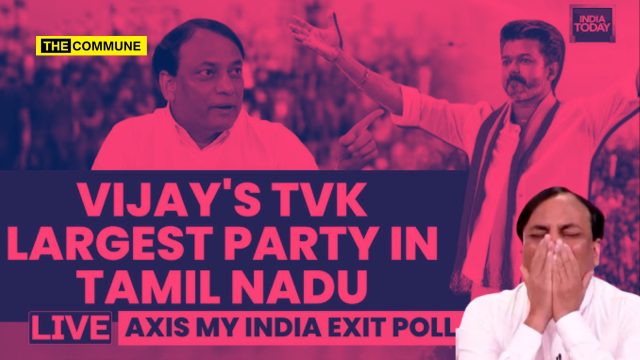
“You Can Leave The Alliance If You Want”: MK Stalin Reportedly Told Congress Shocked By Rahul Gandhi’s Letter

DMK Stalin Congress Rahul Gandhi

Seat-sharing negotiations between the DMK and its Congress ally have intensified ahead of the upcoming elections, with Chief Minister MK Stalin reportedly expressing strong reservations over the Congress party’s demands, according to sources in the DMK.

Congress general secretary KC Venugopal and former Chhattisgarh Deputy Chief Minister TS Deo visited Chennai and met Stalin to discuss alliance terms. During the meeting, they handed over a letter said to have been sent by Rahul Gandhi outlining the Congress party’s expectations, including a share in government, allocation of 32 Assembly seats, and a Rajya Sabha berth.

Sources in Arivalayam said Stalin was taken aback after reviewing the contents of the letter and conveyed his concerns to Venugopal through DMK MP Kanimozhi.

According to reports from Tamil Janam/Dinamalar, the DMK leadership also flagged recent remarks made by Congress leaders, including Girish Chodankar, Praveen Chakravarty, and Manickam Tagore, stating that the comments were not only directed against the DMK but were also contrary to coalition norms. The DMK is said to have insisted that if the alliance is to continue smoothly, the Congress leadership should take action or at least issue a reprimand.

The DMK reportedly conveyed that it remains a strong political force capable of winning power independently but is bringing together secular parties primarily to prevent the BJP from gaining ground in Tamil Nadu.

Party sources indicated that continued criticism from the Congress camp could affect grassroots cooperation, warning that DMK cadres may not work wholeheartedly for the alliance under such circumstances. The DMK is also said to have maintained that discussions about a coalition government should arise only if it falls short of a majority, and that raising the issue prematurely would create confusion.


View this post on Instagram


A post shared by Tamil Janam (@tamiljanam)

The DMK leadership further pointed to developments in other states where, according to them, Congress’ strained ties with regional parties weakened both sides and enabled the BJP to form governments. Sources said the DMK conveyed concerns that a similar situation should not be allowed to emerge in Tamil Nadu.

The party is also said to have dismissed suggestions from some Congress quarters about a possible tie-up with TVK, asserting it was not under pressure and that any party is free to choose its alliances.

According to the sources, the DMK conveyed that while Congress retains a certain vote share in Tamil Nadu, it lacks the organisational machinery and cadre strength required for election management. The party reportedly emphasised that its electoral victories are driven by its own grassroots network.

Sources added that Stalin firmly indicated the DMK could allocate only up to 22 Assembly seats to the Congress in the current round of talks, while the question of a Rajya Sabha seat could be discussed at a later stage.

Subscribe to our channels on WhatsAppTelegram, Instagram and YouTube to get the best stories of the day delivered to you personally.
Sun News Editor-in-Chief Twists Justice GR Swaminathan’s Statement On Fake Rationalists

Sun News Editor-in-Chief M. Gunasekaran appears to be attempting to create a controversy after claiming that Madras High Court judge Justice GR Swaminathan insulted non-believers at a recent public event, seemingly distorting the judge’s words to manufacture outrage.

Gunasekaran wrote on social media that “Madras High Court Justice GR Swaminathan called those who do not believe in spiritual gurus or the power of God ‘rascals, fools and barbarians’ at a public event.”

However, a closer reading of Justice Swaminathan’s full speech at the Guru Vandana event in Hosur tells a very different story.

What Justice GR Swaminathan Said

The Madurai Bench judge was speaking at a programme organised to honour Udupi Pejawar Mutt seer Vishwaprasanna Theertha Swamiji, where he delivered a strongly worded defence of India’s guru tradition and criticised what he termed “fake rationalism.”

During the speech, Justice Swaminathan narrated a personal late-night highway incident to explain the spiritual role of the Guru. Recalling the tense moment when his car broke down in heavy fog, he said he repeatedly uttered “Gurunatha, Gurunatha…” and described the Guru as the living presence of God in moments of helplessness.

The controversy hinges on his subsequent remark“Now in Tamil Nadu, some people who call themselves ‘rationalists’, call us immoral, foolish and barbaric because we see the Guru as the embodiment of God. I say, those who say so are the ones who are immoral, foolish and barbaric.”

Selective Framing By Gunasekaran

Gunasekaran’s version strips away the crucial context that Justice Swaminathan was responding to those who abuse believers and instead presents it as though the judge attacked all non-believers.

This is yet another instance of how the DMK’s mouthpiece and its minions cleverly twist the judge’s words to inflame sentiment and create avoidable controversy around a sitting High Court judge.

The speech clearly shows the judge was pushing back against what he called derision from certain rationalist quarters, not issuing a blanket denunciation of people who do not believe in God or gurus.

Subscribe to our channels on WhatsAppTelegram, Instagram and YouTube to get the best stories of the day delivered to you personally.
Vellore Police Refute TVK Charge Of Last-Minute Permission For Public Meeting

Vellore Police Refute TVK Charge Of Last-Minute Permission For Public Meeting

The Vellore District Police have rejected allegations by Tamilaga Vettri Kazhagam (TVK) that permission for its administrators’ meeting attended by party chief Vijay was granted at the last minute, stating that due process was followed and approval was issued within the prescribed timeline.

The TVK administrators’ meeting was held at Agaramcheri in Vellore district, where police had permitted participation of 4,900 party functionaries. Around 900 police personnel were deployed for security. The event also featured a pandal and seating arrangements, which observers noted was not typical of earlier TVK gatherings.

Ahead of the meeting, TVK functionary Nirmal Kumar told reporters that party administrators had been running around for more than 40 days to secure permission for the Vellore event. He alleged that the police issued the approval letter only 22 hours before the programme. Similar concerns have been raised by the party on earlier occasions. Addressing the gathering, party president Vijay also said obtaining police permission for TVK meetings and public interactions had become difficult and asserted that he would visit every village after the party comes to power.

Police Issue Detailed Rebuttal

Refuting the allegations, the Vellore District Police, in a press release dated 23 February 2026, termed the claim of last-minute approval “not true” and provided a date-wise sequence of the application process.

According to the police, TVK first applied on 28 January 2026 seeking permission to hold a public interaction meeting on 8 February with participation of the party leader and about 25,000 people. On 30 January 2026, police sought mandatory basic details in line with Government Order No. 05 issued by the Tamil Nadu government following directions of the Madras High Court.

On 5 February 2026, TVK informed authorities that the event would be postponed due to unavoidable reasons and that a fresh date would be sought. The party then reapplied on 6 February 2026 stating the programme would be held on 23 February 2026 with an expected turnout of about 25,000 persons. Police again sought required details.

In a subsequent communication dated 18 February 2026, TVK informed the police that the programme had been converted into an administrators’ meeting and that only 4,900 district-level functionaries would participate.

Police said further queries were raised on 19 February 2026 seeking essential arrangements details, and TVK furnished the clarifications on 20 February 2026.

Permission Granted After Field Inspection

The police stated that, keeping public safety in view, they conducted a field inspection of the venue and reviewed parking arrangements. Formal permission was issued on 22 February 2026.

Officials maintained there was no delay and that approval was granted within four days of the relevant application process. They also rejected as “completely false” the claim that the party had struggled for one and a half months or that permission was given only about 20 hours before the event.

The police further noted that permission had been granted strictly for an administrators’ meeting of 4,900 participants. However, during the event held on 23 February 2026, more than 10,000 people were found to have attended, exceeding the permitted number.

According to the police, this amounted to a violation of the Madras High Court’s guidelines and Government Order No. 05 governing public meetings. Despite this, the police said adequate security arrangements were made to ensure that no untoward incident occurred.

Subscribe to our channels on WhatsAppTelegram, Instagram and YouTube to get the best stories of the day delivered to you personally.
Dhurandhar Team Snubs The Hollywood Reporter India Awards Ceremony

Dhurandhar Team Snubs The Hollywood Reporter India Awards Ceremony

The Hollywood Reporter India hosted the inaugural edition of The Honours in Mumbai on 18 February 2026, celebrating standout achievements in Indian cinema, including a special box-office recognition for the blockbuster Dhurandhar. However, in what seemed like a slap on Hollywood Reporter’s face, the Dhurandhar team was absent, no member of the film’s team attended the event to receive the honour.

During the ceremony, the organisers announced a special honour for the film, noting that Dhurandhar had grossed over ₹1,200 crore worldwide and had remained in theatres for 76 days – a rare feat in the current theatrical landscape. However, no member of the film’s team was present to receive the recognition.

The absence came in the backdrop of a controversy involving film critic Anupama Chopra, whose review of Dhurandhar had triggered significant backlash online. In her review, Chopra had described the film as ‘exhausting, relentless and frenzied’, and criticised what she called ‘excessive testosterone, shrill nationalism and an inflammatory anti-Pakistan narrative’.

She had also argued that director Aditya Dhar’s blending of fictional storytelling with references to real terror events, including the Kandahar hijacking, the Parliament attack and the 26/11 attacks, felt ‘dangerous and clunky’.

The review drew sharp reactions on social media, with several users accusing the critic of being out of touch with the conventions of the espionage-action genre. Many questioned her criticism of violence and nationalism in a film centred on covert operations and terror networks.

Within days of the backlash intensifying, Chopra’s original review link was removed from YouTube, fuelling speculation that it had been taken down or restricted. Screenshots of the review continued to circulate widely online.

Subscribe to our channels on WhatsAppTelegram, Instagram and YouTube to get the best stories of the day delivered to you personally.
DMK Govt Blocked Kandha Sashti Kavacham Chanting In Namakkal Murugan Temple, Alleges TN BJP Chief Nainar Nagenthran

DMK Govt Blocked Kandha Sashti Kavacham Chanting In Namakkal Murugan Temple, Alleges TN BJP Chief Nainar Nagenthran

Tamil Nadu BJP president Nainar Nagenthran on Monday, 23 February 2026, alleged that a Kandha Sashti Kavacham recitation programme was prevented at a Murugan temple in Namakkal district, triggering a fresh political row over the alleged curbs on devotees’ right to chant.

Earlier in the day he had called upon Murugan devotees across the state to collectively recite the Kandha Sashti Kavacham at 6 PM, citing what he described as long-standing grievances over restrictions at Thirupparankunram.

Speaking to the press, Nagenthran said that an appeal had been issued asking all Murugan devotees living across Tamil Nadu to hold lamps in their streets and recite the Kandha Sashti Kavacham. He stated that despite a court verdict, devotees continued to feel distressed that they were unable to light lamps at Thirupparankunram.

He urged that at 6 PM, people in every locality should gather together in public places and recite the Kandha Sashti Kavacham collectively rather than individually. He added that lighting lamps remained their wish and said the prayer was also being made so that the National Democratic Alliance forms the government in the upcoming Assembly elections.

The recitation was also arranged in temples. It is alleged that the DMK government had prevented a Kandha Sashti Kavacham recitation programme at the Iyimangalam Murugan temple in Namakkal district.

Nagenthran took to his X handle to state that the DMK government, which he accused of repeatedly obstructing the worship of Lord Murugan, would be driven out. He said the alleged prevention of the recital by what he described as the government’s “proxy machinery” deserved strong condemnation.

Nagenthran questioned whether, in what he termed a regime speaking of “fake secularism,” devotees would be denied permission not only to light lamps on the hill but also to recite Lord Murugan’s name inside temples during the Karthigai festival.

He further alleged that the government was attempting to suppress the cultural rights of millions of Murugan devotees and said such “fascist” actions by the DMK government would not succeed. He added that the DMK’s “daydream” of returning to power would not be fulfilled.

Subscribe to our channels on WhatsAppTelegram, Instagram and YouTube to get the best stories of the day delivered to you personally.
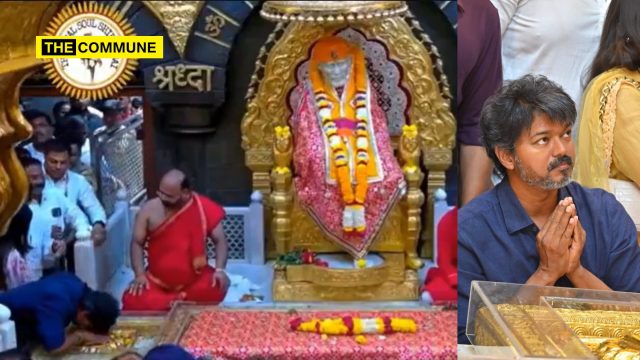
How Vijay Is Building His Image And Politics On Stolen Identities

Tamilaga Vettri Kazhagam – right from its inception has been the butt of many jokes – right from its flag colours to the anthem, dialogues made by Vijay to his audience and what not, every single time, it feels like a deja vu.

Recently, cricket lovers had to face an issue at Chepauk, which has long been celebrated as one of India’s finest cricket venues – not just for the quality of cricket but for the culture of its crowd. For nearly two decades, one sound has defined that culture: the piercing, rhythmic call of “Whistle Podu,” inseparable from the Chennai Super Kings’ identity.

But during the T20 World Cup 2026’s Afghanistan-New Zealand clash at this iconic venue, fans faced an absurd police-enforced whistle ban. Neither BCCI nor TNCA listed it as a rule, fueling speculation of political meddling tied to actor Vijay’s TVK party, which snagged the whistle as its election symbol in January 2026.

CSK CEO Kasi Viswanathan dodged questions with a curt “I don’t prefer to talk about it,” leaving the franchise’s trademark identity awkwardly muzzled. This isn’t coincidence, it’s Vijay’s signature move: stealing established brands to bootstrap his political ambitions.

From GOAT’s Flop to Chepauk’s Embarrassment

Vijay first hijacked CSK’s thunder in his 2024 film GOAT, shoehorning a “Whistle Podu” rip-off song that bombed critically and commercially – a desperate bid to glom onto the most successful sports brand in Tamil Nadu. Now, with TVK’s whistle symbol approved amid TN’s volatile pre-poll climate, Chepauk’s police “security measures” (read: election optics) have forced CSK management into silence.

Vijay didn’t just borrow, he poached an identity that belongs to millions of Yellow Army fans, embarrassing a franchise worth crores and turning their war cry into a political punchline. TVK’s gain is CSK’s gag order.

“Thalapathy”: Pilfered from DMK’s Legacy?

It’s a pattern. Vijay’s moniker “Thalapathy”, thrust upon him by fans, wasn’t his to own. He went from ‘Ilaya Thalapathy’ to ‘Thalapathy’, if you remember. He seems to have lifted it straight from DMK’s arsenal, where it defined iconic leaders like M. Karunanidhi. DMK coined the term for their youth brigade; Vijay monetized it into a personality cult. Now, as TVK pitches him as the anti-establishment savior, he’s repurposed DMK’s own lingo against them. Steal from the masters, then fight them with their weapons.

NTK Vs TVK Party Shawl

Even the visual branding raises eyebrows. The shawls worn by TVK cadres at rallies bear a striking resemblance to those long associated with the Naam Tamilar Katchi (NTK). From colour palette to styling and stage presentation, the overlap feels less like coincidence and more like calculated borrowing. In Tamil Nadu politics, symbolism matters — shawls are not mere accessories but identity markers. When visual cues begin to blur between parties, it reinforces the broader criticism that TVK’s political aesthetic is assembled from pre-existing templates rather than crafted from an original vision.

The Jagan-Vijay Parallel: Khaki Pants and Christian Playbook

Vijay’s mimicry peaks in his dressing style, a carbon copy of former Andhra Pradesh CM YS Jagan Mohan Reddy. Jagan’s white shirt-khaki shorts combo projected “man of the people” simplicity, but critics slammed it as evangelical branding in a Hindu-majority state. Jagan’s rise drew massive Christian backing – alleged corruption, church alliances, and policy favors followed. Andhra became a hotbed for conversions under his watch.

Enter Vijay: same white shirt, khaki pants at every TVK rally, mirroring Jagan down to the last crease. Coincidence? Hardly. Vijay’s family ties scream the playbook – uncles Xavier Alphonse and Xavier Britto helm Loyola College’s syndicate, entangled in Catholic Church networks and Jesuit influence (Society of Jesus). Like Jagan, Vijay taps religious machinery for political muscle: education empires funding rallies, youth mobilization via church networks. It’s not organic populism, it’s calculated evangelism in politics, dressing up religious agendas as mass movements. Jagan cleared the path; Vijay’s sprinting down it.

A Thief in Politician’s Clothing?

Vijay excels at identity theft: CSK’s whistle for votes, DMK’s “Thalapathy” for swagger, Jagan’s khakis for “authenticity.” Each borrow dilutes the original – CSK fans muted, DMK history mocked, Hindu symbols subtly subverted. TVK’s whistle isn’t rebellion; it’s parasitism on Chennai’s cricket soul. As 2026 polls loom, Vijay’s not building a brand, he’s looting them. Tamil Nadu deserves leaders who forge paths, not followers who filch outfits and slogans. Vijay, it is time to whistle a new tune or own the echoes you’re stealing.

Subscribe to our channels on WhatsAppTelegram, Instagram and YouTube to get the best stories of the day delivered to you personally.
Complaint Filed Before NHRC Alleging Curbs On Hanuman Chalisa Recitation At NIT Warangal

A complaint has been submitted to the National Human Rights Commission (NHRC) by Legal Rights Protection Forum alleging suppression of Hindu students’ religious freedom and discriminatory treatment in the regulation of religious activities at the National Institute of Technology (NIT), Warangal.

The petition, addressed to NHRC member Priyank Kanoongo, has sought an independent inquiry into the actions of certain institute officials, including Director Prof. Bidhyadhar Subudhi, Chief Warden Prof. P. Abdul Azeem and Dean (Students Welfare) Prof. Kiran Kumar.

According to the complaint, students residing in the 1.8K Hostel had been voluntarily assembling every Tuesday at 7 PM for about fifteen minutes to recite the Hanuman Chalisa. The activity was described in the petition as informal, student-initiated and conducted peacefully without political affiliation.

The complainants alleged that the institute administration intervened after a video of the recitation circulated on social media. They claimed that on 17 February 2026, the Dean (Students Welfare), Chief Warden and faculty members entered the hostel and directed students to stop the recitation. Students were allegedly warned of strict disciplinary action, including possible rustication, if the activity continued.

The petition further alleged differential treatment of religious activities on campus. It claimed that Muslim students were being provided space to offer namaz in the hostel’s ninth-floor common hall, while Christian events, including Christmas celebrations under the banner “NITMAS”, had been conducted with participation of senior administrators in previous years.

If accurate, the complaint argued, such selective accommodation could amount to unequal application of institutional policy and may implicate constitutional protections under Articles 14, 15 and 25.

The complainants contended that as a centrally funded institution under the Ministry of Education, NIT Warangal qualifies as “State” under Article 12 of the Constitution and is therefore bound to uphold fundamental rights.

They have urged the NHRC to order an impartial inquiry, ensure that peaceful religious expression by students is not arbitrarily curtailed, and direct the institute to apply any campus regulations uniformly across communities. The petition also sought protection for students who participated in the Hanuman Chalisa recitation from any alleged retaliation pending inquiry.

Subscribe to our channels on WhatsAppTelegram, Instagram and YouTube to get the best stories of the day delivered to you personally.
Instagram ‘Influencer’ Nakul Dhull Trivialises Women’s Fear, Encourages Harassment

Instagram 'Influencer' Nakul Dhull Normalises, Encourages Harassment Of Women

Instagram creator Nakul Dhull, who has built a one‑million–strong following by projecting himself as a progressive, anti‑establishment voice, is facing severe backlash after posting videos that seems to trivialise women’s fear and normalise harassment at night.

Dhull, often cheered on by self‑styled feminists, “seculars” and liberal influencers for his anti‑government and anti‑Modi content, has previously called festivals such as Holi “unsafe for women” and described them as spaces notorious for harassment. In older clips, he spoke about how groping and non‑consensual touching are routinely brushed aside under the excuse of “Bura na mano, Holi hai”, positioning himself as someone calling out misogyny in popular culture.

However, the same creator has now put out a video in which he casually advises young men to “make women experience fear” instead of being scared of women, by stalking a lone woman at night. Addressing a follower named Kartik, whom is described as “average‑looking, insecure and scared to talk to girls” and is looking for advice from Dhull, he says there is no need to fear women as “at most, a girl can reject you, what more can she do, file a case?” He then adds that to truly make them understand fear, a boy should “try to walk behind a girl at 11 pm”: follow her, run after her, “drive fast, run fast, and overtake”, and then watch their reaction as girls are left speechless.

The message is framed as confidence‑building advice for shy men, but the practical “tip” is effectively a playbook for recreating the exact fear that lakhs of women in India already live with on a daily basis. In a country where official crime data and countless testimonies show that women walking alone at night are routinely stalked, harassed and assaulted, treating that fear as a social experiment or prank for content crosses every line of basic decency.

Instagram creator Nakul Dhull routinely positions himself as a progressive voice and since he is constantly posting anti-government and anti-Modi content, a lot of self-proclaimed feminists, seculars and liberals cheer him on and amplify his content.

It is noteworthy that Dhull is doing this not in a private chat but in broadcast mode, to an audience of around a million followers, many of them teenage boys. Telling that audience to simulate stalking “for fun” is not harmless humour but an invitation to normalise intimidating behaviour in public spaces. The fact that Dhull explicitly emphasises “don’t tease her, just walk away, overtake and run” has done little to reassure anyone because the core dynamic he is endorsing is a man following a lone woman at 11PM purely to trigger fear.

The outrage has been sharpened by the contrast with Dhull’s earlier commentary on Holi and women’s safety. In another viral video, he mocks a familiar line used by harassers during the festival: “Don’t feel bad, it is Holi, I have only applied colour from the top (superficially), have I opened the bra?” The tone is ostensibly perverted, and reproducing such language as punchlines normalises the exact excuses used to justify non‑consensual touching.

What has angered many observers is the near‑silence from the same progressive and feminist circles that previously boosted Dhull’s content when he spoke against the government or majoritarian politics.

This episode exposes a deep double standard: creators who posture as allies on women’s safety when it fits their political narrative but treat women’s actual lived fear as expendable when there is an opportunity for edgy, viral content. In Nakul Dhull’s case, the dissonance is stark – a self‑styled progressive who condemned unsafe festivals for women, now using the language and logic of stalkers as a motivational gimmick, and doing so in front of an impressionable mass audience.

Subscribe to our channels on WhatsAppTelegram, Instagram and YouTube to get the best stories of the day delivered to you personally.
MAWS Mega Scam: ED Dossier Names MK Stalin As ‘Direct Beneficiary’, Tamil Media Silent

stalin kn nehru scam

The KN Nehru MAWS corruption scandal has been making the waves across the country, but the local Tamil media seem to be brushing it under the carpet for one main reason – the Enforcement Directorate (ED) has, for the first time during his tenure, named Tamil Nadu Chief Minister MK Stalin as a “direct beneficiary” in its dossier.

According to a 258-page communication sent by the ED to the Tamil Nadu government under Section 66(2) of the Prevention of Money Laundering Act (PMLA), the central agency alleged that at least ₹1,020 crore was collected through widespread tender manipulation in the MAWS department. The letter urged the state police to register an FIR to enable further PMLA investigation.

Stalin Named as “Direct Beneficiary”

On page 51 of the dossier, the ED stated that by virtue of being DMK president, Chief Minister Stalin is a “direct beneficiary” of the bribes allegedly collected as “party funds.” The agency also named Deputy Chief Minister Udhayanidhi Stalin in the same context.

Image Source: X

Officials cited digital evidence recovered during April 2025 searches on Municipal Administration Minister KN Nehru, his relatives and associates. The ED claimed contractors were allegedly forced to pay 7.5–10% of contract value as kickbacks.

Notably, the agency clarified that it has not indicated any probe into the personal assets of either Stalin or Udhayanidhi in the present dossier.

Link to Key Associate

The ED communication also highlighted the role of Kavi Prasad, described as a close associate of Nehru’s family, particularly his brother KN Ravichandran of True Value Homes (TVH).

Investigators alleged that Kavi Prasad functioned as a key intermediary connecting senior IAS and IPS officers, MLAs, and the Chief Minister’s Office (CMO). The agency cited chats and call records purportedly showing senior officials addressing him with honorifics such as “Respected Sir” and “Chief.”

According to the ED, some officers allegedly approached Kavi Prasad for transfers, postings and tender-related favours, and sensitive intelligence was also shared with him – actions the agency termed a violation of service conduct rules.

Allegations Around Official Events

The dossier further alleged that bribes were collected from MAWS engineers to organise official programmes of the Chief Minister. One cited instance claimed ₹1 lakh each was collected from 43 engineers for a function in Tirunelveli district, based on recovered chat material.

Image Source: Maridhas

Sources close to Kavi Prasad had earlier denied the ED’s allegations, describing the case as politically motivated.

How ED Says It Found the Trail

The agency stated the material emerged from digital devices seized during searches linked to a PMLA probe that originated from a CBI bank fraud case involving TVH. Although the bank fraud case was later quashed by the Madras High Court, the ED said the digital evidence led to separate corruption findings.

High Court Pushes Action

The issue has gained fresh legal traction after the Madras High Court on 20 February 2026 directed the Directorate of Vigilance and Anti-Corruption (DVAC) to examine the ED communication and register an FIR.

The court observed that the material shared by the ED was not a mere complaint but “detailed source information disclosing cognisable offences.”

Political Ripples

Government sources indicated that soon after details of the ED letter surfaced in December 2025, Stalin reviewed the matter with senior police officials. He subsequently cautioned party functionaries about the possible “use” of central agencies against the DMK.

With the High Court now pushing for formal action, the ED’s naming of the sitting Chief Minister, even in an alleged beneficiary capacity, marks a politically sensitive moment in Tamil Nadu’s pre-election landscape.

Source: Sid Prabhakar Medium Page

Subscribe to our channels on WhatsAppTelegram, Instagram and YouTube to get the best stories of the day delivered to you personally.