Ingo Strauch, who presented a paper on the discovery of Tamil and Sanskrit inscriptions, written respectively in Tamil-Brahmi and Kharoshthi scripts, in Egypt’s Valley of the Kings, has also published extensively on a series of comparable inscriptions found on the island of Socotra in the Republic of Yemen, specifically in a cave context.
Socotra functioned as a crucial intermediate maritime station linking Bharat with the western world within the ancient transoceanic trade network. The Periplus of the Erythraean Sea (1st century CE) explicitly refers to the island as an important trading centre in the Indian Ocean commercial circuit.
More than one hundred inscriptions have been discovered on Socotra. Of these, a significant portion are in Sanskrit, while the remaining inscriptions belong to South Arabian and Aramaic linguistic traditions. The Sanskrit inscriptions are written in the Brahmi script and are dated broadly to the 2nd-4th centuries CE.
These Sanskrit records have been classified into three broad categories:
First type: simple personal names, most likely engraved by individual merchants or visitors marking their presence. Examples include names such as Vishnudatta and Bhattiputra.
Second type: inscriptions giving both father and son names, for example Ajita suno Ajita and codakaputro colika.
Third type: more complete records ending with a “has come” suffix, such as “Ajitivarman, son of Samgharangin, has come.”
In addition to the inscriptions, several auspicious Hindu symbols, including the Nandipada, have been identified among the cave graffiti.
Taken together, the epigraphic evidence indicates that the presence in these regions was not limited to a single individual such as “Sikai Korran,” nor only to Tamil traders. Rather, the material clearly points to multiple merchants from different parts of the Indian subcontinent travelling along these maritime routes and leaving inscriptions at various halting points.
(Courtesy: “Indian Inscriptions from the Cave Hoq on Suqutra, Yemen,” by Ingo Strauch and Michael D. Bukharin.)
TS Krishnan is a Tamil scholar, historian and author.
Subscribe to our channels on WhatsApp, Telegram,Instagram and YouTube to get the best stories of the day delivered to you personally.

A new report published by the London-based School of Oriental and African Studies (SOAS) on the 2022 inter-communal violence in Leicester is nothing but a propaganda document that unfairly blames Hindus and Hindutva while downplaying Islamist aggression.
The report, titled ‘Better Together: Understanding the 2022 Violence in Leicester,’ was released on 23 February 2026 and funded by the Open Society Foundations (OSF), an organization founded by ‘philanthropist’ George Soros. The ‘inquiry’ presents a distorted narrative of the events that erupted in the city in August and September 2022.
While the report claims that “no single community or group is ‘to blame’,” its findings consistently frame Hindus, the Hindutva ideology, and the Indian government as the primary drivers of the conflict. This portrays Muslim violence as reactive while depicting Hindu actions as the main instigators.
A Distorted Narrative
The report seems to frame the May 2022 altercation involving Hindu youths as the “main trigger” for the larger-scale violence that followed months later. It also characterizes the behavior of Hindu youths from the Daman and Diu community, including gatherings outside mosques and car convoys on India’s Independence Day, as “provocative” and a key factor in offending and instigating Muslims.
The document suggests that while both “Hindu nationalist and political Islamist actors” inflamed divisions, Hindutva was the more significant and international problem. The report states that “Hindu nationalism (Hindutva) was a clear factor” in the events and describes it as a “state-backed international project,” whereas the Islamist narrative is portrayed as more localized.
Source: SOAS report
Villainization of the Daman and Diu Community and Hindu Symbols
The SOAS inquiry dedicates significant space to portraying the Hindu community from Daman and Diu as central actors in the unrest. It notes that they were blamed for antisocial behaviour, unregulated religious celebrations, a culture of drinking, and harassment and provocations outside mosques, a framing that adopts the accusers’ perspective without sufficient scrutiny.
Source: SOAS report
Furthermore, the report casts common patriotic and religious expressions in a negative light. Raising slogans such as ‘Jai Shri Ram’ and ‘Bharat Mata ki Jai’ during celebrations of an India-Pakistan cricket victory is described in the document as carrying “Hindu nationalist” sentiment and potentially offending Muslims.
Source: SOAS report
Now contrast this with the report’s softer treatment of the Islamic slogan ‘Allahu Akbar,’ which was also raised during the violence.
Source: SOAS report
Selective Use of Evidence and Omissions
A key point is the report’s selective use of evidence and its failure to name known instigators. While the report discusses social media disinformation, it does not specifically name individuals like Majid Freeman, a Muslim activist who was jailed in September 2024 for inciting terrorism and spreading lies about the 2022 unrest, including false claims of Quran desecration. It also omits detailed mention of inflammatory online content from figures like Mohammed Hijab.
The report does mention the attack on the Shivalaya Mandir, where a saffron flag was pulled down and burnt. However, it frames the incident primarily as something that “energised” the political “Hindus under attack” narrative for Hindutva groups, rather than as an unprovoked attack on a place of worship. It also includes a claim, based on an eyewitness, that Muslim counter-protestors formed a human chain to protect the temple, a narrative that is nothing but a trope used to deflect from Islamist violence.
Contrast with Previous Findings and Legal Judgments
The SOAS report stands in stark contrast to a November 2022 report by the Henry Jackson Society (HJS), which found no evidence of Hindu extremism in Leicester and concluded that the riots were instigated by Islamist misinformation.
Most significantly, take a look at the August 2025 ruling by the High Court of Justice in England during a defamation case involving instigator Mohammed Hijab. The court stated that Hijab’s account attributing responsibility to Hindutva “does not withstand scrutiny,” noting he had no first-hand knowledge of the events. The court also dismissed the idea that the ‘Jai Shree Ram’ chant was a definitive indicator of Hindutva ideology as opposed to non-political Hindu expression.
Panel Members and Funding Under Scrutiny
The composition of the SOAS inquiry panel is also problematic. Take note of the past statements and associations of its members to understand the pre-existing bias. The panel head, Juan E. Méndez, a former UN Special Rapporteur, previously called for UN intervention in India to “protect Indian minorities” in an interview with Al Jazeera but has not made similar appeals for Hindus in Pakistan or Bangladesh.
Source: OpIndiaSource: OpIndia
Another panellist, Schona Jolly KC, is reported to be a supporter of Kashmiri separatism.
Subir Sinha has previously equated Hindutva with Nazism.
Chetan Bhatt has written articles blaming Hindus for the Leicester violence and equating the RSS with Islamist groups.
Source: OpIndia
Suresh Grover of The Monitoring Group (TMG), in an interview with convicted Leicester violence instigator Majid Freeman, blamed Hindus and the RSS for the unrest.
Source: OpIndia
The Open Society Foundations (OSF) is said to have provided significant funding for the report. Records show a grant of $730,754 in 2023 to SOAS to “support the creation and work of a commission of inquiry into intercommunal violence in the UK.”
Source: OpIndia
A separate 2022 grant of nearly $1.44 million was given to support fellows working on democracy and human rights in the South Asian diaspora.
Source: OpIndia
It is noteworthy that OSF has been funding groups that destabilize non-left governments.
Recommendations and Reaction
The report’s key recommendations have further fueled the controversy. It specifically calls for the UK government to show “determined attention to recognising radical and militant Hindutva… as a form of ‘extremism’, like militant political Islamism and far-right white nationalism.” This is a false equivalence because British Hindus have never carried out terror attacks in the UK, unlike elements inspired by political Islamism.
The British Hindu community and various Hindu rights groups have condemned the report, viewing it as a biased document that resurrects narratives already debunked by courts and evidence. They allege it is part of a broader pattern of “Islamo-leftist” propaganda aimed at smearing Hindus and Hindutva, while platforms like The Wire have been accused of amplifying its findings as universal truth.
BJP MLA Vanathi Srinivasan has shared a video alleging that a group, including the son of a DMK union councillor, arrived at a temple festival near Krishnagiri in an intoxicated state and allegedly intimidated members of the public with a machete-like weapon.
Posting the video on social media, Srinivasan described the incident as shocking and raised concerns about drug abuse among youth in Tamil Nadu.
She wrote, “It is painful that Tamil Nadu’s youth are being ruined by narcotic substances like ganja to the extent that one is forced to ask whether Tamil Nadu is excelling in education or in intoxication.”
Referring to a statewide protest held a day earlier by the BJP youth wing and its allies against the DMK government over drug control, she added that the emergence of such a video was alarming.
Srinivasan wrote, “At a time when the BJP youth wing, along with allied parties, held statewide protests condemning the anti-people DMK government for failing to control narcotics and allowing youth to be ruined, this shocking video has surfaced.”
She further criticised the ruling party, alleging a pattern of misconduct among its leaders and their families.
She added, “If DMK ministers and functionaries themselves are accused of not respecting women and are linked to rowdyism and corruption, it is the Dravidian Model 2.0 that their heirs too are turning into such anti-social elements.”
கிருஷ்ணகிரி அருகே கோவில் திருவிழாவில் திமுக ஒன்றிய கவுன்சிலர் மகன் உள்ளிட்ட சிலர் பொதுமக்களை அச்சுறுத்தும் வகையில் கஞ்சா போதையில் பட்டாகத்தி போன்ற ஆயுதத்துடன் வந்ததாகக் கூறப்படும் சம்பவம் அதிர்ச்சி அளிக்கிறது. கல்வியில் சிறந்த தமிழ்நாடா அல்லது போதையில் சிறந்த தமிழ்நாடா என்று… pic.twitter.com/RDp8Rqbx4l
An Assistant Labour Inspector was killed and three of his family members were seriously injured after a car allegedly rammed into them following a street altercation in Rayakottai near Hosur. Police have arrested three college students in the case, with the main accused being the son of a DMK functionary.
The deceased, Sivamoorthi, was a resident of Annai Aravindar Nagar near the Housing Board area and was working as an Assistant Labour Inspector in Hosur. He is survived by his sons Krupakaran and Bhaskar.
According to police, the incident began when a youth driving a car through Sivamoorthi’s street repeatedly honked after noticing two-wheelers parked in front of the house.
Sivamoorthi and his son Krupakaran came out to move the vehicle, which led to a heated argument between the family and the car occupants.
Hearing the commotion, Krupakaran’s wife Amsaveni came out with her six-year-old daughter. As tensions escalated, the car driver and two associates allegedly picked up a wooden log and attempted to attack the family, triggering a scuffle.
Police said that in the heat of the moment, the youth got into the car and allegedly drove at high speed into the family.
Sivamoorthi, Krupakaran, Amsaveni and the child suffered serious injuries. Neighbours rushed them to Hosur Government Hospital, but Sivamoorthi succumbed to injuries on the way.
During investigation, police identified the main accused as Adithya, son of DMK West Krishnagiri District Deputy Secretary Srinivasan of Kumbarapettai.
Adithya and his associates, Harish and Rithik Kumar, all college students from private institutions, have been arrested.
Police said the confrontation, which began over obstruction caused by parked bikes in the narrow street, escalated into violence and ended in the fatal incident.
Subscribe to our channels on WhatsApp, Telegram,Instagram and YouTube to get the best stories of the day delivered to you personally.
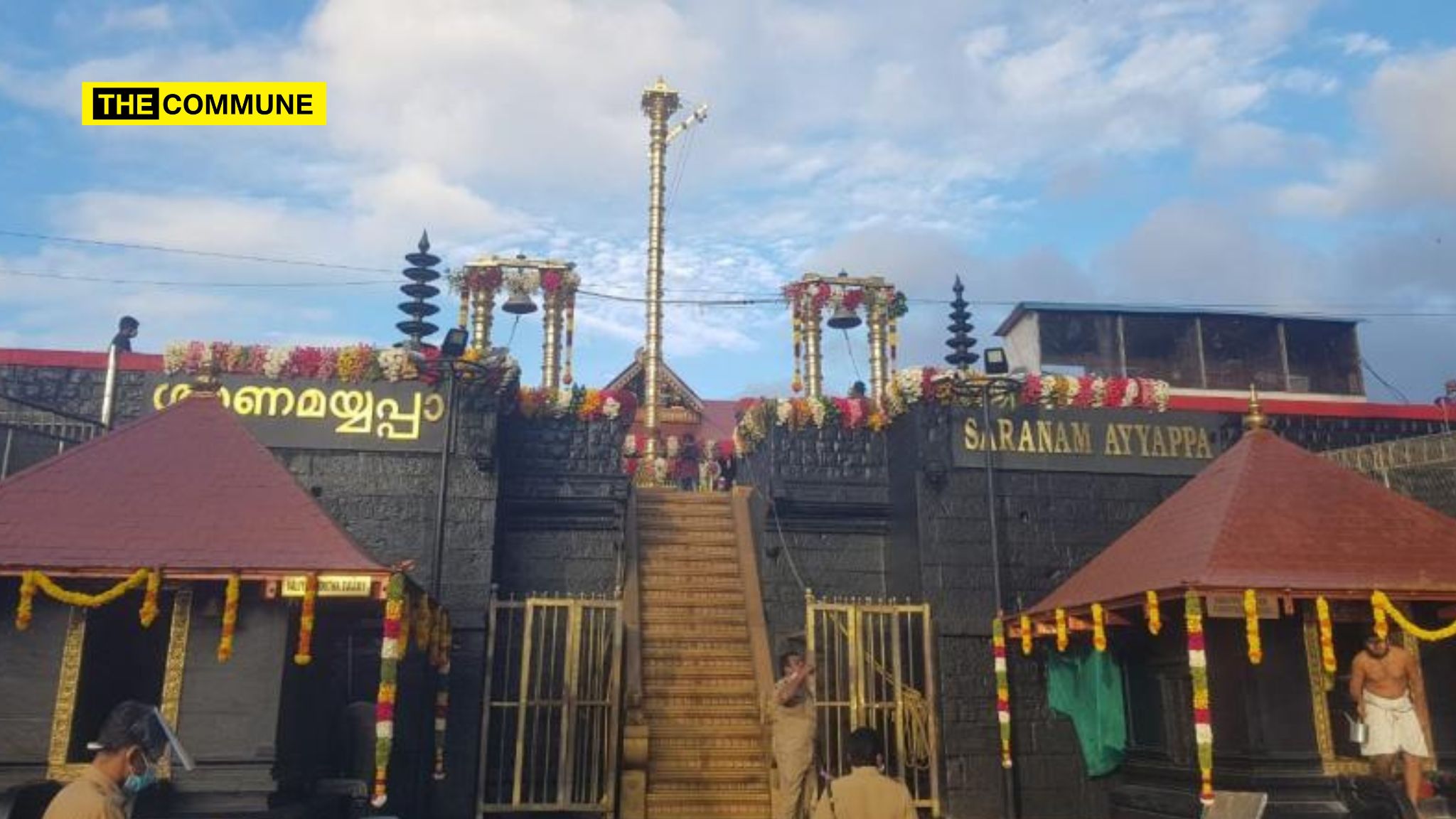
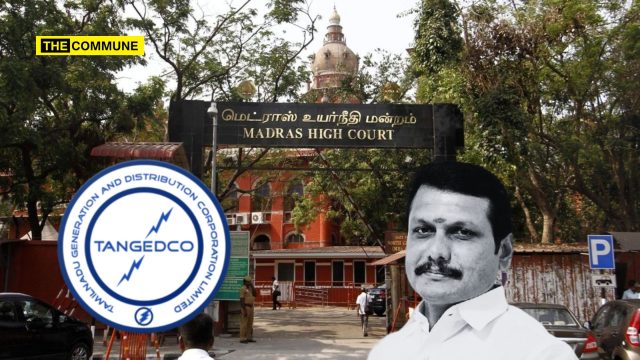
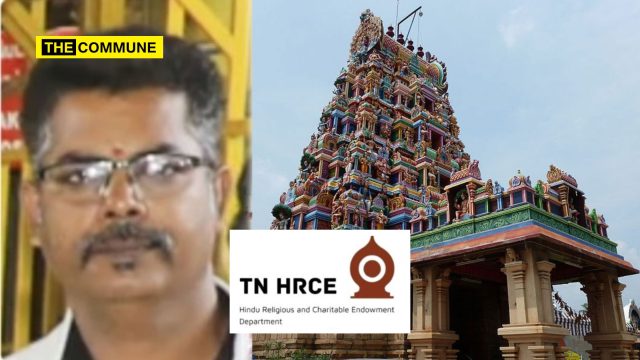
The Madras High Court has strongly criticised officials of the Hindu Religious and Charitable Endowments (HR&CE) Department for failing to protect temple properties, observing that such negligence amounts to a betrayal of the very institutions they are meant to safeguard.
The observations came during the hearing of a petition concerning alleged encroachment of lands belonging to the historic Kannanoor Mariamman Temple in Omalur, Salem district.
The petitioner, Salem-based Radhakrishnan, informed the court that the ancient temple owns several acres of land in the locality. He alleged that nearly four acres had been encroached upon and that despite submitting a representation as early as 2016, the HR&CE Department had failed to take any effective action.
He further contended that the inaction of officials had resulted in the loss of valuable temple property and sought disciplinary proceedings against the responsible officers.
When the matter had previously come up, a Division Bench comprising Justices S.M. Subramaniam and C. Kumarappan had issued directions and ordered the HR&CE Joint Commissioner to appear in person.
During the latest hearing, Joint Commissioner Sabarmathi appeared before the Bench and placed on record the steps purportedly taken by the department.
After reviewing the submissions, the judges sharply criticised the department’s functioning. The Bench observed that HR&CE officials draw salaries specifically to protect temple properties but are failing to discharge that responsibility.
The court termed the approach of the officials highly condemnable and noted that similar negligence has resulted in the loss of properties belonging to several temples.
The Bench made it clear that such lapses would no longer be tolerated.
The High Court directed that disciplinary action be initiated against officials who failed to act on the encroachment complaints.
It also ordered authorities to recover losses from individuals who had utilised temple lands without authorisation.
With these directions, the court disposed of the petition.
Subscribe to our channels on WhatsApp, Telegram,Instagram and YouTube to get the best stories of the day delivered to you personally.
The Kerala High Court on Tuesday, 24 February 2026, issued a stern warning to the State Government and sought an immediate explanation on how the Chief Minister’s Office (CMO) allegedly accessed private contact details of nearly five lakh government employees, judicial officers, and welfare scheme beneficiaries.
The court was hearing a petition alleging that the CMO bypassed privacy safeguards to send unsolicited, personalised WhatsApp messages carrying the Chief Minister’s photograph and highlighting government achievements, including the recent 10% DA hike, allegedly as part of outreach ahead of the May 2026 Assembly elections.
Court Flags Privacy Concerns
During the hearing, the Bench noted a clear “lack of privacy” in the mass messaging exercise and examined claims that data may have been accessed from the SPARK (Service and Payroll Administrative Repository for Kerala) portal – a database meant strictly for salary and administrative purposes.
The court specifically scrutinised the alleged transfer of data via the Kerala State IT Mission to the CMO.
Observing that use of administrative data for political promotion could amount to a serious privacy violation, the court directed the State to clarify the legal basis for such data processing. It also instructed authorities to halt further dissemination of such WhatsApp messages until the data source is legally verified.
The court further directed the CMO to stop sending the messages immediately.
Congress Levels Sharp Allegations
The development comes a day after the Kerala Congress publicly accused Chief Minister Pinarayi Vijayan of misusing official SPARK databases for election propaganda.
In a series of posts on X, the party alleged: “Kerala is witnessing state-sponsored data theft! CM @pinarayivijayan is caught red-handed using official SPARK databases to spam government employees and people with election propaganda. This is a massive breach of trust and individual privacy,” the post read.
The party further said: “Why is @AshwiniVaishnaw looking the other way? Is it because of the unholy CPM-BJP alliance we see in Kerala?. Pinarayi has clearly mastered the Modi playbook, turning governance into a PR spectacle and using public money for a “snooping” infrastructure,”
Kerala Congress also cited a previous High Court ruling that had quashed a ₹20 crore data-harvesting survey as a “colourable exercise of power” violating Article 166(3) Rules of Business.
Kerala is witnessing state-sponsored data theft! CM @pinarayivijayan is caught red-handed using official SPARK databases to spam government employees and people with election propaganda. This is a massive breach of trust and individual privacy.
The petitioners have argued that the alleged data use violates the fundamental Right to Privacy under Article 21 of the Constitution as well as provisions of the Digital Personal Data Protection (DPDP) Act, 2023.
The High Court has sought the State’s response and is expected to examine the legality of the data flow, the role of SPARK records, and whether proper consent mechanisms were followed.
The Karnataka High Court has granted interim protection to actor Ranveer Singh in connection with an FIR filed over his mimicry of the Daiva scene from the film Kantara, directing authorities not to take any coercive action against him for now.
The case came up before Justice M. Nagaprasanna after a Bengaluru-based advocate filed a complaint alleging that the actor had mocked the Chavundi Daiva tradition, which is considered sacred by people of coastal Karnataka.
Background
Ranveer Singh landed in controversy following his on-stage imitation of Rishab Shetty’s Daiva performance during the closing ceremony of the International Film Festival of India (IFFI) in Goa on November 30, while promoting his film Dhurandhar.
The FIR was registered under BNS Sections 196 (promoting enmity between groups), 299 (deliberate and malicious acts intended to outrage religious sentiments), and 302 (using words intended to hurt religious feelings).
Following social media backlash, the actor had issued a public apology, stating he did not intend to hurt sentiments and was only praising Shetty’s performance.
Court Proceedings
Appearing for Ranveer Singh, Senior Advocate Sajan Poovayya acknowledged the controversy and submitted: “At the outset, I admit a completely insensitive statement made by me has led to this complaint being filed,” as reported in court.
During the hearing, the Bench noted the sensitivity of the issue, observing: “Rishab Shetty was performing an act of deity. Goddess Chamundi. He may be aware or may not be aware of the impact of the religious sentiments towards the deity,”
The Court cautioned the actor about responsibility in public speech, stating: “An act of mimicking Shetty would definitely hurt. You must be responsible in your statements. You can’t be loose-tongued at all. You may be Ranveer Singh; you may be anybody. Whether there is mens rea or not, we will examine.”
Judge Flags Influence of Public Figures
Justice Nagaprasanna also underscored the wider influence of celebrities: “You being an actor have influence on so many people. When you have that, you should be responsible. You may mimic; you may do anything. You have no right to hurt anyone’s religious sentiments…your apology will take back the words? I may forget, you may forget, but the internet never forgets.”
To this, Poovayya responded: “I bow down.”
The Court further remarked: “When actors go on stages and try to do all this. You have to exercise caution…religious sentiment of the people of the region should be respected.”
It added: “You are speaking of a deity, mimicking a deity. Why film was made explanation is there. But standing on a stage, you cannot take it so lightly.”
Intent and Recklessness Debated
While the defence argued the remarks were not deliberate, the Court observed: “I’m not saying it is a deliberate statement. It is gross ignorance. It is a sacred act of the region.”
Poovayya replied: “Correct.”
The complainant’s counsel told the court the actor continued despite being warned. When the Court asked: “He was asked to stop?” The counsel answered: “Yes. Don’t do that, he says…”
Interim Protection Granted
The State informed the Court that the Magistrate had already considered the complaint. Poovayya countered that careless statements should not automatically attract penal provisions and urged the Bench to view the video footage.
After hearing the parties, the Court directed, “You file objections, and I’ll take it on Monday. But don’t take coercive steps till then. You (Ranveer Singh) are reckless and have no right to do what you have done,”
Granting interim relief, the High Court protected the actor from coercive action while directing him to fully cooperate with the investigation.
The matter is now posted for further hearing on 2 March 2026, when the Court is expected to examine the case in greater detail.
The Madurai Bench of the Madras High Court has held that a person seeking a “no caste, no religion” certificate must first formally relinquish his religion in accordance with applicable rites.
Justice Krishnan Ramasamy passed the ruling while dismissing a writ petition filed by Chellamanickam, who had challenged the 9 July 2025 order of the Tahsildar, Thiruppathur Taluk, refusing to issue such a certificate.
The petitioner had submitted that although his parents belong to the Hindu religion, he wanted an official certificate that would not mention either caste or religion. His application was rejected by the Tahsildar on the ground that no Government Order exists permitting issuance of such certificates.
During the hearing, the Court specifically asked the petitioner whether he had relinquished his religion. The petitioner answered in the negative.
Justice Ramasamy observed, “Unless and until, the petitioner has relinquished his religion as per the Hindu Rites, the petitioner’s request could not be considered by the respondents. When such being the position, the issuance of such certificate does not arise.”
The Court also noted that the petitioner had not produced any proof of relinquishment.
In view of this, the Bench declined to interfere with the Tahsildar’s order and dismissed the writ petition.
However, the Court granted liberty to the petitioner to formally relinquish his religion and submit proof before the authorities. The judge observed that if a fresh application is made along with such proof, the authorities may consider it in accordance with applicable rules.
The petitioner was represented by Advocate P. Surendran, while the State was represented by Government Advocate S. Jeyapriya.
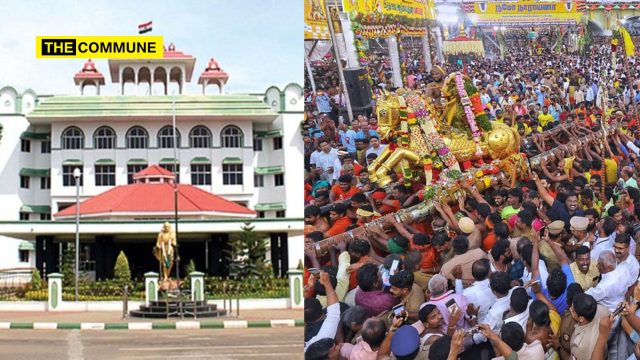
A controversy has broken out in Madurai after a newly constructed bridge in the Goripalayam area featured only the image of a horse without the traditional depiction of Lord Kallazhagar.
The issue pertains to artwork painted on the new bridge, where the horse motif, symbolically associated with the Kallazhagar procession, was displayed without the accompanying image of the deity. This has drawn criticism from sections of the public and devotees.
Local residents and devotees have condemned the Madurai Corporation administration, questioning why the deity was omitted while only the horse figure was portrayed.
The development has triggered debate in the area, with calls for the civic body to clarify the decision and make appropriate corrections.
The Madras High Court has restrained authorities from demolishing the historic Arulmigu Ponkaaliyamman Temple near Namakkal, granting interim relief to devotees and directing a status quo until further review.
The temple, located at Kumarapalayam in Tiruchengode taluk of Namakkal district, is said to date back several centuries and functions under the control of the Hindu Religious and Charitable Endowments (HR&CE) Department. It is currently administered by a non-hereditary trustee board.
Background
The controversy began after the HR&CE Department decided to proceed with demolition works in the name of renovation. A case challenging the move had already been filed in the Madras High Court in 2024 and remains pending.
During peace talks held in December 2025, the HR&CE inspector had reportedly assured stakeholders that no work would commence until the High Court issued directions. However, at a subsequent peace meeting on February 5, attended by the Tiruchengode DSP and HR&CE officials, authorities stated that work would be halted only if a formal stay order was obtained, failing which balalayam (ritual preceding renovation) would be conducted on February 22.
Opposing the proposed balalayam, petitioner Chandrasekaran Kaliyannan of Amma Palayam in Perambalur moved the High Court seeking urgent intervention. Separately, on February 16, Hindu Tamilar Katchi founder-president Ram Ravikumar also submitted a representation to Namakkal Collector Durga Moorthy.
Urgent Hearing and Court’s first Order
With the matter originally listed for February 24, the petitioner sought urgent listing citing the planned February 22 balalayam. Accepting the request, Justice Bharatha Chakravarthy took up the matter and directed that until the next hearing, officials should not commence any demolition or renovation work at the temple.
Following this order, no maintenance or demolition activity was carried out at the Kumarapalayam temple, and devotees who had gathered at the site dispersed peacefully.
Court Pulls up Authorities
During the hearing, government counsel Arun Natarajan initially submitted that only renovation works preserving the temple’s antiquity were being undertaken.
However, he later informed the court that a portion of the temple had already begun to be demolished earlier that morning for renovation purposes.
Taking serious note, Justice Bharatha Chakravarthy directed that the temple must be maintained in the same condition as it existed at 1:45 pm and ordered that no further repair or demolition work should proceed.
Petitioner’s Plea
In his petition, Chandrasekaran Kaliyannan stated that the Ponkaaliyamman Temple is an ancient shrine, estimated by him to be around 300 years old, and argued that the HR&CE Department’s demolition order was unjustified.
He contended that the structure could be renovated without demolition and warned that devotees would be severely affected if the temple were pulled down. He sought quashing of the HR&CE order and a permanent ban on demolition.
Fresh Directions on 23 February 2026
In subsequent proceedings, Justice Bharatha Chakravarthy granted an interim stay on demolition and adjourned the matter to the 23rd, directing the government to submit a status report on the temple’s condition.
The court further ordered that the temple should not be demolished until a detailed re-inspection of the structure is completed. It also directed that before the review committee undertakes inspection; the views of devotees must be obtained and considered.
Until such an exercise is completed and a final decision taken, the court made clear that the temple must not be demolished.