Home Blog Page 66

Madras High Court Summons Former DMK Minister Ponmudi In Hate Speech Against Hindus Case

madras high court ponmudi

The Special Court for cases against MPs and MLAs in Chennai has issued summons to former Tamil Nadu minister K Ponmudi in connection with a case alleging derogatory remarks about Saivite and Vaishnavite traditions. The court has directed him to appear in person on 24 March 2026.

The case stems from a speech delivered by Ponmudi at an event in Chennai in April last year, where he allegedly made controversial comments about Saivism, Vaishnavism and women.

Following the speech, Chennai Corporation Councillor Uma Anandhan filed a private complaint before the Saidapet Magistrate Court seeking action under provisions related to promoting religious enmity and hurting religious sentiments.

The matter was later transferred to the George Town Special Court dealing with cases against MPs and MLAs. When the case came up for hearing before Judge Soundarapandian, the court found prima facie material to proceed and issued summons to Ponmudi. The case has been adjourned to 24 March 2026.

Subscribe to our channels on WhatsAppTelegram, Instagram and YouTube to get the best stories of the day delivered to you personally.
Madras High Court Gives 12 Weeks To DMK Govt To Clear Encroachments On Adheenam, Mutt Properties Across The State

dmk madras high court ungaludan stalin

The Madras High Court has directed the DMK government in Tamil Nadu to remove encroachments on properties belonging to Adheenams and Mutts across the state within 12 weeks.

The order came while hearing a petition filed in 2018 by Radhakrishnan, trustee of the Thiruthondar Trust, seeking removal of encroachments from properties belonging to the Sengol Adheenam at Nedungunram in Thoothukudi district. The petition stated that several properties of the Adheenam in Thoothukudi and Tirunelveli districts were under illegal occupation.

During earlier proceedings, the High Court had directed that all Adheenams and Mutt heads in Tamil Nadu be impleaded as respondents in the case.

A division bench comprising Justices SM Subramaniam and C Kumarappan, after hearing the matter, ordered the state government to clear encroachments on properties belonging to Adheenams and Mutts within the stipulated 12-week period.

Source: News18 Tamil

Subscribe to our channels on WhatsAppTelegram, Instagram and YouTube to get the best stories of the day delivered to you personally.
‘₹25K–₹40K Per Reel’: Instagram Influencers Allege Youth Congress Paid Campaign Against AI Summit

‘₹25K–₹40K Per Reel’: Instagram Influencers Allege Youth Congress Paid Campaign Against AI Summit

Several Instagram influencers have alleged that representatives linked to the Youth Congress approached them with paid collaboration offers to post negative content about the recently concluded AI Impact Summit.

Among those raising the claim is influencer Vinayak Dev Trivedi, who stated that he was offered between ₹25,000 and ₹40,000 per reel to portray the summit as a failure.

An influencer named Dev Vedik with 137k followers also was approached and he posted a video saying why he turned down the offer.


View this post on Instagram


A post shared by Dev vedik (@dev_vedik)

Influencer Charmingchaoss with 71k followers also alleged that money was being offered to “defame the country,” while Preeti Bhati with 82.6k followers said she received a similar outreach.


View this post on Instagram


A post shared by Raavi Vishwakarma (@charmingchaoss)


View this post on Instagram


A post shared by Preeti Bhati (@rashtra.preeti)

It is reported that even handles with smaller following have been reached out to by the Youth Congress to post negatively about the AI summit. Anushka having 4000+ followers posted as below:


View this post on Instagram


A post shared by Anushka (@chhotatoofann)

The allegations surfaced days after the Youth Congress staged a shirtless protest at the summit venue. The organisation has not publicly responded to the claims at the time of reporting.

Subscribe to our channels on WhatsAppTelegram, Instagram and YouTube to get the best stories of the day delivered to you personally.
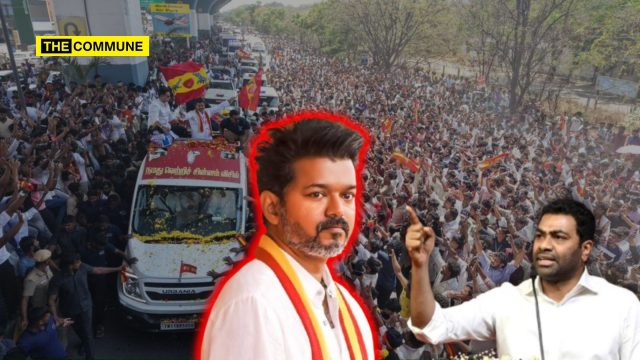
TVK Ready For Alliance With Congress, Says TN Congress In-Charge

congress dmk tvk

Tamil Nadu Congress in-charge Girish Chodankar has said that Tamilaga Vettri Kazhagam (TVK) is willing to form an alliance with the Congress party, indicating ongoing political engagement between the two sides ahead of the Assembly elections.

With the Tamil Nadu Assembly polls expected to be announced soon, alliance negotiations and seat-sharing discussions among parties in the state have reached an advanced stage.

Earlier this week, Congress general secretary KC Venugopal visited Chennai and held discussions with Chief Minister MK Stalin regarding seat-sharing arrangements within the DMK-led alliance.

In a special interview to The New Indian Express, Chodankar addressed questions about TVK and confirmed that the Vijay-led party had openly extended an invitation to Congress for an alliance. He said the move reflected TVK’s recognition of Congress’s political strength.

Chodankar further indicated that maintaining communication across political lines is a normal part of democratic politics. He noted that parties routinely engage in dialogue and that even strong political rivals remain in contact at various levels.

The remarks come at a time when Congress is continuing parallel political conversations amid ongoing alliance negotiations in Tamil Nadu.

Source: Dinamani

Subscribe to our channels on WhatsAppTelegram, Instagram and YouTube to get the best stories of the day delivered to you personally.
‘Shocked’: Quaid-e-Millath Trust Writes To CM Over College Professor Haja Gani Joining DMK-MMK Alliance Talks, Issues Notice To Professor

‘Shocked’ Quaid-e-Millath social Trust Writes To CM Over College Professor Haja Gani Joining DMK-MMK Alliance Talks, Issues Notice To Professor

The administration of Quaid-e-Millath College in Chennai has issued a notice seeking an explanation from Tamil professor Haja Gani over his participation in political activities, triggering fresh controversy.

Haja Gani, 55, who serves as Head of the Tamil Department and professor at the government-aided Quaid-e-Millath College in Medavakkam, is also the general secretary of the Tamil Nadu Muslim Munnetra Kazhagam (TMMK), an affiliate of the Manithaneya Makkal Katchi (MMK), which is part of the DMK alliance.

The issue surfaced after he participated in the recent alliance talks of the MMK, attended by party leader Jawahirullah and others. His presence at the political meeting while drawing a government-aided salary has drawn criticism in academic and political circles.


View this post on Instagram


A post shared by Tamil Janam (@tamiljanam)

Dawood Miyakhan, general secretary of the Quaid-e-Millath Education and Social Trust, has written to Chief Minister MK Stalin expressing concern over the development. In the letter, he stated that it was shocking to see a professor from a government-aided college taking part in alliance negotiations on behalf of a political party.

He argued that a professor receiving government aid and salary participating in political negotiations could be legally problematic and urged the Chief Minister to take appropriate action. The letter also raised concerns about the Chief Minister holding talks with individuals who have faced various allegations in the past.

Following the controversy, the college management issued a formal notice to Haja Gani seeking clarification regarding his involvement in political events.

Sources in the higher education sector indicated that the matter had already generated debate within academic circles and that the professor was attempting to address the situation through Higher Education Minister Chezhiyan. When contacted for comment earlier, Haja Gani had not responded.

However, responding to the allegations, Haja Gani denied wrongdoing. He stated that the Tamil Nadu Muslim Munnetra Kazhagam is a social movement and not a political organisation and that he holds a position within that body. He maintained that his participation in the alliance meeting was not to discuss politics but to present the demands of his community.

He further alleged that a smear campaign was being carried out against him because he had raised concerns about high fee collection at Quaid-e-Millath College.

Source: Dinamalar

Subscribe to our channels on WhatsAppTelegram, Instagram and YouTube to get the best stories of the day delivered to you personally.
Is Congress Walking Out Of DMK Front? TVK Talks Trigger Buzz

congress dmk tvk

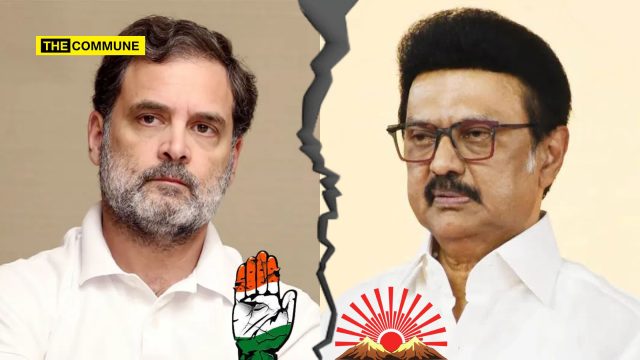
The Congress party has reportedly opened alliance discussions with Tamilaga Vettri Kazhagam (TVK) even as uncertainty continues over its seat-sharing and power-sharing arrangements with the DMK-led alliance in Tamil Nadu.

Tamil Nadu Congress election in-charge Girish Chodankar has confirmed that talks with TVK are underway. His remarks come amid growing speculation that the party could reconsider its position in the DMK front if its demands are not met.

Chodankar indicated in an interview to a private daily that while Congress has initiated alliance discussions with the DMK, it has not yet received a formal invitation for official negotiations and is currently waiting. At the same time, he acknowledged that Congress is also in dialogue with TVK, noting that such parallel political talks are routine.

Political observers view the confirmation as significant, as reports of backchannel discussions between Congress and the Vijay-led TVK had been circulating for several months.

Internal Discontent within Congress

The development follows visible unease within the Tamil Nadu Congress unit. At a recent Youth Wing executive and general council meeting held in Madurai, several party functionaries reportedly expressed frustration over what they described as the party being treated in a diminished manner within the DMK alliance.

Leaders at the meeting are understood to have warned that if the DMK does not allocate the number of seats sought by Congress, the party should explore contesting the elections in alliance with TVK. These concerns were conveyed to Congress MP Manickam Tagore, who chaired the meeting, and multiple resolutions were reportedly adopted.

Sources indicate that several second-rung Congress leaders have escalated the demand for exploring a TVK tie-up to the party’s national leadership, including president Mallikarjun Kharge and Leader of Opposition Rahul Gandhi.

Power Sharing Demand

Congress has reiterated that it has not backed down from its demand for a share in power in the prospective Tamil Nadu government, with Girish Chodankar stating that the party continues to press the demand at the state level even though it has no issues with power-sharing arrangements in local bodies. His remarks come despite Chief Minister MK Stalin having earlier ruled out coalition governance in the state. Chodankar maintained that Congress remains firm on the issue, arguing that no political party would refuse participation in governance, and indicated that the demand reflects the party’s position as a principal force within any alliance it joins.

Pressure Tactic or Strategic Shift?

Chodankar’s remarks are being interpreted in political circles as sending two clear signals: that Congress continues to press for a share in governance within the DMK alliance, and that it is keeping its options open by engaging with TVK.

Some observers see the move as a pressure tactic aimed at strengthening Congress’s bargaining position in ongoing alliance talks with the DMK.

From the DMK’s perspective, party sources suggest the ruling party has already conveyed that Congress is free to leave the alliance if it so chooses.

TVK Factor

Tamilaga Vettri Kazhagam, founded by actor Vijay, is said to have generated considerable public attention despite being a relatively new entrant to Tamil Nadu politics. Chodankar noted that the party has recently formed its own negotiation committee and that discussions between the two sides are ongoing.

With formal seat-sharing talks between the DMK and Congress yet to begin, the key political question now is whether Congress will ultimately remain within the DMK-led alliance or pivot towards a new electoral understanding with TVK.

Subscribe to our channels on WhatsAppTelegram, Instagram and YouTube to get the best stories of the day delivered to you personally.
“Constitutionally Impermissible For State/Non-State Actors To Vilify/Denigrate Any Community Through Speeches, Memes Or Art”, Says Supreme Court

SC Refuses To Stay Gujarat's Anti-Encroachment Drive Near Somnath Temple

The Supreme Court has observed that it is constitutionally impermissible for any person or entity, whether State or non-State, to vilify or denigrate any community through speeches, memes, cartoons or visual art. The Court underlined that the principle applies with greater force to public figures holding high constitutional offices.

The observations were made by Justice Ujjal Bhuyan in a separate judgment in a petition challenging the title of the Netflix film “Ghooskhor Pandat.” A Bench comprising Justice BV Nagarathna and Justice Bhuyan closed the matter after the filmmakers agreed to change the title.

Although the dispute itself was resolved, Justice Bhuyan noted that it was necessary to restate the constitutional position on fraternity and free speech to avoid any misunderstanding.

The Court emphasised that fraternity is a foundational objective of the Constitution and forms part of the guiding philosophy of the Preamble. Referring to Article 51A(e), the Bench noted that every citizen has a fundamental duty to promote harmony and brotherhood beyond religious, linguistic and regional differences.

Justice Bhuyan wrote: “It is essentially an attitude of respect and reverence towards fellow human beings. Thus, cultivating a sense of brotherhood and respecting fellow citizens irrespective of caste, religion or language is a constitutional dharma each one of us must follow.”

The judgment also referred to the Court’s earlier ruling in the Section 6A Citizenship Act case, which had described fraternity as a concept intended to cultivate a sense of brotherhood among individuals in society.

Against this backdrop, the Court stated: “It is constitutionally impermissible for anybody, be it the State or non-State actors, through any medium, such as speeches, memes, cartoons or visual arts, to vilify and denigrate any community.”

The Court stressed that the prohibition assumes greater significance when public officials engage in such conduct.

Justice Bhuyan observed: “It will be violative of the Constitution to target any particular community on the basis of religion, language, caste or region by whosoever he or she may be. This is particularly true for public figures occupying high constitutional office who have taken the solemn oath to uphold the Constitution.”

The Bench noted that its earlier concerns regarding the film title were therefore “well-founded and valid.”

The observations gain relevance amid the recent controversy surrounding speeches made by the Assam Chief Minister. In a related development, a Bench led by the Chief Justice of India had recently declined to entertain Article 32 petitions seeking registration of an FIR for alleged hate speech against the Assam CM and directed the petitioners to approach the High Court.

At the same time, the Court reaffirmed that filmmakers enjoy protection under Article 19(1)(a) of the Constitution. Justice Bhuyan noted that artistic expression, including cinema and satire, plays an important role in democratic discourse and cannot be curtailed merely because certain groups take offence.

Relying on precedents including S. Rangarajan v. P. Jagjivan Ram, Shreya Singhal v. Union of India, Imran Pratapgadhi v. State of Gujarat, and the Padmavat case involving Viacom 18, the Court reiterated that freedom of expression cannot be held hostage to threats of protest or potential public disorder.

The Bench emphasised that films must be evaluated from the standpoint of a reasonable viewer rather than hypersensitive individuals. It also reiterated that once a film has been certified by the Central Board of Film Certification, courts should ordinarily be slow to interfere with its exhibition.

Justice Bhuyan particularly highlighted the caution in Imran Pratapgadhi that courts must not appear to regulate or stifle free speech. He quoted the earlier observation that a 75-year-old Republic should not be so fragile as to feel threatened by a poem or comic performance.

Concluding his opinion, Justice Bhuyan remarked: “This would equally apply to the title of a movie as well. I say this and no more.”

Source: LiveLaw

Subscribe to our channels on WhatsAppTelegram, Instagram and YouTube to get the best stories of the day delivered to you personally.
Hindu Munnani Slams Alleged Arrest Of Murugan Devotees For Kandha Sashti Recitations By DMK Govt

Hindu Munnani Slams Arrest Of Murugan Devotees For Kandha Sashti Recitations By DMK Govt

Hindu Munnani state president Kadeswara Subramaniam has strongly condemned the reported arrest of Murugan devotees who gathered to recite the Kandha Sashti Kavasam at temples across Tamil Nadu, alleging that the DMK government had denied devotees their right to worship.

In a statement, he said that on 23 February 2026, marking Sashti and Krithigai, thousands of devotees under the banner of the Muruga Bhaktargal Peravai conducted Kandha Sashti Kavasam recitations in numerous temples across the state. He stated that the prayers were offered for family welfare, public good, the progress of Tamil Nadu and national development, and also as a vow seeking the unhindered implementation of a court order regarding the lighting of the lamp at the Thiruparankundram Deepa Thoon.

Subramaniam alleged that when devotees went to temples to conduct the recitation, the DMK government termed the shrines as HR&CE department temples and public places and carried out arrests in what he described as an arbitrary manner. He further claimed that oral instructions had been passed to HR&CE officials to prevent the event and to lodge complaints against participants.

According to him, based on such information, HR&CE officials in several temples alerted the police, following which Kandha Sashti Kavasam recitations were stopped.

He specifically cited incidents at Kumbakonam Thenupureeswarar Temple and the Arulmigu Subramaniya Swamy Temple in Thanjavur, where he alleged that Murugan devotees who arrived to sing the hymn were detained by police, thereby denying their right to worship. He also claimed that at the Kurunthamalai Murugan Temple in Karamadai, devotees were physically removed from the premises.

Subramaniam further stated that at the Arulmigu Subramaniaswamy Temple in Mettupalayam, devotees were forced to sit on the road and recite Kandha Sashti Kavasam after being denied permission inside the temple.

He maintained that the Muruga Bhaktargal Peravai had not placed any demands before the state government and that devotees had gathered only to fulfil a prayer in a peaceful manner. The arrests and removals, he said, had created doubts among the public about whether such actions reflected authoritarian governance.

The Hindu Munnani leader asserted that Lord Murugan is revered as a family deity by many Hindus in Tamil Nadu and that preventing devotees from reciting Kandha Sashti Kavasam in temples amounted to injustice against Murugan worshippers. He also alleged that the state government had curtailed the constitutional right to worship.

Condemning what he described as an “arbitrary approach” against Murugan devotees, Subramaniam urged the Tamil Nadu government to immediately withdraw from temple administration under the Hindu Religious and Charitable Endowments (HR&CE) department.

Source: Hindu Munnani

Subscribe to our channels on WhatsAppTelegram, Instagram and YouTube to get the best stories of the day delivered to you personally.
Dravidian Model: Worms Found In Hostel Food; Government Law College Students Protest in Salem

Worms Found in Hostel Food; Government Law College Students Protest in Salem

Tension prevailed at the Government Law College hostel near Ariyanur in Salem district after female students alleged that worms were found in the food served to them.

According to reports, the students launched a sudden protest on the hostel premises, expressing anger over the quality and hygiene of the meals provided.

The protesting students demanded immediate action from the college administration. They called for the replacement of the hostel contractor and sought the removal of the existing cooking staff and other workers, urging the authorities to appoint new personnel.

Subscribe to our channels on WhatsAppTelegram, Instagram and YouTube to get the best stories of the day delivered to you personally.
NCERT Adds Corruption, Massive Case Backlog In Judiciary Sections To Class 8 Textbook For First Time

NCERT Adds Corruption, Massive Case Backlog In Judiciary Sections To Class 8 Textbook For First Time

The National Council of Educational Research and Training (NCERT) has, for the first time, introduced a discussion on judicial corruption in its revised Class 8 Social Science textbook. The section appears in a chapter dealing with the role of the judiciary in society and marks a significant shift from earlier editions, which largely focused on the structure and functions of courts.

The updated book, Exploring Society: India and Beyond, was released on 23 February 2026. Unlike previous versions, the new chapter goes beyond institutional description to examine key challenges facing the judicial system, including corruption and the growing backlog of cases.

According to the textbook, pendency remains a major concern. It notes that more than 81,000 cases are pending before the Supreme Court, around 62.4 lakh in the High Courts, and approximately 4.7 crore in district and subordinate courts.

The chapter identifies corruption at various judicial levels and the massive case backlog as among the major challenges confronting the system. It attributes delays to factors such as an insufficient number of judges, complex legal procedures and inadequate infrastructure.

Earlier editions of the textbook did not include a dedicated discussion on corruption. They primarily explained judicial responsibilities, the concept of judicial independence, court hierarchy and access mechanisms. However, they did acknowledge that delays in hearings affect access to justice and referenced the well-known principle that justice delayed amounts to justice denied.

In the new edition, students are informed that judges operate under a formal code of conduct governing behaviour both inside and outside the courtroom. The text outlines the judiciary’s internal accountability mechanisms and refers to the Centralised Public Grievance Redress and Monitoring System (CPGRAMS) as an established channel for complaints. It notes that more than 1,600 complaints were received through this mechanism between 2017 and 2021.

The book explains that in cases involving serious allegations, Parliament has the authority to remove a judge through an impeachment motion, which is considered only after a formal inquiry and after the concerned judge is given an opportunity to present a defence.

The chapter further acknowledges that instances of corruption are experienced at different levels of the judiciary and that such problems can worsen access to justice, particularly for poorer and disadvantaged sections. It adds that both the Union and state governments are pursuing measures to strengthen public trust and improve transparency, including the use of technology and prompt action against proven misconduct.

The text also notes that episodes of corruption and misconduct within the judiciary can adversely affect public confidence and potentially weaken trust in the institution. It cites observations made in July last year by former Chief Justice of India B. R. Gavai, who emphasised that restoring credibility depends on swift, transparent and decisive responses to wrongdoing and that transparency and accountability are essential democratic values.

Following a section on the importance of judicial independence, the textbook presents students with case-based exercises. One example discusses the Information Technology law framework. It explains that after the law came into force, the government introduced a provision allowing imprisonment for certain social media posts. A law student challenged the provision in 2015 on free speech grounds, and the Supreme Court later struck it down as unconstitutional and directed its removal.

Another example examines the electoral bonds scheme introduced in 2018 to enable political funding through bank-issued instruments redeemable by eligible political parties. The textbook notes that the Supreme Court invalidated the scheme, holding that voters have a right to know the sources of political funding.

Students are asked to analyse the role played by the judiciary in both instances and to explain the reasoning behind the court’s decisions.

The revised textbooks are part of NCERT’s broader overhaul aligned with the National Curriculum Framework for School Education and the National Education Policy (NEP) 2020. New books for Classes 1 to 8 have already been released. The first part of the Class 8 Social Science textbook had earlier been issued in July 2025.

NCERT had previously rationalised older textbooks based on the 2005 framework by reducing content load following the Covid-19 pandemic.

Source: OpIndia

Subscribe to our channels on WhatsAppTelegram, Instagram and YouTube to get the best stories of the day delivered to you personally.