Home Blog Page 65

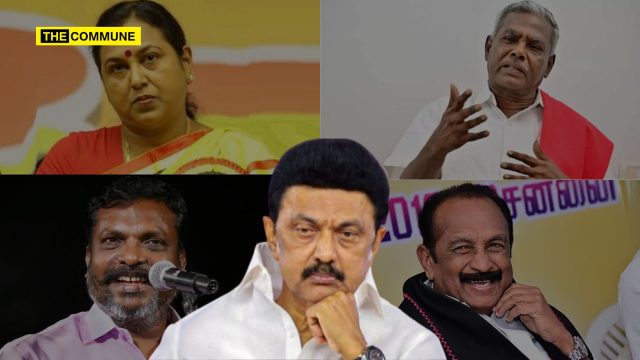
Seat Allocation Tug-Of-War: DMK Struggles As Allies Demand Bigger Share

Act With Caution": Stalin Warns Ministers

The DMK is reportedly under mounting pressure from its alliance partners, with multiple parties demanding a higher share of Assembly seats ahead of the upcoming elections. Ongoing negotiations have yet to yield a single finalized seat-sharing agreement, sources indicated.

Alliance talks between the DMK and its partners have been underway since 22 February 2026, but progress has been slow. The primary hurdle is said to be the steep seat demands from constituent parties.

The Congress, a key ally, has sought 38 Assembly constituencies – roughly one per district. However, the DMK, which allotted 25 seats to Congress in the previous election, is reportedly willing to offer only 22 this time. The gap has stalled a formal agreement between the two parties.

Discussions with the Indian Union Muslim League (IUML) have also hit a roadblock. Though IUML was allotted three seats in the last election and lost all of them, the party is now seeking five seats. The DMK leadership has reportedly offered only two, leading to a pause in talks.

Similarly, the Manithaneya Makkal Katchi (MMK) has asked for five seats but has been offered only two. Sources said the DMK has also insisted that MMK candidates contest under the party’s Rising Sun symbol.

The Viduthalai Chiruthaigal Katchi (VCK), considered a major ally, has demanded 12 seats – double the six it received last time. Party leaders argue that after winning two Lok Sabha seats and securing recognition as a state party, it deserves a larger share. However, sources indicate that formal seat-sharing talks with VCK have not yet begun.

The Communist parties are also reportedly pushing for double-digit allocations. In the previous Assembly election, both the Communists and VCK were allotted six seats each.

The situation has been further complicated by the entry of two new allies – Makkal Needhi Maiam (MNM) and Desiya Murpokku Dravida Kazhagam (DMDK). The DMK leadership had initially planned to accommodate them by asking existing partners to give up one seat each, but resistance from allies has stalled that plan.

Political friction has also surfaced between the DMK and Congress at the second-rung leadership level. Although Chief Minister MK Stalin has ruled out any power-sharing arrangement in government, Congress leaders are said to be continuing to press the demand.

Recent remarks suggesting that the Congress could explore an alliance with TVK have reportedly triggered unease within DMK ranks. Some party insiders believe that if Congress were to exit the alliance, the DMK could redistribute the more than 20 seats earmarked for it among other allies and new entrants.

The absence of formal talks between the DMK and Congress so far may reflect expectations that the Congress could reconsider its position.

With competing demands from allies continuing to mount, the key question now is how the DMK leadership will navigate the increasingly complex seat-sharing negotiations in the days ahead.

Subscribe to our channels on WhatsAppTelegram, Instagram and YouTube to get the best stories of the day delivered to you personally.
Islamists Object To Temple Procession Route In Uthamapalayam, Event Held After 10:30 PM With Drums, Firecrackers Curbed

Islamists Object To Temple Procession Route In Uthamapalayam, Event Held After 10:30 PM With Drums, Firecrackers Curbed

A temple procession in Uthamapalayam was conducted late at night following intervention by revenue and police officials after a section of Muslim youths objected to the route, citing disturbance to prayers.

The incident occurred in connection with the Masimagam chariot festival of the Kalatheeswarar Gnanambigai Temple in Uthamapalayam, scheduled for 2 March 2026. Preparatory mandagapadi events have been underway since 19 February 2026, with different communities hosting the deity each day.

On the previous night, members of the Okkaliga Gounder community had taken the deity to the Indira Nagar area of the town as part of the mandagapadi. When arrangements were being made for the return procession, a section of Muslim youths raised objections.

They reportedly urged organisers to follow the usual practice, stating that the presence of a mosque along the route could disrupt prayers. They suggested either delaying the procession or diverting it via the cemetery road towards the post office side.

Following the objection, functionaries from the BJP and Hindu Munnani also reached the spot, leading to a tense situation.

Uthamapalayam Revenue Divisional Officer Syed Mohammed and Deputy Superintendent of Police Ponnarasu held talks with those opposing the procession. After negotiations, it was agreed that the procession would proceed after the completion of prayers.

Accordingly, the temple procession moved through the area after 10:30 pm. Authorities also ensured that bursting of firecrackers and playing of drums were stopped near the mosque to maintain peace.

Source: Dinamalar

Subscribe to our channels on WhatsAppTelegram, Instagram and YouTube to get the best stories of the day delivered to you personally.
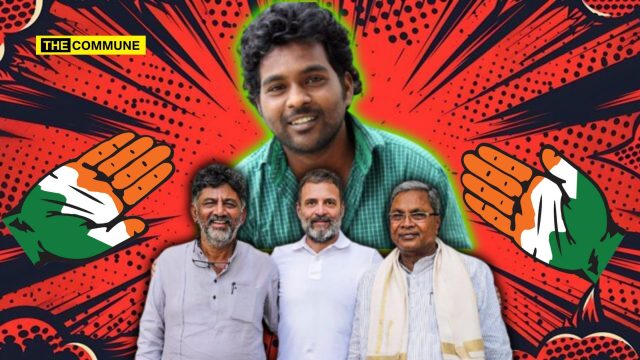
Maari Becomes A Complete Oopi, To Direct DMK’s 2026 Campaign Song Video?

Maari Becomes A Complete Oopi, To Direct DMK's 2026 Campaign Song Video?

Mari Selvaraj – The man who gave Tamil cinema some of its sharpest images of oppression and state violence is now, reportedly, in talks to direct the ruling party’s 2026 Assembly elections campaign video.

The same Mari Selvaraj whose literary debut circled the Thamirabarani and the Manjolai killings is now being whispered about as a creative face of the Dravidian establishment’s re‑election machinery.

Mari Selvaraj was the first widely recognised writer from the Nellai belt to turn the 1999 Manjolai atrocity into serious literature. Thamirabharaniyil Kollappadaathavargal is not a tourist brochure for the river; it is a graveyard of memory and state brutality, cast as short fiction but rooted in real blood on the Thamirabarani’s banks. Seventeen people died after a police operation on 23 July 1999; the incident has remained one of the ugliest symbols of how “progressive” Tamil Nadu treats its most voiceless workers.

That is the Mari the public first encountered: the chronicler of those “who were not killed” in Thamirabarani, the narrator of absences – the missing bodies, the lives stolen by the state but never really accounted for. His cinema carried that reputation forward, marketed as the voice of the oppressed, the director who would not forget what the river had seen.

Now, fast‑forward to 2026. DMK reportedly wants an official campaign song, a carefully packaged celebration of the “Dravidian model”, splashed across YouTube and party social media. Around this, rumours and “insider talk” start to swirl: that Mari Selvaraj will direct or shape a campaign video for the very regime that sits on top of today’s police force, bureaucracy and contractor nexus. There is no official credit yet naming him, but the buzz itself raises an uncomfortable question.

If the auteur of Manjolai is now a creative partner of the party in power, what happens to the moral claim that he has repeatedly made – that he will remain honest to his soil, his language and the community that trusts him?

Because the soil and the people he speaks about are not living in some ideal, caste-free Tamil Nadu. They are living in a state where the memory of Vengaivayal still feels like an open wound. A Dalit colony’s drinking water was found contaminated with human waste, and we’ve seen how painfully slow the government’s response has been.

So, the question becomes simple and direct: if Mari Selvaraj’s camera is used for a DMK campaign video, will there be space even for one honest shot from the Vengaivayal water tank?

This is the same Tamil Nadu where K. Armstrong, the state president of the BSP and a prominent Dalit voice, was hacked to death in Chennai in 2024. His killing sparked outrage, protests and the usual round of official assurances. Yet even today, it stands as a stark reminder of how vulnerable a Dalit political leader can be in the capital of a state that prides itself on “social justice.”

If Mari Selvaraj’s name eventually appears on a DMK campaign video, a blunt question will follow: will there be even one frame remembering Armstrong or will his death be treated as an inconvenient detail in election season?

The questions do not stop there.

Farmers in Parandur have been protesting a proposed greenfield airport, fearing the loss of their land and water, and have already faced police action and detentions. Coastal communities around Kattupalli say port expansion plans threaten their sea and their livelihoods. In Tirunelveli’s Nanguneri–Radhapuram belt, activists have repeatedly raised allegations about quarrying and mining operations that are said to be flattening hills while enriching politically connected players. This is Mari Selvaraj’s home ground.

Then there is the widely discussed “TASMAC bottle” controversy – the allegation that former Transport Minister Senthil Balaji enabled the collection of extra money (10 rupees) per liquor bottle through the state’s retail system. Investigative agencies have put forward their versions, and the courts are still examining the matter. But politically, the episode has already become shorthand for the uneasy relationship between power and money in Tamil Nadu.

None of these are abstract policy debates. They are exactly the kind of ground-level social conflicts that Mari Selvaraj has built his reputation documenting – the pain beneath Tamil Nadu’s development story, the voices of the marginalised, the friction between state power and ordinary people.

Which is why the speculation around his possible role in the DMK’s 2026 campaign carries unusual weight.

If he does take up the assignment, what will his camera choose to see?

Will it follow the farmers of Parandur as bulldozers move closer to their fields or only showcase glossy airport visuals and industrial growth shots? Will it sit with the women of Vengaivayal drawing water they no longer trust or glide past newly painted overhead tanks? Will it show the blasted hills of Nanguneri and Radhapuram or focus only on tree-planting photo-ops and green slogans?

The sharper question is this: if Mari Selvaraj becomes part of an official ruling-party campaign, can he still convincingly present his art as a witness against state power, or will it begin to look like a polished layer over it?

Artists aligning with governments is nothing new. Radical voices have often moved closer to power over time. The state has always had ways of absorbing its critics. What makes the possible Mari–DMK link-up particularly sensitive is the moral ground on which he built his public image.

You cannot foreground Manjolai, publish Thamirabharaniyil Kollappadaathavargal, and position yourself as a chronicler of state violence and then expect people not to ask hard questions when you appear alongside the same political machinery seeking votes.

If the reports are incorrect, Mari Selvaraj has every right, and perhaps a responsibility, to clarify his position plainly. Silence only strengthens the perception that, yet another strong cultural voice has been drawn into the ruling ecosystem.

But if the reports are accurate, then the standard he set for himself will apply.

At the very least, every time a campaign song celebrates “Dravidian justice,” viewers will expect the uncomfortable realities to be remembered too – Vengaivayal’s water crisis, Armstrong’s murder, the anxieties in Parandur, the fears in Kattupalli, the scarred hills of Nanguneri, the allegations surrounding Senthil Balaji, and the sanitation workers who are protesting day in and day out for permanent jobs under the same Dravidian Model government he wishes to show in a bright light.

If Mari Selvaraj truly remains honest to his land, his language and his people, he cannot afford selective memory.

Subscribe to our channels on WhatsAppTelegram, Instagram and YouTube to get the best stories of the day delivered to you personally.

NCERT Apologises, To Rewrite Class 8 Chapter On Judicial Corruption After Supreme Court Objection

NCERT Adds Corruption, Massive Case Backlog In Judiciary Sections To Class 8 Textbook For First Time

After announcing that a discussion on judicial corruption and the massive backlog of court cases will be included in its revised Class 8 Social Science textbook, the National Council of Educational Research and Training (NCERT) has apologised for what it described as a “purely unintentional” inclusion of “inappropriate material” in Class 8 Social Science textbook. This came after the Supreme Court sharply criticised a chapter referring to judicial corruption and directed that the book’s distribution be halted.

In a statement issued on Wednesday, 25 February 2026, NCERT said certain “inappropriate textual material” had inadvertently appeared in Chapter 4, The Role of Judiciary in our Society, of the newly released Social Science textbook Exploring Society: India and Beyond, Vol II.

“The error is purely unintentional and NCERT regrets the inclusion of inappropriate material in the said chapter. NCERT reiterates that the objective of the new textbooks is to strengthen constitutional literacy, institutional respect, and informed understanding of democratic participation amongst students,” the council said.

Following observations by the Department of School Education and Literacy under the Ministry of Education, NCERT said it had immediately placed the textbook’s distribution on hold and removed it from circulation. The chapter will now be rewritten in consultation with appropriate authorities and republished for students from the 2026–27 academic session.

NCERT emphasised that it holds the judiciary in the “highest esteem” as the guardian of the Constitution and protector of fundamental rights. “There is no intent to question or diminish the authority of any constitutional body,” the council said.

“As part of its continuous review process, NCERT remains open to constructive feedback… NCERT, once again, regrets this error of judgement and apologises while re-iterating our resolve to continuously work for institutional sanctity and respect,” it added.

The controversy erupted after a Supreme Court bench led by Chief Justice of India Surya Kant took suo motu cognisance of the issue when it was mentioned for urgent hearing by senior advocates Kapil Sibal and Abhishek Singhvi.

Expressing strong displeasure, the Chief Justice described the textbook content as a serious matter and said the court would not allow any attempt to defame or question the integrity of the judiciary. He noted that he had received numerous messages, including from High Court judges, raising concern over the references.

The Class 8 Social Science textbook includes a section discussing corruption within the judiciary alongside India’s mounting case backlog.

In Chapter 4, The Role of the Judiciary in Our Society, the book outlines structural challenges facing courts, including judge shortages, procedural complexity and infrastructure gaps, and links these issues to concerns about public confidence in the justice system. References to how corruption can affect judicial credibility triggered objections from the judiciary.

The chapter also presents data on pendency, stating that the Supreme Court of India has roughly 81,000 pending cases. It adds that High Courts together face more than six million pending matters, while subordinate courts are burdened with over 40 million cases.

These passages prompted strong criticism from the Supreme Court, which viewed the references as objectionable, leading to the textbook’s withdrawal and planned revision.

Soruce: India Today

Subscribe to our channels on WhatsAppTelegram, Instagram and YouTube to get the best stories of the day delivered to you personally.

Dravidian Model Healthcare: Sanitation Worker Treats Head Injury at Thirubhuvanam Govt Hospital

Dravidian Model Healthcare: Sanitation Worker Treats Head Injury at Thirubhuvanam Govt Hospital

A video from the Thirubhuvanam Government Hospital in Sivaganga district has triggered controversy after showing a sanitation worker allegedly providing first aid to an injured patient.

According to reports, the incident involved Varadarajan, a resident of Pethanenthal village, who arrived at the hospital on Wednesday afternoon with a head injury. With no doctor or nurse reportedly present at the time, sanitation worker Pappammal was said to have cleaned the wound and applied medicine.

Bystanders recorded the episode and shared the footage on social media, where it quickly went viral and drew public criticism. The development has renewed scrutiny of staffing levels at the government facility.

Sources indicated that the hospital handles more than 600 outpatients and over 50 inpatients daily. While norms require the presence of 12 doctors and 20 nurses, only six doctors and five nurses are currently posted, according to available information.

Allegations have also emerged that doctors remain on duty for only about an hour in the morning, with sanitation staff and trainee students attending to patients during other periods. The claims have intensified public dissatisfaction, particularly since a new hospital building was recently inaugurated at a reported cost of ₹3.9 crore.

Responding to the controversy, hospital authorities stated that the patient was bleeding heavily and the sanitation worker intervened only to clean the wound in an emergency. The administration said the doctor stationed on the first floor was informed immediately and subsequently took over the patient’s treatment.

Subscribe to our channels on WhatsAppTelegram, Instagram and YouTube to get the best stories of the day delivered to you personally.
When The New York Times Justified Pedophilia As A Disorder Rather Than A Crime

When The New York Times Justified Pedophilia As A Disorder Rather Than A Crime

A 2014 opinion article published by The New York Times has resurfaced widely on Indian social media, drawing sharp reactions as public discussion around the Jeffrey Epstein scandal intensifies once again.

The piece, titled “Pedophilia: A Disorder, Not a Crime,” was written by Rutgers law professor Margo Kaplan and appeared in the newspaper’s Opinion section on 5 October 2014.

Its renewed circulation comes as online debate grows around recently discussed Epstein-related court materials and longstanding allegations involving sexual exploitation of minors.

What the 2014 Op-Ed Argued

In the original article, Kaplan cited psychiatric definitions that describe pedophilia as a persistent sexual attraction to prepubescent children and noted that it becomes a diagnosable disorder when it causes distress or when an individual acts on the urges. She argued that conflating attraction with criminal behavior could discourage individuals from seeking help before any offense occurs.

The op-ed also discussed research suggesting possible neurological or developmental factors associated with pedophilia and called for reconsidering legal exclusions that prevent individuals with the condition from receiving certain disability protections. Kaplan maintained that expanding avenues for treatment and support could help reduce the risk of child abuse.

Importantly, the article explicitly stated that individuals who commit child sexual abuse should be held fully responsible under criminal law and that protecting children must remain paramount.

Epstein Case Continues to Cast Long Shadow

Jeffrey Epstein, a financier and convicted sex offender, was accused by US prosecutors of running a years-long sex trafficking operation involving underage girls at his properties in Florida, New York, and elsewhere. The scandal first drew major attention in 2005 when Palm Beach police investigated allegations that he had abused a 14-year-old girl who had been paid for massages, leading investigators to identify numerous additional victims.

Epstein reached a controversial plea agreement in 2008 with federal prosecutors led at the time by then-U.S. Attorney Alex Acosta. He pleaded guilty to state prostitution-related charges and served about 13 months in custody with work release privileges, despite federal investigators having gathered broader evidence.

He was rearrested in July 2019 on federal sex trafficking charges but died by suicide in a Manhattan jail on 10 August 2019, before trial. His associate Ghislaine Maxwell was later convicted in 2021 for recruiting and grooming minors for Epstein and was sentenced to 20 years in prison.

Victims, including Virginia Giuffre, have alleged that powerful individuals were involved in Epstein’s orbit. However, U.S. authorities have not confirmed the existence of any official “client list” establishing criminal liability for additional high-profile figures. Court documents continue unsealing through 2025, fueling speculation and identifying several big names across industries who were indulging in the pedophilia for most part.

12 years ago, pedophilia was justified as a disorder rather than a crime – New York Times by platforming this opinion piece downplayed the trauma of minor victims while also providing intellectual cover for offenders.

The Kaplan article was published as an opinion essay reflecting NYT’s academic policy argument rather than a news report or institutional editorial position.

Subscribe to our channels on WhatsAppTelegram, Instagram and YouTube to get the best stories of the day delivered to you personally.
Drugs, Sex Racket Alleged Inside Abandoned Salem Bus Stand’s Shops, Activists Slam Police Inaction

Drugs, Sex Racket Alleged Inside Abandoned Salem Bus Stand's Shops, Activists Slam Police Inaction

A disturbing investigation by News Tamil 24×7 has unveiled a web of illegal activities, including drug abuse and alleged sexual misconduct, operating with impunity from within the abandoned shops of the old bus station complex in the heart of Salem city. Despite multiple complaints and the presence of minors involved in these acts, the local police have reportedly failed to take any substantial action, sparking outrage among social activists and the community.

The old bus station, located centrally in Salem, was renovated years ago into a two-story complex under Smart City Scheme, housing over a hundred shops intended for commercial use. However, these shops have remained locked and unused, transforming the area into a dangerous hub for anti-social elements.

This bus stand serves as a critical transit point for thousands of commuters, with an estimated five thousand school and college students passing through daily. It is here, in the shadows of the vacant establishments, that illicit activities have taken root.

During an undercover investigation, the news team witnessed firsthand the brazen nature of these crimes. Individuals were seen entering the vacant shops in succession to smoke and sell cannabis. More alarmingly, evidence points to the operation of illicit sexual activities within these premises.

Predatory Environment and Shocking Evidence

Sources within the business community and social activists have alleged that these spaces are being used for private meetings, raising serious concerns for the safety of minors. The investigation found beds arranged inside some of the rooms and evidence of sex work taking place. The most alarming aspect, according to the report, is the potential threat to school and college girls, with concerns that students, some in uniform, are being lured into these deserted spaces. The discovery of used women’s underwear and condoms scattered inside has confirmed the nature of the activities occurring there.

The investigation further revealed that the illegal acts are not confined to adults, with minors deeply entangled in this ecosystem of crime.

Minors Caught and Released; Police Fail to Act

The news team witnessed three minors selling cannabis on the premises. They apprehended the individuals and handed them over to the Salem Town Police. However, the police reportedly released them without conducting any proper investigation or filing a report. This failure to act against juvenile offenders is seen as a critical lapse that will only embolden the criminals operating in the area. Reports also indicate that drug abuse is rampant, with individuals openly taking turns to inject drugs inside the shops.

Business organization executives and the municipal administration have reportedly submitted multiple complaint petitions to the Salem Town Police Station over an extended period, but no investigation has been initiated. The report states that despite being informed, the police have turned a blind eye, and this inaction is the primary reason these illegal activities are flourishing.

Social activists are now demanding urgent and decisive intervention from both the police and the municipal authorities. They have insisted that the entire area be sealed off immediately without any further delay, expressing shock and concern over the sight of school children engaging in smoking cannabis, consuming alcohol, and injecting drugs.

Furthermore, activists are calling on the municipal administration to break the deadlock by finally auctioning the shops through proper legal channels. Bringing the spaces into public use is seen as the only permanent solution to drive out the anti-social elements who have claimed the area as their own. If these shops are leased out and opened for legitimate business, the activists believe these illegal activities will naturally cease.

As of this report, there has been no official response from the Salem Town Police or the municipal administration regarding the serious allegations and the demand for a thorough investigation.

Subscribe to our channels on WhatsAppTelegram, Instagram and YouTube to get the best stories of the day delivered to you personally.
After Outrage, Main Deity Kallazhagar Image Added To Goripalayam Bridge Artwork In Madurai

After Outrage, Main Deity Kallazhagar Image Added To Goripalayam Bridge Artwork In Madurai

A controversy erupted in Madurai after a newly constructed bridge in the Goripalayam area featured artwork showing only a horse, symbolically linked to the Kallazhagar procession, without the traditional depiction of Lord Kallazhagar.

The omission drew criticism from sections of local residents and devotees, who questioned the Madurai Corporation over why the deity’s image was not included alongside the horse motif.


View this post on Instagram


A post shared by Tamil Janam (@tamiljanam)

The issue quickly sparked debate in the locality, with calls for the civic body to explain the decision and make suitable corrections.

Following media coverage of the issue, the artwork on the bridge was modified to include the image of Lord Kallazhagar. Devotees expressed satisfaction over the change and said the correction addressed their concerns.


View this post on Instagram


A post shared by Tamil Janam (@tamiljanam)

Subscribe to our channels on WhatsAppTelegram, Instagram and YouTube to get the best stories of the day delivered to you personally.
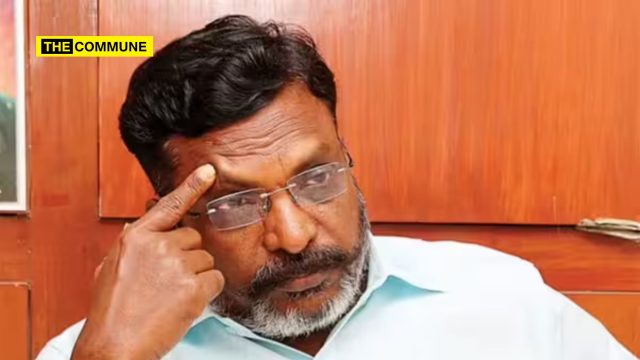
‘Corruption In Universities Unacceptable’: Madras High Court Transfers Madurai Kamaraj Univ Corruption Case To CBI

‘Corruption In Universities Unacceptable’: Madras High Court Transfers Madurai Kamaraj Univ Corruption Case To CBI

The Madurai Bench of the Madras High Court has transferred a corruption complaint related to Madurai Kamaraj University (MKU) to the Central Bureau of Investigation (CBI), observing that the Directorate of Vigilance and Anti-Corruption (DVAC) failed to conduct a proper probe.

The order was passed on a public interest litigation filed by Madurai-based Venkatesan. He alleged that Gomathi, who joined MKU as a junior assistant in 2013, later rose to become a superintendent with the support of certain university officials.

The petitioner levelled several allegations, including illegal issuance of certificates, leaking of university documents, and acceptance of bribes in matters relating to research and affiliations. He also claimed that despite these complaints, the university administration merely transferred her instead of initiating strict action.

Venkatesan further alleged that Gomathi had purchased a house in Vandiyur and extended loans exceeding ₹2 crore to employees, which he said violated government service rules.

He told the Court that his complaint to the DVAC last year yielded no response. An RTI reply later revealed that the complaint had simply been forwarded to MKU. Subsequently, in January, the university registrar reportedly closed the complaint citing lack of prima facie material.

A division bench comprising Justices G Jayachandran and KK Ramakrishnan observed that vigilance authorities had acted merely like a “post office” by forwarding the complaint without conducting an independent inquiry. The judges stressed that corruption in universities is unacceptable and can adversely affect future generations.

Holding that a transfer becomes necessary when an investigative agency fails to perform its duty properly, the Court ordered that the case be handed over to the CBI and disposed of the petition.

Subscribe to our channels on WhatsAppTelegram, Instagram and YouTube to get the best stories of the day delivered to you personally.
“Is Hindu Girl Marrying Muslim Boy Destroying National Fabric? Have A Thick Skin”: Supreme Court Rejects Ban Plea ‘Yadav Ji Ki Love Story’

"Is Hindu Girl Marrying Muslim Boy Destroying National Fabric? Have A Thick Skin": Supreme Court Rejects Ban Plea ‘Yadav Ji Ki Love Story’

The Supreme Court on Wednesday, 25 February 2026, dismissed a petition seeking a ban on the upcoming film Yadav Ji Ki Love Story, observing that the concerns raised by the petitioner were without merit.

The plea was filed by the chief of the Vishwa Yadav Parishad, who argued that the film’s title created a direct and offensive stereotype against the Yadav community. The petitioner also contended that the movie depicts a Hindu girl from the Yadav community falling in love with a Muslim man.

A Bench comprising Justices BV Nagarathna and Ujjal Bhuyan rejected the arguments, remarking, “Is Hindu girl marrying Muslim boy destroying the national fabric?”

The Court noted that the title of the film did not contain any adjective or expression that portrayed the Yadav community in a negative light.

“We have perused the material on record. The main grievance is that the name of the forthcoming film reflects the Yadav community in bad light in the society. Therefore the contention is that the name of the film is to be changed. We fail to understand as to how the title of a film can reflect the community in bad light. The title of the film nowhere has any adjective or any word that portrays the Yadav community in bad light. The apprehensions are wholly unfounded,” the Bench said.

The Court also distinguished the present case from its recent order concerning the film Ghooskhor Pandat.

“We would like to distinguish our order in Ghooskhor Pandat. The expression ghooskhor in English means corrupt. Therefore a negative meaning was being attached to the community. In the instant case no such negativity is attached to the Yadav community. Neither of the reasonable restrictions under 19(2) are attracted. The name in no way portrays the Yadav community in bad light or any negative way. The writ petition is accordingly dismissed,” the Court ordered.

During the hearing, the petitioner’s counsel argued that the film claims to be based on a real story and cited past concerns about community portrayal in cinema.

Responding, the Bench remarked, “In Bandit Queen movie, they said Gujjar community was shown in poor light. This court said ‘no’.”

When the counsel sought liberty to approach the Court after the film’s release if grievances persisted, the Bench advised restraint.

“Have a thick skin. It is fiction. In one week, it will all be over. No one is going to theatres these days. Everyone is watching on phone,” the judges observed while dismissing the petition.

Source: Bar and Bench

Subscribe to our channels on WhatsAppTelegram, Instagram and YouTube to get the best stories of the day delivered to you personally.