Home Blog Page 70

“Chepauk Has Become Ganja Capital”: BJP Leader Annamalai Fires Salvo At DMK Scion Udhayanidhi Stalin

“Chepauk Has Become Ganja Capital”: BJP Leader Annamalai Fires Salvo At Udhayanidhi Stalin

The BJP on Saturday organised a street-corner campaign titled “Tomorrow is ours… Tamil Nadu is ours!” in Chintadripet, which falls under the Chepauk–Thiruvallikeni Assembly constituency.

Addressing the gathering, BJP leader K Annamalai alleged a sharp rise in ganja circulation across the state and claimed the problem had reached residential areas and educational institutions.

He said, “Today wherever you see in Tamil Nadu, we have ganja circulation has spread to every nook and corner of the state. I am not saying ganja was not there all these years, but today it has come to the streets. Today if you go to a government school, you will find that in a student’s bag. Due to this ganja proliferation, major crimes are increasing in Tamil Nadu today.”

Annamalai went on to name several localities in and around Chepauk where he alleged the narcotics trade was prevalent. He said, “Today, if you ask where the ganja trade is most prevalent in Chepauk’s streets, even the local people here will tell you – it’s in Neelam Paasha Dargahpuram, Lady Wellingdon Women’s School area, near Nadukuppam, Krishnaampettai cemetery area, Shivaraja Puram, Mattankuppam, Chellamma Thottam, Mannjakori, Border Thottam, Pudupettai areas. To that extent, if you ask whether there is a part in Tamil Nadu that has become the capital of cannabis, then today the Chepauk area has become the capital of ganja circulation and addiction.”

Referring to actor Revathi’s recent remarks about safety concerns in parts of Chennai, Annamalai alleged harassment by the DMK’s IT wing. He said, “Actress Revathi says that she is afraid to go to some places in Chennai. On that, DMK’s IT wing is sexually harassing her.”

He further claimed that crimes against women and children had been rising in the state. Annamalai said, “From 2021 to 2025, crimes against women and children are increasing by 8 percentage points every year. Every capital in India is progressing. But this government is preventing Chennai’s development by claiming they are creating problems with the central government.”

Subscribe to our channels on WhatsAppTelegram, Instagram and YouTube to get the best stories of the day delivered to you personally.

AIADMK Chief EPS Flags Hawala Links In KN Nehru Corruption Case

AIADMK Chief EPS Flags Hawala Links In KN Nehru Corruption Case

Following the disclosures emerging in the public domain regarding the alleged hawala links in the MAWS corruption scandal involving DMK minister KN Nehru, AIADMK general secretary and Leader of the Opposition Edappadi K Palaniswami on Saturday, 21 February 2026, launched a sharp attack on the ruling DMK, accusing the Municipal Administration Minister of corruption and hawala-linked irregularities and asserting that the AIADMK would return to power in the upcoming elections.

Addressing an election campaign meeting in Ambattur as part of his ‘Makkalai Kaappom, Thamizhagathai Meetpom’ yatra, Palaniswami alleged that the DMK regime had engaged in “five years of loot” and claimed that the public had not received any tangible benefits during its tenure.

He said that once the AIADMK returned to power, the party would recover funds allegedly sent abroad through hawala channels and use the reclaimed money to implement welfare schemes.

Referring to Chief Minister MK Stalin’s recent remarks that he was not afraid of raids, Palaniswami alleged that the chief minister’s comments reflected nervousness following a court direction to register an FIR in connection with the issue.

The AIADMK leader further alleged that Minister Senthil Balaji had previously spent 453 days in jail in connection with alleged corruption in TASMAC and claimed that Minister K.N. Nehru was now facing allegations related to hawala transactions. He stated that the Enforcement Directorate had written to the Director General of Police seeking registration of a case based on evidence gathered during raids, but no action was taken until the court intervened following a petition by the AIADMK.

Palaniswami also alleged that Nehru collected bribes ranging from ₹30 lakh to ₹35 lakh for postings in the water supply department and took commissions on public works. He further claimed that Senthil Balaji had siphoned off more than ₹24,000 crore through TASMAC operations.

Continuing his attack, Palaniswami accused the chief minister of avoiding direct responses in the Assembly despite speaking for over two-and-a-half hours and questioned the government’s handling of law and order.

He also alleged the existence of a kidney trafficking racket linked to a hospital run by a DMK MLA and warned the public to exercise caution while seeking treatment at hospitals owned by ruling party functionaries. In addition, he criticised the state government’s claims on poverty reduction, alleging that economic distress was forcing people into extreme measures.

Source: The New Indian Express

Subscribe to our channels on WhatsAppTelegram, Instagram and YouTube to get the best stories of the day delivered to you personally.
TNM’s Double Standards: When Hindus Gather It Is ‘Hindutva’ Theatre, When Others Do It Is ‘Culture’

The News Minute recently published an opinion piece by a Binu Karunakaran on the Maha Magha festival that concluded recently.

In the piece, Karunakaran calls Tirunavaya’s Maha Magha Mahotsavam a “saffron script” and “political theatre of Hindutva,” warning it will morph into a full Kumbh Mela to polarize Kerala ahead of 2028 elections.

But read between the lines, this is peak pseudo-secular hypocrisy from a Left-leaning outlet that stays silent when other religions dominate public spaces with fanfare. Let’s call it out with facts they conveniently ignore.

“Thankfully Ignored by Secular Politicians” – Except When It’s Convenient

Karunakaran pats the Left and Congress on the back: “Thankfully… ignored by secular politicians… None trooped for photo-ops.” Really? Where was this “secular vigilance” when Kerala CM Pinarayi Vijayan hosted lavish Christmas-New Year feasts at Cliff House, complete with carols and cakes? Or when Thiruvananthapuram airport shuts down runways for Hindu Padmanabhaswamy Temple processions, yet TNM never cries “political theatre” or “Brahminic rituals dominating public infrastructure.” Selective silence?​

“Divisive Fear-Mongering Targeting Muslims” – But Christmas Processions Are Fine?

He quotes ABAP’s shop restrictions at Prayagraj Kumbh as “normal divisive rhetoric,” and Tirunavaya swami warning Hindus about Malappuram’s demographics: “Our future should not be like Bangladesh.” Alarmist? Sure. But TNM ignores massive Christmas street prayers blocking roads in Trivandrum, Palayam Cathedral masses drawing thousands (non-Christians included), or Kerala churches voicing “concern” over “attacks elsewhere” while demanding unrestricted celebrations. Why no “Christian political theatre” label when Cardinal Cleemis calls for “free celebration without fear”?

“Brahminic Rituals” vs. “Subaltern Space” – Where’s the Outrage for Eid/Christmas Dominance?

TNM frets over “high importance to Brahminic priestly rituals” at Tirunavaya while “esoteric practices” get space. Yet Malappuram’s Kondotty Nercha (Muslim festival) turns into a “carnival” with trade fairs, no “fear-mongering” scrutiny. Airports like Kannur have prayer rooms (Muslim/Christian focus) – no “desperate revenue source” cries. And Kerala schools canceling Christmas under pressure? TNM reports it neutrally, but Hindu revival is “sentiment manipulation.”

Kumbh as “Political Theatre”? Try Mamankam Revival as Cultural Pride

Mamankam was always ritual-trade-power nexus on Bharathapuzha-Zamorin coronations, Kalaripayattu, diverse traders (Muslims included). Reviving it as “Kerala’s Kumbh” celebrates Hindu roots in Muslim-majority Malappuram—peaceful, lakhs attended, no riots. TNM’s own “Let Me Explain” calls it “plural past reshaped”, but that’s evolution, not “desperate measures.” Compare to TNM ignoring RSS “Ganageetham” pressure canceling Christmas in post offices.

Bottom Line: RW Revival Triggers TNM’s Instincts – Left/Islam/Christian Dominance Doesn’t

TNM’s “history demands caution” is code for “Hindu assertion bad.” They amplify swami quotes on Pakistan/Bangladesh while silent on church demands or street Eid fairs. Kerala’s secularism thrives because Hindus don’t riot over Christmas airports or Ramzan feasts, yet TNM pathologizes Juna Akhada’s expansion as “militant.” Hypocrisy exposed: When Hindus reclaim their riverbanks, it’s “theatre.” When others block roads/airports, it’s “culture.” Wake up, TNM, Kerala’s pluralism works because Hindus prioritize harmony, not hegemony.

Subscribe to our channels on TelegramWhatsApp, and Instagram and get the best stories of the day delivered to you personally.
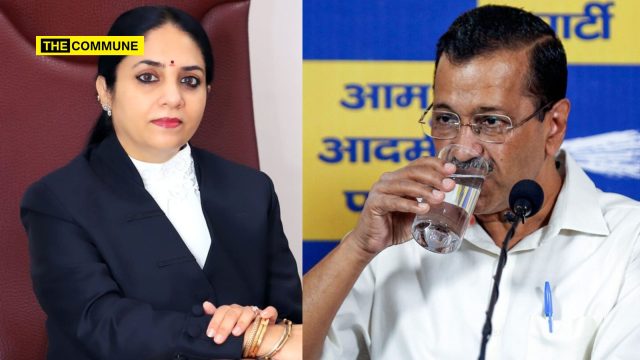
DMK Minister Rajendran’s Brother’s Daughter-In-Law Levels Harassment Charges

A woman identified as Devi, the daughter-in-law of DMK Minister Rajendran’s (who is the Minister of Tourism and Tourism Development Corporation of Tamil Nadu) brother, has publicly alleged that she has been subjected to harassment by members of the minister’s family. She made the allegations while speaking to reporters in Salem.

According to Devi, assurances about housing were given at the time of her marriage, but she has allegedly been forced to live in rented accommodation for years. She stated that she has changed eight rented houses over the past eight years due to the situation.

When questioned about the timing of her press interaction, given that a related property dispute is currently pending before a family court, Devi said she had been struggling for several months and had approached the police and the Superintendent of Police’s office multiple times without receiving support. She further alleged that she and her family members had been threatened and that she was being prevented from seeing her child.

Responding to suggestions that her public statements were aimed at seeking money, Devi denied the claim. She also rejected allegations that she had demanded ₹2 crore as part of a divorce-related settlement. Devi said discussions about any settlement would arise only after the divorce case is concluded and maintained that any compensation must be decided through legal proceedings.

The matter is understood to be under consideration before the family court. There has been no immediate response from Minister Rajendran or his family members at the time of reporting.

Subscribe to our channels on WhatsAppTelegram, Instagram and YouTube to get the best stories of the day delivered to you personally.
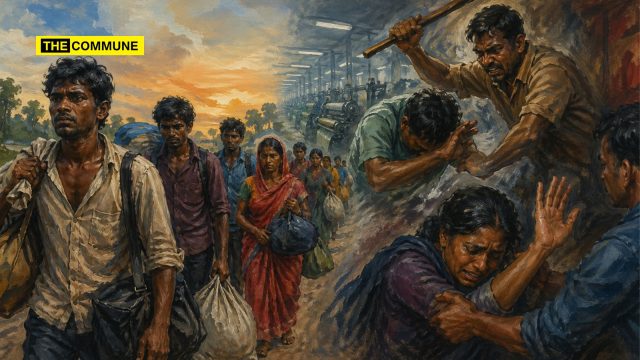
Leftist Rag The Wire Quotes Select Figures, Pushes ‘General Category Majority’ In Civil Services Narrative, Quietly Edits Report After Getting Exposed

Leftist rag The Wire has once again done it – fumbled numbers to suit propaganda narrative and when exposed, quietly edit everything and pretend as if nothing happened.

Here’s what the portal did – The Wire quietly revised both the headline and portions of its report on caste representation in the All India Services after publishing what was initially framed as a story suggesting an “overwhelming majority” of IAS, IPS, and IFS officers were from the General Category.

The original headline, which circulated widely on social media, read “Overwhelming Majority of IAS, IPS, IFS From General Category.”

However, after the data framing came under scrutiny, the publication altered the headline to, “Govt Evasive on Number of SC, ST, OBC Officers in IAS, IPS, IFS, Only Provides Data of Direct Recruits in Last 4 Yrs.”

An editor’s note was subsequently inserted at the bottom of the article stating: “This copy was edited on February 17, 2026 to correct for some inaccuracies in how we had first represented the data.”

No detailed public breakdown was issued explaining the nature or scale of the inaccuracies.

What the Parliamentary Reply Actually Contained

The report was based on a written reply tabled in the Rajya Sabha by Minister of State Jitendra Singh.

The government provided:

Total officers in position

  • IAS: 5,577
  • IPS: 4,594
  • IFS (Indian Forest Service): 2,164

Direct recruits (2020–2024)

  • IAS: 135 SC | 67 ST | 245 OBC
  • IPS: 141 SC | 71 ST | 231 OBC
  • IFS: 95 SC | 48 ST | 231 OBC
  • The reply did not include:
  • Category-wise total composition of all serving officers
  • General category recruit numbers for the same five-year window

Instead, it confined itself to recent direct recruitment figures.

How the Narrative Setting Occurred

The original framing juxtaposed the total serving cadre strength accumulated over decades with SC/ST/OBC direct recruits from only recent years.

By placing five-year recruitment numbers against the full historical officer pool, representation percentages appeared sharply compressed.

UPSC recruitment follows constitutionally mandated reservation quotas:

  • 15% SC
  • 7.5% ST
  • 27% OBC

These apply to annual intake, not retrospectively to the entire serving cadre, which includes officers recruited prior to OBC reservation implementation and through promotion channels.

IFS Mislabelled in Initial Framing

The parliamentary data referred to Indian Forest Service (IFS), one of the three All India Services alongside IAS and IPS.

The initial article framing, however, referred to “Indian Foreign Service” in places, a separate Central Service with different recruitment data structures.

All India Services data is routinely grouped together in parliamentary replies, whereas Indian Foreign Service statistics are reported separately.

The headline was later modified without a standalone clarification note on this distinction.

Vacancy Context Also Omitted in Initial Framing

The same parliamentary reply also disclosed significant vacancies:

  • Total authorised AIS strength: 15,169
  • Vacancies: 2,834 (18.6%)

Break-up:

  • IAS: 1,300 vacancies (~18.9%)
  • IPS: 505 vacancies (~9.9%)
  • IFS: 1,029 vacancies (~32.2%)

This structural gap further complicates category representation snapshots, especially when relying solely on direct recruitment figures.

By the time the correction note was added:

  • The original headline framing had already circulated widely.
  • Screenshots of the earlier version continued to remain in public circulation.
  • The revised headline fundamentally shifted the thrust of the story, from cadre dominance to alleged government opacity.

The edit note acknowledged inaccuracies but did not specify what numerical or interpretive elements were incorrect.

Subscribe to our channels on WhatsAppTelegram, Instagram and YouTube to get the best stories of the day delivered to you personally.
Pre-DMK Tamil Nadu Was Already Urbanised, Educated, Industrialising

Tamil Nadu is frequently cited in contemporary political discourse as one of India’s most developed states, with supporters of Dravidian parties often attributing many of its socio-economic achievements to post-1967 regional governance. However, historical data and pre-Independence records indicate that several foundational development indicators in the region pre-date the rise of Dravidian political formations.

Present-Day Development Claims

A range of widely circulated indicators place Tamil Nadu among India’s leading states on multiple fronts:

  • Among the top states by Gross State Domestic Product (GSDP)
  • One of India’s most urbanised states
  • A leading industrial and manufacturing hub
  • Highest or among the highest female workforce participation bases
  • Low poverty ratios relative to national averages
  • Ranked high in domestic tourism inflow
  • Major exporter of electronics goods
  • Higher education enrolment significantly above national average

These indicators are broadly supported by contemporary economic and social datasets.

Urbanisation: Evidence from 1901 Census

Historical census tables from the Madras Presidency (1901), which covered large parts of present-day Tamil Nadu, show that the region already had a high concentration of urban settlements compared to most of British India outside the Bombay Presidency.

Level of Urbanisation (1901-2011); Source- Various census Reports               Image Source: ResearchGate
Size and growth of urban population in India, 1901-2011.
Image Source: ResearchGate

The below table titled “Distribution of Population, Madras Presidency, 1901” records significant urban population clusters across districts such as Madras City, Chingleput, Tanjore, Trichinopoly, Madura, and Tinnevelly, indicating an established urban base decades before the emergence of Dravidian parties in the mid-20th century.

This positions the Tamil region among the more urbanised parts of colonial India at the time.

Literacy and Education Before Dravidian Politics

Pre-Independence literacy studies and colonial education records show that:

The Madras Presidency, especially Tamil and Malayalam regions, ranked among the most literate in India in the early 20th century.

Missionary schooling networks, princely patronage, and early social reform movements contributed to educational spread.

Community-level literacy data from the early 20th century indicates exceptionally high literacy rates among certain social groups. For instance, Tamil Brahmin literacy rates recorded in early 20th century administrative studies were among the highest globally outside industrialised Western nations and Japan.

Early Scientific Achievement

The region’s academic ecosystem also produced globally recognised scholars prior to Dravidian party rule.

The first non-white Nobel laureate in science, physicist CV Raman (awarded the Nobel Prize in Physics in 1930), was from the Madras Presidency. His work emerged from institutional and intellectual networks that pre-dated post-Independence regional political formations.

Industrial and Urban Foundations Under Colonial Administration

Madras Presidency functioned as one of British India’s major administrative and commercial hubs, with:

  • Port-based trade centred in Madras (Chennai)
  • Textile and agro-processing industries
  • Railway connectivity expansion
  • Municipal governance institutions

These laid early foundations for later industrial expansion.

Continuity vs Political Attribution

Post-Independence and especially post-1967 governments, including Dravidian parties, operated on an already urbanised, literate, and institutionally networked social base.

Subsequent administrations expanded:

  • Public sector manufacturing
  • Automobile and electronics corridors
  • Welfare delivery systems
  • Higher education capacity

However, historical census and literacy data indicate that several baseline development indicators – urbanisation, literacy concentration, educational institutions, and early scientific output were already visible before the political rise of Dravidian parties.

Tamil Nadu’s contemporary economic and social indicators are widely acknowledged. Yet archival census records and early 20th century educational data show that many structural advantages – urban clustering, literacy penetration, and intellectual capital, were present well before regional party politics took shape.

Subscribe to our channels on WhatsAppTelegram, Instagram and YouTube to get the best stories of the day delivered to you personally.
The 1996 Parumala Killings: How Three ABVP Student Activists Were Hunted To Death By Communist Goons

Kerala’s long history of political violence is often reduced to slogans, party statements, and disputed numbers. What tends to disappear in that process are the individual lives, the families, and the moments of extreme brutality that defined entire phases of the state’s political history.

A brutal episode of campus-linked political violence unfolded on the banks of the Pampa River at Parumala on 17 September 1996, when three student activists, Anu, Sujith and Kim, lost their lives in what came to be known as the Parumala murder case.

All three were students of Devaswom Board College, Parumala, and were associated with the Akhil Bharatiya Vidyarthi Parishad (ABVP) unit in the institution. They were targeted because of their active organisational involvement, amid heightened political tensions on campus between rival student groups.

According to accounts of the incident, the three students were cornered near the riverbank by a violent mob allegedly comprising workers linked to the Students’ Federation of India (SFI), Centre of Indian Trade Unions (CITU), and Democratic Youth Federation of India (DYFI). They were threatened with death, prompting them to flee the spot in fear.

In an attempt to escape, the students ran towards the Pampa River and jumped into the water, hoping to swim across to safety. As they struggled in the river, assailants stationed on the bank began pelting stones at them. The sustained stone-throwing is said to have prevented the students from swimming effectively, leaving them exhausted and unable to reach the shore.

Local women present on the riverbank at the time, who had been washing clothes, witnessed the incident and attempted to rescue the students. They threw the loose ends of their sarees into the water, urging the boys to hold on so they could be pulled out. However, the attackers chased the women away, hurling abuses and pelting stones at them as well, thwarting the rescue attempt.

All three students eventually drowned in the river in full view of onlookers.

Recovering the lifeless body of Kim Karunakaran from river Pampa
Recovering the lifeless body of PS Anu from river Pampa

The incident triggered political controversy in Kerala. Allegations were raised against the then Communist government over the handling of the case. Authorities reportedly destroyed/ manipulated crucial evidence, including post-mortem records, and constructed a counter-narrative that the students had been intoxicated and had drowned accidentally.

Using these records, it was alleged, the political leadership was able to evade legal consequences in the case.

The issue later surfaced in the Kerala Legislative Assembly, when MLA T.M. Jacob raised questions regarding the incident. Then Chief Minister EK Nayanar reportedly responded in a dismissive tone, asking why the matter was being pressed so strongly “since they belonged to the RSS,” a remark that drew further criticism and fuelled allegations of political bias.

The personal tragedies surrounding the victims deepened the emotional weight of the case. All three students were only sons in their families.

Anu, who served as the college Arts Club secretary, was known as a multi-talented student active in arts and sports. He was trained in mridangam and tabla and had been part of the Pathanamthitta district junior football team. His father, PC Sasidharan Nair, a retired postal employee, and his mother, a retired school teacher, are described as living amidst his trophies and certificates that remain as reminders of his life.

Kim was also the sole child of his parents. Following news of his death, both parents reportedly went into deep shock and never fully recovered. They later passed away, and in his memory had established a Sree Narayana Guru Smriti Mandiram.

Sujith’s father, Sivadasan Nair, resigned from his overseas employment and returned home after the incident. He is described as continuing to live in grief, maintaining that justice was never fully delivered in his son’s case.

The Parumala killings remain one of the most cited instances of student political violence in Kerala’s campus history, continuing to be referenced in discussions on ideological clashes and their human cost.

Subscribe to our channels on WhatsAppTelegram, Instagram and YouTube to get the best stories of the day delivered to you personally.
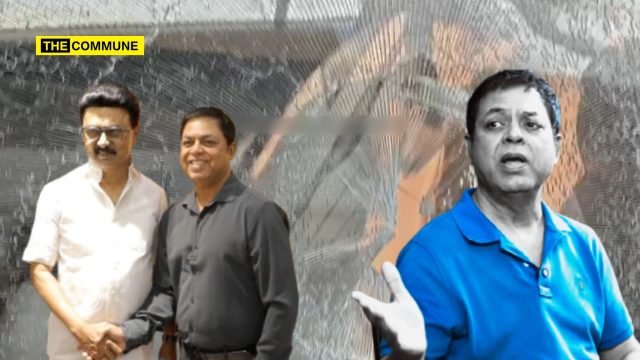
DMK Cadres Reportedly Unhappy With Over-Reliance On Senthil Balaji’s “Karur Company”

The DMK’s aggressive push to reclaim the Kongu belt ahead of the 2026 Assembly elections is facing murmurs of unease within party ranks, with some functionaries questioning the heavy dependence on western zone in-charge Senthil Balaji and his Karur-based network.

The concern stems from comparisons with the recent local body elections, where the DMK performed strongly in the region. Party insiders note that the earlier success came in a different political context, when the AIADMK and BJP contested separately and the ruling party benefited from the usual incumbency advantage. With the opposition expected to mount a more coordinated challenge in the Assembly polls, some workers believe the electoral terrain could be tougher this time.

The unease comes even as Balaji’s team — popularly referred to by cadres as the “Karur company” — has taken charge of intensive booth-level data work across parts of Coimbatore and the western belt. While the exercise is aimed at tightening the party’s ground machinery, a section of local cadres is privately questioning whether the same model can be scaled across the wider region.

Some functionaries point out that the Karur team has so far handled concentrated operations only in a handful of constituencies and warn that stretching the same apparatus across several dozen seats could pose logistical challenges. There is also quiet discussion within party circles about the additional pressure on Balaji, who is expected to face the electorate himself in the upcoming polls.

Supporters of the strategy, however, insist the micro-level voter mapping and structured booth management will give the DMK a decisive organisational edge in the Kongu region.

With key conferences lined up in Coimbatore and election preparations gathering pace, the DMK leadership is said to be closely watching both the ground mobilisation and the emerging disquiet within the ranks. Whether the western gamble pays off will ultimately be tested at the ballot box.

Source: Vikatan

Subscribe to our channels on TelegramWhatsApp, and Instagram and get the best stories of the day delivered to you personally.
NTK Seeman Announces 6 Brahmins As Candidates For 2026 Tamil Nadu Assembly Elections To Counter Dravidian Anti-Brahmin Hate Politics

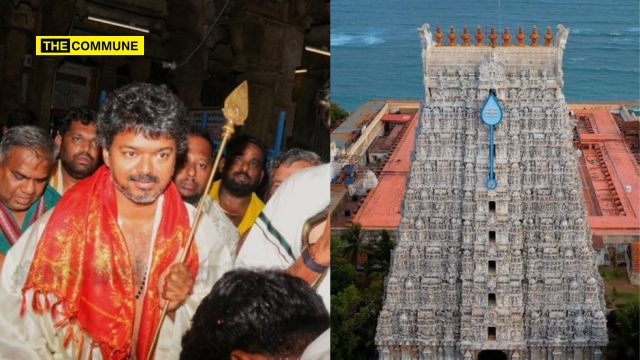
In a bold move ahead of the 2026 Tamil Nadu Assembly elections, Naam Tamilar Katchi (NTK) chief Seeman has demonstrated rare political conviction by fielding six Brahmin candidates as part of the party’s complete slate of 234 nominees.

This move is widely interpreted as a direct counter to the long-standing anti-Brahmin rhetoric embedded in Dravidian politics, of the DMK and its ideological predecessors.

By including Brahmin representatives, NTK aims to broaden its appeal beyond traditional Tamil nationalist lines, positioning itself as an inclusive force that rejects caste-based exclusion while championing Tamil identity.

NTK’s Bold Departure From Entrenched Dravidian Model Politics

On February 21, 2026, NTK held its major conference, “Maatrathai Virumbum Makkalin Manadu” (Conference for People Seeking Change), in Alampatti Pudur, Tiruchirappalli district.

Seeman, the party’s Chief Coordinator, unveiled the complete slate of 234 candidates for all Tamil Nadu Assembly constituencies.

True to NTK’s signature approach of gender parity, the list features exactly 117 men and 117 women. Seeman himself will contest from the Karaikudi constituency, while prominent faces like Idumbaikkarthi are fielded in Vedaranyam.

The inclusion of six Brahmin candidates stands out as a deliberate social engineering effort. NTK is targeting constituencies in Chennai—such as T. Nagar, Mylapore, Saidapet, and similar areas—where Brahmin communities have historical presence and influence.

This decision aligns with NTK’s broader strategy of representing marginalized or sidelined groups, including Dalits, tribals, smaller OBC communities, and now Brahmins, to challenge the dominant Dravidian narrative.

The following are the Brahmin candidates announced by NTK head Seeman.

  1. Maduravoyal – Revathi
  2. Saidapet – Srividya
  3. T. Nagar – Anusha Vijayakumar
  4. Mylapore – Arun
  5. Alandur – Mahalakshmi
  6. Mayiladuthurai – Kasiraman

Seeman has long criticized the Dravidian parties for divisive caste politics rooted in anti-Brahmin rhetoric. He has praised figures like Subramania Bharati (a Brahmin poet who fought caste discrimination) and emphasized that Tamil Brahmins are an integral part of the Tamil identity.

This stance contrasts with hate-filled Dravidian ideology, which has historically abused and demonized Brahmins as ‘outsiders’ or ‘oppressors’, with frequent calls for genocide. The poisonous rhetoric over five decades has resulted in political and administrative marginalization of Brahmins.

Seeman’s decision to field six Brahmin candidates is being widely viewed as a refreshing and courageous departure from the usual political playbook — a step that even major national parties haven’t had the guts and the gumption to take.

Subscribe to our channels on TelegramWhatsApp, and Instagram and get the best stories of the day delivered to you personally.
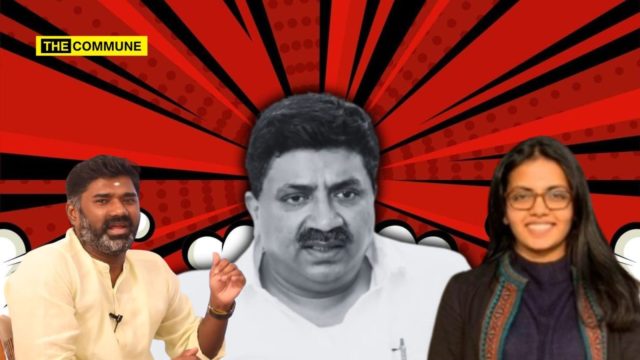
Is Tamil Nadu Congress President A Christian? Misuse Of SC Reservation Alleged

K. Selvaperunthagai, the President of the Tamil Nadu Congress Committee (TNCC) and Member of the Legislative Assembly (MLA) from the Sriperumbudur constituency, has been accused of concealing his alleged Christian faith to contest and win in a Scheduled Caste (SC)-reserved seat.

According to a report by Dinamalar, It stems from an marriage engagement invitation card for Selvaperunthagai’s daughter, which purportedly indicates his affiliation with Christianity. This has sparked debates over the potential misuse of SC reservations, raising questions about constitutional eligibility and legal precedents in India.

The contents of this invitation card clearly indicate that Selvaperunthagai belongs to the Christian faith.

The invitation says that the engagement ceremony is being officiated by Rev. D. Mohan, a senior pastor at New Life AG Church in Chennai.

It is to be noted that Tamil Nadu Congress President Selvaperunthagai is also one of the main speakers at the state level conference demanding reservation for ‘Dalit Christians’ organized by Dalit Christian Liberation Movement.

Selvaperunthagai is an MLA from Sriperumbudur constituency which is a seat reserved for Scheduled Caste.

Constitutional Provisions On SC Reservations And Religious Conversion

The core of this dispute revolves around India’s constitutional framework for SC reservations, which is designed to uplift historically disadvantaged castes.

Article 341 of the Constitution empowers the President to specify Scheduled Castes through orders, with Parliament able to modify them.

The key document here is the Constitution (Scheduled Castes) Order, 1950, particularly Paragraph 3, which states: “No person who professes a religion different from the Hindu, the Sikh, or the Buddhist religion shall be deemed to be a member of a Scheduled Caste.”

This provision explicitly excludes converts to Christianity or Islam from SC benefits, as these religions are not considered to perpetuate the caste-based discrimination rooted in Hindu social structures.

A 2021 statement by the then-Union Law Minister Ravi Shankar Prasad in the Rajya Sabha reinforced this: “A person who converts to Islam or Christianity cannot avail benefits for the depressed classes. They cannot contest in constituencies reserved for the depressed classes.”

The rationale is that conversion severs ties to the original caste system.

As per the 1950 Order and subsequent amendments, SC status is tied to Indic faiths (Hinduism, Sikhism, Buddhism), and changing religion disqualifies individuals from reservations in education, employment, and electoral constituencies.

Supreme Court Judgements: Precedents on Conversion and FraudThe Supreme Court of India has consistently upheld these restrictions through landmark judgements, emphasizing that claiming SC benefits post-conversion constitutes a violation:

Soosai v. Union of India (1985): The Court ruled that a person from an SC community loses eligibility for reservations upon converting to Christianity, as the caste identity ceases to exist in the new faith.

C.M. Arumugam v. S. Rajgopal (1975): The apex court observed that “conversion operates as an expulsion from the caste,” meaning converts no longer belong to their original caste for reservation purposes.

C. Selvarani v. Special Secretary (2024): In a stern ruling, the Court held that claiming caste-based benefits after conversion amounts to “fraud on the Constitution,” potentially leading to disqualification and penalties.

Recent High Court Rulings: The Allahabad High Court has directed Uttar Pradesh authorities to prevent misuse of SC benefits by converts, calling it a “fraud on the Constitution.” Similarly, the Andhra Pradesh High Court (2025) stated that SC status “stands nullified upon conversion,” regardless of prior caste certificates.

These judgements underscore that while conversion is a personal right under Article 25 (freedom of religion), it cannot be used to retain reservation benefits. In cases like Selvaperunthagai’s, any proven concealment could lead to electoral disqualification under the Representation of the People Act, 1951, which penalizes false declarations in nominations.

Subscribe to our channels on TelegramWhatsApp, and Instagram and get the best stories of the day delivered to you personally.