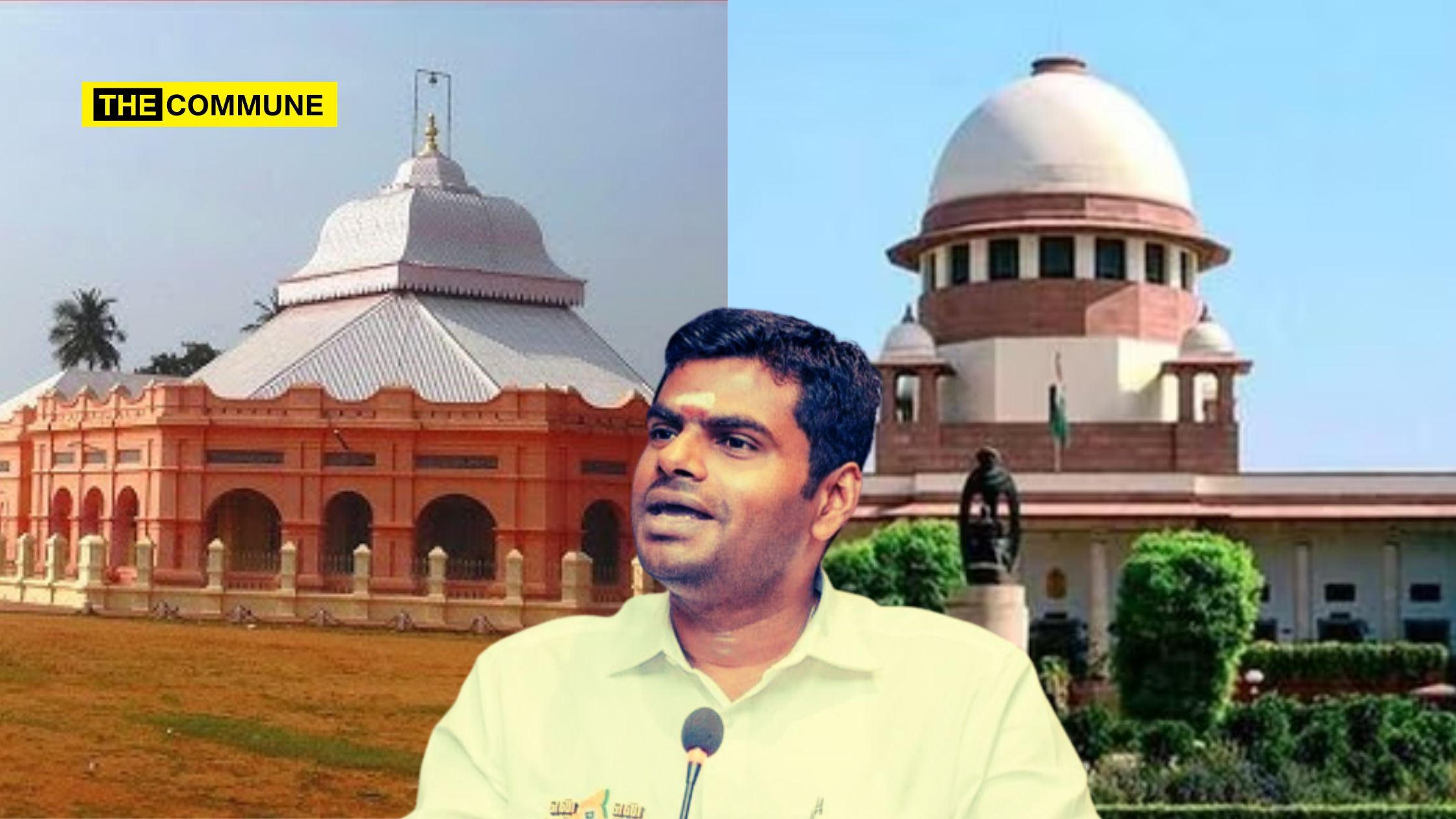
Creating a further drift in the DMK alliance, VCK Deputy General Secretary Aadhav Arjuna called for the empowerment of Dalit communities and the dismantling of entrenched power structures. Speaking at a housewarming event in Madurai, Arjuna stressed the importance of shifting political leadership to ensure Dalit people have the authority to shape their own destinies.
“We are working to create a political movement that can challenge and dismantle oppressive mindsets,” Arjuna stated. “The fight against honor killings must begin in schools, and we need to make public the data on over 10 lakh acres of Panchami lands that should be allocated to affected communities.”
Arjuna also criticized the overemphasis on caste identity, responding to social media discussions about his own caste. “I don’t even know what my caste is,” he said, emphasizing that his alliance with VCK leader Thol Thirumavalavan is based on shared values and principles, not caste. “Dalit politics is not about caste; it’s about humanity,” he added.
Criticizing the DMK indirectly, he said, “We have been waiting for the problems to come, only with problems solutions will arrive. It’s enough being quiet and patient. We’ve been waiting quietly for over a thousand years. They claim this is an ideological alliance, a power alliance and so if that’s the case, then give us the power. Shouldn’t the power given to Dalit people, then this ideological alliance is not a power-sharing alliance. Here, one alone not born to rule.”
"அமைதியா பொறுமையாக இருந்தது எல்லாம் போதும்.. பிரச்சனை வருவதை தான் எதிர்பார்க்கிறோம்.. பிரச்சனை வந்தால் தான் தீர்வு கிடைக்கும்.. அண்ணன் திருமாவளவனின் கனவுகள் கூடிய விரைவில் நிறைவேறும்.." – விசிக துணை பொதுச்செயலாளர் ஆதவ் அர்ஜுன் பேச்சு#Madurai | #VCK | #Thirumavalavan |… pic.twitter.com/hwMheadAuH
Arjuna continued to advocate for the realization of Thirumavalavan’s vision, expressing his confidence in its success. “Thirumavalavan’s dreams will be realized soon,”
Arjuna concluded by invoking the teachings of Dr. B.R. Ambedkar, emphasizing the power of knowledge over violence and urged to creating a movement based on education and patience, and when the time comes, will act decisively and challenge the hegemony and build a just society.
Subscribe to our channels on Telegram, WhatsApp, and Instagram and get the best stories of the day delivered to you personally.

In an egregious display of journalistic irresponsibility, The News Minute (TNM) has published a highly problematic piece glorifying Abdul Nasir Maudany, a man charged in two heinous bomb blast cases, including the 1998 Coimbatore blasts that claimed 58 lives and injured over 200. Instead of providing a balanced account of a deeply controversial figure, TNM’s article reads like a fawning hagiography, dangerously whitewashing terrorist Maudany’s divisive legacy and downplaying his alleged involvement in acts of terror.
This is not just a failure of journalism—it is an affront to the victims of terrorism and a betrayal of the public trust. By selectively presenting a narrative of Maudany’s “forgiveness” and “advocacy for the oppressed,” TNM undermines the gravity of his alleged crimes and paints a dangerously misleading portrait of a terrorist.
Forgiveness Framed As Virtue, Ignoring The Larger Picture
TNM glorifies Maudany’s supposed magnanimity, highlighting his forgiveness of RSS workers accused of a 1992 bomb attack that cost him his leg: “Despite this, he publicly forgave the culprits and even appeared in court at the beginning of the trial, requesting a pardon for the accused.”
While this may appear noble, it is an oversimplification of a much more complex and troubling legacy. TNM conveniently ignores Maudany’s long history of inflammatory speeches, which stoked communal tensions and contributed to an atmosphere of division and hostility in Kerala. Forgiveness does not absolve him of his role in deepening societal fractures or the allegations that link him to acts of terror.
Dangerous Romanticization Of A Polarizing Politician
TNM attempts to reframe Maudany as an advocate for social justice: “On April 14, 1993, Ambedkar’s birthday, Maudany founded the PDP, calling for unity among Dalits, Muslims, and other backward communities.”
This description blatantly ignores the People’s Democratic Party’s (PDP) reliance on communal identity politics. Far from being a unifier, Maudany’s political rhetoric often deepened divides along religious lines, fostering mistrust and resentment. TNM’s portrayal sanitizes this reality, reducing his divisive politics to an idealized mission for justice.
Exploiting Tragedy To Build A Narrative
The article highlights Maudany’s reaction to the tragic death of Sirajunnisa, an 11-year-old girl, as a turning point in his life: “Sirajunnisa’s murder profoundly affected Maudany, becoming a personal mission for him. He used the incident as a poignant example of the oppression faced by his community.”
What TNM fails to mention is how Maudany’s rhetoric frequently exploited such tragedies to fuel communal grievances and rally political support. While he claimed to fight for justice, his actions often exacerbated tensions rather than healing them.
A Token Apology For Inflammatory Rhetoric
TNM attempts to downplay Maudany’s history of incendiary remarks by citing his later apology: “He later apologised for these comments, acknowledging the damage they may have caused.”
This superficial acknowledgment cannot undo the harm caused by his earlier words. Statements like“Muslim boys are born seeing blood”did not just inflame passions; they left lasting scars on Kerala’s social fabric. An apology years later does little to mitigate the consequences of such divisive rhetoric.
Selective Storytelling And Omission Of Victim Voices
The article quotes glowing testimonials about Maudany’s character: “Swami Saraswatheekananda and Maudany were great friends. … He spoke very strongly for his community and I don’t find anything wrong about that.”
However, there is a glaring absence of perspectives from the victims and survivors of the Coimbatore and Bengaluru blasts. TNM’s deliberate focus on Maudany’s personal anecdotes and friendships erases the pain of those who suffered in the attacks he stands accused of orchestrating or abetting.
Misrepresenting Legal Proceedings
TNM leans heavily on the fact that Maudany has not been convicted, portraying him as a victim of judicial delays. While prolonged trials are indeed a failure of India’s legal system, they do not exonerate him. Maudany’s status as an undertrial does not absolve him of the grave charges he faces, nor does it warrant the kind of uncritical sympathy TNM extends.
Irresponsible Journalism As Propaganda
By selectively highlighting Maudany’s “forgiveness” and “advocacy,” TNM crafts a narrative that dangerously flirts with absolution. This is not journalism—it is propaganda disguised as storytelling. The piece not only distorts the facts but also normalizes extremist behavior by portraying Maudany as a misunderstood anti-hero.
The Betrayal Of Victims And Public Trust
Terrorism is not an abstract issue; it is a grave and immediate threat that destroys lives and destabilizes societies. In choosing to humanize a terror-accused figure while ignoring the voices of his victims, TNM has abdicated its responsibility to report with fairness and rigor. This is a betrayal not only of journalism’s core principles but also of the countless victims of communal violence.
Stop The Whitewashing
The News Minute must be held accountable for this reckless glorification of a deeply controversial figure. Journalism has the power to inform, educate, and uphold justice—but when it is wielded irresponsibly, it can cause irreparable harm. TNM’s attempt to rewrite Maudany’s legacy is not just poor journalism—it is an insult to the victims and a dangerous distortion of history.
Maudany is no saint, and it is high time media outlets stopped portraying him as one.
Subscribe to our channels on Telegram, WhatsApp, and Instagram and get the best stories of the day delivered to you personally.

John Pandian of the Tamizhaga Makkal Munnetra Kazhagam (TMMK) has strongly condemned Dravidar Kazhagam activist and speaker Oviya after an old video resurfaced following the recent controversial arrest of actress Kasthuri Shankar.
The video, which went viral and sparked widespread outrage, shows Oviya making derogatory remarks about the Devendrakula Vellalar community in 2019. In the video, she says, “Krishnasamy can keep whatever name he wants, but Devendrakula Vellalar also means the son of Paapan’s (Brahmin) mistress (Vapaati).”
தமிழ்நாட்டில் பெரும்பான்மை சமூகமாக இருக்கக் கூடிய உழைக்கும் மக்களை பாப்பானின் வப்பாட்டி மக்கள் என இழிவுப்படுத்தும் இவரின் பேச்சு வன்மையாக கண்டிக்கதக்கது ! pic.twitter.com/RsdwJPCzZX
On 20 November 2024, TMMK chief John Pandian issued a statement through his official account condemning Oviya’s remarks and demanding both an apology and her arrest for the offensive statement.
John Pandian stated, “Comrade Oviya should apologize for speaking disparagingly about the Devendrakula Vellalar people on a public platform. I strongly condemn Mrs. Oviya Vallinayakam for speaking disparagingly about the Devendra Kula Vellalar community, the historical majority community that taught the world the civilization of rice. The majority community in Tamil Nadu is the Devendrakula Vellalar community. I request the Tamil Nadu Police Department to arrest Comrade Oviya, who spoke disparagingly about the Devendrakula Vellalars who discovered rice civilization and practiced agriculture for the survival of humanity. She has spoken about the Devendrakula Vellalars in a way that incites violence. Comrade Oviya does not need to teach history lessons to the Devendrakula Vellalars. I believe that Comrade Oviya has deliberately this comment on a public platform with the intention of defaming Devendra Kula Vellalars after a long struggle and as a result of the continuous black shirt struggle of the Tamizhaga Makkal Munnetra Kazhagam for the past one year, as they have raised their heads high as Devendra Kula Vellalars. I strongly condemn her again. She should stop such talks. Those who cannot understand the needs and demands of the majority of the people and speak for petty identity politics are inciting riots in society. Therefore, I request the Tamil Nadu Police to arrest her.”
தேவேந்திர குல வேளாளர் மக்களை பொது மேடையில் இழிவாக பேசிய தோழர் . ஓவியா அவர்கள் மன்னிப்பு கேட்க வேண்டும்
உலகில் நெல் நாகரிகத்தை கற்று கொடுத்த வரலாற்று பெரும்பான்மை சமூகமான தேவேந்திரகுல வேளாளர் சமூகத்தை இழிவான வார்த்தைகளால் பேசிய திருமதி . ஓவியா வள்ளிநாயகம் அவர்களை வன்மையாக… pic.twitter.com/8iguHo11ug
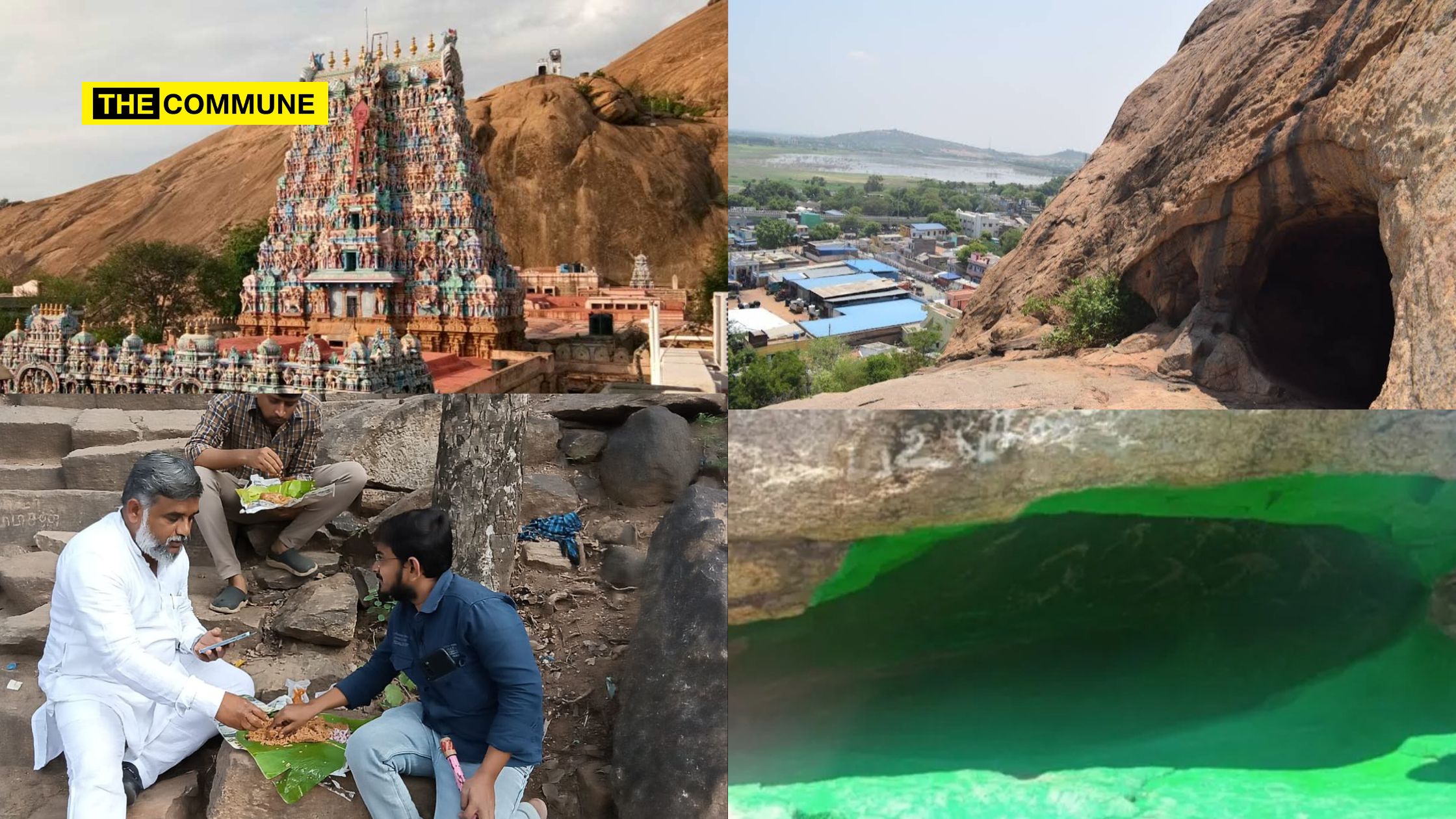
In a significant archaeological find, Dr. Lokesh and local villagers have informed the District Historical Research and Documentation Committee about the discovery of ancient rock paintings in the Anganamalai area, near Maharajakadai in Krishnagiri district. The discovery has been corroborated by a team of experts including District Government Museum Curator Sivakumar, retired Curator Govindaraj, and Historical Research and Documentation Committee Coordinator Tamilselvan, who visited the site for an investigation.
Retired Curator Govindaraj revealed that during a previous exploration in the area, 13th-century inscriptions were uncovered. In the current investigation in Krishnagiri, the team identified three white sandstone rock paintings on a large rock known as Panamarathu Bandha. These paintings, believed to be around 2,000 years old, depict intriguing symbols and human figures. One painting features several symbols, while another showcases four human figures, and the third portrays people in a dance.
In addition to the paintings, archaeologists discovered 2,000-year-old black and red potsherds, along with a carved stone lamp, at the base of the rock. According to Govindaraj, the presence of the lamp suggests that the site may have been a memorial dedicated to the deceased, with the carved lamp serving as an element of the worship practices associated with honouring the dead.
DMK Minister for the Forest Department, Ponmudi, recently sparked controversy during a press briefing by revealing that the elephant Deivanai, which was involved in the tragic death of a mahout and his relative on 18 November 2024, at the Tiruchendur Subramanian Swamy temple, was kept at the temple without proper authorization from the Forest Department. He further emphasized that many temples across the state have failed to secure the necessary permits for housing elephants.
Ponmudi confirmed that two individuals lost their lives after the temple elephant, Deivanai, attacked them in Tiruchendur. He pointed out that the Forest Department had not granted permission for the elephant’s presence at the temple, and that the animal, reportedly brought in from Assam, falls under the Department’s responsibility for protection. He added that the Department of Endowments is required to obtain the proper clearance for keeping temple elephants, and discussions are ongoing with that department on the matter.
During a press briefing on 21 November 2024, Ponmudi stated, “We have kept ‘Deivanai,’ the elephant from Tiruchendur, without the necessary permission. There is no authorization from Forest Department, and as you may have seen in the TV and magazines, the elephant was brought from Assam. Despite this, it has grown up here, and regardless of the circumstances, it remains our responsibility to ensure its protection and take actions in future.”
He then criticized the Hindu Religious and Charitable Endowments (HRCE) Department, saying, “The responsibility for the elephant’s care falls under the temple’s HRCE. When they fail to properly maintain such unfortunate incidents like this occur.”
Ponmudi further revealed that veterinarians are currently evaluating the condition of Deivanai, and a decision regarding its potential transfer to a special camp will be made based on their medical assessment. The Forest Department is taking various steps to protect wildlife, including elephants and tigers, and is preparing a comprehensive plan to prevent elephants from entering residential areas.
The temple elephant is undergoing examination by veterinarians, and following their report, a decision will be made about relocating the elephant to a special camp. Additionally, a case has been filed with the Ministry of Justice concerning the Tamil Nadu government’s mountaineering plans, and legal actions are being pursued in relation to this matter.
Subscribe to our channels onTelegram, WhatsApp, and Instagram and get the best stories of the day delivered to you personally.
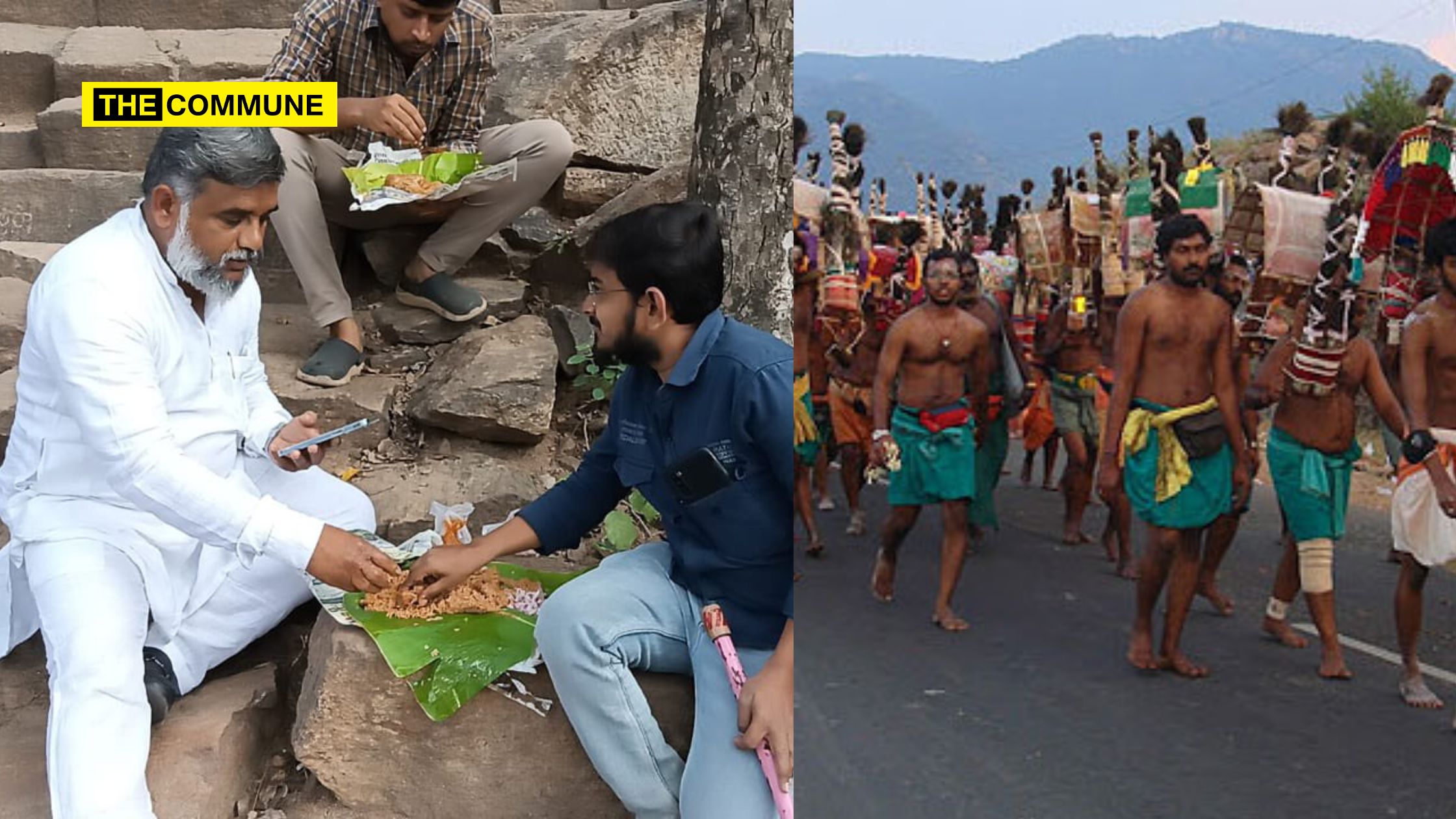
The recent charges against Gautam Adani and several associates for bribery have taken a new turn, with questions being raised about U.S. Attorney Breon Stacey Peace’s potential connections to George Soros. Peace’s spouse, Jacqueline Jones-Peace, holds a senior position at the Equal Justice Initiative—an organization tied to Soros’ Open Society Foundations.
Soros has previously been linked to campaigns that challenge the Narendra Modi government, raising speculation about the motivations behind these new legal actions, especially as an arrest warrant looms over Gautam Adani. This is the third major controversy involving the Adani Group, each time with alleged ties to Soros-backed entities, casting a shadow over the prosecution’s intentions.
US Indictment Charges Against Adani
U.S. authorities have charged Gautam Adani and seven others for allegedly bribing Indian government officials to secure solar power contracts with state-run electricity distribution companies. According to the lawsuit, the Adani Group chairman, his nephew Sagar Adani, and six others allegedly paid bribes totaling ₹2,029 crore (approximately $265 million) between 2020 and 2024.
The individuals named in the case include Vineet Jain, a senior executive at Adani Group; Ranjit Gupta and Rupesh Agarwal, employees of Azure Power; and Cyril Cabanes, Saurabh Agarwal, and Deepak Malhotra, former employees of Canadian institutional investor CDPQ.
The Adani Group is also accused of concealing these bribes from U.S. banks and investors, from whom it raised billions of dollars to finance its solar energy projects. The prosecution alleges that the group sought to earn $2 billion in profits through these contracts.
Breon Stacey Peace, the U.S. Attorney for the Eastern District of New York, brought the charges. Reports suggest that an arrest warrant has been issued for Gautam Adani in connection with this case.
This marks the third major controversy surrounding the Adani Group, following Hindenburg Research’s allegations of fraud and the Organized Crime and Corruption Reporting Project’s (OCCRP) investigative findings. A common thread across these incidents is the involvement of organizations linked to billionaire philanthropist George Soros.
Through his Open Society Foundations, Soros has frequently been associated with political disruptions and regime changes. Critics have described him as an agent of chaos, citing his alleged disregard for democratic norms and his use of questionable methods to exert influence globally.
In the current case, Breon Peace’s allegations against Adani, including the claim that the group orchestrated an elaborate bribery scheme while misleading U.S. and international investors, have sparked speculation about his possible connection to Soros.
Soros-Breon Peace Connection
Breon Peace’s spouse, Jacqueline Jones-Peace, serves as the Director of Development and Senior Attorney at the Equal Justice Initiative (EJI), a nonprofit organization based in Montgomery, Alabama. EJI was founded by Bryan Stevenson, who also leads the organization as its Executive Director. Notably, Stevenson is a member of the U.S. Programs board of the Open Society Foundations, which is funded by billionaire philanthropist George Soros. This connection raises questions about the links between the Peace family and Soros, suggesting potential motivations for targeting the Adani Group.
Additionally, U.S. Senate Majority Leader Chuck Schumer, who has long-standing ties to Soros and his family, supported Breon Peace’s nomination for a judicial role and played a significant role in his appointment in 2021. Schumer has publicly aligned himself with several Soros-backed initiatives. Wealthy liberal donors, including Soros, have contributed significantly to Schumer-affiliated political causes.
Soros’ Democracy PAC II has been a notable source of financial support for Senate Democrats. On June 22, Soros donated $2.5 million to the Senate Majority PAC, bringing his contributions to the PAC to $6 million over the past three years. This includes donations of $3.5 million in 2022 and $2.5 million in 2021. In 2024 alone, Soros has contributed $16 million to the PAC, which underscores his influence on Democratic Party initiatives.
How Soros Targeted Adani Repeatedly
George Soros, along with his organizations and allied networks, has previously targeted the Adani Group, seemingly as part of a broader agenda to destabilize the Indian economy and undermine the Modi government. On February 16, 2023, Soros made a public statement leveraging the Adani-Hindenburg controversy to criticize the Indian government. “Modi and business tycoon Adani are close allies. Their fate is intertwined. Adani Enterprises tried to raise funds in the stock market, but it failed. Adani is accused of stock manipulation, and his stock collapsed like a house of cards,” he alleged.
Soros went on to accuse Prime Minister Narendra Modi of crony capitalism, asserting that Modi would eventually face questions from international investors and in parliament. He suggested that the Hindenburg Research report, which triggered a downturn in Indian markets, could lead to “much-needed institutional reforms” and a “democratic revival” in the country.
The Bharatiya Janata Party (BJP) also linked Soros to Hindenburg Research, accusing him of funding anti-India narratives. Ravi Shankar Prasad, a BJP leader, claimed on August 12 that Soros was a major investor in Hindenburg Research. He accused the Congress Party of aligning with Soros in a campaign against Modi, stating, “In their pathological hatred against Narendra Modi, the Congress Party today has developed hatred against India itself.”
Additionally, the Organized Crime and Corruption Reporting Project (OCCRP), which released a critical report on the Adani Group, is financially supported by Soros’ Open Society Foundations. The foundations provided at least $800,000 (₹6.61 crores) in funding to OCCRP, ostensibly to enhance its cross-border reporting capabilities. Critics argue that this aligns with Soros’ usual approach of influencing civil society and shaping public opinion to suit his agendas. Through organizations like Freedom House and the Varieties of Democracy (V-Dem) Institute, Soros has frequently been accused of attempting to tarnish India’s global image.
Anand Mangnale, OCCRP’s South Asia Editor, also has ties that raise questions. He previously worked as a partnerships and strategy consultant for NewsClick, a controversial media platform with reported financial links to China. NewsClick, which positions itself as a left-leaning outlet, has often faced scrutiny for its editorial stance and funding sources. Mangnale’s profile highlights his involvement in investigations into corporate fraud and government corruption, further fueling the debate around OCCRP’s motivations and affiliations.
Soros & His Alleged Role In Swaying US Elections
George Soros made headlines by acquiring a significant stake in Audacy, the second-largest radio company in the United States, just weeks before the presidential elections. This media giant operates over 220 radio stations nationwide and boasts a monthly audience of 165 million listeners. The timing of the purchase and its implicationsraised alarm among lawmakers and officials, including a Federal Communications Commission (FCC) commissioner appointed by former President Donald Trump.
U.S. law generally restricts foreign ownership in American radio stations to no more than 25%. Reports suggest Soros leveraged foreign investments to secure his bid for Audacy. Public filings reveal that his group petitioned the FCC to bypass the typical review process. Alarmingly, the FCC granted expedited approval for this deal, marking the first instance in modern history where such a transaction avoided the standard national security review process, which usually takes up to a year.
Republican Congressman Chip Roy of Texas highlighted concerns over the FCC’s handling of this matter in April. Citing communications laws designed to limit foreign ownership of radio licenses, Roy questioned how Soros’ acquisition was approved so quickly. According to Roy, the Soros group requested a waiver to delay this process instead of following the traditional petition for a declaratory ruling—which would have allowed for a thorough review of foreign ownership interests.
Roy raised the issue in a letter to the FCC, stating, “Instead of going through the usual petition for declaratory ruling process, which would enable the FCC to review and assess those foreign ownership interests as part of its transaction review, the Soros group has asked the FCC to waive that process and put it off until sometime down the road.”He further revealed that the foreign stakeholders involved in the deal were granted special warrants.
The investment, reportedly amounting to nearly $400 million, added to concerns about Soros’ influence on U.S. media and its potential impact on the election process.
Soros-Linked Attorney Behind Donald Trump’s Indictment
The indictment of former President Donald Trump by a Manhattan grand jury last year prompted accusations from Trump and other prominent Republicans, including Florida Governor Ron DeSantis and former Secretary of State Mike Pompeo, of George Soros’ influence in the case. The investigation, led by Manhattan District Attorney Alvin Bragg, centered on allegations of hush money payments made during Trump’s 2016 presidential campaign to adult film star Stormy Daniels.
George Soros’ financial connections to Bragg became a focal point of criticism. In May 2021, Soros donated $1 million to the Color of Change PAC, a racial justice advocacy organization that heavily supported Bragg’s campaign. Additionally,Soros’ son, Jonathan Soros, and daughter, Jennifer Allan Soros, also contributed to Bragg’s election bid. State records reveal that Jonathan Soros donated $10,000 to Bragg’s campaign on April 26, 2021, followed by a $10,000 contribution from Jennifer Allan Soros on April 29, 2021. While others donated more significant sums directly, the Soros family’s involvement positioned them among Bragg’s key supporters.
Trump vehemently criticized the indictment and its implications, calling out Bragg as a “Soros-backed” figure. On his social media platform, Truth Social, Trump questioned why the case persisted despite what he described as a lack of evidence. He asserted, “Why won’t Bragg drop this case? Everybody says there is no crime here. I did nothing wrong.”Trump referred to Michael Cohen, his former attorney and a key figure in the case, as a “convicted nut job with zero credibility.”
Trump further criticized the situation, likening it to authoritarian regimes, stating, “This is the Gestapo, this is Russia and China, but worse. Disgraceful!”In another post, he accused Bragg of carrying out a politically motivated agenda, claiming, “He is just carrying out the plans of the radical left lunatics. Our country is being destroyed.”
The former president also used the indictment to rally his supporters, sending a fundraising email that declared, “They’re coming for me,” and blamed district attorneys “hand-picked and personally funded by George Soros.”
It is worth noting that Trump’s political influence remained robust, as evidenced by his decisive victory in the recent U.S. elections, setting him up for a second term as president.
George Soros’ Hostility Toward Nationalist Leaders Including PM Modi
At the 2020 World Economic Forum in Davos, George Soros pledged support for initiatives aimed at addressing what he described as the erosion of civil society under the influence of “would-be and actual dictators” and the challenges of climate change. He openly criticized global leaders, claiming that nations like the United States, China, and Russia under Vladimir Putin were under the control of authoritarian figures. Soros went further to express concern about the growing prevalence of such leaders worldwide.
Singling out India, Soros described it as experiencing “the biggest and most frightening setback.” He accused Prime Minister Narendra Modi of transforming India into a “Hindu nationalist state,” imposing strict measures in Jammu and Kashmir and allegedly threatening the citizenship of millions of Muslims. His remarks reflected a long-standing animosity toward the Indian government, with Soros never shying away from expressing his opposition to PM Modi’s administration.
The Agenda Behind Soros’ Efforts
George Soros has a history of labeling nationalist governments as “authoritarian” and committing resources to counter them globally. Among his key targets, India and PM Modi’s administration stand out as the primary focus of his campaigns. Soros’ Open Society Foundations, which began operations in India in 1999 by offering fellowships and scholarships, have expanded their influence under the pretense of charitable work. However, they have also been linked to supporting groups critical of the Indian government.
Through networks comprising media outlets, non-governmental organizations (NGOs), and intellectual figures, Soros has made efforts to challenge India’s nationalist leadership. His activities suggest a deliberate strategy to undermine the government by fostering dissent and empowering organizations that oppose the administration’s policies.
One of Soros’ more recent tactics appears to involve targeting Indian corporations. The Adani Group, in particular, has faced repeated criticism, with Soros and his affiliates accused of orchestrating campaigns to tarnish its reputation. Such actions not only aim to destabilize the company but also threaten the broader fiscal health of the Indian economy.
Soros’ efforts to hinder India’s economic growth are seen as part of a broader attempt to discredit the Modi administration. By undermining India’s progress and creating economic turbulence, Soros seeks to weaken the current leadership and pave the way for a government more aligned with his ideological preferences.
In a shocking video that’s gone viral, Manithaneya Makkal Katchi (MMK) leader and Tambaram Corporation Councilor M Yakub, openly threatened BJP leader H Raja, stating that if Raja’s police protection were removed for just two hours, the BJP leader would never be able to give another interview. He went further, accusing Raja of speaking “like a terrorist” only because of his police security.
The BJP has hit back, condemning the DMK government for allowing such blatant threats against a senior leader and accusing Chief Minister M.K. Stalin of presiding over a crumbling law and order situation. They’ve demanded immediate action against Yakub.
In the video, Yakub is seen saying, “If you just remove H Raja’s official security arrangements for 2 hours, he will thereon never give any interview to the press. If at all he gives an interview, then that will be his last interview. Because H Raja has police protection, he speaks like a terrorist and anti-national. We are controlling ourselves and only complaining following the subtle orders of our leader. We are silent only because our leader has asked us to be, otherwise, H Raja would not even be able to move about freely at night.”
பொது வெளியில் ஒரு தேசிய கட்சியின் ஒருங்கிணைப்பாளருக்கே கொலை மிரட்டல் விடுக்கும் இந்த நபர் மீது நடவடிக்கை எடுப்பீர்களா? இல்லை, உங்கள் கூட்டணி கட்சி என்பதால் கண்டுகொள்ளாமல் விட்டு விடுவீர்களா? @mkstalin.! pic.twitter.com/a6TWWmWfB8
In a strongly-worded statement, the Tamil Nadu BJP condemned the threat against Raja from Yakub and questioned Chief Minister MK Stalin’s governance model.
“The state of law and order under the DMK government is rapidly deteriorating. Every day, incidents of violence reveal a complete breakdown in governance. It has now reached a point where senior leaders of national parties face blatant public threats. Is this the Dravida model of governance being touted?” the BJP asked.
The party called for immediate action against Yakub and demanded that the Tamil Nadu Police ensure H. Raja’s safety. “Such blatant threats incite violence and reflect the inability of the Tamil Nadu Police to uphold the rule of law. The Chief Minister must intervene decisively and restore accountability in governance,” the statement added.
This incident spotlights growing concerns about the state’s governance and political climate, with opposition parties alleging that the DMK government has failed to uphold constitutional values and ensure public safety.
Subscribe to our channels onTelegram, WhatsApp, and Instagram and get the best stories of the day delivered to you personally.
The Andhra Pradesh government is working to create an ecosystem for Information Technology companies with the target of providing five lakh jobs in the sector over the next five years, Minister for Education, IT, and Electronics Nara Lokesh said on Thursday. He told the Assembly during question hour that the Tata Consultancy Services (TCS) will set up its unit in Visakhapatnam soon and was confident that the company would begin its operations in three months.
He said during the last five months, he had discussions with representatives of various IT companies. “I also made a request to Infosys to set up another campus. We are now in search of necessary land for them and I am confident that within six months they will take off,” Lokesh said. Recalling that he has held discussions with owners of various data centres during his recent visit to the United States, the IT Minister said that since the previous state government did not focus on setting up data centres, they moved to neighbouring states like Karnataka and Telangana, besides Mumbai. The data centre owners had raised several issues during discussions like data security and taxation, he said, adding that now talks are on to resolve these issues.
Expressing confidence that the discussions that he held with the top 100 IT companies in the country will be fruitful, Lokesh said that these companies also will be invited to Visakhapatnam. He also stressed the need for a new policy for setting up global delivery centers of Fortune 500 companies which is likely to be adopted next month. At least two data companies are going to set up their units in Visakhapatnam in a couple of months, Lokesh said and stated that efforts are on to get the NICSI to Vizag. The IT Minister felt that if a national-level data policy is adopted data companies will certainly come to the state with massive investments.
He said it was gratifying that of the total employees in the entire IT sector across the globe, 20 per cent are Telugus. He revealed that that at least 150 companies were set up in the state between 2014 and 2019 providing jobs to 50,000 youth. “We have even entered into an agreement then with the industrialist, Mr Adani, to establish a data centre in the state and have organised a conclave in Vizag with several IT giants,” Lokesh said.
He said at a time when the IT industry was moving much further, there was a sudden halt due to the policies adopted by the previous government. “Perhaps for the first time in the history of the country the government had demanded shares in IT companies following which units like the NICSI and the STBI have left the state as a result of which the youth lost the employment opportunities,” Lokesh said. Lokesh informed the House that the Bhogapuram airport works are moving at a fast pace and the biggest convention centre in the country which is part of the social ecosystem is going to be established in Visakhapatnam very soon. He underlined the need for more hotels along with such companies.
–IANS
Subscribe to our channels onTelegram, WhatsApp, and Instagram and get the best stories of the day delivered to you personally.
Prime Minister Narendra Modi said on Thursday that India and Guyana have struggled to achieve their independence from colonisation while asserting that both countries believe in the creed of ‘Democracy first, humanity first’. “Democracy first, humanity first is our mantra. Democracy teaches us that everyone should be treated equally and everyone should be taken on board while ‘humanity first’ determines the direction of our decisions.
When we make ‘humanity first’ the basis of our decisions, the results are also in the interest of humanity,” PM Modi said while addressing the Special Session of the Guyanese Parliament during his visit to the South American country on the third and final leg of his three-nation tour. He said when India and Guyana gained freedom, the world faced different challenges, and today, in the 21st century, the challenges are entirely different. “The systems and institutions created after World War 2 are now being destroyed. While the world was supposed to move forward towards a new world order, countries got tangled up in other things. In these situations, the most powerful mantra to move forward for the world is ‘democracy first’, ‘humanity first’,” PM Modi said in his address.
He said that there is no greater medium than democracy to create an inclusive society, adding that democracy is in India’s DNA. “The democracy is in our vision and in our behaviour. So when it came to uniting the world, India gave the mantra of one earth, one family, one future during its G20 Presidency. When the Corona crisis came, a challenge came before the entire humanity, then India gave the message of one earth, one health,” PM Modi said. PM Modi said that this is not a time for conflict for the world but this is the time to identify the conditions that create conflict and remove them. “Today there are so many challenges like terrorism, drugs, cybercrime… only by fighting them we will be able to shape the future of our coming generations,” he said. In his opening remarks, PM Modi said Guyana gave him its highest honour on Wednesday. “I express my heartfelt gratitude to all of you, to every citizen of Guyana, for this honour. Thank you very much to all the citizens here. I dedicate this honour to every citizen of India.”
Earlier, PM Modi met the top leaders of Caribbean nations such as St. Lucia, Antigua and Barbuda, Grenada, Barbados, Bahamas, Trinidad & Tobago, Suriname, and Dominica on the sidelines of the second India-CARICOM Summit here and discussed strengthening bilateral ties and enhancing cooperation across several key areas. Prime Minister Modi met his Barbados counterpart Mia Amor Mottley on Wednesday.
–IANS
Subscribe to our channels onTelegram, WhatsApp, and Instagram and get the best stories of the day delivered to you personally.
AI-powered smart glasses, which can help the visually impaired to identify faces and objects and also provide navigation support, were launched by Telangana Governor Jishnu Dev Varma at a programme in Secundrabad on Thursday. The glasses have been developed by the KIMS Foundation and Research Centre (KFRC). In his address at the programme for the launch of the glasses, held at KIMS Hospital, Secunderabad here, the Governor stated that AI-powered smart glasses are set to bring a new light to their lives.
Until now, visually impaired individuals primarily relied on canes for assistance, but he said these advanced glasses are designed to enhance their quality of life in previously unimaginable ways. Governor Varma praised the innovation, noting that it has the potential to make a profound difference in the lives of millions of visually impaired people. These glasses were developed by former DRDO scientist Dr. V. Bhujanga Rao, under the KIMS Foundation and Research Centre. Founded in 2010 by KIMS Hospital CMD Dr Bollineni Bhaskar Rao, the foundation collaborated with Achala Health Services, a technology company founded by Rajesh Raju.
These smart glasses employ advanced computer vision and machine learning algorithms, making them an exceptional aid for the visually impaired. The glasses can help identify people standing in front of the user and can detect objects, obstacles, and surroundings, helping visually impaired individuals navigate without difficulty. The glasses can also read printed or handwritten text aloud, facilitating easier communication and information access. Governor Varma noted that India is home to over 20 million visually impaired people, making these smart glasses a crucial resource for them. He highlighted that these devices not only support daily activities but also boost users’ self-confidence.
He expressed admiration for the scientists, technology experts, and supporting organizations involved, commending them for their dedication to improving the lives of the visually impaired. Dr Bhaskar Rao emphasised that these glasses would allow the visually impaired to move more freely, recognise people around them, and communicate with greater ease. This technology, he said, fulfils the vision of providing equal opportunities and accessible information for everyone.
Dr. V. Bhujanga Rao announced that these smart glasses will be distributed to visually impaired individuals in need, with the assistance of prominent non-profit organisations, government agencies, and healthcare providers. Achala Solutions CEO Raju affirmed that they have the infrastructure necessary to produce as many smart glasses as required. The Devanar Foundation for the Blind has verified the quality and performance of these smart glasses.
–IANS
Subscribe to our channels onTelegram, WhatsApp, and Instagram and get the best stories of the day delivered to you personally.