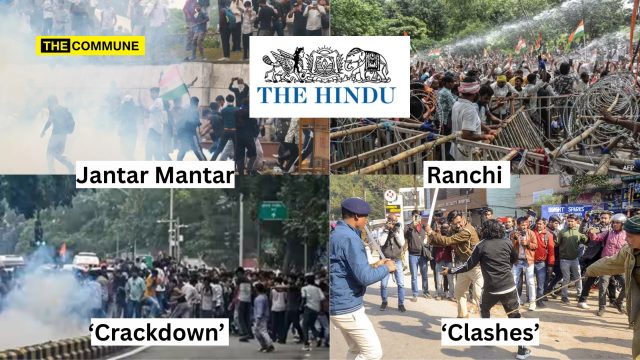
It is a known fact that The Hindu is biased. The bias becomes increasingly visible in the words it chooses to describe similar incidents, time and again.
Within the space of three weeks, the paper covered two student protest marches; two confrontations involving the police. The words it chose to describe them told two very different stories.
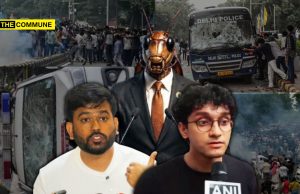
On 20 July 2026, during the Cockroach Janta Party’s (CJP) Parliament march in Delhi, protesters confronted the police after attempting to breach barricades. Police personnel were injured and the situation turned violent.
The Hindu’s headline? “Several hurt in crackdown on CJP Parliament march.”
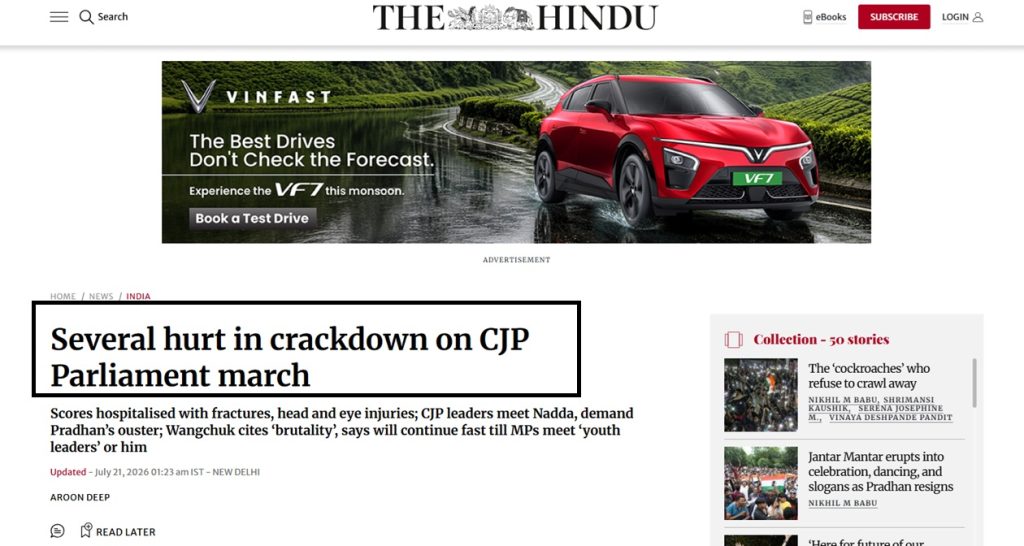
“Crackdown” is not a neutral word. It immediately establishes a particular narrative: protesters are being subjected to state repression, while the police are cast as the aggressors. The word carries a clear moral and political weight.
Now compare that with its coverage of the student protest in Jharkhand on 10 August 2026.
Students protesting alleged irregularities in recruitment examinations marched towards the Jharkhand Assembly. The police resorted to lathi-charge and dispersed the crowd. The paper itself reported that protesters were injured.
The headline? “Protesters march to Jharkhand Assembly; 5 injured in clashes.”
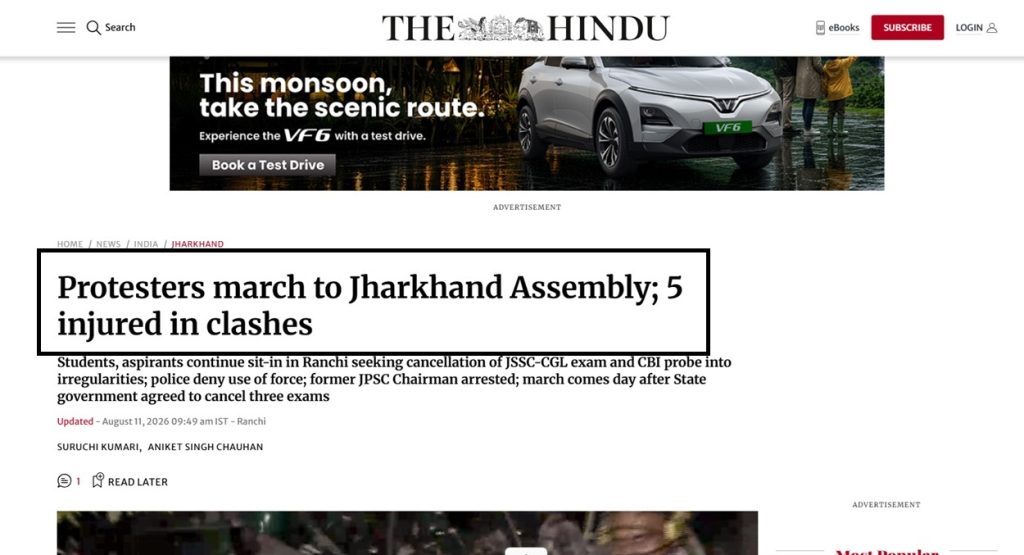
There is that word again: “clashes.”
Unlike “crackdown”, “clashes” distributes responsibility. It suggests a confrontation between two sides, without automatically positioning one as the aggressor and the other as the victim.
That raises a rather obvious question: why does the vocabulary change when the protest changes?
If a police action against protesters warrants the word “crackdown” in Delhi, why does a police lathi-charge in Jharkhand become merely a “clash”?
And if “clashes” is an appropriate description when protesters and police confront each other, why was the Delhi incident not framed in similar language, particularly when police personnel were also injured?
The issue here is not whether The Hindu is entitled to choose its headlines. Of course it is.
The issue is whether the choice of words is being applied consistently.
A newspaper does not need to fabricate a fact to influence how readers perceive an event. Sometimes, all it needs to do is choose one adjective over another.
“Crackdown” creates an aggressor and a victim. “Clash” creates two sides in confrontation.
The underlying facts may remain unchanged, but the reader’s understanding can shift dramatically.
This is precisely why headline writing matters. Newspapers like The Hindu often position themselves as institutions of ‘responsible’, ‘neutral’ journalism. That reputation comes with an obligation to apply the same editorial standards regardless of who is protesting, which government is in power, or which political constituency the protesters represent.
The question isn’t whether The Hindu can call something a “crackdown.”
It is whether it can explain why “crackdown” in Delhi becomes “clashes” in Jharkhand when the underlying police-versus-protester dynamic is strikingly similar.
Same police. Same protesters. Same lathis. Different vocabulary.
Subscribe to our channels on WhatsApp, Telegram, Instagram and YouTube to get the best stories of the day delivered to you personally.