Home Blog Page 654

Budget 2025: A Blueprint For Sustainable Growth, Not Short-Term Populism As Claimed By Cong MP P Chidambaram

Former Finance Minister P Chidambaram’s address in Parliament yesterday was high on rhetoric but lacked factual accuracy. I have responded to 6 of his key allegations with detailed response notes and facts. While attempting to critique the current government’s economic policies, he conveniently ignored the financial mismanagement, high inflation, and reckless lending practices that defined the UPA era. It’s time to set the record straight with facts.

Statement 1

Former Finance Minister P. Chidambaram’s recent assertion that the 2025 Budget should have included a reduction in Indirect taxes, particularly on petrol and diesel, alongside the income tax cuts, warrants a closer examination of the fiscal implications and economic strategies involved. Let us see the truth:

It’s important to note that petrol and diesel are currently outside the purview of GST. 96%+ meetings of the GST Council have taken decisions unanimously. Even DMK and Congress FMs have opposed Petrol under GST. So Instead, now they are subject to excise duties imposed by the central government and VAT by state governments. As of the latest data, the excise duty is ₹19.90 per litre for petrol and ₹15.80 per litre for diesel. Additionally, state governments levy VAT, which varies across states. Chidambaram must note that the Congress government’s ally DMK in Tamil Nadu is unable to implement even a ₹4 cut that they promised vigorously in 2021 while the NDA Govt reduced Central Excise duty fully from Central Share by a total of ₹13/litre and ₹16/litre on petrol and diesel respectively in two tranches in November 2021 and May 2022, which was fully passed on to consumers. Some state governments also reduced state VAT rates to provide relief to citizens. In March 2024, OMCs also reduced the retail prices of petrol and diesel by ₹2 per litre each, across the country.!! Instead of asking a govt that has reduced its portion of prices by ₹15 since 2021, he should instead ask tough questions to his ally the DMK and the Chief Minister of TN.

Income Tax Reduction and Consumption

The 2025 Budget’s decision to cut personal income tax rates aims to increase disposable income for the middle class, thereby boosting consumption. Estimates suggest that these tax cuts will inject approximately ₹1 lakh crore into the hands of consumers. Considering a marginal propensity to consume of 80%, this could lead to an overall increase in consumption of about ₹5 lakh crore, representing approximately 2.7% of GDP. This surge in consumption is expected to stimulate demand across various sectors, fostering economic growth. While the suggestion to reduce taxes on petrol and diesel is well-intentioned, it’s crucial to balance such measures against fiscal responsibilities. The current strategy of reducing personal income taxes is designed to boost consumption without compromising essential government revenues. Therefore, the approach taken in the 2025 Budget aligns with the broader objective of sustaining economic growth while maintaining fiscal prudence.

Statement 2:

Chidambaram compared the Finance Minister’s budget allocation for the External Affairs Ministry (MEA) to Elon Musk’s cost-cutting strategies is misplaced and ignores economic realities. Here’s why:

Budget Allocation vs. Effective Spending  

MEA’s core functions—diplomacy, international trade relations, foreign aid, and security cooperation—are shifting towards efficiency-driven models, with greater digital diplomacy, AI-driven consular services, and targeted foreign policy interventions. The previous budget allocation of ₹28,915 Cr was underspent, leading to ₹3,638 Cr of unused funds in FY 2023-24. A lower allocation reflects realigned priorities, not a shrinking global presence.

International Best Practices: Efficiency > Expansion

Global trends show that leaner diplomatic budgets improve agility rather than dilute influence. Example: The UK Foreign Office saw a 10% budget cut in 2022 yet strengthened global influence through strategic alliances and AI-powered diplomacy.

India’s Diplomatic Presence is Expanding, Not Shrinking  

New Embassies Opened in Africa, Indo-Pacific: India has expanded its diplomatic missions, particularly in Africa and the Pacific, countering China’s influence. G20 Presidency showcased India’s leadership—a global-first strategy that focused on outcomes over excessive spending.

Fiscal Prudence & Growth Priorities

The Budget 2025 prioritizes economic growth, infrastructure, defense, and social sector spending, which aligns with long-term global positioning. A smaller MEA budget does not mean reduced influence—it means a focus on strategic diplomacy, not wasteful expenditure.

Verdict: Chidambaram’s “Elon Musk” analogy is mud mathematics. Budget efficiency ≠ Diplomatic weakness India is expanding its influence through smart diplomacy, not excessive spending Strategic prioritization is the hallmark of modern global leadership Smart foreign policy is about outcomes, not just budget size.

Statement 3:

Chidambaram criticized the income tax cuts in Budget 2025, arguing that while they provide relief to the middle class, they also disproportionately benefit the richest taxpayers. He claimed that 2.27 lakh people earning over ₹1 crore, 262 people earning over ₹100 crore, and 23 people earning over ₹500 crore would also benefit from the revised tax slabs.

Response:

The Reality of Tax Savings

Maximum tax savings per taxpayer = ₹1.10 lakh. How much do high-income earners actually save?

  • ₹1 crore+ earners (2.27 lakh people): 1.1% of their income saved
  • ₹100 crore+ earners (262 people): 0.011% of their income saved
  • ₹500 crore+ earners (23 people): 0.0022% of their income saved  

Chidambaram’s claim that the rich gain disproportionately is misleading -for ultra-high earners, ₹1.10 lakh is an insignificant fraction of their income. Middle-class gains the most—80-85 lakh taxpayers exit the tax net, keeping more of their earnings to spend, invest, and drive economic growth.

Economic Growth & Consumption Impact

₹1 lakh crore back into taxpayers’ hands → ₹5 lakh crore consumption boost (~2.7% of GDP). Increased spending stimulates businesses, drives demand, and creates jobs. Countries like the US, UK, and Singapore have used direct tax cuts to boost demand and drive GDP growth.

Final Verdict: Chidambaram’s Argument is Mud Mathematics. If this is how he calculated numbers when he was FM, then India did well not to become bankrupt during his term. Numbers don’t lie—the tax cuts are designed for middle-class relief, not a giveaway to billionaires. Tax policy is structured to stimulate demand, ensuring broad-based economic growth. Smart taxation fuels consumption, investment, and economic stability—not misleading populism.

Statement 4:

Chidambaram questioned how the Finance Minister (FM) could claim 11.1% growth in net tax revenues in 2025-26 despite foregoing ₹1 lakh crore in tax cuts. He argued that the ₹1 lakh crore is only 0.3% of GDP (₹324 lakh crore) and doubted its impact on economic growth. He also suggested that a portion of this tax relief would go into savings, debt repayment, and foreign spending, rather than domestic consumption. He further pointed out that even the SBI Chairman expects part of the ₹1 lakh crore to go into savings, implying that it may not fuel domestic consumption as projected.

Response:

Why is the 11.1% Tax Revenue Growth Achievable?  

Chidambaram calls it “magic,” but it’s mathematics. Despite the ₹1 lakh crore tax cut, net tax revenues will still increase by ₹3.49 lakh crore due to:

  • Stronger GST collections from increased consumption.
  • Corporate tax buoyancy as businesses grow.
  • Higher direct tax compliance as economic activity expands.  

Even in 2024-25, net tax revenue grew by 11% despite earlier tax adjustments—proving that growth-driven policies offset short-term revenue losses.

Consumption vs. Savings: The SBI Chairman’s View Supports Growth

Chidambaram assumes that savings don’t contribute to economic expansion, which is incorrect. SBI Chairman’s expectation of increased savings is actually good for the economy:

  • Higher savings → Increased bank deposits → More credit availability
  • Increased credit → More business loans → Higher business expansion & sales
  • Higher investment → More jobs & economic momentum  

Empirical data from past tax cuts (India & globally) show that increased disposable income leads to greater spending, even if part of it goes to savings or debt repayment.

Does 0.3% of GDP Matter? Yes!  

₹1 lakh crore is 0.3% of GDP, but its impact is amplified through the consumption multiplier. With a spending multiplier effect of ~5x, this translates to a ₹5 lakh crore boost to demand (~2.7% of GDP), not just 0.3%.

Example: The US tax cuts in 2018 were around 0.4% of GDP but led to a significant economic expansion.

Other Growth Engines: FM is Already Acting on It  

  • Exports: PLI schemes, global trade agreements, and Make-in-India initiatives are expanding export potential.
  • Capex: The FM has allocated record-high infrastructure spending, which directly fuels economic growth.
  • Balanced Growth Strategy: Tax cuts + infrastructure + exports = sustained economic expansion.

To sum up: 11.1% revenue growth is backed by data, not “magic.” Savings don’t disappear—they fuel investment & credit expansion. A ₹1 lakh crore tax cut translates into a much larger GDP impact. Even the SBI Chairman’s expectation of increased savings is an economic positive, as it fuels lending and business expansion. Smart economics relies on multiple growth levers, not just tax collections. This is sound policy, not guesswork.

Statement 5:

Chidambaram criticized the Finance Minister’s claim of improving the fiscal deficit from 4.9% to 4.8%, arguing that this was achieved by rationalizing capital expenditure (capex) by ₹1.83 lakh crore. He claimed that this adjustment reduced the fiscal deficit by ₹43,785 crore, which accounts for 23.85% of the total capex rationalization, and argued that this was not sound economic policy. He further pointed out adjustments in key sectors. Additionally, he highlighted adjustments in flagship welfare schemes like Poshan, Jal Jeevan Mission, Crop Insurance, Urea Subsidy, PM Gram Sadak Yojana, and SC/ST Scholarships, calling them “cruel cuts.”

Response:

Fiscal Deficit Improvement: The Right Approach  

Fiscal discipline is a necessity, not an afterthought. Rationalizing spending ensures lower borrowing costs, stable inflation, and a better credit rating—key for attracting foreign investment and maintaining economic growth. Even after fiscal adjustments, India has the highest capital expenditure allocation in history—₹11.21 lakh crore for FY26 (3.1% of GDP).  

Before 2014, average capex allocations were significantly lower. The current capex level is a strategic shift toward long-term growth, not a reduction.  

Capex Rationalization: Strategic & Temporary, Not Permanent

Capex isn’t stopped—it’s optimized for maximum efficiency. Projects facing delays are realigned to ensure high-impact infrastructure investments rather than wasteful expenditure. Even with rationalization, India’s capex-to-GDP ratio remains among the highest globally. Countries like Germany & the UK have strategically adjusted capex in economic slowdowns while ensuring sustainable deficit management.  

Social Sector Spending: The Full Picture  

Despite realignment, social spending remains strong: ₹86,175 crore was allocated for healthcare. PM Awas Yojana’s budget has increased. Food security & rural employment schemes remain fully funded. Education & scholarships continue under efficiency-focused models. Reprioritizing inefficient spending does not mean abandoning welfare. Balanced expenditure ensures fiscal health while meeting social obligations.

Tax Cuts & Economic Growth: Not Magic, but Sound Economics  

Tax cuts = more disposable income = higher demand. ₹1 lakh crore in tax relief is not just 0.3% of GDP—it has a 5x multiplier effect, boosting demand by ₹5 lakh crore (~2.7% of GDP). Savings don’t disappear—they fuel bank deposits, increase credit availability, and drive business expansion. Even the SBI Chairman acknowledged that increased savings would strengthen credit availability, fueling business growth. 11.1% revenue growth is not an illusion—it’s a result of expanding tax compliance, GST collections, and business growth.

To sum up: Fiscal discipline ensures long-term stability, not reckless spending. Capex rationalization is temporary & strategic—high-impact projects continue. Tax cuts fuel demand, and savings enhance credit & business expansion. Welfare spending remains intact, with a focus on efficiency. Smart fiscal management prioritizes sustainable economic expansion, not short-term populism.

Statement 6:

Chidambaram criticized the budget for not addressing inflation’s impact on Indian households He argued that GST, fuel taxes, and wage policies should have been adjusted to ease financial pressure on low-income households.

Response:

Let’s go by data. Under the UPA, inflation averaged 8.1% (2004-14); under the NDA, it stands at 5.1%. Also, India’s Inflation is lower than global trends.

Inflation in India is lower than in most major economies:

  • Global Average (2012-24): 4.66%
  • US: 5.3%
  • UK: 6.2%
  • Eurozone: 6.8%

India has managed inflation better than developed economies despite global crises (pandemic, supply chain disruptions, oil price spikes). Food inflation is lower than education & healthcare because of strong PDS and government food programs. Healthcare inflation is being tackled with Ayushman Bharat & public health infra investments. Education reforms & scholarships continue to improve affordability.

Household Savings: The Right Perspective  

The savings rate declined from 25.2% (2012) to 18.4% (2024) is due to higher spending & investment, not just inflation.

Banking deposits have surged, proving that people are investing their savings more productively.

SBI Chairman has noted that tax savings from Budget 2025 will increase bank deposits, improving credit access & business expansion. Government schemes like PM Jan Dhan Yojana have boosted financial inclusion, increasing access to credit & reducing reliance on informal loans.

Tax & Fiscal Strategy is Designed for Sustainable Growth

GST Adjustments: India already has one of the lowest GST rates on essential goods globally to protect consumers.

Fuel Taxes: A reduction in fuel taxes would reduce government revenue needed for welfare & infrastructure. Instead, India is promoting EV adoption & alternative fuels to mitigate fuel cost burdens.

Capex & Job Creation: Instead of raising MGNREGA wages, the focus is on higher-value employment in manufacturing & services, ensuring sustainable income growth. Real wages & employment data show that job creation is outpacing inflationary pressures.

To sum up: India’s inflation is lower than most global economies. Household savings shift towards investments & productive growth, not just consumption pressure. Budget 2025’s tax relief will increase disposable income, boosting spending & savings. Targeted welfare schemes ensure essential spending on food, education, & healthcare remains supported. This is sustainable economic policy, not short-term populism.

S Sundar Raman is a Chartered Accountant and the Vice President of BJP Tamil Nadu’s Thinker’s Cell

Subscribe to our channels on Telegram, WhatsApp, and Instagram and get the best stories of the day delivered to you personally.
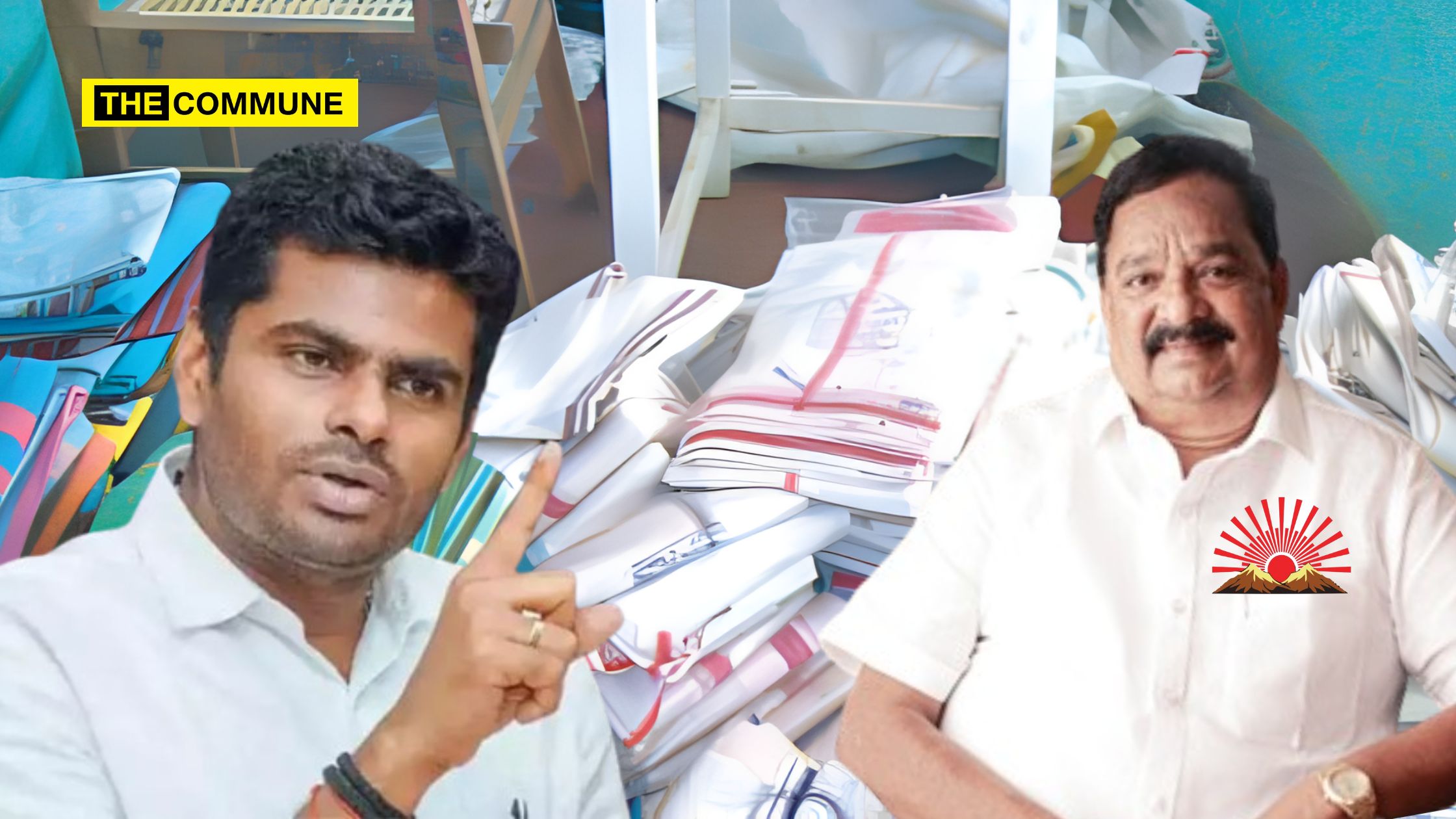
“DMK Minister Gandhi Will Be The First To Be Jailed In 2026 For Corruption,” Annamalai Slams DMK Minister Over Pongal Dhoti Scheme Scam, Demands Resignation

Tamil Nadu BJP president Annamalai has strongly criticized DMK Minister for Handlooms and Textiles, R. Gandhi, accusing him of continuous and widespread corruption in the free cotton dhoti and saree scheme under the Pongal package. Annamalai claims that Gandhi has been reducing the cotton content and substituting it with cheaper polyester, making profits through proxy cooperative companies, and effectively looting public funds. He also called out the DVAC and Chief Minister Stalin for their failure to take action, questioning why, despite the BJP submitting relevant documents and raising the issue last year, no steps have been taken against Gandhi. He further asked whether Chief Minister MK Stalin is complicit in the corruption.

In a post on his official X account, Annamalai stated, “Corruption Minister Commission Gandhi should resign immediately. Minister Commission Gandhi is involved in corruption every year through the free cotton dhoti and saree scheme provided in the Pongal package. Last year, the people were deceived when less cotton yarn, which is priced up to ₹320 per kg, was used, while more polyester yarn, which costs half that amount at ₹160, was used to make the dhotis. On behalf of the Tamil Nadu BJP, we conducted an investigation at the Textile Research Center in Coimbatore, and we found that 78% of the dhotis given to the people were made of polyester, with only 22% being cotton. This reveals the massive corruption in the production costs. On 11th July 2024, officials from the Tamil Nadu Anti-Corruption and Vigilance Department met me at the Tamil Nadu BJP head office seeking explanation against this corruption allegation. As per their request, the inspected dhotis were handed over to the Anti-Corruption and Vigilance Directorate on 13 July. Why has the Tamil Nadu Anti-Corruption and Vigilance Directorate still not taken any action regarding this complaint?”

Annamalai continued, “This year, they have repeated their corruption by reducing the amount of cotton yarn used in the free dhotis provided in the Pongal package to the public and replacing it with cheaper polyester yarn. Additionally, on 3 December 2024, the Director of the Tamil Nadu Government Handlooms Department, IAS officer Mr. Shanmugasundaram, sent a memorandum directing the return of around 20 lakh dhotis that failed the quality inspection to their respective cooperative societies and instructed that the same number of high-quality dhotis be sent to the government procurement warehouse. Since the cooperative societies have failed to comply, on 6 February 2025, Mr. Shanmugasundaram warned that if the required quality dhotis are not sent to the warehouse, compensation action will be taken, and these societies will be barred from future production plans.”

He further added, “However, Minister Gandhi, who is systematically looting public money through his proxy companies in the name of cooperative societies, learned that IAS officer Mr. Shanmugasundaram was blocking his corruption. Within two days, Mr. Shanmugasundaram was transferred from the handloom sector. If the Chief Minister continues to retain him in this position despite knowing about the massive corruption in the handloom sector, does that mean the Chief Minister is also complicit in the corruption? The fact that a government official, who was performing his duty by exposing corruption, was transferred within two days, only confirms this. Isn’t it shameful to have such a government?”

Concluding, Annamalai said, “Minister Gandhi, who has been repeatedly stealing from the free dhotis and sarees meant for the poor and innocent people every year, should no longer hold the position of Handloom Minister. I urge Chief Minister Mr. Stalin to remove him from office immediately.I also wish to inform you that when the National Democratic Alliance comes to power in Tamil Nadu in 2026, Minister Gandhi will be the first corrupt DMK minister to be jailed.”

Subscribe to our channels on TelegramWhatsApp, and Instagram and get the best stories of the day delivered to you personally.

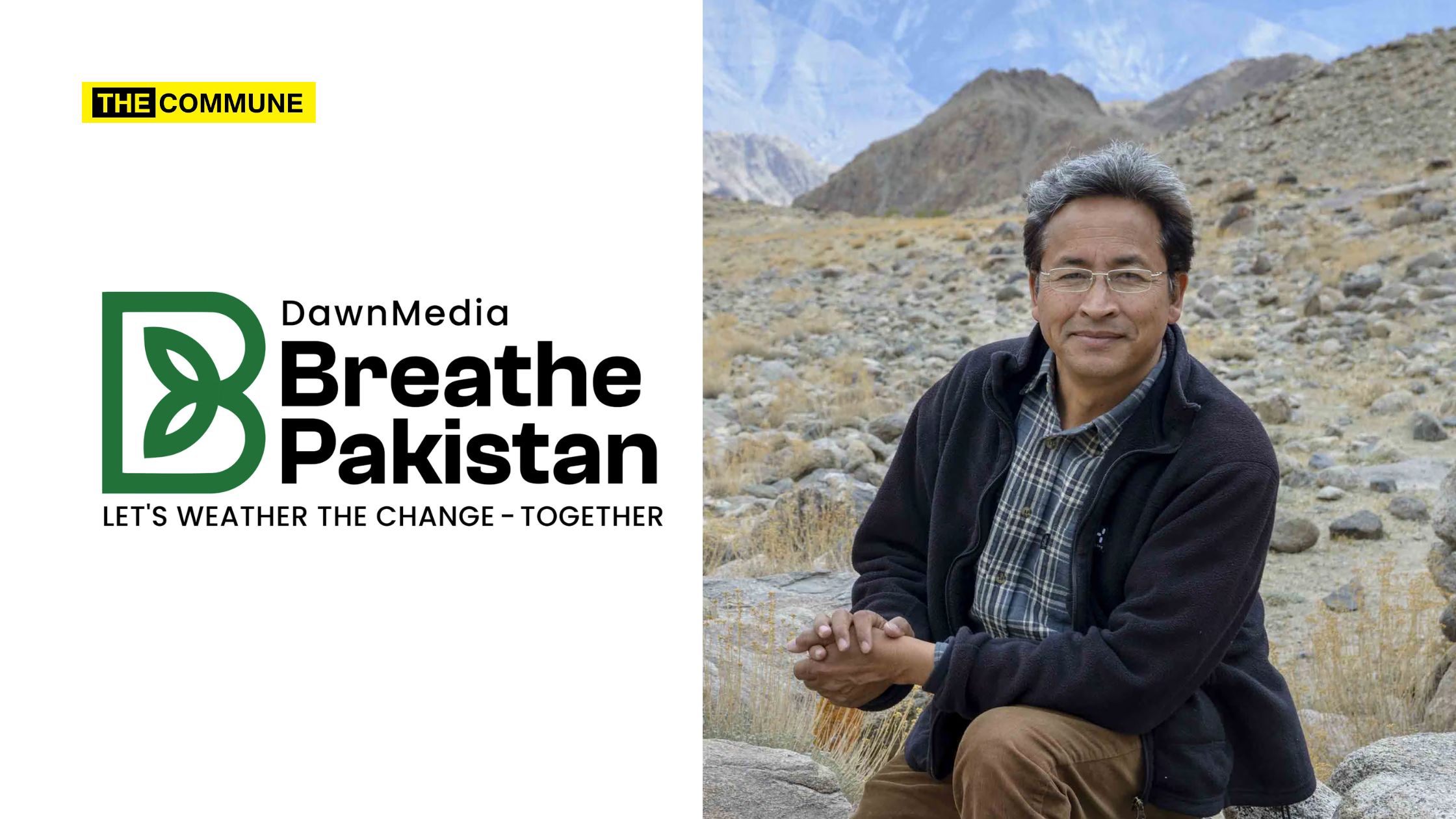
‘Climate’ Activist Sonam Wangchuk Who Made Derogatory Remarks About Lord Ram & Ma Sita Attends “Breathe Pakistan” Conference In Islamabad, Praises Pakistan’s Dawn Media

Sonam Wangchuk has been in the news every now and then. Last we heard; he was fasting unto death. But just a few days ago, that Wangchuk was attending a conference in Pakistan made the news.

Sonam Wangchuk participated in the ‘Breathe Pakistan’ climate conference in Islamabad, an event organized by Dawn Media to raise awareness about environmental challenges.

During the panel discussion on “Glacial Melt: A Sustainable Strategy for the Water Towers of South Asia,” Wangchuk reportedly stressed the need for urban populations to adopt simpler lifestyles in order to protect mountain ecosystems. He stated that people in cities should reduce their consumption levels so that those living in mountainous regions could sustain themselves without excessive environmental stress.

He also praised Pakistani media outlet, Dawn Media for taking the lead in addressing climate change and expressed hope that other media organizations, including those in India, would assume similar responsibilities. He said, “In Pakistan, I see Dawn Media is taking that responsibility as a champion of environment. I wish all countries and, in my country, and media house really take this responsibility like here.” 

Wangchuk reportedly spoke about the role of leadership in tackling climate change. While some world leaders continued to deny the issue, he is said to have acknowledged Indian Prime Minister Narendra Modi’s Mission Life initiative as a positive step towards encouraging sustainable living. He remarked that this was the kind of leadership expected from global figures, media houses, and celebrities to ensure a safer environment for people living in mountainous regions.

Who Is Sonam Wangchuk?

Ladakh-based alleged activist Sonam Wangchuk has often been in the news for his hunger strikes and more recently, he was on a hunger strike demanding Ladakh’s inclusion in the Sixth Schedule of the Indian Constitution for greater autonomy. However, the Delhi Police at that time detained him at the Singhu border (in October 2024.)

Wangchuk, often linked to the character of Rancho from 3 Idiots, comes from an influential political family. His father, Sonam Wangyal, was a Congress minister in J&K. Over the years, he received significant support from foreign organizations such as the Ford Foundation, Tata Trust, and Rockefeller Foundation. His wife, Rebecca Norman, an American educator with links to U.S. institutions, has also been a subject of scrutiny.

Wangchuk held various advisory roles under the Congress-led UPA government and collaborated with international NGOs. His work, including projects like Ice Stupas, gained Western media attention but faced skepticism from locals.

Despite initially supporting the repeal of Article 370, Wangchuk later opposed its aftermath, with Pakistan using his statements against India. His demands now include halting army construction in Ladakh for environmental reasons, a stance that has sparked controversy. Critics question his international affiliations and whether his activism aligns with India’s strategic interests.

In March 2024, he abused Lord Ram and Goddess Sita during an interview with NDTV. While criticizing the Modi government for not fulfilling its promise to include Ladakh in the Sixth Schedule, he compared the government’s actions to Lord Ram rescuing Sita from Ravan but then selling her in the open market. He said, “I see it in the way that they [Central government] turned out to be such Ram who freed Sita from Raavan but didn’t take her home rather they put her on sale in an open market. So like this, they have left Ladakh open for industrialists and mining lobbies without any protection [from the government],” 

He claimed that while Ladakh was freed from one problem, it was left vulnerable to industrialists and mining lobbies without government protection. His remarks drew widespread condemnation on social media for being derogatory toward Hindu deities.

Subscribe to our channels on Telegram, WhatsApp, and Instagram and get the best stories of the day delivered to you personally.
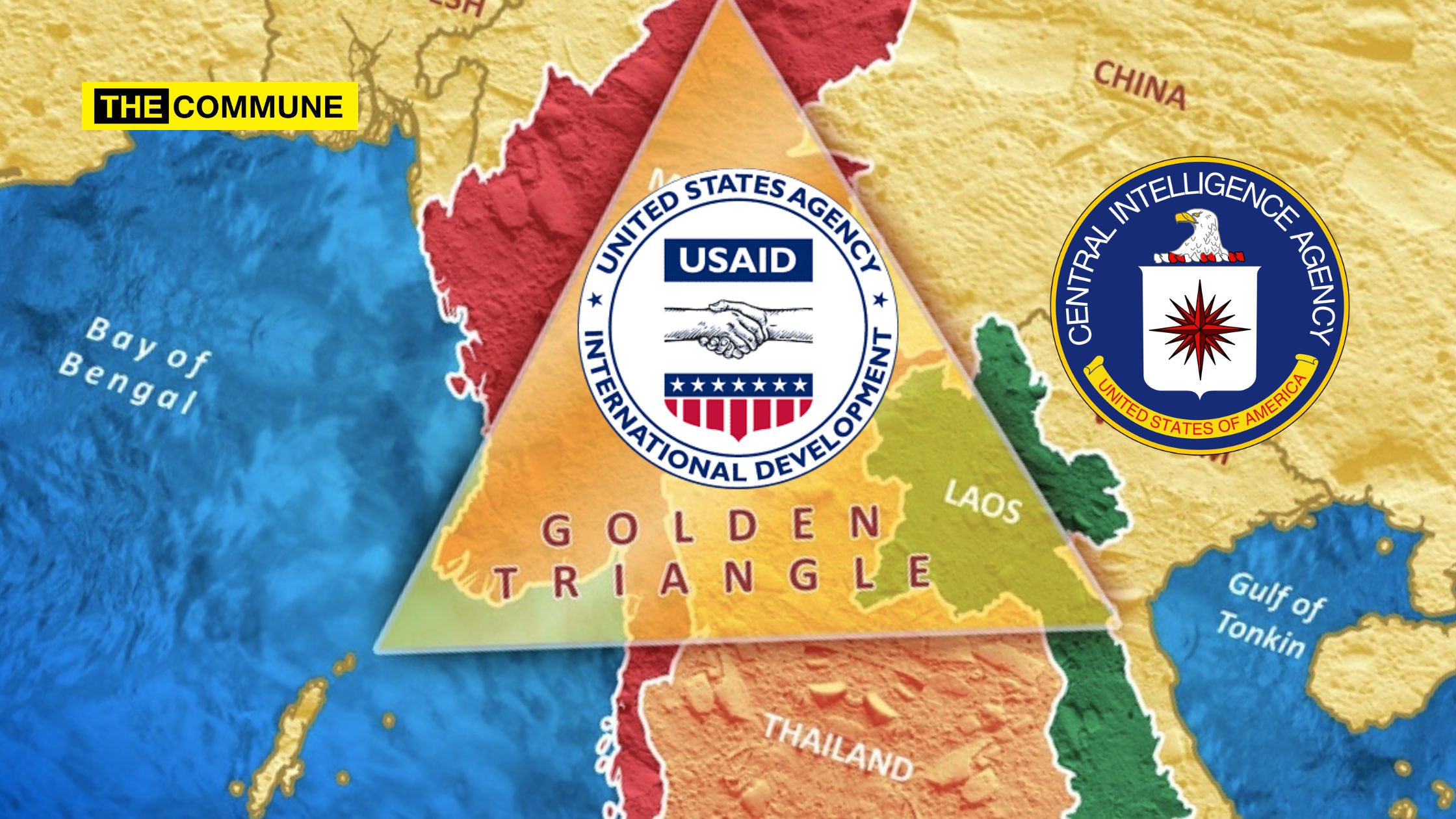
Is USAID A Spy Agency? The Truth About Its Covert Role In Global Destabilization & The Golden Triangle Drug Trade

The United States Agency for International Development (USAID) has long operated beyond its official mandate of humanitarian aid, frequently being linked to covert operations aimed at influencing foreign governments. Established in the early 1960s, USAID was ostensibly created to manage U.S. development assistance programs. However, behind this humanitarian facade, the agency has been accused of funding clandestine activities, facilitating regime change, and undermining sovereign nations.

Following Donald Trump’s inauguration as President, he appointed billionaire Elon Musk to lead the Department of Government Efficiency (DOGE) to streamline federal spending. Musk ultimately dismantled USAID, calling it a “criminal enterprise.” Since then, increased scrutiny has exposed how USAID and the U.S. State Department have historically engaged in destabilization efforts worldwide. As investigations continue, one of the most telling examples of these covert operations is the forgotten war in Laos, which reveals the deep state’s long-standing involvement in secretive military interventions and illicit activities.

The Covert War in Laos and the Birth of the Golden Triangle

During the height of the Cold War, the United States waged a covert war in Laos from 1964 to 1973 as part of its broader fight against communism. The conflict saw the Royal Laotian forces, CIA-trained guerrilla fighters, U.S.-funded Thai mercenaries, and American military personnel engaging in combat against North Vietnamese forces and the Pathet Lao, a communist insurgent group.

A critical element of this war was Operation Barrel Roll, an extensive aerial bombardment campaign. U.S. Air Force and Navy bombers dropped an estimated 260 million bombs on Laos—an equivalent of 100 bombs per resident. Since Laos was officially neutral in the Vietnam conflict, this military action was conducted in secrecy, violating the Geneva Conventions.

Although USAID was a civilian agency responsible for development aid, it played a far more sinister role in Laos, using humanitarian assistance as a cover to finance covert operations and guerrilla warfare in remote regions.

The Hmong (Meo) Insurgents: A CIA Proxy Army

The Hmong (Meo) people, an ethnic group originating from southern China, Thailand, and Laos, became key players in the U.S. covert war in Laos. Historically marginalized, the Hmong had little integration with the majority Buddhist Lao population, making them ideal recruits for a CIA-backed militia.

The U.S. had been involved in Vietnam for decades, countering communist influence, which had also spread into Laos. As the Royal Laotian Army struggled to combat North Vietnamese incursions and the Pathet Lao insurgency, the CIA saw an opportunity to exploit the Hmong people’s isolation and vulnerability.

Nearly 60% of Hmong adult males were enlisted into CIA-backed guerrilla forces. Declassified reports from the RAND Corporation (1972) describe how USAID funds, supposedly earmarked for refugee relief, were instead used to provide food security for the families of Hmong fighters—effectively serving as financial incentives for enlistment. USAID funds were also funneled into the construction of remote airstrips near the North Vietnamese border, further aiding covert military operations.

The Opium Trade and the Formation of the Golden Triangle

The opium trade had long been a tool of imperial control. During the 19th century, British and American traders flooded China with opium sourced from India, leading to the infamous Opium Wars. However, after India gained independence and Mao Zedong’s government cracked down on opium trafficking in China, the industry relocated to ungoverned regions in Southeast Asia, particularly the Laotian highlands, northern Thailand, and Burma (Myanmar).

The Hmong people had longstanding trade connections with Chinese smugglers and became key players in the cultivation of poppy for the opium trade. Triads and other criminal networks facilitated this illicit business, while CIA-backed warlords in Laos, such as General Vang Pao and General Ouane Rattikone, took control of drug production and trafficking.

With CIA assistance, opium was airlifted from remote Laotian airstrips—built with USAID funds—to processing centers in Saigon. From there, it was sold to U.S. troops stationed in Vietnam. By the late 1960s, nearly 10% of American servicemen in Vietnam were addicted to heroin, fueling a crisis back home.

CIA’s Involvement in Drug Trafficking

Colonial and royal regimes had historically leveraged the opium trade for financial gain, but during the Vietnam War, the CIA actively facilitated its expansion. Originally, the agency backed Kuomintang (KMT) forces who had fled to Burma after losing the Chinese Civil War. The KMT, rather than fighting to reclaim China, instead took control of opium production in the Shan hills and smuggled it into Thailand, further embedding drug trafficking into the region’s economy.

In Thailand, General Phao Sriyanonda, head of the Thai National Police, was propped up by the CIA and provided with military resources ostensibly to combat communism. However, he used these assets to turn Bangkok into a hub for global heroin distribution.

In Laos, CIA-linked groups transported opium via Air America, a covert airline used for U.S. operations in Southeast Asia. Reports surfaced that heroin laboratories were operating under the protection of Laotian military generals, with drugs being distributed to American troops and trafficked globally.

The War on Drugs and the Aftermath

By 1971, as heroin addiction among U.S. troops reached alarming levels, President Richard Nixon launched the War on Drugs, focusing on identifying and disrupting supply routes. The RAND Corporation’s assessment, though praising the effectiveness of tribal guerrilla forces, acknowledged that USAID funding for these programs was being scaled back by 1968.

With Nixon’s diplomatic outreach to China in 1972, Laos lost its strategic importance in the Cold War. After the U.S. withdrawal from Vietnam in 1975, American interest in Laos waned further. Because the U.S. intervention in Laos had always been classified, the conflict became a forgotten war in mainstream historical narratives.

However, the tactics developed in Laos—such as CIA-backed militias, funding insurgencies through drug profits, and using USAID as a financial cover—were later replicated in Colombia during the 1980s and Afghanistan in the 2000s.

Many former Hmong fighters were eventually resettled in the U.S. as refugees. Meanwhile, the Golden Triangle remains a global center for drug production, plagued by ethnic conflicts and controlled by criminal warlords.

(With Inputs From OpIndia)

Subscribe to our channels on TelegramWhatsApp, and Instagram and get the best stories of the day delivered to you personally.

Tamil Nadu’s Electricity Woes To Worsen As Central Warns Of Electricity Shortfall This Summer

Tamil Nadu is likely to face an electricity shortfall from March as peak power demand is expected to surpass 22,000 megawatts (MW) this summer, marking a 10% increase from last year’s record of 20,830 MW. The Union Ministry of Power has warned the Tamil Nadu Electricity Board (TNEB) about potential shortages, particularly in the evenings when demand is at its peak.

Projections indicate that the state will require an additional 3,810 MW in March, 4,697 MW in April, 3,472 MW in May, and 2,192 MW in June to meet demand. The state government has initiated measures such as short-term power purchases and inter-state power transfers to bridge the gap.

Despite Tamil Nadu’s reliance on solar power during the day, evening demand remains a challenge. To mitigate potential shortages, the state’s thermal power plants must operate at near-full capacity. However, the newly inaugurated 800MW North Chennai Super Critical Thermal Power Station (NCTPS-Stage III) is unlikely to contribute due to incomplete infrastructure work.

A senior official from the Tamil Nadu Power Generation Corporation Limited (TNPGCL) confirmed that the plant is still not commercially operational. Key infrastructure components, including wagon-loading facilities and fly ash ponds, remain unfinished, and a Rs 50 crore funding request is yet to be approved. Additionally, BHEL has not handed over the plant to TNPGCL as it has failed to achieve full capacity generation.

Compounding the delay, the plant is designed to run on imported coal, and arrangements for a steady fuel supply are still pending. Since its inauguration in March 2024, the plant has generated less than 1,000 million units, relying on limited coal or oil reserves.

Originally announced by former Chief Minister M. Karunanidhi in 2010, the project saw multiple delays. Boiler operations commenced in February 2021 under then-CM Edappadi K. Palaniswami, and full power generation was inaugurated by CM M.K. Stalin in March 2024. However, unresolved technical issues have prevented it from running at full capacity.

With power demand soaring due to summer heat and school examinations, the state government is under pressure to ensure an uninterrupted supply. The coming months will be crucial in determining whether Tamil Nadu can avoid power cuts amid the looming electricity shortfall.

Subscribe to our channels on Telegram, WhatsApp, and Instagram and get the best stories of the day delivered to you personally.
TN BJP Slams Dravidianist Media For False Propaganda, Exposes DMK Links Of Arrested Fraudster In Extortion & Cheating Case

The Tamil Nadu BJP has strongly denied allegations made by Dravidianist media, accusing them of pushing a narrative to tarnish the party’s image. The controversy stems from reports that a man, recently arrested for allegedly cheating multiple women and extorting money and jewelry using compromising images and videos, was linked to the BJP.

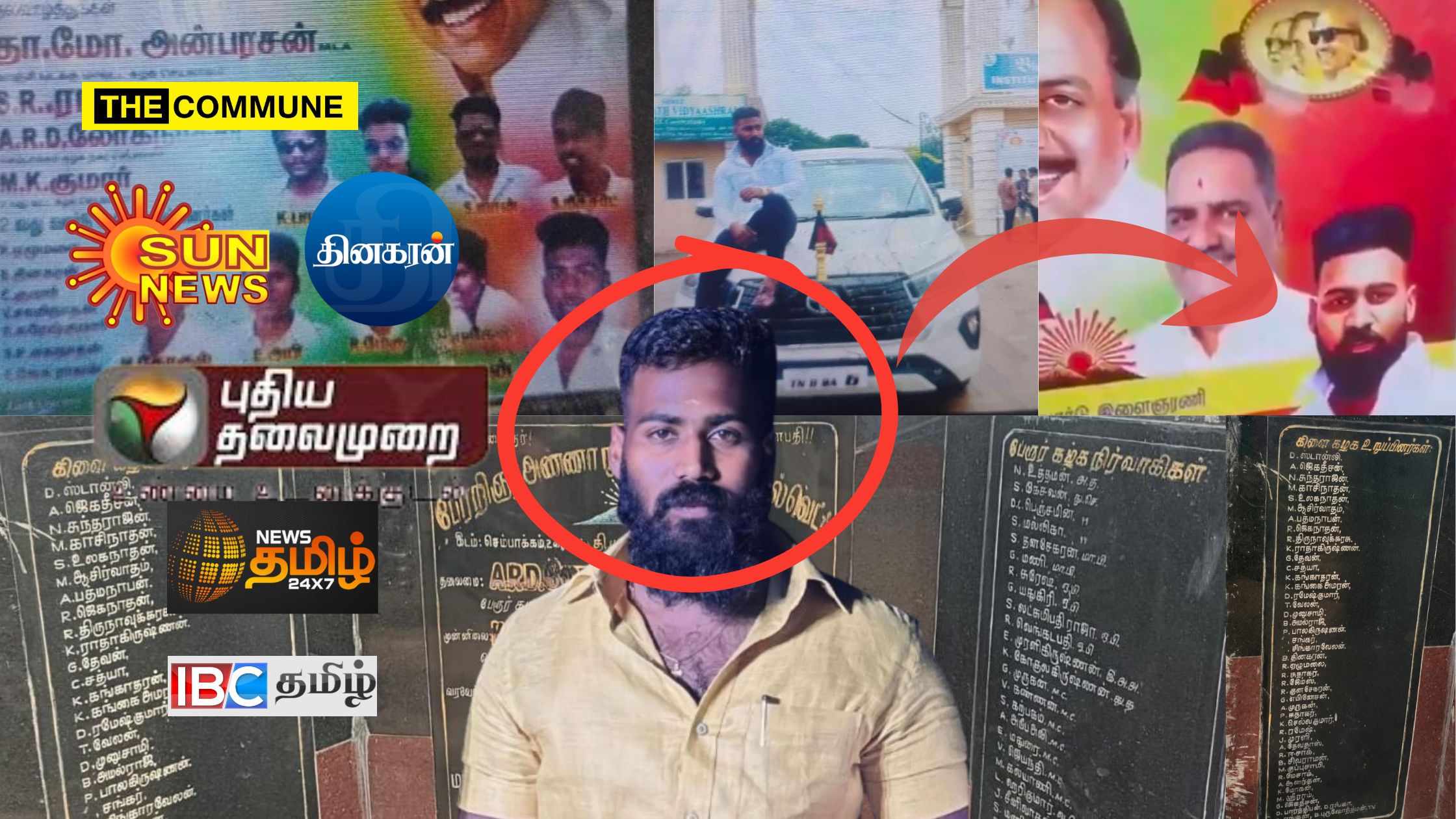
Tamil Nadu BJP State Secretary S.G. Suryah questioned the media’s credibility, demanding to know the source of their claim that the accused had ties to the party. All Dravidian-aligned media outlets unanimously reported that the accused, Liyas Tamilarasan, was the BJP Chengalpattu North District Youth Wing Secretary. In response to these allegations, the BJP countered the claims by releasing posters, banners, and social media account photos of the accused connected to the DMK to refute any connection with the party. The BJP also issued a warning against spreading such misleading narratives in the state.

SG Suryah, via his official X account, challenged the media’s claims, stating, “As of today, what evidence does the media have to prove that Liyas Tamilarasan is the BJP Youth Wing District Secretary? His father has been a long-standing DMK member. Liyas Tamilarasan joined the BJP from the DMK and Ambedkar Sena organizations two years ago. However, all his responsibilities in the BJP ended last September. We have verified that he has not even renewed his membership for the current term, which began in September 2024. Based on this, Liyas Tamilarasan is not even a basic member of the BJP as of today. Then how can he be referred to as the BJP District Secretary, as repeatedly claimed by Tamil Nadu media? Shouldn’t the media verify facts before publishing such news?”

Furthermore, Suryah shared images showing the accused, Liyas Tamilarasan, sitting on his vehicle with a DMK flag, along with posters linking him to the DMK. He also provided documentary proof that Liyas Tamilarasan’s father, R. Ezhumalai, holds a leadership position in the DMK. Additionally, he noted that R. Ezhumalai, a DMK executive, has been absconding since this morning. Concluding his remarks, Suryah criticized the Tamil media’s handling of the issue, calling it a “disappointing conduct by Tamil media—worst.”

The Dravidian-aligned media outlets collectively propagated the false narrative that the accused, Liyas Tamilarasan, was a BJP member, despite evidence proving otherwise.

Liyas Tamilarasan, a 24-year-old law student from Sembakkam, Thiru.V.Ka. Nagar, accused of allegedly cheating multiple women and extorting money and jewelry using compromising images and videos. Since 2018, he had been in a relationship with a 22-year-old woman, whom he had introduced to his parents under the pretense of a future marriage.

In February 2022, he reportedly took the woman to his house and engaged in sexual activities with her, allegedly recording videos without her consent. Over time, he continued the relationship, taking her to different places while secretly filming intimate moments. It is alleged that he also exploited her financially, obtaining approximately ₹20 lakhs and around 20 pieces of jewelry.

When the woman later urged him to fulfill his promise of marriage, he refused and allegedly threatened to release the videos online. Upon checking his Instagram account, she discovered that he had been involved with multiple women, using similar tactics to deceive them into giving him money and valuables. Realizing the extent of his actions, she lodged a complaint against him at the Selaiyur All Women’s Police Station.

Following the complaint, police launched an investigation, leading to his arrest. Authorities reportedly discovered multiple videos on his phone featuring intimate encounters with several women. He was subsequently presented in court and remanded into custody. Reports suggest that another woman has since come forward with a similar complaint, and it is anticipated that more victims may file cases against him.

Additionally, allegations have surfaced against Inspector Rakhumathi of the All Women’s Police Station, claiming she attempted to shield Liyas Tamilarasan by delaying legal action and withholding case details from the media. It is also alleged that she negotiated with the accused to suppress news coverage of the case.

Leveraging the fact that Liyas Tamilarasan was previously associated with the BJP, the DMK IT Wing and Dravidian media launched a campaign to malign the party’s reputation. This comes at a time when the BJP is rapidly gaining traction and increasing its influence in the state.

Subscribe to our channels on TelegramWhatsApp, and Instagram and get the best stories of the day delivered to you personally.

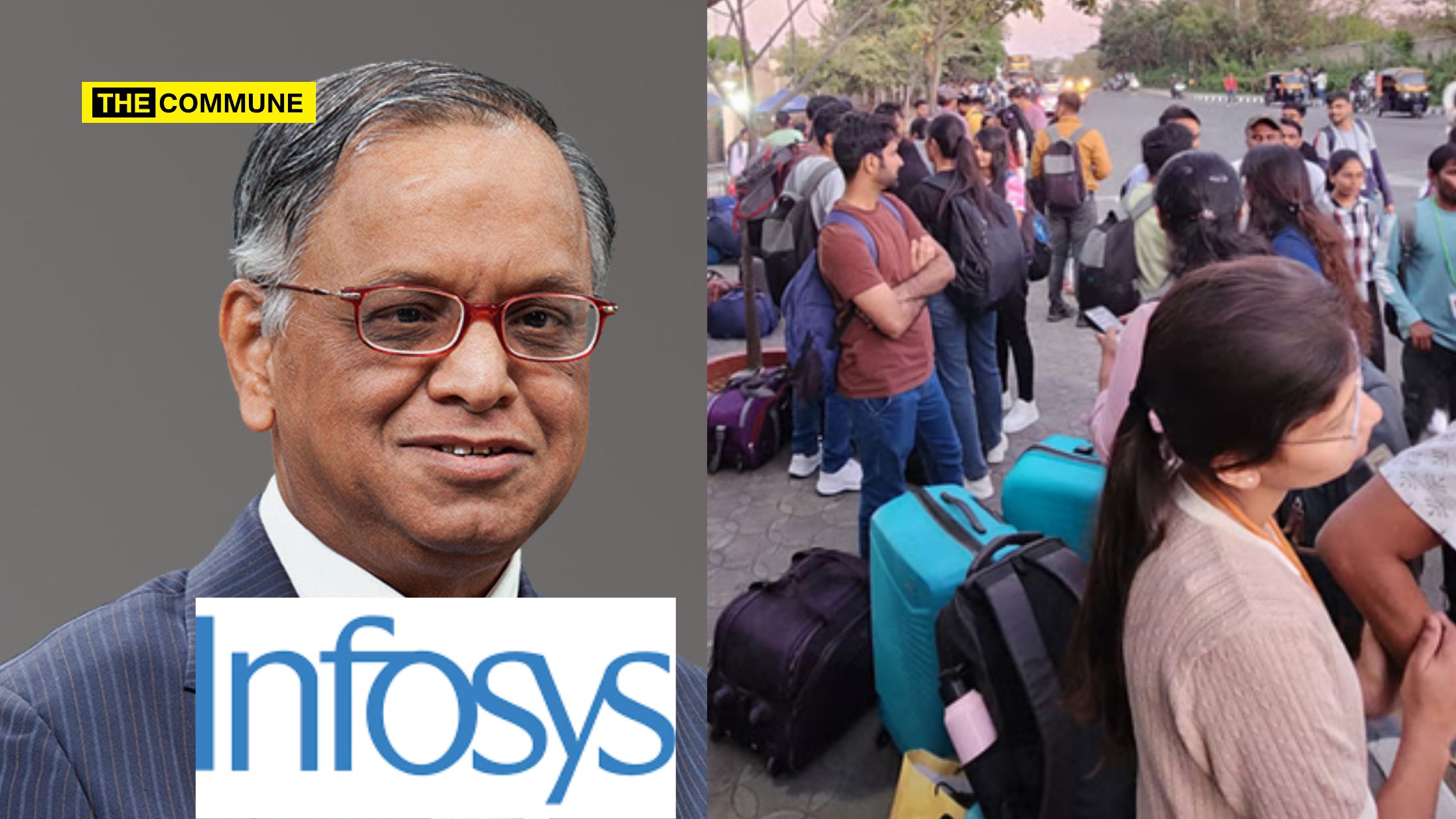
2.5 Years After Making Them Wait, Infosys Fires 400 Trainees Unprofessionally, Its Co-Founder Narayanmurthy Wants People To Work 70 Hrs A Week

Infosys, India’s second-largest IT services firm, has come under heavy criticism for its recent mass layoffs at its Mysuru campus, where around 400 freshers were unceremoniously dismissed after failing internal assessments. Many of these trainees had waited over two and a half years after receiving their offer letters, only to be terminated within months of joining. It is noteworthy that Infosys co-founder Narayana Murthy continues to advocate for a 70-hour work week for young Indians, exposing the hypocrisy at the heart of the IT industry’s treatment of employees.

Cruel Layoffs At Infosys

On 7 February 2025, freshers undergoing training at Infosys’ Mysuru campus were called in batches, handed termination notices, and ordered to vacate the premises by 6 PM on the same day. Trainees pleaded with officials for more time, with some breaking down in tears, but the company refused to budge. The dismissals left hundreds scrambling for last-minute transport to their hometowns, many unsure of how to explain the sudden job loss to their families.

The mass firing was reportedly carried out in a manner that suggests Infosys wanted to keep it hidden. Terminated trainees were huddled into a room guarded by security and bouncers, while buses were positioned to shield the area from other employees and visiting US clients. The company had also preemptively warned the trainees via email to maintain confidentiality about the proceedings.

Adding to the distress, many of those fired had spent years preparing for this role. Infosys had issued offer letters as far back as 2022 but delayed onboarding due to economic downturns. Once training finally began, the company introduced a drastically revamped syllabus with unrealistic expectations. The failure rate shot up as the curriculum was expanded while the time allotted to complete it was slashed. Trainees alleged that the tests were designed to fail them in large numbers.

Infosys justified the layoffs by citing its long-standing policy of requiring freshers to clear internal assessments within three attempts. However, reports suggest that the 2024 batch faced a significantly tougher evaluation process compared to previous years, making it nearly impossible for many to pass. Earlier, those who failed could still proceed to the next training phase, but the new system ensured immediate terminations.

Industry-Wide Concerns And Calls For Action

Infosys’ mass layoffs have sparked outrage among IT professionals and labor rights groups. The Nascent Information Technology Employees Senate (NITES), an IT employees’ union, has slammed the company for its unethical conduct. The union has accused Infosys of forcing fired employees to sign confidentiality agreements, preventing them from speaking out.

There are also allegations that security personnel and bouncers were deployed to intimidate the trainees. Reports suggest that affected employees were even restricted from using their phones, cutting them off from external help. In response, NITES has vowed to escalate the matter to the Ministry of Labour and Employment, demanding government intervention to hold Infosys accountable for its treatment of freshers.

Meanwhile, thousands of other trainees still undergoing training at Infosys fear they may be next. Over 4,500 trainees remain in limbo, uncertain whether they will clear the company’s arbitrarily toughened evaluation process.

Infosys’ handling of freshers is a stark example of how Indian IT firms treat their employees—expendable when demand slows, disposable when they don’t meet ever-changing expectations. The same companies that tout “high-performance culture” and “rigorous training” conveniently forget their own role in creating unrealistic workloads.

Narayana Murthy Calls For & Defends 70 Hr Work Week

While Infosys ruthlessly discards freshers after making them wait for years, its co-founder Narayana Murthy continues to push for extreme work hours. Murthy has repeatedly urged young Indians to work 70-hour weeks, claiming that hard work is the only way for India to achieve economic prosperity.

His comments ignore the reality of India’s labor market, where IT employees are increasingly facing job insecurity. He has also argued that the government should stay out of business, despite Infosys benefiting from India’s economic policies for decades. Murthy’s stance exposes a glaring contradiction—while he advocates for endless toil from young professionals, his own company has no hesitation in throwing them out without notice or support.

His argument that India must follow China’s work culture also falls apart under scrutiny. Data shows that longer working hours do not necessarily lead to higher economic prosperity. Countries with strong worker protections and better work-life balance often outperform nations where employees are overworked. Murthy’s obsession with grueling work weeks fails to address the root issues of India’s employment crisis, including mass layoffs like those at Infosys.

(With inputs from Money Control)

Subscribe to our channels on Telegram, WhatsApp, and Instagram and get the best stories of the day delivered to you personally.
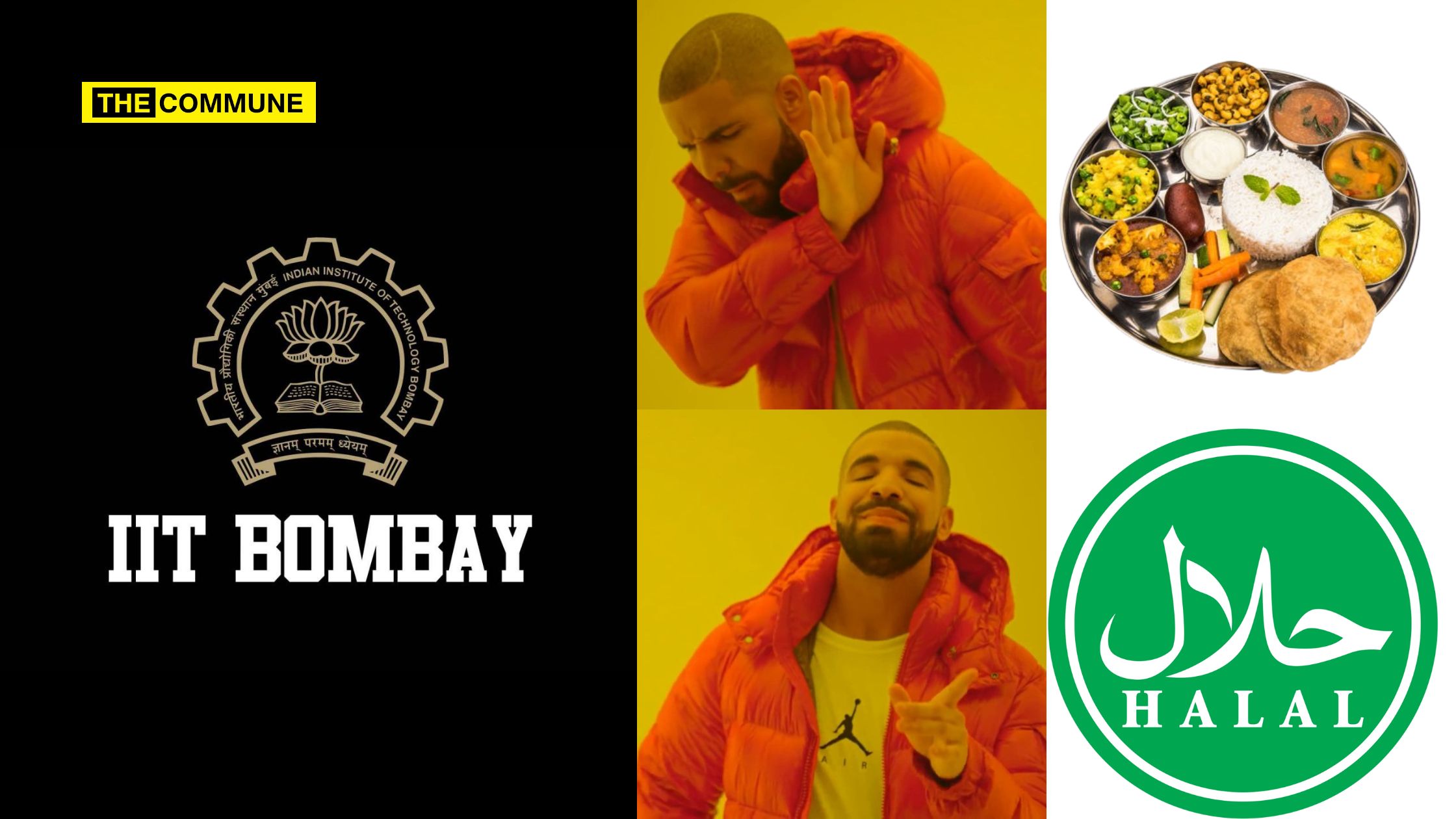
IIT Bombay’s Humanities Dept’s Contradictory Stance: Halal Meals Welcomed For Ramadan, Vegetarian Tables Rejected As ‘Casteist’

The Indian Institute of Technology Bombay (IIT-B) is facing criticism over its contradictory stance on food segregation after the administration was seen facilitating elaborate meal arrangements for Ramadan while previouslyrefusingits approval for vegetarian-only tables, calling itexclusionary and casteist.”

An internal email sent by the General Secretary (Health Advisory HA) on behalf of “Ramadan volunteers” informed students about Sehri (pre-dawn meal) arrangements for those observing the fast. Hostels were divided into zones for easy access, and meals would be delivered to female hostels based on headcount. Students interested in availing of the facility were asked to register.

However, this move has reignited accusations of selective religious favoritism. Critics pointed out that IIT-B had recently faced criticism for a decision to allocate just a few tables for vegetarian students, following intense backlash from leftist student groups and faculty members.

In 2023, posters markingvegetarians onlyseating areas appeared in a hostel mess, triggering outrage from the Ambedkar Periyar Phule Study Circle (APPSC). The posters were torn down, and RTI inquiries later confirmed that IIT-B has no official policy allowing separate eating spaces. The administration followed up with a warning email, declaring that no student had the right to designate areas for specific food preferences.

Even though the vegetarian-only tables were open to all castes and religions, the move was labeled discriminatoryanda Brahminical imposition.Some activist students even went as far as to deliberately consume non-vegetarian food at those tables in protest.

Yet, the same faculty and student groups that opposed vegetarian tables have raised no objections to Ramadan-specific dining arrangements. This has led to allegations that IIT-B selectively enforces its so-called secular principles—opposing dietary preferences linked to Hindu and Jain traditions while bending over backward to accommodate Islamic practices.

This extends beyond seating arrangements. While vegetarian tables were deemed casteist, halal food remains unquestioned on campus. Critics argue that if separate tables for vegetarians were seen as divisive, then so should halal-only meat, which actively excludes non-Muslim butchers. However, IIT-B faculty and leftist student groups remain silent on this inconsistency.

One of those leftistprofessorswho was at the forefront of these anti-Hindu/Jain activities was Suryakant Waghmore.

Now, however, with Ramadan meal arrangements being officially coordinated by the administration, critics ask why IIT Bombay applies different rules depending on the religion in question.

Despite the growing criticism, Akshay Sawant, a representative of the Ambedkar Periyar Phule Study Circle (APPSC) at IIT-B, dismissed the criticism, stated to The Free Press Journal that the campus celebrates numerous Hindu festivals, including Holi, Diwali, and Ganesh Chaturthi, with enthusiasm. He labeled the allegations as baseless and an attempt to undermine the department’s liberal environment.

Subscribe to our channels on Telegram, WhatsApp, and Instagram and get the best stories of the day delivered to you personally.
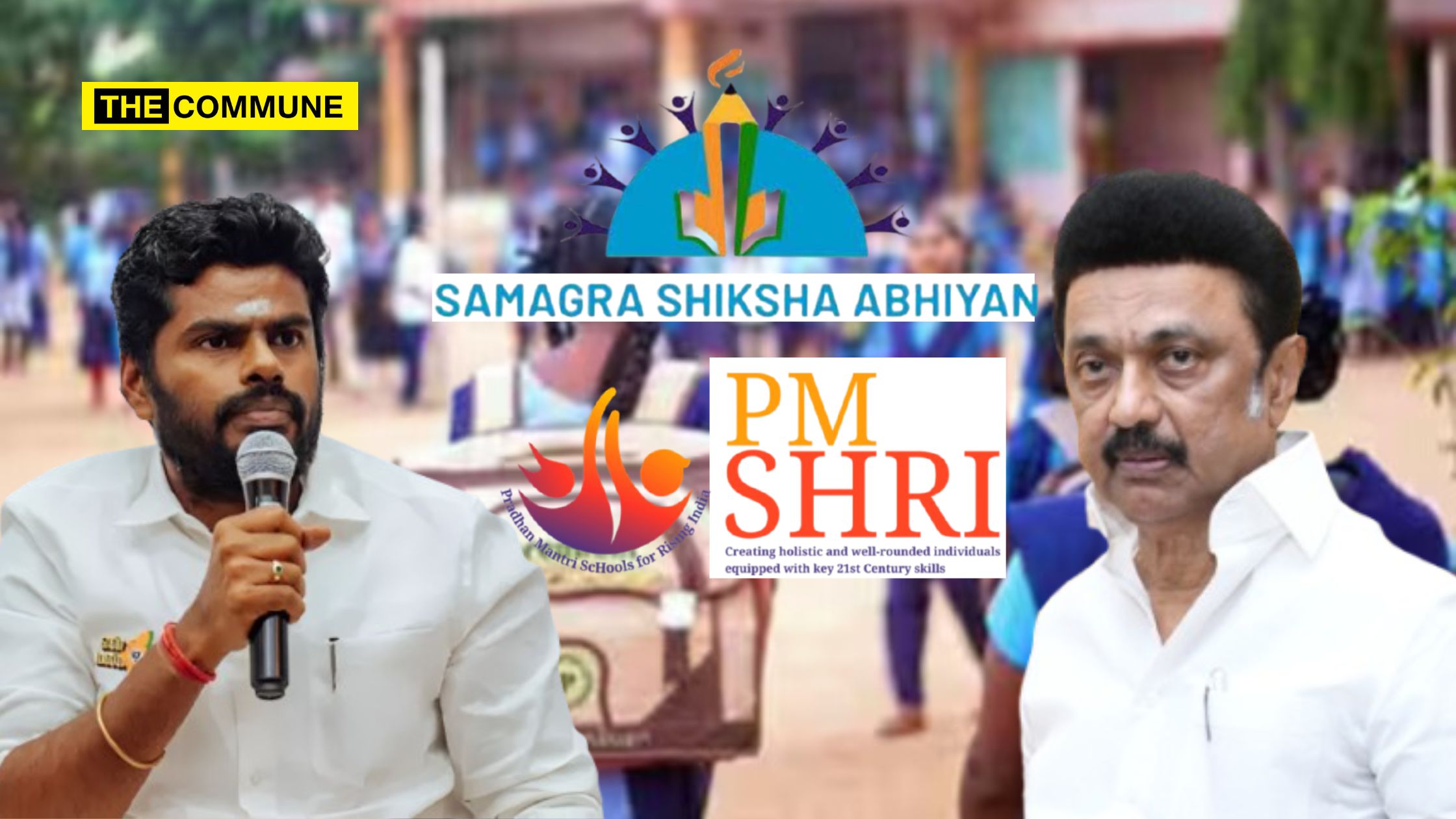
“How Can Centre Fund An Unimplemented Scheme?” – BJP TN Chief Annamalai Rebuts TN CM Stalin’s False Claims On SSA & PM SHRI Schemes, Slams DMK For ‘Degrading’ Quality Of Learning

Tamil Nadu BJP chief K. Annamalai has countered Chief Minister M.K. Stalin’s claims that the central government is treating the state unfairly by diverting its education funds to other states under the Samagra Shiksha Abhiyan (SSA) and PM Shri schemes. Annamalai questioned the DMK government’s stance, arguing that the state had not properly implemented these schemes while still demanding funds for them. He asked, “How do you expect the Centre to pay the State for a programme that has not been implemented?”

In a statement, Annamalai pointed out that the DMK government had assured in March last year that it would roll out all aspects of Samagra Shiksha, including PM Shri, from the start of the academic year. He directly questioned Stalin, asking whether the government had fulfilled this commitment.

Taking to his official social media account, Annamalai criticized the ruling DMK, claiming that Tamil Nadu has fallen behind in numeracy and basic language proficiency. He accused Stalin and his administration of degrading the quality of education by politicizing the sector, denying students in Tamil Nadu equal opportunities for world-class learning.

Furthermore, he dismissed the DMK’s allegation that the Centre had diverted Tamil Nadu’s education funds, stating that 35 out of 36 states and union territories have yet to receive their SSA allocations for 2024-25. He accused the DMK of spreading falsehoods instead of taking responsibility for its failure to implement the schemes effectively.

Annamalai via his official X account stated, TN has lost its sheen and is at the bottom of the table in numeracy and basic language proficiency (Tamil). Thiru @mkstalin and his coterie should be ashamed of bringing down the quality of education, politicising Education, and depriving the Children of Tamil Nadu of equal opportunities and world-class education. The TN govt committed in March last year that it will implement all aspects of Samagra Shiksha, including PM Shri, from the beginning of this academic year. Did you or did you not make this commitment, Thiru @mkstalin? How do you expect the Centre to pay the State for a programme that is not implemented? As per the recent fund releases to states under SSA, 35 of 36 States/UTs are yet to receive the allocated amount for the year 2024-25. Do you have no shame in spreading a lie that the funds allocated to TN are diverted to other states? Tamil Nadu BJP chief K Annamalai has issued a rebuttal to Chief Minister MK Stalin over the DMK’s usual rehetoric blamming the central government has seeing the state with a step motherly attitude by diverting the states education fund to other states for samagra Shiksha Abhiyan (SSA) and PM Shri schemes, without implementing the schemes in thestatw but asking funds for it, in this backdrop Annamalai questioned whether these schees were implemented as promised slammed the politics of the DMK ted to release funds for a programme that has not been implemented by the State government. “How do you expect the Centre to pay the State for a programme that is not implemented?”

This rebuttal from Tamil Nadu BJP Chief K. Annamalai comes in response to Chief Minister M.K. Stalin’s accusations against the central government. Stalin had claimed that the BJP-led Union government was displaying blatant bias against Tamil Nadu, stating, The Union BJP Government’s unjust attitude against Tamil Nadu knows no bounds! For rejecting the imposition of #NEP2020 and the three-language policy, they resorted to open blackmail, snatching away ₹2,152 crore meant for Tamil Nadu’s students and now they have handed it over to other states. This is nothing short of coercion, punishing our students for standing up for their rights. No government in India’s history has been so ruthless to strangle access to education for political revenge against a State. The BJP has once again proven itself to be the face of injustice and hatred towards Tamil Nadu and its people!” 

Annamalai, in his rebuttal, refuted these claims, accusing the DMK of spreading misinformation and failing to implement the central education schemes while blaming the Centre for fund allocation issues.

Earlier, on 15 March 2024, Shiv Das Meena, the Chief Secretary of the School Education Department, had written to the Ministry of Education confirming that Tamil Nadu would soon implement the central education schemes and requested the release of funds. However, while other states and union territories went ahead with the implementation, the Tamil Nadu government, under the DMK, failed to do so. As a result, the central government was not obligated to release funds for the schemes.

In his letter, Shiv Das Meena stated that Tamil Nadu has always been committed to enhancing the quality of education by introducing various impactful initiatives. Referring to a prior communication from the Ministry dated 23 February 2024, he affirmed the state’s willingness to sign the MoU for establishing PM SHRI schools. He mentioned that a State Level Committee, led by the School Education Secretary, had been formed to oversee the process, and based on its recommendations, Tamil Nadu would sign the MoU before the start of the 2024-25 academic year. He also requested the release of the third and fourth installments of funds for the financial year 2023-24.

Subscribe to our channels on TelegramWhatsApp, and Instagram and get the best stories of the day delivered to you personally.
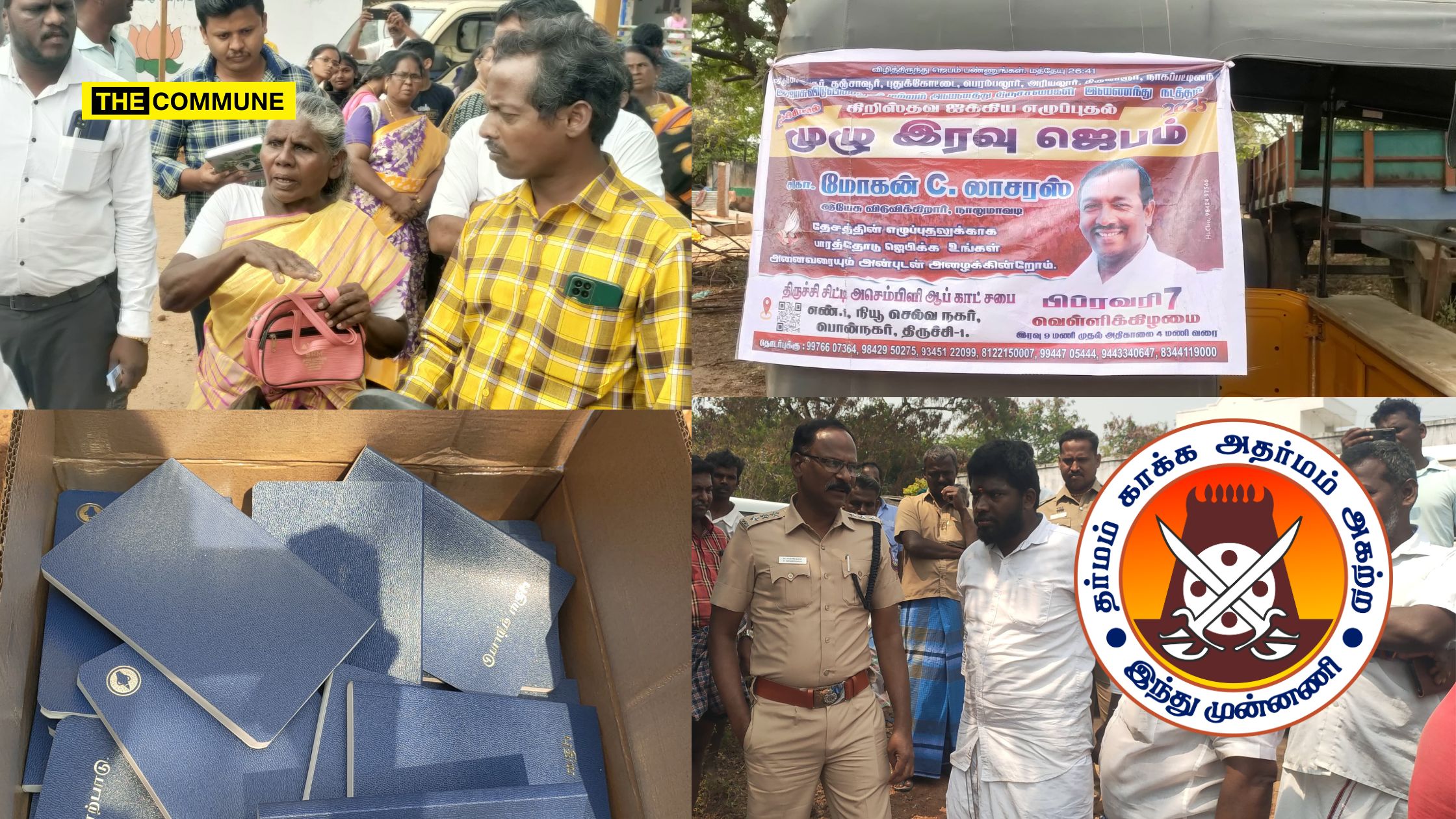
Hindu Munnani Foils Religious Conversions In Trichy And Tirupur Districts

In Vellaiyammalpatty, located in the Manapparai division of Tiruchirappalli district, an alleged attempt at religious conversion was halted when a group of 28 individuals distributing Bibles to the public in rural areas was stopped by members of the Hindu Munnani and handed over to the police.

According to reports, the group was engaged in distributing religious materials when local Hindu activists intervened and informed law enforcement authorities. The individuals were subsequently taken into police custody for further inquiry.

Authorities have yet to issue an official statement regarding the incident.

In another incident at Vellakovil, located in Tiruppur district‘s Palaniswami Nagar, approximately 22 individuals from Coimbatore were reportedly entering the village to engage in proselytization.

Coming to know of this, local Hindu Munnani leaders intervened and subsequently turned the proselytizing individuals over to the police.

In January 2025, the Hindu Munnani successfully thwarted an attempt by Christian missionaries to carry out mass conversions through a door-to-door campaign in the villages of Tiruchuli Union, including Kulasekaranallur, Konapanendal, Manjampatti, and Madathupatti in Virudhunagar district.

A group of missionaries arrived in a van from Tirunelveli and began their conversion campaign, causing disturbances among the local villagers. The missionaries claimed they were spreading the word of the Lord, but their actions intruded on the privacy of the residents and created unrest. Annoyed villagers, upon realizing the nature of the campaign, alerted Thangaraj, the leader of the Hindu Munnani Tiruchuli Union.

In response, Hindu Munnani members, along with local residents, arrived at the scene and, in coordination with the Tiruchuli police, successfully thwarted the missionaries’ efforts, ensuring the group was handed over to the Sub-Inspector for further action.

Subscribe to our channels on Telegram, WhatsApp, and Instagram and get the best stories of the day delivered to you personally.