Home Blog Page 437

Karnataka High Court Quashes Congress Govt’s Move To Withdraw 43 Criminal Cases, Including Hubballi Riot Case Involving Islamist Mobs

karnataka high court congress govt hubbali

The Karnataka High Court on 29 May 2025 struck down the state government’s decision to withdraw 43 criminal cases, including those related to the 2022 Hubballi police station riots, declaring the move “null and void from inception.”

A division bench comprising Chief Justice N.V. Anjaria and Justice K.V. Aravind delivered the ruling in response to a Public Interest Litigation (PIL) filed by advocate Girish Bharadwaj. The PIL challenged the legality of the government’s decision, issued through a Government Order (GO), to direct public prosecutors to withdraw specific cases.

The bench held that the government lacked the authority to unilaterally instruct prosecutors to drop criminal proceedings, especially in matters involving serious charges such as rioting, attempted murder, and assault on police personnel.

Among the 43 cases listed for withdrawal were those against Kannada activists, farmer leaders, and individuals accused in the Hubballi riot incident. The case, initiated in October 2022, involves several leaders from the All India Majlis-e-Ittehadul Muslimeen (AIMIM), including Mohammed Arif, who are alleged to have mobilized a large crowd of Muslims outside the Old Hubli police station. The gathering was reportedly in reaction to a social media post by Abhishek Hiremath, which was perceived as offensive to Islamic religious sentiments.

The court agreed with the petitioner’s contention that Section 321 of the Code of Criminal Procedure (CrPC) empowers public prosecutors to decide whether to withdraw a case, but only after independent assessment and with the court’s consent—not on government instruction alone.

Bharadwaj further argued that the Law Department, the Government Litigations Department, and the Directorate of Prosecution had all opposed the withdrawal of several of the cases, citing their serious nature.

Highlighting possible misuse of executive power, the PIL alleged that the cases selected for withdrawal were “cherry-picked” and that several individuals named in them were politically influential, including former ministers, legislators, and heads of major organisations.

With the High Court setting aside the GO, all 43 criminal cases will now proceed in court as originally filed, effectively reversing the state’s attempt to quash them.

(With inputs from Madhyamam Online)

Subscribe to our channels on Telegram, WhatsApp, and Instagram and get the best stories of the day delivered to you personally.
RTI Reply Reveals No Official Record Of Surgical Strikes Under UPA Government

manmohan singh sonia gandhi upa surgical strikes rti congress terror

The Ministry of Defence (MoD) has stated that it has no information regarding any surgical strikes conducted by the Indian Army prior to 2016, directly contradicting repeated claims by Congress leaders that multiple such operations were carried out during the UPA regime.

In response to a Right to Information (RTI) query filed by Jammu-based activist Rohit Chaudhary, the MoD—through the Directorate General of Military Operations (DGMO)—replied that it only has a record of one surgical strike conducted along the Line of Control (LoC) on 29 September 2016, following the Uri terror attack in Kashmir.

The RTI, filed in 2018, specifically sought details of surgical strikes conducted between 2004 and 2014. In its reply, the MoD clearly stated that it holds no data on surgical strikes from before 2016. The response has renewed the political debate over the authenticity of Congress’s claims regarding military action during its tenure.

“This clearly proves that the Congress party was lying,” activist Rohit Chaudhary told India Today TV, accusing the party of misleading the public with unverified claims.

The disclosure comes amid an intensifying political battle between the Bharatiya Janata Party (BJP) and the Congress over national security and the politicization of military operations. Congress has consistently maintained that it conducted at least six surgical strikes during the UPA’s tenure, though it chose not to publicize them.

In response to BJP’s criticism, Congress president Rahul Gandhi recently defended the armed forces and accused Prime Minister Narendra Modi of insulting the military. “The Army isn’t Modi’s personal property,” Gandhi said. “Surgical strikes were done by the Indian Army, not by the Congress. When he says they were like video games, he insults the Indian Army. The records are available.”

Congress leader Kapil Sibal also reiterated that surgical strikes took place during the UPA government, citing “Operation Ginger” in 2011 as an example. “Surgical strikes are meant to secure our country and borders—not for celebration,” Sibal said. “Manmohan Singh never boasted about them. But PM Modi turns these into political events while soldiers continue to die.”

The BJP, however, has repeatedly dismissed the Congress’s claims, emphasizing that the 2016 operation was the first publicly acknowledged and documented surgical strike by India in response to cross-border terrorism.

Congress Reiterates Surgical Strikes Claim

On 29 May 2025, the Congress party reiterated its claim that six surgical strikes were carried out during the tenure of the Manmohan Singh-led UPA government, while accusing the BJP of exploiting military operations for political advantage.

In a post on X, the Congress shared a list of what it described as six UPA-era “surgical strikes,” reaffirming that the party has never used such operations for electoral mileage or political messaging.

The party referred to a press conference it held in 2019, during which these strikes were allegedly first publicly listed. Congress leaders emphasized that while the UPA government authorized strategic military responses when required, it refrained from publicizing them or turning them into political spectacles.

The statement comes amid renewed political sparring over the issue, following the Ministry of Defence’s recent RTI response stating that it has no records of surgical strikes prior to the 2016 operation conducted after the Uri attack.

Subscribe to our channels on Telegram, WhatsApp, and Instagram and get the best stories of the day delivered to you personally.
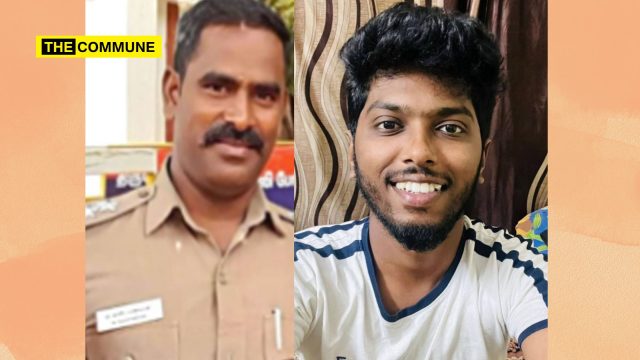
AIADMK Pollachi MLA V. Jayaraman, Son File ₹1 Crore Defamation Suit Against YouTube Channels Over Assault Case Allegations

pollachi jayaraman mla youtube channel defamation suit

AIADMK Pollachi MLA V. Jayaraman who has also served as the Tamil Nadu Deputy Speaker earlier, along with his son Pravin Jayaraman, has filed a civil defamation suit in the Madras High Court seeking ₹1 crore in damages from eight YouTube channels and three guest speakers for allegedly linking them to the infamous Pollachi serial sexual assault case.

Justice Senthilkumar Ramamoorthy heard the matter on 29 May 2025 and adjourned it for a week, following a request from a junior counsel appearing on behalf of the plaintiffs. The judge also took on record a submission by senior advocate P.T. Perumal, who informed the court that he would be representing journalist and publisher Nakheeran Gopal, the first defendant in the case.

In their suit, the father and son not only seek damages but also a permanent injunction to restrain the defendants from making or publishing any statements—directly or through innuendos—that connect them to the sexual assault case. Additionally, they have requested the court to direct the defendants to bear the legal costs incurred in filing the present suit.

The plaintiffs have also filed two interim applications: one seeking an immediate order restraining the YouTube channels and speakers from continuing to circulate content implicating them in the case, and another requesting that existing videos be taken down.

According to the suit, the contentious videos were published on multiple platforms over three consecutive days in May. These include videos uploaded on 13 May 2025, by Nakheeran TV, AranSei, Jeeva Today, and Jambavan TV; on 14 May 2025 by Galatta Voice and The Debate; and on 15 May 2025 by Tamil Nadu Now and IBC Tamil.

The legal action follows a verdict delivered by a Mahila Court in Coimbatore on 13 May 2025, in which nine individuals were sentenced to life imprisonment after being found guilty in the Pollachi sexual assault case.

The next hearing in the civil defamation suit is scheduled for next week.

(With inputs from The Hindu)

Subscribe to our channels on Telegram, WhatsApp, and Instagram and get the best stories of the day delivered to you personally.
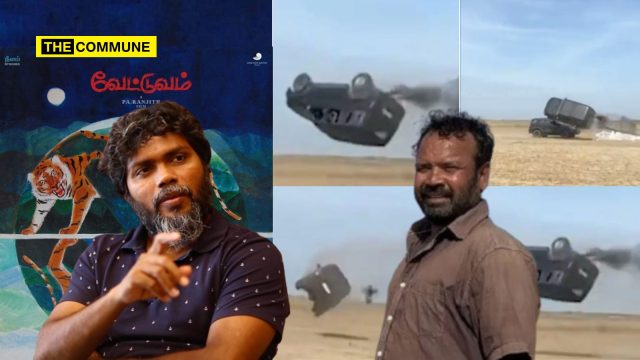
DMK Stooge Actor Kamal Haasan Who Is Releasing His Film Thug Life In Hindi Goes On A Tirade Against ‘North’

Full-time actor and part-time politician Kamal Haasan has found himself at the center of a new controversy after stating at a public event in Chennai that, Kannada originated from Tamil.” The comment sparked strong reactions, particularly from Karnataka, where political leaders and the public alike condemned the remark as insensitive and historically inaccurate.

Responding to the backlash, Haasan attempted to clarify his statement, calling it an expression of affection rather than a definitive claim. He urged that complex and sensitive issues such as language origins should be left to experts in the field.

“What I said was out of love, and a lot of historians have taught me language history. I didn’t mean anything,” Haasan explained. He acknowledged that political figures, including himself, lack the academic background to make authoritative statements on linguistic history and should defer to scholars, archaeologists, and linguists for such discussions.

Haasan also cited Tamil Nadu’s inclusive political past, noting that leaders of various ethnic and linguistic backgrounds—such as MG Ramachandran (a Menon), Omandur Ramasamy Reddiyar (a Reddy), M. Karunanidhi (a Tamil), and J. Jayalalithaa (a Kannadiga Iyengar)—have all served as Chief Ministers. “This state has never been narrow in its outlook,” he said.

He added, “So the people will take care of Thug Life, Kamal Haasan and all these controversies. Politicians are not qualified to talk about language, they don’t have the education enough to talk about it, that includes me. So let’s leave all these very in-depth discussions to historians, archaeologists and language experts. Both those who criticize me for this statement of love, I spoke to Mr Shivanna, his father is like my father, elder brother, whatever you call it, we are a family, and so are the languages. If you look at it from the northern point of view, yes what they say, according to them is right. If you look at it from ‘then-Kumari’, then what I said is right. There is a third angle to it, that is what I said, the scholars and language experts, they will say both are right, but they must decide where they want to belong, with their family or the languages that came from the north. That’s up to you; it’s a democratic country. This is not an answer, this is an explanation. Love will never apologize, thank you.”

This comes at a time when Kamal Haasan is also planning to release the film Thug Life in Hindi!

The fallout from Haasan’s initial remarks was swift. Karnataka Chief Minister Siddaramaiah criticized him, saying the statement ignored Kannada’s rich and ancient heritage. “Kamal Haasan appears unaware of Kannada’s deep historical roots,” Siddaramaiah said.

Karnataka Congress MLA Rizwan Arshad also condemned the comment, questioning the need for such a divisive discussion. “At a time when the country needs unity, it’s disappointing to see such statements being made. Kannada and Tamil are both ancient and integral to our cultural fabric,” he said.

BJP Karnataka state president BY Vijayendra was even more scathing, accusing Haasan of insulting the Kannada language and undermining the pride of over 6.5 crore Kannadigas. Protests erupted in Belagavi, where members of the Karnataka Rakshana Vedike gathered outside an INOX cinema to demand an apology from the actor.

In contrast, the DMK came to Haasan’s defense. Party spokesperson TKS Elangovan criticized the BJP for politicizing the issue and attempting to incite division by misinterpreting historical context. Elangovan argued that Haasan’s comment was likely based on a historical reference rather than personal bias, and emphasized the importance of focusing on how languages are used and evolve, rather than debating their origins.

(With inputs from ANI)

Subscribe to our channels on Telegram, WhatsApp, and Instagram and get the best stories of the day delivered to you personally.
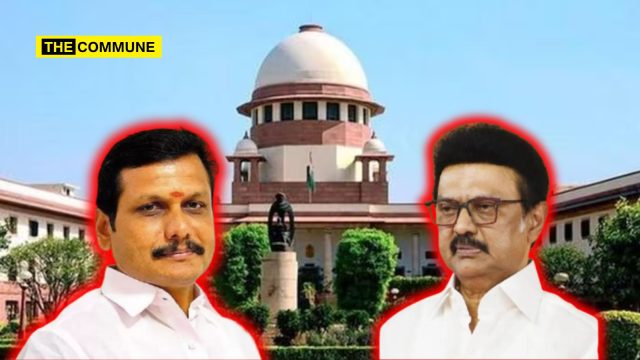
Declassified Reagan Letter Shows Rajiv Gandhi Sought US Help In Pakistan Talks—Shimla Pact Breach?

india pakistan shimla agreement ronald reagan rajiv gandhi

A political storm erupted on 28 May 2025 after BJP MP Nishikant Dubey alleged that former Prime Minister Rajiv Gandhi had sought the intervention of then-US President Ronald Reagan in India-Pakistan negotiations—despite the 1972 Shimla Agreement which mandates that all such disputes be resolved bilaterally.

Dubey posted on his X handle, an alleged letter from Reagan to Rajiv Gandhi dated 25 March 1987. According to Dubey, the letter was delivered by the US Ambassador to India and reveals that Gandhi had requested US experts to be present during bilateral discussions with Pakistan concerning cross-border narcotics smuggling.

“It is not easy to be Gandhi This letter is in reply to a letter written by US President Ronald Reagan to the then Indian Prime Minister Rajiv Gandhi. When it was decided under the 1972 Shimla Agreement that any dispute between India and Pakistan would be negotiated only between the two countries and there would be no mediator, why did the then Indian Prime Minister Rajiv Gandhi ask for US President Reagan’s help in negotiating with Pakistan?” Dubey asked in his post.

He claimed the letter contradicts India’s long-standing position of keeping third-party involvement out of India-Pakistan matters.

The contents of Reagan’s letter, as shared by Dubey, indicated the US President’s willingness to support any initiative jointly agreed upon by India and Pakistan. Reagan expressed readiness to assist with expertise should both nations seek help in addressing narcotics issues.

The revelation comes amid renewed scrutiny of third-party involvement in India-Pakistan affairs, particularly following the recent Pahalgam terror attack and India’s retaliatory military operation, codenamed Operation Sindoor.

The row intensified when Dubey also referenced a declassified 1971 US intelligence cable, claiming that Indira Gandhi, under pressure from the United States, accepted a United Nations ceasefire proposal during the Bangladesh Liberation War. Dubey questioned whether India had compromised on reclaiming Pakistan-occupied Kashmir (PoK) and securing heritage sites like Kartarpur Gurdwara in favor of prioritizing the creation of Bangladesh.

“Iron Lady Indira Ji and her father Nehru Ji After the illegal occupation of Kashmir by Pakistan in 1948, again under the pressure of mediation by America and Britain, continuous meetings were held between 1962 and 1964 between the minister of Indian government Swaran Singh ji and Zulfikar Ali Bhutto. Read this paper carefully, India had already decided to give back to Pakistan the territory forcibly occupied by Pakistan in Poonch and Uri. The matter did not stop at this, the entire Neelam and Kishanganga valley in Gurez was made the international border along with the Line of Control. The only reason for India’s problems today is the hand of Congress? With whom?” Dubey said in a post on 26 May 2025.

The Congress hit back strongly. Party leader Udit Raj dismissed Dubey’s interpretation, accusing him of misreading the Reagan letter.

The exchange comes as Congress also took a swipe at External Affairs Minister S. Jaishankar. Senior leader Jairam Ramesh criticized Jaishankar for remaining “silent” on recent remarks made by US Secretary of State Marco Rubio, who referenced “US mediation” and a “neutral site” for India-Pakistan talks.

The Ministry of External Affairs refuted Rubio’s claims, reiterating India’s consistent policy that all matters with Pakistan, especially those concerning Jammu and Kashmir, are strictly bilateral and do not warrant third-party mediation.

Subscribe to our channels on Telegram, WhatsApp, and Instagram and get the best stories of the day delivered to you personally.
DMK Claims To Keep Religion Out Of Politics; Renominates P. Wilson To Rajya Sabha Gets Thanked By Archbishop Of Madras For Backing A “Roman Catholic”

dmk p. wilson archbishop roman catholic

Following the DMK’s decision to renominate P. Wilson to the Rajya Sabha, Archbishop George Antonysamy of the Archdiocese of Madras and Mylapore, who recently drew attention for invoking religious identity during the ongoing Lok Sabha elections to influence voters, publicly expressed his gratitude to Tamil Nadu Chief Minister M.K. Stalin. In his letter, the Archbishop highlighted Wilson’s “Roman Catholic” identity and thanked Stalin for reappointing him, emphasizing Wilson’s service to the Christian community and minorities at large.

This public acknowledgment has raised eyebrows, particularly because it contradicts the DMK’s longstanding claim against blending religion with politics. The party, and Chief Minister Stalin himself, have consistently maintained that while they respect spirituality, they oppose the exploitation of religion for political advantage.

For instance, in 2022, Stalin stated that the DMK is not anti-religion but firmly against those who manipulate faith for personal or political gain. Speaking at an event organized by the Hindu Religious and Charitable Endowments Department, Stalin said, “Those using religion for their political survival allege that the Dravidian model of governance is against religion and beliefs. I wish to reiterate that the DMK is not against spiritualism but is against those who use religion to serve their selfish political agenda.”

In contrary to this, a letter dated 28 May 2025, Archbishop Antonysamy addressed Chief Minister Stalin, writing, “I am happy to learn that you have re-nominated Thiru P. Wilson, who is a Roman Catholic, as Member of Rajya Sabha. Under your guidance, over the last six years, he has contributed a lot to our State, minorities in general and particularly our Christian community. Now he is in a position to continue his good work and bring more glory to our State, your party and our community. I thank you for recognising the needs of our minority Christian community and giving representation in Parliament.”

The letter’s explicit religious framing, especially during an election period, has drawn criticism given the DMK’s public commitment to secular governance and its avowed resistance to religious-based political mobilization.

Subscribe to our channels on TelegramWhatsApp, and Instagram and get the best stories of the day delivered to you personally.

Nehru Rejected India Becoming Asia’s First Nuclear Power, Indira Offered To Share Nuclear Tech With Pak, Rajiv Championed Disarmament: How The Nehru-Gandhi Dynasty Repeatedly Compromised India’s National Security Over The Decades

Over the decades, the Nehru-Gandhi political dynasty, long positioned at the helm of Indian governance, has repeatedly made decisions that, critics argue, compromised India’s national security. From missed strategic opportunities in the nuclear realm to restrained responses in the face of terror, a pattern of indecision and idealism over hard realism seems to have defined their approach to safeguarding the nation.

Nehru’s Nuclear Blunder: Rejecting Kennedy’s Offer, Ceding Advantage to China

India’s first Prime Minister, Jawaharlal Nehru, turned down a significant strategic opportunity that could have changed the subcontinent’s nuclear trajectory. Former Foreign Secretary Maharajakrishna Rasgotra revealed in his memoir ‘A Life in Diplomacy’ that in the early 1960s, US President John F. Kennedy offered to help India conduct a nuclear test — an offer made to ensure democratic India, not communist China, became the first Asian nuclear power.

“Kennedy, who was an admirer of India’s democracy and held its leader Jawaharlal Nehru in very high esteem, felt that democratic India, not Communist China, should be the first Asian country to conduct a nuclear test,” Rasgotra writes. Despite initial interest, Nehru rejected the proposal after consultations with Dr. Homi Bhabha and G.P. Parthasarathy. According to Rasgotra, had Nehru accepted the offer, “India would have tested the nuclear device first in Asia, before China, and it would have deterred China from launching its war of 1962 and even imparted a note of caution to Pakistan’s Field Marshal Ayub Khan’s plans for war in 1965.”

This only blocked India’s entry into the NSG (Nuclear Suppliers Group) and had Nehru chosen otherwise, that decision could have positioned India as a founding member of the NSG, rather than leaving it to seek entry as a supplicant in later decades.

This single decision arguably delayed India’s emergence as a nuclear power and gave China a strategic upper hand, which continues to influence geopolitical dynamics today.

Indira Gandhi’s Offer To Share Nuclear Technology With Pakistan

In a move that stunned even diplomatic circles, Indira Gandhi offered to share nuclear technology with Pakistan just two months after India’s first nuclear test — the 1974 “Smiling Buddha.” According to US embassy cables released by Wikileaks in 2013, Indira Gandhi sent a letter to Pakistan’s Prime Minister Zulfikar Ali Bhutto offering peaceful nuclear cooperation.

I have explained in my letter to Prime Minister Bhutto the peaceful nature and the economic purposes of this experiment and have also stated that India is willing to share her nuclear technology with Pakistan in the same way she is willing to share it with other countries, provided proper conditions for understanding and trust are created. I once again repeat this assurance,” Gandhi reportedly stated in Parliament on 22 July 1974.

This outreach came shortly after the 1971 Bangladesh Liberation War, during which India held nearly 93,000 Pakistani prisoners of war.

The offer, framed as “peaceful cooperation,” came despite Pakistan’s open hostility post-1971 war. Bhutto rejected it, but the ideological folly was clear: empowering a rogue state with WMD capabilities. Meanwhile, India faced global sanctions, while Pakistan accelerated its nuclear program with Chinese aid.

Critics continue to argue that the decision to return the POWs without extracting substantial strategic guarantees was itself a grave diplomatic blunder — one that was compounded by this gesture of nuclear magnanimity to a state that would soon become a global hub of terror networks.

Rajiv Gandhi’s Nuclear Disarmament Idealism

At a time when China had become a nuclear power and Pakistan was stealthily advancing its nuclear weapons programme with covert international support, Rajiv Gandhi chose to champion global nuclear disarmament.

In 1988, he presented an Action Plan for a Nuclear-Weapons-Free and Non-Violent World Order at the United Nations General Assembly. While idealistic in tone, the plan was seen by many as disconnected from India’s strategic necessities amid an increasingly hostile neighborhood.

“India remains convinced that its security would be strengthened in a nuclear weapon free and non-violent world order,” the plan stated. “We are prepared to negotiate a global No-First-Use treaty… Our proposal for a Convention banning the use of nuclear weapons remains on the table.”

While India’s moral commitment to non-proliferation was commendable, this disarmament push during an era of nuclear arms build-up in both China and Pakistan signaled strategic naïveté rather than pragmatic leadership. Critics say such posturing weakened India’s bargaining position and gave adversaries room to maneuver. Critics argue this emboldened Islamabad’s asymmetric warfare, culminating in Kargil (1999) and 26/11 (2008).

UPA’s Cowardice After 26/11: Refusing To Strike Back

Perhaps the most striking example of compromised national security came under the United Progressive Alliance (UPA) government led by Prime Minister Manmohan Singh, with Sonia Gandhi and Rahul Gandhi at the political helm. The most damning indictment comes from Shivshankar Menon, former Foreign Secretary and NSA, in his book Choices: Inside the Making of Indian Foreign Policy

In the book, Menon reveals that in the immediate aftermath of the 26/11 Mumbai terror attacks, Indian security and intelligence agencies had strongly recommended a military response — including strikes on Lashkar-e-Taiba (LeT) headquarters in Muridke and camps in Pakistan-occupied Kashmir.

He writes in the chapter titled “Restraint or Riposte?”, “I am often asked, “Why did India not attack Pakistan after the 26/11 attack on Mumbai?” Why did India not use overt force against Pakistan for its support of terrorism? I myself pressed at that time for immediate visible retaliation of some sort, either against the LeT in Muridke, in Pakistan’s Punjab province, or their camps in Pakistan-occupied Kashmir, or against the ISI, which was clearly complicit. To have done so would have been emotionally satisfying and gone some way toward erasing the shame of the incompetence that India’s police and security agencies displayed in the glare of the world’s television lights for three full days.

During and after the attack, a series of informal discussions and meetings in government took place that considered our responses. The then national security adviser, M. K. Narayanan, organized the review of our military and other kinetic options with the political leadership, and the military chiefs outlined their views to the prime minister. As foreign secretary, I saw my task as one of assessing the external and other implications and urged both External Affairs Minister Pranab Mukherjee and Prime Minister Manmohan Singh that we should retaliate, and be seen to retaliate, to deter further attacks, for reasons international credibility and to assuage public sentiment.

For me, Pakistan had crossed a line, and that action demanded more than a standard response. My preference was for overt action against LeT headquarters in Muridke or the LeT camps in Pakistan-occupied Kashmir and covert action against their sponsors, the ISI. Mukherjee seemed to agree publicly of all our options being open. In these discussions we considered our options, the likely Pakistani response, and the escalation that could occur.”

Despite military readiness and public outrage, Sonia Gandhi and Manmohan Singh’s government opted for inaction—a decision Menon calls a “betrayal of national sentiment.” Pakistan, sensing impunity, escalated terrorism in Kashmir.

A Pattern Of Strategic Compromise

From Nehru’s rejection of pre-emptive nuclear capability, Indira Gandhi’s nuclear olive branch to Pakistan, Rajiv Gandhi’s disarmament idealism during regional proliferation, to the UPA’s muted response to cross-border terror — the Nehru-Gandhi family’s foreign and security policies reveal a recurring pattern: prioritizing abstract principles over pragmatic national interest. These decisions have consistently left India vulnerable — strategically outpaced, diplomatically constrained, and frequently reactive in the face of aggression.

Subscribe to our channels on Telegram, WhatsApp, and Instagram and get the best stories of the day delivered to you personally.
Why Kamal Haasan Is A Third Rated Hypocrite And A Political Fraud Who Pledged His Self-Respect And Party At Stalin’s Feet For A Rajya Sabha Seat

dmk stooge kamal haasan

From lecturing the public on political purity to grovelling for a Rajya Sabha seat like a washed-up extra begging for a cameo, he’s gone from Ulaganayagan to DMK’s court jester. The man who once promised to clean up Tamil Nadu now clings to the very filth he vowed to fight. Congratulations, Kamal — your acting was so convincing, you fooled even yourself.

The real reason this self-declared intellectual floated a party wasn’t public service — it was pure personal vendetta. After Jayalalithaa gave him a ruthless reality check during the Vishwaroopam fiasco, his bruised ego needed a stage. But like a true coward, he only found the “guts” to launch his party and bark at AIADMK after Amma had passed away. Not courage — just opportunism in costume. Shameless doesn’t even begin to cover it.

The DMK endorsing him for Rajya Sabha was a reward for his hardwork. He worked hard for the DMK since 2018, ensuring no real opposition stood in their path to power. By portraying himself as an alternative to the two Dravidian parties, he ensured that the votes got split helping DMK to come to power. Political analysts note that in many constituencis MNM’s candidates were handpicked by the DMK effectively becoming DMK’s B-team. Once the DMK secured victory in 2021, Kamal faded into silence, only to resurface in 2024, mortgaging his entire party for a single Rajya Sabha seat—for himself. And in May 2025, the DMK kept its promise of the RS seat by nominating him.

Interestingly, most of Kamal Haasan’s key party members, having already anticipated his political leanings, either resigned or defected to the DMK. Kamal Haasan has proven time and again that he’s a classic turncoat—a third-rated opportunist who parades as an intellectual but operates with zero consistency or conviction.

This is the same man who surrendered his self-respect and his party’s relevance just to sit in the Rajya Sabha, shamelessly propping up the DMK’s crown prince someone half his age just to stay politically alive.

When Kamal Haasan Opposed DMK & Dravidian Parties

In 2020, Kamal Haasan personally released a statement on his official social media account, expressing criticism towards the ruling Dravidian parties in Tamil Nadu regarding the escalating debts in the state stating, “Every man, woman, child & even an unborn child of Thamizh Nadu will have to bear a debt of ₹57,000. The 2 Dravidian parties who ruled & swindled alternatively are responsible. Let’s join hands & put an end to their looting. Come, let’s forge a wealthy, debt free Thamizh Nadu.”

Subsequently, he shared an MGR song, suggesting his anticipation and readiness to challenge the Dravidian parties in the forthcoming assembly elections. “Some people, for want, need, life, convenience, will catch legs of others… There is no honor in it, there is no shame in it He always catches the tail. Future will come, My duty will come, I will abolish this gangs game

Even at the inaugural event of his political party and in subsequent interviews, he consistently reiterated his commitment to removing the Dravidian parties from the political landscape. Following the inauguration of the party, during a session addressing queries from party members, the presenter posed the question, “Will you publicly declare that we will not ally with the parties and their affiliates that you have identified as corrupt?”

Kamal instantly replied, “Lets announce it, just think of this, We started a party like this, convene a meeting, and none of us knows how many years or months for the election. Instead of doing all this, we could have join a big party, bent a little and bow that’s enough, could have gone like that, why didn’t we go like that? I had the hope that it would not blossom into a democracy, that is why I dared and they said that if I fall from this, I will never be able to get up, even now Tamil Nadu is like that, unable to get up. That’s why we have taken this decision we will be one of them.

Hence, we can surely promise that we will not ally ourselves with baseless unworthy people, boldly swear that we will not ally our self with thieves. If we found that they are criminals, we promise that we will not cooperate, this is not an election promise, but a promise given at the beginning of the party.”

When Kamal Haasan Mocked The DMK

Back in 2021, the same Kamal Haasan was far from being a DMK ally—he frequently took jabs at the party and its leadership. One of his most controversial comments came when he mocked DMK president M.K. Stalin by suggesting that merely uttering his name was enough to insult the late DMK patriarch, M. Karunanidhi.

This statement was made in response to the backlash Kamal received from DMK supporters over a remark he had made referencing a wheelchair—widely perceived as a slight toward Karunanidhi. Clarifying his position at an event on 8 March 2021, Kamal said, “They misunderstood that I had insulted Karunanidhi when I spoke on wheelchair. But truly, if one were to insult Karunanidhi one has to just say M.K. Stalin.”

He didn’t stop there. Taking aim at the DMK’s election anthem “Stalin dhaan vaaraaru” (Stalin is coming), Kamal quipped that even dacoits these days announce their arrival in advance—an unsubtle dig at the DMK’s return to power.

He also accused the DMK of lifting ideas from his party’s manifesto, after the DMK released its vision document in Trichy on 7 March 2021. Kamal alleged that many of their promises closely mirrored those of Makkal Needhi Maiam (MNM). Kamal shared, “I once protested against the imposition of Hindi, but ironically ended up acting in Hindi films. Back then, the political climate justified the protest. Today, rather than opposing Hindi, I would say ‘Long live Tamil’. Let Tamil thrive too.”

Kamal Haasan: From DMK Critic To DMK Stooge

After a series of electoral defeats, Kamal Haasan and his party, Makkal Needhi Maiam (MNM), struggled to stay politically relevant. In the 2019 Lok Sabha elections, MNM contested 37 seats but failed to win even one, managing only 0.40% of the total vote share (around 16 lakh votes). It was a complete washout.

Things didn’t improve in the 2021 Tamil Nadu Assembly elections, where MNM fielded candidates in 180 constituencies and again failed to win a single seat, securing just 2.62% of the votes. The party faced similar rejection in Puducherry, contesting 22 seats with no wins and just 1.89% of the vote. Across these elections, most MNM candidates lost their deposits, including Kamal Haasan himself. Despite initial speculation of a possible alliance with the Congress in 2019, the party ended up isolated and ineffective, especially in rural regions.

Faced with repeated rejection at the ballot box, Kamal Haasan reached for his last resort—mortgaging his political outfit for personal ambition. In a desperate bid to enter Parliament, he struck a deal with the DMK, a party he once harshly criticized. That trade-off? A Rajya Sabha seat for himself.

The irony is glaring. Kamal once wrote, “Some people, out of need, convenience, or desperation, will stoop to catch others’ feet. There’s neither pride nor shame in it. He always catches the tail. My time will come. My duty will come. I will put an end to this puppet show.” Yet today, he’s the one clinging to the very puppet strings he promised to cut.

Kamal Haasan Buttressing DMK Scion Udhayanidhi Stalin

Even more telling is how Kamal transformed into a vocal supporter of DMK’s ideological line. After DMK Minister Udhayanidhi Stalin stirred nationwide outrage by calling for the eradication of Sanatana Dharma, comparing it to diseases like dengue and malaria, Kamal stepped in—not to condemn, but to defend.

In a social media post, Kamal Haasan framed Udhayanidhi’s remarks as part of healthy democratic discourse, “The hallmark of a true democracy is the ability to disagree and engage in open discussion. History has shown that asking the right questions leads to better answers and a more progressive society,” he said. Backing the Dravidianist rejection of the term “Dharma,” Kamal Haasan insisted that Udhayanidhi had the right to his opinion and urged critics to respond with debate—not legal threats or emotional manipulation. “Tamil Nadu has always been a space for intellectual debate. We must evaluate our traditions with an eye toward inclusivity, equality, and progress,” he concluded.

In 2023, Kamal Haasan offered an unusually glowing birthday tribute to Udhayanidhi Stalin, lauding his performance as Tamil Nadu’s Minister for Youth Welfare and Sports Development. He tweeted,Anbu Thambi @Udhaystalin has achieved remarkable achievements in the responsibilities he has taken on in a short period of time. My heartfelt birthday greetings to my brother Udhayanidhi Stalin, who is working effectively as the Minister of Youth Welfare and Sports Development of the Government of Tamil Nadu and the Youth Secretary of the DMK.

This public praise wasn’t just a casual birthday message—it reflected the well-understood political reality in Tamil Nadu, to stay in the DMK’s favor, especially under the current regime, one must be in the good graces of Udhayanidhi. This unwritten rule applies not only to newcomers but also to seasoned politicians. Kamal Haasan’s praise, therefore, came across more as a strategic show of allegiance than a genuine acknowledgment—an act seen by many as political sycophancy.

Kamal Haasan Buttressing DMK During Chennai Rains Flooding the City

During the severe floods that crippled Chennai in December 2023, actor-turned-politician Kamal Haasan emerged not as a critic of the government’s handling, but as a vocal defender of the DMK administration. At a press conference on 8 December 2023, Kamal downplayed the state’s responsibility, instead blaming the unprecedented rainfall and climate change for the disaster.

Despite claiming to lead a party rooted in clean and accountable politics, Kamal’s recent stance showed complete alignment with the DMK’s narrative. He went so far as to claim the city received 56 cm of rainfall in 24 hours—a figure that did not align with official IMD records. Still, he insisted that, “Instead of pointing fingers, now is the time to set aside criticism and work together.”

Kamal urged the public to take individual responsibility, “The government cannot reach out to one crore people at once. We must be prepared ourselves. We can criticise the government later. For now, let’s focus on supporting the efforts being made.”

He also praised the media for not “sensationalising” the crisis and, in a surprising shift, placed the blame on citizens for buying homes in flood-prone areas, “We are the ones buying land, filling it with sand and building on it. The government comes in later. This is a collective failure, and we must correct it.”

But this tone was in stark contrast to Kamal Haasan’s own statements during the 2015 Chennai floods. Back then, he had sharply criticised the AIADMK government for its failure to manage the crisis. Speaking to the media, he had said, “I’m ashamed to watch my fellow citizens suffer. If this is Chennai, imagine the condition of other areas. Even after the rains stop, it will take months for the city to recover. The government machinery has collapsed.”

He had gone further, questioning the use of taxpayer money and lashing out at politicians, “I don’t believe in God—but I have even less trust in politicians who call themselves gods. Where is the money we paid in taxes? If such emergencies arise, the government expects donations from people like me. But I give not as a wealthy man who exploited others—but as someone who genuinely cares for the people.”

Kamal’s transformation from a vocal critic of poor governance to a convenient apologist for the current regime underscores his shifting political calculus—one seemingly driven more by personal ambition than public accountability.

Kamal Haasan Blamed Hooch Tragedy Victims, Not DMK Government

Not only that, actor-turned-politician Kamal Haasan, in 2024, failed to hold the DMK government accountable for the Kallakurichi hooch tragedy despite it being the second such incident under their watch. Instead of calling out the state’s repeated administrative failure, Haasan chose to blame the victims themselves.

On 20 June 2024, following the initial reports of the tragedy in which 36 people died after consuming illicit liquor, Kamal Haasan posted on X, “Tamil Nadu has been shocked by the news that 36 people have died, and many others are in critical condition after consuming illicit liquor in Kallakurichi. My deepest condolences to the bereaved families. I wish those undergoing treatment a speedy recovery. The government of Tamil Nadu should crack down on the bootlegger dealers with an iron fist so that such a tragedy does not happen again in Tamil Nadu. Rehabilitation centers should be set up immediately to help drug addicts get rid of it. Now is the time for each of us to get involved in the war against addiction.”

However, as the death toll rose to 58, criticism mounted online against silent celebrities and vocal DMK sympathizers. Under pressure, Haasan visited Kallakurichi on June 23. But instead of acknowledging systemic lapses or demanding accountability, he doubled down, shifting the blame entirely onto the victims.

Addressing the media, Kamal said, “These victims will have to understand they have exceeded their limit, and they have been careless. They have to be careful. They have to take care of their health. My request to the government would be to create psychiatric centres which will counsel them.

“It has to be occasional drinking, social drinking if at all. But they must understand that exceeding limit in any form be it sugar, or anything is bad,” the part-time politician added.

Haasan’s remarks drew criticism for lacking empathy and ignoring the root causes: unchecked illicit liquor networks, weak law enforcement, and recurring administrative negligence. Rather than demanding a robust crackdown or justice for the families affected, Kamal’s comments came across as tone-deaf, deflecting blame from a failing system to the most vulnerable.

Kamal Haasan Attempts To Shield DMK by Diverting Attention From Hindi Imposition Backlash With Gibberish

This was amidst growing public backlash over the DMK’s in the imaginary Hindi imposition issue—which had politically backfired, Kamal Haasan, out of nowhere stepped in to deflect attention and protect the ruling party. At a time when the delimitation debate was not even a issue, Kamal attempted to redirect the conversation and temporarily shift focus away from the DMK’s misstep.

Speaking to reporters, Haasan, who has aligned his Makkal Needhi Maiam (MNM) with the DMK in pursuit of a Rajya Sabha seat, commented, “My opinion is that this 453 (seats) need not change. Even when it was 145 crores, these 453 members led the country to this position today…they are sufficient. If at all, they have to increase the number of seats, all govt decisions made in the centre are executed by the states. If at all they want to increase number of people’s representatives, let the Assembly seats be increased…”

This statement not only misstated the actual number of Lok Sabha seats (543 elected + 2 nominated), but also seemed more like a strategic deflection from DMK’s political fall back. He appeared to play the role of a loyal ally—deflecting public scrutiny from the ruling party and helping shift focus away from its missteps.

Anti-Indian & Anti-Hindu Kamal Haasan

Beyond his political maneuvering to stay relevant and secure a foothold in the Rajya Sabha, Kamal Haasan has often echoed views aligned with the DMK’s anti-India and anti-Hindu stance. While he has made films like Kuruthipunal, Indian, and Hey Ram—the latter criticized for its portrayal of the Partition with a slant toward minority appeasement—his public statements and positions have repeatedly revealed a clear bias against Indian national ethos. Here are some notable instances that reflect Kamal Haasan’s recurring anti-India sentiments.

Called For Plebiscite In Kashmir

Part-time-politician Kamal Haasan, made his alignment move with the DMK in pursuit of a single Rajya Sabha seat in 2024, voiced strong opposition to the central government’s actions in Kashmir at the time of Article 370 abrogation. In 2019, he called the move to revoke Jammu and Kashmir’s special status and bifurcate the state into two Union Territories a “direct blow to democracy,” and called the move as an autocratic decision-making process.

“This move is highly regressive. Article 370 and 35A have historical significance, and any changes should have been made through a consultative and inclusive process,” he said.

Not only this, back in February 2019, during a public event in Chennai, Kamal Haasan raised several provocative questions, stating, “Why do the soldiers die? Why should our home’s watchman die? If politicians on both sides (in India & in Pakistan) behave properly, no soldier needs to die. The Line of Control will be under control. Why is India not holding a plebiscite in Kashmir? What are they (Indian government) afraid of?” 

Said India’s First Terrorist Was A Hindu

In May 2019, actor-politician Kamal Haasan stirred controversy by calling Nathuram Godse, Mahatma Gandhi’s assassin, “free India’s first terrorist.” While campaigning in Aravakurichi, a Muslim-majority constituency in Tamil Nadu, Haasan stated, “I am not saying this because this is a Muslim-dominated area, but I am saying this before a statue of Gandhi. Free India’s first terrorist was a Hindu, his name is Nathuram Godse. There it [terrorism] starts.” Emphasizing unity and equality, he added, “Good Indians desire for equality and want the three colours in the Tricolour to remain intact. I am a good Indian, will proudly proclaim that.”

His remarks drew sharp criticism from BJP leaders. Tamil Nadu BJP chief Tamilisai Soundararajan condemned the statement, calling it “strongly condemnable” and accused Haasan of inciting “communal violence” through “divisive vote bank politics.” She urged the police to take action and ban his campaign.

In response, Haasan later clarified“Let me tell you terrorists abound all religions. Every religion has its own terrorists, and we cannot claim that we are sanctimonious.” He emphasized that his speech aimed at maintaining harmony and warned that arresting him would escalate tensions: “Let them arrest. But if they arrest me tensions will escalate.”

His film Hey Ram was another attempt at minority appeasement in which he would’ve shown Hindu nationalists as Nazis.

Anti-Hindu Statements By Kamal Haasan

While he may have made statements in public claiming he is atheist, Kamal Haasan ensured to inject anti-Hindu themes into his films, often portraying Hindu symbols and traditions in a negative light. In Kaathala Kaathala (1998), a Hindu religious figure—also depicted as a liquor merchant—converts a classroom into a cow shed and forces the hero to fake a miracle for a fraudulent Hindu godman, a trope more commonly associated with Christian evangelists.

In Manmadhan Ambu (2010), Haasan himself penned a controversial song in which a woman mockingly prays to goddess Varalakshmi for a sexually satisfying husband, even expressing willingness to convert religions. The song also ridicules the goddess’s husband as someone who is “always sleeping.”

Facing backlash from Hindu groups like Hindu Munnani, Haasan was forced to remove the song, though he claimed he did so to protect producer Udhayanidhi Stalin’s interests.

On Sacred Thread

In July 2018, actor-politician Kamal Haasan held a Q&A session on Twitter where he candidly answered questions from his fans. When asked which books (“nool” in Tamil) had influenced his life, Haasan replied with a pointed wordplay that sparked controversy. He said, “There is a thread I avoided. The thread affected me a lot – Poonool. That is why I avoided it.”

The remark, referring to the sacred thread traditionally worn by Brahmins, drew sharp criticism from members of the Brahmin community. Offended by what they saw as a dismissive statement about a significant religious symbol, the community issued a statement condemning his comment. “The poonool is the most secular thread and his statement has no logic,” they declared. The statement further accused Haasan of disrespecting his own roots, stating, “Kamal Haasan has no respect for his parent heritage and is putting forth a poor personality in front of the people and now people are more aware of it.”

Chozhas Are Not Hindus

Kamal Haasan supported Tamil director Vetrimaaran’s controversial claim that Raja Raja Chola “wasn’t Hindu.” Vetrimaaran, speaking at an event after the release of Ponniyin Selvan: 1, said, “They (BJP) are trying to steal our identity. They have already tried to saffronize Thiruvalluvar. We should never allow that.”

Kamal Haasan echoed this view, stating“There was no name called ‘Hindu religion’ during Raja Raja Chola’s period. There was Vainavam, Shaivam, and Samanam, and it was the British who coined the term Hindu since they didn’t know how to refer to it collectively.” He compared it to the colonial renaming of places, saying, “It is similar to how they changed Thuthukudi into Tuticorin.”

BJP leader H Raja responded by pointing out that the king called himself Sivapadha Sekaran, and challenged, “Let him point out two churches and mosques built by Raja Raja Chola.” This controversy follows earlier criticism in 2019 by director PA Ranjith, who called the Chola period a “dark age” for Dalits.

Derogates Hindu Gods

While talking about women’s issues on a stage back in 2020, Kamal Haasan said, “Gods too wear less dress. A few Gods don’t wear any dress. When the mind is not spoiled by seeing those Gods, how come it is spoiled while seeing my sisters”. This statement of the MNM chief has invited severe backlash.

While addressing the women audience Kamal Haasan said“I have never felt shy to speak in front of women. Because my house was mostly dominated by women. Women play an important role in the transformation of the world. Even before Gandhiji, women took part in the freedom struggle. They say that women wearing less dress is the reason for the rape crimes. Gods too wear less dress. A few Gods don’t wear any dress. When you don’t get the urge on seeing ‘that’, how come you feel the urge while seeing my sisters. It is mutual consent when there is love but when they want to have that without love, then is the problem”.

This remark of his came just days after he refused the ‘poornakumbham’ honours offered by Hindu priests on behalf of a Murugan Temple in Kanchipuram on 21 December 2020.  According to sources, a member belonging to Kamal Haasan’s party and known to one of the Sivachariyars had approached to make arrangements for welcoming Kamal Haasan. Since the person was known to the priest, he had obliged to the request. However, they did not expect that the actor-politician would refuse it.

Kamal Haasan’s Political Drama Summed Up With Opening Door Stunt 

Summing up Kamal’s politics in a single scene, in a notable display during an MNM party meeting at the Alwarpet office, Kamal Haasan made a dramatic gesture aimed at promoting integrity in politics. In the video, he firmly stated, “Only those who believe that they can be honest and win by doing politics like that can be here. If there is even a hint of disbelief in that, the door will open in a few seconds.” As he pointed toward the door, it theatrically opened symbolizing his challenge to any non-believers in his ideals to leave.

While the gesture was intended to inspire commitment to clean politics among his party members, it now seems ironic. In the years that followed, Kamal Haasan appeared to abandon those very principles himself making political compromises and alliances that contradict the integrity he once demanded from his cadre. In the end, it appears Kamal is the first to walk through that symbolic door.

Subscribe to our channels on TelegramWhatsApp, and Instagram and get the best stories of the day delivered to you personally.
As Vyasarpadi Burnt, Stalin Was Enjoying The Cringeworthy Dance Performance In Kolathur

stalin dance anakaputhur vyasarpadi

When Dravidian media were busy celebrating Chief Minister M.K. Stalin’s visit to his Kolathur constituency—focusing on his cheerful reaction to a cringeworthy welcome dance performed by party cadres and joined by HR&CE Minister Sekar Babu, another significant and tragic event on the same day, 26 May 2025, received little attention.

Vyasarpadi Fire Accident

In Sathyamoorthy Nagar, Vyasarpadi, a major fire broke out, destroying over 20 makeshift huts. Though all residents managed to escape to safety, they lost nearly all their belongings and important life-line documents in the blaze. Despite their initial efforts to extinguish the fire, they were unsuccessful and subsequently alerted the police and the Tamil Nadu Fire and Rescue Services.

According to police sources, the fire is believed to have been caused by a leak from an LPG cylinder in one of the huts. The flames spread rapidly, as most of the huts were constructed with thatched roofs and asbestos sheet walls, which are highly flammable. Ten fire engines from Tondiarpet, Vyasarpadi, Vepery, and Kolathur fire stations responded to the emergency and battled the fire for over two hours before bringing it under control.

Deputy Mayor M. Magesh Kumaar stated that the Greater Chennai Corporation has arranged temporary shelter, food, and drinking water for those affected by the incident.

Demolition And Resident Evacuation in Anakaputhur

In Anakaputhur, a major eviction and demolition operation is currently underway, impacting neighborhoods such as Quaid-E-Millath Nagar and Stalin Nagar. As part of a large-scale initiative led by the Tambaram Corporation, approximately 600 concrete homes are being demolished. This action is being carried out in connection with flood mitigation efforts, following the distribution of relocation tokens to affected residents for newly constructed housing.

According to a senior official from the Tambaram Corporation, a total of 593 unauthorized homes built along the Adyar River have been marked for removal. The demolition is primarily focused in Chamundeswari Nagar, including areas such as Kattabomman Street and Nethaji Nagar. The operation is being closely monitored by police forces and revenue department officials, with Corporation Commissioner S. Balachander overseeing the process at key locations like the Anakaputhur bus stand to ensure public safety.

Now in its third day, the clearance work in Anakaputhur has already resulted in the dismantling of more than 300 structures in the Quaid-E-Millath Nagar and Stalin Nagar areas. This follows similar demolition activities in Shanthi Nagar and Moogambi Nagar the previous week, where another 300 homes were taken down.

The government maintains that these actions are in line with court rulings and necessary due to the classification of the homes as riverbank encroachments. To accommodate displaced families, new homes have been built in Keerapakkam and Thailavaram. Out of 10,347 identified illegal homes along the Adyar River, officials report that 4,575 have already been removed.

Plans for resettlement also include locations like Perumbakkam and Navalur. In the current phase, around 600 houses have been listed for demolition, with 20 families relocating after receiving shifting tokens earlier this week. Officials estimate the demolition of these structures in Anakaputhur will conclude within two weeks.

 However, many residents are distressed and confused, claiming they have lived in the area for several decades—some for over 50 years. Several residents expressed frustration, stating they were promised land ownership documents (pattas) shortly before the demolition notices were issued. This contradiction has left them questioning the legitimacy of the encroachment claims, particularly since the affected areas include proper roads and have long had government-provided electricity connections, including separate meters.

Despite the provision of new homes, many families report challenges. One resident claimed that the new housing lacks basic facilities, stating it is not suitable for living. The demolitions have also had broader impacts—disrupting livelihoods and separating tight-knit communities. Families are now scattered, with some being relocated far from their original homes, disrupting their children’s education and daily life.

One of the Muslim women residents, grieving after the demolition of her home, said, “This is unjust — that’s all I can say. What else is there to say? Didn’t they know we’ve been living here for 50 years? If someone has been here for more than 10 years, they’re supposed to be given a patta (land deed). When we were here for 40 years, they didn’t realize it while giving us water and electricity connections? They didn’t realize it while collecting taxes from us? Now how can they come and remove us? Every time they come asking for votes, they promise pattas and win by getting our votes again and again. Not a single politician has come, not a single media outlet has shown up. They knew it was an unjust, that’s why they kept the media out. Now after everything’s been destroyed to the ground, the media coming? What’s the use now?”

Another Muslim woman expressed her agony saying, “The Chief Minister has said give them a new place before removing them, don’t cause them any hardship. What hardship could be greater than this, sir? Our grandparents, served in the military right here in Chennai, in this same Mount area, in this same Anakaputhur, very nearby. They worked in the army, held high positions, earned everything with dignity. And today, do you know where I am? Care of platform. Do you know my address? Care of platform. After everyone left and this becomes a burial ground, who will come and live here in this park happily? I am watching, I will see.  This was my husband’s investment — a lifetime investment. He built it with his sweat, standing and struggling for every brick, every step with pain. Today, he’s standing outside in sorrow. Whatever you give us now can never replace what we’ve lost, sir. This message should reach the Chief Minister of Tamil Nadu. How many towns like this have you destroy and cleared? All the curses from this will come back as consequences it will show, and it will reflect. We kept waiting, ‘Will this party come?’ We cast our votes expecting this ruling government to come to power. We waited day after day, hoping they would come. And the moment they took office, this is the wonderful reward we received. Thank you very much, sir.”

(With inputs from The Hindu)

Subscribe to our channels on TelegramWhatsApp, and Instagram and get the best stories of the day delivered to you personally.
Dravidian Model Law & Order: Teen Girl Stabbed To Death At Her Home In Ranipet District; Suspect Captured By Villagers

teen girl stabbed to death ranipet palakkad

A 15-year-old girl was brutally stabbed to death in a shocking attack at her home in Pulivalam panchayat near Sholingar. The assailant, a young man armed with a knife, forcibly entered the residence and launched a violent assault on the victim. Despite her attempts to escape, she succumbed to her injuries on the spot due to excessive bleeding.

A 16-year-old girl, also present at the scene, tried to intervene but was stabbed as well. She sustained serious injuries and has been hospitalized. Hearing her cries for help, neighbors rushed in and chased down the attacker before handing him over to the police.

Authorities are investigating multiple angles, including whether the suspect knew the victim beforehand. Possible motives being explored include sexual assault, property disputes, or prior enmity. A case has been registered, and further inquiries are underway.

(With inputs from OneIndia Tamil)

Subscribe to our channels on Telegram, WhatsApp, and Instagram and get the best stories of the day delivered to you personally.