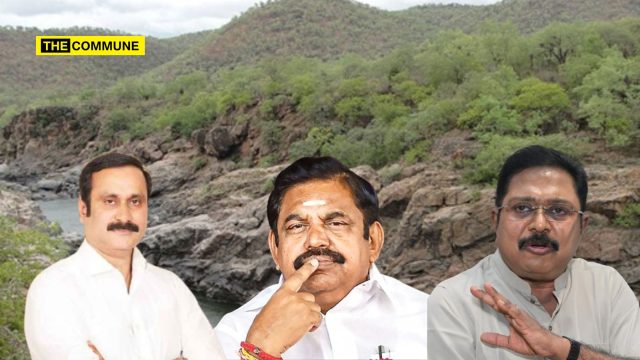
The political controversy over the Centre’s parliamentary clarification on the proposed Mekedatu project has rapidly escalated, with NDA allies AIADMK general secretary Edappadi K. Palaniswami (EPS), PMK president Dr. Anbumani Ramadoss and AMMK leader TTV Dhinakaran joining former Tamil Nadu BJP president K. Annamalai in accusing the BJP-led central Government of undermining Tamil Nadu’s rights over the Cauvery.
Although each leader advances a slightly different legal argument, they all arrive at the same political conclusion: that the Centre has executed a “U-turn”, abandoned Tamil Nadu’s interests and effectively given Karnataka a free hand to construct the Mekedatu reservoir.
However, a closer reading of the parliamentary reply, the Supreme Court’s 2018 judgment and the statutory approval framework governing interstate river projects shows that these allegations are built on conflating two entirely different legal questions. The Ministry’s reply neither approves the Mekedatu project nor weakens Tamil Nadu’s legal protections. Instead, it merely answers a narrow question about what the Supreme Court’s 2018 judgment expressly states.
What The Centre Actually Said
The controversy began after PMK leader Dr. Anbumani Ramadoss sought clarification in Parliament on whether Karnataka was required to obtain the consent of Tamil Nadu, Kerala and Puducherry before constructing the proposed Mekedatu balancing reservoir.
Responding in the Lok Sabha, Minister of State for Jal Shakti Raj Bhushan Choudhary stated that the Supreme Court’s judgment dated February 16, 2018 does not expressly require Karnataka to obtain the consent of the lower riparian States before constructing any structure across the Cauvery.
The Minister simultaneously referred to Clause XVIII of the Cauvery Water Disputes Tribunal (CWDT) Award, which ewas upheld by the Supreme Court. The clause makes it clear that every State may regulate water use within its territory only insofar as it remains consistent with the Tribunal’s award.
More importantly, the same parliamentary reply also disclosed that Karnataka’s Detailed Project Report (DPR), submitted in 2019, had been returned by the Centre. Karnataka has been asked to submit a revised DPR complying with the CWDT Award and the Central Water Commission’s guidelines.
In other words, the parliamentary reply explicitly confirms that the Mekedatu project has not been approved and continues to remain subject to statutory, technical and legal scrutiny.
EPS Repeats The Same False Premise
EPS accused the Centre of betraying Tamil Nadu and alleged that the parliamentary reply gives Karnataka unrestricted permission to proceed with Mekedatu.
His criticism primarily relies on portions of the Supreme Court’s 2018 judgment, particularly paragraph 342, arguing that upper riparian States cannot undertake projects affecting downstream States.
However, this argument attacks a position the Centre never adopted.
The Ministry never claimed Karnataka could proceed without statutory approvals. It merely clarified that the 2018 judgment itself contains no explicit consent clause requiring Karnataka to obtain prior approval from Tamil Nadu.
EPS also ignores perhaps the most significant part of the parliamentary reply – the Centre’s confirmation that Karnataka’s DPR has been returned and remains under examination.
If the project had indeed received a green signal, there would have been no reason to return the DPR for revision.
காவிரி நதிநீர் தொடர்பான வழக்கில் 2018-ஆம் ஆண்டு பிப்ரவரி 16-ஆம் நாள் உச்சநீதிமன்றம் வழங்கிய தீர்ப்பில், “காவிரி ஆற்றின் குறுக்கே எந்தவிதமான கட்டுமானத்தையும் கர்நாடக அரசு கட்டுவதற்கு தமிழகம், கேரளா, புதுச்சேரி ஆகிய மாநில அரசுகளிடம் ஒப்புதல் பெற வேண்டும்” என்று எந்த இடத்திலும்… pic.twitter.com/uv6TO8ErSs
— Edappadi K Palaniswami-SayYEStoWomenSafety&AIADMK (@EPSTamilNadu) July 28, 2026
The allegation that the parliamentary reply grants Karnataka a free hand simply does not align with what the reply actually says.
Anbumani Confuses Historic Agreements With The Question Asked In Parliament
Unlike Annamalai, Dr. Anbumani Ramadoss builds his criticism around the historic 1892 Madras-Mysore Agreement.
He argues that because the Supreme Court discussed the continued relevance of the 1892 and 1924 agreements, Karnataka remains legally bound to obtain Tamil Nadu’s consent before constructing the reservoir.
மேகதாது அணைக்கு தமிழகத்தின் ஒப்புதல் தேவையில்லையா? பெரும் சதி வலை பின்னப் படுகிறது – அரசுக்கு எச்சரிக்கைத் தேவை! @CMOTamilnadu pic.twitter.com/eO34OmzllU
— Dr ANBUMANI RAMADOSS (@draramadoss) July 28, 2026
This, however, conflates two separate legal issues.
Parliament was never asked whether the 1892 agreement remained historically relevant.
It was asked a far narrower question:
Does the Supreme Court’s judgment dated 16 February 2018 expressly state that Karnataka must obtain the consent of Tamil Nadu before constructing any structure?
The Ministry answered only that question.
The answer that the judgment contains no such express provision is factually correct.
Nothing in the parliamentary reply comments on the legal effect of the historical agreements or suggests they have become irrelevant.
Anbumani therefore criticises the Centre for failing to answer a question that Parliament never asked.
TTV Dhinakaran Relies On An Outdated Legal Premise
AMMK general secretary TTV Dhinakaran adopts a different approach.
He argues that Karnataka cannot legally proceed without Tamil Nadu’s consent and warns that a 70 TMC Mekedatu reservoir would deprive the Delta districts of water.
மேகதாது அணை தொடர்பாக மாநிலங்களவையில் எழுப்பப்பட்ட கேள்விக்கு, 2018 ஆம் ஆண்டு பிப்ரவரி மாதம் 16ஆம் தேதி உச்சநீதிமன்றம் வழங்கிய தீர்ப்பில் காவிரி ஆற்றின் குறுக்கே எந்தவகையான கட்டமைப்பையும் அமைப்பதற்கு தமிழ்நாடு, கேரளம் மற்றும் புதுச்சேரியின் ஒப்புதலைப் பெற வேண்டும் என எங்கும்…
— TTV Dhinakaran (@TTVDhinakaran) July 28, 2026
The concern over Tamil Nadu’s water security is undoubtedly legitimate.
However, the legal foundation of his argument overlooks how Tamil Nadu’s protections operate after the Supreme Court’s 2018 judgment.
Following the judgment, Tamil Nadu’s safeguards no longer depend on locating an express “consent clause” in the judgment.
Instead, they arise from:
- the CWDT Award,
- the Supreme Court’s modified water allocation,
- the Cauvery Water Management Authority (CWMA),
- statutory approvals,
- Central Water Commission scrutiny, and
- judicial review.
If Karnataka eventually proposes a project that diminishes Tamil Nadu’s allocated share of water, it remains fully open to challenge before the appropriate legal forums.
The absence of an explicit consent clause in the judgment does not remove these protections.
The Common Error Shared By All Four Leaders
Although Annamalai, EPS, Anbumani and Dhinakaran rely on different legal provisions, every one of them makes the same underlying mistake.
They conflate a factual clarification about the wording of the Supreme Court judgment with the entirely separate statutory approval process governing interstate river projects.
These are not the same issue.
The Ministry’s reply answers only the first question.
Whether Karnataka can actually construct Mekedatu depends upon multiple independent legal requirements, including compliance with the CWDT Award, scrutiny by the Central Water Commission, oversight by the Cauvery Water Management Authority, environmental clearances and judicial review wherever necessary.
None of these safeguards has been removed.
No U-Turn, Only A Narrow Legal Clarification
Presenting the parliamentary reply as evidence that the Centre has suddenly abandoned Tamil Nadu therefore stretches the text far beyond what it actually says.
The Ministry did not approve Mekedatu, it did not waive statutory approvals, it did not alter the Tribunal Award nor did it dilute Tamil Nadu’s allocated share of Cauvery waters.
It merely stated a factual proposition – that the Supreme Court’s judgment itself contains no express clause requiring Karnataka to obtain prior consent from Tamil Nadu before constructing any structure across the river.
Political criticism of the Centre is entirely legitimate.
But portraying an accurate description of the contents of a judicial judgment as a wholesale reversal of national policy risks creating a false narrative. Tamil Nadu’s rights over the Cauvery will ultimately be protected not by attributing words to the Supreme Court that it never wrote, but by ensuring rigorous enforcement of the CWDT Award, vigilant oversight by the CWMA, strict scrutiny of any revised DPR, and prompt judicial intervention if any future project threatens the State’s legally allocated share of water.
Subscribe to our channels on WhatsApp, Telegram, Instagram and YouTube to get the best stories of the day delivered to you personally.