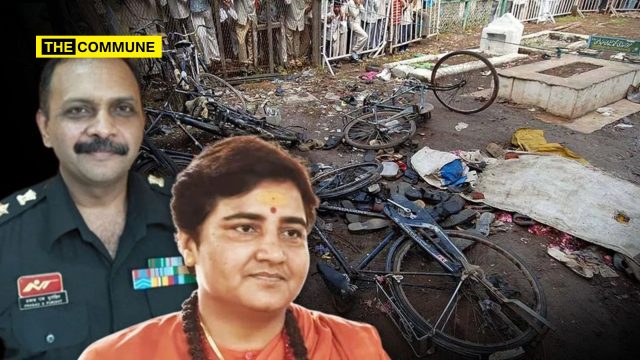
The acquittal of all seven accused in the 2008 Malegaon blast case on Thursday marks the end of a case which saw the coining of a new term ‘Hindu terror’ and its effective junking by the Special NIA Court in Mumbai.
The 17-year-long trial witnessed several twists, with three charge sheets, including a supplementary one, being filed by two probe agencies: the ATS, Maharashtra, and the NIA. Both agencies added new contours to the prosecution theory at crucial stages and frequently included and dropped witnesses.
Key facts, developments and dates related to the case:
29 September 2008: Six killed in Malegaon after a bomb strapped to a motorcycle explodes, sparking riots
Accused: Sadhvi Pragya Singh Thakur, former BJP MP from Bhopal; Lt. Col. Prasad Shrikant Purohit, then serving officer in Military Intelligence; Major (Retd) Ramesh Upadhyay; Ajay Rahirkar; Sudhakar Dwivedi; Sudhakar Chaturvedi and Sameer Kulkarni
Charges: Conspiracy, murder, and use of explosives under the Unlawful Activities (Prevention) Act (UAPA), Arms Act, and the Indian Penal Code (IPC)
Genesis of ‘Hindu terror’: The ATS led by Hemant Karkare claimed that the blast was carried out by individuals linked to right-wing Hindu extremist groups – leading to the coining of the term ‘Hindu terror’
October 2008: ATS arrests Sadhvi Pragya, Purohit; both accused of links to Abhinav Bharat, which planned the ‘revenge attack’ on Muslims
November 2008: The Motorcycle used in the blast was collected as evidence. And Karkare was killed in the 26/11 attack
January 2009: First chargesheet filed by ATS, 11 accused named
July 2009: Special Court drops MCOCA charges against accused
July 2010: Bombay High Court reinstates MCOCA charges
April 2011: NIA takes over the case
2016-2017: NIA files supplementary chargesheet, drops MCOCA charges but retains terror charges; accuses ATS of planting evidence
2017: Purohit gets bail in the Supreme Court; HC grants bail to Sadhvi Pragya
October 2018: Charges formally framed against seven accused
December 2018: Trial begins officially in the Special NIA Court
September 2023: Prosecution closes argument after examining 323 witnesses, 37 of whom turned hostile
19 April 2025: Final arguments conclude, Special NIA Court in Mumbai reserves judgment
31 July 2025: Special NIA Court acquits all seven accused who were on bail, orders Maharashtra government to pay Rs 2 lakh compensation to those killed, Rs 50,000 to the injured
NIA Special Judge Abhay Lohati’s quote: Prosecution proved that a blast occurred in Malegaon, but failed to prove that a bomb was placed in a motorcycle
Grounds for acquittal: Benefit of the doubt given to the accused; the prosecution failed to prove that the motorcycle belonged to Sadhvi Pragya and that Lt. Colonel Purohit planted the bomb in it
Key turning point: Prosecution failed to prove that the accused held meetings in Bhopal, Faridabad, and other locations where the idea of forming a ‘Hindu Rashtra’ and launching attacks was discussed
-IANS
Subscribe to our channels on Telegram, WhatsApp, and Instagram and get the best stories of the day delivered to you personally.
On July 27, 2025, popular e-commerce brand Swiggy ran an advertisement in the Jaipur Times to mark the Hindu festival of Hariyali Teej. The ad carried the headline: “Tu Teej Badi Hai Mast Mast.” The phrase, viewed by many as a crass distortion of a devotional occasion, sparked widespread criticism. Several Hindu organizations condemned the campaign, accusing Swiggy of vulgarizing a sacred festival that celebrates the divine union of Lord Shiva and Goddess Parvati.
This incident is not isolated. Between 2016 and 2025, at least 16 major corporate campaigns have come under fire for misrepresenting, mocking, or trivializing Hindu festivals and religious sentiments in the name of marketing. These include instances of cultural appropriation, suggestive slogans, and deliberately provocative imagery used during occasions like Diwali, Holi, Karva Chauth, and others – all sparking backlash for being insensitive and Hinduphobic.
This report compiles these 16 instances, raising serious concerns about the recurring pattern of disrespectful branding tactics targeting Hindu traditions for commercial gain.
#1 Swiggy’s Anti-Hindu Teej Ad
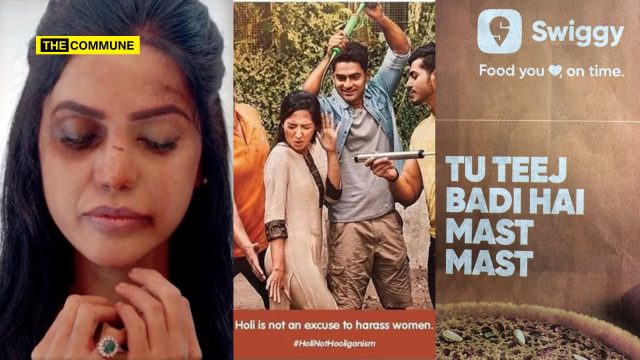
On 27 July 2025, food delivery platform Swiggy published an advertisement in the Jaipur Times with the headline “Tu Teej Badi Hai Mast Mast” to mark the Hindu festival of Hariyali Teej. The festival, which honors the sacred union of Lord Shiva and Goddess Parvati, was perceived to be mocked through the ad’s suggestive tone.
In the race to harness moment marketing, some brands are losing track. Teej Mata is worshipped on this auspicious day. It is not a meme material. #swiggypic.twitter.com/ohuPBAltoi
The campaign has sparked strong backlash, with several organizations accusing Swiggy of insulting Hindu sentiments and using a sacred occasion for vulgar, attention-seeking marketing.
#2 JK Paper India Demeans Holi as Wasteful
In March 2023, JK Paper India, a paper manufacturing company, released an advertisement portraying Holi as a wasteful festival. The campaign drew sharp criticism for shaming a sacred Hindu celebration while the company itself engages in water-intensive paper production, contributing significantly to environmental degradation.
Transcript of @JKPaperIndia's Hinduphobic ad on #Holi 👉About 4 bln people around the globe live in water scarce areas 👉As many as 1 bln of these people live in India 👉While playing Holi, a person uses at least 2 buckets of water, which means about 30 liters of water is wasted pic.twitter.com/J1OXOxoKd5
The ad was seen as hypocritical and offensive, sparking accusations of Hinduphobia and selective targeting of Hindu traditions.
#3 Bharat Matrimony Calls Holi a Festival of Harassment
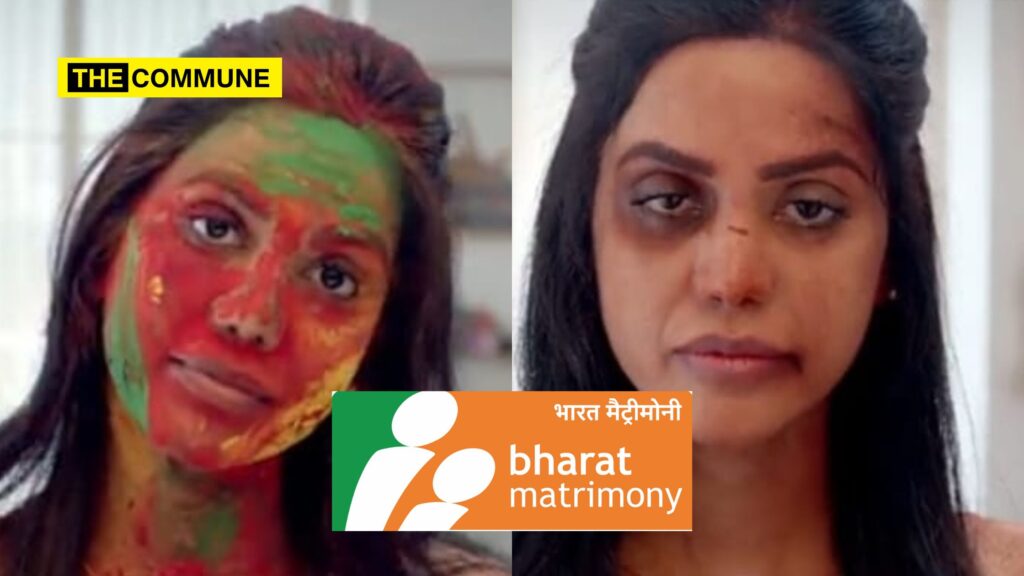
On 7 March 2023, Bharat Matrimony released an advertisement conflating Holi with sexual harassment, framing the sacred Hindu festival as unsafe for women. The ad, timed with International Women’s Day (which coincided with Holi that year), was widely condemned as Hinduphobic and misleading.
This Women's Day & Holi, let's celebrate by creating safer and more inclusive spaces for women. It's important to acknowledge the challenges that women face in public spaces and create a society that truly respects their well-being – today & forever.#BharatMatrimony#BeChoosypic.twitter.com/9bqIXZqaXu
— Bharatmatrimony.com (@bharatmatrimony) March 8, 2023
Critics noted that while claiming to raise awareness about women’s safety, the campaign specifically demonised Hindu traditions, while remaining silent or reverent about other religious festivals. The ad remains on Bharat Matrimony’s official X profile, further fueling backlash over its perceived contempt for Hindu cultural practices.
#4 Swiggy’s ‘Holi Egg’ Billboard Sparks Hinduphobia Row
In March 2023, Swiggy faced backlash over a controversial Holi-themed billboard that read: “Omelette; Sunny side-up; Kisi ke sarr par. #BuraMatKhelo. Get Holi essentials on Instamart.” The ad, perceived as mocking Holi traditions, was widely condemned as Hinduphobic for equating the joyful festival with food wastage and disorder. Critics slammed the campaign for moralising against Hindu practices while trivialising religious sentiment. Following widespread outrage, including from public figures, Swiggy removed the billboard.
Swiggy starts campaign to give Hindus gyan on Holi. Starts massive ad campaign with hashtag: #BuraMatKhelo. Same company @Swiggy is also famous for sending non-veg items to some of their customers who are staunch vegetarians & had ordered veg items: Swiggy #BuraMatBhejopic.twitter.com/ywqCpMuNRL
— Radharamn Das राधारमण दास (@RadharamnDas) March 6, 2023
#5 Viviana Mall Labels Holi as Hooliganism Risk
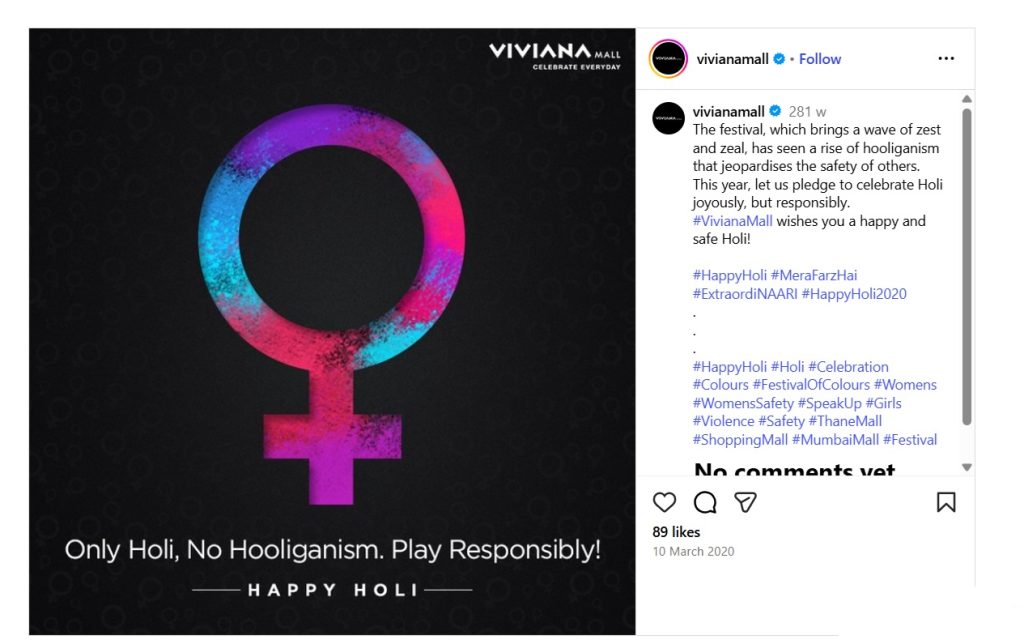
In 2020, Viviana Mall posted a Holi campaign on Instagram urging people to say no to “hooliganism,” claiming the festival had seen a rise in unsafe behavior. While masked as a message for responsibility, many viewed it as a veiled Hinduphobic swipe at Holi, portraying a joyous Hindu celebration as inherently disorderly.
Critics argued that such concerns should apply universally and not be selectively imposed on Hindu festivals. The campaign, though couched in concern for safety, was seen as part of a growing trend of corporate narratives that subtly demean traditional Hindu practices under the guise of social responsibility.
#6 Livpure Mocks Holi as Wasteful in 2020 Ad
In March 2020, Livpure Pvt Ltd released an advertisement portraying Holi as a wasteful celebration. The ad featured children stealing water balloons from a shop and justifying the act by claiming they were preventing water wastage during Holi. The message implied moral superiority in sabotaging the festival’s traditional celebrations. The company faced backlash for shaming Hindu customs under the pretext of environmentalism. Notably, Livpure disabled comments on their YouTube video to suppress public criticism, a move widely interpreted as an attempt to avoid accountability for hurting Hindu sentiments.
#7 FBB’s 2020 Holi Ad Links Festival to Harassment
On 6 March 2020, FBB released an online video campaign featuring digital influencer Mithila Palkar, aiming to raise awareness about harassment. However, the ad took a controversial turn when it subtly implied that Holi enables inappropriate behavior. Palkar’s line, “par saath hi hogi thodi zor zabardasti, thodi ched chad, thodi manmaani”, was criticized for associating Holi with eve-teasing.
While the campaign intended to highlight consent, critics pointed out it needlessly vilified a sacred Hindu festival, reflecting Hinduphobic undertones. The message, they argued, could have been conveyed without painting Holi in a negative and culturally insensitive light.
#8 Surf Excel Ad Portrayed Holi As A Festival Where Hindus Harass People
In 2019, Unilever faced backlash for its ads that portray Hindu-Muslim harmony during festivals. One ad for Surf Excel detergent showed a Hindu girl protecting a Muslim boy from Holi colours so he could go to the mosque.
#9 Reliance General Insurance Portrays Holi As Festival of Harassment
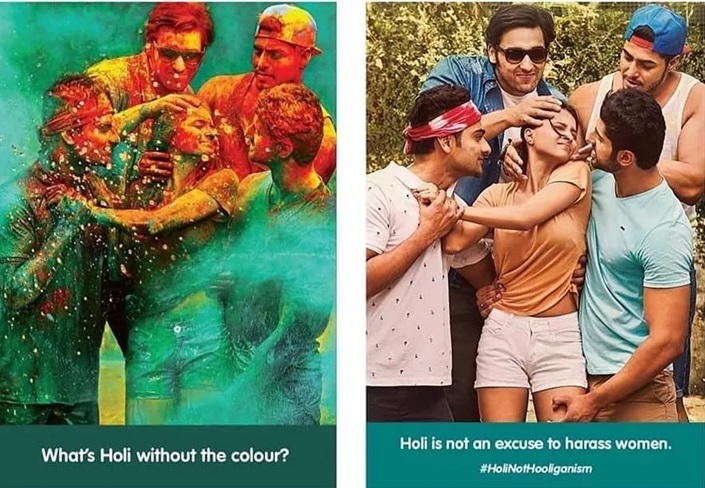
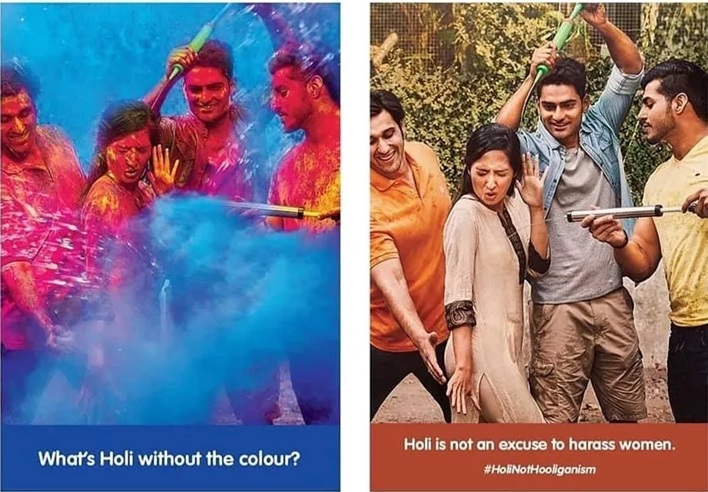
On 1 March 2018, Reliance General Insurance launched a social media campaign that portrayed Holi as a festival marked by harassment. Through a series of Instagram posters, the company emphasized incidents of eve-teasing associated with Holi. One caption read, “Behind the joyous colors of Holi lies an unfortunate reality. Press and hold to find out what it is. And pledge to ensure this year’s celebrations are truly happy and safe for us all. #HoliNotHooliganism.”
Image Source: OpIndiaImage Source: OpIndia
The campaign drew criticism for contributing to a growing trend among corporate brands of vilifying Hindu festivals through selective messaging.
#10 Deepavali As Smoke Festival – Priyanka Chopra & Radio City
Actors like Priyanka Chopra, who contracted asthma only during Deepavali, made her presence known by requesting every Hindu not to burst crackers to celebrate a green Deepavali.
Radio City used children and their love for crackers to promote a “smoke-free” Deepavali.
These are just a few advertisement campaigns and instances of secularization of the Hindu festival of Deepavali. Thanks to the constant virtue signalling, Hindus are rebelling more and more and celebrating Deepavali like it should be celebrated – with pomp, splendour, sweets, savouries, and lots of crackers!
#11 Deepavali As A Noisy Festival – Tata Motors, Saregama Carvaan
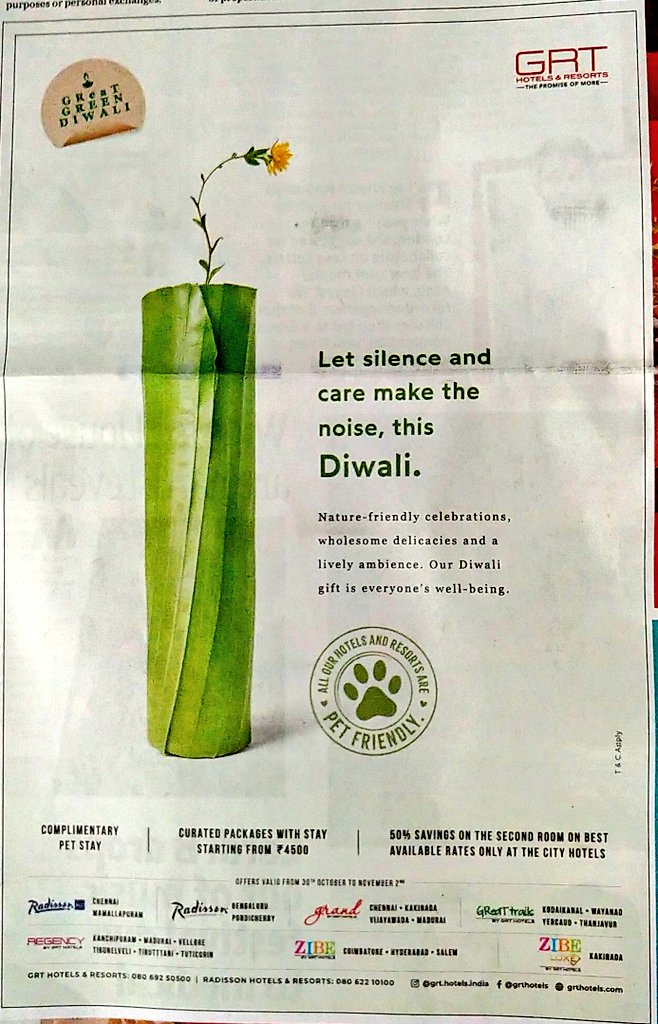
Since Deepavali is said to be a festival of lights, several brands came forward with ad campaigns gaslighting Hindus into not purchasing crackers. The noiseless Deepavali was one of the biggest campaigns that was run by several corporate houses. They gave excuses like make it safe for animals who get scared by the noise or make it noise-free for babies and elderly.
In 2020, Tata Motors launched the ‘Silent Diwali Film’ to promote a safe, pollution-free Diwali while encouraging viewers to adopt electric mobility for a sustainable future. The video contrasted the excitement of lighting firecrackers with the environmental harm they cause, showcasing nature’s beauty amid chaos. It emphasized that the loudest statement can be the quietest, highlighting the Nexon EV, India’s best-selling electric car, which operates with minimal noise.
The most recent one from the corporate stable is GRT group. In an advertisement in print and on their social media, they called for silence and care to make noise this Deepavali!
#12 Sexualizing Navratri/Durga Puja With Condom & Deodarant Ad (Manforce & Wildstone)
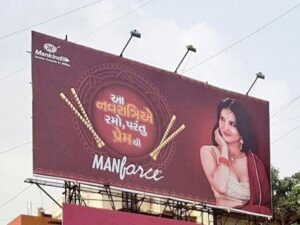
A Manforce advertisement featuring Sunny Leone on its poster was released during Navratri to promote condom sales in Gujarat. Later, due to public outrage, the company was forced to withdraw the ad following public outcry. The Confederation of All India Traders (CAIT) urged the then Union Consumer Affairs Minister Ram Vilas Paswan to act against Mankind Pharma and its brand ambassador for misleading consumers.
“Though they have not used the word condom in their banner but the intention is very clear as the combination of words like ‘play’, ‘love’ and ‘Navratri’ are coined above the large logo of Manforce“, CAIT National Secretary Praveen Khandelwal wrote in the letter. The hoarding showed Leone on one side staring at the text written in Gujarati, “Ya Navratriyon Ramo Parantu Prem Thi”- which translates to, “Play during Navratri but with love”, between two dandiya sticks and above the Manforce logo. “Their large banners in cities across Gujarat are shouting out to encourage youths to use Manforce condoms in the name of Navratri festival,” Khandelwal said. Terming the advertisement as “derogatory”, he further said: “This is a clearly irresponsible and immature attempt to boost sales by putting our cultural value system at stake.”
Wild Stone Advertisement Featuring Bengali Women (2007)
Deodorant ads often use sexual imagery and degrade women to extreme levels. Women, for years, have been protesting such obscene portrayals of their sexuality. Wild Stone deodorant was promoted in an advertisement that caused some controversy. Set amidst the backdrop of Durga Puja, it showed a married woman in traditional Bengali attire being drawn to fantasize about having intercourse with another man right after she bumps into him accidentally, courtesy of the “wild” fragrance. The Bengali community got deeply offended by such blasphemy and protested the defamation of their holy celebrations.
#13 Dabur’s Lesbian Karwa Chauth
In 2021, an advertisement by Dabur that showed a lesbian couple celebrating Karwa Chauth landed the brand in trouble. Dabur’s new ad for its bleaching product featured a lesbian couple preparing for their first Karwa Chauth. The ad aimed to normalise same-sex relationships, but it backfired. The LGBTQ community slammed the ad for endorsing a “regressive” festival and a fair-skin obsession. The ad offended both the supporters and the critics of Karwa Chauth. The former disliked the brand’s promotion of fair skin, while the latter denounced the festival as a backward practice.
Well done, Fem/Dabur!
A nice film for a traditional, often-criticized festival by an otherwise conservative brand. pic.twitter.com/gHBTca6jP8
Karwa Chauth has often faced scorn and ridicule from the liberals. Karwa Chauth has often been criticised by the left-liberals as a festival that promotes patriarchy. By contrast, they maintain a deafening silence when it comes to calling out traditions of other religions that are patently racist, misogynistic, and regressive.
#14 The Quint Labels Holi as ‘Terror’, Glorifies Other Religions
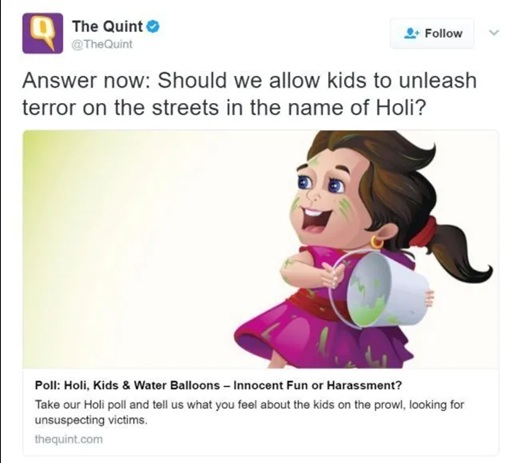
On 3 March 2017, The Quintpublished an article titled “Should we allow kids to unleash terror on the streets in the name of Holi?”, linking a joyous Hindu festival with violence and fear.
Image Source: OpIndia
This aligns with a pattern of selective portrayal where The Quint praises Islamic traditions like Ramzan fasting but casts Hindu festivals such as Holi and Navratri in a negative light. While Eid is associated with harmony, Holi is framed as a gateway to “terror.” Such headlines suggest a consistent Hinduphobic bias used to attract engagement and appease its left-leaning readership.
#15 Finolex Ad Labels Holi As Wasteful
On 21 March 2016, Finolex Pipes and Fittings released a digital ad campaign that many Hindus found demeaning towards the festival of Holi. The 10-second video featured the line, “Every drop you save, adds color to someone else’s life,” implicitly framing Holi celebrations as wasteful. While presented as a water conservation message, the ad was seen as selectively targeting Hindu festivals under the guise of social responsibility. Several viewers criticized the brand for its patronizing tone and for singling out Holi, reflecting a broader trend of corporates adopting dismissive attitudes toward Hindu cultural practices.
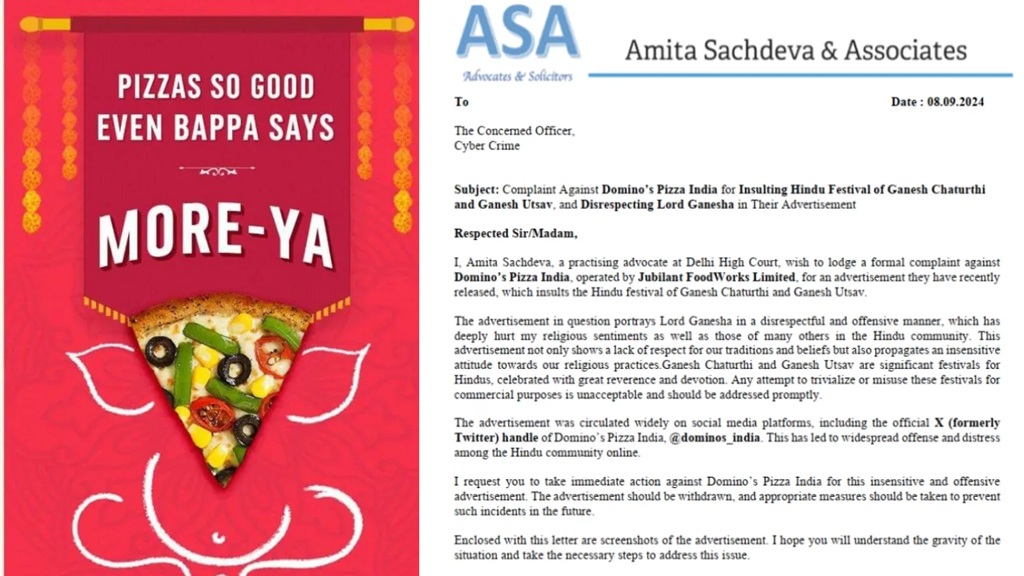
#16 Domino’s Ganesh Ad Sparks Outrage Over ‘More-Ya’ Wordplay
On 7 September 2024, Domino’s India sparked outrage during Ganesh Chaturthi by emailing customers an ad that many Hindus found blasphemous. The poster featured a pun on the sacred chant “Ganapati Bappa Morya,” altering it to “More-Ya” to promote pizza.
Image Source: Best Media Info
The image even depicted Lord Ganesha with a pizza as His head. Delhi High Court advocate Amita Sachdeva filed a formal complaint, calling the ad offensive and disrespectful to Hindu beliefs. She pledged legal action and shared her statement on social media. The campaign triggered widespread backlash online, with netizens calling for a boycott of Domino’s India.
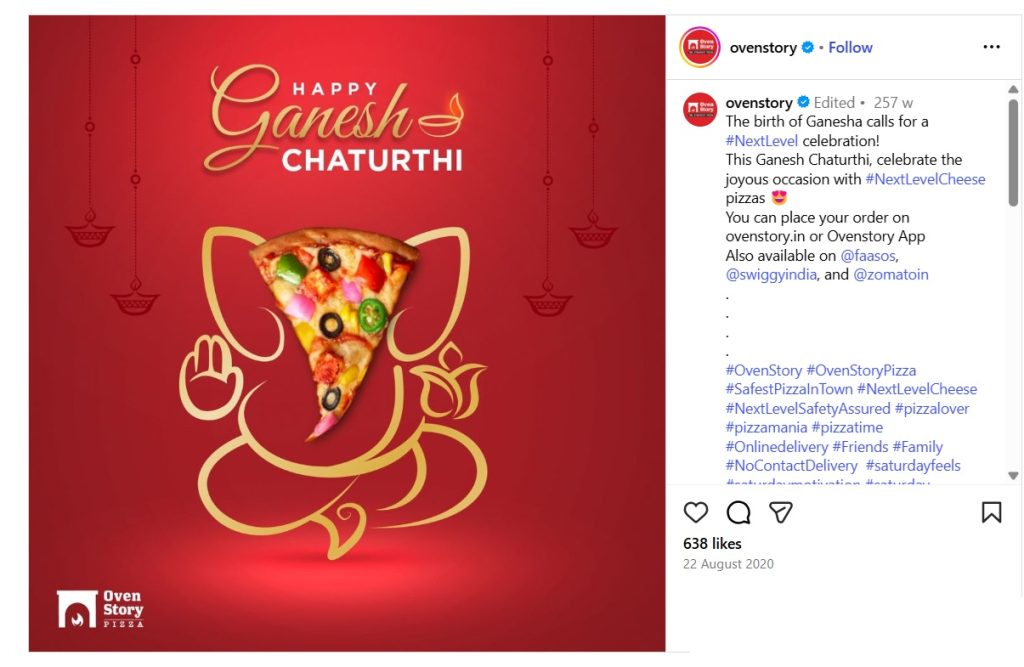
Similarly, a brand named Ovenstory posted an image of Ganpati Bappa with pizza as His head.
However, this one went unnoticed.
#17 Cracker-Free Deepavali By Tanishq
In 2020, Tanishq encountered significant backlash over a Diwali advertisement featuring actors Neena Gupta, Nimrat Kaur, Sayani Gupta, and Alaya F discussing the significance of the festival. Sayani Gupta’s call for a cracker-free Diwali upset many Hindus on Twitter, resulting in widespread criticism. In light of the negative reactions, Tanishq opted to withdraw the ad.
#18 Urduizing Deepavali By FabIndia
Fabindia drew backlash with its festive collection named ‘Jashn-e-Riwaaz,’ which used Urdu, the language associated with Islamic culture, to promote Diwali attire, sparking a debate over cultural misrepresentation. The ad was later removed from the platform.
Deepavali is not Jash-e-Riwaaz.
This deliberate attempt of abrahamisation of Hindu festivals, depicting models without traditional Hindu attires, must be called out.
In 2019, Brooke Bond faced criticism for an ad depicting a son abandoning his elderly father at the Kumbh Mela. Viewers condemned the storyline for misrepresenting the sacred Hindu gathering, portraying Hindus as neglectful and promoting harmful stereotypes.
Critics argued that the ad demeaned Hindu traditions and contributed to Hindumisia by using a revered cultural event as the backdrop for a narrative of cruelty and abandonment.
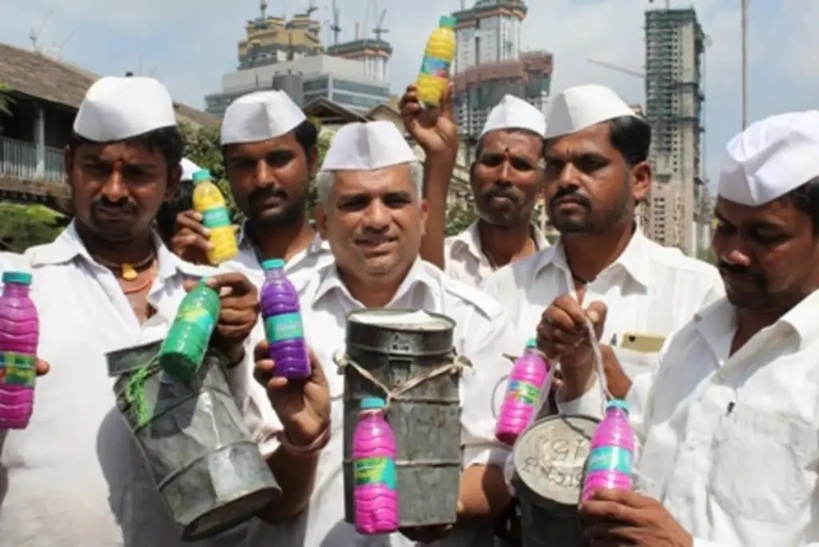
#20 Bisleri’s Waterless Holi Campaign Draws Ire
Bisleri, in collaboration with Mumbai Dabbawalas, ran a Holi campaign promoting waterless celebrations. Eco-friendly colors were distributed with tiffin boxes, and company reps handed out colors at toll booths.
Image Source: OpIndia
While framed as an environmental message, the campaign drew criticism for selectively targeting a Hindu festival and projecting Holi as wasteful.
Subscribe to our channels onTelegram, WhatsApp, and Instagram and get the best stories of the day delivered to you personally.
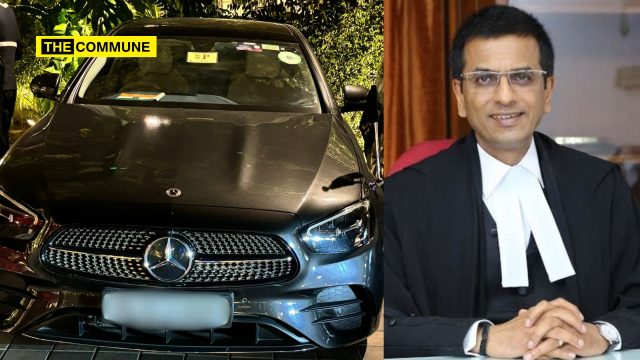
The administrative branch of the Supreme Court has formally approached the Delhi Transport Department seeking the prompt assignment of a specific vehicle registration number for a newly purchased Mercedes-Benz E220 by former Chief Justice of India, Justice D.Y. Chandrachud.
In an official letter dated 28 July 2025, the Deputy Registrar (Transport) of the Supreme Court requested the Transport Commissioner to expedite the allocation of a preferred registration number for the luxury car. The correspondence emphasized the need for swift processing and asked that the registration details be shared with the registrar’s office once completed. Although the exact number sought has not been made public, such customised or “fancy” registration numbers are commonly requested by high-ranking dignitaries, subject to availability and compliance with rules.
Justice Chandrachud, who retired on 10 November 2024, was the 50th Chief Justice of India and is widely recognized for his influential judgments. During his eight-year tenure on the Supreme Court, he contributed to landmark rulings on issues including the Ayodhya land case, the revocation of Article 370, and the decriminalisation of same-sex relationships. He participated in 38 Constitution Benches, significantly shaping India’s legal landscape through progressive interpretations.
A tragic incident at the Kallakurichi Government Maternity Hospital has sparked outrage, as the parents of the deceased one-and-a-half-year-old girl have filed a police complaint alleging medical negligence. They claim their child died due to an overdose of medication and the absence of an ambulance and oxygen support during transport. Authorities have launched an investigation into the circumstances surrounding the child’s death.
Vishnupriya, the young daughter of couple Ezhumalai and Dhanalakshmi from Chinnakuppam village near Ulundurpet in Kallakurichi district, fell seriously ill on 27 July 2025. She was initially treated at the Ulundurpet Government Hospital before being referred to the Kallakurichi Government Maternity Hospital for further care.
According to reports, the child was taken for an MRI scan at the Medical College Hospital, during which she received medication three times. After the scan, however, she was reportedly transported back to the maternity hospital on a motorcycle instead of an ambulance without oxygen support. Tragically, the child passed away around 4:00 PM the same day.
Dhanalakshmi, the child’s mother, blamed the lack of an ambulance and oxygen during the transfer for her daughter’s death. In response, Dr. Bhavani, Dean of the Medical College Hospital, stated that the child received appropriate treatment but died suddenly. She added that an inquiry would be conducted regarding the decision to transport the infant by motorcycle and that disciplinary action would be taken if any negligence is found. The exact cause of death will be determined through an autopsy.
The incident has caused unrest among those present at the hospital, and Kallakurichi police have begun a formal investigation.
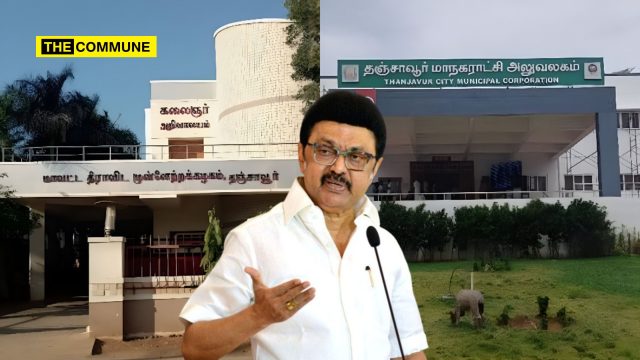
The Thanjavur Corporation has issued a notice to the DMK’s district office, Kalaignar Arivalayam, over unpaid property and sewerage taxes amounting to ₹34.46 lakh. The office, situated on M.K. Moopanar Road and inaugurated by the late party leader M. Karunanidhi on 27 July 2010, is officially registered under the name of Anbazhagan.
According to the corporation, the dues have accumulated from the year of inauguration up to the 2025–26 financial year. The notice instructs that the outstanding amount must be paid at the Corporation’s Tax Collection Centre within 15 days.
In response, the DMK office stated that a formal request had been submitted by former MP S.S. Palanimanickam, urging the corporation to exempt the office from commercial property tax, citing the presence of a public-access library within the premises. They claimed the petition has been submitted on three separate occasions but has received no response. The office assured that if the corporation reclassifies the property and adjusts the tax accordingly, the dues would be settled promptly.
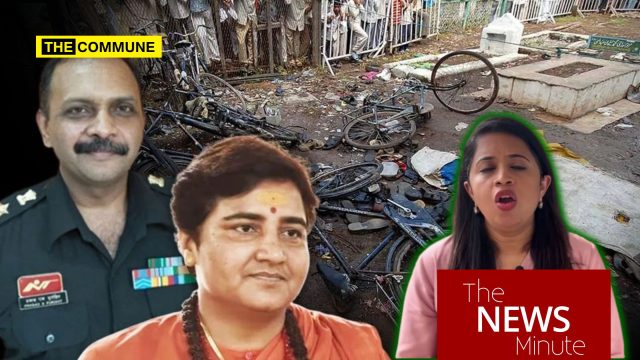
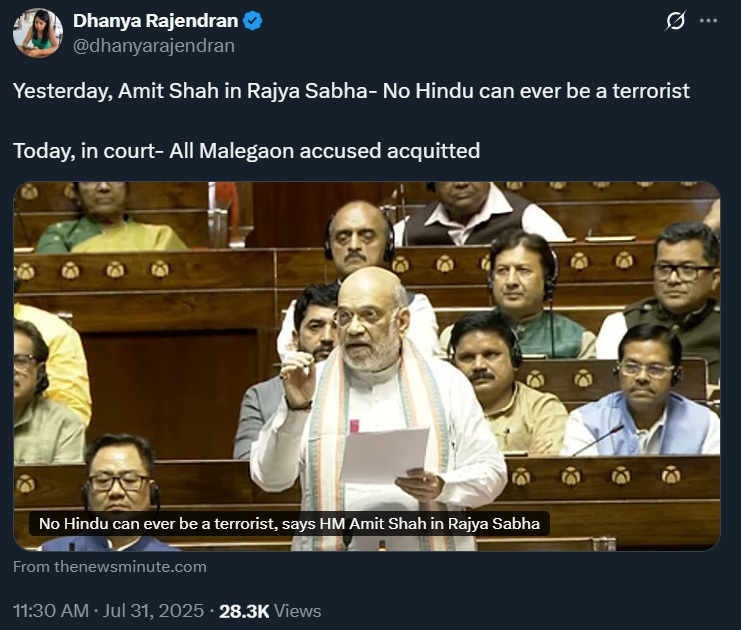
On 30 July 2025, Union Home Minister Amit Shah stood in the Rajya Sabha and declared unequivocally: “No Hindu can ever be a terrorist.” He was responding to years of narrative-building that sought to equate terrorism with Hindu symbols, particularly during the UPA regime, which popularised the term “saffron terror.”
Barely 24 hours later, on 31 July 2025, a special court in Mumbai acquitted all seven accused in the 2008 Malegaon blast case, including Sadhvi Pragya and Lt. Col. Prasad Purohit, vindicating Amit Shah’s position with judicial clarity. The accused, branded as terrorists for over 17 years, walked free after the court ruled that the prosecution failed to establish even the basic elements of the charges.
But instead of introspecting on how a deeply flawed prosecution collapsed under its own weight, The News Minute (TNM) editor, Dhanya Rajendran, took to social media with a cryptic, bitter post. She wrote, “Yesterday, Amit Shah in Rajya Sabha: No Hindu can ever be a terrorist. Today, in court: All Malegaon accused acquitted.”
Why so salty, Dhanya?
Is she implying that the courts took a cue from Amit Shah’s Rajya Sabha speech? That the judiciary, after 17 long years of trial, 323 prosecution witnesses, 10,800 exhibits, and over 1,300 pages of arguments, waited for Shah’s “signal” in Parliament before delivering its judgment?
A 17-Year Trial That Destroyed Lives
The court’s judgment systematically dismantled the “saffron terror” narrative. There is no proof that the motorcycle used in the blast belonged to Sadhvi Pragya, no evidence that she had possession of the vehicle at the time of the incident. There is no credible link between any accused and the actual bomb-making process. There is no proof that the Abhinav Bharat trust collected or used funds for terror.
Sanctions under UAPA were found to be defective and legally untenable.
Sadhvi Pragya, who was brutally tortured in custody, suffered brain swelling, multiple injuries, and eventually cancer. She never confessed to any crime, and the court has now ruled that no crime could be proven. She was vilified as the face of “Hindu terror” – propaganda that many “journalists”, including Dhanya Rajendran, ran with enthusiastically.
Where is the apology for what she went through? Why isn’t the same moral outrage directed at those who tortured her, fabricated evidence, and ran a witch-hunt?
Selective Outrage Much?
Just over a week ago, the Bombay High Court acquitted all the men convicted in the 2006 Mumbai train blasts. Is Dhanya aware of their religion? Does justice only matter when it serves your narrative?
Amit Shah’s statement was not a directive; it was a reflection of lived reality and judicial record. It is now backed by an acquittal in the Malegaon blast case, collapsing prosecution stories from the UPA era, and the complete failure of the “Hindu terror” thesis in court.
Meanwhile, Shah also pointed out in Parliament how the Congress attempted to blame 26/11 on Hindutva groups, even though the perpetrators were Pakistan-based jihadis. Shah named Congress leader Digvijaya Singh for promoting this lie and exposed how a leaked diplomatic cable revealed Congress leaders expressing more concern about “Hindu terror” than Pakistan’s role.
Why is Dhanya Rajendran so upset that innocent people were acquitted? She would have probably preferred that they remain falsely convicted to protect a political narrative – that of her paymasters.
What does that say about her faith in the judiciary – only valid when it aligns with her beliefs?
As Amit Shah said, “No Hindu can ever be a terrorist”, not because Hindus are above the law, but because the legal system has found no evidence to justify that label, even after exhaustive trials.
Justice has been done. The innocents are free.
Will those who manufactured and amplified the “Hindu terror” narrative face their own reckoning in the mirror, if nowhere else?
Subscribe to our channels on Telegram, WhatsApp, and Instagram and get the best stories of the day delivered to you personally.
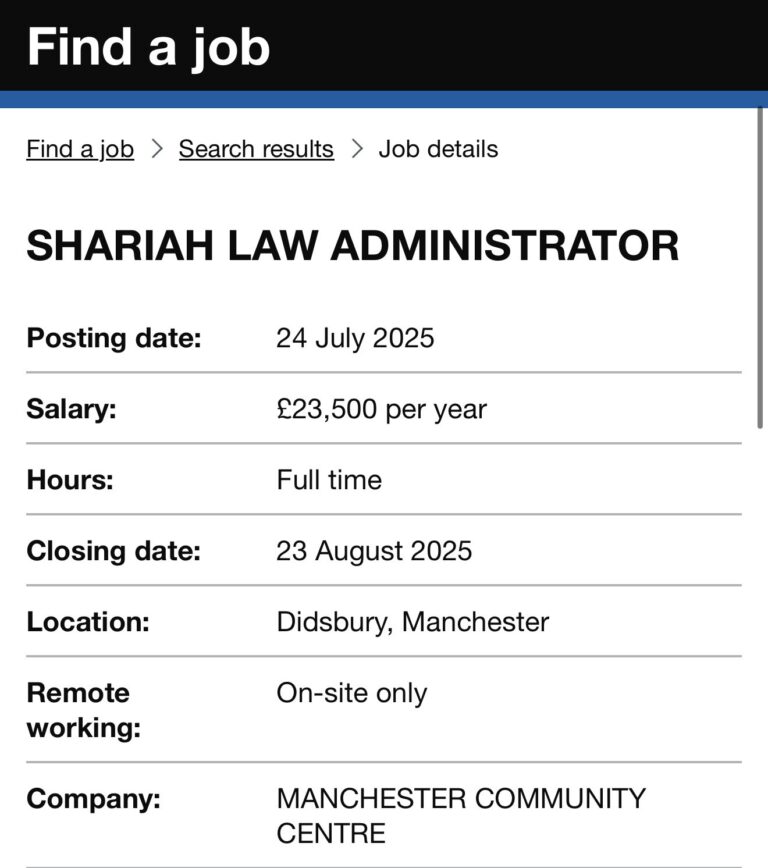
On July 28, 2025, the UK government removed a job advertisement for a “Shariah Administrator” from its official “Find a Job” portal following significant public backlash. The position, originally posted by Didsbury Mosque on July 24, 2025, offered an annual salary of £23,500 (approximately ₹25.14 lakh) and sought to appoint an administrative assistant to support its religious services division.
This development is one of 11 notable incidents compiled in this report, highlighting growing public discourse and concern over the perceived Islamization of the United Kingdom between 2000 and 2025. The documented cases span a range of issues, including religious influence within public institutions, radical preaching, the operation of parallel arbitration systems, political debates around blasphemy, and broader symbolic and cultural shifts.
Demographic Context
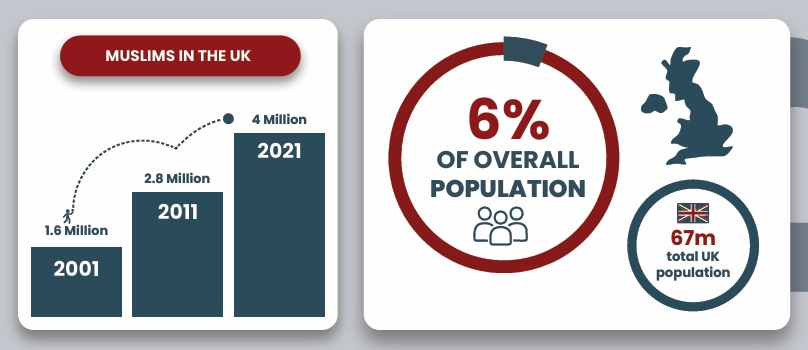
According to the 2021 Census, Muslims now make up approximately 6.0–6.5% of the UK population, an increase from 4.4% in 2011 and 2.7% in 2001. The Muslim population is currently estimated at around 4 million people, reflecting both demographic growth and the expanding visibility of Islamic institutions and practices within British public life.
Demographic and Regional Overview of the Muslim Population in the UK
Regional Distribution (2021 Census Data)
England: 3.8 million Muslims (6.7% of the population)
Scotland: 119,872 Muslims (2.2%)
Wales: 66,947 Muslims (2.2%)
Northern Ireland: 10,870 Muslims (0.6%)
Electoral Relevance
As of July 2024, the estimated number of registered voters in the United Kingdom stood at 28,258,80. Given the rapid population growth among Muslim communities, their political influence, especially in urban constituencies, is expected to increase.
Growth Rate
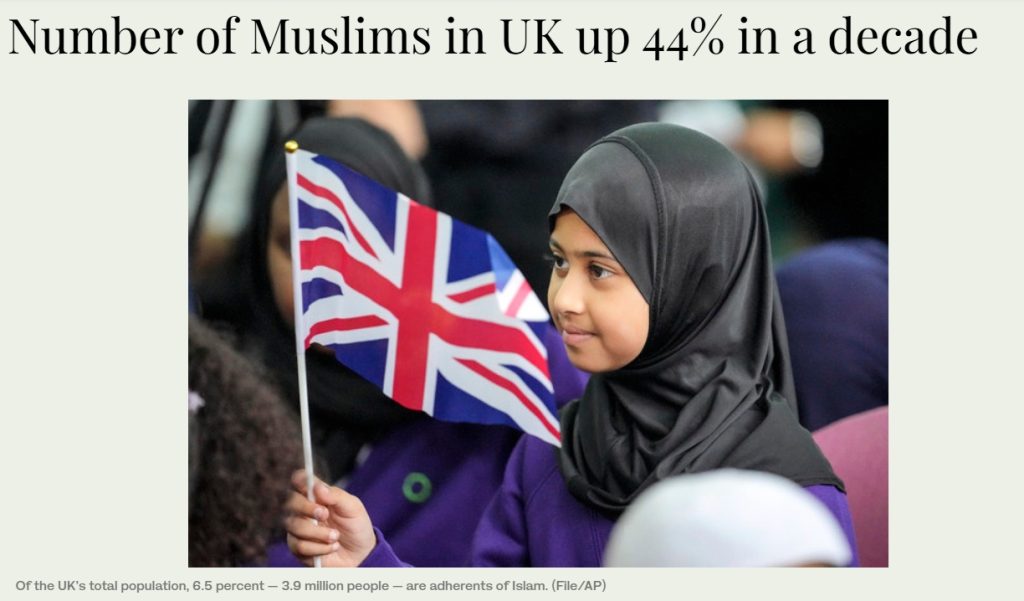
According to the figures from the Office for National Statistics (ONS) in 2022, the Muslim population in the UK has grown by approximately 44% over the past decade, making it one of the fastest-growing demographic groups in the country.
Places of Worship
Data from TheMuslimsInBritain.org, a directory, lists approximately:
1,887 to 1,947 purpose-built mosques (masjids)
2,157 to 2,178 total active Islamic worship sites, including temporary or informal prayer rooms
Future Projections
If current demographic trends continue, Muslims could comprise 10% or more of the UK population within the next 20 to 30 years. In certain urban centers, the cultural shift is already pronounced. For instance, in Birmingham, over 40% of children and youth are now from Muslim backgrounds.
#1 Sharia Job Ad Pulled After Backlash in Manchester
On 24 July 2025, Didsbury Mosque in Manchester withdrew a job advert for a “Shariah Law Administrator” after public outrage. The £23,500 role, listed on the UK government’s “Find a Job” portal, required a Shariah law degree and experience abroad.
Critics, including Nigel Farage and other politicians, accused it of promoting a parallel legal system. The mosque denied the claim, calling it a misrepresentation and stating the role was administrative and compliant with UK law. Shariah councils, which offer religious arbitration within legal limits, have faced increasing scrutiny despite operating under the 1996 Arbitration Act.
#2 Birmingham Hosts Europe’s Largest Eid Celebrations
On 30 March 2025, Birmingham hosted one of Europe’s largest Eid gatherings, with thousands attending “Eid in the Park” at Small Heath Park, organized by Green Lane Masjid and Community Centre (GLMCC). Due to weather, some celebrations moved indoors. The West Midlands also saw large turnouts in Wolverhampton’s West Park. Organizers emphasized unity and remembrance of global suffering, especially amid conflict. Eid al-Adha, commemorating Prophet Ibrahim’s faith and sacrifice, was highlighted as a time of hope and reflection. Leaders like Haniya Aadam and Sohail Khan called for solidarity and welcomed all communities to the inclusive, festive events.
#3 Belfast Marks Eid with 2,000-Strong Gathering
On 30 March 2025, about 2,000 people celebrated Eid al-Fitr at Newforge Sports Complex in south Belfast – the largest such gathering in Northern Ireland. Organized by Dr. Raied Al-Wazzan, multiple events were held citywide due to growing participation. PSNI Chief Constable Jon Boutcher attended, calling it an important gesture of support for a community that often feels vulnerable. Participants likened the celebration to Christmas, emphasizing joy after Ramadan’s spiritual discipline. Speakers like Leila Hashim and Dr. Ahmar Saeed highlighted growing turnout and the need for more space in future. Community leaders praised efforts to strengthen interfaith and civic ties.
#4 UK Grooming Gang Scandal – Child Sexual Exploitation by UK Men of Pakistani Heritage
A 2014 report by Professor Alexis Jay exposed widespread child sexual exploitation in Rotherham, where 1,400 girls were abused by mainly Pakistani-heritage men between 1997-2013. Victims faced rape, trafficking, and threats, while authorities failed to act, fearing accusations of racism. The scandal led to resignations, police reforms, and Operation Stovewood, convicting 36 offenders. A decade later, Rotherham Council introduced a new safeguarding strategy, vowing to prevent future failures.
#5 Radical Preacher Anjem Choudary Jailed for Life Over Terror Leadership
In July 2024, radical preacher Anjem Choudary was sentenced to life imprisonment with a minimum term of 28 years for leading the banned terror group al-Muhajiroun. Convicted at Woolwich Crown Court, the 57-year-old was found guilty of directing ALM from 2014 to 2023, promoting extremist views, and inciting support through online lectures. The judge called his beliefs “entrenched and abhorrent,” citing his continued threat to public safety. Choudary had earlier served time for supporting ISIS. Co-accused Khaled Hussein, a Canadian supporter, received a five-year sentence. Authorities linked Choudary to decades of jihadist radicalization across the UK and abroad.
#6 Windsor Castle Hosts Historic Public Iftar
On 10 March 2024, Windsor Castle hosted its first-ever public Iftar in over 1,000 years, as 350 guests gathered in St George’s Hall to break their fast during Ramadan. The event, organised by the Ramadan Tent Project with support from the Royal Collection Trust, included the Islamic call to prayer echoing through the historic halls. King Charles III, Supreme Governor of the Church of England, was reportedly supportive of the event. The move drew criticism from Christian groups, with some online voices questioning the appropriateness of Islamic rituals inside a royal, traditionally Christian, venue.
#7 Batley Teacher Suspended, Forced into Hiding After Prophet Cartoon Sparks Outrage
In March 2021, a 29-year-old religious studies teacher at Batley Grammar School in West Yorkshire was suspended and forced into hiding after showing a cartoon of Prophet Muhammad during class. The incident triggered protests by parents outside the school and widespread online backlash. Despite over 60,000 people signing a petition for his reinstatement, the teacher did not return. The headteacher issued a public apology, calling the material inappropriate, and the school launched an investigation. Community leaders urged peaceful dialogue while condemning threats. The Department for Education backed the teacher’s right to teach challenging topics within the law.
#8 UK’s 80+ Active Sharia Councils
Though not legally recognized in the UK, over 80 Sharia councils operate nationwide, primarily addressing family issues like divorce and inheritance under Islamic law. These councils lack legal authority but are influential in Muslim communities, prompting fears of a “parallel legal system.” Critics argue the councils often disadvantage women, particularly in divorce proceedings. With cuts to legal aid, more couples now turn to Sharia bodies like the Islamic Sharia Council. A 2018 government review found councils sometimes discriminate against women. Despite having no formal jurisdiction, these bodies continue to grow.
#9 Increase In Muslim Mayors in UK Cities
Muslim political representation in the UK continues to rise, with several cities electing Muslim mayors. Sadiq Khan, of Pakistani descent, was re-elected Mayor of London in 2024. In May 2024, Mohammed Asaduzzaman became Brighton & Hove’s first Muslim and South Asian mayor. Nazma Rahman, a British Bangladeshi Muslim, became Camden’s mayor in 2023, one of the few Muslim women in such a role. Parwaiz Akhtar served as Mayor of Blackburn with Darwen (2023–2024), while Suleman Khonat, born in Malawi and of South Asian heritage, held the same post in 2022.
#10 UK Faces Threat from 25,000 Islamist Radicals: EU Official
In 2017, EU counterterrorism chief Gilles de Kerchove warned that the UK had identified 20,000–25,000 Islamist radicals, the highest in Europe. Of these, MI5 considered 3,000 a direct threat and monitored 500 constantly. Many terror attacks in the UK were carried out by individuals previously known to authorities but deemed low-risk. De Kerchove said ISIS was now urging attacks in home countries using everyday weapons. With returning foreign fighters and prison radicalization risks, UK security services face intense pressure and limited resources. Experts stressed the need for better mental health, education, and monitoring to counter evolving domestic extremism threats.
#11 Terror Preacher Abu Hamza and Finsbury Park Mosque’s Extremist Past In Jihadi Recruitment
In the late 1990s and early 2000s, Finsbury Park Mosque became a hub of radical preaching under Egyptian cleric Abu Hamza al-Masri. Once seen as a godsend, Hamza incited violence, glorified terrorism, and recruited for jihadist causes. He praised Osama bin Laden and the Taliban, trained followers in weapon use, and radicalized future terrorists like Richard Reid and Germaine Lindsay. His mosque served as a recruitment center for Al-Qaeda. Arrested in 2006 and later extradited to the U.S., Hamza’s legacy tainted the mosque’s image. Despite reform efforts since 2005, past associations continue to resurface in national security discourse.
Subscribe to our channels on Telegram, WhatsApp, and Instagram and get the best stories of the day delivered to you personally.
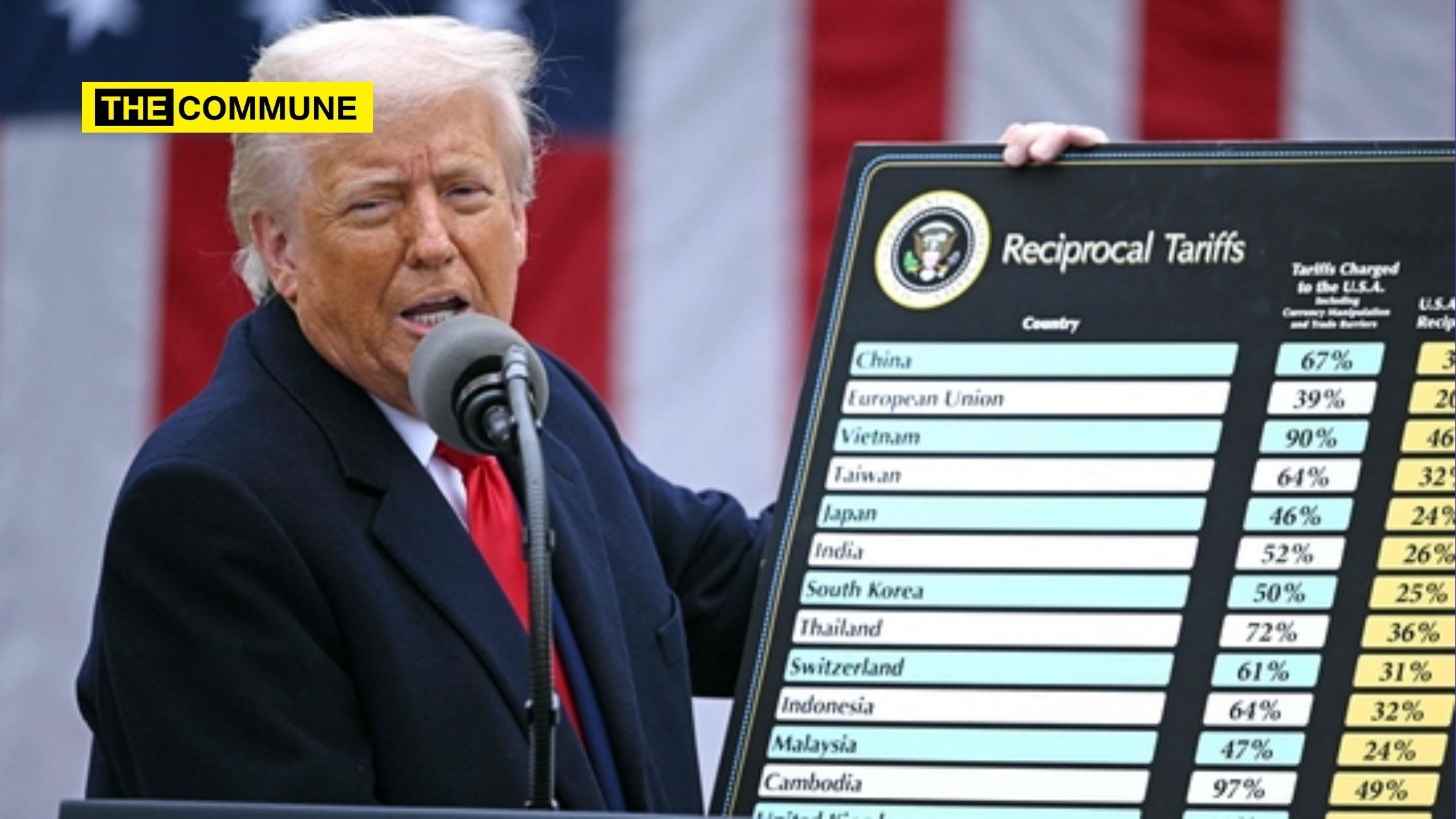
The statement by US President Donald Trump that India’s tariffs are way too high does not hold water as several nations, including America itself, protect their domestic businesses by imposing high customs duties on products.
According to the World Trade Organisation (WTO) data, the US imposes high duties on items such as dairy products (20%), fruits and vegetables (132%), cereals and food preparations (196%), oilseeds, fats and oils (164%), beverages and tobacco (350%), fish and fish products (35%), and minerals and metals (38%).
India, on the other hand, imposes 150% on whiskey and wines and 100-125% on automobiles. Japan also levies around 400 % duty on rice, Korea 887% on fruits and vegetables, and the US 350% on tobacco to protect domestic industries. While India’s simple average tariff is 17%, the actual duties on key American imports are much lower.
The weighted average tariff on US exports to India is below 5%. India has already started buying more oil and gas from the US to reduce the trade surplus and has offered to increase these purchases. The country has proposed significant tariff reductions, potentially lowering average duties from 13% to 4%, in exchange for exemptions from US tariff hikes imposed during the Trump administration.
According to Mahendra Patil, Founder and Managing Partner, MP Financial Advisory Services LLP, the imposition of a 25% US tariff on Indian exports marks a disruptive moment for sectors such as textiles, gems and jewellery, auto components, and pharmaceuticals. “For India Inc, the immediate priority is to diversify markets, accelerate value addition, and build domestic buffers to better withstand the unpredictability of global trade,” he mentioned. The recently concluded India-UK Free Trade Agreement presents a timely opportunity by unlocking stable, tariff-free access to a key market.
“This calls for a more nuanced and coordinated fiscal response, such as targeted support to impacted export sectors, faster refund mechanisms, and temporary enhancements to incentive schemes. India must use this moment not only to cushion near-term shocks but to strategically reposition itself in global value chains,” said Patil. India remains a domestic-oriented economy with consumption accounting for 60% of the total GDP. On the other hand, merchandise exports accounted for only 12% of GDP in FY24.
-IANS
Subscribe to our channels on Telegram, WhatsApp, and Instagram and get the best stories of the day delivered to you personally.
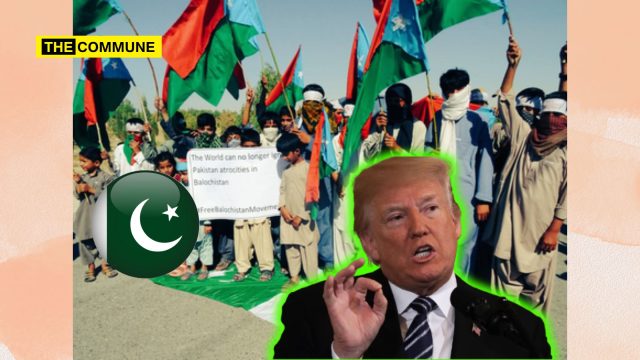
Just after US President Donald Trump announced to help Pakistan develop its “massive oil reserve,” leading Baloch human rights defender Mir Yar Baloch wrote to the American President, stating that military leadership in Islamabad have gravely misled the US administration regarding the “true geography and ownership” of Pakistan’s resources. He stated that the oil reserves are in Balochistan and not in Punjab.
This came after President Trump, on his social media platform, announced that the US and Pakistan have finalised an agreement to collaborate in developing the oil reserves in the South Asian country. Mir Yar Baloch asserted that Trump’s recognition of the oil and mineral reserves in the region is “indeed accurate.”
However, the human rights activist mentioned that the untapped reserves of oil, natural gas, copper, lithium, uranium, and rare earth minerals are “not located within the territories of Punjab which is the actual Pakistan,” but they belong to the “Republic of Balochistan, a historically sovereign nation currently under illegal occupation by Pakistan.”
Mir Yar Baloch stressed that the claim that these resources belong to Pakistan is not only “false,” but a “deliberate attempt to misappropriate Balochistan’s wealth for political and financial gain.” “Allowing Pakistan’s radicalised military, and rogue ISI known for sponsoring Al-Qaeda and various proxy groups responsible for the deaths of thousands of US soldiers in Afghanistan, to exploit Balochistan’s trillion-dollar reserves of rare earth minerals would be a grave strategic mistake.
Such access would significantly enhance the operational and financial capabilities of the ISI, enabling it to expand its global terror networks, recruit more militants, and potentially facilitate large-scale attacks reminiscent of 9/11,” said the human rights activist.
Raising concern, he stated that the profits from “Balochistan’s stolen resources” would not benefit its people — they would be funnelled into strengthening “anti-India and anti-Israel jihadist proxies,” further destabilising South Asia and the broader international order.
Mir Yar Baloch emphasised that preventing Pakistan’s “exploitation” of Balochistan is not just a matter of justice for the Baloch people; it is also a matter of global security. “There is no doubt: Balochistan is not for sale. We will not permit Pakistan, China, or any other foreign power to exploit our land or its resources without the explicit consent of the Baloch people. Our sovereignty is non-negotiable, and our struggle for rightful ownership and independence continues with dignity and resilience,” he stated.
He called on the international community, including the United States, to support the rightful aspirations of the Baloch people for freedom and control over their homeland and natural resources.
-IANS
Subscribe to our channels on Telegram, WhatsApp, and Instagram and get the best stories of the day delivered to you personally.
In a significant judgment, a special National Investigation Agency (NIA) court on Thursday acquitted all seven accused in the 2008 Malegaon blast case, including former BJP MP Sadhvi Pragya Singh Thakur and Lt Colonel Prasad Shrikant Purohit. The court dropped all charges against the accused under the Unlawful Activities (Prevention) Act (UAPA), Arms Act, and the Indian Penal Code (IPC), citing a lack of sufficient evidence.
The blast occurred on 29 September 2008, when a bomb strapped to a motorcycle exploded near the Bhikku Chowk mosque in Malegaon city of Nashik district, Maharashtra. The explosion, which took place during the holy month of Ramzan and just days before the Hindu festival of Navratri, claimed six lives and injured over 100 people in the communally sensitive town.
After nearly 17 years of legal proceedings, the verdict was delivered in a packed courtroom with all the accused present, as directed earlier by the court. The court also ordered compensation of Rs 2 lakh to the families of each of the six deceased and Rs 50,000 for every injured victim.
The trial saw a prolonged legal process involving a voluminous case file exceeding one lakh pages. Hearings concluded in April this year, and the court had reserved its judgment on April 19. Given the scale and complexity of the case, the court took additional time to scrutinise all the material before announcing its verdict.
Throughout the trial, the prosecution examined 323 witnesses, though 34 of them turned hostile, significantly weakening the prosecution’s case. Initially, the investigation was conducted by the Maharashtra Anti-Terrorism Squad (ATS), which arrested the accused and filed the first charge sheet.
However, in 2011, the probe was transferred to the NIA. In 2016, the NIA filed a supplementary charge sheet dropping charges against several accused, including Sadhvi Pragya, citing insufficient evidence to prosecute them under stringent anti-terror laws. All accused were out on bail during the trial. They were facing serious charges, including conspiracy, murder, and use of explosives under UAPA and IPC provisions.
-IANS
Subscribe to our channels on Telegram, WhatsApp, and Instagram and get the best stories of the day delivered to you personally.