Apple CEO Tim Cook has said that the iPhone maker had June quarter revenue records in more than two dozen countries and regions, including India. During the call with analysts, Cook said these results were driven by double-digit growth across iPhone, Mac and Services.
“We saw an acceleration of growth around the world in the vast majority of markets we track. We saw iPhone growth in every geographic segment and double-digit growth in emerging markets including India, the Middle East, South Asia, and Brazil,” the Apple CEO said. Mac continued to see excellent results with revenue up 15 per cent year-over-year, and “we set another all-time revenue record in Services which grew 13 per cent with double-digit growth in both developed and emerging markets,” Cook informed.
The company recently launched the Apple Store online in Saudi Arabia, and “we couldn’t be more excited to open new stores in the UAE and India later this year”. Counterpoint Research Director Tarun Pathak said that Apple continues its strong growth in India, achieving another record-breaking revenue quarter with double-digit growth.
“iPhone captured 7 per cent volume and 23 per cent revenue share as per Counterpoint during the quarter and the iPhone 16 was the top-shipped model in the region, a key driver of this momentum. A major highlight from the quarter was the significant shift in manufacturing,” he told IANS. Cook noted that the majority of iPhones sold in the US now have a ‘Country of Origin’ of India.
According to Counterpoint Research, India’s contribution to total U.S. iPhone shipments surged to 71 per cent in Q2, a substantial increase from just 31 per cent in the same period last year.
“Looking ahead, Apple also announced plans to expand its presence in India with new retail stores opening later this year, a key part of its ongoing channel expansion strategy,” said Pathak. On tariffs, Cook said the situation is evolving. “For the June quarter, we incurred approximately $800 million of tariff-related costs. For the September quarter, assuming the current global tariff rates, policies, and applications do not change for the balance of the quarter, and no new tariffs are added, we estimate the impact to add about $1.1 billion to our costs,” according to him.
This estimate should not be used to make projections for future quarters, as there are many factors that could change, including tariff rates, he added.
-IANS
Subscribe to our channels on Telegram, WhatsApp, and Instagram and get the best stories of the day delivered to you personally.
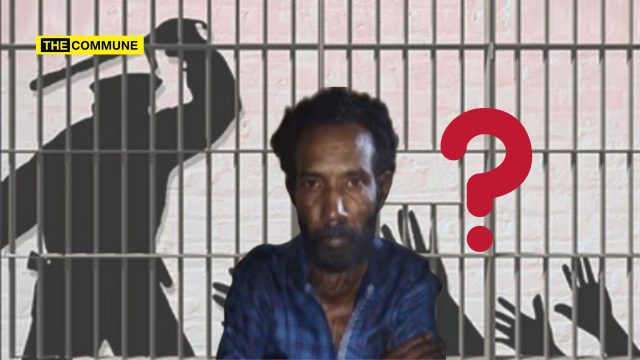
Just as the news about the custodial death of 27-year-old temple security guard Ajithkumar dies down, the news of something similacomes up. A 58-year-old tribal farmer, Marimuthu of Melkurumalai village near Udumalai, died under suspicious circumstances early morning on Tuesday, 29 July 2025, while in the custody of the forest department, triggering widespread protests and demands for a high-level inquiry.
According to initial reports, Marimuthu, who had recently been acquitted in a ganja smuggling case by a local court on 29 July 2025, was returning from Udumalai after receiving a copy of the judgment. On his way back to visit his family near Munnar, he was reportedly intercepted at the Chinnaru forest check post by forest department personnel. Officials claim he was found in possession of a tiger tooth and was taken to the Udumalai Forest Office for questioning.
Forest officials later stated that Marimuthu died by suicide, alleging that he hanged himself in the toilet of the office around 4:30 AM. However, the unexplained nature of his detention and the circumstances of his death have led to widespread suspicion and unrest in the area.
Marimuthu’s daughter, Sindhu, lodged a complaint with the Udumalai police, asserting that her father was unlawfully detained and could not have died by suicide. “We are tribals. He was a kind-hearted man. We believe he was beaten to death during interrogation,” she stated.
Multiple tribal organizations and the Hill People’s Association staged protests outside the Udumalai Forest Office, demanding that a case under the SC/ST (Prevention of Atrocities) Act be registered against the forest department officials. Protesters accused the department of custodial violence and failing to inform the family of the arrest.
The Udumalai police, under the supervision of DSP Namachivayam, have taken custody of the body, and a post-mortem is underway. District Collector Manish Naranavar confirmed that the matter is under investigation. He said the forest department maintains that Marimuthu died by suicide and that no external injuries have been found on the body so far. However, he added that the police are also probing why the family was not informed about his detention.
Over 100 police personnel have been deployed in the area to maintain law and order as tensions remain high.
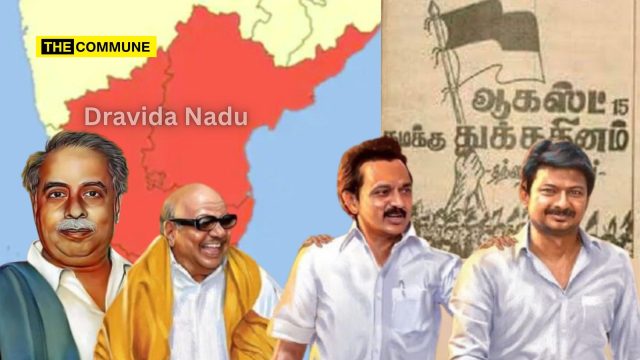
In a recent speech in the Lok Sabha, DMK MP A. Raja made headlines by declaring his party’s commitment to “national integration” and proudly asserting the DMK’s “nationalist” credentials. However, such claims stand in stark contrast to the party’s historical record, which includes a strong push for a separate Tamil nation Dravida Nadu until it was constitutionally curtailed.
The demand for Dravida Nadu was only abandoned after the Indian government, under Prime Minister Jawaharlal Nehru, enacted the 16th Amendment to the Constitution in 1963, widely known as the Anti-Secessionist Amendment. This amendment made secessionist movements illegal and prohibited political parties promoting separatism from participating in elections. Faced with the threat of being banned, the DMK officially dropped its demand for a separate Tamil nation in the same year, not out of ideological transformation but political necessity.
Even within the DMK, there had been internal disagreements on the practicality of Dravida Nadu. As early as 1956, at the Tiruchi conference, leaders such as E.V.K. Sampath questioned its feasibility. By 1960, a party meeting held in the absence of C.N. Annadurai saw leaders like V.P. Raman advocate for removing the separatist plank altogether. The party then shifted focus to regional concerns like opposing the imposition of Hindi and advocating for greater state autonomy moves that eventually contributed to its landmark electoral victory in 1967.
Yet, despite officially discarding the separatist agenda over six decades ago, the DMK continues to flirt with secessionist rhetoric from time to time. While the 16th Amendment legally buried the dream of Dravida Nadu, the party’s occasional revival of this outdated narrative suggests a lingering desire to stoke regional sentiments for political gains.
This contradiction between the DMK’s historical actions and its present-day nationalist claims raises serious questions about the sincerity of its commitment to national unity especially when viewed alongside instances of anti-India and anti-Hindu statements by various party leaders.
Separatist And Anti-India Remarks
Let us take a look at all the DMK members’ anti-India remarks that are separatist.
DMK MP A Raja
During a gathering in Coimbatore on 3 February 2024, DMK MP A Raja incited separatist sentiments as “India is not a nation. Understand this well. India is never a nation. One nation means one language, one tradition and one culture. Then only it is one nation. India is not a nation but a subcontinent. What’s the reason? Here, Tamil is one nation and one country. Malayalam is one language, one nation and one country. Oriya is a nation, a language and a country. All these nations make up India. So, India is not country it is a subcontinent.”
The hate speeches from DMK’s stable continue unabated. After Udhayanidhi Stalin’s call to annihilate Sanatan Dharma, it is now A Raja who calls for balkanisation of India, derides Bhagwan Ram, makes disparaging comments on Manipuris and questions the idea of India, as a nation.… pic.twitter.com/jgC1iOA5Ue
During DMK Youth Wing Conference on January 2024, A Raja spoke India is an artificially constructed nation against the Britishers, “Periyar did not accept this (Indian) nationalism. He said that Indian nationalism was a fiction. He called the Indian flag as a loincloth. He burnt the national flag. He burnt the portraits of Gandhi. The reason for that was Tamil nationalism and Tamilians should survive.”
2G scam fame A. Raja stokes controversy in #DMK youth win conference
➡️ Rooting for #Tamil Nationalism over Hindu nationalism
Similarly, DMK Minister for Minorities Welfare and Non-Resident Tamils Welfare, SM Nasar, stirred controversy during the launch of a website and the release of a conference report at the 12th World Tamil Economic Conference. The event, held on 16 June 2025, at Hotel Le Royal Meridien, was jointly organized by the World Tamil Economic Institute and the Chennai Development Corporation. In his special address, Nasar claimed, “Amartya Sen said if Tamil Nadu were a separate country, it would become a superpower and rank 18th among global powers.”
He said, “To tell the truth, an economist named Amartya Sen, recognized on the world stage. He is a Bengali, not even a Tamil. This Bengali man born in Shantiniketan. He studied at Oxford University and at Yale University. He has been a professor at two universities. Among students worldwide, he is known as a brilliant student—ranked among the top three. Such a person has also received the Bharat Ratna Award. Even after receiving many awards, he says in a research, “I have prepared research reports for development of many countries. If geographic details of the country is given based on a country’s economic growth, the goods it produces and grows. I would submit a Detailed Project Report (DPR) for 5, 10 and 15 years. I have submitted such reports for many countries, and I have seen with my own eyes the growth they have achieved. In that context, I have seen every state in India. I have studied the economic development of many states—from Kashmir to Kanyakumari.” And when he sees that, he says… He is not a Tamil. If someone like Sambath here said this, we might assume he’s saying it to flatter us because he’s Tamil. But that’s not the case here. The economist Amartya Sen who said, “If Tamil Nadu had been a separate country, it would have ranked as the 18th superpower in the world economically.”
During the Hindi imposition controversy, the ruling DMK appeared to revert to a familiar and divisive narrative. As its political strategies faltered, the party leaned once again into rhetoric that bordered on secessionism. At the center of this was Chief Minister M.K. Stalin, who controversially claimed, “India is not one country, but a subcontinent.”
In a recent social media post, Tamil Nadu Chief Minister MK Stalin criticized the BJP-led central government for what he described as the imposition of Hindi, stating, “BJP leaders advocating Hindi insist, “You must know Hindi to buy tea, pani puri, or use toilets in North India.” In the Age of AI, forcing any language as a third language in schools is unnecessary. Advanced translation technology already removes language barriers instantly. Students should not be burdened with extra languages. They should focus on mastering their mother tongue and English while gaining expertise in science and technology. If needed, they can learn any language later. True progress lies in innovation, not linguistic imposition. #தமிழ்_வாழ்க! #LetterToBrethren#StopHindiImposition.”
One of the images shared in the post included that the letter by leader to DMK cadres, in which the it stated, “India is not one country, but a subcontinent.”
MK Stalin said “DMK was the first to proclaim in Parliament and make people realize that India is not one country but a subcontinent.”
This is the same rhetoric peddled by Congress’ crown prince Rahul Gandhi who has time and again said “India is not one nation” but a “union of states”.
BJP leaders advocating Hindi insist, “You must know Hindi to buy tea, pani puri, or use toilets in North India.”
In the Age of AI, forcing any language as a third language in schools is unnecessary. Advanced translation technology already removes language barriers instantly.… pic.twitter.com/b5s5tpHuPZ
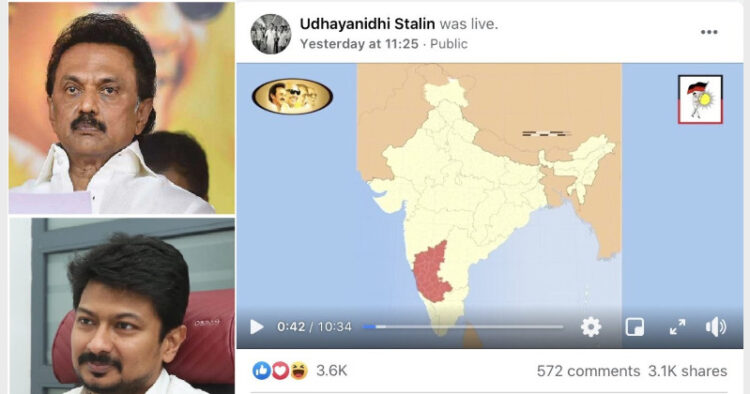
In 2020, Udhayanidhi Stalin, the deputy chief minister of Tamil Nadu, shared a video that featured a map of India omitting Pakistan-occupied Jammu and Kashmir (PoJK) and Chinese-occupied Ladakh. This official DMK video was posted on Facebook on 11 November that year and garnered over 3,000 shares. BJP spokesperson Suryah SG highlighted the significant error on Twitter, questioning the DMK’s stance toward India.
Suryah tweeted at DMK’s official handle, asking, “#DMK’s official video released yesterday doesn’t show PoK & CoK as part of #India. Is this the official stand of @arivalayam? DMK President @MKStalin and his heir @UdhayStalin should clarify if they have any private #Pakistan deal to take such a stand against India!” As the tweet gained traction, many users from Tamil Nadu and beyond expressed concern over DMK’s use of the incorrect map. One user even tagged the NIA, urging immediate investigation, while others called on the Government of India to take stringent action.
Following the backlash, the DMK removed the video from Facebook on November 14, but did not provide any explanation or apology. Udhayanidhi Stalin’s tweet was also deleted, and neither the party nor its leaders addressed the issue or offered any clarification.
DMK IT Wing
On 10 June 2021, the DMK IT wing’s official Twitter account quoted late former Tamil Nadu Chief Minister Annadurai, saying that the demand for a separate “Dravida Nadu” is still relevant, and has fuelled separatism.
"#திராவிட_நாடு கோரிக்கைதான் கைவிடப்பட்டது, ஆனால் அதற்கான காரணங்கள் அப்படியே உள்ளன"
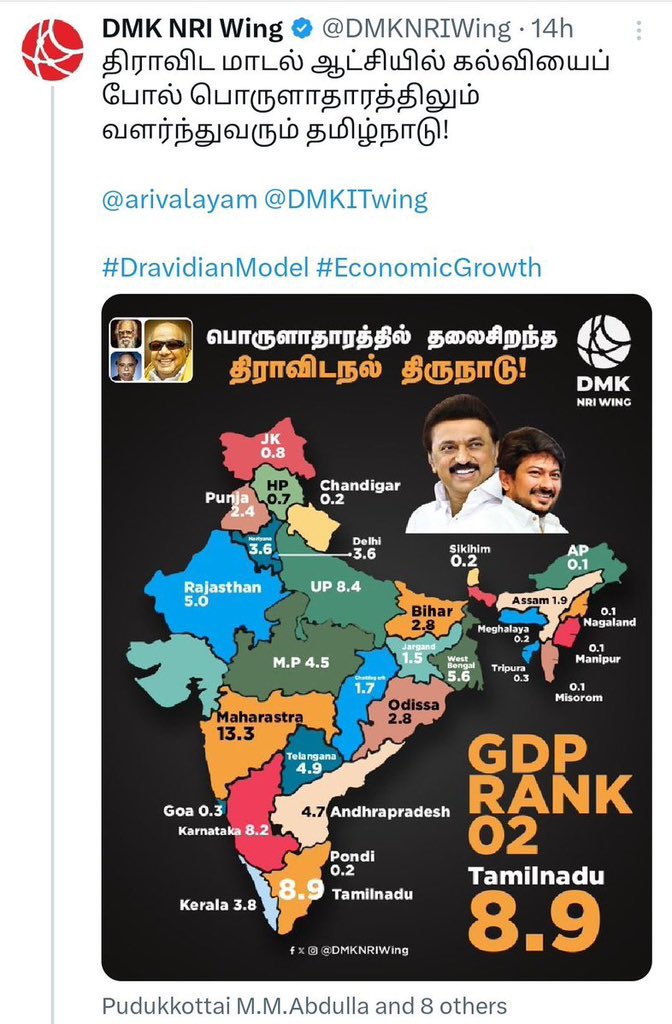
Similarly, the DMK NRI wing, shared a post on the social media platform X that included a map of India inaccurately depicting parts of Jammu and Kashmir as belonging to Pakistan and China.
Following significant backlash, with many accusing the DMK of seditious conduct, the post was promptly removed, and a corrected map was uploaded again with the caption, “Tamil Nadu is growing economically like education under the Dravidian model regime!” featuring the correct map of India.
The situation escalated when SG Surya, the State Secretary of Tamil Nadu’s BJP, criticized the DMK in a pointed post on X. He noted that this isn’t the first instance of the party misrepresenting India’s map, recalling a similar incident in 2020 involving Udayanidhi Stalin, the son of Chief Minister MK Stalin.
SG Suryah via his official X account stated, “Not the first time #DMK does this. Previously in 2020 #UdhaynithiStalin made the same mistake in a video & after I filed a complaint with then Police Commissioner he deleted the video where Indian map was misrepresented. No wonder #DMK & DMKTards are fond of Pakistan.”
Not the first time #DMK does this. Previously in 2020 #UdhaynithiStalin made the same mistake in a video & after I filed a complaint with then Police Commissioner he deleted the video where Indian map was misrepresented.
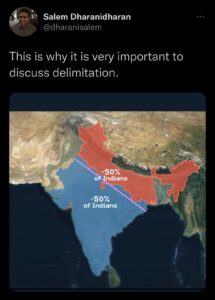
In November 2022, Salem Dharanidharan, who claims to be a former World Democracy Forum and UN youth leader but is really a DMK spokesperson, posted a distorted map of India that excluded Pakistan-occupied Kashmir (PoK) and Aksai Chin.
He made an anti-North Indian statement by dividing the map into two sections: one representing a large part of South, Central, and Western India with 50% of the population, and a smaller section including Uttar Pradesh, Bihar, West Bengal, and Northeast states, also with 50%. He claimed, “This is why it is very important to discuss delimitation,” suggesting that populous Northern states were depriving Southern states of benefits, fostering resentment. However, after facing backlash and potential legal repercussions, he deleted the tweet.
Senior DMK leader and spokesperson Constantine Raveendran in an interview claimed that if all 30 Indian states decide to leave the ‘Union,’ there will be no India.
It all began after Tamil Nadu Chief Minister MK Stalin said in the Tamil Nadu Assembly on Wednesday that referring to the Centre as Union Government is not a “social crime” as being portrayed by a few and the DMK government will continue to use the term ‘Union’ to refer central government.
Later in the evening, the issue of referring to the central government as the union government took up prime time debate slots in all mainstream news outlets. Constantine Raveendran, the DMK spokesperson, stated during a debate in News7 Tamil, “India does not exist if there is no state government. Where was India before 1947? There was no India before the British declared independence in 1947. There was no such entity called India prior to the adoption of our constitution on 26 January 1950.”
He went on to say, “Indian government does not have sovereignty on its own and its sovereignty is only transferred from people of the state. If all thirty states decide to leave the ‘Union,’ there will be no India.”
What absolute stupidity is this by DMK Spokesperson? He says if 30 Indian states now want to secede, they can secede & go out from Indian Union. Which Article in the Indian Constitution guarantees that? DMK's secessionist Agenda is out in open now. Shame.pic.twitter.com/gjt3a4KdLK
In 2023, a widely circulated video showed EV Velu, the DMK Public Works Minister, making remarks that appeared to disparage India by referring to it as “some place in North India.” This statement drew extensive criticism and condemnation.
In the video, DMK Minister EV Velu can be heard saying, “What is the state today? The word India never had any impact on us. When has India had an impact on us? I’m making an open statement. There wasn’t any such impact on us. I’m talking about some time ago. Where did we have an impact? There was no impact. India is someplace in North India. We belong to Tamil Nadu. If possible, we have to create a Dravida Nadu. Our thought process was going in that direction.”
DMK Minister Thiru EV Velu expressing what they stood for. This is the true face of parties in the I.N.D.I. Alliance.
In 2024, DMK’s Organizing Secretary RS Bharati took pride in the DMK advocating for a separate nation, leading to the creation of a distinct IPC act to impede such aspirations. He said, “You go to every town and poach ministers and buy MLAs, but in Tamil Nadu you can’t even touch the slippers of DMK’s last-mile cadres. Even if he dies, he will not change his party and survive. If someone asks Dravida Nadu as a separate nation, 7 years of imprisonment. Today’s politicians doesn’t know the fact. To the Indian Penal Code Section 153, they added a separate section 153 A, to give 7 years imprisonment. They changed the law exclusively for the DMK in 1962. Even with law, they could not destroy DMK. Can you destroy it by shouting?”
In 2024, former DMK minister K. Ponmudy and his son, MP Gautham Sigamani, presented DMK scion and Deputy Chief Minister Udhayanidhi Stalin with a symbolic shield shaped like a map of South India. The gesture was widely interpreted as an indirect nod to the “Dravida Nadu” separatist ideology once championed by the DMK.
தாய்வள நாட்டை கூறுபோடத் துடிக்கும் அரசியல் வாரிசுகள் !
வேற்றுமையிலும் ஒற்றுமையைப் பேணும் நமது பாரதத்தில், மக்களின் சமூக அடையாளங்களைக் கொண்டு அவர்களிடையே வெறுப்பை விதைத்து, வேற்றுமையின் வீரியத்தை பரப்பி, அவர்களைப் பிரித்தாளுவதையே நோக்கமாகக் கொண்ட குடும்பக்கட்சி தான் @arivalayam… pic.twitter.com/3ajgwS8Wik
This isn’t the first time the DMK has been targeting Hindu beliefs. Over the years, several party leaders have made controversial statements that many consider to be mocking Hinduism. Below are some notable instances.
DMK Leader K. Ponmudy
In April 2025, Former DMK Forest Minister K. Ponmudy speaking at an event organized by the Thanthai Periyar Dravidar Kazhagam, recounted a vulgar anecdote that linked sacred Hindu religious symbols to sexual positions. The minister referenced a crude joke historically shared in Dravidian movement circles, which equated the forehead markings of Shaivites and Vaishnavites to different sexual acts. The remarks, which quickly went viral, drew widespread condemnation from various political and religious groups. Subsequently, the speech resulted in the DMK stripping him of his post and ministership.
He said, “A man goes to the home of a sex worker. She asked him if he was a Shaivaite or a Vaishnavite. He did not understand. If she had asked for ₹5 or ₹10, it would have been okay. He pondered why she asked if he was a Shaivaite or Vaishnavite coming to a sex worker’s home. When he asked, he did not understand her question. She said if you are a Shaivaite, you wear holy ash this way, and if you are Vaishnavaite, you wear it this way. He did not understand. He asked her what she meant. She said if you are Shaivaite, it means intercourse in a lying position, and if it is Vaishnavaite, intercourse in a standing position.” This went viral and received criticism from all quarters.
This is DMK’s standard of political discourse in Tamil Nadu. Thiru Ponmudi was once the Higher Education Minister of Tamil Nadu & now Minister for Forests and Khadi, and the youth of Tamil Nadu are expected to tolerate this filth? Not just this Minister, the entire DMK ecosystem… pic.twitter.com/ENMq47hiPf
On 2 September 2023, Udhayanidhi Stalin, DMK leader and son of Tamil Nadu Chief Minister M.K. Stalin, participated in a conference organized by the Tamil Nadu Progressive Writers and Artists Association titled “Eradicate Sanatana Conference“. During the event, he made a controversial analogy, “The title of this conference has been excellently coined. You’ve named it as ‘Abolish Sanatanam Conference’ and not ‘Oppose Sanatanam Conference’, so my best wishes to that.”
He went further, comparing Sanatanam (Hinduism) to diseases, “Mosquitoes, dengue, flu, malaria, corona – we should not oppose these things. They’ve to be eradicated completely. Same is the case with Santanam (Hinduism). Our first work should be to abolish/eradicate Sanatanam instead of opposing it. So, my appreciations to you all for giving an apt title to the meeting.”
The speech drew widespread criticism, with many seeing it as part of a broader agenda against Sanatana Dharma by the I.N.D.I alliance, of which the DMK is a member.
Education Minister Anbil Mahesh Poyyamozhi
Likewise, Tamil Nadu Education Minister Anbil Mahesh Poyyamozhi stated the government’s intention to revise school textbooks to remove certain references to Hinduism. He said, “The part about Sanathana is found in the textbook printed in 2018. As the syllabus is changed every five years, textbooks will be altered next year. We have appointed a committee to look into the issue.”
DMK MP Kanimozhi
In 2018, DMK MP Kanimozhi made remarks about Lord Balaji of Tirupati that sparked outrage. She reportedly said, “Why would we require a god who can’t save the poor?.. There is no need.” She went on to criticize the disparity in temple access, stating, “People talk about morals that everybody is equal before God but the rich people are getting special treatment through special darshan. The poor people had to wait hours together for his darshan every day. He is a god to the people who give crores of rupees.” Kanimozhi further added, “How could he save us who can’t even protect his own Hundi?”
DMK MP A Raja
during a public gathering on 3 March 2024, at Coimbatore A Raja, delivered a speech characterized by abusive language and controversial statements targeted at Hindu beliefs. A Raja stated“If this is your Jai Sri Ram, if this is your Bharat Mata Ki Jai, we will never accept that Jai Sri Ram and Bharat Mata. Tamil Nadu won’t accept. You go and tell, we’re enemies of Ram.“ Later, he recounted the tale Kamba Ramayana and affirmed that “I don’t have faith on Ramayana, and Lord Ram“.
If you say this is the God. If this is your Jai Sri Ram, if this is your Bharat Mata Ki Jai, we will never accept that Jai Sri Ram and Bharat Mata. Tamil Nadu won’t accept. You go and tell, we’re enemies of Ram.
During another occasion in September 2022, while addressing a gathering convened to honor the six-decade association of Dravida Kazhagam head K. Veeramani with Viduthalai, A. Raja remarked, “You’re a Shudra till you remain a Hindu. You’re a son of the prostitute till you remain a Shudra. You’re a Panchaman (Dalit) till you remain a Hindu. You’re an untouchable till you remain a Hindu. How many of you wish to stay as children of prostitutes? How many of you wish to remain untouchable? Only if we’re vocal about these questions, it will become elemental in breaking Santhana (Sanatana Dharma).”
On September 2023 speaking at a protest organized by the rabid anti-Hindu outfit Dravidar Kazhagam against the Centre’s Viswakarma Scheme. A Raja spoke “I am oddly surprised that Udhayanidhi Stalin had only spoken about it only softly saying (Sanatana Dharma) has to be eradicated like malaria and dengue. Malaria and dengue doesn’t have social stigma. The society won’t look at them disgustingly. If we have to call it something disgusting, there was leprosy, there is HIV today. For us, just like leprosy and HIV, we’ve to see it (Sanathana Dharma) as a social stigma.” supporting Udhayanidhi stalin calling Hindu Dharma as Dengue and Malaria it should be eradicated.
Taking the hate to next level, now I.N.D.I.A alliance DMK leader A Raja compares Sanatana Dharma with leprosy and AIDS pic.twitter.com/WmUfRaxDRY
During the commemoration and film premiere event for Aanimuthu, affiliated with the Periyar Organization, DMK’s A Raja remarked, “At that point, when I used to step out, my mother would ask me to smear Muruga’s Vibuthi and I would smear it. Then I listened to Periyar’s final speech and continued reading all of his books. After that, I threw away the Vibuthi. Not only that, I also placed a elephant cracker below your Ganesha idol and it exploded. That was a time in my life. The reason behind this change in me is Periyar’s final speech.”
DMK Minister TRB Rajaa
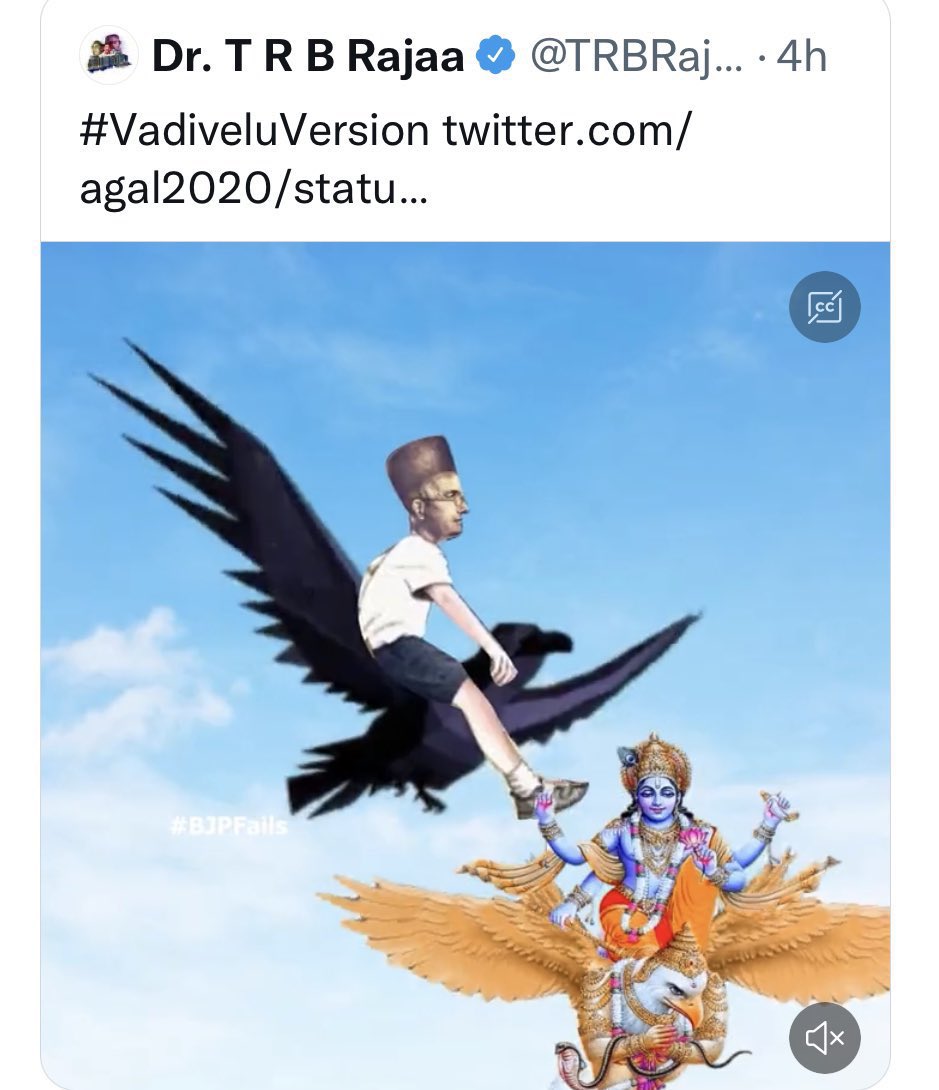
In another incident, DMK IT wing head and MLA TRB Rajaa, son of Lok Sabha MP T.R. Baalu, posted a tweet disrespectful to Hindu sentiments. The tweet featured an image depicting Veer Savarkar as a black bird hitting Lord Vishnu, who was shown mounted on his divine vehicle Garuda.
Hi @tnpoliceoffl one MLA Mr.@TRBRajaa posted sensitive & defamatory content that has a potential to disrupt peace.
Therefore to set an example, Social Media Monitor Team of TN Police should prosecute TRB Rajaa & show that they will follow the rules book without compromise. https://t.co/9fMOtUVkVppic.twitter.com/UD2vG96UnT
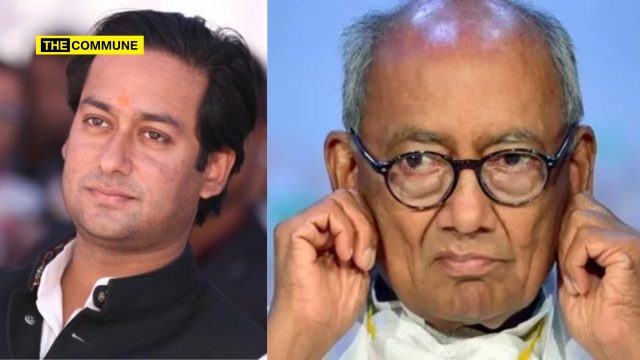
Jaivardhan Singh, son of former Madhya Pradesh Chief Minister Digvijaya Singh, said on Thursday that using the terms like “Bhagwa Atankwad” is wrong, but there is no place for those who support Mahatma Gandhi’s assassin Nathuram Godse.
Former minister Jaivardhan Singh, who is MLA from his family bastion Raghogarh in Rajgarh district, made these remarks while responding to the acquittal of ex-BJP MP Pragya Singh Thakur and six others in the 17-year-old Malegaon blast case in Maharashtra, in which six people were killed in 2008.
“I personally believe that using the word ‘Bhagwa’ is completely wrong. I haven’t read the court’s judgment yet, but I would welcome the court’s verdict,” Jaivardhan Singh said. He further stated that Pragya Singh Thakur may have been acquitted in the Malegaon blast case, but the people in a civilised society won’t accept her because she supports Mahatma Gandhi’s assassin, Nathuram Godse.
“Pragya Singh has praised Nathuram Godse several times at different occasions; therefore, even if she has been acquitted, we won’t accept her, and no one in a civilised society will accept her,” Jaivardhan added.
When reporters reminded him that Prime Minister Narendra Modi had already warned Pragya Singh Thakur for her alleged derogatory remarks on Mahatma Gandhi, and she was denied a Lok Sabha ticket from Bhopal in 2024, Jaivardhan said, “Then I would urge BJP friends also to stop praying for her (Pragya Thakur)”.
Notably, Pragya Singh Thakur had won the Lok Sabha from Bhopal in 2019 against Congress veteran Digvijaya Singh. Digvijaya Singh was among those Congress leaders to use words like ‘Bhagwa’ Atankwad’ and “RSS bomb-making factory” after the Malegaon blast had happened, and Thakur was arrested. During the 2019 Lok Sabha elections in Bhopal, the BJP had then presented Digvijaya Singh as anti-Hindu for his words “Bhagwa Atankwad” and Pragya Singh Thakur, despite being an accused then had won the election.
In 2024, the BJP, however, sidelined Thakur for his relentless, controversial remarks on Mahatma Gandhi and replaced her with Alok Sharma. Digvijaya Singh also chose to contest the Lok Sabha from his home district, Rajgarh, but he lost again.
The Mumbai court on 31 July 2025 acquitted all seven accused in the Malegaon blast case, including Pragya Singh Thakur and Lt. Colonel Prasad Shrikant Purohit, citing a lack of sufficient evidence under charges filed under the Unlawful Activities (Prevention) Act (UAPA), Arms Act, and various sections of the Indian Penal Code (IPC).
-IANS
Subscribe to our channels on Telegram, WhatsApp, and Instagram and get the best stories of the day delivered to you personally.
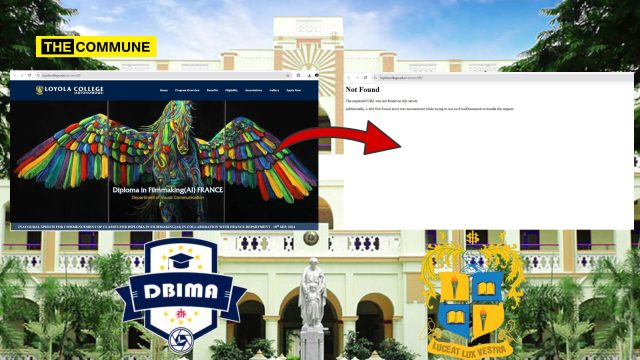
The Loyola College, Chennai, has taken down the advertisement for its unapproved ‘Diploma in Filmmaking (AI) France’ from its official website, following widespread criticism and regulatory concerns. The program was flagged for violating University Grants Commission (UGC) norms and potentially putting students’ academic futures at risk.
This development follows a firm advisory issued by the UGC, cautioning students, educational institutions, and EdTech platforms against entering into or endorsing collaborations with foreign entities that lack official approval. The commission warned that any degrees or diplomas obtained through such unauthorized partnerships would be deemed invalid, and institutions involved could face strict penalties.
The issue came to the forefront after Loyola College’s association with Don Bosco International Media Academy (DBIMA), Paris, drew scrutiny. The Legal Rights Protection Forum (LRPF), a legal advocacy organization, lodged formal complaints with the UGC, the Ministry of Education, and the University of Madras. The complaints alleged that Loyola was offering an unrecognized filmmaking diploma in collaboration with DBIMA—an arrangement not in compliance with existing educational regulations and potentially endangering students’ academic credentials and visa eligibility overseas.
In a statement released on 22 July 2025, the UGC reaffirmed its stance, referring back to a 12 December 2023 notification. The commission highlighted the applicable regulatory framework established in its 2022 and 2023 guidelines, which govern joint and dual degree programs, twinning arrangements, and collaborations involving foreign campuses. The statement served as a reminder to all stakeholders to adhere strictly to UGC-approved procedures when pursuing international academic partnerships.
“It has been observed that many HEls/colleges have entered into collaborative agreements/arrangements with foreign-based educational institutions/providers not recognized by the Commission and have been facilitating the issuance of degrees to the students enrolled in those institutions/college from such foreign-based educational institutions/educational providers. Similarly, some EdTech companies are also giving advertisements in newspapers/social media/television ete. offering degree and diploma programmes in Online modes in association with some foreign universities/institutions. Therefore, it is reiterated that any such kind of collaboration/ arrangement is not recognized by the University Grants Commission and accordingly, the degrees issued subsequent to such collaboration/ arrangement are also not recognized by the Commission. Action will be taken against all the defaulting HEls and EdTech companies under applicable laws/rules/regulations. Students/general public are once again advised to exercise due caution and are made aware that such courses/programmes/degrees do not have UGC recognition and that they would be doing at their own risk and consequences.” the UGC said.
📢 UGC Updates
UGC warns students and institutions against collaborations with foreign-based education providers and EdTech companies that are not recognised by the Commission. Degrees obtained through such arrangements are not valid and may result in strict action.
Allegations of Fraud and Misconduct Rock Loyola College and Don Bosco Academy
In a blistering email addressed to the CEO of Don Bosco International Media Academy (DBIMA), Paris, Joseph Kennedy a distinguished alumnus of both Loyola College, Chennai, and Don Bosco institutions has leveled serious accusations of academic malpractice, ethical misconduct, and deliberate concealment surrounding an unauthorized “Diploma in Filmmaking (AI), France.”
Kennedy, widely recognized for his 2022 campaign that led the University Grants Commission (UGC) to reject Loyola College’s bid for university status, has once again publicly challenged his former institution. His latest allegation targets a joint diploma program between Loyola and DBIMA Paris, which he claims violates educational norms and misleads students under the guise of a “dual certification” allowing project completion in France.
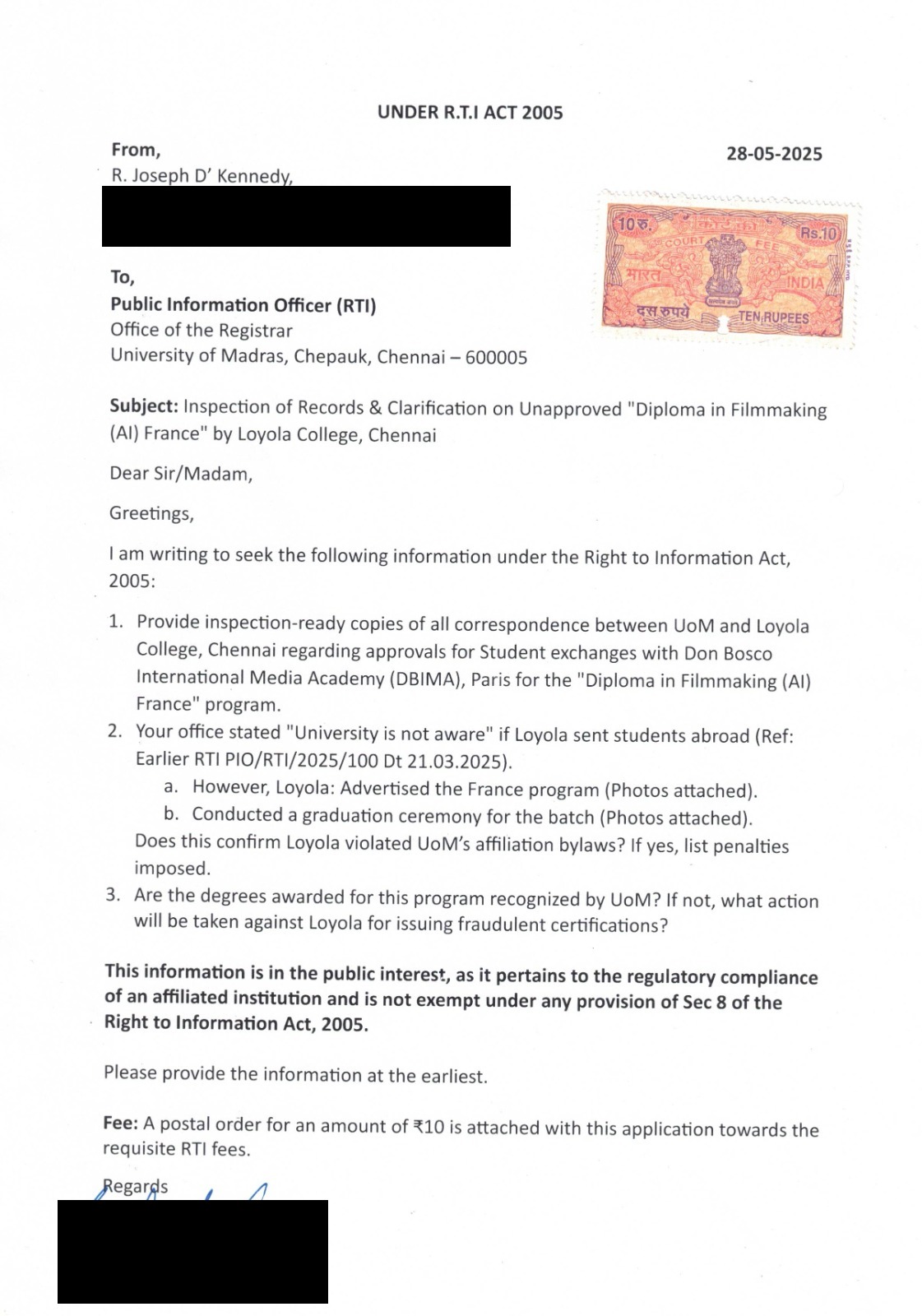
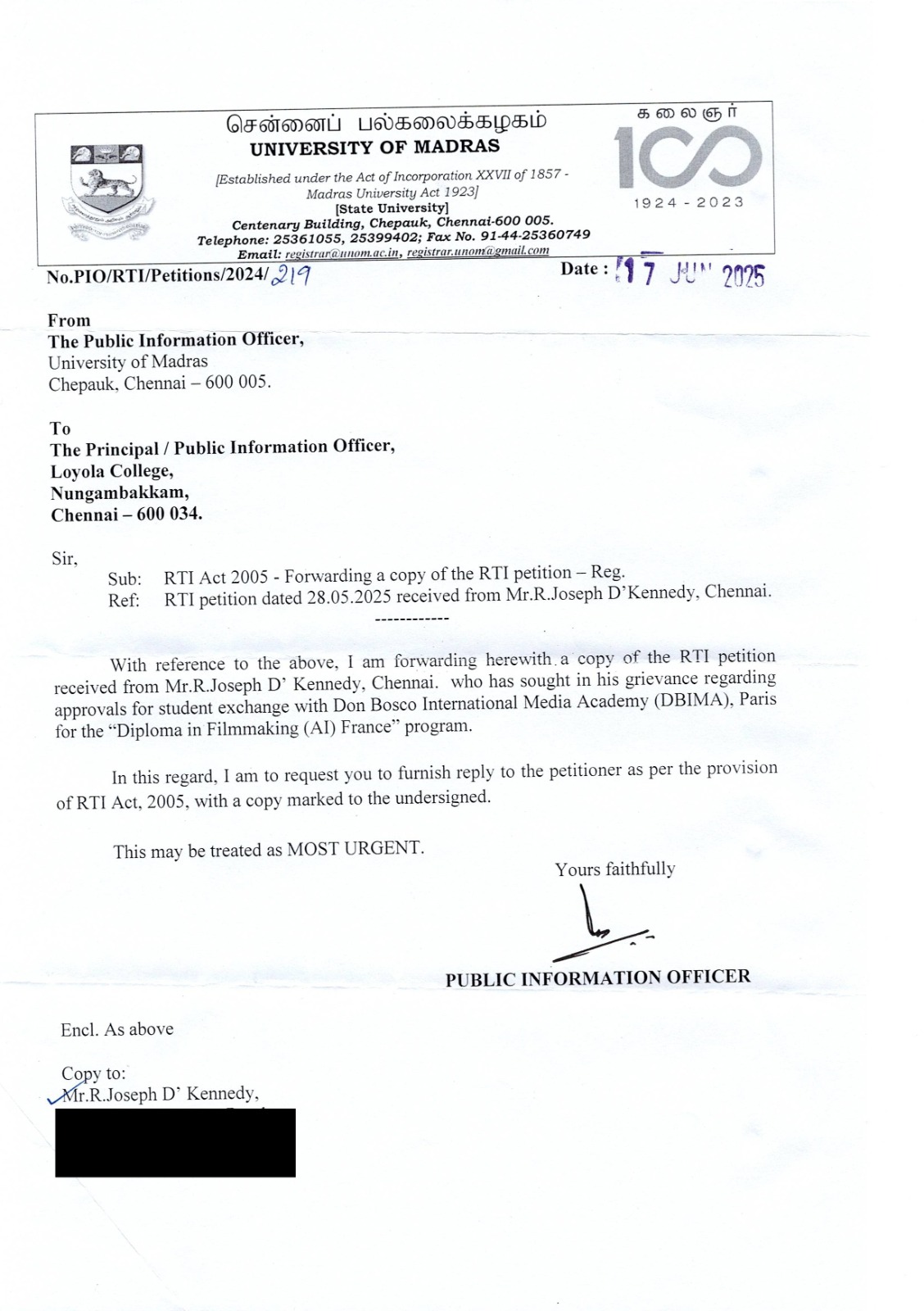
Despite the program being heavily promoted, including by DBIMA’s CEO Fr. John Paul Swaminathan, an RTI response from the University of Madras Loyola’s affiliating university confirms that the filmmaking diploma has not received formal approval, rendering it illegitimate under Indian regulations.
“Loyola College has a history of entering into unauthorized international collaborations without proper regulatory clearance,” Kennedy stated, citing his detailed 41-page submission to the UGC, titled “Loyola College, Chennai is at a Dangerous Inflection Point.”
The controversy takes a darker turn with the involvement of actor John Vijay, featured in promotional materials for the program alongside Fr. Swaminathan. Vijay has faced multiple accusations of sexual harassment, including during the 2018 and 2024 waves of India’s #MeToo movement. Despite these public allegations widely reported in outlets like Hindustan Times and India Today the institution continued to associate with him, a move Kennedy calls “deeply unethical and morally indefensible.”
“When a faith-based college promotes someone with a record of sexual misconduct, it sends a dangerous signal,” Kennedy emphasized.
In his email, Kennedy clarified that he is not inviting dialogue but publicly distancing himself from what he described as a “morally bankrupt” operation.
“If DBIMA continues its collaboration with Loyola, it does so fully aware that it is endorsing an academically unapproved and ethically compromised program.”
This development emerges amid increasing scrutiny of Catholic educational institutions in India, especially those run by Jesuit orders, many of which face criticism for administrative opacity, abuse cover-ups, and commercializing education under the guise of religious values.
Silence from DBIMA and Loyola, Escalating Regulatory Heat
As of now, neither DBIMA Paris nor Loyola College has issued any public statement addressing the allegations. However, sources within the University of Madras suggest further regulatory measures may be initiated if the program continues despite lacking approval.
Meanwhile, the University of Madras with over 130 affiliated colleges has come under fire for sidestepping its responsibilities. Instead of providing clear answers to an RTI filed by Kennedy, now an activist with Ending Clergy Abuse (ECA) India, the university redirected the request to Loyola itself raising concerns about its oversight mechanisms.
Kennedy’s RTI sought clarification on the academic legitimacy of the filmmaking diploma, the nature of correspondence between Loyola and the university, and possible violations of affiliation norms. Yet, the university effectively washed its hands of the matter.
“Asking Loyola to investigate itself is a complete abdication of responsibility,” Kennedy said. “It’s an institutional failure that threatens both student welfare and public trust in higher education.”
A Glamorous Facade, Misleading Promotions
Despite lacking regulatory clearance, Loyola conducted a graduation ceremony for students of the disputed diploma course. The event featured prominent figures from the Tamil film industry, including cinematographer P.C. Sreeram, actor Arya, veteran actor Nassar, and editor Lenin lending undue credibility to a program that may not meet legal or academic standards.
Kennedy expressed outrage over this deceptive promotion, “This goes beyond administrative negligence it’s willful deception. Students are spending lakhs for a qualification that may have no standing.”
He further criticized DBIMA’s apparent lack of due diligence before partnering with Loyola, asserting that the Salesian institution must not repeat the mistakes made during the DBPPA Egmore abuse scandal a case Kennedy claims was buried under a culture of silence and image management.
“If DBIMA finds this alliance has been built on false pretenses, it must immediately revoke certifications and publicly admit its role in misleading students.”
Human Rights Implications and Public Accountability
Adding weight to the controversy, the National Human Rights Commission (NHRC) has acknowledged a complaint from the Legal Rights Protection Forum (LRPF), citing potential violations of students’ rights. The complaint points out that unsuspecting students paid substantial fees for a program lacking both recognition and legal legitimacy potentially compromising their futures, especially if they sought international opportunities.
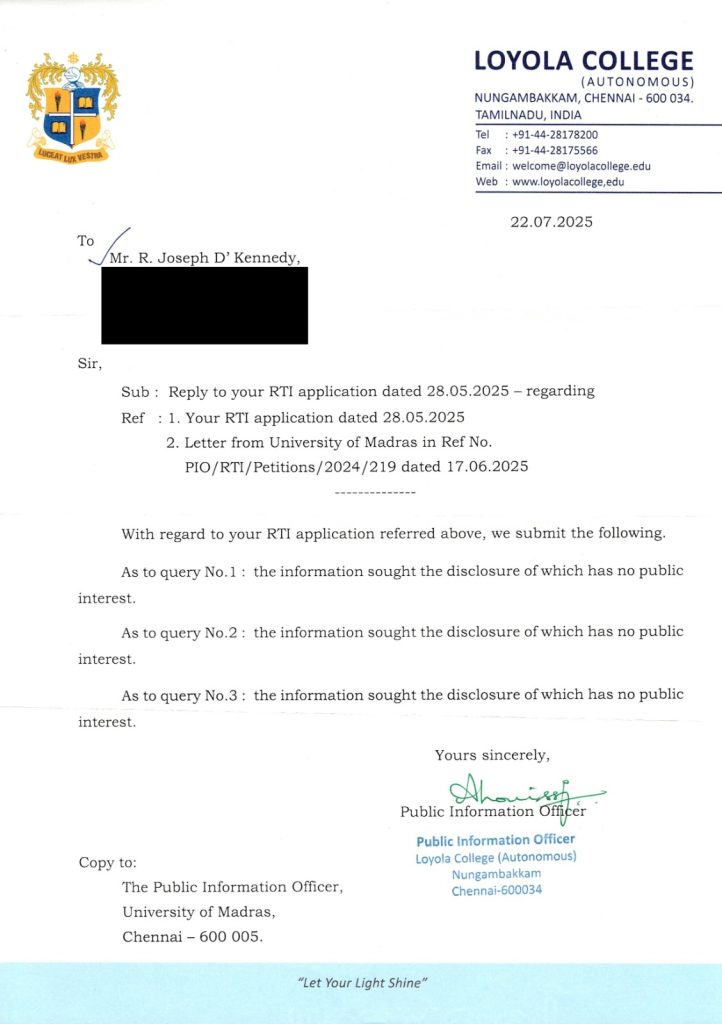
In parallel, Loyola’s evasive handling of RTI inquiries has amplified public criticism. The college failed to respond within the 30-day timeframe mandated by the RTI Act and, when it eventually replied, declined to share meaningful information dismissing the request as not being in the “public interest.”
Kennedy was incredulous, “Loyola acts like it’s above scrutiny. They held high-profile MoU events, issued press releases, but now claim there’s no public interest in disclosing program details? That’s absurd.”
A Second Batch Amid the Scandal
Despite legal scrutiny and media coverage, Loyola appears to be pushing forward with a second batch of the same filmmaking diploma, further alarming watchdogs and regulatory authorities. Kennedy warns that this brazen move points to institutional impunity enabled by systemic regulatory failure.
“This isn’t just about Jesuit overreach anymore it’s about a crumbling framework of academic governance. Officials at the University of Madras appear to be complicit by remaining passive.”
The unfolding scandal has exposed serious cracks in India’s higher education oversight particularly the ease with which private and autonomous colleges can bypass approval processes while using foreign branding to attract students. There are growing calls for the UGC and the University of Madras to take immediate and decisive action against Loyola College, restore regulatory credibility, and ensure that similar breaches do not recur.
Subscribe to our channels on Telegram, WhatsApp, and Instagram and get the best stories of the day delivered to you personally.
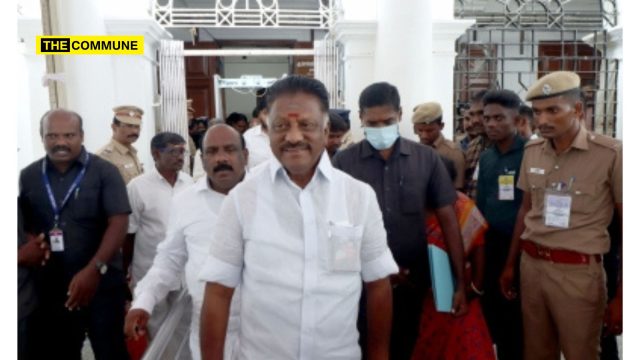
In a major political development in Tamil Nadu, the faction led by former Chief Minister O. Panneerselvam (OPS) has officially announced its exit from the National Democratic Alliance (NDA).
The declaration was made by senior leader and OPS loyalist Panruti S. Ramachandran, who stated, “We are breaking the alliance with the NDA.” The announcement comes as OPS prepares to embark on a statewide tour in the lead-up to the 2026 Tamil Nadu Assembly elections. Ramachandran noted that there is currently no alliance with any political party and that decisions regarding future alliances would be made closer to the elections.
The split follows what is widely viewed as a snub by the central leadership. During Prime Minister Narendra Modi’s recent visit to Tamil Nadu, OPS had written to him seeking an appointment, expressing that it would be his “singular honour” to meet the Prime Minister at Gangaikonda Cholapuram. However, the request was reportedly declined, leaving the OPS camp disappointed.
In the aftermath, OPS took to social media to criticise the Union Government for delays in releasing funds under the Sarva Shiksha Abhiyan, signalling a growing rift with the BJP. His departure from the NDA is now being seen as the culmination of these tensions.
Adding an element of political intrigue, OPS met Tamil Nadu Chief Minister M.K. Stalin during a morning walk earlier today, raising speculation about potential future alignments. OPS, once a key leader of the AIADMK and a former ally of the BJP within the NDA, has been politically adrift since a bitter power struggle with Edappadi K. Palaniswami (EPS) led to a split in the AIADMK. He subsequently formed his own faction and aligned briefly with the BJP.
The exit of the OPS faction from the NDA is expected to impact Tamil Nadu’s political landscape significantly, especially among the Thevar community, a powerful social group in southern Tamil Nadu that has traditionally backed the AIADMK. It remains to be seen how the community will respond to OPS’ decision to walk away from the BJP alliance. With the 2026 elections looming, the move sets the stage for potential realignments and shifting loyalties in the state’s dynamic political scene.
-IANS
Subscribe to our channels on Telegram, WhatsApp, and Instagram and get the best stories of the day delivered to you personally.
More than 5.67 crore job seekers have been registered on the National Career Service (NCS) portal (as on July 14), out of which 3.03 crore were male, 2.63 crore were female, 1.55 lakh were not gender-specified, and 8,535 were transgender, the Parliament was informed on Thursday. Further, more than 6.49 crore vacancies have been mobilised on the NCS Portal, Minister of State for Labour and Employment, Shobha Karandlaje, said in a written reply to a question in the Rajya Sabha.
The NCS portal is a one-stop solution for providing career-related services, including information on jobs from private and government sectors, information on online & offline job fairs, job search and matching, career counselling, vocational guidance, information on skill development courses, skill/training programmes, etc., through a digital platform.
The Ministry also launched the eShram portal (eshram.gov.in) on 26 August 2021, for the creation of a comprehensive National Database of Unorganised Workers (NDUW) seeded with Aadhaar. The eShram portal is meant to register and support the unorganised workers by providing them with a Universal Account Number (UAN) on a self-declaration basis.
As on 21 July 2025, over 30.95 crore unorganised workers have already registered on the eShram portal, the minister informed the House. Moreover, the Employees’ Provident Fund Organisation (EPFO) Payroll Data indicates the level of employment in the formal sector.
During the years 2020-21 to 2024-25, more than 5.99 crore net subscribers have joined the EPFO. Also, more than 7.67 crore newly registered employees, paid contribution under Employees’ State Insurance Corporation (ESIC) during the year 2020-21 to 2024-25, said the minister.
Karandlaje further stated that the Ministry of MSME, through Khadi and Village Industries Commission (KVIC), is implementing the Prime Minister’s Employment Generation Programme (PMEGP) for assisting entrepreneurs in setting up new enterprises in the non-farm sector. It aims to provide employment opportunities to traditional artisans/rural and urban unemployed youth at their doorstep.
-IANS
Subscribe to our channels on Telegram, WhatsApp, and Instagram and get the best stories of the day delivered to you personally.
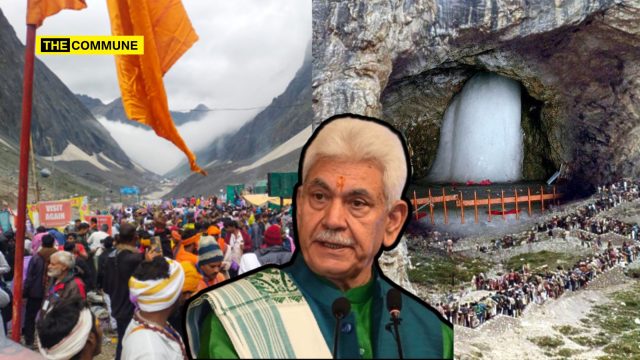
After the Yatris were allowed to move towards the holy cave shrine from Baltal base camp on 31 July 2025, the annual Amarnath Yatra 2025 has crossed the four-lakh mark. J&K Lt Governor Manoj Sinha, who is also the chairman of the Shri Amarnath ji Shrine Board (SAAB), shared the information on his X handle.
“Baba Amarnath makes the impossible, possible. With his blessings, the Holy Yatra today crossed the figure of 4 Lakh. I bow to Lord Shiva for this miracle and express my gratitude to everyone involved in making the holy pilgrimage a divine experience for devotees,” he posted on X.
He said this godly expedition was “incomparable not because it’s arduous and challenging but because it’s an inimitable journey into pure bliss”. “It’s a spiritual experience & gives an opportunity to devotees to know themselves & offers deep trust & fills their hearts with infinite gratitude,” the L-G further wrote in the post.
The L-G said the record number of darshans and the arrival of devotees from across the country and the globe were a testament to India’s unity and its resolve to overcome the challenges. “I am truly thankful to the devotees, who have shown immense faith and strengthened our priceless spiritual heritage,” he said.
Baba Amarnath makes the impossible, possible. With his blessings, the Holy Yatra today crossed the figure of 4 Lakh. I bow to Lord Shiva for this miracle and express my gratitude to everyone involved in making the holy pilgrimage a divine experience for devotees.
The movement of Yatris from Bhagwati Nagar Yatri Niwas in Jammu was suspended this morning due to the maintenance of the track from Pahalgam to the cave shrine, but later in the day, devotees were allowed to move towards the cave shrine from Baltal base camp in Ganderbal district.
This year’s Yatra has witnessed a large rush of devotees as it takes place in the aftermath of the Pahalgam terror attack of April 22, in which 26 civilians, including 25 tourists and a local, were killed by Pakistan-backed three Lashkar-e-Taiba (LeT) terrorists.
All three hardcore Pakistani terrorists, including Suleman Shah and his two associates, Abu Hamza and Jibran Bhai, were killed by the joint forces on July 28 in Operation Mahadev in the upper reaches of the Dachigam national park in Srinagar.
Yatris approach the cave shrine either from the traditional Pahalgam route or through the shorter Baltal route. Those undertaking the trek from the Pahalgam side take four days to reach the cave shrine, while those using the Baltal base camp return to the base camp the same day after having the darshan.
The cave shrine situated at 3888 metres above sea level in the Kashmir Himalayas houses an ice stalagmite structure that wanes and waxes with the phases of the moon. Devotees believe that the ice stalagmite structure symbolises the mythical powers of Lord Shiva.
This year’s Yatra started on July 3 and will end on August 9, coinciding with Shravan Purnima and Raksha Bandhan festival. The fact that four lakh devotees have performed the Yatra this year so far is proof of the victory of faith over terror.
-IANS
Subscribe to our channels on Telegram, WhatsApp, and Instagram and get the best stories of the day delivered to you personally.
The Indian stock market settled slightly down after a highly volatile session on 31 July 2025. The domestic indices showed resilience, averting a big crash post US tariff imposition on India, driven by buying interest in FMCG stocks.
Sensex ended the session at 81,185.58, down 296.28 points or 0.36 per cent. The 30-share index opened the trading with a significant fall at 80,695.50 against the last session’s closing of 81,481.86. The index showed some resiliency, erasing early gains and returning in green in the afternoon, hitting an intraday high at 81,803.27 amid buying in the consumer sector.
However, it did not hold up the momentum in the closing hour due to a monthly expiry day. Nifty closed at 24,768.35, down 86.70 points or 0.35 per cent.
According to analysts, India’s true strength lies in its economic resilience. Tata Steel, Sun Pharma, NTPC, Reliance, Asian Paints, L&T and Titan were the top losers from the Sensex basket. While Hindustan Unilever, Eternal, ITC, and Kotak Mahindra Bank settled in green.
The selling pressure gripped the broader market as well. Nifty 100 fell 95 points or 0.38 per cent, Nifty Mid cap 100 dragged 541 points or 0.93 per cent, and Nifty Small cap 100 ended the session 190 points or 1.05 per cent lower.
Meanwhile, amid a bearish market, Nifty FMCG soared 791 points or 1.44 per cent, driven by buying interest- especially in Hindustan Unilever after it reported decent earnings in Q1. Other sectoral indices settled in negative territory with Nifty Auto falling 89 points, Nifty IT slipping 180 points, and Nifty Bank closing 188 points down.
The domestic market attempted a strong recovery after experiencing a sharp decline, but by the end of the day, it closed with marginal losses on a monthly expiry day. “Investors gravitated toward domestically oriented, non-discretionary players, especially FMCG, which offered attractive valuations, demand outlook and relative insulation from tariff risks,” said analysts.
-IANS
Subscribe to our channels on Telegram, WhatsApp, and Instagram and get the best stories of the day delivered to you personally.
Authorities in West Godavari district have apprehended a pastor and school correspondent, Akumarthi Shaji Jayaraju, on grave charges of rape, which resulted in the victim’s pregnancy. The arrest follows an investigation into an incident that unfolded in the Rayavaram mandal.
AP: Pastor Akumarthi Shaji Jayaraju of Divine Grace Ministries, Machavaram, East Godavari District is running an unauthorized school. He raped a minor student in March 2025, threatened her life, and now she’s pregnant. Police arrested him.
— Legal Rights Protection Forum (@lawinforce) July 31, 2025
According to details provided by Ramachandrapuram trainee DSP P. Pradeepti, Jayaraju, who also oversees the Margadarshi Foundation, a private educational institution in Machavaram, Rayavaram mandal, is accused of sexually assaulting a young girl. The incident reportedly occurred on 26 March of this year. Jayaraju allegedly lured the student from a classroom to his office under the guise of retrieving files. While in the office, he is accused of sexually assaulting her. The victim, reportedly intimidated by threats to her life, initially feared disclosing the assault to anyone.
The alarming situation came to light recently when the girl’s parents observed significant changes in her health. Upon taking her to a hospital for examination, medical professionals confirmed she was five months pregnant. Faced with this revelation, the distressed parents questioned their daughter, who then bravely recounted the abuse she suffered at the hands of the school correspondent.
On the 28th of this month, the victim’s parents filed a formal complaint with the police, demanding stringent action against the accused. Responding swiftly to the complaint, law enforcement registered a case under the Protection of Children from Sexual Offences (POCSO) Act against Jayaraju.
Police successfully located and arrested the absconding suspect, Jayaraju, yesterday at the Kothuru Suburb intersection in Ramachandrapuram mandal. Following his arrest, Jayaraju was presented before a magistrate and subsequently remanded to judicial custody.
Superintendent of Police B. Krishna Rao, Additional SP Prasad, and Ramachandrapuram DSP Raghuveer commended the police personnel and staff for their diligent efforts and successful apprehension of the accused in this sensitive case.