Home Blog Page 333

‘Friends By Choice, Partners By Destiny’ Prime Minister Narendra Modi Hails India – Philippines Strategic Partnership

Lauding ties between India and the Philippines, Prime Minister Narendra Modi on 5 August said that the two nations are “friends by choice and partners by destiny.” He emphasised that while the diplomatic ties might be new, the cultural bond between the two nations exists from the ancient times and termed the Philippines’ Ramayana Maharadia Lawana as a “living proof” of the centuries-old cultural ties.

While making a joint press statement with the Philippines President Ferdinand R Marcos Jr at the Hyderabad House in New Delhi on Tuesday following their bilateral discussions, PM Modi extended a warm welcome to the visiting leader and noted that the two nations are celebrating 75th anniversary of diplomatic ties in 2025. “India and the Philippines are friends by choice and partners by destiny. From the Indian Ocean to the Pacific, we are united by shared values. Ours is not just a friendship of the past, it is a promise for the future,” said PM Modi.

PM Modi also expressed gratitude to the Philippines President and his government for strongly condemning the 22 April Pahalgam attack, which claimed 26 lives and injured several others. He welcomed Manila’s decision to give a visa-free entry to Indian tourists. “We express gratitude to the Philippines Government and the President for strongly condemning Pahalgam attack and standing with us in our fight against terrorism. The agreements signed today on mutual legal assistance and the transfer of sentenced persons will further strengthen our security partnership. We welcome Philippines decision to give visa-free entry to the Indian tourists. India has also decided to give free e-visa facility to tourists from the Philippines. This year, we will work to start direct flights between Delhi and Manila,” stated PM Modi.

Extending India’s support to the Philippines for its chairmanship of ASEAN that is set to begin next year, PM Modi expressed India’s commitment to peace, security, prosperity, and a rules-based order in the Indo-Pacific region. “The Philippines is an important partner in our Act East Policy and Mahasagar Vision. We are committed to peace, security, prosperity, and a rules-based order in the Indo-Pacific region. India strongly supports freedom of navigation in accordance with international law,” he said. Prime Minister Modi mentioned that the growing defence ties between India and Philippines are a “symbol of deep mutual trust.” He announced India’s decision to increase the number of Quick Impact Projects (QIPs) in the Philippines. “Our companies are actively working in every sector — information and digital technology, health, automobiles, infrastructure, and minerals. In the field of science and technology, from virology to AI and additive manufacturing (ADQ), joint research is ongoing. The Science and Technology Cooperation Plan finalised today will further accelerate this…I am pleased to say that under the Development Partnership, we will increase the number of Quick Impact Projects in the Philippines and will cooperate on developing sovereign data cloud infrastructure in Philippines.”

He announced that India and the Philippines will also cooperate in the space sector. “Our partnership on Earth is already strong and we have also begun preparations for space sector. In this regard, an agreement has also been signed today. Our growing defense ties are a symbol of deep mutual trust. As maritime nations, maritime cooperation between our two countries is both natural and necessary.” PM Modi said that India and Philippines have decided to work towards a Bilateral Preferential Trade Agreement. He mentioned that during their meeting, both leaders also discussed other areas of mutual cooperation, regional issues and international situations.

“Dialogues at every level and cooperation in every sector have been the identity of our relations for a long time now. Today, the President and I held a detailed discussion on mutual cooperation, regional issues and international situations. This is a matter of joy that today we have decided to elevate our relations to strategic partnership. To convey the potential of this partnership into results, an extensive action plan has been formed. Our bilateral trade is increasing continuously and has crossed the figure of three billion dollars. To further strengthen this, it will be our priority to complete the review of India-ASEAN Free Trade Agreement at the earliest. We have also decided to work towards Bilateral Preferential Trade Agreement,” said PM Modi. Earlier in the day, Philippines President Ferdinand R Marcos Jr was accorded a ceremonial welcome at the forecourt of the Rashtrapati Bhavan.

-IANS

Subscribe to our TelegramWhatsApp, and Instagram channels and get the best stories of the day delivered to you personally.

Fake ID, Flat Purchase, And False Complaints: Kolkata Police Bust Bangladeshi Model Santa Paul’s Cover-Up As Indian Citizen

Santa Paul, the recently arrested Bangladeshi model, tried multiple means to camouflage as an Indian citizen, even trying to engage with the local administration and police on various pretexts, investigating officers in the case revealed on 5 August 2025.

Investigating officials said that Paul was desperate to keep her image clean as a purported Indian citizen. She did not hesitate to approach the police with a fictitious complaint, posing as an Indian citizen and as a resident and seeking justice.

A police officer said on 5 August that Paul, during her stay in Kolkata after expiry of her visa, registered a fictitious complaint with the police, accusing an interior designer company, whom she appointed for decoration of her flat at Gold Green in South Kolkata, of cheating her out of lakhs of rupees.

“She had filed the written complaint against the interior designer company at Thakurpukur Police Station in south Kolkata’s Behala area. Santa Paul had bought a flat in Golf Green in South Kolkata. She was given a quote of several lakhs of rupees by an interior decoration company which she had hired to design her flat,” a city police official said. In her complaint, the city police official said Paul alleged that she had given several lakhs of rupees to the company concerned in the first phase.

“However, as per her complaint, no work started even after making the payment. Therefore, she registered a complaint with the police,” the city police cops added. According to him, generally, a foreign national residing in any other country illegally without proper documents maintains a low profile and avoids approaching the police even if they become victims of minor crimes like forgery out of fear of his or her real identity being revealed.

“But this Bangladeshi model tried to be too smart and over-confident, and that is why she did not hesitate to approach the police with the complaint,” the cop added. According to him, any individual could file a police complaint, and prima facie, it is not always possible to know whether that person is a citizen of India or an illegal foreign infiltrator.

Following her arrest, several questions have been raised about how she bought the flat in Golf Green and got it registered. On Tuesday morning, the Anti-Rowdy Squad (ARS) of the Kolkata Police nabbed one individual, Soumik Dutta, from Naihati in North 24 Parganas district, on charges of arranging fake Indian documents for Paul.

-IANS

Subscribe to our TelegramWhatsApp, and Instagram channels and get the best stories of the day delivered to you personally.

Khalistan Terror Goes Global: India Warns Canada & UK Of ISI-China-Drug Cartel Convergence

India has repeatedly warned countries such as Canada and the United Kingdom about the Khalistan terror menace. Both countries have been complicit when it comes to taking action against the Khalistani terrorists operating on their soil.

The problem is also persistent in the United States, and these elements have managed to get away under the garb of free speech. While they state that their demand is the creation of a separate Khalistan nation carved out of India, in reality, these elements are notorious gangsters, terrorists, arms smugglers, and drug lords. Earlier, they would operate by using their own networks in these foreign nations.

The Khalistani terrorists also have a wide network of gangsters operating in India. These persons indulge in hit jobs, terror acts, and narcotic smuggling. However, in recent times, the Khalistani elements have teamed up with Latin-American drug cartels and the Chinese network as well. These connections were exposed after the US Drug Enforcement Agency (DEA) revealed that there was a Khalistan connection to the Chinese and Latin-American cartels. The busting of these networks, which also have an ISI link, led to the arrest of an Indian-Canadian gangster, Opinder Singh. There has not been any link with the Chinese elements and Khalistani terrorists. However, the security agencies suspect that China may have started to promote these elements following a request by the ISI.

In a bid to gain the support of the Chinese, the ISI roped in Gurpatwant Singh Pannun, the head of the proscribed group, Sikhs for Justice (SFJ). Intelligence agencies say that the proximity between the Chinese and Khalistani elements may have begun when India and China were locked in a tense standoff along the Line of Actual Control (LAC). It was at that time that Pannun had written to Chinese President Xi Jinping, in which he justified China’s stand against India. “We consider China’s counter-military action against India as legitimate and justified to protect its territorial integrity under international laws,” he had written.

He urged the Chinese President to take up the issue of Sikhs’ rights of self-determination in the UN Security Council. He had also written a letter in 2019 to the Chinese ambassador to Pakistan stating that the Indian agencies are planning to attack the Chinese consulate in Pakistan. China also appeared to be supportive of Pannun when the US agencies arrested one Nikhil Gupta, who had claimed that he had been paid by the Indian agencies to assassinate the SFJ chief. India had rejected the claim and even snubbed China. These developments are worrying since the ISI has been pooling several resources to ensure that the Khalistan movement is taken forward.

To take the movement forward, the ISI brought together gangsters and narcotic smugglers. The mingling with the international cartels is aimed at earning more money so that the movement can be funded in a major way. While the Indian agencies are on high alert and have not allowed the movement to raise its ugly head in the country, the worry is the associations abroad. The Punjab police also held a detailed meeting with the field officers, during which presentations were given about the issue. The Punjab police took note of the rise in activity in the border areas of Amritsar and Jalandhar. This was an indication that the ISI was pushing the Khalistan agenda harder.

-IANS

Subscribe to our TelegramWhatsApp, and Instagram channels and get the best stories of the day delivered to you personally.

Indian Army Takes A Dig At U.S. Sharing How It Armed Pakistan In 1971 Amidst Trump’s Trade Threats

Amid growing strain between the US and India over trade ties, the Indian Army on 5 August 2025, shared details of how Pakistan, the safe haven for global terrorists, was receiving an ‘uninterrupted‘ supply of weapons from America since 1954.

The Eastern Command of the Indian Army shared a throwback newspaper clipping from 1971 archives, and shared it on its social media handle and wrote, “This Day That Year Build Up of War 05 Aug 1971″. “US Arms worth $2billion shipped to Pakistan since 1954”, the newspaper heading reads, with details of US shipments to Pakistan elaborately explained in the news report.

The report highlights how the United States remained one of the key suppliers of arms to Pakistan till 1971, the year when war broke out between India and Pakistan, resulting in the formation of Bangladesh. Indian Army’s digging out old news report on US arms supply to Pakistan assumes importance in light of the American President, Donald Trump’s recent tirade at India and also his threats of imposing ‘penalty’, besides the recently unveiled 25 per cent tariff. Trump recently threatened to impose additional tariffs on Indian goods, objecting to the latter’s purchase of subsidised oil from Russia. This prompted a strong counter from India as well as the Ministry of External Affairs (MEA), which pointed to ‘unfair‘ treatment and targeting by the US.

“They don’t care how many people in Ukraine are being killed by the Russian War Machine. Because of this, I will be substantially raising the Tariff paid by India to the USA,” Trump posted on Truth Social. Subsequently, India hit back at the United States, reminding it that when it began importing from Russia after the Ukraine conflict, the former ‘actively encouraged such imports’.

In a riposte to Trump’s threats to India over the purchase of Russian oil, the MEA said that the US objections were “unjustified and unreasonable”. The MEA also rebuked the European Union for singling out Indian refiners over their trade with Russia. It also called out the double standards of the US as well as the European Union and underscored the fact that America continues to import uranium hexafluoride from Russia for its nuclear installations.

-IANS

Subscribe to our TelegramWhatsApp, and Instagram channels and get the best stories of the day delivered to you personally.

‘Power Belongs To The People’ Sheikh Hasina Reaffirms Faith In Democracy As Bangladesh Marks Year Of Political Upheaval

Sheikh Hasina achievements in Bangladesh

As Bangladesh marked one year since the fall of the democratically elected Awami League government on 5 August 2025, former Prime Minister Sheikh Hasina slammed the current interim regime and hailed the people for standing up in the face of “injustice and repression.”

In an open letter, the people of the country, Hasina wrote, “One year ago today, our nation witnessed the violent interruption of our hard-fought democracy, as an unelected regime seized power through unconstitutional means. It was a dark moment in our history, an affront to the will of the people, and a betrayal of the trust between citizens and the state.” Slamming the Muhammad Yunus-led interim government, Hasina stated, “While they may have taken power, they will never take away our spirit, our resolve, or our destiny. I can assure you of that.”

She praised the extraordinary courage of the people of Bangladesh who have refused to be silenced in the face of “injustice and repression.” “You have stood up for democracy, for freedom, and for the future we all deserve. I am constantly inspired by your courage and your love for our country. Though this past year has tested us, it has also revealed the unbreakable bond between our people and the values of democracy. We have endured hardship, but in that hardship, we have found unity and purpose,” the letter detailed. Emphasising that “power belongs to the people”, Hasina stated no regime can suppress the will of a nation forever, adding that their struggle for the just cause continues.

The former Prime Minister urged the people to continue “to stand for justice, for economic opportunity, for education, for peace, and for a nation where no one lives in fear.” “Together, we will rebuild what has been broken. Together, we will reclaim the institutions that were taken from us. And together, we will write a new chapter, one defined not by oppression, but by hope, progress, and freedom,” she said. Hasina expressed hope for the future and called on the people to remember it as “a rallying cry for a brighter tomorrow.” “Bangladesh has overcome adversity before, and we will rise again, stronger, more united, and more determined to build a democracy that truly serves its people. I believe in you. I believe in Bangladesh. And I believe that our best days are yet to come,” she added.

-IANS

Subscribe to our TelegramWhatsApp, and Instagram channels and get the best stories of the day delivered to you personally.

Over 4 Crore Fake And Duplicate LPG Connections Blocked Under Aadhaar-Linked PAHAL Scheme: Govt Tells Parliament

The Aadhaar-based authentication under the PAHAL scheme for the direct benefit transfer of LPG subsidy has played a crucial role in identifying and blocking ghost accounts, multiple accounts, and inactive connections, thereby curbing the diversion of subsidised LPG for commercial use, Minister of Petroleum and Natural Gas Hardeep Singh Puri informed Parliament on 5 August 2025.

As of 1 July this year, as many as 4.08 crore duplicate, fake, and inactive LPG connections have been blocked, suspended, or deactivated, the minister said in a written reply to a question in the Rajya Sabha. The minister said that Aadhaar-based authentication for DBT schemes enables accurate, real-time, and cost-effective identification, authentication, and de-duplication of beneficiaries, ensuring targeted delivery of benefits.

The government had directed public sector oil marketing companies to undertake and complete biometric Aadhaar authentication of PMUY and PAHAL beneficiaries. He said that focused efforts have been made to ensure that all consumers become Aadhaar Transfer Compliant. As of 1 July, 92.44 per cent of active LPG consumers out of a total 33.05 crore have their Aadhaar seeded in the database of the oil companies. Around 86.78 per cent of the total 30.63 crore DBTL consumers are Aadhaar Transfer Compliant.

As of 1  July this year, biometric Aadhaar authentication has also been completed for 67 per cent of the existing PMUY beneficiaries. Further, all new PMUY consumers undergo biometric authentication before the release of connections, the minister said. Puri further stated that the government has introduced the Common LPG Database Platform through which duplicate connections are identified and removed from the LPG database. Deduplication is carried out using Aadhaar number, bank account details, AHL TIN, ration card details, name, and address as key parameters. He pointed out that PAHAL enables the disbursement of targeted subsidy benefits to PMUY consumers.

Multiple steps have been taken to ensure that these benefits reach the eligible and targeted beneficiaries efficiently and in a timely manner. Since inception, as a result of comprehensive deduplication exercises, 8.49 lakh PMUY connections have been terminated. He added that, in January 2025, a Standard Operating Procedure (SOP) was issued for the removal of PMUY consumers who had not taken any refills after installation of their connection. Under this SOP, around 12,000 inactive PMUY connections have been terminated, the minister said. The Minister further stated that several studies have been conducted to assess the impact of the DBTL–PAHAL scheme.

A comprehensive third-party evaluation by the Research and Development Initiative (RDI) found that more than 90 per cent of respondents were satisfied with the subsidy reimbursement mechanism. The report recommends strengthening the subsidy payment infrastructure and grievance redressal systems, and improving targeting by limiting subsidies to economically weaker sections.

-IANS

Subscribe to our TelegramWhatsApp, and Instagram channels and get the best stories of the day delivered to you personally.

Madras High Court Seeks TN Govt Response On Plea For CBI Probe In BSP Leader Armstrong Murder Case

madras high court bsp leader armstrong murder case

On 4 August 2025, the Madras High Court directed the Tamil Nadu government to submit its response in connection with a petition seeking to transfer the investigation of BSP leader K. Armstrong’s murder to the Central Bureau of Investigation (CBI).

Armstrong, who served as the state president of the Bahujan Samaj Party, was killed last year. The petition, filed by his wife Porkodi, alleges that the current police investigation is biased and lacks diligence. She urged the court to hand over the case to the CBI for a more impartial and effective probe.

During the hearing, Justice P. Velmurugan questioned the validity of relying on media reports in criminal investigations and proceedings. He expressed concern over the submission by the government counsel, representing Greater Chennai Police, who argued that an identification parade wasn’t held because the images of the accused had already been widely circulated in the media.

The judge countered this reasoning, stating that the arrest of suspects and conducting an identification parade serve distinct purposes. While arrests are necessary for custody and questioning, identification parades are crucial for witnesses to confirm the accused’s identity. “If an eyewitness is willing to identify the accused in person, what prevents you from conducting an identification parade?” he asked.

Justice Velmurugan also criticised the media’s role in high-profile cases, warning against what he described as “media trials.” He noted that sensationalised coverage often disregards journalistic responsibility and accountability, even though the media claims to act as the fourth pillar of democracy.

The court has directed the authorities to file a counter-affidavit and adjourned the matter to 20 August 2025. A similar petition has also been filed by Armstrong’s brother, on which the court has reserved its decision.

(With inputs from The New Indian Express)

Subscribe to our TelegramWhatsApp, and Instagram channels and get the best stories of the day delivered to you personally.

10 Countries That Imposed Social Media Bans Or Restrictions On Teenagers

social media apps ban countries children minors

On 30 July 2025, Australian Prime Minister Anthony Albanese announced that children under the age of 16 will be banned from using social media platforms, including YouTube, starting in December 2025. Citing a government report revealing that 37% of minors had been exposed to harmful content on YouTube, he stressed the urgent need to protect children online and declared that the time had come for decisive action.

This report compiles 10 instances from 2018 to 2025 in which various countries around the world have implemented bans, strict regulations, or precautionary measures to limit social media use among teenagers.

#1 Australia to Ban YouTube for Minors Under 16

On 30 July 2025 announced that starting December 2025, Australia will ban children under 16 from accessing YouTube, adding the platform to its existing restrictions on Facebook, Instagram, Snapchat, and TikTok. The move follows a government report that found 37% of minors exposed to harmful content. Platforms that fail to comply could face fines up to $49.5 million (₹432.8 crore), according to Prime Minister Anthony Albanese.

#2 United States: State-Level Restrictions Take Hold

While the U.S. has no federal ban, states like Florida, Utah, and Texas have introduced laws requiring parental consent or setting minimum age for social media use. These laws often target TikTok, Instagram, and YouTube, with restrictions on data collection for users under 13. The fragmented approach reflects growing national concern over teen safety online.

#3 Netherlands Sets 15 as Recommended Minimum Age

On 18 June 2025, the Dutch government issued official guidelines advising that children under 15 should avoid social media altogether. While not a legal ban, the move is supported by surveys showing teens themselves are open to such restrictions with 69% of Dutch youth in favor of age limits. Recommendations also include limiting screen time to 3 hours and delaying smartphone use until the last year of primary school.

#4 Greece Launches ‘Kids Wallet’ App for Parental Control

In May 2025, Greece introduced “Kids Wallet,” a government app that lets parents verify age and monitor children’s internet use. Integrated with Greece’s digital ID and tax systems, the app supports enforcement of the legal digital consent age of 15. The measure aligns with broader EU goals for a safer internet for children.

#5 Italy Requires Parental Consent for Under-14 Users

In December 2024, Italy mandated parental permission for children under 14 to use any social media platform. Yet, enforcement remains a challenge. Reports from Italy’s Higher Health Institute reveal that many teens still use social media daily, and nearly 40% of 13-year-old girls show signs of problematic usage.

#6 UK Bans Social Media for Children Under 16

Under the Online Safety Act, the UK bars children under 16 from accessing social media. The November 2024 decision marked a major shift, with Technology Secretary Peter Kyle pledging further research into the mental health impacts of smartphones. The policy signals a national effort to prioritize online safety for youth.

#7 Norway Raises Age Limit to 15

In October 2024, Norway increased the minimum age for social media use from 13 to 15. Prime Minister Jonas Gahr Støre stressed the vulnerability of young minds to online pressure and labeled the decision a necessary, if difficult, step toward child protection.

#8 France Pushes EU-Wide Age Restrictions

Since June 2023, French law requires platforms to verify users’ age and secure parental consent for anyone under 15. Violations can result in fines up to 1% of a company’s global revenue. President Macron has called for a unified European regulation setting 15 as the minimum age for social media access with parental approval.

#9 Germany Upholds Parental Consent Law for Teens

Since November 2024, Germany mandates that users aged 13 to 16 can only access social media with parental consent, in accordance with GDPR. However, enforcement is difficult as many teenagers bypass age-verification systems, leading child protection groups to call for stronger implementation.

#10 Belgium Sets Minimum Age for Social Media at 13

Belgium enacted a minimum age limit of 13 for social media in March 2018. According to Child Focus, this reflects reality more than restriction, as 83% of 13–14-year-olds in Belgium are already online. The law, led by Philippe De Backer, aims to bring transparency and accountability to teenage online activity.

Subscribe to our channels on Telegram, WhatsApp, and Instagram and get the best stories of the day delivered to you personally.
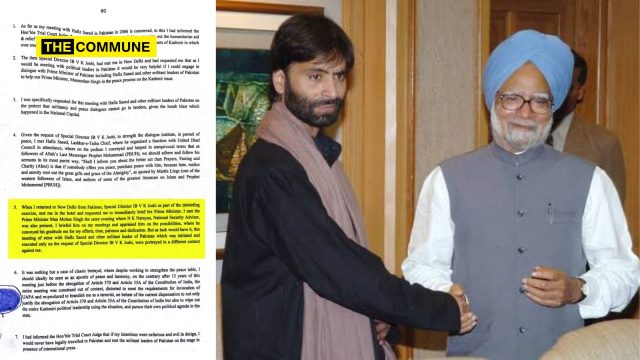
Philippines Elevates India To Strategic Partner Status Amid Indo-Pacific Cooperation And BrahMos Expansion

Philippines President Ferdinand R Marcos Jr. on 5 August 2025, expressed readiness to work with India towards a free and open Indo-Pacific while expressing satisfaction over the rapid pace of the Philippines ongoing defence modernization and the expanding capabilities and footprint of India’s indigenous defence industry as a partner in this undertaking that is exemplified by the Brahmos project.

Making a joint press statement with PM Modi following their bilateral discussions at the Hyderabad House in New Delhi, Marcos announced that the two nations will foster naval and coast guard interoperability via more port calls in cooperative activities and capacity building in the maritime sector. “We agreed to continue leveling up our collaboration in defence and security. We expressed satisfaction over the rapid pace of the Philippines ongoing defence modernization and the expanding capabilities and footprint of India’s indigenous defence industry as a partner in this undertaking exemplified by our Brahmos project. We concurred that we should be accompanied with intensified dialogue and exchanges between our defence establishments. So, we have agreed to establish mechanisms for service-to-service talks for information sharing and training exchanges amongst our militaries,” he said.

“We will foster naval and coast guard interoperability via port calls in cooperative activities and capacity building in the maritime domain. The economic sphere has been a steady engine driving our ties for seven-plus decades… We have decided to expedite the work that we are doing to forge a bilateral preferential trade agreement. We looked at leveraging mutual opportunities to boost two-way investment. Our fast growing innovated private enterprises will play an important role in our common march towards progress and development, facilitating innovation, technology transfer, and upskilling and generating employment for our people,” the Philippines President added.

Thanking the Indian Navy for rescuing Philippines citizens following a Houthi rebel attack last year, he stated that ties between two nations have entered a new epoch as he and Prime Minister Narendra Modi on 5 August launched the strategic partnership between the longstanding partners. The visiting leader also expressed the Philippines’ full solidarity with India over the heinous 22  April Pahalgam attack.

“As emissaries of our people, I bring with me the enduring friendship of the Filipino nation. I carry the message of our solidarity with India both over the tragic attack in Pahalgam earlier this year and in the broader fight against terrorism. Despite these challenges, I also bear felicitations on India’s remarkable transformation and inexorable march to become Vikit Bharat by 2047 under Prime Minister Modi’s guiding hand,” he said. He announced India and the Philippines have agreed to level up collaboration in defence and security, stating that India has become the fifth strategic partner for Philippines and emphasised that this new apex showcases the rapid growth and deepening of the bilateral ties.

“I again thank the Indian people and the brave men and women of the Indian Navy through Prime Minister Modi for your kind rescue of our nationals in 2024 after a Houthi rebel attack. We recognise India’s influence as first responder role in this critical area and we want to work with you for a free and open Indo-Pacific. We both have high stakes in the future of our Indo-Pacific region and in the world. The Philippines-India strategic partnership will doubtless resonate beyond the confines of our bilateral relationship. Prime Minister Modi and I have committed to bring our collaboration to bear on shared concerns. A free, open and inclusive Indo-Pacific region, security and rule of law in the maritime commons. supply chain resilience, food security, countering terrorism and other traditional and non-traditional threats,” he added.

The visiting leader thanked PM Modi for India’s support on the peaceful settlement of disputes and adherence to international law, especially the United Nations Convention on the Law of the Sea (UNCLOS) and the 2016 arbitration award on the South China Sea. He stated that India and the Philippines have also decided to expedite the work to forge a bilateral preferential trade agreement. “I come at a crucial juncture in our bilateral partnership. Today, our relationship enters a new epoch as Prime Minister Modi and I formally launched the strategic partnership between Philippines and India. For the Philippines, this is a momentous decision for we take a very considered path to such elevated partnerships. Today, India becomes only the fifth strategic partner for the Philippines. This new apex attests as much to the remarkably rapid growth, broadening and deepening of our 75-year-old bilateral relationship. The possibilities represented by the strong upward trajectory of our true economies as it does to the growing alignment of our interests and views on the challenges and imperatives of our time. This was also the auspicious context in which Prime Minister Modi and I engaged in far-reaching, productive and forward-looking discussions this past hour,” he said.

-IANS

Subscribe to our TelegramWhatsApp, and Instagram channels and get the best stories of the day delivered to you personally.
Unearthing The Truth: How Keeladi’s Hindu Links Are Being Buried, Literally

keeladi hindu

Tamil civilization was non-religious. Ancient Tamils were secular. Keezhadi excavations prove that Tamils have no connection with Hinduism.” – These are the kind of narratives that gets churned out by the DMK and its Dravidianist ecosystem in the media, academia and government. Notably, archaeologists K. Amarnath Ramakrishna who has been spearheading the Keezhadi excavations has been claiming that there was no evidence of religious symbols at the site which implying the ‘secular’ nature of the Tamil civilization.

However, a 2023 ground report by PoliTalks channel has revealed stunning evidences. The video evidence suggests that connections to Hindu faith near the site are being concealed, despite visible remnants of temples and idols just 100 meters from the dig location.

Since the Keeladi excavations began, they have revealed significant historical insights into ancient Tamil civilization. However, one point has been repeatedly emphasized: that no evidence of religious practice or worship has been found at the site. This has led to the assertion that Sangam-era Tamils lacked deities, spirituality, or any form of worship associated with Hinduism. But an on-site investigation by Team PoliTalks appears to contradict this narrative.

Their findings indicate that only a small section of what was likely a much larger city has been excavated. Crucial information could still lie in the unexcavated surrounding areas. Notably, within a 400-meter radius of the current site, there are visible signs of what appears to be a large temple complex. These include the top portion of a stone pillar, the foundation base of a temple, a half-buried Vishnu idol, and sculptures of other deities. Scattered large stones and column-like structures further indicate the presence of a grand temple that once stood in the area.

In addition to the presumed Shiva temple ruins, within just 100 meters of the main excavation zone, several idols can be found discarded, lying in debris or partially buried—prompting further concerns about the selective focus of the archaeological documentation.

Three specific artifacts found directly at the Keeladi site also stand out:

  • A figurine of a bull’s head

  • A female terracotta figure with a wide mouth and prominent teeth

  • A coral piece engraved with a pig’s image

These items have raised cultural and historical questions. The female figurine closely resembles depictions of Goddess Neeli, revered as a guardian deity of Madurai. The pig engraving is seen as potentially referencing a legend in which Lord Shiva assumes the form of a boar during his divine acts in Madurai. The bull’s head is believed by some to symbolize Nandi, the mount of Lord Shiva.

Despite these findings, researchers have reportedly overlooked these artifacts in discussions surrounding Keeladi. Critics argue that there has been little to no academic acknowledgment of the site’s spiritual or religious aspects. This concern extends to the recently inaugurated Keeladi Museum, which contains no mention or display of Tamil religious beliefs, practices, or associated artifacts from the site.

Allegations continue to circulate that ideological leanings particularly from Dravidianist circles are influencing the framing of Keeladi’s history, promoting a narrative that ancient Tamils had no connection to Hinduism or religious worship. The exclusion of religious evidence, despite the presence of idols, temple ruins, and supporting Sangam literature, should now become a central point the debate over the portrayal of Tamil heritage.

Subscribe to our TelegramWhatsApp, and Instagram channels and get the best stories of the day delivered to you personally.