There have been 4 alleged cases of custodial deaths in Tamil Nadu under the barely 2-month old TVK government led by Joseph Vijay.
Custodial deaths, atleast 27 of them were reported in the DMK regime.
As a news portal, one would expect journalists to call out the atrocities of the ruling government. A look at leftist propaganda outlet The News Minute, for a minute, felt like real journalism after their Editor-in-Chief Dhanya Rajendran shared a report on the 4 alleged custodial deaths in Tamil Nadu within just 5 weeks’.
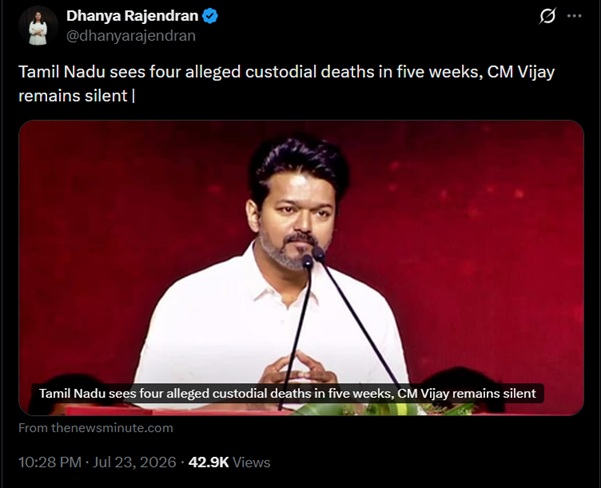
The title of the report reads, “Tamil Nadu sees four alleged custodial deaths in five weeks, CM Vijay remains silent”.
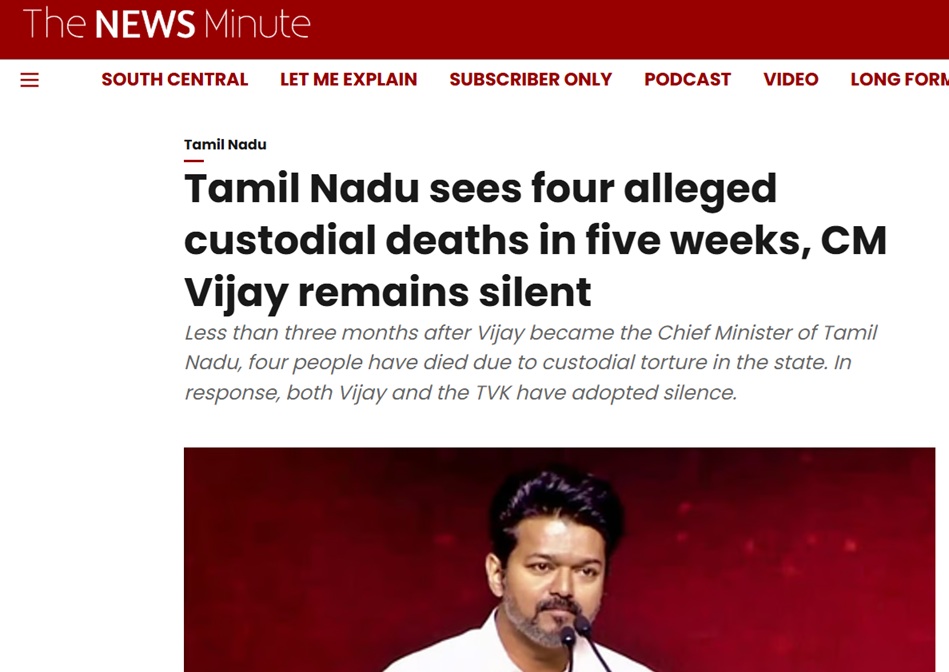
One would even go to the extent of thinking that the leftist rag grew a spine to question the incumbent government. But before you do that, wait. Let us take a look at how they reported the 27 alleged custodial deaths in the DMK regime.
They reported each one, but look at how it is packaged – “A look at 27 custodial deaths in Tamil Nadu: Most victims were poor and marginalised”
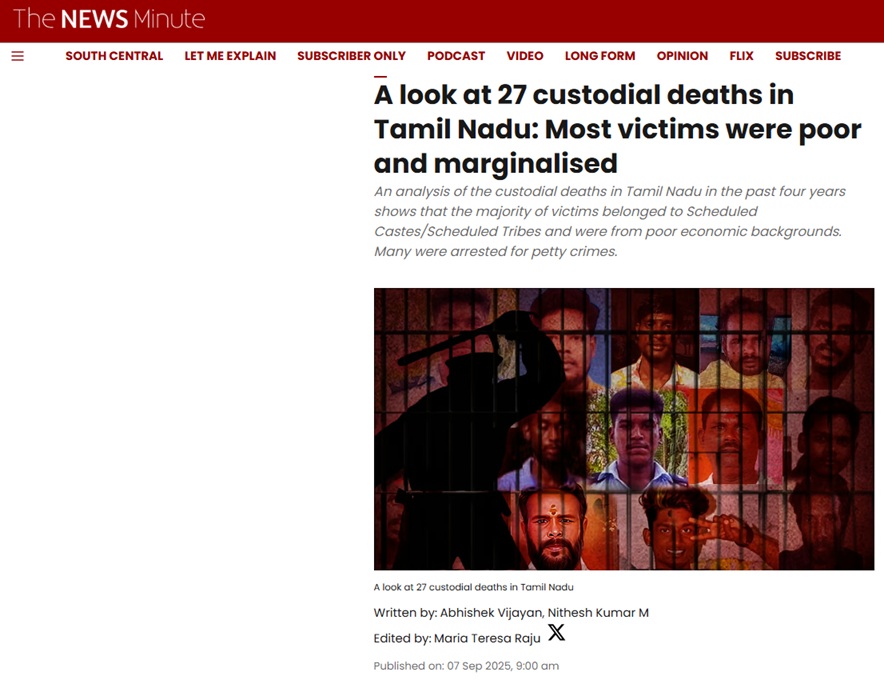
Now the focus is on the victims, instead of the then-DMK regime.
A comparative analysis of both these reports reveals a significant shift in language, framing, and attribution of blame depending on which party is in power.
Headline Framing
The first report, published in September 2025, when the DMK was in power, carried the headline: “A look at 27 custodial deaths in Tamil Nadu: Most victims were poor and marginalised.”
The headline does not mention the DMK, the then-Chief Minister MK Stalin, or the government. Instead, the focus is on victims, caste, poverty and policing.
The second report, published in July 2026, after Vijay became Chief Minister, carried the headline: “Tamil Nadu sees four alleged custodial deaths in five weeks, CM Vijay remains silent.”
The DMK-era headline focuses on the victims’ demographics while the TVK-era headline focuses on the Chief Minister’s silence and directly names him.
Attribution of Responsibility
In the September 2025 report on 27 custodial deaths, the government is referred to as “the DMK regime” in neutral terms. The article presents data without directly attributing blame to the ruling party. Criticism is channeled through activist quotes rather than the publication’s own framing.
The report includes a quote from Henri Tiphagne of People’s Watch: “Isn’t it a shame for the ‘social justice government’? Is this the way Dalits are to be treated?”
The story largely examines structural issues within the police force, socioeconomic backgrounds of victims, investigative practices and institutional reforms.
Although the article mentions the DMK regime within the body of the report and quotes activists criticising the “social justice government,” the political responsibility is largely embedded inside the story rather than foregrounded in the headline.
In the July 2026 report, the publication states as fact: “Both CM Vijay and the TVK have adopted silence.” This suggests deliberate inaction on the part of the Chief Minister. TNM takes a position against the current government.
Historical Context: Provided for DMK, Omitted for TVK
The September 2025 report provides historical context comparing DMK to the previous AIADMK government. It notes: “Under the rule of AIADMK, between 2016 and 2021, the state saw investigation in 40 custodial death cases… No police officers faced prosecution during the period.”
This context is entirely absent from the July 2026 report – yes, one might argue that both the report types are different, but the portal chose to do it so. There is no mention of custodial deaths under the DMK rule or the previous government’s record. The critique is isolated to the present administration.
Emphasis on Contradiction
The July 2026 report explicitly highlights the contradiction between Vijay’s past promises and his current actions:
“A year ago, as the chief of TVK, C Joseph Vijay vowed justice for victims of custodial violence.”
“Now, less than three months after Vijay became the Chief Minister… four people have died due to custodial torture.”
“Chief Minister Vijay has not uttered a single word against custodial violence.”
No such emphasis on contradiction exists in the September 2025 report regarding Stalin or the DMK.
Direct Calls for Action
In the September 2025 report, calls for action come from activists, not the publication. The report quotes advocate Edgar Kaiser: “If public trust in police is not restored under Stalin’s leadership, it would simply be a betrayal of the principles espoused by Periyar and Anna.”
In the July 2026 report, the publication itself calls on Vijay to act: “Chief Minister Vijay, through his new-age political project, should fulfil that promise.”
Language of Allegation
The September 2025 report uses phrases like “allegedly” and presents post-mortem findings as evidence. It allows families and activists to make accusations while maintaining journalistic distance.
The July 2026 report states “four people have died due to custodial torture” as a definitive claim in the subheading. The publication takes a stronger editorial position.
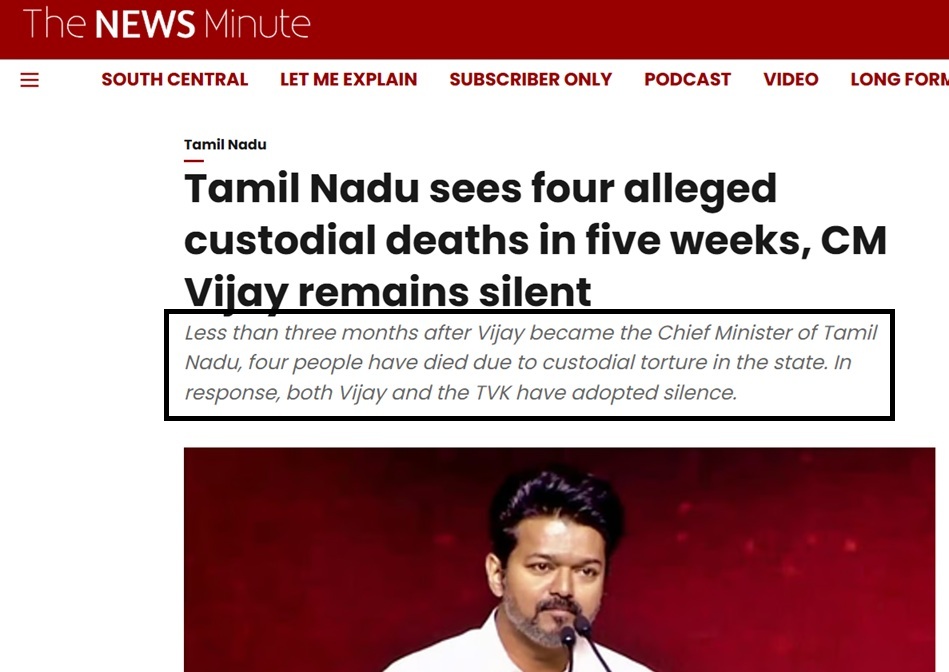
The “Silenced by His Own Power” Framing
The July 2026 report includes a subheading: “Silenced by his own power?” This framing suggests that Vijay’s silence is not just neglect but a symptom of being corrupted by power.
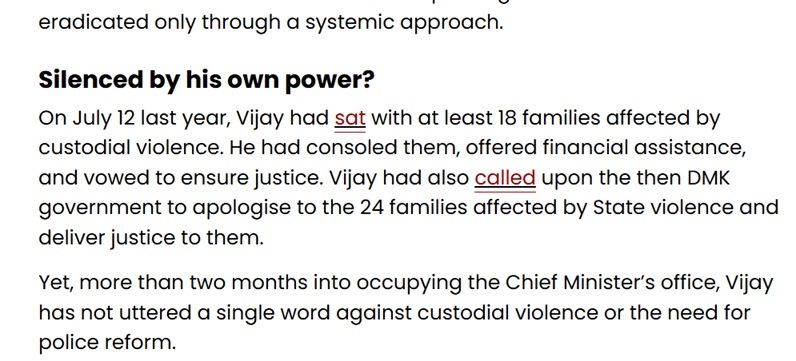
No equivalent framing exists in the September 2025 report regarding Stalin or the DMK government.
The Difference Is The Portrayal
The difference lies in where responsibility is placed. The DMK regime report presents custodial deaths primarily as a long-standing institutional problem affecting marginalised communities.
The latest report frames the same issue as a political test for the sitting Chief Minister, repeatedly questioning his silence and administrative choices.
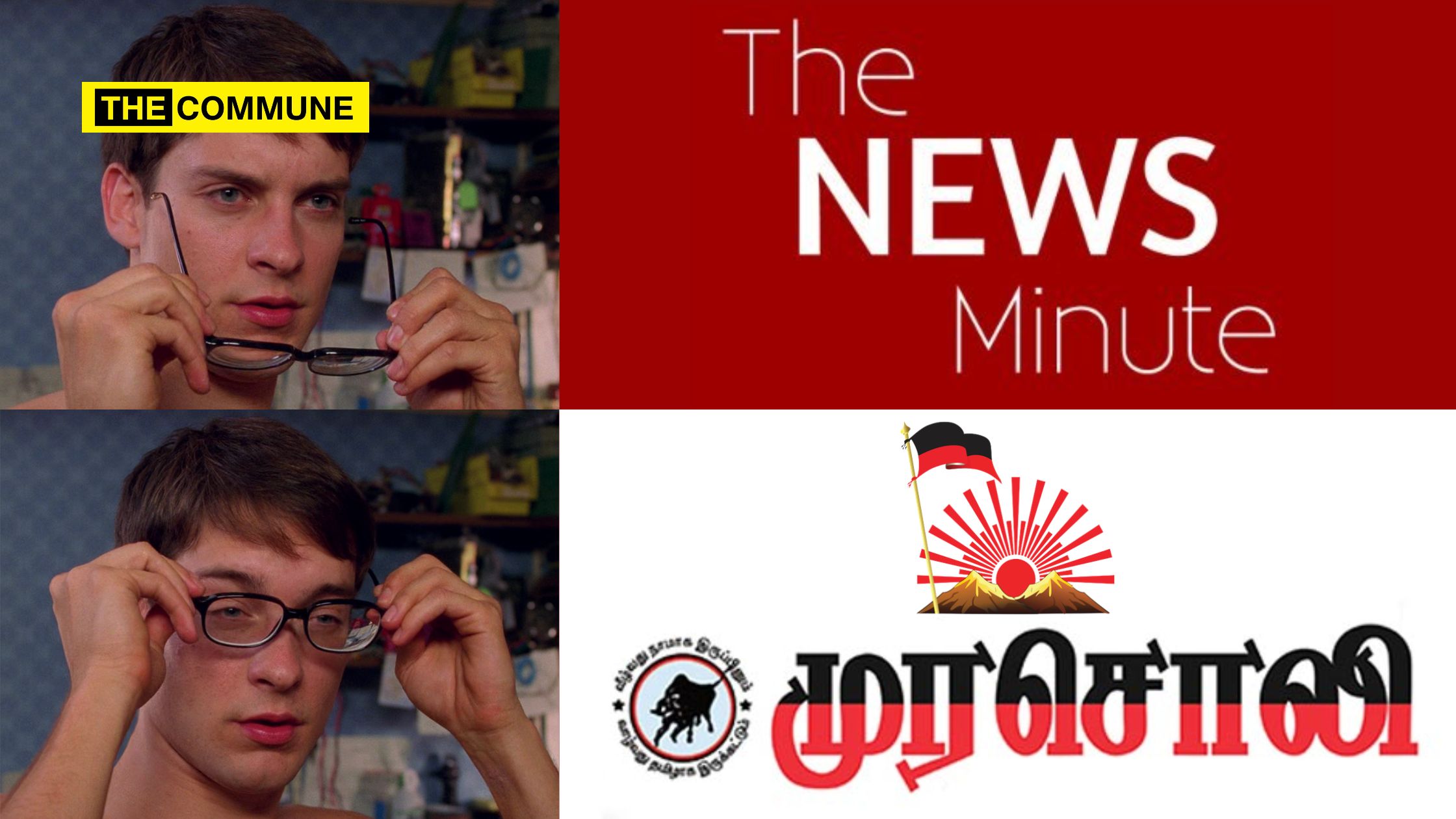
It is no wonder that TNM is in fact, TN Murasoli, The New Murasoli, that buttresses the DMK whatever be the issue.
Subscribe to our channels on WhatsApp, Telegram, Instagram and YouTube to get the best stories of the day delivered to you personally.