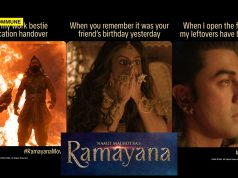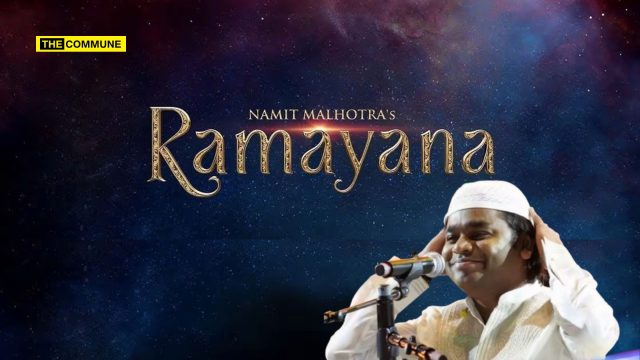
A song meant to celebrate the divine wedding of Lord Rama and Goddess Sita has instead left many Hindu listeners questioning the musical choices behind Nitesh Tiwari’s Ramayana. And the one who has produced such music is none other than composer AR Rahman, whose new track, Mangal Rang, brings qawwali and Sufi-style influences into one of Hinduism’s most sacred stories.
Featuring Ranbir Kapoor as Lord Rama and Sai Pallavi as Goddess Sita, Mangal Rang depicts the wedding celebrations of the divine couple and Sita’s arrival in Ayodhya. The song is sung by Shreya Ghoshal and Arijit Singh, with lyrics by Kumar Vishwas.
This is why I hated the decision of Namit and Nitesh to take AR Rahman to compose music for Ramayana
He bought Urdu music into CHHAVA and destroyed the movie or else it would have become the biggest blockbuster movie
And even after getting so much trolled for it, he couldn’t stop bringing Sufi music into Ramayana
I donno how director accepted this— Swathi Bellam (@BellamSwathi) October 25, 2026
For listeners expecting a soundtrack that captures the grandeur of the Ramayana, the song has been more than a disappointment. Its qawwali-style arrangement has raised questions about why a celebration of Rama and Sita’s union should have Sufi music in the first place!
The objection is not simply to musical experimentation. It is about whether the music suits the story being told. The Ramayana is a sacred Itihasa, not an ordinary romantic drama, and its most significant moments call for a musical identity that reflects its cultural and spiritual setting.
From Rama-Sita’s Wedding To Kun Faya Kun?
When listening to Mangal Rang, one cannot but compare it with Rahman’s earlier compositions, particularly Kun Faya Kun from Rockstar, the 2011 film that also starred Ranbir Kapoor.
The similarities in the chorus, vocal arrangement and overall sound raise questions whether Rahman has the same Sufi-style template into another major film rather than developing a musical language specific to the Ramayana.
Some netizens found it similar to Enna Solla Pogirai, his Tamil song from Kandukondain Kandukondain (2000).
The song lacks the devotional character expected from a sequence celebrating Rama and Sita’s wedding. The lyrics which use contemporary romantic expressions also lack spiritual and cultural connection to the epic.
The composition could have made greater use of instruments such as the veena, sitar, mridangam and tabla, alongside Sanskrit lyrics or other musical elements rooted in India’s devotional traditions.
Instead, all the audience hears is the sound of qawwali and Sufi music. The choice feels deliberately disconnected from the occasion the song is supposed to celebrate.
How Rahman Destroyed Chhaava
The present controversy has brought back focus on Rahman’s work on Chhaava, the historical film about Chhatrapati Sambhaji Maharaj.
The film’s soundtrack explicitly shows how Rahman’s music failed to capture the Maratha cultural identity and historical setting of the story. The absence of a strong Marathi musical character as well as sounds that were Arabic or Middle Eastern-inspired were once again present in the film. The film deserved a more powerful score rooted in the traditions associated with Sambhaji Maharaj and the Maratha legacy.
In both cases, Rahman’s musical choices never seem to reflect the cultural world of the story. In Chhaava, the soundtrack did not capture the spirit of the Marathas. In Ramayana, the music does not reflect the sacredness and grandeur of the Hindu epic.
Subscribe to our channels on WhatsApp, Telegram, Instagram and YouTube to get the best stories of the day delivered to you personally.