Home Blog Page 190

“Director Is A Fool”: Congress Leader Trichy Velusamy Slams Anti-Hindi DMK Propaganda Film Parasakthi, Says Kanimozhi Studied Hindi
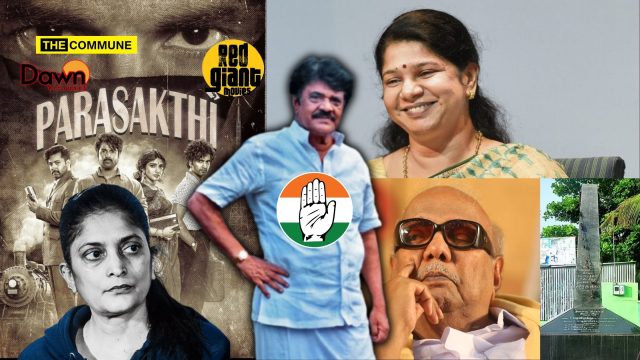
“Director Is A Fool”: Congress Leader Trichy Velusamy Slams Anti-Hindi DMK Propaganda Film Parasakthi, Says Kanimozhi Studied Hindi, Recalls How Karunanidhi Govt Shot Down Protesting Farmers

The film Parasakthi, by DMK stooge Sudha Kongara, which glorifies the arson during anti-Hindi agitation has been rubbished and trashed by Tamil audience at the box office.

The film has also widened the rift between alliance partners DMK and the Congress. The Congress party units in the state have vehemently opposed the characterisation of Indira Gandhi, use of specific vocabulary for Congress leaders and also for distorting history.

In this regard, Congress leader Trichy Velusamy denounced the film and the distortions in the movie. Speaking to a YouTube channel, he also called out the hypocrisy of the DMK leaders with regard to Hindi.

In the interview targeting Karunanidhi, he says, “The person who went around in the villages, provoking people saying, “Beat them up, kick them, do not study Hindi”, when his own nephew Maran was a minister in Delhi, a journalist asked him, “At such a young age he has a good name there, how?” At that time he replied, “He not only knows English, he knows Hindi very well too, that is why he is able to manage there in Delhi.” 

He also pointed out that Karunanidhi’s daughter Kanimozhi who is now a DMK MP knows Hindi very well.

He said, “Let me ask you one more thing directly. His daughter is Kanimozhi. Do you know that she has studied Hindi formally and she knows to read and write the language? Did her father teach her that, or did she learn it on her own? His daughter and his grandson, all of them are studying Hindi, that he has proudly said. But he told the people in the state that they should not study it at all. Which of these is right and which is wrong, this is left to the viewers to decide.”

It is to be noted that the anti-Hindi “Hindi Theriyathu Poda” T-Shirt campaign was initiated and publicized by DMK MP Kanimozhi back in 2020. In another incident, she claimed that she was asked whether she was an Indian by a Central Industrial Security Force (CISF) officer at the airport as the legislator supposedly did not know Hindi.

But the fact of the matter is that when the Nira Radia tapes were made public, Radia can be heard speaking to Kanimozhi in Hindi.

Narrating a gory incident, he said, “I will now tell you one more thing; if you hear it, many people’s hearts will burn. When that agitation was at its peak, there is a place called Oothukuli, you know it, the place famous for butter, near Tiruppur. In that town, one day in broad daylight, around 12 or 1 in the afternoon, during that agitation, a police inspector’s hands were tied, and in broad daylight, public poured petrol on him and he was set on fire. He burned alive and died, screaming in agony. Everyone stood around and shouted slogans “Long live Tamil, down with Hindi”. The name of the inspector who was burnt like that was Ramasamy. His only daughter’s name is Tamizhselvi. ​He named her Tamizhselvi, but he was a ‘Hindi fanatic’.

Continuing, he said, “Afterwards, DMK came to power, they gave monetary compensation to the “language martyrs” like they give to freedom struggle martyrs, right? The people who burnt the ‘Hindi fanatic’ who named his daughter Tamizhselvi, weren’t they also given monetary compensation as ‘language martyrs’?  What a huge contradiction this is. If he had given her some other name, he could have given some other name, say Stalin; that is also a good Tamil name, no? Is Tamizhselvi not a good Tamil name?”

When the interviewer asks about the character played by Ravi Mohan – an IB officer asking for reinforcements from other states since he could not suppress the agitators with people named Tamil Pandian, Tamizhvaendan, Tamizharasan, Velusamy replies, “How can an IB officer ask a Chief Minister all this? The foolish and stupid director and producer must know this. Can an IB officer ask all this to a Chief Minister? Law and order is a State subject. No matter how bad the law and order situation becomes, only if the State government requests can Border Security Force or the military come in. If it is said that the IB officer asked for them, then he/she knows no politics, no law and knows nothing about the land.”

About whether the film had targeted the Congress party, Velusamy said, “You are still thinking that they are protecting Tamils in that film. After he came to power, after Karunanidhi became Chief Minister, within just two or three years, do you know that there was a farmers’ agitation? All over Tamil Nadu there was a big agitation. In how many places did police firing take place? You may not know because of your age. On a single specific day, in only two villages there was police firing and 25 people died. Those two villages are Pethanayakkanpalayam and Perumalnallur. Perumalnallur is a small village near Tiruppur, which might have grown a bit now. The other village, Pethanayakkanpalayam, is a small village near Attur in Salem district. At that time in the Assembly, from Pethanayakkanpalayam 13 or 14 people had died. In the Assembly, a Congress MLA said that in that village, farmers who were protesting had been wrongly shot dead. What the Chief Minister replied is still there in the Assembly records. He said, “The Congress party member is giving wrong information. The dead are not farmers; they are anti‑social elements. They came to attack the police station. To protect the station and themselves, the police fired back, and they died in that firing.” The funny part is, until that very minute there was not even a police station in that village. People who indulge in such fraud and thuggery, what qualification do they have to make this kind of film? Reality is something else.”

Subscribe to our channels on TelegramWhatsApp, and Instagram and get the best stories of the day delivered to you personally.
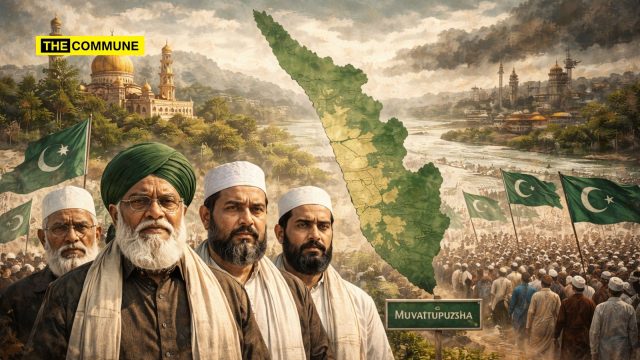
Demography Changed, Split Ernakulam, Kerala Muslim Jamaath Demands

The Kerala Muslim Jamaath has formally demanded the bifurcation of Ernakulam district, citing demographic changes and evolving social conditions in the region.

Addressing a press conference, the organisation stated that a new district should be carved out with Muvattupuzha as its headquarters, asserting that such a move was essential to ensure balanced development. The Jamaath said the demand emerged from public feedback gathered during its state-wide yatra and would be submitted to the Kerala government.

The organisation further noted that similar demands for bifurcation were relevant in Malappuram district as well, indicating that the issue extended beyond Ernakulam alone.

Additional Demands Raised

Alongside the district bifurcation demand, the Kerala Muslim Jamaath placed several other demands before the state government, including declaring Ernakulam an educational hub, taking stringent action against the drug mafia, which the organisation said was destroying the youth, protecting the Periyar River from pollution, and urgently addressing infrastructure and administrative deficiencies at the Government Medical College, Kalamassery.

Leadership Present at Press Conference

The press conference was attended by senior leaders of the organisation, including Sayyid Ibrahimul Khaleel Al Bukhari, Perod Abdurahman Saqafi, deputy leader of the Kerala Yatra, C P Saithalavi Master, secretary of Kerala Muslim Jamaath, V H Ali Darimi, Ernakulam district president, and C T Hashim Thangal, Ernakulam district secretary

‘Let Us Move Past Marad’

Responding to political remarks on the 2003 Marad ‘riots’, Sayyid Ibrahimul Khaleel Al Bukhari said there was no purpose in revisiting the incident and that it should not be discussed again as it would reopen old wounds.

His remarks came in response to a statement made by A K Balan, who had said that a situation similar to Marad could recur if the United Democratic Front (UDF) returned to power.

Perod Abdurahman Saqafi dismissed Balan’s remarks as political in nature and said the organisation had nothing further to comment on the issue.

Source: OnManorama

Subscribe to our channels on TelegramWhatsApp, and Instagram and get the best stories of the day delivered to you personally.
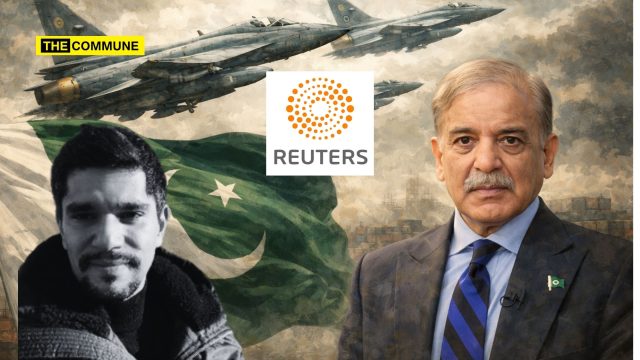
Recycled Sources, Recycled Claims: How Reuters Journo Saad Sayeed Built ‘Exclusives’ To Peddle Dubious Narrative On Pakistan Arms Deals

Recycled Sources, Recycled Claims: How Reuters Journo Saad Sayeed Built ‘Exclusives’ On Pakistan Arms Deals

A rapid series of defence-related “exclusive” reports published by Reuters ‘journalist’ Saad Sayeed in the December 2025 and January 2026 has triggered scrutiny over narrative construction and the repeated amplification of unverified claims originating from Pakistani officials and military-linked sources.

Within a span of six days, Reuters published multiple reports projecting Pakistan as an emerging global arms exporter engaged in multi-billion-dollar negotiations across South Asia, the Middle East, and Africa. The reports were primarily authored by Reuters journalist Saad Sayeed, whose bylines suddenly reappeared in quick succession after nearly a year of absence from Reuters’ Pakistan-focused reporting.

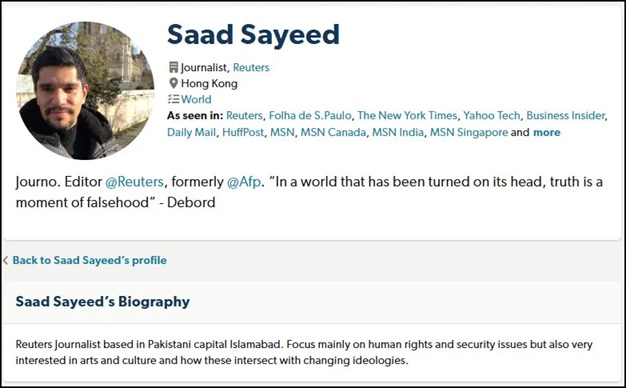
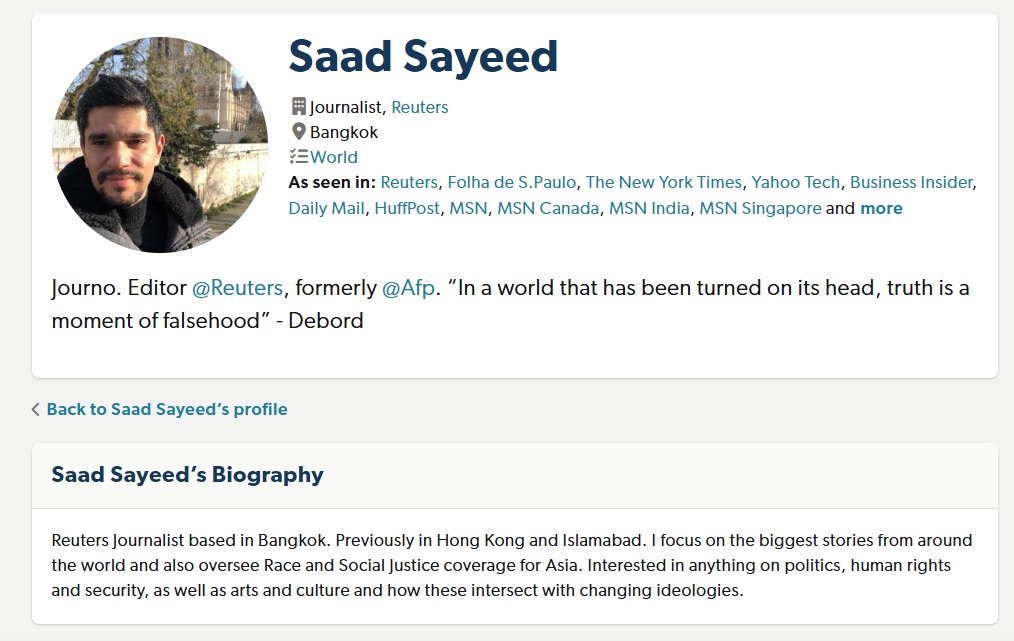
When OpIndia reported this news a couple of days ago, his MuckRack profile stated that he was based out of Hong Kong but his biography in the same page stated he was based out of Islamabad, Pakistan.

As we publish this report on 15 January 2026, his bio has changed and so has his location. The profile claims he is based out of Bangkok.

Back-To-Back Reporting

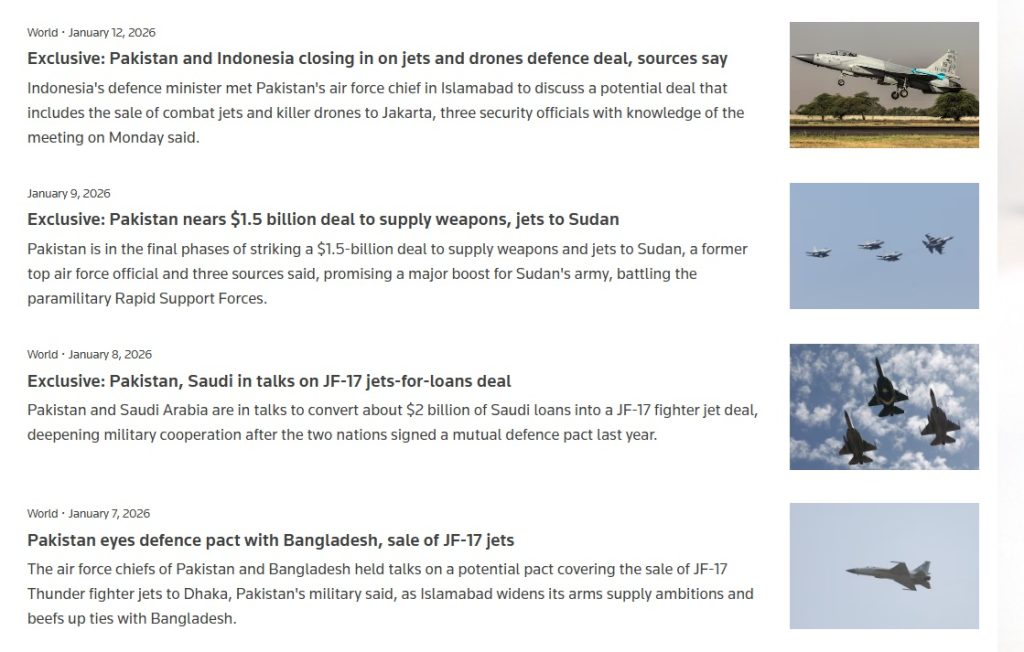
The back-to-back reporting sequence began on 7 January 2026, when Reuters published two defence exclusives by Saad Sayeed.

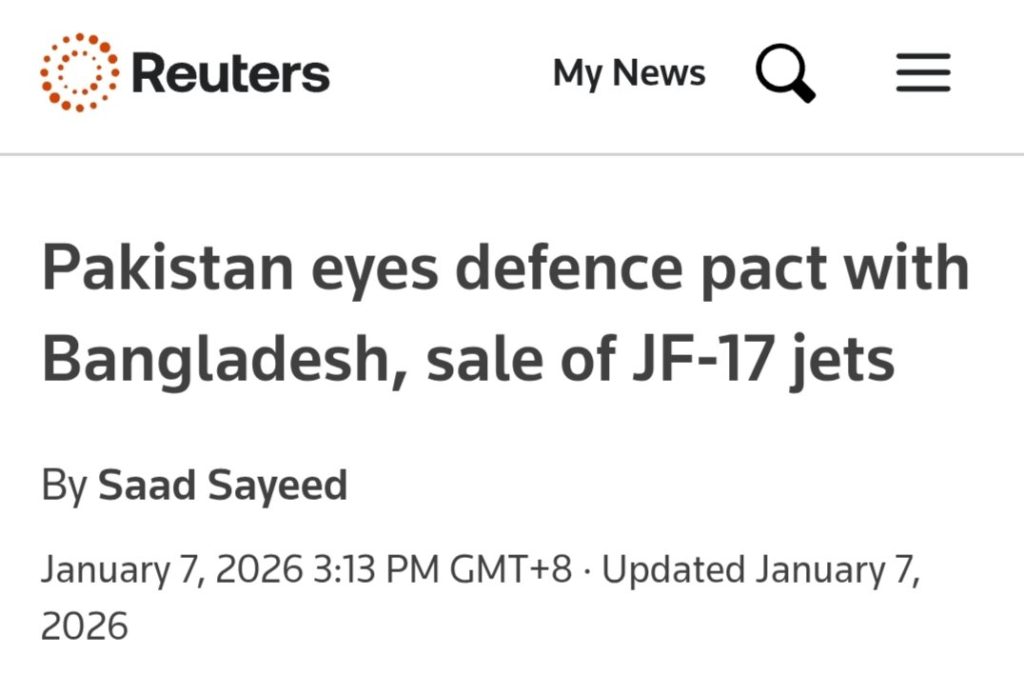
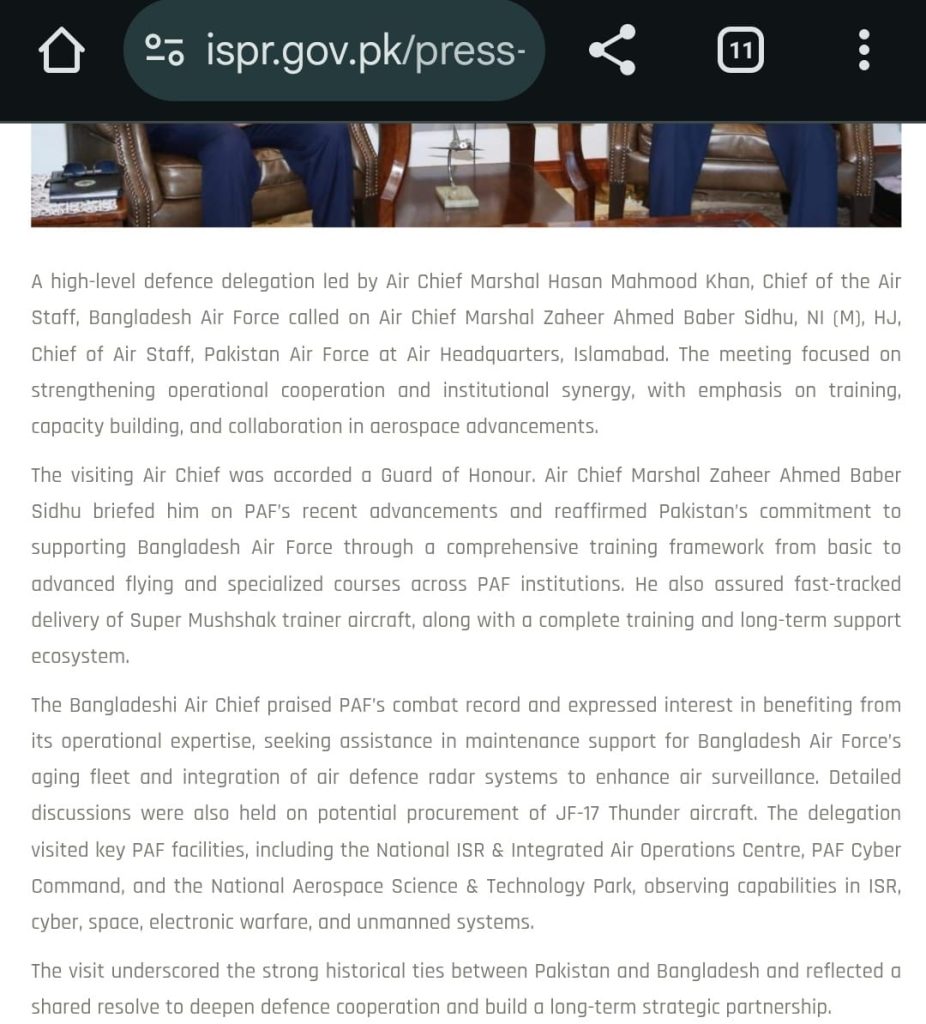
The first report published on 7 January 2026, claimed that Pakistan was in talks with Bangladesh for a defence cooperation package involving JF-17 Thunder fighter jets and Super Mushshak trainer aircraft.

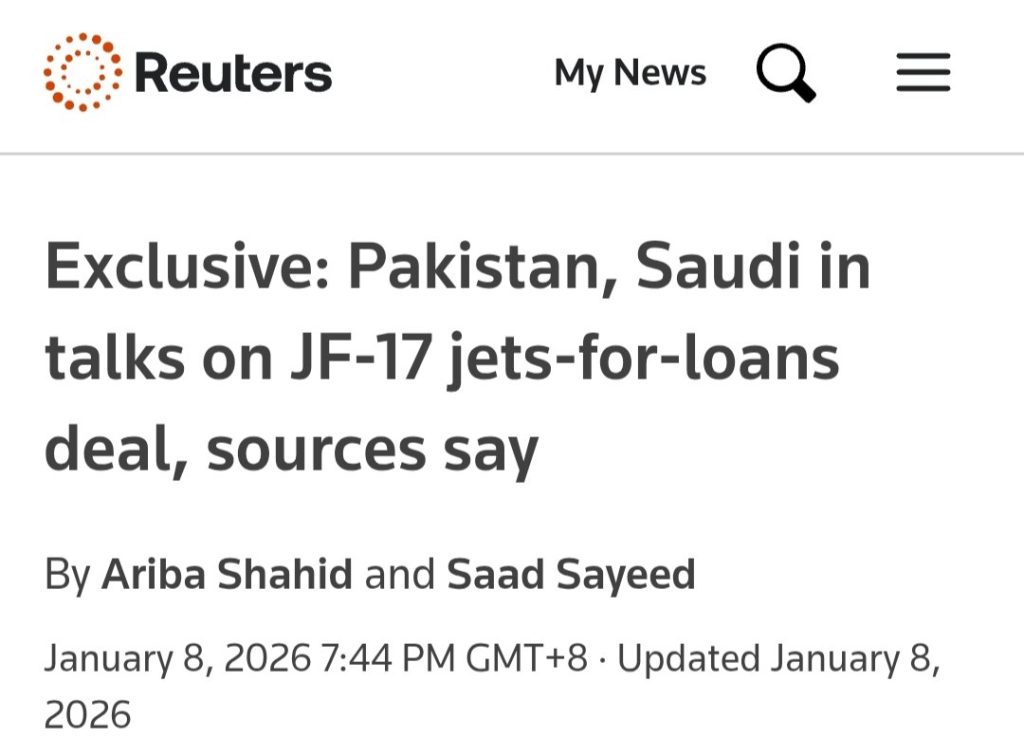
The second report on 8 January 2026, suggested that Saudi Arabia was considering converting existing loans to Pakistan into a potential $4 billion defence deal, again centred on the JF-17 platform.

Both reports emphasised that the aircraft was “combat-proven,” citing the May 2025 India–Pakistan conflict that followed India’s launch of Operation Sindoor. Operation Sindoor was initiated after the Pahalgam terrorist attack, in which 26 Hindu tourists were killed by Pakistan-sponsored terrorists, according to Indian authorities.

The Reuters reports asserted that Pakistan was marketing the JF-17’s performance against India as evidence of its battlefield credibility, despite the absence of publicly verifiable proof supporting these claims.

In the Bangladesh-related report, Pakistan’s Defence Minister Khawaja Asif was quoted as claiming that a surge in defence exports could make assistance from the International Monetary Fund unnecessary within months. The statement appeared without accompanying economic analysis or countervailing expert assessment.

Context: Pakistan’s Economic Position

The optimistic framing stood in contrast to Pakistan’s recent financial history. Over the past several years, Pakistan has approached the IMF multiple times for bailout packages amid inflationary pressures, foreign exchange shortages, and mounting debt obligations. In addition to IMF assistance, Pakistan has relied heavily on loans from China, Saudi Arabia, and other bilateral partners, often under stringent conditions.

Sudan and Indonesia Added to the Narrative

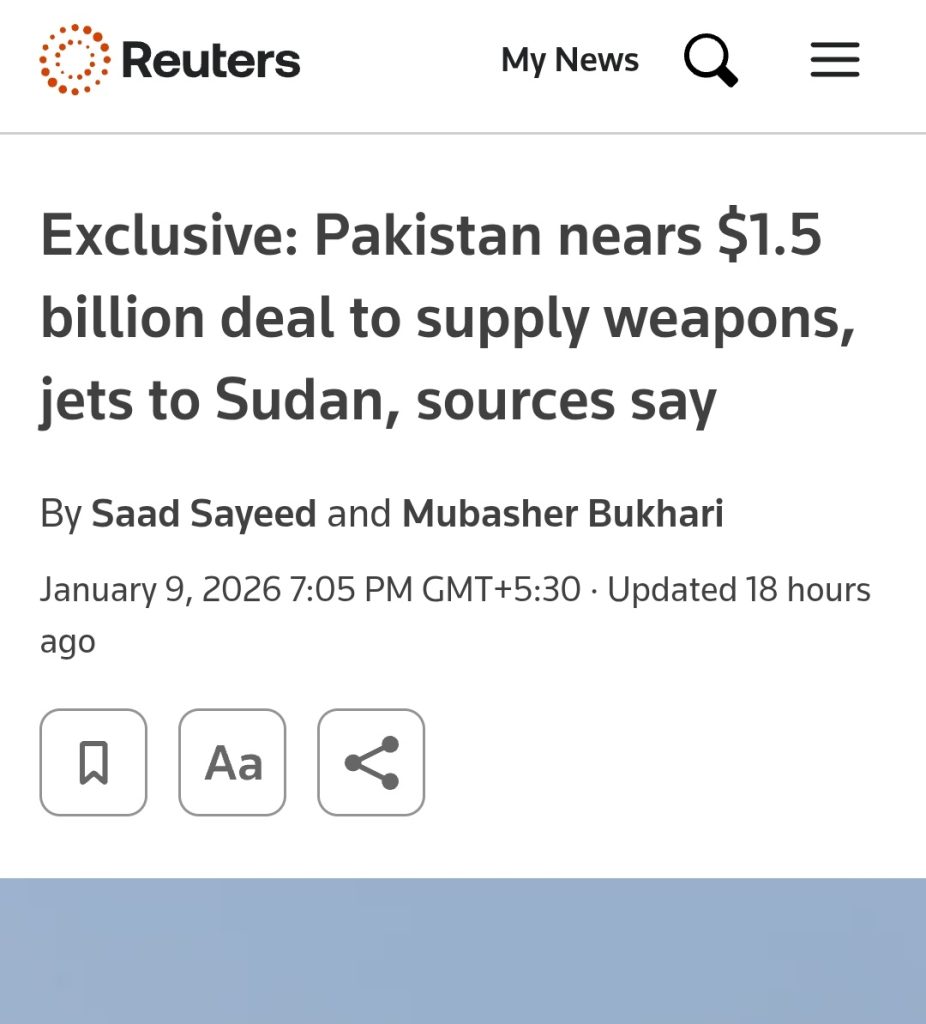
On 9 January 2026, Reuters published another “exclusive” claiming that Pakistan was nearing a $1.5 billion arms deal with Sudan, covering aircraft, drones, and air defence systems.

The report appeared despite the ongoing civil war in Sudan and amid questions surrounding Pakistan’s own air defence capabilities. During the May 2025 conflict, Indian officials stated that Pakistan’s air defence systems failed to intercept Indian missiles, while India’s air defence neutralised drone and missile attacks following Pakistan’s retaliation.

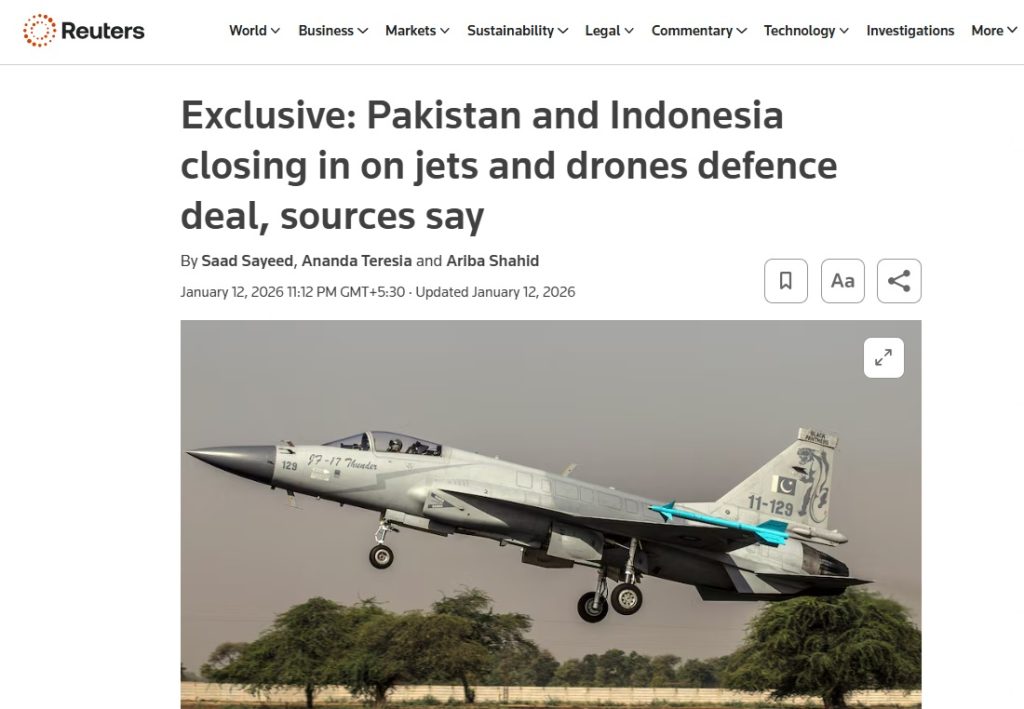
On 12 January 2026, Reuters published yet another exclusive claiming that Indonesia was in advanced talks to acquire over 40 JF-17 fighter jets and Shahpar drones from Pakistan. This marked four Pakistan-centric defence exclusives in under one week, all reinforcing a similar trajectory of Pakistan as a rising arms exporter.

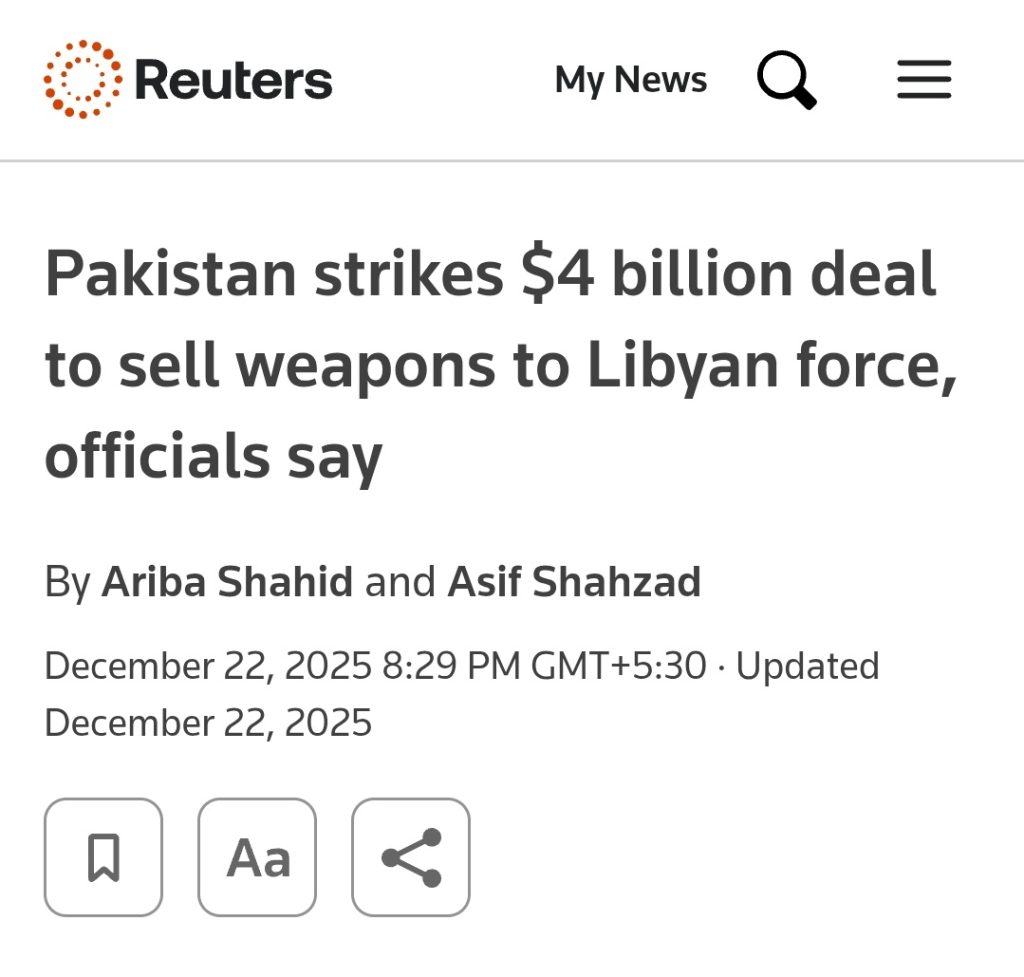
Back in December 2025, there was a report on Pakistan selling arms to Libya as well.

Anonymous Source Patterns Raise Questions

Across all the reports, sourcing followed a consistent pattern. Key claims were attributed to unnamed officials described as “sources close to the military” or “sources with knowledge of the matter.” Additional commentary was provided by retired Pakistani air marshals who were said to have been informally briefed on defence developments.

Where official statements were cited, they generally acknowledged meetings or discussions rather than confirming deal sizes, funding structures, delivery timelines, or final agreements. The substantive elements of the reports, financial values, scope, and certainty rested almost entirely on anonymous or semi-detached sources.

While anonymity is not unusual in defence reporting, observers note that the repeated reliance on similar categories of unnamed sources, without named independent analysts or dissenting assessments, raises questions about verification and balance.

Internal Citation Loop Within Reuters

Another notable feature across the reports was the dense cross-referencing within Reuters’ own coverage.

The Indonesia article referenced the Sudan, Saudi, and Bangladesh reports. The Sudan report cited the Saudi and Bangladesh discussions along with a previous Libya deal. The Saudi and Bangladesh pieces cited each other. Several of these articles were written by Saad Sayeed, while others were co-authored with Reuters journalists Mubasher Bukhari, Ananda Teresia, Ariba Shahid, and Asif Shahzad, all of whom have published extensive Pakistan-focused reporting.

Media analysts note that such internal citation loops can create the appearance of corroboration even when the underlying sources remain unchanged, potentially reinforcing a narrative without independent validation.

Consistently Favourable Framing

Across the reports, Pakistan’s defence ambitions were framed as economically transformative and strategically successful.

In the Sudan report, the humanitarian implications of supplying arms to a conflict zone were mentioned briefly but secondary to claims that Pakistani weapons could “revive” the Sudanese military. The Indonesia report acknowledged Jakarta’s broader fighter jet considerations but positioned the Pakistani offer as competitively advanced without comparable scrutiny of performance claims or geopolitical trade-offs.

The cumulative framing foregrounded Pakistan’s prospective gains while offering limited engagement with risks such as sanctions exposure, arms proliferation concerns, or regional instability.

Source: OpIndia

Subscribe to our channels on TelegramWhatsApp, and Instagram and get the best stories of the day delivered to you personally.
DMK Youth Wing Functionary And Accomplice Aamer Suhail Arrested For Attempting To Sell Firearms Via Instagram

DMK Youth Wing Functionary, Accomplice Arrested For Attempting To Sell Firearms Via Instagram In Tirunelveli

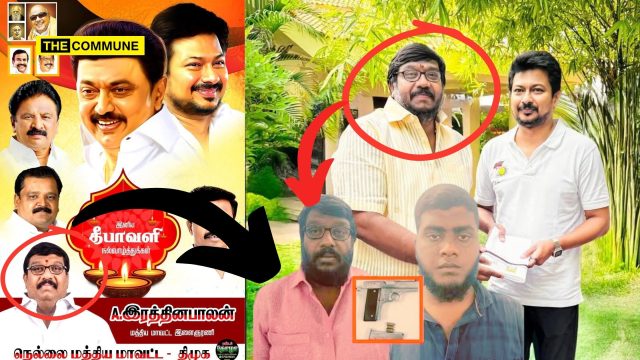
Tamil Nadu police have arrested two persons, including a Dravida Munnetra Kazhagam Youth Wing functionary and his accomplice Aamer Suhail, for allegedly attempting to sell an illegal firearm through social media in Tirunelveli.

According to police, the arrests were made following a tip-off that an unlawful firearm transaction was being planned in the Melapalayam area. Acting on the information, the police conducted a special operation in the locality and apprehended Ameer, a resident of the area, along with Rathina Bala, who is said to be associated with the DMK Youth Wing.

An illegally possessed firearm was seized from the accused. During interrogation, police found that the weapon had been smuggled into Tamil Nadu from a northern State and that the accused had allegedly advertised the firearm for sale on Instagram.

Police officials stated that they are also examining whether the accused were involved in or planning any further criminal or conspiratorial activities. Further investigation is currently underway to identify possible links, buyers, and the broader network behind the illegal arms transaction.

Source: Dinamalar

Subscribe to our channels on TelegramWhatsApp, and Instagram and get the best stories of the day delivered to you personally.
EVRism Goes For A Toss As ‘Rationalist’ DMK Followers Parade Elephant At Kerala Temple Festival To Prolong Stalin’s Life

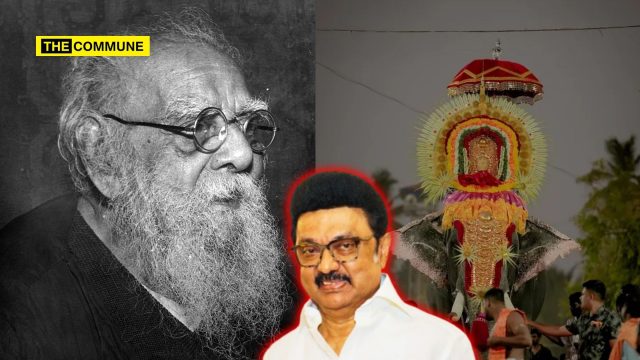
Kollam witnessed an unusual political-religious irony after the name of Tamil Nadu Chief Minister and DMK chief MK Stalin appeared on the official offering list of the Pazhayidom Narasimhaswami Temple at Anayadi, ahead of its annual Gajamela (elephant fair).

According to temple records released for the 20 January 2026 festival, an elephant parade offering has been booked in Stalin’s name – an irony of ironies given his public rejection (as well as that of the party) of religious rituals and his party’s ‘rationalist ideology’ rooted in the Dravidian movement.

The offering, however, was not initiated by Stalin or the DMK. Temple authorities confirmed that it was sponsored by two of his ardent supporters – M Jayan, a Chennai-based welding worker, and his aunt Sulatha Chandran, a Tamil Nadu native residing in Anayadi. The duo reportedly pooled savings over several years to meet the ₹10,000 fee required for parading an elephant as a votive offering.

Temple officials said the pair had been making the booking annually since 2022, initially prompting scepticism from the temple committee. The registration was taken seriously only after the devotees appeared in person to remit the amount. This year’s notice gained wider attention after Stalin’s name appeared publicly in the festival booklet, leading to curiosity among locals and a surge in enquiries to the temple.

The offering was reportedly booked in the sixth slot, which the devotees believe symbolises prosperity. Temple president Chandrakumar stated that the viral attention stemmed largely from the contrast between Stalin’s political identity and the religious nature of the offering, adding that it was unlikely the Chief Minister himself was aware of it.

Speaking to the media, Sulatha reportedly acknowledged the ideological contradiction but maintained that their actions were driven purely by personal belief. She stated that while Stalin may not agree with religious practices, the prayers were intended for his health, longevity, and electoral success.

The duo has reportedly vowed to continue the offering for six consecutive years, with this year marking the fourth. Despite health challenges, Sulatha said the ritual would be carried out as planned, with Jayan travelling from Chennai to participate.

Source: OnManorama

Subscribe to our channels on TelegramWhatsApp, and Instagram and get the best stories of the day delivered to you personally.
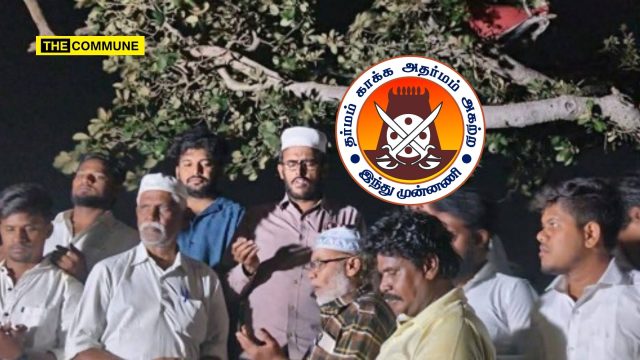
No Muslim Names In FIR: Hindu Munnani Flags Selective Action After Dargah’s Crescent Flag Hoisted On Thirupparankundram Sacred Kallathi Tree

No Muslim Names In FIR: Hindu Munnani Flags Selective Action After Crescent Flag Hoisted On Thirupparankundram Sacred Kallathi Tree Case

Hindu Munnani has raised sharp questions over the Tamil Nadu police’s handling of the incident involving the hoisting of a crescent flag on the kallathi tree, the sacred thalavirutcham belonging to the Thirupparankundram Temple.

In a statement, the organisation alleged selective action by the authorities, pointing out that no Muslim names have been mentioned in the FIR registered in connection with the incident. Hindu Munnani questioned how this was possible when police reportedly insist that visitors must produce Aadhaar identification to climb the hill.

“If Aadhaar verification is mandatory, the identities of those who hoisted the crescent flag should be easily traceable. Why then were FIRs not registered in their names?” the outfit asked, suggesting that exceptions appeared to be made.

The organisation also flagged that clear photographs showing the faces of those involved are available, yet no arrests have been made so far. Hindu Munnani questioned whether the delay was due to “vote-bank considerations or fear”.

Further, it criticised the State government and the police for failing to remove the crescent flag even after the FIR was filed, calling it a reflection of administrative inaction and incompetence.

Subscribe to our channels on TelegramWhatsApp, and Instagram and get the best stories of the day delivered to you personally.
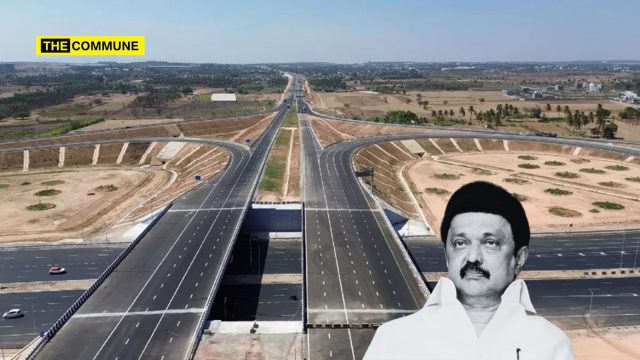
Chennai–Bengaluru Expressway: 25 Km Of DMK Rule Holds 262 Km Of National Highway Construction Hostage

Cleared In Karnataka, Forests Cleared In Andhra But Tamil Nadu’s Flat Stretch Stalls Chennai-Bengaluru Expressway Completion

Work on the four-lane, access-controlled Bengaluru–Chennai Expressway in Tamil Nadu is nearing completion, except for a single stalled stretch between Arakkonam and Kancheepuram, which has now emerged as the sole bottleneck delaying commissioning of the entire corridor.

According to officials from the National Highways Authority of India, all sections except the Arakkonam–Kancheepuram package are expected to be ready by June or July 2026.

Progress Across Tamil Nadu Sections

The 105.75-km Tamil Nadu portion of the expressway is divided into four packages:

  • Gudipala–Walajahpet (24 km): 23.85 km completed
  • Walajahpet–Arakkonam (24.5 km): 20.35 km completed
    • Only pending work: a rail overbridge
    • A railway-owned building obstructing alignment was recently demolished
  • Arakkonam-Kancheepuram (25.5 km): Only 11 km completed
  • Kancheepuram-Sriperumbudur (31.7 km): 25.25 km completed

NHAI sources said that with the recent clearance of railway land near Walajahpet-Arakkonam, work on that stretch is expected to move swiftly.

Single Package Delays Entire 262-km Project

While 71 km in Karnataka has already been commissioned and all Andhra Pradesh packages, cutting through forest and hilly terrain, are in advanced stages, the 25-km Arakkonam-Kancheepuram stretch in Tamil Nadu remains severely delayed.

An NHAI official confirmed that the authority has issued an intention to terminate the contractor for the Arakkonam-Kancheepuram package, citing abnormally slow execution.

However, the contractor challenged the notice in court. The High Court subsequently directed NHAI to provide the firm with one final opportunity to explain its position in person. Sources indicated that even this hearing has not yet taken place.

A retired NHAI official criticised the delay, stating that the contractor responsible for stalling the corridor should not be granted further extensions. He noted that the Karnataka and Andhra Pradesh sections, despite more challenging terrain, have progressed faster.

Conflicting Claims Over Responsibility

Over the past several months, multiple and conflicting explanations have emerged for the delay:

  • NHAI alleges poor contractor performance
  • The contractor reportedly claims delays in power and utility shifting by Tamil Nadu authorities
  • The contractor has also cited non-fulfilment of fly ash supply commitments by the State, affecting project viability

With flatter terrain and minimal environmental hurdles, the continued delay of this stretch has raised questions over administrative coordination rather than engineering complexity.

Trumpet Interchange At Sriperumbudur Progressing

Meanwhile, work on a ₹122.03-crore trumpet interchange at Sriperumbudur is progressing steadily. The 1.089-km structure will provide six directional arms, connecting traffic from Vellore, Kancheepuram, and Chennai to the expressway.

Construction began in August 2024, and around 25% of the work has been completed, with 198 of 221 girders already precast. The interchange is expected to be completed later this year.

Why This Matters

Once operational, the Chennai–Bengaluru Expressway is expected to reduce travel time to around 2 hours and 15 minutes, significantly easing congestion on the existing highway.

With most of the 262-km, ₹18,000-crore project nearly ready, the continued delay of a single 25-km stretch has prompted industry observers to question whether the problem lies not in construction—but in governance and execution oversight.

As things stand, the commissioning of one of South India’s most critical infrastructure corridors hinges entirely on resolving this lone stalled package in Tamil Nadu.

Source: The Hindu

Subscribe to our channels on TelegramWhatsApp, and Instagram and get the best stories of the day delivered to you personally.
Labs & Factories Tamed Christianity, Digital Tech Will Tame Islam

Why Religious Violence Is The Death Rattle Of A Fading Monopoly

Religious violence is rarely a failure of faith; it is the desperate survival mechanism of a fading monopoly. For centuries, we have been told that intolerance and blasphemy regimes are the result of “radical” theology. History suggests a colder, more structural truth: Religious violence emerges when faith is fused with state power, and it ends only when that fusion is shattered by technology.

Christianity did not become “peaceful” because it rediscovered its scriptures. It was stripped of its teeth by the Industrial Revolution. The printing press put an end to papacy. Today, Islam is entering its own “stress test”, driven not by steam engines and factories, but by the borderless, decentralized power of the Internet.

I. Christianity: Peace Through Disempowerment

For over a millennium, Christianity was a religion of coercion, expanding not on its theological strength, but on the power of the sword. Once it acquired the Roman state apparatus, it treated dissent as a virus and blasphemy as high treason. The Inquisition, the Crusades, and the burning of heretics were not “misinterpretations” of the Gospel; they were the logical tools of a faith that held a monopoly on the Law.

The Great Emasculation

Christianity’s transition to modern pluralism was not a moral evolution – it was a structural retreat.

  • The Westphalian Shift: The state reclaimed the monopoly on violence, turning the Church from a sovereign into a subject.
  • The Industrial Catalyst: As the 19th century moved the masses from the parish to the factory, the Church lost its grip on education, social welfare, and the daily survival of the people.
  • Scientific Reality: When science replaced scripture as the arbiter of physical truth, the Church’s “absolute” authority was relegated to the realm of personal opinion.

Christianity grew tolerant only when it lost the physical capacity to be intolerant. Its peace is a consequence of its disempowerment.

II. Islam’s Legal Wall

Islam faces a more volatile transition because it is fundamentally Orthopraxic (law-centric) rather than just Orthodoxy-centric (belief-centric). In Islam, the “truth” is not just a theology; it is a legal framework – Sharia. For centuries, this framework was guarded by the Ulama, the clerics, who functioned as the high priests of social and legal order.

Today, that wall is being breached from two directions:

State Realism: In the heart of Sunni Islam, Saudi Arabia is dismantling its religious police and sidelining its clerics. This isn’t a “theological awakening”; it is a cold political pivot. To survive in a post-oil, globalized economy, the state has realized that clerical literalism is an economic liability.

The Digital Siege: The Internet has done to the Ulama what the printing press did to the Papacy; it has destroyed the “black box” of their authority.

III. The Internet: The New Industrial Revolution

The Internet is not just a tool for communication; it is an architecture of disruption. It is doing to Islam what the factory floor did to the 19th-century Church:

  • The Death of the Intermediary: When a teenager in Riyadh or Jakarta can access a thousand years of conflicting legal rulings on their smartphone, the local Imam’s “absolute” fatwa becomes just one opinion among many.
  • The Rise of “Direct-to-Consumer” Faith: Digital platforms have democratized Ijtihad (legal reasoning). By putting the tools of interpretation into the hands of the laity, the Internet has stripped the clerics of their status as the sole gatekeepers of the Law.
  • The Collapse of Fear: Blasphemy laws rely on the isolation of the dissenter. The Internet provides a borderless sanctuary where ideas cannot be executed and dissent cannot be silenced.

I recommend the findings and observations of Gary Bunt, Professor of Islamic Studies, at the University of Wales. In his book, “iMuslims”, he argues that the internet and social media continually impact the presence and place of Islam in the contemporary world. Far from being resistant to digital technology, Muslims around the globe have embraced Facebook, Twitter, and all the other digital suspects that have so massively altered religious communities, interpretations, discourses, and practices. This has its own set of not so peaceful contributions to the society. But it has also demonstrated that you can question without fear, and you’d find yourself among similarly aligned group of people contributing to your inquisitive mind.

IV. Violence As A “Death Rattle”

The “sacred rage” and escalating extremist violence observed today are frequently misread as signs of a religious resurgence; in reality, they are symptoms of a profound systemic collapse. Historically, violence intensifies not when a faith is confident, but when its institutional authority feels its grip slipping. Just as the Inquisition reached its lethal peak while the Church was losing its monopoly on European thought to the printing press, modern blasphemy regimes and radical insurgencies represent the desperate screams of a dying order.

In a borderless digital world, where traditional custodians can no longer enforce compliance through social habit or intellectual isolation, violence becomes a “costly signal” – a brutal attempt to re-establish boundaries through fear because they can no longer be maintained through faith.

This collapse is most visible in the possible “post-theocratic” shifts occurring in places like Iran. The sight of protestors burning hijabs or targeting mosques signifies a total rupture between the citizenry and the clerical class. For many, the mosque has transitioned from a spiritual sanctuary to a symbol of state-enforced monopoly, and the “Maulvies” are viewed not as moral guides, but as agents of an obsolete control mechanism.

As the internet acts as a great secularizer, decentralizing information and exposing the masses to a global market of ideas, the traditional custodians find themselves unable to compete. Their resort to spectacular violence is the ultimate admission of incompetence; it is the final, reflexive lash of a power structure that has lost the intellectual argument and has nothing left but the sword.

They are the last, desperate screams of a monopoly that can no longer enforce compliance through tradition. Violence is the “costly signal” of a dying order trying to re-establish boundaries in a borderless digital world.

Conclusion: The Inevitability Of Choice

Religions do not find “liberal values” in their holy books; they find them when they can no longer afford the alternative.

Christianity was tamed by the laboratory and the factory. Islam is being tamed by the fiber-optic cable and the global marketplace. The transition is uneven, contested, and often bloody, but the structural direction is irreversible. Once a religion loses the power to enforce its law, it must eventually learn to compete in the marketplace of ideas.

Islam is no different.

G Saimukundhan is a Chartered Accountant.

Subscribe to our channels on TelegramWhatsApp, and Instagram and get the best stories of the day delivered to you personally.
DMK Ally Karunas Mocks Brahmin Priests

"Will Murugan Only Talk To Those Who Ring The Bell? I Will Also Ring The Bell", Comedian Turned Politician Karunas Mocks Brahmins

DMK ally, comedian turned politician Karunas has stirred controversy with a speech he made recently at an MDMK stage in Madurai. The MDMK chief is on a padayatra across the state reportedly to create awareness against drug use and alcohol.

Karunas is the head of a caste-based party named Mukkulathor Pulipadai Katchi which in 2024 allied with the DMK in the I.N.D.I bloc for the parliamentary elections.

Karunas initially started off his speech highlighting MDMK chief Vaiko’s long political career and his role in sustained protest politics in Tamil Nadu. Karunas placed Vaiko within a broader historical tradition of political marches and yatras, referring to figures such as Pasumpon Muthuramalinga Thevar, Mahatma Gandhi, Periyar, and later Dravidian leaders who used mass mobilisation to press political demands. He argued that protest marches have historically been used to secure rights, resist state policies, and articulate ideological positions, particularly on issues concerning Tamil identity, language, and political rights. Referring to Vaiko’s first march in 1986, Karunas noted that Vaiko has continued similar forms of political mobilisation for nearly four decades. He cited Vaiko’s interventions in Parliament, confrontations with successive central governments, and his imprisonment under the Prevention of Terrorism Act as part of this political trajectory.

Karunas also recalled Vaiko’s association with Tamil nationalist causes, including the Sri Lankan Tamil issue, and described his continued participation in marches as consistent with his long-standing political positions.

Slipping into the Thirupparankundram context and making moves that one would expect of a Dravidianist, Karunas said, “We are stuck in a very, very bad political environment that exists today. It is only after our ancestors fought for nearly a hundred years that we have obtained even these small concessions we have today. That is, what did the great and honorable Ambedkar, who wrote the Constitution of India, say? Equality must be available to everyone equally. Today we have obtained a right to vote; only this has been obtained to some extent. If we think about whether this social justice and equality are correct, the truth is it is not there at all. It is caught and suffering with the upper-caste people, especially with the Brahmins, with these Sanghis, and with this murderous RSS gang. If you take this area, it has been 75 years since independence. Until today, the reservations for it, especially for the people of the BC and MBC communities living here, and specifically for communities like the Piramalai Kallar, has anyone ever received the positions that come in the Supreme Court or the High Court? If you look, it is being denied; it is being deliberately denied. But a group is cheating the reservation and exploiting the rights of oppressed, Dalit, backward, and most backward people like us and enjoying those high positions. The evidence for that is the antics happening in the Madurai High Court and the antics happening in Thirupparankundram.”

He further said, “Tomorrow or the day after, I am planning to go see Murugan. I’m thinking of seeing him and asking, “What is your problem, what’s the problem for you?” Then what will he say? “Hey, I don’t understand anything, brother. They are shouting ‘Gaya Muya Gaya Muya’ in front of me. Before, the Pandaram rang the bell, the Koyavan rang the bell, the Vellala rang the bell. At those times, I was very happy. Everyone spoke in Tamil. I am the Tamil God, right? I only know Tamil, right? Suddenly, what is this, they are shouting ‘Gui Ang’, shouting ‘Ang Ng Ang’ there, doing all this, I don’t understand anything at all. “Karunas, come; you come to Thirupparankundram, I need to talk to you a bit,” he said. Why, won’t Murugan talk to me? Or won’t Murugan talk to me, I’m asking? Will only the one who wears a loincloth talk? Will only the one who rings the bell talk? I will also ring the bell. I belong to a priestly family with a 9,00-year historical significance… 90, 90,000, 900, 900, 900 years—look, there is a record. Should I show it? Does Modi or Amit Shah want it? I’ll show it. For us, everything is history.”

He further said, “In a democratic country, in a large nation where many religions and many languages are spoken, in a diverse nation, you act against the Constitution. You draw a picture about squeezing things from the sea, that curd came, buttermilk came from it and you bring a language that is not in the spoken language of the people in any form and write it – what a big anarchy this is! If you think no one will ask about this, understand one thing clearly. I’ll say one thing straight – while these people are here, we must do the work of saving the next generation.”

Jumping on to SIR, he said, “Because a huge conspiracy is going on. You think this SIR is ordinary? That is a huge deception. He says he’s bringing Punjab, he says he’s bringing Bihar, now he says he’s bringing Uttar Pradesh here. What do they think here? Only one thing: they think of brainwashing people in the name of God and religion and turning them into votes. And there are 4 ‘Kavali’ (rogue) fellows here are going along with it. They have no means for food, what policy do they have, what ideology do they have? Votes in the name of religion, how can politics in the name of religion be accepted? Politics is a policy, an ideology; it is for the people, isn’t it?

Getting back to punching the brahmins, he said, “I have a pottu, you have a pottu, so you and I are one, so can I say vote for me?” Okay, I will ask for your daughter’s hand in marriage; will you give? I have a pottu, and you also have a pottu. I’m not wearing a thread; I’m asking for your daughter’s hand, will you give her to me? So, it’s entirely about cheating the faith we have, the belief in God, and snatching it as a vote. But why do you need a fight with a ‘Bhai’? Why should we fight? We are all fine. How can you blame an entire community for a mistake one person made? How can you? The Dravidian rule in Tamil Nadu, which is currently yearning for Dravidian ideology, must continue. The BJP-RSS ideological group, the Sanghi group, who think of defeating it in some form and entering through a shortcut to capture it, must be chased away relentlessly.”

Subscribe to our channels on TelegramWhatsApp, and Instagram and get the best stories of the day delivered to you personally.
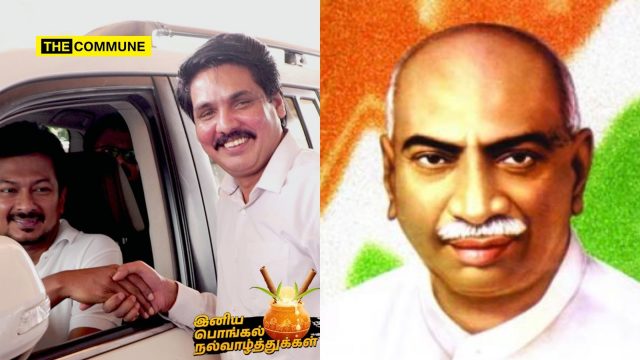
DMK Scion Udhayanidhi Stalin Shakes Hands With Misogynist Dravidianist YouTuber Mukthar Ahmed Who Insulted Congress Leader Kamaraj

Back in December 2025, YouTuber Mukthar Ahmed, said to be close to the Deputy CM of Tamil Nadu, DMK scion Udhayanidhi Stalin, had made a series of incendiary remarks targeting former Chief Minister K Kamaraj, widely revered as the “Kalvi Thanthai” (Father of Education).

Mukhtar’s statements, branding Kamaraj as a “caste leader,” alleging corruption in dam construction, and claiming he worked only for his own community, sparked massive backlash across districts, particularly in southern Tamil Nadu and the Cauvery delta belt.

In a video posted in December 2025, in an interaction with field coordinator of Tamil Nadu Toddy Movement, S Nallasamy, Mukhtar Ahmed made the following allegations:

  • Kamaraj was not a universal leader, but merely a caste-leader
  • The dams constructed during Kamaraj’s tenure are “leaking”
  • Kamaraj indulged in commission-based corruption
  • His legacy is deliberately mythologised to protect vote-bank politics

These remarks were made while accusing political parties of selectively shielding Kamaraj from criticism while freely attacking leaders like EVR, Anna, Karunanidhi, MGR, and Jayalalithaa.

Mukhtar’s claims were immediately countered by historians, political observers, and citizens who pointed out a basic factual problem – Kamaraj’s public life was among the most intensely scrutinised in post-Independence India.

From the petrol bills of his official car to his personal finances, Kamaraj was subjected to audits and political attacks even during his lifetime. No credible corruption charge ever stood.

More importantly, many of the dams Mukhtar casually dismissed, built in an era with limited technology, continue to serve Tamil Nadu’s agricultural backbone decades later, despite repeated floods and climate stress.

Following the comments made in the YouTube video, outrage expolded across the state and it was not confined to social media.

In Mayiladuthurai, Nadar community organisations staged a large protest on 7 December 2025, marching through major roads and submitting formal complaints at the police station and the DSP’s office. Protesters demanded immediate criminal action against Mukhtar Ahmed, FIR under IPC and IT Act provisions, removal of the defamatory video, and permanent blocking of his YouTube channel. Community leaders warned that such provocations threaten social harmony and could escalate if ignored.

However, a month later, the video still remains.

Kamaraj’s leadership went far beyond party or caste. He expanded free education and school infrastructure across rural Tamil Nadu, implemented mid-day meals before it became political currency, brought in top engineers to execute dam and irrigation projects with scientific planning, and lived an austere life that even political opponents acknowledged.

Had Kamaraj wanted to loot like today’s politicians, he could have. But he didn’t and that is why he still stands as a tall figure in TN politics.

Mukthar Ahmed, An Abusive Misogynist Who Objectifies Women Actors

Mukthar Ahmed, creates content that objectify and demean women. In one video, Mukthar shamelessly used a glamorous image of Kasthuri Shankar in his video thumbnail, accompanied by a caption that callously labeled her as a “pros*itute.”

In another episode, he along with Dravidian ideologue Sex Doctor Kantharaj objectify cine actresses gossiping about their personal lives.

How DMK Derogated Kamaraj

The DMK even made fun of his skin colour with nasty cartoons. Even recently, DMK MP Trichy Siva made an outrageous claim that Kamaraj would not sleep without air conditioning. He stated that Karunanidhi himself told him this, and that it inspired the DMK government to install air conditioning in all guest house in Tamil Nadu.

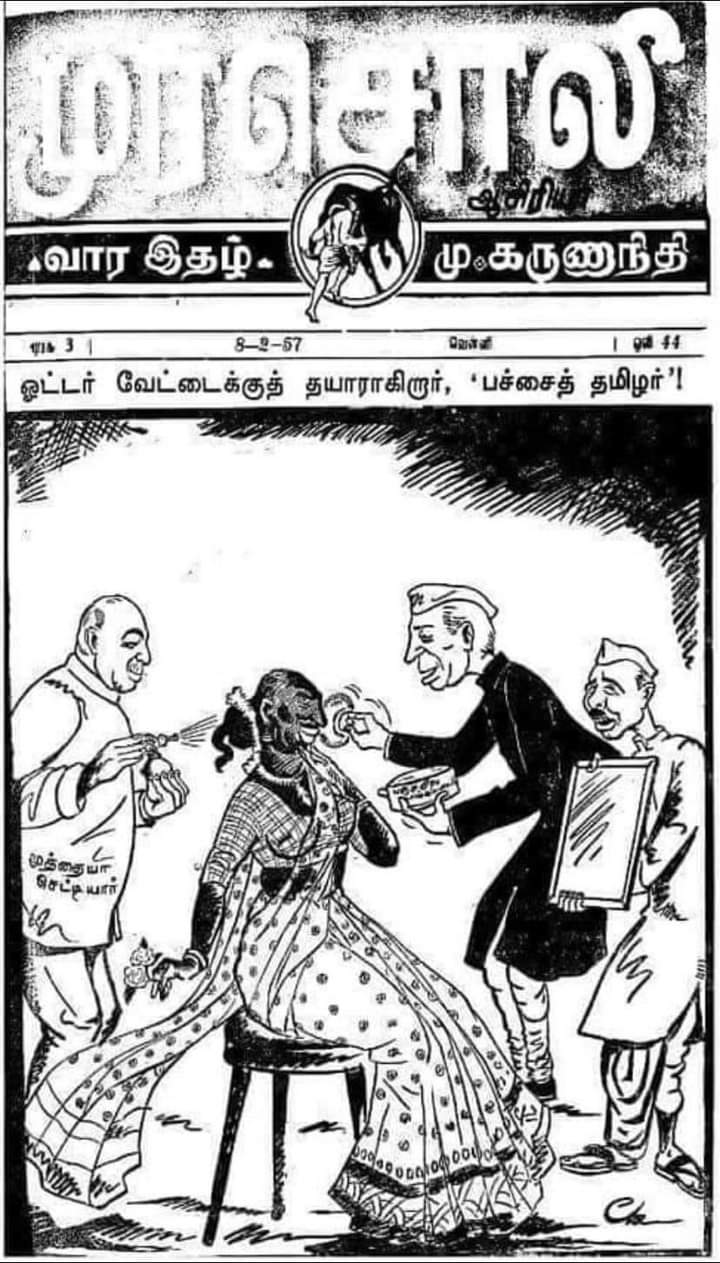
On 8 February 1957, in Murasoli magazine, Karunanidhi, serving as the chief editor at the time, published a controversial cartoon that depicted a derogatory portrayal. The cartoon featured a black woman undergoing makeup to resemble Kamaraj, with another figure representing Prime Minister Nehru as the makeup artist. The caption accompanying the cartoon read, “The true Tamilian is getting ready for vote hunting.” This portrayal aimed to ridicule Kamaraj for his deliberate decision not to marry. Karunanidhi ridiculed him by likening him to a woman dressed in a saree and wearing a nose pin. This has been widely condemned as one of the most disgraceful instances of mockery in political history, stemming from jealousy over Kamaraj’s effective governance.

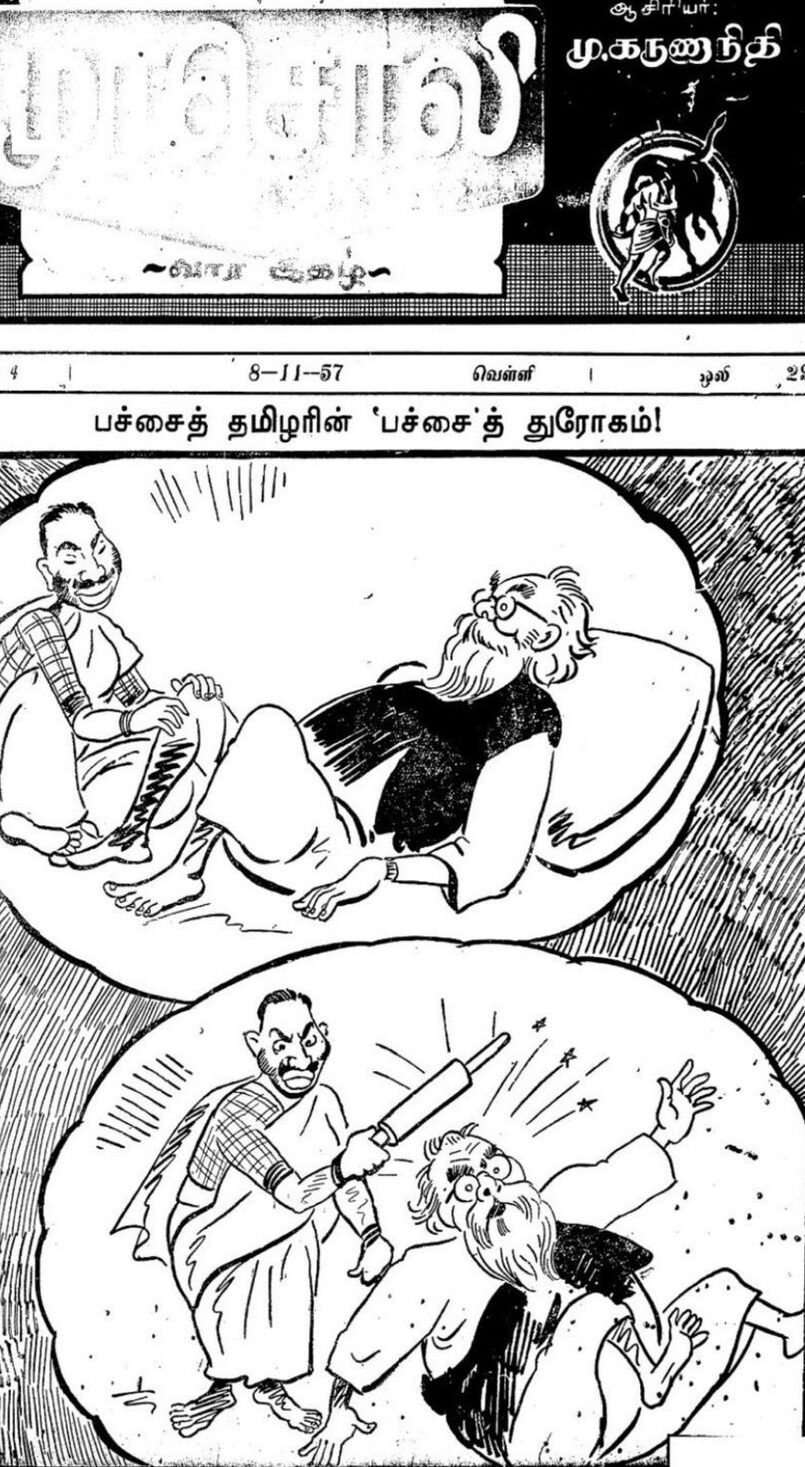
In the same Murasoli magazine dated 8 November 1957, Karunanidhi portrayed Kamaraj wearing a saree in a cartoon. In this one cartoon depicted Kamaraj seeking favors by massaging the legs of EV Ramasamy. In a subsequent cartoon, Karunanidhi depicted Kamaraj forcefully driving away EV Ramasamy, with a caption titled “True Tamilans, True treachery.” Once again, he created a cartoon mocking Kamaraj by portraying him as a woman.

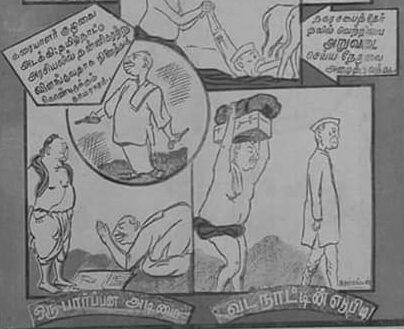
In the 1956 Pongal Malar edition of Murasoli, Karunanidhi featured a cartoon series titled ‘Kamarajar Puranam’ where he portrayed Kamaraj as prostrating before a Brahmin. This one was titled “A Brahmin Slave.”

Additionally, another cartoon depicted Kamaraj as a porter carrying the agendas of Prime Minister Nehru titled “Mere worker for North Indians“, which not only insulted both leaders but also demeaned the profession of the downtrodden who earn their livelihood through hard labor. Karunanidhi promoted a misleading narrative among the impoverished population of Tamil Nadu, portraying himself as a constructive force. However, in truth, Kamaraj held significant political sway as a kingmaker. His renowned “K plan” garnered praise, with even Prime Minister Nehru seeking counsel from Kamaraj. Following Nehru’s passing, Kamaraj played a pivotal role in determining who would assume the prime ministerial position in Delhi.

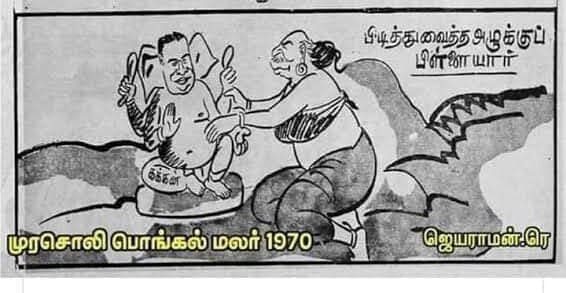
In 1970, amidst the Murasoli controversy surrounding the Pongal Malar, Karunanidhi published a cartoon that not only disrespected Kamaraj but also offended Hindu sentiments. In the cartoon, Kamaraj was depicted as a semi-clothed woman resembling a Hindu goddess, and Kakkan, another esteemed leader of the Congress known for his neutrality, was portrayed as a male Hindu deity. This portrayal was titled “A handmade dirty Pillayar,” adding insult to injury for many Hindus. Kakkan, hailing from a Scheduled Caste background, rose to the position of Home Minister. Despite his stature, even in his passing, he relied on a government hospital for his medical care. Surprisingly, he lacked financial resources at the time of his demise. The DMK, which boasts of advocating for social justice, ironically subjected such a man to derogatory caricatures, despite his significant contribution to the state.

Attempts to reduce him to caste caricatures or to casually accuse him of corruption have not only failed but have united communities across political lines in condemnation.


View this post on Instagram


A post shared by Tamil Janam (@tamiljanam)

Subscribe to our channels on TelegramWhatsApp, and Instagram and get the best stories of the day delivered to you personally.