Home Blog Page 13

Dappa DMK Candidates: The Most Satisfying Defeats Of Tamil Nadu Assembly Polls 2026

Dappa DMK Candidates: The Most Satisfying Defeats Of Tamil Nadu Assembly Polls 2026

4 May 2026 will be one of the most memorable days in history for the public of Tamil Nadu who suffered for 5 years under the so-called Dravidian Model rule of the DMK government.

Thanks to the heavy anti-incumbency against the Stalin government and the Vijay wave, DMK didn’t just lose, sitting ministers were thrown out by the people.

Stalin Falls in Kolathur

The most shocking fall belonged to none other than Chief Minister MK Stalin himself. A man who had won from Kolathur three consecutive times, who had held the seat like a personal fiefdom, beaten by VS Babu, a TVK candidate who once wore the DMK’s own colours. The margin: 8,795 votes. After nine assembly contests, Stalin finally tasted defeat, and the symbolism could not be sharper. The party’s president, the state’s chief minister, toppled in his own backyard.

PTR’s Arrogance, Answered

IT Minister PTR Palanivel Thiagarajan, long regarded as the DMK’s sharpest but also the smuggest operator, lost Madurai Central to TVK’s Madhar Badhurudeen by a humbling 19,128 votes. For a minister who never missed a chance to talk down to critics, the voters of Madurai Central did the talking this time.

Ma. Subramanian’s Saidapet Collapse

Health Minister Ma. Subramanian, whose press conferences during COVID became a masterclass in self-congratulation, who claimed TN was a drug free state, under whose supervision TN’s government hospitals caused problem after problem to the public, was routed in Saidapet. TVK’s M. Arul Prakash defeated him by a massive 28,514 votes – one of the largest ministerial margins of defeat in this election.

Anbil Mahesh Swept Out of Thiruverumbur

School Education Minister Anbil Mahesh Poyyamozhi, often seen as a minister more interested in social media optics and being Udhayanidhi Stalin’s fan club president than school infrastructure, lost Thiruverumbur to TVK’s Vijayakumar by 8,705 votes. The students of Tamil Nadu, it seems, gave him a failing grade. His dramatic behaviour and tears after the Karur stampede failed to make any impact.

Duraimurugan’s Katpadi Curtain Call

DMK’s general secretary Duraimurugan, one of the party’s older leaders caught in sand smuggling cases, fell in Katpadi losing to TVK’s DR M. Sudhakar by 7,309 votes. A man who helped steer the DMK’s election machinery for decades couldn’t steer himself to safety.

Nasar’s Record Rout in Avadi

If there was a prize for the most emphatic individual defeat, Avadi’s S. M. Nasar won it, in reverse. He lost to TVK’s R. Ramesh Kumar by a staggering 74,829 votes, the highest margin of defeat among all fallen ministers. A number that speaks louder than any speech he ever gave.

Geetha Jeevan vs. Srinath: Cinema Meets Comeuppance

In Thoothukudi, minister Geetha Jeevan faced actor Srinath, a close associate of Vijay, and lost by 37,731 votes. The constituency chose the newcomer from the screen over the incumbent from the cabinet.

One Vote. One Verdict. Periyakaruppan’s Historic Loss

Perhaps the most cinematic loss of all came from Tiruppattur in Sivaganga district, where Minister K. R. Periyakaruppan lost his seat by exactly one vote. One. Single. Vote. Democracy, at its most precise.

TRB Rajaa Loses By A Narrow Margin

Industries minister TRB Rajaa lost in Mannargudi only by 1,566 votes to AMMK’s S. Kamaraj. His IT Wing wreaked havoc on dissenters and his loss was literally celebrated by many.

The Rest of the Fallen

Tourism minister R. Rajendran lost Salem North by 14,034 votes.

Adi Dravidar welfare minister Dr. M. Mathivendan was pushed to third place in Rasipuram, losing to TVK’s D. Logesh Dhanapal by 16,954 votes with BJP’s Premkumar finishing ahead of him too.

Housing minister S. Muthusamy lost Erode West by 22,250 votes.

TM Anbarasan fell in Alandur.

Moorthy P. lost Madurai East.

Another satisfying defeat is that of Thousand Lights MLA Ezhilan Naganathan, who is known for his rabid anti-Hindu and anti-Brahmin comments. He lost to TVK’s JCD Prabhakaran by 15,141 votes.

The DMK didn’t just lose the election, it lost its face, its senior leaders, and its chief minister in a single night. Tamil Nadu had voted. And it voted loudly.

Subscribe to our channels on WhatsAppTelegram, Instagram and YouTube to get the best stories of the day delivered to you personally.
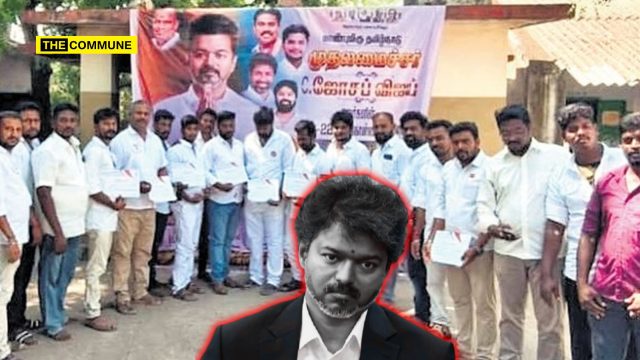
Booth Collapse, Cadre Revolt: How Kolathur Brought Stalin Down

Booth Collapse, Cadre Revolt How Kolathur Brought Stalin Down dmk

In a stunning upset in the 2026 Tamil Nadu Assembly elections, Chief Minister M K Stalin was defeated in his Kolathur stronghold by TVK candidate V S Babu by a margin of 8,795 votes, overturning confident projections by DMK cadres who had expected a victory margin exceeding 75,000 votes, as reported in Times of India.

As the campaign drew to a close, DMK functionaries in Kolathur had publicly expressed strong confidence in Stalin’s re-election, citing extensive campaigning efforts and the implementation of development projects worth several hundred crores in the constituency. However, following the results, party insiders described the defeat as both unexpected and internally driven.

Kolathur area secretary Nagarajan stated that despite coordinated campaigning by party workers, the party failed to effectively manage booth-level operations. He acknowledged that the defeat exposed significant organisational lapses at the grassroots level.

Party sources pointed to internal discord as a decisive factor. A senior minister overseeing Kolathur (PK Sekar Babu) allegedly created parallel power centres, which disrupted coordination among local units.

This fragmentation reportedly prevented cadres from communicating grievances directly to the chief minister, leading to resentment within the party ranks. A DMK functionary indicated that this internal friction weakened mobilisation efforts during the election.

Political observers also noted the broader electoral context, including a strong wave in favour of actor-turned-politician Vijay and his party, Tamilaga Vettri Kazhagam (TVK), which emerged as a major force in the state, pushing both DMK and AIADMK to the margins in several constituencies.

V S Babu, who secured victory in Kolathur, leveraged his deep familiarity with DMK’s organisational structure. He had earlier played a key role during Stalin’s first win in Kolathur in 2011, serving as DMK’s North Chennai district secretary and as MLA from Purasawalkam between 2006 and 2011. After switching to AIADMK a decade ago, Babu joined TVK shortly before the 2026 elections, a move that proved strategically significant.

Opposition voices attributed Stalin’s defeat to governance failures at the local level. AIADMK North Chennai district minority wing secretary A Abbas stated that long-standing civic issues in Kolathur remained unresolved over the past 15 years. He cited persistent problems such as poor road conditions, sewage contamination in drinking water, and rainwater stagnation. Abbas alleged that the DMK government prioritised high-visibility schemes and publicity efforts without addressing these basic concerns, contributing to public dissatisfaction.

Historically, Kolathur has been a DMK stronghold. Parts of the constituency were earlier under Purasawalkam, which the DMK retained even during the 1984 elections held amid a strong sympathy wave for M G Ramachandran and the AIADMK. However, in 2026, a notable shift occurred as sections of traditional DMK voters reportedly switched allegiance, contributing to Stalin’s defeat.

The Kolathur result is being seen as emblematic of a larger political shift in Tamil Nadu, with TVK’s rise disrupting long-standing electoral equations and exposing vulnerabilities within established party structures.

Subscribe to our channels on WhatsAppTelegram, Instagram and YouTube to get the best stories of the day delivered to you personally.
TVK Vijay Broke The Duopoly, Can He Build A Government?

vijay tvk

Thalapathy Vijay has done what most political veterans said was impossible. In its debut election, his Tamilaga Vettri Kazhagam has emerged as Tamil Nadu’s single largest party, leading in approximately 106–110 seats in a 234-member assembly – a result that has shattered the decades-old DMK-AIADMK duopoly overnight.

But leading is not governing. And the road to the Tamil Nadu Secretariat is considerably more complicated than the ballot count suggests.

The Hung Assembly Problem?

TVK’s lead is historic. Its majority is not. With 118 seats required and TVK currently short of that threshold, Tamil Nadu is staring at a hung assembly. The Governor will invite the single-largest party to prove its majority giving Vijay some time to demonstrate he commands the floor. That sets the clock ticking on a frantic post-poll negotiation that will determine whether his government is born stable or compromised from day one.

Congress had already signalled openness to supporting TVK – a party that Congress members were keen to ally with. The Left parties and VCK, long-suffering junior partners who felt humiliated by DMK’s seat allocation, have little reason to stay loyal to a sinking ship. PMK, currently in the AIADMK alliance, is reportedly already receiving feelers about switching sides in exchange for a ministerial portfolio. The arithmetic is available. The price is political debt.

The Manifesto He Must Now Fund

Vijay’s electoral promises were sweeping and specific: ₹2,500 monthly for women heads of households, six free LPG cylinders annually, farm loan waivers, five lakh government jobs, ₹15,000 annual school aid per child, ₹3,000 monthly pension for the elderly, 200 units of free power, and a ₹25 lakh family health insurance scheme. Every single one of these commitments has a price tag. Tamil Nadu already carries significant fiscal stress inherited from the outgoing DMK government. Delivering these schemes without either raising taxes or escalating debt will require a level of financial engineering that even PTR, with all his MIT Sloan credentials, struggled to execute, only to lead TN to nearly 10 lakh crore in debt.

The Inexperience Factor

Of TVK’s likely legislators, the overwhelming majority have never held public office. Many were recruited late, with no deep roots in party ideology. The internal power dynamics, between figures like Bussy Anand, John Arokiaraj, Aadhav Arjuna were already visible during candidate selection. A government where the CM is the singular centre of gravity, surrounded by first-time MLAs and competing power brokers, carries structural fragility that a well-organised opposition will ruthlessly exploit.

The DMK, now in opposition, retains its media network, its cadre machinery, and its institutional memory of exactly how to make a government bleed slowly. It will not rest.

The Opportunity

None of this means Vijay will fail. It means he has no margin for complacency. Tamil Nadu has handed him a genuine mandate for change, built on five years of public anger, broken promises, and a ruling family that confused dynasty with democracy. That mandate is real, and it is his to either honour or squander.

The question is not whether Vijay can win Tamil Nadu. He already has. The question is whether he can govern it. Will he last 5 years or break in a few? Only time will tell.

Subscribe to our channels on WhatsAppTelegram, Instagram and YouTube to get the best stories of the day delivered to you personally.
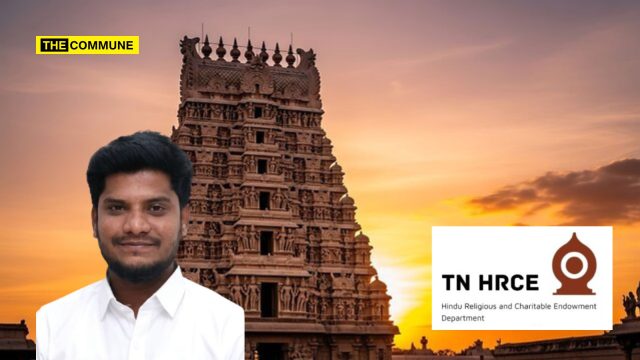
MIT Sloan Educated Lehmann Bros Fame Ultra Intellectual Pro Max DMK’s Pannaiyaar PTR Loses To TVK Candidate

ptr madurai palanivel thiagarajan

DMK has been trailing since the counting began this morning. One of the most satisfying defeats for many people across the state seems to be that of MIT Sloan educated Lehmann Brothers fame, ultra intellectual, double watch wearer and Pannaiyar – DMK’s Madurai central candidate PTR Palanivel Thiagarajan.

PTR wore his MIT Sloan badge like a badge of superiority. He kept dropping names like Lehman Brothers, USA, University of Buffalo, his experience as a banker, a financial whiz and his experience working in the US in an MNC at the drop of the hat – in every interview, at every opportunity he had. The same high-level PTR who behaves like a ‘Pannaiyar’ has now been defeated in his own constituency, he won twice before.

He was defeated not by a seasoned politician. Not by a veteran organiser with thirty years of booth-level work. But by a candidate from a party that did not exist three years ago.

How His Failures And Arrogance Caused His Downfall

Yes, we all agree PTR is an intelligent chap. That was never the problem. It was how he carried himself and his credentials. He did not do enough for his constituency, he claimed he was not able to do much because of ‘problems’ he couldn’t speak of.

He pooh-pooed his opponent Sundar C, ridiculed him, mocked him and called him names. He called Sundar C an outsider while he branded himself as ‘Maduraikaaran’. He called Sundar C a koothadi, a cinemakaaran, a cinema sanghi when he himself had to bring an actor Prakash Raj from another state to canvass for him.

He talked endlessly about controlling the state’s debt. Meanwhile, Tamil Nadu’s debt kept climbing every single year he was in charge. He quoted international economists and global frameworks in press conferences. Meanwhile, his own city was being ranked among the dirtiest cities in the country.

And when people asked him about it? He didn’t take responsibility. He pointed at the corporation. He essentially told the residents of Madurai: your city looks like this, but that’s not my problem, go complain to someone else.

Add to this, he wore Madurai malli flower garland on his wrist/arm when he went to vote – this made him the butt of many jokes.

Tamil Nadu’s voters, it turns out, understood perfectly. They understood that a man who treats citizens as an inconvenience to good policy is not a democrat. He is a pannaiyaar in a pant and shirt, ‘managing’ his constituency from a distance and wondering why the tenants are ungrateful.

What the Loss Means

PTR’s defeat is one where people are saying they will not condone arrogance and egoistic behaviour. It is Tamil Nadu telling the DMK’s intellectual aristocracy – give respect, take respect. The people do not vote for you for your fancy degrees but the humility you display and the work you do.

They trusted you for 2 terms and what did you give them – betrayal. You could not address even simple civic issues, you could not even hear their complaints, listen to their woes, you lived inside a grand house and guarded it with dogs at the gate, scaring people away.

People want an approachable person as their MLA – someone who will listen to them and not give lectures.

They owe you nothing. You owe them everything. That is the contract. PTR forgot it. And on 4 May 2026, an entire constituency reminded him in the only language that cuts through even the most sophisticated intellectual armour.

A ballot. Marked elsewhere.

Subscribe to our channels on WhatsAppTelegram, Instagram and YouTube to get the best stories of the day delivered to you personally.
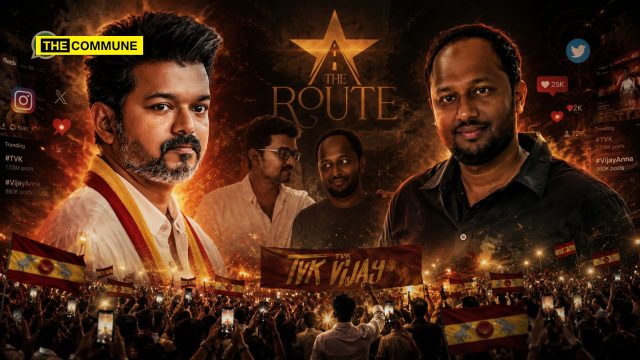
DMK Oopis Suffer Meltdown As DMK Trails In A Majority Of Seats Across The State

As the DMK found itself trailing for most part of the day of counting on 4 May 2026, the meltdown suffered by supporters or rather ‘Oopies’ was telling.

Celebrations were already planned in Arivalayam with tents set up and crackers ready. However, ADMK took the early lead and TVK was a close second in the first few hours of counting. Seeing this, everything was dismantled at the DMK HQ.

Several of its supporters on social media were in denial mode and kept maintaining that DMK would win.

One casteist and abusive handle on social media, a DMK supporter has been in severe denial mode since the morning. He continuously kept repeating that since voting was not over, TVK won’t form the government and DMK would, instead.

He claimed Kolathur constituency where MK Stalin is contesting had superior development. But the people were not loyal enough to vote for him.

Here are some more gems from the same handle.

The whining has been non-stop.

Now let’s look at a few others who suffered meltdown.

Some handles that are not from TN but have been pretending to be, also went from ‘TN is educated because of DMK’ to ‘collective shame and embarassment’ just because the state voted DMK out of power.

Image source: Tamil Labs

Since MK Stalin has been trailing in Kolathur, the supporters, ie, Oopies have started blaming the people.

Image source: Tamil Labs

The DMK supporter/influencer oopie who lives in the US and abused TVK voters as ‘Otteri nari’ ‘Dumeel Kuppam Vavval’ suffered a meltdown calling people having a ‘cinema disease’. Well, the DMK itself used MGR’s cinema presence and fame to win the 1967 election. Karunanidhi was a scriptwriter, so was Annadurai. MK Stalin and Udhayanidhi Stalin launched themselves through cinema.

Image source: Tamil Labs

Another insufferable supporter even quoted Thirukural with Karunanidhi’s commentary shaming voters that said something like people were ungrateful. He was indicating that if one didn’t vote for the DMK, they were useless.

Image source: Tamil Labs

Some went on to claim that TN would now become a UP or Bihar.

Image source: Tamil Labs

TNM editor in chief Dhanya Rajendran who almost rubbished the Axis My India exit poll earlier

seemed to have jumped ship to be on the good side of the incoming government.

Image source: Tamil Labs

Here are a few more who pretend that the world would collapse because MK Stalin would not going to be Chief minister.

Image source: Tamil Labs

A few others again mocked the people for taking all the freebies from the DMK and still voting for TVK.

Image source: Tamil Labs

Another one abused the voters as idiots.

Image source: Tamil Labs

Here are a few more.

While the DMK is leading in about 56 constituencies and won 3, the supporters, ie Oopies will still take time to come out of denial and go through the five stages of grief before accepting reality.

Subscribe to our channels on WhatsAppTelegram, Instagram and YouTube to get the best stories of the day delivered to you personally.
DMK’s Decimation: Good Riddance For Tamil Nadu But An Even Bigger Danger Awaits TN

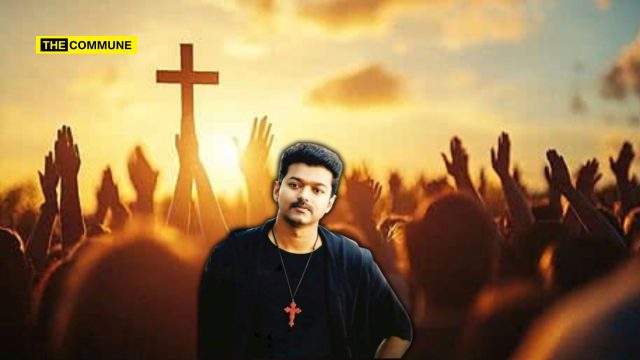
Is-Vijays-TVK-A-Christutva-Project

Tamil Nadu voted. And if the trends hold, the people have delivered a verdict not just against a party, but against a decade of arrogance dressed up as governance.

The DMK’s five years in power were not marked by governance. They were marked by the management of perception. Crores spent on advertising. A propaganda machinery so vast it confused noise for achievement. Meanwhile, the actual Tamil Nadu – the one with unemployed youth, unresolved government workers, broken government hospitals, law and order breaking down irreparably, and promises that expired quietly was told to look at the advertisements and feel grateful.

The breaking point didn’t come suddenly. It accumulated. It came when critics of the government were treated not as political opposition but as enemies to be crushed. When non-DMK leaning journalists who questioned the government found themselves frozen out, cases filed against them, vilified. When DMK supporters on social media operated as a digital militia, browbeating dissent with coordinated abuse. The party that once claimed the mantle of social justice, the opposers of ‘fascism’ began to resemble, in its conduct, exactly the fascist, hierarchical arrogance it claimed to oppose.

People were not fooled. They watched. They waited. And in April 2026, with an unprecedented 85% voter turnout, they spoke.

The Vijay Phenomenon

Thalapathy Vijay’s Tamilaga Vettri Kazhagam entered this election as a political newborn – no legacy machinery, no entrenched cadre network, no decades of booth-level organisation. What it had was something the DMK had spent five years destroying: trust.

Vijay’s appeal cut across the fatigue lines. Young voters, first-time voters, women, parents who had watched their families struggle while the government celebrated so-called ‘double-digit’ growth – they found in TVK not an ideology but an alternative. That is both TVK’s greatest strength and its most serious structural vulnerability. A party built on a leader’s personal magnetism has no immune system against the moment that leader disappoints.

The Verdict

TVK is leading in about 110 seats as of now, enough to form a government, with or without post-poll support. Vijay, who entered politics barely two years ago with no legislative experience, no party infrastructure, and no inherited vote bank, is on the verge of becoming Tamil Nadu’s Chief Minister. That is, by any measure, a seismic democratic moment.

But 110 seats mean TVK almost certainly does not have a standalone majority in the 234-seat assembly. The arithmetic of coalition will kick in immediately and the queue of parties offering “unconditional support” will include Congress, whose price has never truly been unconditional.

The Danger That Follows the Victory

Here is where Tamil Nadu must not mistake the relief of DMK’s exit for the arrival of safety.

The Congress party, TVK’s most likely coalition partner, has spent decades cultivating Tamil Nadu’s Christian community as its most reliable vote bank, especially in deep South Tamil Nadu which is Christian dominated. Congress’s ties to church hierarchies – Catholic, CSI, and Pentecostal denominations run deep and transactional.

TVK itself actively courted this same constituency during the campaign. Vijay did a ‘Samathuva Christmas’ event with church pastors and Christian preachers. There was a simmering anger of the Christians against the DMK for various reasons. George Ponnaiah had hinted at this. The Christian vote, concentrated in Tirunelveli, Kanyakumari, and parts of North Chennai, became a prize both DMK and TVK competed for aggressively.

A TVK government propped up by Congress support is not a theoretical concern. It is the arithmetic of Tamil Nadu’s coalition math and coalition debts in Indian politics are never paid in cash. They are paid in policy, in appointments, in administrative silence, and in the quiet looking-away that allows certain agendas to advance without ever appearing in a manifesto.

Southern Tamil Nadu – Kanyakumari, Tirunelveli, parts of Thoothukudi has been a live laboratory for this process for four decades. The demographic and religious composition of entire taluks has shifted within a single generation. This did not happen through persuasion alone. It happened because at critical moments, the administration was either complicit or absent.

A TVK government indebted to Congress’s church network will not reverse this. It will, at minimum, ensure the administration remains absent. That is all the space these networks need.

The Longer Game

The cruelest irony may be this: if a TVK-Congress government governs with an openly minority-appeasing, evangelical-networked agenda, the backlash will come, but after a decade. And a decade is enough time to reshape school syllabuses, alter demographic pockets, weaken temple administration further, and entrench the very networks that funded the political access.

Tamil Nadu’s Hindu majority, never organised, never politically consolidated the way minority communities have been, will absorb the damage quietly for years before the anger crystallises into votes. But the question is what Tamil Nadu looks like after those ten years.

The people of Tamil Nadu voted for change. Whether they get change or merely a change of hands on the same lever depends entirely on what Vijay does in the next 72 hours. Who he calls. What he agrees to. Whose support he accepts.

That phone call, not the ballot count, will define Tamil Nadu for the next decade.

Subscribe to our channels on WhatsAppTelegram, Instagram and YouTube to get the best stories of the day delivered to you personally.
“Dr BR Ambedkar Occupies A Place Of Singular Eminence”, Says Madras High Court, Stresses Teaching Him In Schools

“Dr BR Ambedkar Occupies A Place Of Singular Eminence”, Says Madras High Court, Stresses Teaching Him In Schools

The Madras High Court has directed the Tamil Nadu government to take appropriate policy decisions to incorporate lessons on the life and contributions of Dr BR Ambedkar in the Social Science curriculum, emphasising his role in India’s freedom movement and democratic nation-building, as reported in LiveLaw.

Justice Victoria Gowri stated that the school system should not teach the Constitution merely as a set of “dry institutional facts,” but must present the constitutional journey of India through the lives of those who shaped it. The court observed, “The school system must not teach the Constitution merely as a set of dry institutional facts. It must teach the constitutional journey of India through the lives of those who shaped it. Among them, Dr. BR Ambedkar occupies a place of singular eminence.”

The court further stated, “To know him is to understand why the Constitution insists upon equality. To study him is to understand why democracy must be social before it can remain political. To remember him is to remember that the Republic is a moral project, not merely a territorial arrangement.”

At the same time, the court clarified that it was not within the judiciary’s domain to mandate specific policy decisions or dictate curriculum content. However, it emphasised that constitutional values such as fraternity could not be left to uncertain social transmission and that constitutional literacy must be recognised as a component of social responsibility.

“The seeds sown by our Constitution, particularly those of justice, liberty, equality and fraternity, must be consciously nurtured if they are to endure. The time has come for the State to recognise that constitutional literacy is itself a component of social responsibility,” the court stated, adding that such measures were necessary for shaping informed and constitutionally aware citizens.

The observations were made while hearing a plea seeking to quash criminal proceedings against two men, aged 26 and 29, accused of desecrating a photograph of Dr Ambedkar during his birth anniversary celebrations. According to the prosecution, the de facto complainant had pasted Ambedkar’s photographs at Pulikuthi Bus Stand, following which one of the accused allegedly tore a poster and urinated on it, while the other recorded the act and circulated the video on WhatsApp.

Based on the complaint, a case had been registered under provisions of the Scheduled Castes and Scheduled Tribes (Prevention of Atrocities) Act, 1989. The accused later approached the High Court seeking to quash the proceedings on the basis of a compromise with the complainant.

Since the offences were non-compoundable, the petitioners sought the court’s intervention under its inherent jurisdiction. During earlier hearings, the court had questioned the accused about their knowledge of Ambedkar’s life and found that while they were aware of his stature as a legal figure, they lacked a deeper understanding of his contributions to the Constitution and social reform.

The court then directed the petitioners to purchase 101 books each in Tamil on Ambedkar’s life, retain one copy, and distribute the remaining 100 copies each to students of Classes XI and XII at Murugappa Government Higher Secondary School in T. Kallupatti. They were also instructed to read the book and appear for an oral test.

At a subsequent hearing, the court noted that the petitioners had complied with the directions, demonstrated improved understanding, and expressed regret for their actions. The court recorded that their repentance appeared genuine and that their transformation was evident.

Observing that the justice system need not always choose between punishment and closure, the court stated that a reformative approach based on accountability, education, and social responsibility could be adopted in appropriate cases. It noted, “There exists, in appropriate cases, a narrow but valuable reformative path, one that insists upon accountability, repentance, education and social responsibility as prerequisites to judicial leniency.”

Holding that the corrective purpose of the law had been substantially achieved, the High Court quashed the criminal proceedings, stating that the ends of justice would be better served by doing so.

Subscribe to our channels on WhatsAppTelegram, Instagram and YouTube to get the best stories of the day delivered to you personally.
Before Counting Day: Rumours Push TVK Supporter To Suicide Attempt

Before Counting Day: Rumours Push TVK Supporter To Suicide Attempt

A 28-year-old man allegedly attempted suicide in Tamil Nadu’s Krishnagiri district after reportedly being distressed by rumours related to actor-turned-politician Vijay and the outcome of the ongoing Assembly election, according to a report by Free Press Journal.

The incident was reported shortly before the commencement of vote counting, causing concern among local residents. The man, identified as K. Mahendran was stated to be a supporter of Vijay and his Tamilaga Vettri Kazhagam (TVK) party.

According to police, Mahendran became distressed after hearing unverified claims suggesting that Vijay might lose the election. Officials stated that, unable to cope with the anxiety, he allegedly attempted to take his own life by slitting his throat near his residence.

Eyewitnesses were reported to have intervened promptly and shifted him to the Krishnagiri Government Medical College and Hospital. A police official stated that bystanders rescued him and ensured he was taken to the hospital, where he was undergoing intensive treatment.

Hospital authorities indicated that Mahendran remains admitted and is under close medical supervision.

Police officials urged the public to avoid spreading or acting upon unverified information, particularly during sensitive periods such as elections. They also emphasised the importance of mental health awareness and advised individuals to seek support when experiencing emotional distress.

Subscribe to our channels on WhatsAppTelegram, Instagram and YouTube to get the best stories of the day delivered to you personally.
Kailash Manasarovar Yatra: India Rejects Nepal’s Lipulekh Claim, Calls It ‘Unjustified’

Kailash Manasarovar Yatra: India Rejects Nepal’s Lipulekh Claim, Calls It ‘Unjustified’

The Government of India, on 1 May 2026, announced that the Kailash Manasarovar Yatra for 2026 will be conducted between June and August, in coordination with the Government of the People’s Republic of China, according to a statement issued by the Ministry of External Affairs.

The yatra is scheduled to be organised in multiple batches, with pilgrims travelling via designated routes including the Lipulekh Pass in Uttarakhand and the Nathu La route in Sikkim. The Ministry stated that applications would be processed through an online system, with yatris selected through a computerised and transparent process.

The announcement triggered a diplomatic response from Nepal, with its Ministry of Foreign Affairs issuing a statement objecting to the use of the Lipulekh route. On 3 May 2026, the Nepal government maintained that Lipulekh falls within its territory and asserted that any activities, including the Kailash Manasarovar Yatra, should not be undertaken through the region without its consent.

In its statement, Nepal reiterated its position that areas such as Lipulekh, Kalapani, and Limpiyadhura form part of its sovereign territory, citing historical treaties and maps as the basis for its claim. It also stated that it had conveyed its concerns to both India and China through diplomatic channels and urged restraint in undertaking activities in the disputed region.

Responding to the development, India rejected Nepal’s claim over Lipulekh Pass and described it as a long-standing and established route for the Kailash Manasarovar Yatra. Ministry of External Affairs spokesperson Randhir Jaiswal stated that the yatra had been conducted through this route for decades, including since 1954.

He further stated that India’s position on the issue remained consistent and clear, adding that Nepal’s claims were not justified and were not supported by historical facts or evidence. He described what he termed as unilateral attempts to enlarge territorial claims as untenable.

At the same time, the spokesperson emphasised that India remained open to engaging with Nepal through dialogue and diplomatic channels to address all outstanding bilateral issues, including boundary-related concerns.

Subscribe to our channels on WhatsAppTelegram, Instagram and YouTube to get the best stories of the day delivered to you personally.
Congress Scion Rahul Gandhi Reportedly Spotted In Muscat At Cafe Linked To Fang Fenglei Who Is Close To China’s Power Circles

Three days before Kerala and other state election results were declared, Congress scion Rahul Gandhi was spotted at a beachfront café in Muscat, Oman. No press briefing. No official itinerary. No statement from the Congress party. The only record of the visit came from videos shot from passing cars on Azaiba Beach, clips that spread across social media within hours on 3 May 2026.

Gandhi was dressed casually – cap, sunglasses, civilian clothes. For a politician who had just delivered one of his most incendiary speeches on Indian soil less than a week earlier, the contrast was striking.


View this post on Instagram


A post shared by Squint Neon (@squintneon)

In late April 2026, Gandhi flew to Great Nicobar Island and publicly attacked the Indian government’s ₹81,000 crore holistic development project – a mega-infrastructure push involving a deepwater port, an airport, and strategic connectivity infrastructure at one of India’s most sensitive Indian Ocean locations. He called it environmental destruction, accused the Adani Group of land-grabbing, and demanded the project be stopped.

What Gandhi did not mention publicly is that Great Nicobar sits astride critical Indo-Pacific sea lanes and that the project is, in significant part, India’s strategic answer to growing Chinese naval and commercial presence in the region.

Days after that speech, he was in Muscat.

The café Gandhi visited Café Farah, also styled Caffe Farah, is operated by Al Zaman Hospitality LLC, a subsidiary of the Al Zaman Group, an Oman-based diversified conglomerate. Its Managing Director is Khalid Mohamed Zaman; a businessman whose name appears in multiple Gulf corporate registries. The café sits in the Azaiba area of Muscat, a zone known for its diplomatic density and international clientele, not a random roadside stop.

Khalid Zaman’s name surfaces in a more significant context beyond hospitality. He holds a board seat at BlueFive Capital – a private equity firm operating across Abu Dhabi, London, and Beijing, with a focus on Gulf economies and Global South investments. BlueFive made headlines in 2025 when it launched its $3 billion Onyx Fund and held its inaugural board meeting in Bahrain. Zaman has since been appointed Vice Chairman of BlueFive Leasing, a related Muscat-based entity.

The BlueFive board is where the story gets complicated. Sitting alongside Zaman is Fang Fenglei – founder and chairman of Hopu Investment Management, one of China’s most powerful private equity firms.

Fang is not simply a successful financier. He is the man who architected China’s modern investment banking infrastructure, served as non-executive chairman of Goldman Sachs China, and spent two decades leveraging that position to extract far more institutional knowledge and access than Goldman Sachs originally anticipated.

Fang Fenglei founded HOPU Investments

His father was an officer in the People’s Liberation Army. More consequentially, Fang built a personal friendship with Wang Qishan, currently China’s Vice President and Xi Jinping’s most trusted political enforcer, dating back to their shared years in Henan Province.

It was Fang who convinced Wang Qishan to establish CICC in 1995, China’s first joint-venture investment bank, which Goldman Sachs helped set up.

The regulatory implications of Fang’s network are not theoretical. India classifies direct investment from Chinese private equity entities, particularly those with documented CCP political links, as requiring extreme scrutiny in strategic sectors including technology, telecom, and financial services. Hopu Investments falls squarely within that classification.

The chain of connections that online researchers have mapped runs as follows: Xi Jinping’s inner circle, to Wang Qishan, to Fang Fenglei, to BlueFive board partner Khalid Zaman, to Café Farah, to Rahul Gandhi’s unannounced visit. Every single link in that chain is sourced from public corporate filings, BlueFive Capital’s own press releases, and established biographical records. None of it is invented.

A politician who just publicly opposed India’s most strategically sensitive infrastructure project, one designed in part to counter Chinese influence, then travels unannounced to a Gulf city and walks into a café owned by a man who shares a board table with one of the CCP’s most connected financiers. No explanation offered. No press access. No timeline provided.

Subscribe to our channels on WhatsAppTelegram, Instagram and YouTube to get the best stories of the day delivered to you personally.