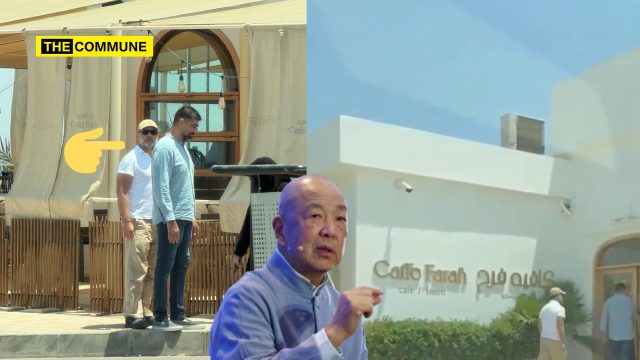
Three days before Kerala and other state election results were declared, Congress scion Rahul Gandhi was spotted at a beachfront café in Muscat, Oman. No press briefing. No official itinerary. No statement from the Congress party. The only record of the visit came from videos shot from passing cars on Azaiba Beach, clips that spread across social media within hours on 3 May 2026.
Gandhi was dressed casually – cap, sunglasses, civilian clothes. For a politician who had just delivered one of his most incendiary speeches on Indian soil less than a week earlier, the contrast was striking.
So this guy after spilling raita in Nicobar mid-election has now secretly ran away to Muscat, Oman
Who is he meeting? Why the secrecy?
Why Leader of Opposition doesn’t publicize his frequent foreign visit? https://t.co/eHJEgeeSoJ pic.twitter.com/ieczqaja1r
— Muji Singh Rangi (@mujifren) May 3, 2026
View this post on Instagram
In late April 2026, Gandhi flew to Great Nicobar Island and publicly attacked the Indian government’s ₹81,000 crore holistic development project – a mega-infrastructure push involving a deepwater port, an airport, and strategic connectivity infrastructure at one of India’s most sensitive Indian Ocean locations. He called it environmental destruction, accused the Adani Group of land-grabbing, and demanded the project be stopped.
I travelled through Great Nicobar today.
These are the most extraordinary forests I have ever seen in my life. Trees older than memory. Forests that took generations to grow.
The people on this island are equally beautiful – both the adivasi communities and the settlers – but… pic.twitter.com/vYdBWdYfIJ
— Rahul Gandhi (@RahulGandhi) April 29, 2026
What Gandhi did not mention publicly is that Great Nicobar sits astride critical Indo-Pacific sea lanes and that the project is, in significant part, India’s strategic answer to growing Chinese naval and commercial presence in the region.
Days after that speech, he was in Muscat.
The café Gandhi visited Café Farah, also styled Caffe Farah, is operated by Al Zaman Hospitality LLC, a subsidiary of the Al Zaman Group, an Oman-based diversified conglomerate. Its Managing Director is Khalid Mohamed Zaman; a businessman whose name appears in multiple Gulf corporate registries. The café sits in the Azaiba area of Muscat, a zone known for its diplomatic density and international clientele, not a random roadside stop.
Khalid Zaman’s name surfaces in a more significant context beyond hospitality. He holds a board seat at BlueFive Capital – a private equity firm operating across Abu Dhabi, London, and Beijing, with a focus on Gulf economies and Global South investments. BlueFive made headlines in 2025 when it launched its $3 billion Onyx Fund and held its inaugural board meeting in Bahrain. Zaman has since been appointed Vice Chairman of BlueFive Leasing, a related Muscat-based entity.
The BlueFive board is where the story gets complicated. Sitting alongside Zaman is Fang Fenglei – founder and chairman of Hopu Investment Management, one of China’s most powerful private equity firms.
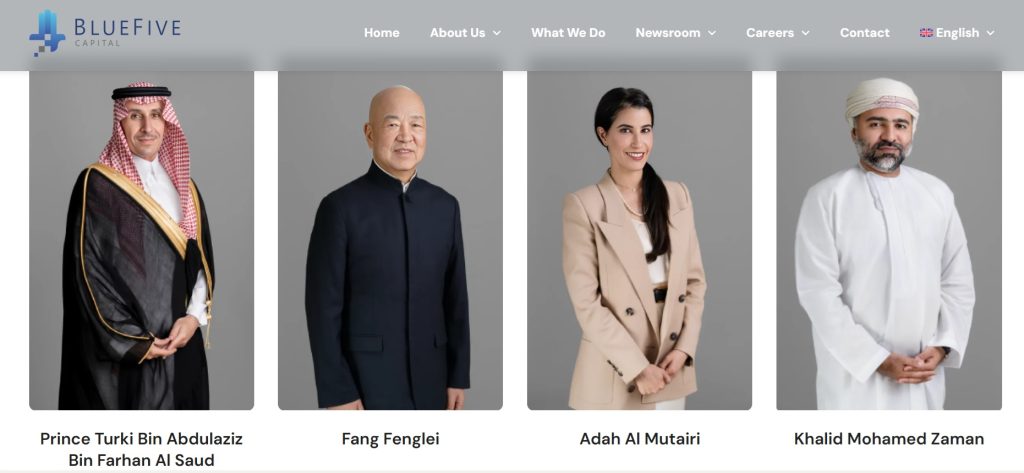
Fang is not simply a successful financier. He is the man who architected China’s modern investment banking infrastructure, served as non-executive chairman of Goldman Sachs China, and spent two decades leveraging that position to extract far more institutional knowledge and access than Goldman Sachs originally anticipated.
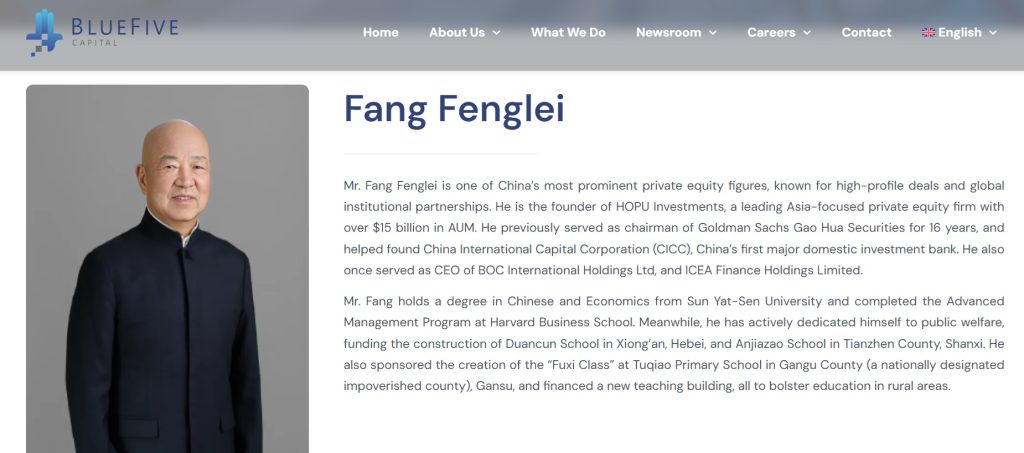
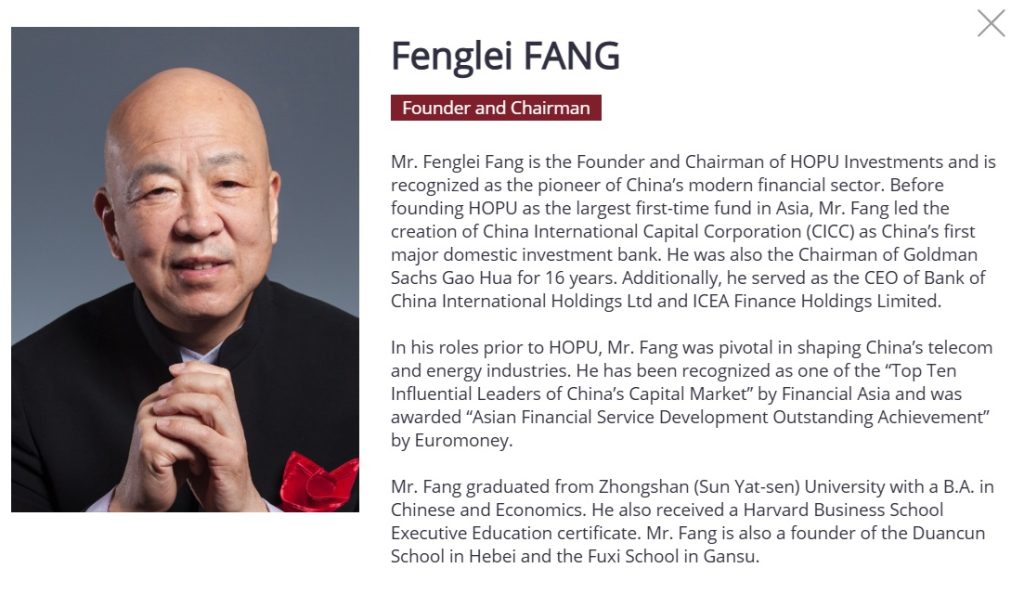
His father was an officer in the People’s Liberation Army. More consequentially, Fang built a personal friendship with Wang Qishan, currently China’s Vice President and Xi Jinping’s most trusted political enforcer, dating back to their shared years in Henan Province.
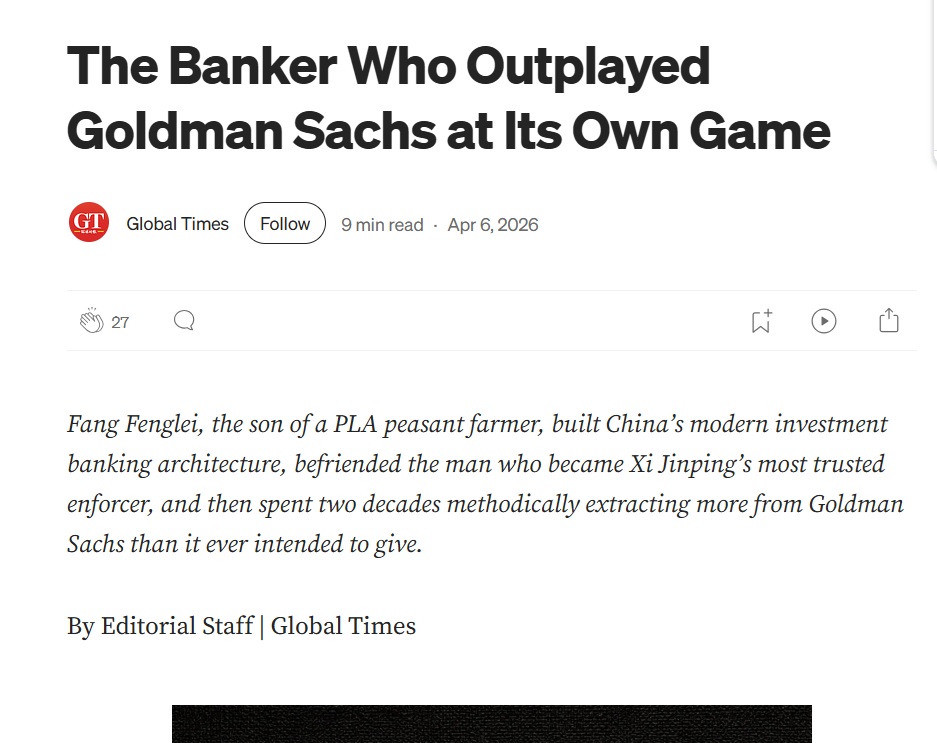
It was Fang who convinced Wang Qishan to establish CICC in 1995, China’s first joint-venture investment bank, which Goldman Sachs helped set up.
The regulatory implications of Fang’s network are not theoretical. India classifies direct investment from Chinese private equity entities, particularly those with documented CCP political links, as requiring extreme scrutiny in strategic sectors including technology, telecom, and financial services. Hopu Investments falls squarely within that classification.
The chain of connections that online researchers have mapped runs as follows: Xi Jinping’s inner circle, to Wang Qishan, to Fang Fenglei, to BlueFive board partner Khalid Zaman, to Café Farah, to Rahul Gandhi’s unannounced visit. Every single link in that chain is sourced from public corporate filings, BlueFive Capital’s own press releases, and established biographical records. None of it is invented.
A politician who just publicly opposed India’s most strategically sensitive infrastructure project, one designed in part to counter Chinese influence, then travels unannounced to a Gulf city and walks into a café owned by a man who shares a board table with one of the CCP’s most connected financiers. No explanation offered. No press access. No timeline provided.
Subscribe to our channels on WhatsApp, Telegram, Instagram and YouTube to get the best stories of the day delivered to you personally.