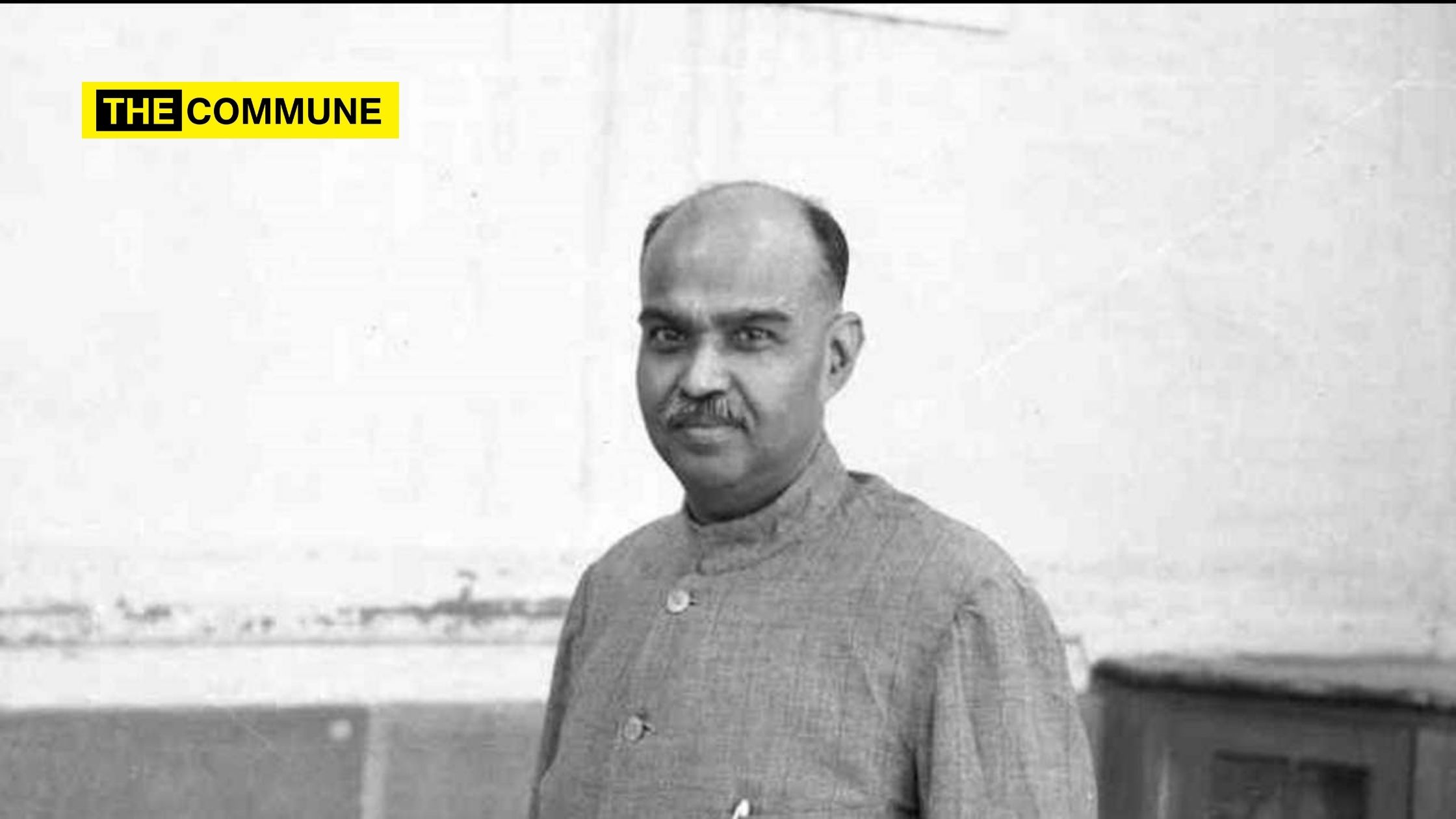
Shyama Prasad Mukherjee was born in a Hindu family of undivided Bengal in Calcutta on the 6th of July 1901 in Bharat. His father’s name was Ashutosh Mukherjee and mother’s name was Jogamaya Devi. Dr. Shyama Prasad’s father had been a Judge of the Calcutta High Court and had been the Vice-Chancellor of Calcutta University. Later, when Shyama Prasad Mukherjee would grow up – he too would become the Vice-Chancellor of Calcutta University.
Shyama Prasad Mukherjee was always brilliant in academics. He joined Presidency College in 1914 after the completion of his matriculation. He graduated in English securing 1st class in 1921 and he got a Master’s degree in Bengali in 1923 securing First Class in Bengali. He became a Fellow at the Senate of Calcutta University in 1923. He obtained his Bachelor’s Degree in Law in 1924. He was just 23 years old in 1924. He was a great achiever at a young age like Swami Vivekananda and Adi Shankaracharya. He would go on to obtain D.Litt. from Calcutta University in 1938.
In 1924, he joined as an advocate in Calcutta High Court. He left for England in 1926 to study at Lincoln’s Inn. He was called to the English Bar in the same year, i.e. in 1926. He became the Vice-Chancellor of Calcutta University in 1934 at the age of thirty- three. He remained as the Vice Chancellor until 1938.
He was elected as a Member of the Legislative Council of Bengal in 1929 as a Congress candidate. Later on, he contested elections as an independent candidate and got elected to the same Council. Much later on, he became the President of the Hindu Mahasabha.
According to Author Pushpesh Pant, the first mantra of victory is complete clarity about the goal. In his book, ‘Victory Mantra’, he writes – ‘The clarity of a goal helps the warriors in their preparation and in honing their aim on the battlefield.’ Author Pushpesh Pant in ‘Victory Mantra’ rightly says – ‘It is often said that wise people select goals that are reachable and realistic. But the interesting thing is that a person who achieves unprecedented and historic victories usually chooses destinations that appear out of reach to ordinary people.
Shyama Prasad Mukherjee was one such visionary leader, who could visualise the far future and set the foundation stone to the future formation of the world’s largest political party. Shyama Prasad Mukherjee also understood the value of team work and mentored eminent intellectuals like Deen Dayal Upadhyaya who would work as the Secretary of the Bharatiya Janata Sangh, which he founded.
2022 is an important time to look back at the phenomenal achievements of the ‘one man army’, Dr. Shyama Prasad Mukherjee at a time when India has had an unprecedented second term BJP majority government at the Centre led by Prime Minister Narendra Modi.
The man, who laid the foundation of the Bharatiya Jana Sangh, the predecessor to the BJP must be remembered with gratitude. Any discerning intellectual will be able to observe the close similarities between the three pairs of individuals – Shyama Prasad Mukherjee and Deen Dayal Upadhyaya; Lal Krishna Advani and Atal Bihari Vajpayee; Narendra Modi and Amit Shah. The message is clear. Whenever two strong individuals join hands for a great cause, the mission is likely to succeed – more so in the context of politics. Sometimes, mere vision is not sufficient. Planning and strategy is required. And there is always a possibility of that happening better when there are two members in a partnership driven by the zeal to accomplish the same goals.
The history of the Bharatiya Jana Sangh begins in October 1951, when it was formed by Dr. Shyama Prasad Mukherjee who at that time was a pioneering educationist. He resigned from Jawaharlal Nehru’s cabinet as the Ministry of Industry and Supply.
Dr. Shyama Prasad Mukherjee was not satisfied with the Nehru led policies for India. Mukherjee formed the Bharatiya Jana Sangh in October 1952 with the support of the RSS (Rashtriya Swayamsevak Sangh). At that time, the RSS was led by Guruji M.S. Golwalkar who directed some of the very energetic and young Pracharaks for assisting with the formation of a political party. The symbol of the Bharatiya Jana Sangh was The Earthen Lamp. Shyama Prasad Mukherjee believed that the humble earthen lamp would ‘carry the light of hope, unity, faith and courage’ to dispel the darkness that surrounds the country.’
In fact, it was the interactions of Shyama Prasad Mukherjee with RSS and Sarsanghachalak Golwalkar that Mukherjee was convinced that ‘RSS could be anything but reactionary. It already had an extensive network of branches and a cadre of tried and selfless workers.’ Earlier in 1943, Shyama Prasad Mukherjee had met the founder of RSS – Dr. Keshav Baliram Hedgewar in the presence of Guruji Golwalkar. Dr. Mukherjee and Dr. Hedgewar discussed the plight of Hindus in the then Bengal ruled by the Muslim League.
It is said that during the course of the discussion, Dr. Mukherjee suggested to Dr. Hedgewar that the ‘Sangh must take part in politics,’ to which Dr. Hedgewar said that the Sangh was ‘not interested in the day-to-day politics.’
It was only after meeting Guruji Golwalkar that Dr. Mukherjee felt that any political organisation supported by and enjoying the confidence of the RSS would surely succeed in mobilising and consolidating the non-Congress and non-Communist nationalist public opinion.
The Bharatiya Jana Sangh was thus formed on the 21st of October 1951. Nehru had resolved to crush the Jana Sangh. However, Dr. Shyama Prasad Mukherjee withstood and countered the Nehruvian hegemony.
In the first General Elections held in independent India, the Jana Sangh could win only three seats. In ‘Hindu Nationalism and Indian Politics: The Origins and Development of the Bharatiya Jana Sangh,’ it has been written that – The demise of Dr. Shyama Prasad Mukherjee caused dismay throughout India and deprived the party of its only parliamentarian of national standing and its one secure link with powerful networks of highly placed professional and political bodies around which an anti-Congress front might have been constructed.’
Dr. Shyama Prasad Mukherjee died under mysterious circumstances at the young age of 52 in the June of 1953 while being kept in detention by the then Jammu and Kashmir government. It was the General Secretary of the Bharatiya Jana Sangh – Deen Dayal Upadhyaya, who steered the fledging Bharatiya Jana Sangh through those trying tough times, when the Bharatiya Jana Sangh was bereft of its Top Leader – The Founder-President and Lion Heart, Dr. Shyama Prasad Mukherjee.
One of the most valuable contributions of Dr. Shyama Prasad Mukherjee was his realising the value of the intellectual brilliance of Deen Dayal Upadhyaya, who gave two valuable ideological concepts – the concept of Antyodaya and the concept of Integral Humanism.
The concept of Antyodaya includes the empowerment, the rise and inclusion of the marginal citizen in the growth story of the nation. Atal Behari Vajpayee stated about Antyodaya that ‘regard of the individual, particularly the weakest individual is the focal point of our developmental endeavours.’ In fact, our current Prime Minister Narendra Modi bases his entire governance on the Antyodaya concept of reaching all facilities to the last person.
In ‘Learn to Live (Volume 2)’, a book authored by Swami Jagadatmananda, he says – ‘Gandhi ji proposed that the Congress party, which had brought freedom to the country should not aspire to be a political party and rule the country. But our leaders did not listen to this advice. Congress came to power and Jawaharlal Nehru became the Prime Minister of India….’ In the same book, he also says that though Nehru was a Hindu by birth, he did not have faith in Hinduism – “Jawaharlal did not have any close acquaintance with the Hindu religion.’ In the book, he says – ‘Jawaharlal was an idealist, who could be honest and truthful without having belief in the existence of God.’
There were many leaders, who had worked in the Congress, who feared that the condition of the Hindus would deteriorate under Jawaharlal Nehru. There were some who went on to establish their own religious organisations like The Hindu Maha Sabha. Rajaji left Jawaharlal and established his own party. Vallabhai Patel did not leave Nehru but the two minds did not always agree. Jawaharlal Nehru passed away in 1964.
In his book, ‘That House, That Age,’ the renowned author, Aju Mukhopadhyaya writes that- ‘The Whole of Bengal was waiting with bated breath as their beloved leader, Shyama Prasad Mukherjee was coming back to his home after forced stay for forty seven days in a Kashmir jail-cottage (some kind of house arrest!) – big enough to somehow hold him with Vaidya Guru Datta, a well-known ayurvedic physician and Tek Chand, the energetic young man from Dehra Dun, who accompanied Shyama Prasad to Jammu for state affairs but they were carried to Srinagar in Kashmir almost blindfolded; people waiting at Jammu were hoodwinked. They were conspiratorially arrested by the Kashmir Government in collaboration with the head of the Indian Government as it was widely rumoured.
The 24th of June of 1953 was indeed a sad day. There were more than a million people, who were awaiting the arrival of Shyama Prasad Mukherjee’s body at Dum Dum airport, Calcutta. The body had been flown from Kashmir to Calcutta.
The renowned writer, Aju Mukhopadhyaya notes that – ‘The whole body of the populace was in remorseful silence with grievance and grief for the great loss throbbing in each heart….’ He writes –‘It seemed that everyone knew of the conspiracy to kill him at the most opportune moment, which occurred in the early hours of the morning of the 23rd of June of 1953 to get rid of the most popular yet troublesome speaker to his enemies; a great activist in the country, who stood so tall over his rivals that they were again and again, harassed, silenced and shamed.’
Thus, we can understand that Shyama Prasad Mukherjee’s voice was the Voice of Truth.
Traitors have ruined India, again and again. Betrayers have always thrived in India (and that does speak volumes about the levels of honesty of some people!) be it Shiladitya, who betrayed Rana Sangha or Mir Jaffer, who joined the British during the Battle of Plassey!
Dr. Shyama Prasad had proceeded to visit Jammu as a Member of Parliament in 1953. Dr. Shyama had not taken any special permission because he did not deem it necessary. Dr. Shyama Prasad had two loyal followers – Atal Behari Vajpayee and Bal Raj Madhok, who accompanied him to house arrest. There were two others – Vaidhya Guru Datta, the well-known ayurvedic physician and Tek Chand, the energetic young man from Dehra Dun, who accompanied Dr. Shyama to Jammu but later they (Dr. Shyama, Guru Datta and Tek Chand) were all carried to Srinagar in Kashmir from Jammu, blindfolded.
Dr. Shyama received a rousing reception at Pathankot railway station after leaving from Delhi on train. He took a jeep and reached Madhopur check post on the Ravi bridge. His jeep was stopped by Kashmir police and an arrest order was handed over to him, Gurudatta and Tek Chand. The others were set free to go back. All this occurred in May 1953. {On 23rd June 1953, Shyama Prasad Mukherjee died under mysterious circumstances and on 24th June 1953, his body was flown in an aircraft from Kashmir to Calcutta}
There were thousands of followers of Shyama Prasad Mukherjee, who were at Jammu. But Dr. Mukherjee, Tek Chand and Guru Datta were taken in closed jeeps from Jammu to Srinagar, hoodwinking Dr. Shyama’s thousands of followers who had assembled at the Jammu Tawi Bridge and who remained there till late night.
The then Prime Minister of India Jawaharlal Nehru had referred the unlawful entry of hooligans from Pakistan into Kashmir to the United Nations instead of throwing them out. The erstwhile Kashmir issue was grossly and intentionally mishandled by the Prime Minister Jawaharlal Nehru.
Shyama Prasad Mukherjee wanted to sense first-hand the happenings of Jammu and Kashmir and that is why he had decided to pay a visit to Jammu and Kashmir without taking any ‘special permission’ because Jammu and Kashmir has always been an integral part of India and Dr. Mukherjee too rightly deemed it so. He had reached Pathankot in Punjab, safely. Then he had proceeded to Jammu, where he was still safe.
But all of a sudden, Shyama Prasad Mukherjee was arrested along with his two confidants by Kashmir police on Jammu Tawi bridge and carried away secretly to ‘Srinagar in a jeep and confined to a tiny bungalow belonging to the central jail of the state of Jammu and Kashmir. They were detained without trial. The arrest of Shyama Prasad Mukherjee caused immense consternation among his supporters.
Shyama Prasad Mukherjee did not receive proper care while in home arrest. He did not have sufficient space for daily walking.
Barrister U.M. Trivedi went to Kashmir to argue the Habeas Corpus case of Shyama Prasad Mukherjee before the Kashmir High Court. Just two days prior to that, Dr. Shyama had a heart attack at night and the following morning, he had been taken to a government hospital, which was at a distance of ten kilometres from where he was staying. However, there was not sufficient oxygen supply at the hospital. So, essentially a sick Dr. Shyama Prasad Mukherjee was taken to a medical centre where there were insufficient oxygen facilities.
Barrister Trivedi met Mukherjee in the evening of the 23rd of June of 1953 after completing his arguments in the court feeling sure that he would win the case and Dr. Mukherjee would be released on the next day, the 24th of June of 1953.
Dr. Shyama Prasad Mukherjee was happy after meeting Barrister Trivedi on the 23rd of June of 1953. However, towards the midnight, when Dr. Shyama was feeling better, a doctor came and gave him an injection, which led to a quick deterioration in the health of Dr. Shyama Prasad Mukherjee. According to the Medical Bulletin, Dr. Shyama breathed his last at 3.40 a.m. Some say that he died at 2.30 a.m. Thus, the time of his demise is not clear, which raises more suspicions. Also, what was the injection, which was administered to him and by whom and under instructions by whom?
Dr. Shyama Prasad Mukherjee was not only the leader of one community as his rivals tried to propagate. He represented the whole of India.’ (From Aju Mukhopadhyaya’s ‘That House, That Age’. Shyama Prasad Mukherjee had been president of not just the Hindu Maha Sabha but he was also the President of the Mahabodhi Society of India and he was respected in various Buddhist countries in South Asia.
But what were the events preceding the mysterious demise of Dr. Shyama Prasad Mukherjee. Who can forget the horrors of partition in the years 1947, 1948, 1949, 1950? So much ruckus had happened in West Bengal, Punjab and in different parts of the country. The pain of partition was largely experienced by the people of two border states – namely Punjab and West Bengal. Tens of thousands of Hindus were brutally raped and massacred during partition.
Shyama Prasad Mukherjee was treated cruelly by the Nehru government. He was kept in jail in a hostile place and he was attended to by unfriendly attendants in the jail. His condition had become pathetic. The Congress does not deserve a single Bengali vote because it betrayed two great Bengali nationalist leaders – Subhas Chandra Bose (born in erstwhile Bengal Presidency and current state of Odisha) and Dr. Shyama Prasad Mukherjee.
It was heard that U.M. Trivedi was planning to meet Dr. Mukherjee again after being denied permission by the government to privately interview the latter.
Dr. Shyama was not any ordinary person. He was a person who was liked by many including the great spiritual ‘Mother’ of Pondicherry, who respected Shyama Prasad a lot. According to the Mother of Pondicherry, ‘If anyone understood one-fourth of Sri. Aurobindo, it was Shyama Prasad.’
It is essential to remember that ‘his (‘Subhas Chandra Bose’s) progress was halted by the dictatorial clique of the then Congress, which caused his arrest after he relinquished the post of the President of the Party.’ {From Aju Mukhopadhyay’s ‘That House That Age}
‘Where did Netaji go and how could he hide from his international and national enemies! He knew that his trusted country led by Stalin had betrayed Japan and attacked Manchuria in August 1945. How could he go there then? He was seen in South East Asian countries for some days after the plane crash? {From Aju Mukhopadhyay’s ‘That House That Age}
The mysterious deaths of Dr. Shyama Prasad Mukherjee and Subhas Chandra Bose are definitely causes for great worry. They remain unresolved till now.
Dr. Mukherjee’s early demise in 1953 in detention in Kashmir under mysterious circumstances was followed in a couple of years by the sudden death of the leader of the Bharatiya Jana Sangh, Deen Dayal Upadhyaya.
The circumstances were never conducive for the Bharatiya Jana Sangh. The Bharatiya Jana Sangh was formed in October 1951 by Dr. Shyama Prasad Mukherjee under the guidance of Guruji M. S. Golwalkar. The Bharatiya Jana Sangh grew bigger and more powerful with its strong ideological touchstones of INTEGRAL HUMANISM and ANTYODAYA, the formulations of the intellectual genius, Deen Dayal Upadhyaya. The powerful philosophy of Integral Humanism was formulated in 1965 by Deen Dayal.
The life of Dr. Shyama Prasad Mukherjee cannot be discussed in isolation from the life of the Bharatiya Jana Sangh. The life of the Bharatiya Jana Sangh is in part, the life of its Founder-President, Dr. Shyama Prasad Mukherjee.
The first important milestone was the creation of the Bharatiya Jana Sangh in October 1951. However, within a short time after its foundation, Dr. Shyama Prasad Mukherjee died on June 23rd 1953 under suspicious circumstances. The party, thus lost its most influential and towering leader, very early on. It was the brilliance of Deen Dayal Upadhyaya, which steered the ship of the nascent political party into its second stage of growth. An important moment in the history of the Bharatiya Jana Sangh was the formulation of the ideologies of Integral Humanism and Antyodaya in 1965.
The next watershed moment was in 1967. The Bharatiya Jana Sangh became a part of a number of coalition ministries that were formed in different states in India. The first alternative nationalistic and patriotic political party had made its mark. The year 1967 is thus considered a milestone year wherein the Jana Sangh became a part of the coalitions comprising members of the Praja Socialist Party (PSP), Samyukta Socialist Party(SSP) and the Bharatiya Kranti Dal(BKD). The formation known as the Samyukta Vidhayak Dal (SVD) ousted the Congress in multiple state assemblies. The year witnessed the Congress Party losing power in six states.
Bhai Mahavir was the first General Secretary of the Jana Sangh from 1951 to 1952. There were multiple leaders like Nanay Deshmukh, Bhai Mahavir, K.R. Malkanji, Kedar Nath Sahani, P.Parameshwaran, Jagadish Prasad Mathu, J.Joshi (Karnataka Kesri), Sunder Singh Bhandari, Vijay Kumar Malhotra, Rajmata Vijayaraje Scindia, Kushabhau Thakre and Balraj Madhok, who helped the party to grow further and to tide over varying crises.
In March 1967, the Central Working Committee of the Jana Sangh met in Delhi and noticed how the Congress had received a big shock.
The year 1968 witnessed the sudden demise of Deen Dayal Upadhyaya within 5 months of being elected to be the President of the Jana Sangh.
The year 1968 saw the Jana Sangh being taken over by Atal Bihari Vajpayee and Lal Krishna Advani The two of them together began to lead the Bharatiya Jana Sangh. The two leaders were soon leading the party and began to emerge as very popular leaders. The two became very important and almost irreplaceable constituents of the Bharatiya Jana Sangh. The Bharatiya Jana Sangh was the precursor of the Bharatiya Janata party.
1975 to 1977 was a debilitating period when Indira Gandhi imposed emergency. This Emergency curtailed the freedom and fundamental rights of many leaders. Many leaders were put behind bars. Many tall leaders of the later dispensation – George Fernandez, Vajpayee were among those who were arrested.
1977 was the year in which the Bharatiya Jana Sangh merged with other groups to form the Janata party coalition that came to power following Indira Gandhi ji’s defeat.
There was a crisis in April 1980 when the National Executive of the Janata Party adopted a resolution, which prohibited members of RSS from continuing in the Janata Party. There appeared to be some fear from the side led by Chandrasekar, who was then President of the party that after the split of the party following a secession by the group led by Charan Singh that the Jana Sangh would capture the party on account of its mass appeal and big army of dedicated workers. So essentially, in 1980, the group belonging to RSS/BJS was ousted from the Janata party following fears of Chandrasekhar and his group that the erstwhile Jana Sangh would take over the Janata Party.
The founder of the Janata Party, Jayaprakash Narayan died in 1979. A Conference of Jana Sangh workers was held at Kotla ground in Delhi on the 6th of April of 1980 and the Jana Sangh workers decided to part company with Janata Party.
Thus, it was decided to begin a new political party – The Bharatiya Janata Party. Essentially, the birth of the World’s biggest political party began with the parting of the Bharatiya Jana Sangh or the Jana Sangh from Janata Party. It had taken almost 30 years, 29 years to be precise for the Bharatiya Jana Sangh to evolve into the Bharatiya Janata Party.
So first, the Bharatiya Jana Sangh merged into the Samyukta Vidhayak Dal in 1967. Then in 1977, the Bharatiya Jana Sangh merged with other groups into The Janata Party. On 6th April 1980, the Jana Sangh workers parted ways with the Janata Party and voila! The path had opened up for the Formation of the World’s Largest Party – The Bharatiya Janata Party!
Thus, the Bharatiya Janata Party was born on the 6th of April of 1980. The important members, who were present include Rajmata Vijayaraje Scindia and Atal Bihari Vajpayee. The workers of the Bharatiya Janata Party were filled with new energy and excitement. Atal Bihari Vajpayee said – ‘Come, light the lamp again.’
There was a plenary, which was convened in Mumbai between the 28th and 30th of December of 1980.An estimated 25,00,000 people enrolled in the BJP at the time. The period between April 1980 and December 1980 was thus used to a. mobilise the cadres b. enrol new members and c. to set up units across India. Most Congresswadis might like to forget the fact that the Plenary Inaugural was attended by Muhammed Currim Chagla, distinguished jurist, Congressperson, who had been Education Minister in Nehru’s cabinet and was later a Foreign Minister in Indira Gandhi’s cabinet. Chagla welcomed the formation of the BJP as a national alternative to the Congress. He felt that the Congress had become a ‘party of hypocrites, opportunists and sycophants.’
There were many important figures, who attended the Mumbai Plenary (also known as the Samata Nagar session) of December 1980. The former Chief Justice of India, J.C. Shah, who had headed the Shah Commission of Enquiry against the excesses of Emergency attended the Samata Nagar session or the Mumbai Plenary session of December 1980. The workers of BJP listened attentively to the speeches of Vajpayee. Atal Behari Vajpayee gave the presidential address and the address was filled with the message of opposition to authoritarianism and to support parliamentary democracy. BJP had turned into a mass party, where Vajpayee and Advani were seen as perfect complements to each other (just like Modi and Amit Shah, I feel). Vajpayee ended his presidential address with his famous prediction that ‘The Lotus Will Bloom!’ Thus, it has been an arduous journey from ‘The Lamp’ to ‘The Lotus’.
The Bharatiya Janata Party has been at the forefront of many yatras and movements. The BJP has grown steadily from 1980 till now with back-to-back BJP majority governments at the centre under the dynamic leadership of Narendra Modi in 2014 and 2019.
Many new things stem from the old. In fact, ‘The Sadasyata Abhiyan’ started by Amit Shah, the National President of the BJP in 2015 was also in some ways – a continuation on the path created by Dr. Shyama Prasad Mukherjee and Deen Dayal Upadhyaya with their Integral Humanism/ Antyodaya and other ideological objectives.
The beginning of the Bharatiya Janata Party of today formed on the 6th of April of 1980, which traces its history to the Bharatiya Jana Sangh of October 1951 can all be linked to the thousands of years of Bharat being bruised by Islamic invaders and foreigners. Renowned author, Sita Ram Goel has rightly pointed out that the ancient past of India is so great that it just cannot be over glorified.
The many and long invasions of Bharat led to great discontentment among the masses because of the perennial pain caused by the Islamic invaders and foreign plunderer imperialists like the British. The trauma caused by the Islamic invaders, who meddled with Bharat’s ancient traditions and culture caused a deep impact on the people of Bharat. A large number of Hindu shrines were devastated – right from the Somnath temple, to Buddhist complexes, Hindu temples in Delhi and in many other places. The very natural fabric of Hinduism of Bharat had been altered in many places and converted into either Islam through coercion or into Christianity through enticement.
Thus, the impact of Islamic plunderers and foreign imperialists left an indelible mark on impressionable intellectual, educated and emotional minds like Dr. Shyama Prasad Mukherjee. The British, French and Portuguese imperialism in India took Bharat back into the Dark Ages in many ways. There was corruption, destruction of Indian traditional industries, painful betrayals and injustice committed on the poor Indians.
Hinduism is not limited to one God. There are unique ways of Hinduism, which is a way of life. There were many movements led by Hindu reformist organisations like The Shuddhi Movement and The Movement against Cow Slaughter.
The Arya Samaj worked at reforming the Hindu society and also helped many Muslims/Christians of Bharat to convert to their ancestral religion, which is Hinduism. Swami Dayanand and Swami Shraddhananda tried to introduce reforms in Hinduism. Swami Shraddhananda was assassinated by a Muslim fanatic.
All the above facts became a part of a multitude of overlapping factors, which led to the development, changes and decisions of Dr. Shyama Prasad. The Islamic invasions of Bharat, the Christian Missionary forces entering Bharat, the Shuddhi movements, the movements against cow slaughter, the hidden caste system among Muslims and Christians all created the course of Dr. Shyama’s life.
Dayanand Saraswati authored ‘Go Karunanidhi -The Ocean of Mercy for The Cow’. Dayanand Saraswati strongly opposed cow slaughter. The Muslim appeasement of the Congress did not settle well with many people especially Dr. Shyama Prasad Mukherjee.
The fact that many Muslims especially those who had converted from Hinduism were trying to deny the Culture existing in Bharat before the hordes of Islamic invasions of Bharat – Hinduism was the religion of our ancient Bharat. The Muslim elite tried to deny the Vedas, the Upanishads, the Puranas, the Ramayana, the Mahabharata and many others from Indian history. The Muslim elite tried to create the opinion among the Bharatiya people that there was no history of Bharat prior to the times of the Prophet Mohammed, who was born and lived in Arabia around 1400 years ago. Lord shiva is said to have roamed on the earth more than 25000 years ago. The Ramayana happened 10,000 years ago but a lot of brainwashing was done by the elite Muslims in India as if Islam was the ancestral religion of Bharat. Actually, both Islam and Christianity are alien religions to Bharat’s ancient and glorious culture.
The Khilafat Movement was a triggering moment for young Shyama Prasad. Indian Muslims picked up an issue, which belonged to outside of Bharat.
The Moplah riots in Kerala region wherein atrocities against Hindu women were carried out were not condemned by the Congress. On the contrary, Nehru and Gandhi spoke about reconciliation etcetera about the serious Moplah riot. All these events of Muslim pacification/appeasement had an impact on Dr. Shyama. The continuous atrocities on Hindus in the ancestral Hindu religious land of Bharat through riots like the Moplah riots, Kohat, Nagpur and Razakar riots , the appeasement of Muslims by the Congress Party, the denying of the history of Bharat, the ancient religious land of Hindus, the hypocrisy of Gandhi ji, the Moplah riots, the cruelty of Muslims in later East Pakistan ( later Bangladesh), the Kashmir issue, the support of the Indian Muslim to the Caliphate movement of Turkey – all shook the conscience and consciousness of Dr. Shyama Prasad.Leaders like Veer Damodar Savarkar also influenced Dr. Shyama greatly.
Veer Damodar Savarkar was a great influencer in Indian politics in the first quarter of the 20th century. Savarkar was many persons in one. He was a poet, writer, lawyer, playwright, freedom fighter and political leader. When brave and patriotic people like V.D. Savarkar were ridiculed, it impacted the minds of young Indians, who believed that India had a rich future, which was only possible if its rich past was not neglected. V.D. Savarkar was expelled from the Fergusson College residency because of his act of revolt against the British authorities. He was later imprisoned at the dreaded Andaman Islands jail and tortured. After all this, he was foolishly ridiculed by some of the ignorant Indians.
Such were the conditions of freedom fighters and Hinduism propagators at the time when Dr. Shyama Prasad Mukherjee was born. Such were the perilous times! Shyama Prasad Mukherjee lived for a mere 52 years on this planet but the great person brought about a revolution in Indian politics by standing up against the mighty British imperialists, Muslim fanatics, Christian Missionary forces, anti-India forces and he also took on the High and Mighty of the Congress Party, when the need to do so came. He was a direct challenger to Jawaharlal Nehru and everyone knows what became of the two challenger- tigers from Bengal – Subhas Chandra Bose and Dr. Shyama Prasad Mukherjee. Both of them died under mysterious circumstances.
Born on 6th July 1901 and dying on 23rd June 1953, Dr. Shyama filled his short life with untiring efforts and greatest devotion to his motherland. Bharat will not forget his immense contributions to her polity and social life.
Dr. Shyama Prasad Mukherjee’s Bharatiya Jana Sangh was the first challenger to the Congress Party after independence. The establishment of the Bharatiya Jana Sangh by Dr. Shyama Prasad Mukherjee in October 1953 with the support of the Rashtriya Swayamsevak Sangh under Guruji, the 2nd Sarsanghachalak of the RSS became the alternative nationalist and Dharmic party to the Congress.
The dynamism and quick progress of the Bharatiya Jana Sangh was because of its eminent and highly influential Founder-President, who was a great intellectual and patriotic person. Dr. Shyama was a barrister by training, a politician by choice and an academician. He served as the Minister for Industry and Supply in Jawaharlal Nehru’s first cabinet of independent India. Dr. Mukherjee resigned as he was against the Liaquat – Nehru pact signed by Nehru. If a person of his stature holding multiple degrees including B.A., M.A., LLB and D.Litt. would have done such a thing, it must not be without reason. Dr. Mukherjee was also a freedom fighter and a Dharmic fighter. He was President of the Hindu Maha Sabha from 1945 to 1946.
Let us take a look at his illustrious life filled with service to humanity. Dr. Mukherjee was a Member of Parliament (Lok Sabha) between 17th April 1952 and 23rd June 1953. He was a Minister of Commerce and Industry of India between 15th August 1947 and 6th April 1950. He was a member of the Constituent Assembly between 9th December 1946 and 24th January 1950. He was Finance Minister of Bengal Province between 1941 and 1942 and a Member of Bengal Legislative Council. He was Vice-Chancellor of Calcutta University between 1934 and 1938. Thus, he began his political career as a member of the Bengal Legislative Council in 1929.
Dr. Shyama Prasad Mukherjee witnessed horrendous muslim atrocities in the Noakhali Genocide in Bengal. Dr. Shyama Prasad launched the Bengali Hindu Homeland movement. Dr. Mukherjee demanded Partition of Bengal in 1946 as he did not want the Hindu majority areas of Bengal to become a part of East Pakistan (Later Bangladesh in 1971) His vision was correct. Today, the Hindus of Bangladesh have been reduced to a minority. Bangladesh is not a secular country. It is a Muslim state, now. We must not forget that Dr. Shyama was a Bengali Hindu. He understood first hand, the problems of Bengal as he was a son of Bengal. He knew the sufferings of his people. The Hindus of East Bengal were either killed or forced to convert to Islam. The population of Hindus in Bangladesh has been reduced to a miniscule minority. India, however, continues to remain as a secular country. Why cannot Bharat become a Hindu Rashtra – a country of Hindus, for Hindus and by the Hindus? If Pakistan could choose to be an Islamic state, then why cannot Bharat turn into a Hindu nation? The religion of Hinduism is intrinsically linked to Bharat and has Bharat’s ancestral religion for tens of thousands of years. If Israel can be a land for Jews, India too can be a land of Hindus because the DNA of all Indians is the same and the traditions and the rich cultural ethos of Hinduism is part and parcel of all things and people, Bharatiya. India and Nepal are the last bastions of Hinduism.
Thus, it can be rightly said that the Moplah riots, the Noakhali riots, the Kohat and the Nagpur riots all left a deep impression on Dr. Shyama Prasad Mukherjee, who was a gigantic intellectual and could read well into the future.
The ideals of V.D. Savarkar were practised by Dr. Shyama Prasad Mukherjee. India can never be Dar-us-Islam (Land of Muslims). Bharat was, is and will always remain the land of Hindus. V.D. Savarkar (born in 1883) and Dr. Keshav Baliram Hedgewar were close contemporaries. Dr. Shyama Prasad Mukherjee and Guruji M.S.Golwalkar were close contemporaries.
Nowadays, there are debates and discussions about Hinduism and Hindutva. They might be or might not be the same. The important point to remember is that Bharat is our common land and we share common, rich and ancient past with a unique culture and traditions. It is important to remember that there are no original Muslims or original Christians in India. They were those who came from outside Bharat or got converted either through coercion or enticement. Very few people convert to a religion out of a genuine revelation or epiphany or desire for change.
The Bharatiya Jana Sangh founded by Dr. Shyama Prasad would not have been plausible without the Rashtriya Swayamsevak Sangh, which is an ideological and social organisation. The RSS teaches the youth about moral values, Dharma, traditions and patriotism.
One cannot understand Shyama Prasad without understanding Guruji Golwalkar, who consolidated Hindu society and brought together various sects, religions and groups on a common platform known as The Vishwa Hindu Parishad.
Nehru always feared that the RSS would become a political party. His fears did not come true directly but the RSS was instrumental in the creation of the Bharatiya Jana Sangh, which was the first alternative nationalist party to the Congress party.
Dr. Shyama Prasad took on the might of Nehru ji and Congress Party in those volatile times. His decision to start The Bharatiya Jana Sangh was at the right time, when he started realising the pro-muslim and anti -Hindu attitude of the Congress party. The RSS had helped in convincing the Maharaja of Kashmir to accede Kashmir to India. There was also a massive rally by RSS on 10th December 1947, which was a big success. All this shook Nehru ji.
The people of Bharat and Dr. Shyama Prasad had realised the horrors of partition caused by the inefficiency of Jawaharlal Nehru to handle the partition fallouts preceded by the Delhi pact or Nehru Liaquat pact of April 1950.
‘The Pioneer’ newspaper dated 22nd May 1950 reported that 8,60,000 Hindus came to India as refugees. Between 10th February 1950 and 20th February 1950, 10,000 Hindus were killed. Some reports suggested that 13 lakh Hindu refugees entered West Bengal between the 9th of April of 1950 and 25th of July of 1950.
It is thus to be clearly noted that Dr. Shyama Prasad did not resign from Ministership in the Nehru cabinet because of any incompetence but because he had realised the foolish nature of Nehru in handling various issues like the Kashmir issue, the Partition issue, the multiple Hindu-Muslim riots, the appeasement of Muslims, the Delhi pact or the Nehru -Liaquat of April 1950 and the clearly emerging anti-Hindu stand of the Congress Party.
Dr. Mukherjee was a great minister and many important projects like The Hindustan Aircraft Factory (Today’s Hindustan Aeronautics Limited), the Sindri Fertiliser Plant and The Chittaranjan Locomotive Works started during Shyama Prasad’s tenure as Minister of Industry and Supply.
The foundation of an alternative political force in Bharat is Dr. Shyama Prasad’s biggest contribution. The Bharatiya Jana Sangh has metamorphosised into the powerful Bharatiya Janata Party of today. The BJP and the country owe a great deal to the contributions of both Dr. Shyama Prasad Mukherjee and Deen Dayal Upadhyaya, the former’s closest confidante. All the growth of today’s BJP owes its existence to the edifice built by the painstaking efforts of Shyama Prasad Mukherjee and Deen Dayal.
In 1946, Nehru entered Kashmir illegally. At that time, he defended his move saying – ‘The whole of India is my home.’ On the other hand, when Dr. Mukherjee visited J&K, he was confined for almost 2 months for entering Jammu and Kashmir ‘without permission’. He died in his confinement.
The visit to Kashmir by Dr. Shyama Prasad was preceded by certain events. There was a group called Praja Parishad, which resorted to a Satyagraha against the Sheikh Abdullah government of those times. It raised important points including Full Integration of J&K into India, Indian Constitution to be applied in J&K in full measure, the Supreme Court of India to have full jurisdiction over J&K and to be considered as the highest judicial court as elsewhere in India, the elimination of customs barriers between India and Kashmir, charges of corruption (against Sheikh Abdullah, his family and his party officials) to be investigated by an impartial tribunal and that Kashmir should adhere to the same Central, state and concurrent lists as envisaged in the Constitution of India.
The annual session of the BJS in Kanpur expressed dissatisfaction over the policies of the Government of India with respect to J&K. One third of J&K had been usurped by Pakistan.
An almost independent Sheikhdom under Sheikh Abdullah in J&K with a separate Constitution, separate Prime Minister and separate Flag shook the nerves of patriotic Indians like Dr. Shyama Prasad. How could there be two Prime Ministers, two Constitutions and two Flags within the same Bharat?
The article 306A later the notorious Article 370 granted Separate Constitution, Flag and Chief to J&K. Also, citizens of Jammu and Kashmir could be deemed as citizens of India but not vice-versa.
On 10th February 1953, the Bharatiya Jana Sangh under its Founder and President passed a long resolution about the deteriorating situation in Kashmir.
Dr. Mukherjee mobilised support against the Separatist Sheikh Abdullah. He was assisted by A.B.Vajpayee, Editor of Veer Arjun, who was to later become one of Bharat’s most illustrious sons and who became a guiding role model figure to our current Prime Minister Narendra Modi.
The order to arrest Dr.Shyama Prasad in J&K came from the Inspector General of Police of J&K. Shyama Prasad was arrested under the Public Safety act of J&K and thus died in detention.
Vajpayee attributes his joining politics to the premature and suspicious demise of Shyama Prasad Mukherjee.
Jawaharlal Nehru and Gopalaswamy Ayyangar, a minister without portfolio in Nehru’s cabinet created many complications for Bharat after Sardar Vallabhai Patel’s death. Patel is the great hero responsible for the United Bharat of today. Sheikh Abdullah who was afraid of Vallabhai Patel till the later was alive, took a U-turn flabbergasting Prime Minister Jawaharlal Nehru. Sheikh Abdullah refused to sign The Accession Treaty to India as was earlier promised by him. Nehru could not get Sheikh Abdullah to fulfil his earlier promise.
Finally, deliverance and justice in the Kashmir issue was given by our current Honourable and brilliant Prime Minister Narendra Modi who used the right combination of constitutional measures to abolish the Draconian and Notorious Acts like Article 370 and article 35 A and integrated Jammu and Kashmir into Bharat Mata – finally our beloved leader, Dr. Shyama Prasad Mukherjee will be able to rest in peace but wait! The final justice will be delivered only when the exact causes and circumstances regarding the mysterious deaths of both our National Hero, Netaji Subhas Chandra Bose and Dr. Shyama Prasad Mukherjee are revealed, action taken and justice in that regard is delivered.
References:
1. Anirban Ganguly & Shiwanand Dwivedi, Amit Shah and the March of BJP, Bloomsbury, New Delhi, 2019
2. That House, That Age, Aju Mukhopadyay, Earth Vision Publications, New Delhi, 2021
3. Pushpesh Pant, Victory Mantra, Rupa, New Delhi, 2014
4. Learn to Live by Swami Jagadatmananda
5. Ratan Sharda, RSS 360 degree, Bloomsbury, New Delhi,2018
6. Shantanu Gupta, Bharatiya Janata Party, Rupa, New Delhi, 2020




Zubair’s Hands Are Drenched In Blood, His Horde Is Helping Washing It Off
Two bearded men – Mohammad Ghous and Mohammad Riyaz – walk in to a tailor’s shop under the pretext of getting their clothes stitched. The unsuspecting tailor goes about taking measurements when suddenly one of the bearded man twists the arm of the tailor and starts hitting him. He is later stabbed multiple times as he cries in excruciating pain. Finally, his head is severed and his headless body is put in full public dispaly to strike terror in the hearts of people.
Yet another Hindu life succumbs to the menace of terrorism which apparently has no religion despite the world seeing attacks after attacks by this horde.
And Kanhaiya Lal wasn’t the only Hindu to be butchered in the aftermath of the Nupur Sharma episode.
A similar incident happened on June 21, 2022 in Maharashtra’s Amaravati where one Dr. Umesh Kolhe was decapitated for reportedly coming out in support of Nupur Sharma. Abdul (24), Shoaib Khan (22), Mudassir Ahmed Sheikh Ibrahim (22) and Shah Rukh Pathan Hidayat Khan (24) were arrested. I repeat, terrorism has no religion.
Kanhaiya Lal’s killing made news because of the spine-chilling video that went viral. It wasn’t the case for Umesh Kolhe.
These cold-blooded murders comes just weeks after ‘Sar Tan Se Juda’ reverberated in different parts of the country with mobs baying for Nupur Sharma’s blood.
The Secular Gymnastics Of Leftist Media
A section of the media keep driving the point that these incidents are a fallout of the Nupur Sharma episode through their secular gymnastics. They attribute it to rising ‘Hindutva’ putting Hindus on the defendant dock while covering the elephant in the room with a big sheet of secularism.
This will be evident from how the identities of the killers are brushed under the carpet and how the name of Nupur Sharma is consciously highlighted portraying her as a bigot.
The Quint in its coverage of the incident made sure that the identity of the perpetrators is not immediately known so that the average reader can pass it off as a nondescript news.
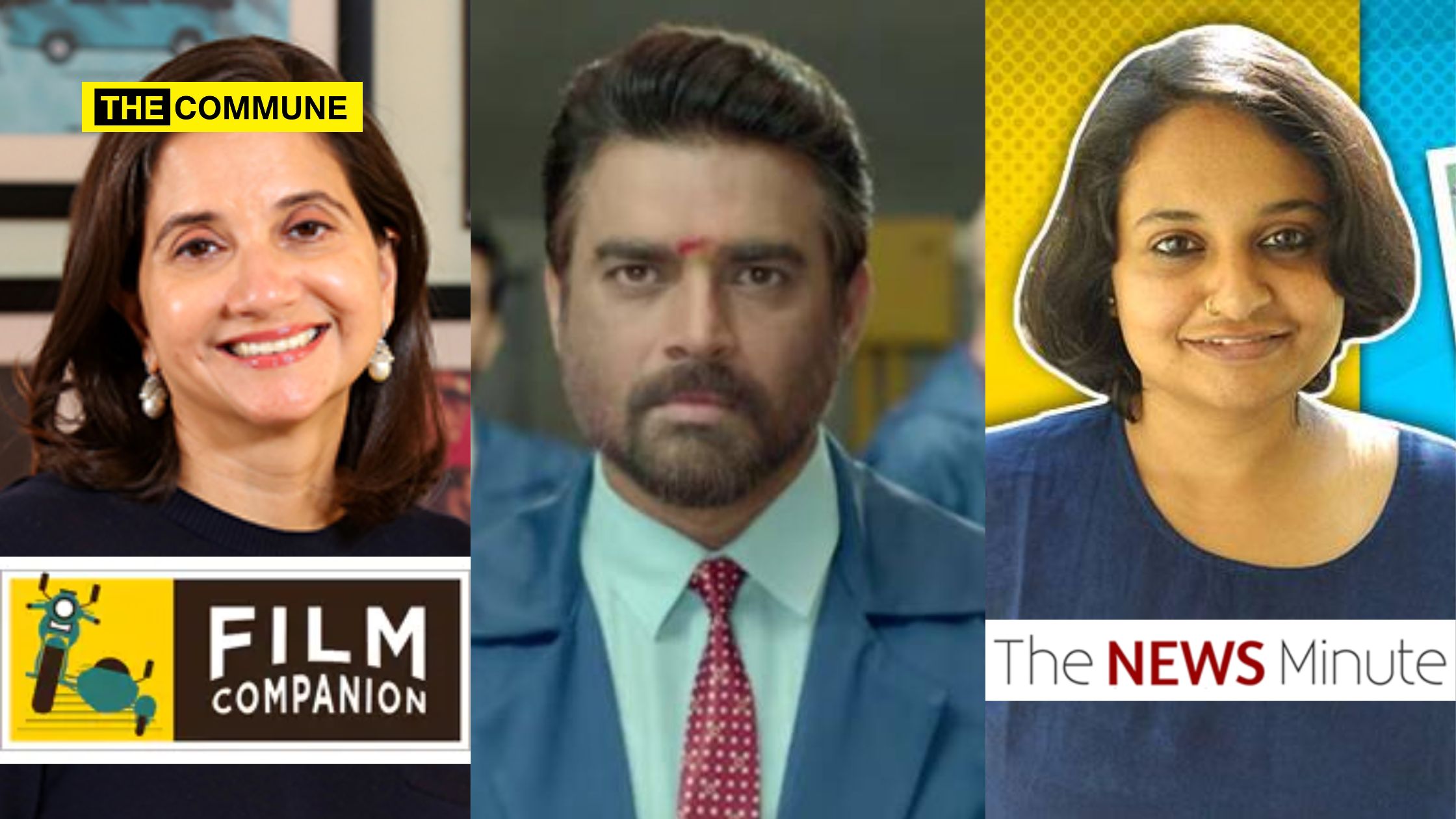
The News Minute, another leftist outlet carefully worded its headline without mentioning the identities of the perpetrators.
Similarly, other leftists portals like The Wire, Scroll.in, Newslaundry and a few mainstream publishing houses secularized the incident with a careful crafting of headlines. .
In fact, Newslaundry has even published a report ridiculing those who called the act a ‘Taliban’ and ‘ISIS’ style crime.
This is nothing surprising as it has been the norm for these media houses to tread soft when the victims are Hindus and the perpetrators belong to the so-called minority community.
On the other hand, the international media houses like CNN have watered down the terror act with the usage of ‘alleged’ in their reports.
BBC on the other hand used a feature image with men wearing saffron shawls and not the image of the Muslim men.
Note how in all these coverages, the name of Nupur Sharma is drilled into the heads of the readers as if she was the only person responsible for all the violence. Also, these reports end stating that Muslim organizations have condemned the murder in an attempt to portray it as an isolated incident when infact these organizations are involved in fomenting hate against non-believers day-in and day-out.
Why Zubair Is The Culprit
In the popular rhetoric, Nupur Sharma has been made the villain by the leftist media while completely ignoring that it was Alt News’ Mohammed Zubair who had cunningly shared an edited clip.
Mohammad Zubair had cropped the part when the Maulvi had made objectionable remarks on Siva Linga which was the reason for Nupur Sharma losing her cool. This was amplified by the usual suspects masquerading as journalists.
It was after Mohammad Zubair tweeted a clip of Nupur Sharma’s remarks about Prophet Mohammad that the issue exploded.
In essence, it was Mohammad Zubair who dogwhistled and unleashed a campaign against Nupur Sharma which led the fanatic Muslims to hit the streets creating a communal frenzy.
It is the tweet of Mohammad Zubair which has cost two Hindu lives. Thus, it is prima facie clear that the blood of Kanhaiya Lal and Dr. Umesh Kolha is on Zubair’s hands.
The jihadi inside Zubair got exposed when his old social media posts mocking Hindu Gods went viral.
None of the champions of free speech or defenders of religious rights took to condemning the vicious tweets of Mohammad Zubair where he had derogated Hindu Gods.
How The Coterie Is Washing Off Blood From Zubair’s Hands
The leftist media outlets who have organized themselves under the banner of “DIGIPUB News India Foundation” have been on an overdrive since the arrest of Mohammad Zubair, the co-founder of propaganda outlet Alt News, which is also part of the outfit.
They’ve been portraying him as some kind of a hero who has been wronged for speaking ‘truth to power’.
This alleged ‘fact-checker’ has been accused of peddling fake news and inciting communal hatred several times.
In fact, all the violence and killings that has unfolded have to be pinned on this vile Islamist propagandist Mohammad Zubair.
This being the case, the coterie of Zubair which is today condemning his arrest as an assault on press is busy doing the dirty job of washing the blood off his hands.
When news of Kanhaiya Lal’s gruesome murder had started hitting the news, The News Minute hosted a space called ‘Online Vigil For Press Freedom’ in support of Zubair in which these alleged ‘journalists’ cried foul calling his arrest a communal act spewing the usual gaslighting terms like ‘Hindutva’, ‘fascism’ and so on.
This cabal which is talking about ‘online vigil for press freedom’ stood as mute spectators when non-BJP Chief Minister incarcerated individuals for harmless social media posts criticizing them.
What Will Happen Now
The killers of Kanhaiya had the impudence to put out a video claiming responsibility for the attack and issuing threats to Prime Minister Narendra Modi – so much for all the rhetorics peddled about a “daraa hua Musalmaan” (Muslims in fear). That impudence is the manifestation of the confidence that they have on the legal systems in the country which has for long been taken for granted.
Zubair and the killers of Kanhaiya will eventually walk free.
Because they know that the secular folks in the country are there to insulate them and act as their frontline warriors.
Click here to subscribe to The Commune on Telegram and get the best stories of the day delivered to you personally.